
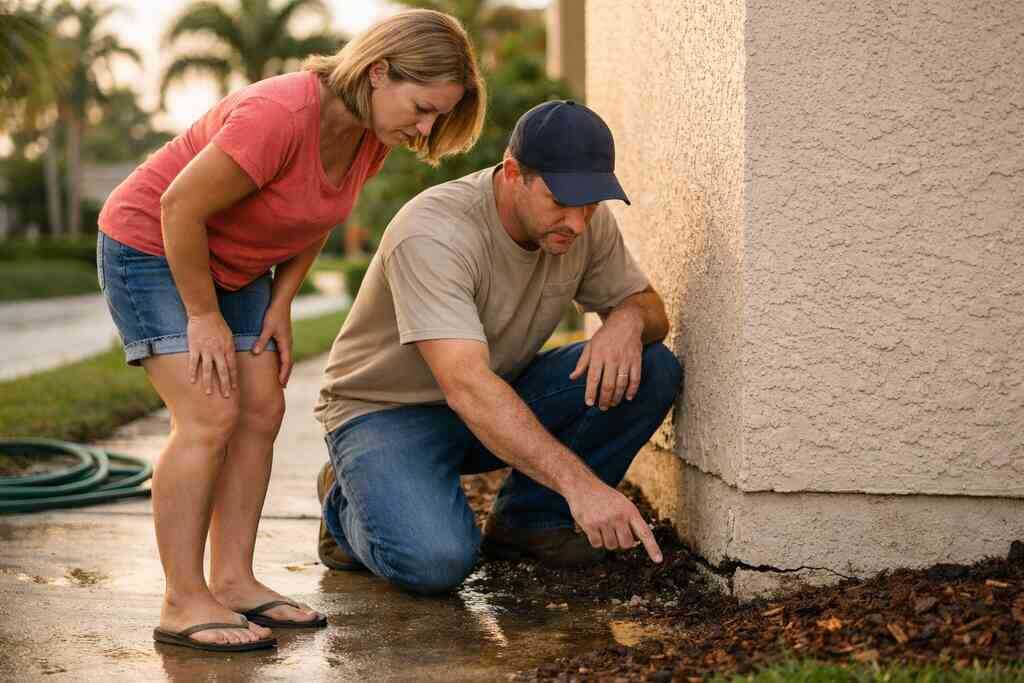
When a small crack stops being cosmetic and starts pointing to South Florida foundation repair
A hairline crack can be harmless. It can also be the first sign you need South Florida foundation repair. If you are staring at a wall crack at 11 p.m., you are probably not overreacting. That anxiety is normal, because foundation problems rarely announce themselves clearly. They usually start small, then spread into something harder and more expensive to ignore. Across homes in Palm Beach, Broward, and Miami-Dade, the key is knowing when a crack is just paint-line noise and when it signals real movement.
The first clues homeowners miss in Palm Beach, Broward, and Miami-Dade homes
The earliest clues are often easy to overlook. You may notice a thin diagonal line above a door, a slightly separated baseboard, or caulk that keeps splitting in the same spot. Those are the moments many homeowners brush off. Here is what most homeowners miss: movement that returns after patching usually means the structure is still shifting. In South Florida, changing moisture levels and soil conditions can turn a small symptom into a bigger repair issue quickly.
One homeowner in Broward called after repainting the same living room wall twice. The crack returned within weeks, and a more thorough inspection found movement at the slab edge near a downspout. The fix was not cosmetic. It required a targeted stabilization plan and better drainage corrections. That kind of story is common, especially in neighborhoods where heavy rain can expose weak grading and runoff patterns.
How slab foundation cracks differ from normal shrinkage in South Florida concrete
Not every crack deserves panic. Concrete shrinks as it cures, and many slab foundation cracks are shallow and stable. What matters is pattern, width, and direction. Random surface crazing usually stays narrow and fine. Cracks that widen, travel through tile, or reappear after patching deserve a closer look. If you are trying to separate routine shrinkage from a structural issue, look for change over time, not just appearance.
A useful rule: cosmetic cracks stay predictable, while structural cracks keep telling a worse story. They may angle toward corners, follow a stair-step pattern, or appear with sticking trim and uneven flooring. That is why homeowners searching for slab foundation cracks and concrete slab repair in South Florida should focus on movement, not just the crack itself. A qualified inspector can tell whether you need monitoring, drainage work, or more serious foundation repair.
Why water intrusion around the foundation often shows up before the real structural damage
Water is usually the first visible problem, not the last one. You may see damp carpet edges, a musty smell, or water stains near the slab before you see serious cracking. That is especially true when gutters overflow, mulch traps moisture, or grading pushes runoff back toward the house. Water intrusion around the foundation can soften soil, undermine support, and start a slow chain reaction. If you wait until the wall bows, you have already lost valuable time.
For homes with crawl areas, the warning signs can be even louder. Crawl space moisture issues and water intrusion around the foundation in South Florida can show up as rusted fasteners, warped framing, or moldy insulation. The hard part is that the water source is not always obvious. Sometimes it is roof runoff. Sometimes it is plumbing. Sometimes it is a combination. That is why a foundation review should always include drainage, slope, and moisture paths, not just a crack count.
Why doors, windows, and floors start telling the truth before you do
A house rarely keeps a secret for long. Before a homeowner says, “I think something is wrong with the foundation,” the doors and floors usually say it first. A door that suddenly scrapes, a window that jams, or a hallway that feels sloped under bare feet can all point to movement. These are classic foundation settlement signs, and they deserve attention before the problem spreads. In South Florida, where moisture and soil conditions change quickly, those small clues matter.
Sticking doors and windows as an early warning of foundation settlement signs
If a door that used to close smoothly now rubs the frame, do not blame humidity alone. Humidity can swell wood, yes. But repeated sticking in multiple openings can point to differential settlement. That means part of the house is moving differently from another part. Sticking doors and windows often show up before the homeowner notices anything wrong with the walls.
We hear this from clients almost every week. A family in Palm Beach thought their patio slider was just old. Then the front bedroom door started dragging, and the kitchen cabinet gap changed enough to notice from across the room. The inspection traced the issue to settlement near one corner of the slab. That is why foundation settlement signs in South Florida homes should never be dismissed as routine wear.
Uneven floors in South Florida homes and what they can reveal under tile, wood, or carpet
Floors tell the truth in a very quiet way. You may feel a soft dip in the hallway, notice a marble rolling on its own, or see tile grout separating near a wall. Uneven floors in South Florida homes can signal soil movement, slab deflection, or moisture-related support loss. If the floor feels worse after heavy rain, that is especially important. It may mean the subgrade is reacting to drainage problems around the home.
The surface material matters too. Tile can crack across the middle of a room. Wood can cup or slope. Carpet hides the problem until you step on a soft spot and feel the floor flex. If you are comparing symptoms, the phrase uneven floors in South Florida homes is not just an SEO term. It is one of the most practical clues a homeowner can use before calling for an inspection. A true floor correction may require foundation work, not just flooring replacement.
Cracked foundation walls, bowing or bulging walls, and the line between cosmetic and structural cracking
Wall cracks are not all equal. A straight, hairline crack in drywall may be cosmetic. A wider crack that follows a stair-step pattern through block, or a wall that visibly bulges, is different. Cracked foundation walls and bowing foundation walls can mean pressure is building behind the wall or the footing is shifting. That is structural territory, not touch-up territory.
One client in Miami-Dade had a garage wall with what looked like ordinary stucco cracking. Once the wall was opened for inspection, the issue was deeper than paint could ever show. The wall had moved enough to require stabilization before any finish repair made sense. That is the line homeowners need to understand. If you see structural cracking in walls and bowing foundation walls, stop patching and start evaluating.
What soil movement and drainage problems are doing under your house right now
The ground under a house should feel boring. In South Florida, it often is not. Soil responds to rain, heat, landscaping, and runoff in ways that surprise homeowners. One week it swells. Another week it dries and settles. That constant push and pull creates stress on slabs, footings, and support walls. If you are trying to understand why your house changed, soil and drainage are often the real answer.
Expansive soil damage in South Florida and why heavy rain followed by dry spells can shift a home
Soil does not need to be dramatic to cause damage. It just needs to move unevenly. Soil movement in South Florida and expansive soil damage can happen when saturated ground expands, then shrinks after a dry stretch. That cycle can alter support conditions under the slab. Homes do not usually fail all at once. They drift out of level in small increments.
The biggest mistake we see most often is assuming one season tells the whole story. It does not. A house may seem stable during dry weather and then change after a stretch of hard rain. That is why the phrase expansive soil damage in South Florida matters even in an area known more for sand than clay. The subgrade can still behave badly when water is concentrated in the wrong places.
Grading and water runoff issues that send trouble back to the slab, crawl space, or footing
Water should move away from the house. Simple. Yet many properties send runoff right back to the foundation because of poor grading, clogged drains, or hardscape that slopes the wrong way. Drainage problems around the home in South Florida often look minor at first. You might see puddles near the front walk, mulch washing away, or a patio that stays wet longer than it should. Those are not just landscaping issues. They can undermine the support under your slab or footing. If your property has pavers, driveways, or walkway additions, the slope should be checked carefully. Poor runoff can drive moisture toward the slab or a crawl space edge. That is where grading and water runoff issues become structural concerns. On several projects this year, correcting the drainage path reduced ongoing movement enough to avoid larger repairs. The lesson is simple: fix the water first, then evaluate the structure. 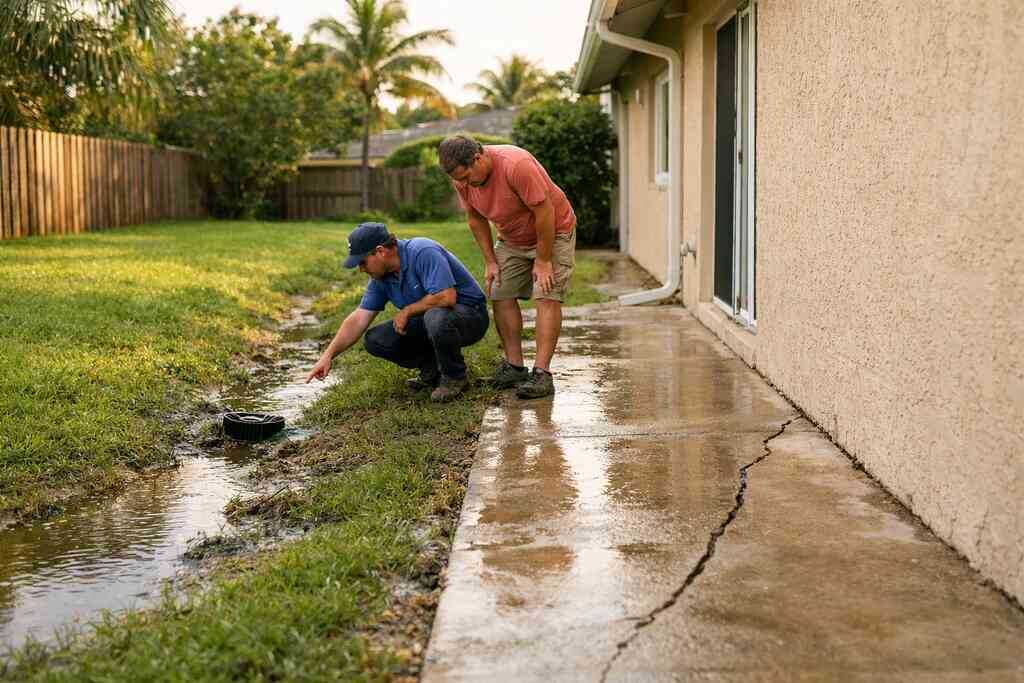
Crawl space moisture issues, sinkhole concerns in Florida, and when a foundation inspection South Florida becomes urgent
Crawl spaces deserve respect in South Florida. They can hide slow leaks, trapped humidity, and wood decay long before the living areas show obvious damage. Crawl space moisture issues can lead to insulation failure, wood rot, and settlement at support points. In some cases, homeowners also worry about sinkhole concerns in Florida. Not every crack means a sinkhole, but sudden settlement, door misalignment, and widening floor drops should be checked quickly.
If you suspect a structural change, do not wait for the crack to “tell you more.” That delay usually costs money. A proper foundation inspection South Florida should evaluate soil, drainage, framing, slab behavior, and visible wall movement together. In coastal neighborhoods, that review may also need to account for salt air, high water tables, and storm runoff. The earlier you act, the more options you usually have.
Which repair path actually fits the problem instead of just covering it up
The right repair depends on the cause. That sounds obvious, but it is where many projects go sideways. A cosmetic patch does not fix settling. A waterproofing product does not solve structural movement by itself. Good repair work starts with diagnosis, then moves to the least invasive fix that actually solves the problem. That is how you avoid paying twice.
Concrete slab repair, pier and beam foundation repair, and house leveling services explained in plain English
If you own a slab home, concrete slab repair may involve crack repair, support restoration, or edge stabilization. If the structure sits on piers or elevated supports, pier and beam foundation repair in South Florida can include shimming, support replacement, or beam adjustments. And if the whole structure has drifted out of level, house leveling services in South Florida may be part of the solution. Each path addresses a different failure mode.
Think of it this way:
- Slab repair helps when the concrete base is the issue.
- Pier and beam repair helps when supports beneath the house are failing.
- House leveling helps when the structure has tilted or settled unevenly.
One homeowner in Broward asked for a quick slab patch after seeing tile cracks in a hallway. The actual issue was support loss near one side of the house. Once corrected, the floor stopped worsening and the door frame gaps closed enough to make the home feel normal again. That is why matching the repair to the failure matters.
Foundation waterproofing, moisture barrier installation, and when they support repair versus replacement foundation decisions
Moisture control is part of structural health, but it is not a magic cure. Foundation waterproofing and moisture barrier installation can protect a repaired structure and reduce future damage. They are especially useful when damp soil or seepage is making conditions worse. However, they do not replace structural correction when the house is actively moving. They support repair. They do not substitute for it.
This is where homeowners should ask direct questions. Is the moisture issue causing the movement, or just adding to it? Is the wall failing because of water pressure, or because the footing has shifted? Those answers determine repair versus replacement foundation decisions. If a contractor talks only about coatings and never about movement, be cautious. Waterproofing should be paired with a structural diagnosis, not used as a distraction.
Emergency foundation stabilization, retaining wall failure, and structural repair choices for coastal home foundation issues
Some situations cannot wait. A cracked wall that is moving quickly, a retaining wall that has shifted, or a coastal property showing sudden settlement needs immediate attention. Emergency foundation stabilization for coastal homes in South Florida is about preventing more movement before permanent repairs can be designed. This may include bracing, temporary support, or controlled load transfer. It is not cosmetic. It is damage control.
Retaining wall trouble is especially serious near sloped lots or waterfront property. When a wall fails, it can change drainage and add pressure to nearby structures. That is why retaining wall failure should be treated as part of the overall foundation system, not a separate landscaping annoyance. For foundation repair and structural repair for waterfront property in South Florida, the work often needs to consider erosion, corrosion, and hurricane-code expectations together. Coastal homes demand more than a standard fix.
The permit and contractor checklist that keeps a foundation job from becoming a costly redo
The right repair can still go wrong if the paperwork and contractor vetting are weak. That is the part many homeowners dread, and I understand why. Permits, insurance, and licensing feel tedious when your house already has a problem. Still, this is where smart owners protect themselves. In South Florida, skipping this step can turn a repair into a dispute.
South Florida permit process and why Palm Beach County permit, Broward County permit, and Miami-Dade permit rules can differ
The South Florida permit process for foundation repair is not always identical from county to county. Palm Beach County permit, Broward County permit, and Miami-Dade permit requirements can differ based on scope, property type, and local review habits. That matters because foundation work can affect structure, drainage, and sometimes adjacent elements. You should never assume a job can start without approval. Foundation work often needs formal review, and sometimes supporting documents or engineering input.
If your home sits in an HOA or condo setting, the process can become more layered. South Florida HOA permit rules may require extra notices, architectural approvals, or contractor documentation. Do not let anyone tell you permits are optional. They are not. The best contractors treat them as part of the project, not an annoying obstacle.
How to verify a contractor license, contractor insurance requirements Florida, contractor bonding requirements, and lien waiver Florida basics
Before you sign anything, confirm the license. How to verify a contractor license in South Florida should be one of your first searches. Then check whether the contractor carries appropriate insurance and, where relevant, bonding. Contractor insurance and bonding requirements in Florida help protect you if something goes wrong on site. Ask for proof, and make sure the documents are current.
Also ask for lien waivers when payments are made. A lien waiver Florida form helps show subcontractors and suppliers have been paid for the work covered by that payment. That matters because unpaid billing disputes can land on the homeowner. If a contractor cannot explain this clearly, slow down. A trustworthy licensed contractor Palm Beach County, licensed contractor Broward County, or licensed contractor Miami-Dade should answer these questions without friction. If they do not, keep looking.
Hurricane code compliance, Florida Building Code 2026, and what changes for oceanfront property, waterfront property, and HOA or condo renovation South Florida projects
Foundation work is not isolated from the rest of the structure. In South Florida, it sits inside a broader set of hurricane code compliance and building rules. The Florida Building Code 2026 and hurricane code compliance expectations matter because structural work can affect load paths, anchorage, and resistance to wind forces. If your repair changes support conditions, the contractor should understand those implications. That is especially important for oceanfront and waterfront properties.
The same caution applies to condo and HOA projects. Condo renovation South Florida often involves board rules, access schedules, noise restrictions, and detailed approvals. For oceanfront property or waterfront property foundation damage, the work may need a contractor familiar with marine exposure and local wind concerns. If you are looking for a general contractor near me South Florida, choose one that understands licensing, permits, and structural repair, not just surface remodeling. South Florida homeowners do not need sales talk. They need verified competence, clear paperwork, and a repair plan that holds up when the weather does what it always does here. If you are ready, start with one inspection request, compare two or three licensed bids, and make sure each bidder explains the permit path before any work begins.
Frequently Asked Questions
Question: What are the top foundation settlement signs South Florida homeowners should watch for before the damage gets worse?
Answer: The biggest warning signs are usually small at first: sticking doors and windows, uneven floors in South Florida homes, slab foundation cracks, cracked foundation walls, and bowing or bulging foundation walls. In South Florida, these symptoms often connect back to soil movement in South Florida, drainage problems around the home, or water intrusion around the foundation. A crack that keeps returning after patching, or a door that suddenly starts rubbing in more than one room, is worth a professional look. South Florida Contractors helps homeowners find a contractor South Florida by connecting them with licensed contractor Palm Beach County, licensed contractor Broward County, and licensed contractor Miami-Dade professionals who can inspect the issue properly. A trustworthy contractor should evaluate the structure, drainage, and moisture conditions together instead of just covering cosmetic damage. If the problem is active, the right fix may include concrete slab repair, foundation waterproofing, or settlement repair solutions rather than another quick patch.
Question: How do I know if my cracks need concrete slab repair, house leveling services, or something more serious like South Florida foundation repair?
Answer: The best way to tell is by looking at pattern, width, and whether the crack changes over time. Hairline shrinkage cracks can be normal, but diagonal cracks, stair-step cracks, recurring slab movement, or cracks that travel through tile often point to more than surface wear. If the home also has sticking doors and windows or uneven floors in South Florida homes, that usually means the movement is structural, not cosmetic. In those cases, you may need concrete slab repair, house leveling services, or pier and beam foundation repair depending on how the home is built. South Florida Contractors can help homeowners connect with a general contractor near me South Florida who understands the difference between a superficial patch and true structural repair. For exterior or structural work, the contractor should also understand hurricane code compliance and South Florida building codes so the repair plan fits local requirements. Never let anyone recommend a fix without verifying licensing and insurance first.
Question: Why do drainage problems around the home and crawl space moisture issues matter so much for foundation repair in South Florida?
Answer: Because water is often the real reason the foundation starts moving. When grading and water runoff issues send water back toward the slab, soil can soften, settle, or expand unevenly. That leads to slab foundation cracks, water intrusion around the foundation, and in some homes crawl space moisture issues that weaken support materials over time. In South Florida, heavy rain followed by dry spells can make soil movement in South Florida even more disruptive. A proper foundation inspection South Florida should look at gutters, slope, runoff, moisture paths, and the structure itself. Depending on what is found, the solution may include foundation waterproofing, moisture barrier installation, drainage corrections, or stabilization work. South Florida Contractors helps homeowners connect with qualified contractors who understand that fixing the water first is often the smartest way to protect the repair and avoid repeat damage.
Question: What should I ask before hiring a contractor for South Florida foundation repair, especially in Palm Beach, Broward, or Miami-Dade?
Answer: Start by asking how to verify a contractor license, whether they carry appropriate contractor insurance requirements Florida, and whether they understand contractor bonding requirements and lien waiver Florida basics. Then ask which permits will be needed under the South Florida permit process, including whether the work will require a Palm Beach County permit, Broward County permit, or Miami-Dade permit. Foundation work can also trigger South Florida HOA permit review in some communities, so that should be discussed early. A good contractor should explain the repair path clearly, whether it involves concrete slab repair, repair versus replacement foundation decisions, or emergency foundation stabilization. South Florida Contractors is a directory designed to help you find a contractor South Florida more efficiently, but you should still verify licensing, insurance, and permit handling directly before signing anything. That is especially important for coastal home foundation issues, waterfront property foundation damage, and any work that may affect hurricane code compliance.
Question: What does the blog Best 5 Signs You Need South Florida Foundation Repair mean for my home, and when should I schedule an inspection?
Answer: The blog is meant to help South Florida homeowners recognize the early clues before a small issue turns into a major structural repair. If you are seeing cracked foundation walls, bowing or bulging foundation walls, uneven floors in South Florida homes, sticking doors and windows, or signs of water intrusion around the foundation, it is a good time to schedule an inspection. The same is true if you are worried about sinkhole concerns in Florida, retaining wall failure, or changes to a coastal property after heavy rain or drought. South Florida Contractors can help you connect with a licensed contractor Palm Beach County, licensed contractor Broward County, or licensed contractor Miami-Dade provider who can evaluate the issue and recommend the right scope of work. A qualified contractor should explain whether you need settlement repair solutions, foundation waterproofing, moisture barrier installation, or more extensive South Florida structural repair. For homes in South Florida, the smartest move is to act early, compare a few licensed bids, and make sure every contractor explains the permit path and code requirements before work begins.