
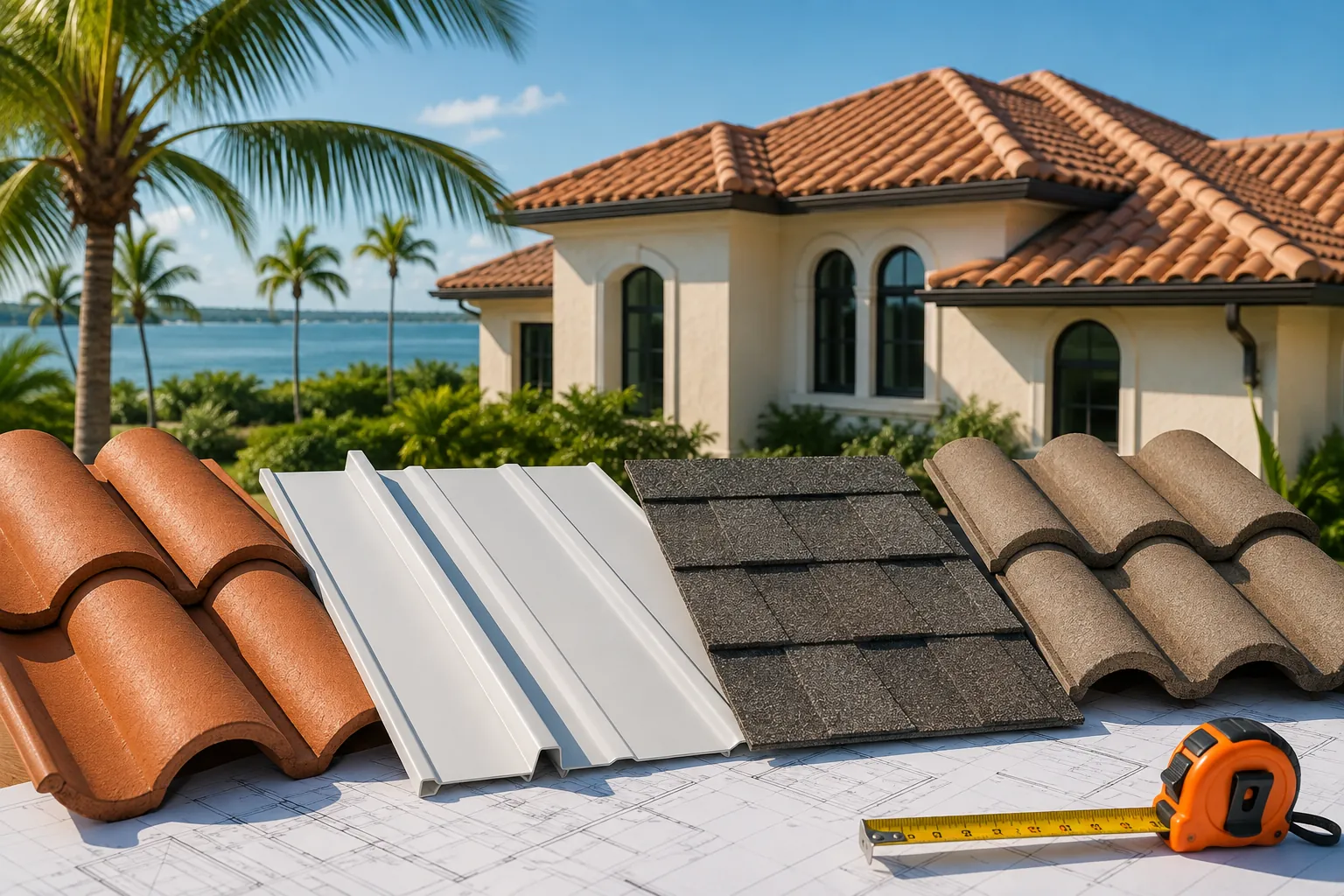
The best South Florida roof depends on the home’s structure, slope, budget, design and approved wind performance. Metal and tile offer long-term advantages in many applications, while architectural shingles can provide a lower initial cost when properly specified and installed.
Key takeaways
- The roof assembly matters—not only the surface
- Confirm wind and product approvals
- Evaluate underlayment and flashing
- Compare life-cycle value and maintenance
Compare complete roofing assemblies
Underlayment, fastening, flashing, ventilation and transitions often determine performance as much as the visible material. Ask each bidder to describe the full proposed assembly.
Account for property-specific constraints
Roof pitch, deck condition, structural capacity, salt exposure, neighborhood standards and solar equipment can narrow the practical choices.
Evaluate proposals on equal terms
Compare removal, deck repair allowances, permits, materials, flashing, ventilation, cleanup and warranties. Confirm what happens if hidden deterioration is discovered.
Frequently asked questions
Is metal always better than tile?
No. Both can perform well, but structure, architecture, product system, installation and budget determine the better fit.
How important is roof underlayment?
Very important. It is a major part of the roof’s secondary water barrier and should be clearly identified in the proposal.