Guide to Hurricane Kitchens via South Florida Contractors
February 23, 2026
Setting the Table for Storm-Resilient Kitchens
Why South Florida Homeowners Fortify Their Kitchens Against Hurricanes
Hurricanes remain the single greatest threat to family life along Florida’s coast, and the kitchen often sits directly in the path of destruction. Residents now prioritize hurricane kitchen design because the room fuels daily routines and emergency survival alike. Planning a hurricane-proof kitchen remodel means securing a cooking, cleaning, and communication hub when the grid fails. Storm-resistant kitchen materials – such as impact-rated glass and marine-grade plywood – reinforce critical surfaces against windborne debris. Working with a trusted South Florida contractor ensures these protective layers pass code and preserve long-term value.
New clients frequently ask whether resilience sacrifices beauty, and the answer is a confident no. Contemporary manufacturers craft finishes that mimic exotic hardwoods while repelling moisture and salt. Coastal kitchen renovation tips emphasize sealing edges, hiding anchors, and choosing colors that mask post-storm wear. Home builders in Florida regularly pair quartz countertops with hidden steel reinforcement, delivering both elegance and structural muscle. These hybrid choices allow families to feel proud hosting neighbors once the storm has passed.
Boca Raton Remodelers and Other South Florida Contractors Leading the Movement
Boca Raton remodelers pioneered wind-code-compliant cabinetry that locks into wall studs every six inches instead of the usual twelve. Their early successes attracted Delray Beach custom home teams that now reinforce cabinet rails with carbon fiber for extra stiffness. West Palm Beach renovations recently showcased open shelving on concealed brackets engineered to resist 175-mph winds. This wave of innovation spreads quickly through construction companies that cross-pollinate ideas at trade shows and job sites. As a result, general contractors in South Florida share best practices rather than guard trade secrets, accelerating region-wide safety.
Partnerships also extend to specialty trades, including Boynton Beach remodelers who perfected quick-shutter pantry design. These contractors install concealed tracks so homeowners can slide aluminum panels over food stores within minutes. Because access remains simple, families rotate provisions regularly, preventing stale supplies. South Florida general contractor networks add value by coordinating carpenters, flooring crews, and licensed electricians into one seamless schedule. Homeowners can feel confident knowing vetted professionals collaborate rather than compete for limited workspace as storm season approaches.
From Miami-Dade Code to FEMA Flood Maps: Decoding the Rules Before Design
Every project begins with paperwork, and few regions enforce stricter rules than Miami-Dade County. Designers first consult FEMA flood maps to verify required finish elevations for appliances and outlets. Impact-rated kitchen windows must bear labels showing compliance with ASTM missile tests, while sliding doors require current Florida Product Approvals. Studying these documents up front helps architects avoid costly revisions during inspections. Knowledge of local variances also prevents overbuilding, saving budget without reducing protection.
Homeowners rarely have time to compare regulatory appendices, so they lean on a contractor directory for hurricane-ready kitchen remodels in South Florida for guidance. This curated resource connects users with verified professionals already fluent in wind load charts and flood vent spacing. Contractors then align material selections with the latest insurance incentives, creating the dual benefit of safety and savings. When codes evolve, directory listings update quickly, sparing families from outdated advice. The result is a smooth path from concept sketch to final permit stamp, even as regulations grow more complex.
Epicenter of Structural Defense
Impact-Rated Kitchen Windows and Sliding Doors Anchoring the Shell
South Florida’s outer walls form the first line of defense, yet kitchen openings ultimately determine survival. Impact-rated kitchen windows integrate laminated glass, thick interlayers, and reinforced frames. Together, they withstand debris traveling faster than eighty miles per hour. Marine-grade silicone seals stop water infiltration that ruins cabinetry and flooring. Homeowners also retain clear views, merging safety with the coastal kitchen renovation goal of maximizing natural light.
During installation, South Florida contractor crews drive stainless steel screws through pre-drilled frame holes every eight inches. Continuous structural headers above each opening disperse uplift forces into adjacent trusses. Installers then apply expanding foam to close micro-leaks driven by sideways rain. Home builders in Florida favor low-profile tracks that shed sand while preserving barrier integrity. Multi-point locks engage the jamb at three separate locations, giving homeowners added hurricane-proof kitchen remodel confidence. Insurance carriers often discount premiums when documented glazing exceeds Miami-Dade large-missile testing standards.
Wind-Code-Compliant Cabinetry and Wall Fastening Methods
Once the shell resists wind, interior finishes must stay anchored throughout the storm. Wind-code-compliant cabinetry begins with marine-grade plywood carcasses bonded with waterproof phenolic resin. Installers fasten back panels into studs every six inches rather than twelve, doubling withdrawal resistance. Hidden steel L-brackets tie upper cabinets to ceiling joists, preventing swinging that could fracture dishware. Delray Beach remodeling crews further reinforce shelves using carbon fiber rails that resist deformation under vibration. These measures keep pantry supplies intact, ensuring families maintain adequate nutrition when outside aid is unavailable.
Choosing professionals who execute these details matters more than purchasing premium materials alone. Many homeowners rely on impact-compliant contractors near West Palm Beach for hurricane kitchens because they routinely surpass inspection benchmarks. Such general contractors in South Florida document every screw pattern, which accelerates municipal approval. They also photograph concealed blocking before drywall installation, creating transparent records for future remodels. As a result, cabinet faces remain flawless even after repeated seasons of gale-force winds.
Open-Concept Evacuation Routes and Quick-Shutter Pantry Design
Storm preparation extends beyond structural strength – it demands swift movement when warnings escalate. Open-concept kitchens remove peninsula obstacles, allowing family members to move simultaneously toward interior safe rooms. Designers maintain at least forty-eight inches between the island edge and refrigerator handle for clear evacuation routes. This width also accommodates emergency crews carrying equipment should a rescue become necessary. Functional kitchen layouts optimized for evacuation also support everyday accessibility for children and older relatives.
Quick-shutter pantry design further speeds response when advisory sirens sound. Installers embed aluminum tracks above shelving so lightweight panels slide closed in seconds without tools. Because homeowners open these panels weekly, they naturally rotate canned goods and catch forgotten expiration dates. Boynton Beach remodelers integrate finger pulls flush with the wood grain, eliminating snag points that could slow closure. Combined with wind-code-compliant cabinetry, the shuttered pantry safeguards nourishment even if windows rupture elsewhere in the home.
Elevated Electrical Outlets and Appliance Bases for Flood Zones
Water rises quietly, so designers elevate power sources before the first sketch leaves the drafting table. FEMA guidelines recommend installing kitchen receptacles at least forty-eight inches above the finished floor in storm zones. General contractors in South Florida often exceed that target, especially along barrier islands subject to surge. Elevated electrical outlets reduce downtime because breakers survive even when base cabinets are soaked. Residents can run dehumidifiers quickly, halting mold growth that otherwise spreads from toe-kicks into walls.
Appliance bases follow the same logic, resting on composite pedestals that lift dishwashers and refrigerators several inches. Manufacturers design these platforms with adjustable feet, allowing precise leveling after tile or waterproof floor installation. Corrosion-resistant kitchen hardware secures the brackets, ensuring vibrations never loosen bolts during prolonged generator operation. Smart contractors pre-install PVC chase conduits underneath, simplifying future retrofits without additional demolition. Together, these layered strategies maintain energy continuity even when streets outside resemble canals.
Elements of Moisture and Corrosion Control
Storm-Resistant Countertop Choices with Sealed Edges
Hurricane kitchen design starts at the horizontal plane where meals, messages, and emergency gear gather. Countertop materials must deflect wind-driven rain and airborne salt without losing their finish. Engineered quartz, recycled glass, and ultra-compact sintered stone all qualify as storm-resistant kitchen materials because they contain minimal pores. Installers spread marine-grade epoxy beneath every slab, then run a continuous silicone bead along the perimeter to block capillary intrusion. Homeowners gain a flawless surface that resists staining today and delamination after the next major surge.
South Florida general contractors take the strategy further by specifying waterfall edges that extend to the floor. This geometry shields cabinet faces from direct spray while hiding structural steel inserts that stiffen the span. Fabricators polish micro-round corners, reducing the chance of chipping when heavy cookware rattles during high winds. Owners still enjoy elegant veining and custom edge profiles, yet every aesthetic choice doubles as a moisture barrier – precisely what coastal kitchen renovation tips demand.
Waterproof Kitchen Flooring Solutions That Outperform Tile Grout Lines
Traditional ceramic tile fails where grout absorbs standing water and cracks under structural flex. Forward-thinking construction companies now favor luxury vinyl plank, SPC core boards, and poured epoxy terrazzo. These products interlock with compression joints rather than brittle mortar, forming a seamless membrane across the cooking zone. When surge water recedes, a quick bleach rinse restores hygiene without lifting a single piece of flooring. Integral sound-dampening layers also reduce generator rumble, keeping stress levels lower during extended outages.
Selecting the right surface is only half the mission; qualified crews must also handle moisture testing, self-leveling, and perimeter expansion gaps. Many residents search for coastal waterproof flooring installers for storm kitchens to find craftsmen who understand these nuances. Specialists flash-weld seams with heat guns, then roll on antimicrobial topcoats that resist mold spores thriving in humid air. Underlayment membranes tie into wall base flashing, creating a bathtub effect that channels water toward floor drains. With this approach, flooring becomes a defensive shield rather than a maintenance headache.
Corrosion-Resistant Hardware and Stainless Fasteners for Coastal Air
Salt particles ride every gulf breeze and settle onto hinges, pulls, and drawer tracks. Standard steel begins pitting within weeks, compromising cabinet alignment and soft-close features. To counteract this, South Florida contractors insist on 316-grade stainless fasteners, anodized aluminum handles, and powder-coated steel brackets. These alloys form passive oxide layers that seal out oxygen, stopping rust before it begins.
Hardware selection also influences insurance assessments because adjusters know cheap metals accelerate post-storm repairs. Builders document each screw specification, proving compliance with wind-code-compliant cabinetry standards. They pair stainless euro-hinges with nylon bushings, ensuring doors swing freely even after multiple wet-dry cycles. Homeowners notice the upgrade every time a drawer glides effortlessly – long after lesser kitchens have seized. These tactile assurances reinforce trust in the broader hurricane-proof kitchen remodel.
Moisture-Resistant Drywall and Smart Vapor Barriers Behind Backsplashes
Behind every glossy backsplash lies a hidden battlefield where vapor pressure seeks weak points. Contractors replace conventional gypsum with mold-resistant drywall impregnated with glass fibers and water-repellent additives. Joints receive alkali-resistant mesh tape plus two coats of polymer-enhanced thinset, creating a composite skin that repels liquid. Even if a window seal fails, latent moisture cannot colonize paper facings or wooden studs.
Savvy installers add smart vapor membranes that change permeability based on humidity levels. During normal operation, the film allows walls to breathe; during a flood event, it tightens to block water influx. This dynamic response aligns with FEMA flood zone guidance and keeps insulation dry enough to retain its R-value. Because the system remains concealed, project managers photograph each layer for digital archives, ensuring future trades respect these critical barriers when renovating electrical or plumbing lines.
Exterior Paint and Stucco Protecting Adjoining Walls
The kitchen’s durability depends on the integrity of the walls surrounding it, especially where exterior facades meet interior finishes. High-solids elastomeric coatings stretch over micro-cracks, preventing wind-driven rain from wicking through block or frame structures. Experienced exterior paint and stucco contractors evaluate vapor transmission rates before selecting primers, ensuring that trapped moisture can still escape outward.
Stucco refinements now include fiberglass lath, drainable wraps, and UV-stable pigments that outlast traditional cement mixes. Crews bevel weep screeds away from slab edges, channeling splash water down and out rather than into wall cavities. Continuous insulation panels further reduce thermal bridging, limiting condensation on cool interior surfaces such as stainless steel appliances. Together, these envelope upgrades complement interior safeguards, forming a holistic shield that allows hurricane kitchens to remain dry, bright, and functional after every storm.
Energy Continuity and Smart Safeguards
Generator-Ready Kitchen Layout and Transfer Switch Placement
South Florida hurricanes often silence the grid before the first rain band arrives. A generator-ready kitchen layout begins with clear pathways for fuel deliveries and exhaust routing. Designers place the portable or standby unit on the side of the home away from prevailing wind to reduce debris impact. Interior walls near that location receive extra sheathing so transfer switches mount securely without compromising fire separation. Conduit chases run vertically to the main panel, keeping cords hidden and traffic lanes clear during emergencies.
The heart of this strategy is the automatic transfer switch that senses outages and shifts loads within seconds. Local codes require the device to sit within sight of the main disconnect, yet above projected flood elevations. Achieving that alignment calls for close collaboration among plumbers, framers, and certified electricians. Homeowners often choose licensed electricians for generator hookups in flood-prone kitchens because these professionals master surge loads and salt corrosion. They pre-label subpanels, balancing vital circuits such as refrigeration, lighting, and phone chargers for seamless switchover under storm pressure.
Backup-Power-Rated Refrigeration and Induction Cooktops
Cold storage keeps medicine and protein safe when evacuation routes close. Backup-power-rated refrigeration uses inverter compressors that draw modest startup amperage, easing strain on portable generators. These units often feature thick vacuum panels that hold temperatures for extended periods without electricity. Manufacturers list them as generator-compatible, meaning compressors tolerate the slight voltage drops common during heavy storm loads. South Florida general contractor teams isolate each refrigerator on a dedicated circuit, preventing nuisance trips when microwaves cycle on.
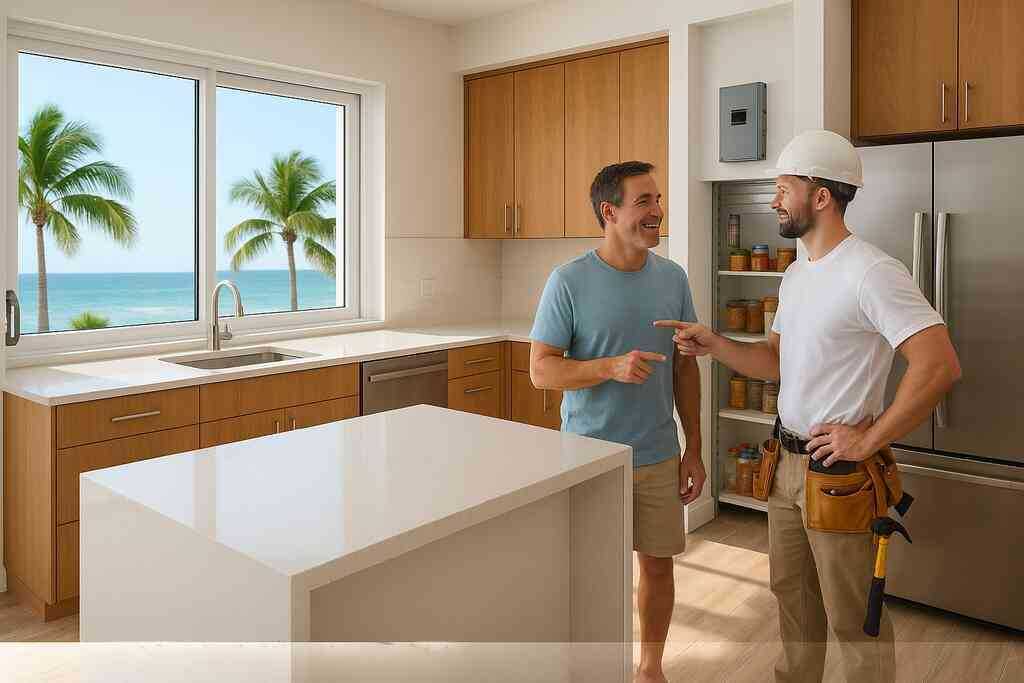
Induction cooktops add another layer of resilience because their magnetic fields heat pans quickly while consuming relatively little electricity. Compared to resistance coils, they finish meals using roughly one-third less energy, stretching fuel reserves considerably. Their flat glass surfaces also double as prep counters when space feels cramped during sheltering. Installers secure these appliances with anti-vibration gaskets so the magnetic modules survive the shaking caused by buffeting winds. Home builders in Florida often integrate downdraft vents, eliminating bulky hoods that could loosen under high pressure.
Smart Kitchen Surge Protection and Whole-Home Lightning Arrestors
Electrical surges arrive long before wind rattles the shutters. Sensitive appliances like Wi-Fi-enabled refrigerators and touchscreen ovens fail when voltage spikes exceed tolerated thresholds. Smart kitchen surge protection starts with plug-in suppressors, but the ultimate defense lives at the service entrance. Contractors specify mid-span devices that clamp currents within nanoseconds, protecting internal circuits from arc flash. Once installed, dashboard apps alert owners when a module has sacrificed itself and needs replacement.
Whole-home lightning arrestors complement surge strips by redirecting mega-joules directly to grounding rods. South Florida soil resistance runs higher than inland averages, so builders drive multiple copper stakes to suitable depths. Installers splice heavy-gauge wire using irreversible crimps that won’t loosen after years of salt exposure. Municipal inspectors verify bonding jumpers across metal pipes, preventing hidden spark paths behind drywall. The investment protects not only premium appliances but also irreplaceable data stored on devices charging during outages.
Energy-Efficient, Hurricane-Rated Appliances That Lower Insurance Premiums
Insurers increasingly reward homeowners who pair energy efficiency with structural resilience. Hurricane-rated appliances carry reinforced casings that stay latched when pressures swing dramatically. Manufacturers build washers with sealed bearings and dryers with stainless drums to resist storm humidity. Energy Star certifications add variable-speed motors and smart sensors, trimming current draw during standby periods. Together, these features reduce generator load and qualify families for green rebates available through many coastal utilities.
Underwriting experts study lab reports before assigning premium credits to reinforced ovens or low-amp dishwashers. South Florida contractor invoices that list make, model, and wind rating often serve as proof during policy renewal. Because documentation matters, remodelers supply digital folders containing purchase receipts and installation photographs. Agents appreciate that transparency and respond with rate reductions or higher content coverage. Homeowners thereby offset part of the remodeling budget while securing appliances that thrive under hurricane kitchen design demands.
HVAC Zoning and Fresh Air Intakes Secured Against Wind-Driven Rain
Comfort deteriorates quickly when humidity climbs inside a sealed home during a storm lockdown. HVAC zoning splits the residence into manageable sectors so generators run smaller blowers instead of a single large unit. Kitchen zones often receive priority because cooking moisture compounds natural ambient dampness. Variable-speed air handlers modulate airflow, keeping cabinets dry without drawing high amperage. Technicians install bypass dampers that relieve pressure when doors slam under gusty conditions.
Fresh air intakes deserve equal attention because sideways rain can ride ducts straight into insulation. Contractors orient louvers downward and add stainless mesh to block windborne debris. They also install motorized dampers that close automatically when outdoor sensors detect abnormal pressure differentials. A secondary drip pan with a float switch guards ceilings below in case condensation forms during prolonged generator cycles. These layered defenses highlight why seasoned construction companies coordinate mechanical, electrical, and envelope teams early in the design process.
Codes, Costs, and Contractor Collaboration
Partnering with General Contractors in South Florida for Permit Navigation
Securing a hurricane-proof kitchen starts with paperwork, and that process can overwhelm even confident homeowners. An experienced South Florida general contractor interprets zoning setbacks, flood-zone elevations, and Miami-Dade impact requirements long before drawings reach the building department. Their plan reviewers identify missing shear calculations or electrical uplift notes so revisions happen on paper rather than during framing. Because they communicate regularly with municipal clerks, they know which reviewer prefers digital submittals or on-site clarifications. That familiarity trims weeks off approvals, allowing construction to begin while neighbors still wait for permits.
Collaboration continues after permits are issued. Contractors host kickoff meetings where structural engineers, cabinet fabricators, and electricians confirm shared load paths. By using cloud folders, everyone tracks updates to wind charts or finish schedules in real time. This transparency prevents costly rework if the architect adjusts an island location to widen evacuation lanes. Homeowners witness professional coordination that mirrors aviation-style checklists, reinforcing trust in the project’s direction. Code alignment becomes a shared language rather than an obstacle course.
Choosing Specialty Pros from Flooring to Electricians Near You
A hurricane kitchen involves dozens of niche skills, from waterproof floor welding to surge-protected panel wiring. Leading South Florida contractors maintain rosters of tile setters, low-voltage integrators, and painters who already understand storm resilience requirements. When the general contractor calls, these trades reserve calendar blocks immediately, knowing the specifications meet both aesthetic and code standards. That reliability spares homeowners from last-minute bids that inflate costs or delay timelines.
Finding those specialists is straightforward through the South Florida Contractors Directory. Search filters narrow results by distance, license class, and past hurricane projects, bringing vetted talent onto the radar quickly. Homeowners can review photo galleries showcasing SPC floors that tolerated three inches of standing water without warping. Electricians display infrared scans proving tight connections inside marine-grade breaker boxes. With this evidence in hand, families can confidently assemble a team that keeps the heart of the home functioning during blackouts.
Budgeting for Insurance Offsets and Financing Resilient Upgrades
Storm-ready kitchens cost more upfront, yet they unlock insurance discounts and attractive financing tools. Smart project managers begin with an itemized spreadsheet that tags each line item by potential policy credit. Impact glass, stainless screws, and elevated outlets often earn percentage reductions on windstorm premiums, softening the final bill. Lenders now offer resilience loans with extended terms, viewing lower risk in fortified homes; the contractor supplies invoices to satisfy underwriting requirements.
Clear cash-flow planning avoids sticker shock. The builder stages deposits to coincide with material milestones, such as cabinetry arrival or generator installation. Clients track expenditures on a dashboard that compares projected savings against real-time spending. As credits materialize, they can redirect surplus toward aesthetic upgrades like quartz waterfall edges. Viewing costs through a long-term resilience lens helps families understand value rather than focusing solely on price.
Scheduling Sequential Trades to Compress Timelines Before Storm Season
Every June arrives like a countdown clock, so contractors adopt critical-path scheduling to finish kitchens before the first tropical wave forms. They slot inspections into float days, ensuring a failed nailing pattern does not derail countertop templating. Material lead times receive color-coded flags; if a stainless vent hood drifts past its ship date, the team sources an equal-spec unit locally and charges back the supplier.
Digital Gantt charts sync to subcontractor apps that ping roofers, plumbers, and painters 24 hours before arrival. This tight choreography reflects the principles outlined in decoding the latest wind code shifts for 2026 Florida remodels, where timeline buffers account for updated inspection volumes. Running parallel tasks – such as prepping surge protectors while tile mortar cures – shaves days off the calendar. Locking cabinets sooner also allows crews to test generator circuits under load well ahead of hurricane alerts.
Quality Assurance Checklists for Final Inspections and Warranty Handoff
No project ends without rigorous verification. Foremen complete multi-page checklists tracking screw spacing, waterproof membrane continuity, and appliance amperage draw. Independent inspectors then spot-check random cabinets, confirming marine plywood grades match invoices. Any discrepancy triggers an immediate punch-list item, documented with photos so homeowners see transparency rather than excuses.
Upon acceptance, the general contractor delivers a digital warranty binder. It contains impact-window certificates, cabinet hardware torque readings, and surge protector serial numbers registered with manufacturers. Owners also receive a seasonal maintenance calendar flagging gasket lubrication schedules and generator oil changes. This proactive aftercare ensures the kitchen stays hurricane-ready – not just hurricane-built – solidifying the South Florida Contractors network’s reputation for craftsmanship that endures.
From Blueprint to Board: Hurricane-Ready Kitchens That Endure
Key Takeaways for Homeowners and Builders in Florida
Every resilient kitchen rests on three pillars: a hardened shell, moisture defense, and reliable power. South Florida builders converge these elements during planning, not after demolition has begun. Impact-rated kitchen windows, wind-code-compliant cabinetry, and elevated outlets form the structural core. Waterproof floors and sealed countertops create a second shield against surge. Generator-ready circuits preserve refrigeration when the grid fails. Following the guide to coastal building codes for South Florida kitchen projects keeps every layer aligned with inspectors and insurers.
Broader lessons surface beyond materials. A hurricane-proof kitchen remodel succeeds when homeowners insist on documentation at every milestone. Photographs of hidden fasteners, torque readings on stainless hinges, and uploaded permits create lasting transparency. Construction companies that share these records demonstrate expertise and credibility while streamlining future service calls. For Floridians, that accountability stands equal to any storm-resistant kitchen materials applied on site.
Next Steps to Connect with the South Florida Contractors Directory
With priorities clear, the next move is assembling the right crew quickly. The South Florida Contractors Directory lets users find kitchen remodeling experts for impact-rated designs near you. Enter a zip code, filter by license, and review galleries showing wind tests, surge simulations, and polished finishes. Because listings rank by distance, decision time shrinks and site visits happen sooner. Rapid engagement matters when offshore forecasts hint at forming storm systems.
After choosing a South Florida general contractor, schedule a kickoff meeting before ordering appliances. Discuss flood elevations, generator transfer switch positions, and cabinetry fastening plans in one decisive session. That conversation aligns budgets early and prevents disruptive change orders later. It also empowers homeowners to question assumptions and request alternatives that better suit their lifestyle or insurance goals. The momentum built during these early steps carries the entire project through inspection checkpoints with confidence.
Future-Proofing the Heart of the Home Against the Next Major Storm
Even completed kitchens evolve as standards tighten and technology advances. Homeowners now pair solar storage with propane generators, for example, reducing fuel anxiety while cooking during outages. Improvements extend outside the walls as well; choosing hurricane-proof roofing that safeguards the kitchen structure prevents uplift that could ripple through ceiling joists and cabinetry. Maintenance plans therefore include periodic roof, sealant, and appliance reviews – not just cosmetic touch-ups. Treating resilience as a living commitment keeps families ahead of both codes and storms.
Ultimately, hurricane kitchen design is less a finished product than an ongoing mindset. When homeowners partner with seasoned construction services near them, every drawer, breaker, and gasket gains intentional strength. Use the South Florida Contractors directory today and transform uncertainty into preparedness before the next advisory appears. Your future meals – and your family – will thank you. Stay safe, stay empowered, and keep the heart of your home ready for whatever the Atlantic delivers.
Frequently Asked Questions
Question: What makes impact-rated kitchen windows essential for South Florida homes, and can South Florida Contractors connect me with installers near me?
Answer: Impact-rated kitchen windows combine laminated glass, reinforced frames, and multi-point locks that meet or exceed Miami-Dade hurricane code kitchen standards. They keep debris, wind, and rain out of your cooking space so cabinetry, countertops, and appliances stay intact when storms hit. By searching the South Florida Contractors Directory, you can instantly find a South Florida contractor – including Boca Raton remodelers, West Palm Beach renovations experts, and other general contractors in South Florida who specialize in installing these windows. Just enter your ZIP code, click View Details, and schedule construction services near you with pros who already have Florida Product Approvals on file.
Question: How do wind-code-compliant cabinetry and corrosion-resistant kitchen hardware used by Boca Raton remodelers protect my family during a hurricane?
Answer: Wind-code-compliant cabinetry is fastened into wall studs every six inches and often tied to ceiling joists with hidden steel brackets. When paired with 316-grade stainless hinges, anodized aluminum pulls, and powder-coated screws, the system prevents doors from ripping loose and keeps emergency food supplies stable even under 175-mph gusts. South Florida Contractors’ network includes Boca Raton renovation contractors and Delray Beach custom home builders who document every fastening pattern for inspectors and insurers, giving you both safety and peace of mind.
Question: You mention generator-ready kitchen layouts – how does a South Florida general contractor ensure my backup-power kitchen appliances run safely after a storm?
Answer: A licensed electrician from the directory will map out conduit runs, elevate transfer switches above FEMA flood elevations, and balance circuits so backup-power kitchen appliances like inverter refrigerators and induction cooktops start smoothly. They also add smart kitchen surge protection and whole-home lightning arrestors to guard sensitive boards from voltage spikes. Because these contractors coordinate closely with plumbers, framers, and HVAC crews, exhaust routing and fuel delivery paths stay clear, letting your generator-ready kitchen layout perform reliably when the grid fails.
Question: I’m worried about flooding. What waterproof kitchen flooring solutions and elevated electrical outlets do Delray Beach custom home teams recommend, and how can I find them quickly?
Answer: Delray Beach construction companies often specify luxury vinyl plank with SPC cores or poured epoxy terrazzo that flash-welds into a seamless membrane. These storm-resistant kitchen materials withstand standing water and bleach cleanups without swelling. Outlets are typically raised to at least 48 inches, with PVC chase conduits that simplify future upgrades. Use the South Florida Contractors Directory, filter for Flooring Contractors or Electricians near you, and book professionals who already carry moisture-testing gear and understand FEMA flood zone kitchen elevations.
Question: Will investing in hurricane-proof kitchen remodel features like quick-shutter pantry design and energy-efficient hurricane-rated appliances actually lower my insurance premiums?
Answer: Yes. Insurers reward documented risk reduction. Quick-shutter pantry systems protect provisions, while energy-efficient hurricane-rated appliances have reinforced casings and low startup amperage that hold up during surge events. When a South Florida general contractor submits receipts, serial numbers, and impact-rating certificates through the South Florida Contractors directory workflow, carriers can verify compliance quickly and often issue premium discounts or higher content coverage. In many cases, these savings offset a significant portion of the upgrade costs within a few policy cycles.