How South Florida Contractors Compare Prefab To Masonry 2026
February 9, 2026
Opening the Toolbox South Florida Prefab and Masonry Landscape
South Florida prefab construction insights at a glance
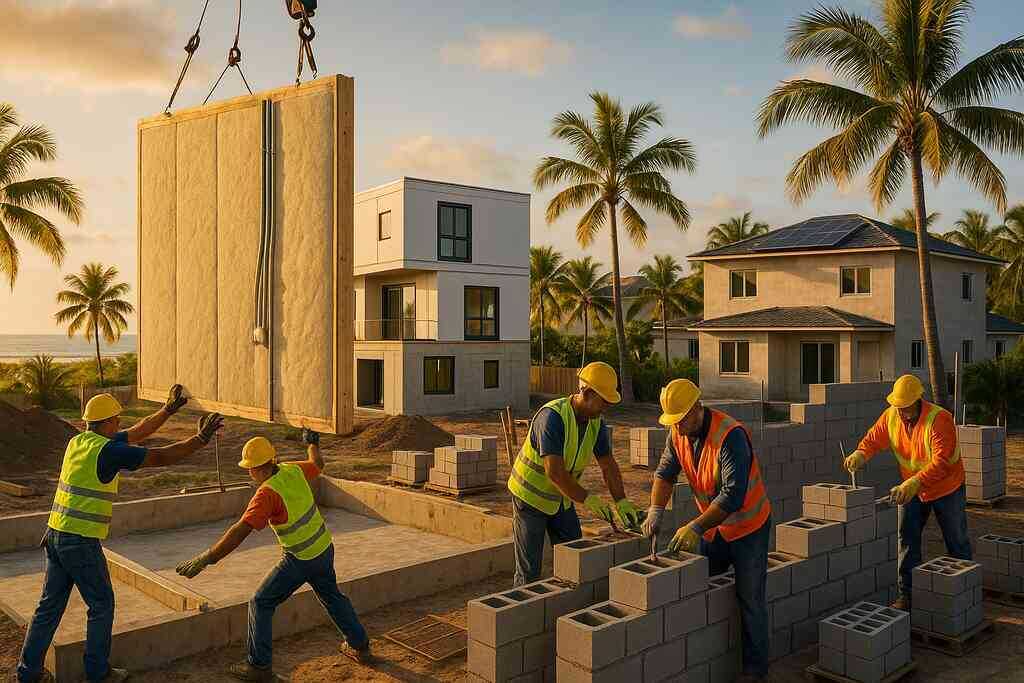
The rise of off-site fabrication has moved beyond novelty, delivering actionable South Florida prefab construction insights for owners seeking speed and certainty. Panelized wall systems now roll onto jobsites pre-wired and pre-insulated, allowing a South Florida general contractor to dry-in a shell in days rather than weeks. That accelerated schedule limits weather exposure, a big advantage during the humid storm season that often slows stick builds. Home builders in Florida also praise the precision of factory jigs, which reduces on-site rework and waste. The net result is a tighter envelope with fewer callbacks and more predictable cash flow.
Even with these gains, prefab is not a one-size-fits-all solution; it lives within a broader contractors’ landscape in South Florida. Some neighborhoods mandate concrete aesthetics, while others value architectural freedom that modular chassis must respect. Local lenders still weigh resale perceptions, evaluating whether prospective buyers fully understand the quality parity between prefabricated steel studs and traditional block. Because of those variables, experienced South Florida contractors spend significant time educating clients on how factory tolerances translate into higher performance. When that conversation lands, homeowners quickly realize that off-site construction aligns with modern sustainability goals and coastal resilience.
Enduring legacy of concrete block masonry specialists in Florida
Long before cranes lifted volumetric modules onto foundations, concrete blocks reigned supreme across the peninsula. Generations of concrete block masonry specialists in Florida earned reputations for crafting walls that shrug off salty air and high winds. Their trade remains central to civic identity-think pastel stucco facades hiding rugged CMU cores. That legacy gives homeowners confidence, especially those who remember hurricanes testing family dwellings. Familiarity breeds trust, and trust keeps the block supply chain healthy.
Technological evolution, however, is changing the craft rather than replacing it. Mortar admixtures now reduce efflorescence, while new hollow-core blocks accept spray-foam inserts that improve R-values without losing the beloved thermal mass benefits masonry South Florida projects rely on. Robotics cuts stone with millimeter accuracy at precast yards, letting masons focus on artful bonds and crisp control joints. Boca Raton remodelers leverage 3D scans to map openings, ensuring every retrofit CMU unit marries perfectly to existing walls. That fusion of time-honored skill and digital tools keeps masonry vital in a region simultaneously embracing innovation.
Market forces shaping contractors in South Florida choices for homeowners and developers
Economic, regulatory, and demographic currents now converge, forcing each contractor in South Florida to weigh prefab speed against block familiarity. Labor scarcity tops the list; veteran masons retire faster than apprentices enter training, pushing wage rates higher and extending timelines. Meanwhile, prefab shops entice carpenters with climate-controlled environments and consistent hours, trimming attrition and boosting productivity. Rising land costs also encourage vertical builds, where lighter modular stacks reduce foundation loads and allow more units per acre. These economics lean many developers toward factory-built solutions-provided code officials and investors feel assured.
For custom houses and mid-rise condos alike, data-driven owners search online to compare builders, budgets, and risk. Interactive directories such as find builders near South Florida listings simplify that vetting process, aggregating credentials, insurance proofs, and photo galleries in one place. Transparent profiles allow buyers to see which companies self-perform masonry, which partner with off-site fabricators, and which integrate both for hybrid schedules. That clarity empowers clients to request side-by-side proposals, fueling healthy competition and smarter allocation of project dollars. As capital demands accountability, adaptability becomes every general contractor’s most valuable currency.
Metrics That Matter: Cost, Speed and Logistics
Masonry versus prefab cost analysis per square foot in the South Florida market
Concrete block masonry still sets the benchmark that every South Florida contractor references during early budgeting. Many estimators quote CMU shells landing between moderate and premium price tiers, depending on finish complexity and site access challenges. Panelized prefab shells, by contrast, introduce higher off-site fabrication fees yet trim onsite overhead through faster stacking and fewer weather delays. When consultants run a rigorous masonry versus prefab cost analysis, they often discover both systems converging within a tight price band for the finished scope. Because parity surprises many owners, advisors emphasize that long-term operating expenses, not just the cost per square foot, prefab south florida market snapshot, should guide the final call.
Hidden line-items complicate quick comparisons. Masonry walls demand more scaffolding days, larger crews, and frequent inspections that inflate general conditions. Prefab installations rely on cranes and escort vehicles, adding transport fees yet slashing prolonged labor insurance. Independent engineers recently published side-by-side tests on prefab versus masonry panels, showing equal structural performance while flagging cost shifts toward earlier design coordination. That evidence helps lenders underwrite innovative methods with confidence, enabling South Florida general contractor teams to negotiate favorable draw schedules. Smart clients therefore parse both hard and soft costs before locking their procurement strategy.
Labor savings with prefab framing and panelized systems near you
Labor scarcity reshapes every construction conversation in the region. Veteran masons retire faster than apprentices fill trowels, pushing wages up and stretching project calendars. Prefab framing counters that pressure by transferring repetitive tasks into controlled factories where standardized jigs multiply worker output. Crews unload labeled panels and complete an entire floor in one shift, reducing trade stacking conflicts that normally plague block builds. By capturing these labor savings with prefab framing, builders allocate more budget toward architectural upgrades instead of overtime premiums.
Productivity analytics reinforce this shift. Factory technicians consistently hit double-digit square-footage installs per labor hour, dwarfing field-mixed mortar rates. Fewer craft workers onsite translates to lower vehicle congestion, simplified safety oversight, and leaner temporary facilities. South Florida prefab construction insights also highlight morale benefits; employees prefer air-conditioned settings over blistering sun exposures. Those combined efficiencies translate into predictable staffing plans that project managers can forecast weeks in advance.
Supply chain trends influencing prefab components and CMU availability
Material volatility has become the wildcard nobody ignores. Port congestion and trucking shortages periodically choke cement deliveries, leaving block yards rationing pallets. Meanwhile, prefab component suppliers stock steel, sheathing, and adhesives under long-term contracts, softening shocks when global logistics stutter. Observers therefore track supply chain trends prefab components adoption as carefully as commodity prices, recognizing how stability protects project timelines. The result is a growing appetite for hybrid schedules that blend in-plant assemblies with strategic onsite masonry details.
Regional data further clarifies the picture. Analysts following supply chain tactics in Palm Beach prefab report that manufacturers now keep multi-week buffer inventories in inland warehouses, allowing just-in-time drops even during storm-season slowdowns. CMU distributors respond by diversifying quarries and introducing micro-grants for apprenticeship programs that expand production capacity. Both industries thus adapt rather than retreat, giving construction companies reliable options regardless of market swings. Owners ultimately benefit from this competitive resilience during procurement.
South Florida contractors compare build timelines for rapid build prefab commercial spaces and traditional block builds
Schedule compression influences financing costs as much as raw material pricing. Rapid build prefab commercial spaces routinely achieve dry-in milestones weeks sooner than traditional block cousins because weather-sensitive operations move under the roof sooner. Accelerated occupancy lets developers capture rental revenue earlier, improving pro-forma returns and attracting institutional investors. Masons counter that their trade offers parallel track advantages: while walls cure, interior trades can already rough-in adjacent areas of the structure. Both claims hold merit, making apples-to-apples timeline studies essential.
Peer data informs current expectations. Several projects executed by commercial prefab crews in West Palm Beach demonstrated foundation-to-finish schedules trimmed by double-digit percentages without penalty on inspection approvals. Comparable masonry builds still recorded strong delivery metrics yet required more float to accommodate rain contingencies and mortar strength tests. South Florida Contractors recommends that owners request detailed Gantt charts showing critical path assumptions before awarding contracts. Transparent schedules empower stakeholders to choose the rhythm that aligns with lending covenants, marketing launches, and seasonal tourism cycles.
 Strength and Sustainability in the Hurricane Belt
 Strength and Sustainability in the Hurricane Belt
Hurricane resistant prefab homes Florida testing and resilience standards
The drive for hurricane resistant prefab homes Florida residents trust begins in accredited wind tunnels, not on glossy brochures. Engineers bolt full-scale modules to hydraulic rigs, then blast them with debris and triple-digit gusts until failure. Panels must stay intact, door hardware must not disengage, and roof sheathing must resist uplift that mimics real squall surges. Because the prefab building codes South Florida contractors follow grow stricter every cycle, factories now integrate continuous load paths, factory-installed clips, and pre-sealed penetrations as standard, not upgrades. These measures give local building officials concrete data that supports faster plan reviews and fewer field corrections.
Even the most rigorous lab cannot replace on-the-ground intelligence gathered after storms. Project managers interview occupants, catalog cracked joints, and document water intrusion patterns, then feed those lessons back to design tables within weeks. Homeowners seeking immediate peace of mind often consult hurricane ready contractors in Boynton Beach before finalizing material choices, because regional specialists correlate test reports with lived experience. Their feedback reveals which panel seams survive prolonged pounding rains and which window flanges deserve extra sealant. Consequently, resilience standards now require third-party audits that track a home’s entire supply chain, ensuring every bolt and bracket matches specifications long after marketing campaigns fade.
Load bearing CMU walls versus panelized systems under high wind events
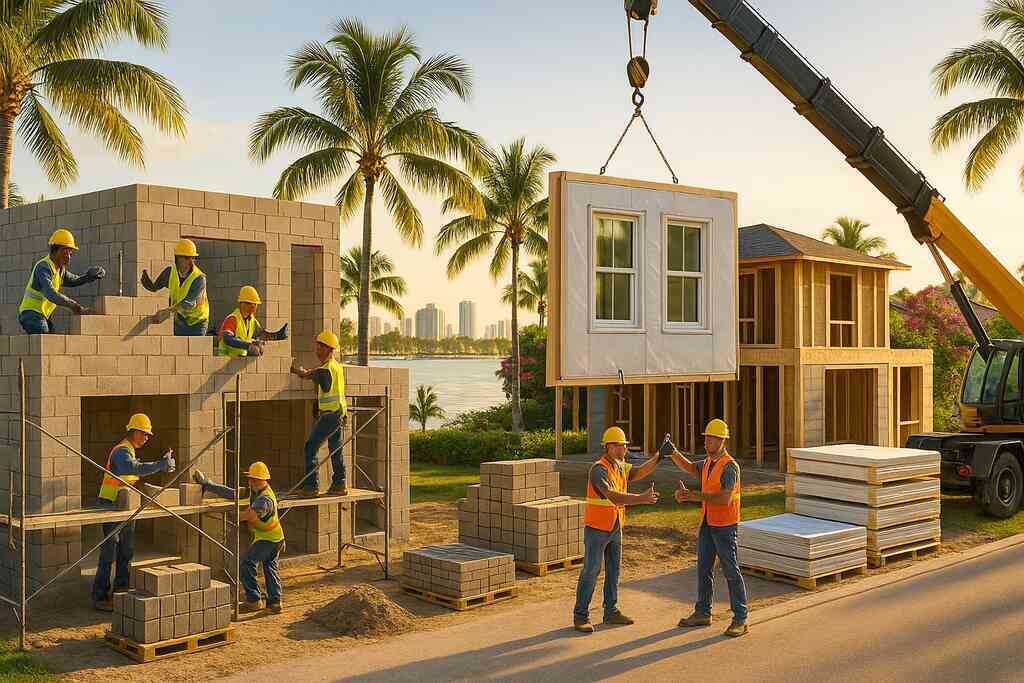
Concrete block remains the stalwart defender of coastal property, with load bearing CMU walls versus panelized systems still sparking spirited debate in design charrettes. CMU excels at mass and inertia, absorbing compressive forces and dispersing impacts without brittle fracture. Yet its weight demands deeper footings, larger cranes, and extended cure windows that can stall scheduling during wet seasons. Panelized frames answer by integrating high-strength fasteners plus exterior sheathing designed to act as a unified diaphragm across multiple bays. By spreading uplift resistance through engineered clips, these systems often match CMU performance even while trimming structural weight by notable percentages.
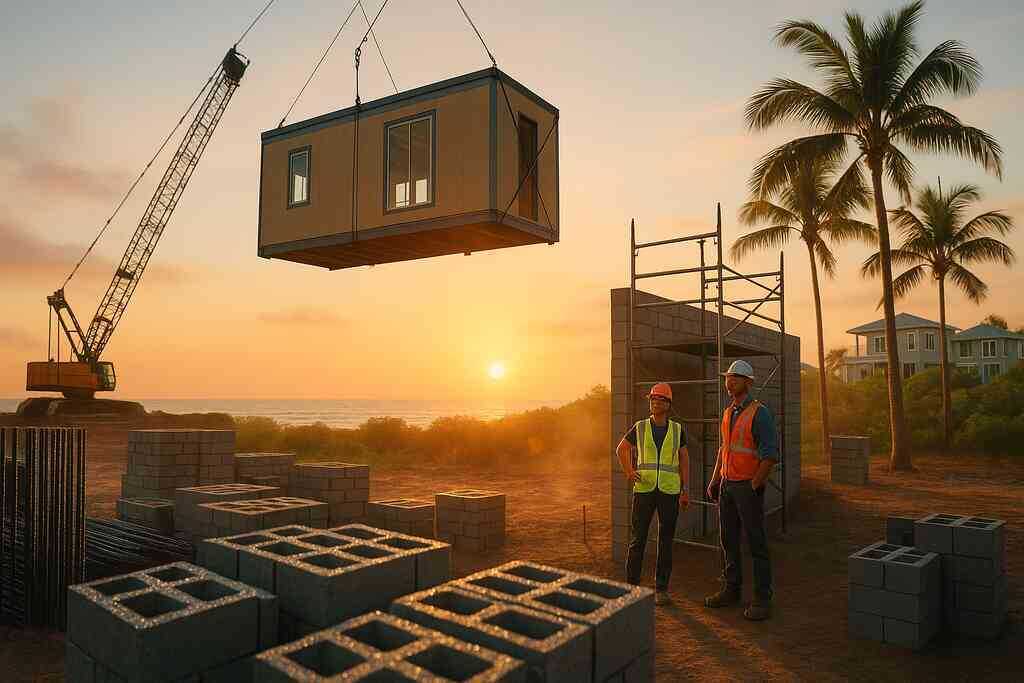
Field tests comparing South Florida prefab construction insights with traditional masonry show both assemblies reaching the required 180-mile-per-hour thresholds when detailing is precise. However, tolerance becomes the deciding factor. Factory jigs deliver millimeter alignment, ensuring every hurricane strap seats correctly, whereas site-poured grout joints sometimes hide voids. Seasoned structural engineers therefore suggest hybridizing, anchoring the first level in CMU, then stacking lighter panels above to reduce overturning moments. This strategy marries the sure footing of masonry with the rapid build prefab commercial spaces mentality embraced by modern developers.
Moisture control in masonry homes: Florida climate and prefab vapor strategies
Humid air remains a stealthy saboteur that attacks both masonry and manufactured walls long after ribbon cuttings. Moisture control in masonry homes Florida climate experts recommend begins with capillary breaks, breathable parging, and properly sloped weep screeds. CMU cores now receive injectable foam insulation that doubles as a vapor retarder while preserving energy efficient masonry walls South Florida families demand. Outside, high-build elastomeric coatings flex through temperature swings, sealing micro-cracks before monsoon season arrives.
Prefab assemblies combat dampness differently, layering factory-applied membranes, taped sheathing, and integrated rainscreens that encourage convective drying. Designers simulate dew-point migration with software, then specify smart vapor barriers that open or close depending on relative humidity. Because the panels arrive dry, framers eliminate the latent moisture that often lingers inside freshly laid blocks, reducing mold risk. Still, installers must align flashing precisely or risk funneling water behind claddings. Meticulous punch-lists therefore accompany every shipment, reinforcing that prefab vapor strategies succeed only when installers respect manufacturer tolerances as religiously as masons respect mortar recipes.
Carbon footprint prefab modular construction versus thermal mass benefits masonry South Florida
Sustainability analytics complicate the cost debate, because carbon footprint prefab modular construction advocates tally emissions from cradle to key handoff, not just material origins. Steel studs include recycled content, factories harness photovoltaic arrays, and shipping logistics consolidate deliveries, lowering embodied carbon per square foot. Off-site operations also slash on-site generator hours, cutting diesel fumes that traditionally blanket build zones.
Masonry champions counter with the thermal mass benefits that masonry South Florida dwellings enjoy during peak heat. CMU walls absorb solar energy by day and release it after sunset, flattening HVAC loads and trimming operational emissions for decades. When projects specify local aggregates and supplementary cementitious materials, initial carbon spikes shrink further. An emerging consensus suggests viewing sustainability in South Florida masonry and prefab as complementary rather than adversarial. Forward-thinking architects now model life-cycle assessments that weigh upfront emissions against ongoing utility savings, enabling owners to choose the mix that meets carbon targets without sacrificing ROI.
Insurance premiums for prefab versus concrete block factors
Underwriters study actuarial tables, not trade rumors, when pricing coverage near the coastline. Historically, concrete blocks commanded lower deductibles because empirical data confirmed their durability. Today, insurers scrutinize hurricane resistant prefab credentials line by line, evaluating impact ratings, anchorage schemes, and third-party certification stamps. When documentation aligns with wind-borne debris zone requirements, premiums for prefab structures often converge with those for traditional CMU shells.
However, insurers remain sensitive to workmanship variables. A single skipped fastener may void a warranty clause, inflating rates across entire policy pools. Consequently, carriers increasingly mandate photographic evidence and electronic torque logs during panel installation, mirroring inspection checkpoints already standard in masonry builds. Owners who present such records alongside moisture management plans and roofing specialists on high-wind codes endorsements secure favorable terms. Over time, data transparency rather than material bias will dictate whether insurance premiums for prefab vs concrete block stabilize at parity or diverge again.
Decision Point: Choosing the Right Path for Your Project
Permitting process for prefab structures Florida and local building codes
Navigating the permitting process for prefab structures Florida officials oversee feels quicker on paper, yet it demands deeper pre-planning. Prefab drawings arrive stamped from the factory, but reviewers still probe load paths, uplift clips, and vapor assemblies. Recent amendments require digital submittals that trace every fastener back to a certified batch, tightening accountability. Builders tracking the 2026 coastal code shifts affecting builds stay ahead, because the portal now flags any missed hurricane strap calculation instantly. By anticipating those alerts, a South Florida general contractor can shave days off response cycles and keep cranes scheduled.
Local building codes layer additional complexity on top of state regulations. Municipalities near the Intracoastal often impose stricter freeboard, while inland cities emphasize energy ratings. Prefab proponents highlight that factory seals make blower-door compliance almost automatic. Masonry advocates counter with legacy approvals that inspectors know by heart, reducing field clarifications. Successful applicants respect both mindsets, submitting clear wind-load tables and moisture diagrams that leave officials confident before the first footing cures.
Onsite masonry craftsmanship Boca Raton renovation contractor expertise
True onsite masonry craftsmanship Boca Raton renovation contractor expertise turns block into architecture, not just structure. Artisans still snap chalk lines, butter joints, and strike concave finishes with rhythm learned over decades. That human touch anchors historic districts where brick coursing must match neighboring facades exactly. Homeowners hire prefab and masonry experts in Boca Raton when they want stone arches blending seamlessly with smart-home conduits. Skilled crews embed sensor sleeves while mortar is wet, merging tradition and technology in a single lift.
Craftsmanship also drives quality control. Experienced masons listen for hollow sounds when tapping a new course, signaling a void before grout sets. They adjust the mix of water on humid days, preventing efflorescence that could haunt paint later. Such intuitive decisions rarely appear on spreadsheets yet protect resale value and insurance inspections. When schedules tighten, pairing that expertise with panelized upper stories creates a hybrid timeline without sacrificing aesthetics at street level.
Custom prefab home builders near me and modular additions Delray Beach inspiration
Demand for custom prefab home builders near me has surged as clients crave personalization without prolonged disruption. Architects now design modules that arrive finished in coastal palettes, ready to bolt together like upscale Lego. They slide effortlessly onto prepared slabs, minimizing neighborhood noise and debris. Homeowners then extend living space through sleek lanai pods, inspired by modular addition resources in Delray Beach. This approach respects many setbacks while maximizing indoor-outdoor flow essential for South Florida lifestyles.
Delray Beach custom prefab additions often blend glass curtain walls with insulated metal panels that echo local art-deco motifs. Integrated roof truss systems accept photovoltaic arrays pre-wired for net-metering, simplifying future upgrades. Because each module ships with commissioning documents, code officials verify conformance within hours, not days. The result is a high-performance shell delivered fast enough to beat afternoon thunderstorms, yet stylish enough for design magazines.
Lifecycle maintenance of masonry structures contrasted with prefab panels
Lifecycle maintenance of masonry structures requires periodic repointing, stucco refreshes, and waterproofing topcoats. Those tasks are scheduled easily, because materials are widely stocked and trade knowledge is abundant. CMU’s thermal mass also cushions HVAC equipment cycles, reducing mechanical wear over decades. Owners appreciate that hurricane repairs often involve swapping individual blocks rather than ordering proprietary parts. These factors translate into predictable upkeep budgets backed by generations of regional data.
Prefab panels flip the script by front-loading durability features. Factory-applied coatings resist UV better than field-rolled paint, and concealed clips minimize corrosion exposure. However, replacement components may involve lead times if manufacturers change product lines. Smart owners negotiate extended part availability clauses before signing. They also catalog torque specifications and sealant types to ensure future contractors replicate factory conditions during repairs.
Aligning project goals with the South Florida Contractors directory resources and services
Selecting between blocks and modules ultimately hinges on budget, timeline, and tolerance for site disruption. The online contractors landscape in South Florida simplifies this decision by filtering builders according to delivery method, insurance ratings, and client reviews. Users compare masonry bids against prefab proposals side by side, gaining transparency once reserved for institutional developers.
Beyond matching names to phone numbers, the directory offers whole home remodeling services, financing tips, and code update alerts. These resources help owners tie material choices to long-term goals, whether leasing units quickly or living in a legacy home. By leveraging data, they move from guesswork to strategy, ensuring every dollar advances structural integrity, energy savings, and aesthetic pride.
Frequently Asked Questions
 Frequently Asked Questions
Question: How do labor savings with prefab framing impact the overall cost per square foot in the South Florida market?
Answer: Factory-built panels arrive pre-wired, pre-insulated, and clearly labeled, allowing a South Florida general contractor to dry-in a shell in days instead of weeks. That speed slices scaffold rental, overtime, and weather delays-line items that quietly inflate traditional block budgets. When our team runs a masonry versus prefab cost analysis, we typically see labor account for 35-40 % of a CMU shell but only 15-20 % of a comparable prefab install. Even after adding crane time and escort vehicles, the cost per square foot prefab South Florida market study often lands within a few dollars of a block while delivering weeks of interest-carry savings. Use the South Florida Contractors directory to compare real bids and watch those labor efficiencies translate into hard-dollar wins.
Question: What resilience standards and hurricane strap requirements should I consider when choosing between load bearing CMU walls versus panelized systems near the coastline?
Answer: Concrete block masonry specialists in Florida still offer legendary mass and impact resistance, but modern panelized systems are engineered for the same 180-mph wind zones. Prefab modules ship with factory-installed continuous load paths, pre-torqued anchors, and digital torque logs that verify every connection. CMU walls rely on field-placed hurricane straps embedded in grout; performance hinges on site craftsmanship. South Florida prefab construction insights show that strict third-party audits now cover both methods, so the key is documentation, not material bias. Our directory lists contractors who provide stamped calculations, uplift charts, and photo evidence that satisfy the latest resilience standards masonry construction inspectors enforce.
Question: In your upcoming blog How South Florida Contractors Compare Prefab To Masonry 2026, what should readers know about insurance premiums prefab vs concrete block?
Answer: Insurers once defaulted to lower rates for CMU shells, but actuarial data now tracks hurricane resistant prefab homes Florida has tested in accredited wind tunnels. When a builder supplies impact ratings, moisture control plans, and verified fastener logs, premiums for prefab converge with or even beat traditional block. The 2026 blog will break down how transparent QA documentation, not just wall composition, drives deductibles. South Florida Contractors makes that paperwork easy to collect by connecting you with general contractors in South Florida who upload certificates, torque readings, and inspection photos directly to your policy file.
Question: Can South Florida Contractors help me navigate the permitting process for prefab structures in Florida codes while still considering energy efficient masonry walls South Florida options?
Answer: Absolutely. Our network pairs you with specialists who understand both prefab building codes South Florida contractors must meet and the legacy approvals familiar to local inspectors. They’ll submit digital submittals that trace every fastener batch for prefab panels, or moisture diagrams for CMU assemblies-often blending both for hybrid builds. Whether you’re hiring custom prefab home builders near me or onsite masonry craftsmanship Boca Raton crews, we coordinate blower-door documentation, vapor strategy details, and structural tables to secure permits quickly and keep your project code-compliant and energy-efficient.
Question: How do lifecycle maintenance needs differ between prefab roof truss systems that Delray Beach builders install and traditional masonry structures maintained by Boca Raton remodelers?
Answer: Prefab roof truss systems Delray Beach builders deliver and arrive with factory-applied UV coatings and concealed connectors that resist corrosion, meaning early-year touch-ups are minimal. Replacement parts, however, may require ordering specific clips or panels from the original manufacturer, so we advise negotiating extended part-availability clauses upfront. Lifecycle maintenance of masonry structures-think energy efficient masonry walls. South Florida homes love focus on periodic repointing, elastomeric paint, and straightforward block swaps after storms. Our West Palm Beach masonry renovation experts note that materials are off-the-shelf and trades are plentiful, keeping costs predictable. South Florida Contractors helps you weigh these differences by providing maintenance schedules and warranty terms from both prefab and masonry providers before you sign.