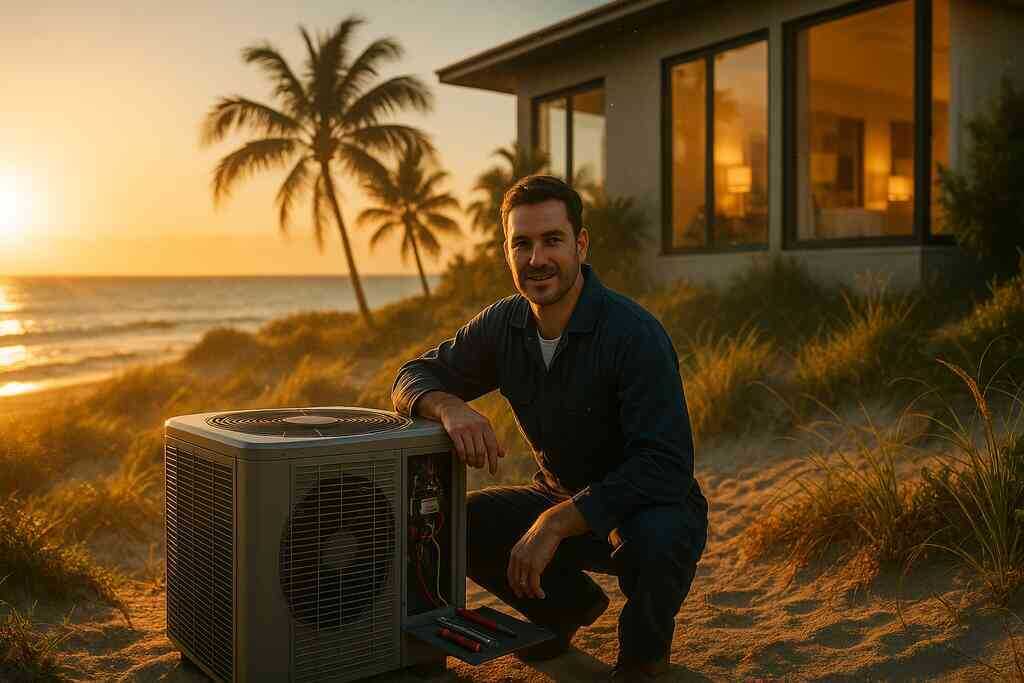
How South Florida Contractors Decipher Winter HVAC Demands
January 7, 2026
When Seventy Degrees Feels Arctic South Florida Winter HVAC Reality Check
Why mild season temperature swings still overwhelm an unprepared building envelope
South Floridians laugh when relatives up north describe snowdrifts, yet winter still surprises local structures. A seventy-degree afternoon can plummet toward the low sixties after sunset with coastal breezes. That ten-degree swing appears minor on paper, but it exposes every gap in an under-insulated wall. Even luxury condos feel drafts because aging glazing, leaky receptacles, and unbalanced air handlers allow infiltration. Winter HVAC load calculation experts therefore treat mild cold fronts as pressure events, not merely temperature dips.
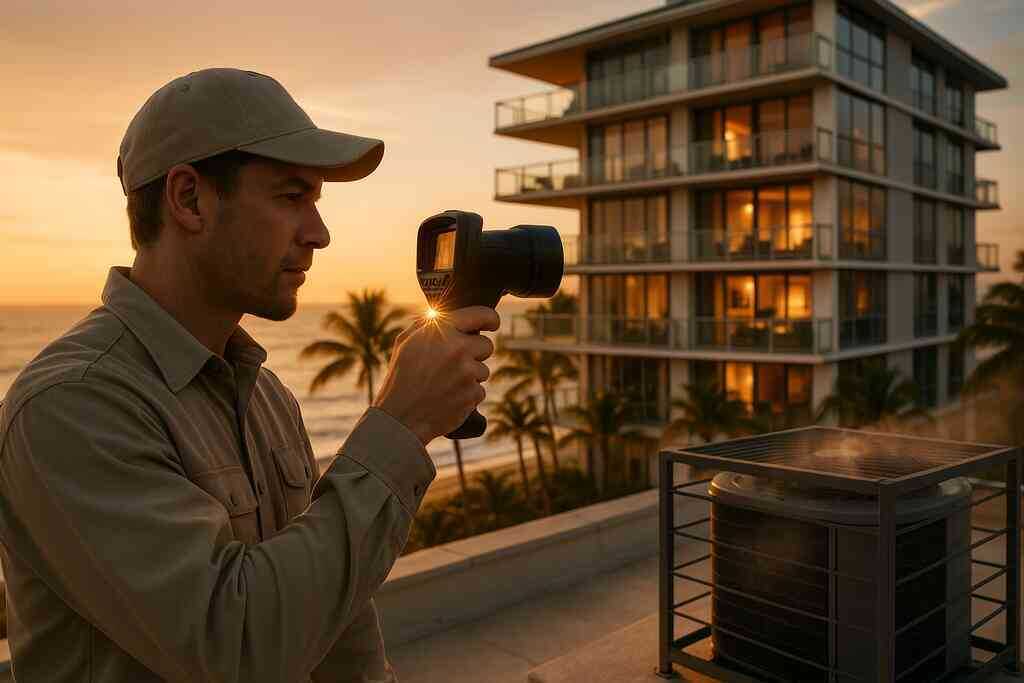
Seasoned South Florida general contractors begin by auditing the building envelope long before discussing equipment. They deploy infrared cameras, blower doors, and humidity probes to quantify hidden leaks invisible during hot weather. Homeowners often find the quickest fix in weather-stripping doors or foaming attic penetrations rather than expensive gear. A search within the contractors directory in South Florida pairs residents with pros certified in envelope diagnostics. Once airflow is tamed, energy-efficient variable-speed air handlers operate at lower RPMs without comfort sacrifice.
Unique coastal humidity loads that linger after summer storms
South Florida’s winter still carries moisture memories from late-season hurricanes and stalled thunderstorms. Warm Gulf Stream currents keep dew points elevated, so interior surfaces rarely dry completely. Mild-season humidity control strategies must therefore accompany sensible heating calculations. A right-sized heat pump that ignores latent load will short-cycle, leaving windows streaked and closets musty. Engineers incorporate dedicated dehumidifiers or low-speed reheat coils to stretch run times and strip moisture.
Data loggers show winter interior relative humidity often exceeds sixty percent when doors stay closed. Excess humidity reduces the body’s perception of warmth, prompting thermostat bumps and higher bills. Contractors counter by sealing duct boots, checking p-trap priming, and programming smart thermostat zoning optimization schedules. These steps maintain comfort while preserving wood floors and preventing coastal HVAC corrosion prevention nightmares. The approach also aligns with green building HVAC code compliance initiatives emerging across county jurisdictions.
The contractor in South Florida’s perspective on balancing comfort and energy spend
A contractor in South Florida manages a delicate equation: customer comfort, lifecycle cost, and grid demand. Clients expect silent operation and minimal drafts, yet utility rates still sway final choices. Experienced teams analyze seasonal utility data alongside blower door results to prioritize improvements with the fastest payback. They may recommend attic radiant barriers before advanced equipment, demonstrating high-performance insulation synergy with mechanical upgrades. Such honesty builds trust and reinforces E-E-A-T principles valued by discerning property managers.
When upgrades are necessary, pros specify SEER2 compliant heat pump upgrades with variable refrigerant flow. These systems modulate capacity in micro-increments, preserving efficiency during mild evenings. Integrating indoor air quality monitoring winter data ensures filtration stays effective even at low fan speeds. Coupled with flexible financing options, smart contractors transform sticker shock into strategic investment. The result is a balanced portfolio of improvements that safeguard comfort, curb emissions, and protect budgets.
Decrypting Winter Load: The Science Behind Mild Season HVAC Calculations
Winter HVAC load calculation methods for low-delta-T climates
Traditional Manual J tables assume brisk northern winters with thirty-degree differentials across the envelope. South Florida contractors instead confront single digit swings that amplify infiltration rather than sensible heat loss. Accurate winter HVAC load calculation therefore demands finer granularity, considering hourly weather data and prevailing coastal winds. Technicians capture real-time readings with Bluetooth anemometers placed at soffits, sliders, and attic hatches. Those readings feed cloud software that models pressure, latent load, and occupancy patterns simultaneously. The result is a demand curve that explains why a ten-degree drop can suddenly feel unbearable.
Engineers double-check the simulation by performing blower door tests at slightly lower pressure than summer assessments. The method exposes microcracks hidden by swollen framing during humid months. Data show that every square inch of leakage can translate to fifty BTUs of unnecessary heating. By quantifying those BTUs early, contractors avoid upsizing equipment and wasting capital. Homeowners meanwhile benefit from quieter operation and reduced grid strain during evening cold fronts. Such precision demonstrates the region’s shift from rule-of-thumb sizing toward evidence-based practice.
High performance insulation synergy with building envelope leak detection
A flawless duct design still fails if walls hemorrhage conditioned air into soffits or balconies. High performance insulation synergy begins with selecting materials that tolerate tropical moisture without losing R-value. Closed-cell spray foam, mineral wool, and foil-faced polyiso each resist wind-driven rain and microbial growth. Contractors stage infrared scans at dusk when thermal gradients peak, spotlighting studs that betray missing insulation. Those findings guide targeted retrofits rather than blanket tear-outs, preserving budgets and finishing schedules. The practice satisfies green building HVAC code compliance while elevating occupant comfort.
Leak detection technologies now integrate moisture mapping, allowing teams to cross-reference humidity hotspots with insulation voids. When both anomalies align, technicians prioritize air sealing before adding further insulation thickness. This sequencing multiplies benefits because even premium batts underperform when wind bypasses them. Once leakage drops below three air changes per hour, variable-speed air handlers operate steadily at low wattage. Lower wattage means longer run times that improve filtration and mild-season humidity control strategies. Ultimately, smart coordination between diagnostics and materials turns an average retrofit into a resilient envelope.
Multi family load balancing HVAC design for dense South Florida housing
High-rise condos dominate skylines from Hallandale to Jupiter, stacking dozens of microclimates atop each other. Interior units trap heat from neighbors while corner suites battle sea breezes and sunrise glazing. Multi family load balancing HVAC design must therefore equalize sensible and latent loads across vertical zones. Designers employ demand-controlled ventilation that modulates airflow per unit based on carbon dioxide sensors. Shared chilled-water loops further stabilize temperatures, reducing compressor cycling in shoulder seasons. Proper hydraulic balancing prevents the notorious scenario of sweating hallways beside frigid living rooms.
Residents seeking immediate assistance can consult the find HVAC specialists near the South Florida directory for certified balancing contractors. These professionals deploy ultrasonic flow meters on risers to verify that gallons per minute match design intent. Where imbalances occur, digital actuators throttle valves until supply air temperatures converge within one degree. The approach trims communal electricity bills, a critical benefit for homeowner associations watching reserve funds. Balanced systems also minimize condensation inside party walls, protecting drywall and preventing costly elevator shaft corrosion. Strategic collaboration between property managers and contractors in South Florida thus safeguards both comfort and structure.
SEER2 compliant heat pump upgrades that future proof projects
Federal efficiency standards recently shifted, and SEER2 now supersedes legacy metrics for all new equipment. South Florida general contractors adopt the change early because mild winters reveal part-load performance shortcomings. SEER2 compliant heat pump upgrades feature larger coils, intelligent expansion valves, and inverter-driven compressors. These refinements allow equipment to modulate capacity in one percent increments, perfect for evenings hovering near sixty-five. Lower compressor speeds translate into whisper-quiet operation, important for patio culture prevalent across coastal condos. Even better, the upgrades integrate seamlessly with existing ductwork, avoiding disruptive ceiling demolition.
Financial modeling proves compelling; payback often arrives sooner than energy codes mandate replacement. Utility rebates, manufacturer incentives, and potential property-assessed clean energy financing shorten timelines further. Contractors strengthen proposals by comparing lifespan cost curves against dated single-stage units of similar tonnage. When owners see cumulative savings, they rarely object to the marginal upfront investment. The improvement dovetails with hurricane-rated condenser protection and salt-air protective coil coatings, extending durability. Collectively, these measures future-proof projects while lowering regional grid demand during evening peaks.
Using indoor air quality monitoring winter data to refine sizing
Temperature is only half the comfort equation; carbon dioxide and volatile organic compounds wield equal influence. Smart sensors now log these metrics alongside humidity, streaming insights to dashboards every five minutes. Contractors mine winter datasets to reveal when occupants feel stuffy despite acceptable thermostat readings. Often, the culprit is oversized equipment that short-cycles, starving the space of ventilation runtime. By correlating IAQ spikes with compressor starts, technicians justify downsizing or adding dedicated ventilation stages. The consequence is healthier air and steadier temperature without additional square footage demanded by equipment.
Continuous monitoring also refines the filter replacement schedule and precise thermostat calibration standards. When particulate counts climb faster than predicted, teams adjust fan curves rather than simply swapping filters. Data-driven calibration ensures sensors display true room averages instead of supply-duct extremes. Over time, these tweaks accumulate, shaving kilowatt-hours and extending component lifespan. Such iterative commissioning aligns perfectly with long-term HVAC maintenance contracts that South Florida property managers favor. Ultimately, real-time IAQ analytics transform sizing from educated guesswork into continuous optimization.
 From Heat Pumps to Solar Assisted Systems: Tailoring Equipment for Coastal Climates
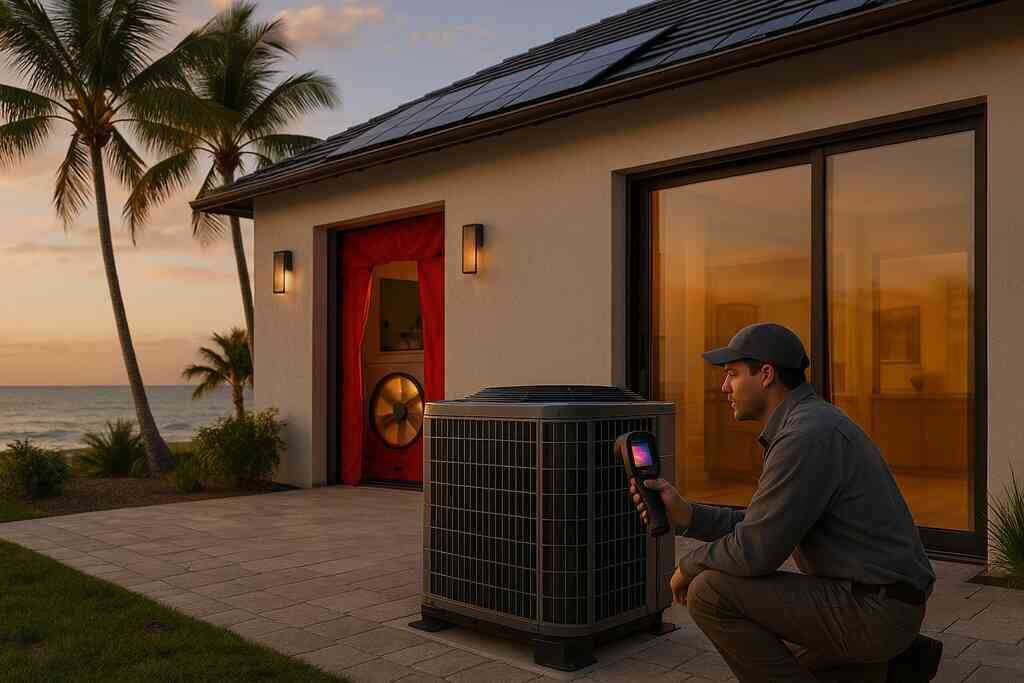 From Heat Pumps to Solar Assisted Systems: Tailoring Equipment for Coastal Climates
Right sizing South Florida heat pumps and variable speed air handlers
South Florida heat pump sizing looks deceptive because winter rarely dips below the fifties. Still, oversizing destroys efficiency and comfort. Experienced estimators begin with a detailed winter HVAC load calculation using hourly data, not averages. They then match energy-efficient variable-speed air handlers that modulate capacity in one-percent increments. This pairing maintains steady airflow, ensures mild-season humidity control strategies, and reduces startup noise.
Proper sizing also unlocks Florida HVAC rebate navigation for homeowners. Rebates reward equipment that operates near its rated Seasonal Performance Factor under part-load conditions. Contractors provide winter HVAC cost estimation near you, showing payback within three years. Because run times lengthen at lower speeds, filtration improves, extending indoor air quality monitoring winter data precision. Residents feel cozy without inflated electric bills.
Ductless mini split retrofits for historic Boca Raton renovations
Ductless mini-split retrofits rescue historic Boca Raton estates where attic space is limited. Slim refrigerant lines weave through plaster without demolition. Indoor heads deliver zoned comfort, eliminating bulky duct trunks that compromise crown molding. Variable inverter compressors mirror occupancy patterns, slashing energy waste during empty daylight hours. Preservation boards applaud because exterior aesthetics stay intact.
Homeowners discover trusted installers by browsing Boca Raton contractor listings on South Florida Contractors. Listings highlight certifications in ductless technology and heritage property care. Installers also incorporate smart thermostat zoning optimization, allowing each room to have independent schedules. Emergency heating repair near me is easier because units contain self-diagnostics accessed through apps. The retrofit therefore protects charm while meeting modern expectations.
Solar assisted heating systems that meet green building HVAC code compliance
Solar-assisted heating systems pair photovoltaic panels with high-efficiency heat pumps. During sunny afternoons, surplus watts preheat refrigerant, easing compressor workload. The approach satisfies green building HVAC code compliance and earns additional permitting credits. Battery-less designs feed power directly into dedicated inverters, trimming equipment count. Occupants gain free thermal energy every clear day.
South Florida general contractors coordinate with electricians to size arrays according to roof orientation and shading. They also integrate SEER2 compliant heat pump upgrades featuring DC drives that accept variable voltage input. Monitoring portals display both thermal gain and carbon savings, boosting project marketing. Because panels shade the roof deck, attic temperatures drop, lowering summer cooling load. The symbiotic system future-proofs coastal homes against rising utility rates.
Hurricane rated condenser protection and salt air protective coil coatings
Hurricane-rated condenser protection starts with welded steel cages anchored into concrete pads. Impact-resistant louvers deflect wind-borne debris without stifling airflow. Manufacturers reinforce fan blades with composite resins that bend rather than shatter. These defenses preserve service continuity when storms sweep across the peninsula. Insurance carriers often reduce premiums when documentation is provided.
Salt-air protective coil coatings add a microscopic polymer layer over copper and aluminum fins. The layer blocks chloride ions, slowing galvanic reactions that corrode tubing. Contractors choose coatings with ASTM B117 test certifications lasting 5,000 hours or more. Paired with powder-coated frames, systems endure twice the lifespan of unprotected units. Such durability forms the backbone of coastal HVAC corrosion prevention programs.
Coastal HVAC corrosion prevention strategies every South Florida contractor should know
Coastal HVAC corrosion prevention strategies begin at design and continue through operation. South Florida contractor HVAC expertise emphasizes stainless hardware, elevated platforms, and routine rinsing schedules. Seasonal HVAC maintenance checklist items include coil washing, drain pan biocide, and cabinet re-sealing. Technicians review advanced filter replacement schedules to prevent salt particulate accumulation. Precise thermostat calibration standards are verified to avoid unnecessary compressor cycling.
Long-term HVAC maintenance contracts in South Florida property managers often bundle quarterly corrosion inspections. Agreements detail anode replacement, refrigerant acidity testing, and protective topcoat reapplication. Data from indoor air quality monitoring winter sessions guide service frequency, ensuring proactive interventions. The arrangement supports warranty requirements while safeguarding tenant comfort. Consistent oversight saves capital by avoiding premature equipment failure.
Operational Mastery Smart Controls Maintenance and Cost Strategy
Smart thermostat zoning optimization across multi level residences
Modern South Florida townhomes often trap heat on upper floors while ground levels cool quickly. Smart thermostat zoning optimization solves the imbalance by staging dampers, sensors, and variable-speed fans. Each zone receives its own algorithm that predicts occupancy rather than reacting to delay. Consequently, comfort stabilizes even during rapid humidity swings that accompany evening sea breezes. Balanced zones also reduce compressor short-cycling, extending equipment life.
Contractors enhance results by integrating learning thermostats that harvest data from motion, light, and humidity probes. The software maps hourly patterns, then instructs air handlers to pre-condition spaces before occupants arrive. Because runtimes lengthen at lower fan speeds, latent load removal improves alongside energy savings. Case studies featured in the strategies for HVAC excellence with Florida experts report show utility reductions exceeding twenty percent after optimization. Those findings underscore why zoning ranks among the fastest payback upgrades available.
Advanced filter replacement schedule and precise thermostat calibration standards
Dust, pet dander, and coastal salt particulates clog filters faster than national averages suggest. An advanced filter replacement schedule therefore underpins any high-performance system. Contractors employ pressure drop sensors that alert homeowners when media approaches critical resistance. Alerts coincide with push notifications, preventing the forgotten filter scenario that suffocates coils and drives up bills. The schedule also supports indoor air quality monitoring and winter data accuracy.
Precise thermostat calibration standards follow close behind. Technicians compare wall unit readings against certified probes placed at occupant height, accounting for radiant influence from windows. If variations exceed one degree, offsets are programmed and sensors are relocated away from supply drafts. Accurate readings ensure winter HVAC load calculation remains valid throughout the season. Ultimately, tight calibration pairs with fresh filters to protect both comfort and equipment.
Seasonal HVAC maintenance checklist for general contractors in South Florida
Savvy project managers distribute a seasonal HVAC maintenance checklist to subcontractors before the first cold front arrives. Tasks begin with inspecting hurricane tie-downs and verifying salt-air protective coil coatings remain intact. Next, technicians flush condensate lines, confirm p-trap priming, and test defrost cycles on heat pumps. They then document blower motor amperage, comparing results against nameplate data to catch early bearing wear. Finally, software logs update firmware on smart controls.
Contractors who wish to expand service offerings can easily add their HVAC listing on South Florida Contractors and reach homeowners seeking scheduled care. Directory visibility reinforces E-E-A-T because customers value firms that prioritize preventative maintenance over emergency calls. Consistent checklist execution also satisfies manufacturer warranty clauses, avoiding expensive disputes later. In short, disciplined routines transform seasonal tune-ups into year-round revenue streams. Everyone benefits when minor issues never escalate.
Emergency heating repair near me and long term HVAC maintenance contracts in South Florida
Despite diligent upkeep, failures still occur during sudden temperature dips, leading residents to search for “emergency heating repair near me.” Forward-thinking contractors integrate GPS-based dispatch that assigns the nearest technician automatically. Vans stock universal defrost boards, contactors, and capacitors, slashing downtime. Transparent pricing sheets reassure worried homeowners while reinforcing trust. A swift fix prevents pipes from sweating and wood floors from warping in damp air.
Once the crisis passes, sales teams transition households into long term HVAC maintenance contracts South Florida residents increasingly favor. Agreements bundle quarterly inspections, filter deliveries, and priority response without surcharge. Predictable billing aids household budgeting, and contractors gain reliable scheduling density. Strong relationships sharpen referral networks, fueling organic growth. Over time, proactive contracts outpace revenue formerly generated by sporadic emergencies.
Winter HVAC cost estimation near you leveraging Florida HVAC rebate navigation
Rising electricity rates propel demand for accurate winter HVAC cost estimation near you. Estimators harness cloud platforms that input localized utility tariffs, home envelope data, and equipment performance curves. Reports break down costs by sensible, latent, and standby categories, demystifying line-item charges on monthly statements. Homeowners can then see how quick envelope repairs outweigh hardware alone. Clear visuals drive informed decisions.
Financial advisors complement the analysis with Florida HVAC rebate navigation expertise. They track incentives from utilities, manufacturers, and municipal green programs, stacking them where rules allow. Residents within coastal zones can even secure corrosion-resistant upgrades at reduced net cost. Resources compiled through the West Palm Beach contracting resources in the Florida portal simplify paperwork. When rebates drop payback below three years, approval barriers vanish.
Commercial rooftop unit modernization for construction companies expanding portfolios
Construction companies expanding portfolios see rooftop units, or RTUs, as low-hanging fruit for carbon reduction pledges. Modernization begins with swapping antiquated belt-driven supply fans for direct-drive ECM assemblies. Inverter compressors follow, allowing turndown ratios near eight-to-one that align with mild-season humidity control strategies. Advanced economizers exploit cool night air, trimming mechanical runtime while protecting indoor finishes from moisture.
General contractors in South Florida bundle RTU retrofits with building management system upgrades. Integration yields remote fault detection and automatic dispatch, minimizing unpleasant surprises for tenants. Predictive analytics flag failing bearings weeks before vibration escalates, preventing roof leaks from oil spray. The same platform tracks energy per BTU delivered, proving return on investment to investors. Ultimately, smart modernization cements a company’s reputation as a sustainability leader without sacrificing profit.
Building Resilience One BTU at a Time: A Call to Action for Contractors and Homeowners
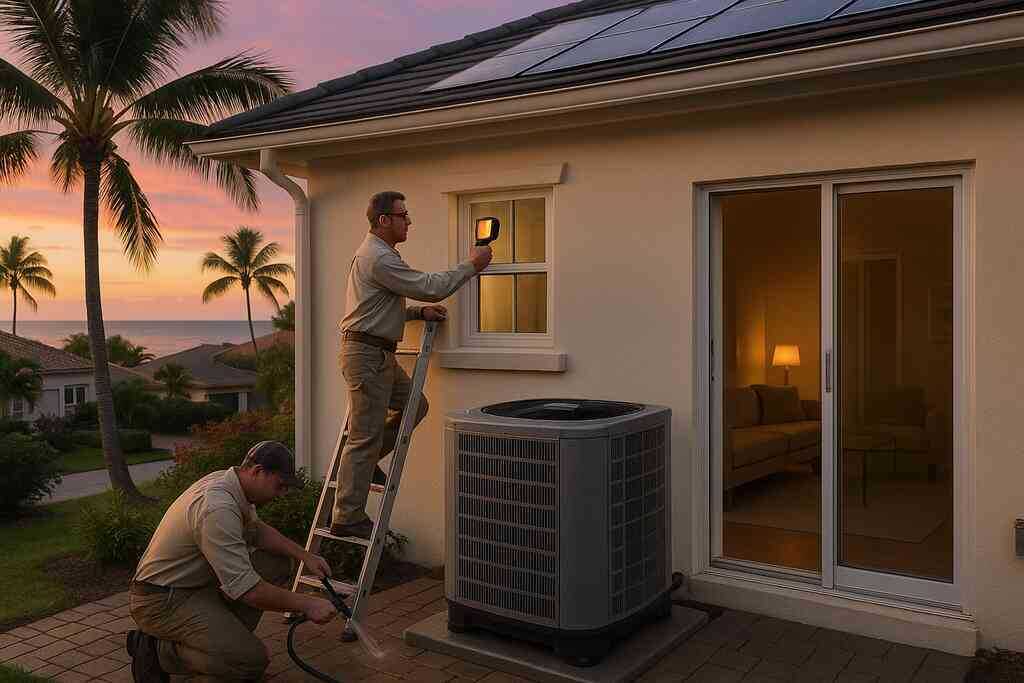 Building Resilience One BTU at a Time: A Call to Action for Contractors and Homeowners
Partnering with the South Florida Contractors directory to locate HVAC specialists
A successful retrofit starts with finding the right specialist before temperatures fall. The South Florida Contractors directory curates technicians certified in winter HVAC load calculation, coastal HVAC corrosion prevention, and energy-efficient variable-speed air handlers. Advanced filters sort listings by zip code, license, and specialty, ensuring homeowners meet qualified experts instead of generalists. Reviews highlight case studies, making it easier to verify experience with smart thermostat zoning optimization or salt-air protective coil coatings. Even better, comparative quotes arrive quickly, saving precious hours when a sudden chill hits.
Partnering through the directory also streamlines project communication. Contractors update profiles with blower door results, SEER2 compliant heat pump upgrades, and indoor air quality monitoring winter data. Homeowners log in to view progress photos, pay invoices, and schedule follow-up seasonal HVAC maintenance checklist visits. Consistent transparency builds trust, reduces misunderstandings, and accelerates decision-making. That trust proves critical when change orders arise or hurricane-rated condenser protection becomes urgent. Ultimately, the platform transforms hiring from a gamble into a guided, data-driven selection process linked directly to comfort outcomes.
For readers seeking quick inspiration, the directory’s blog summarizes South Florida contractors’ top HVAC fixes near you and ranks them by payback period. This resource helps property owners prioritize envelope leak detection over cosmetic upgrades, saving money immediately. It also underscores how simple air-sealing can unlock bigger efficiency gains when paired with properly sized South Florida heat pump systems. Armed with localized insights, residents can enter consultations already understanding project scope and costs.
Synergy between Boca Raton remodelers and West Palm Beach renovations on energy goals
Regional collaboration magnifies individual efforts because similar building types face identical winter challenges. Boca Raton remodelers frequently restore mid-century homes with minimal attic insulation and leaky jalousie windows. Meanwhile, West Palm Beach renovation crews tackle high-rise condos suffering from unbalanced multi-family load balancing HVAC design. When these teams share field data, best practices spread rapidly across city lines.
Joint workshops reveal that mild-season humidity control strategies benefit both markets despite different architectural eras. Remodelers demonstrating closed-cell spray foam techniques help condo specialists reduce stack-effect infiltration around elevator shafts. In return, high-rise contractors teach single-family crews the value of demand-controlled ventilation and precise thermostat calibration standards. Together, they raise the regional performance baseline, driving suppliers to stock better materials and creating economies of scale that lower homeowner costs.
How home builders in Florida integrate smart HVAC with high performance construction services
New construction offers a blank canvas to integrate efficiency from slab to soffit. Forward-thinking home builders in Florida now specify high-performance insulation synergy before mechanical equipment enters the discussion. Air-tight framing, taped sheathing, and insulated roof decks slash sensible heating demand, allowing smaller, quieter heat pumps. Builders then pair those pumps with variable-speed air handlers that maintain gentle airflow, improving filtration and extending filter replacement intervals.
Smart controls tie the package together. Learning thermostats coordinate with zoned dampers, triggering low-speed operation during occupancy peaks and latent load spikes. Data feeds directly to builders’ client dashboards, demonstrating real-time energy savings and indoor air quality improvements. Such transparency reinforces builder credibility and satisfies green building HVAC code compliance requirements without extra paperwork. Most importantly, the integrated approach yields homes that feel draft-free even when coastal breezes drop temperatures ten degrees after sunset.
Next steps toward solar ready HVAC and variable speed dominance across the region
The final step toward true resilience links mechanical systems with renewable power. Contractors encourage homeowners to position conduit, roof curbing, and equipment disconnects for future solar-assisted heating systems even if panels arrive later. This “solar-ready” mindset minimizes retrofits, saving thousands when photovoltaic arrays become a priority. Meanwhile, specifying inverter-driven, variable-speed compressors ensures part-load efficiency today while accepting variable DC input tomorrow.
Region-wide adoption of these practices depends on education and incentives. Utility rebates already reward SEER2 compliant heat pump upgrades, but municipalities can further accelerate change by discounting permit fees for solar-ready rough-ins. Contractors should document winter HVAC cost estimation near you to prove long-term savings exceed modest upfront premiums. When that data circulates through homeowner associations and construction companies alike, momentum shifts rapidly.
Collectively, the strategies above empower South Florida residents to thrive during unpredictable cold fronts without sacrificing coastal lifestyles. By partnering early, sharing knowledge, integrating smart technology, and planning for renewables, every stakeholder helps convert seasonal challenges into lasting comfort and resilience.
Frequently Asked Questions
Question: How do South Florida Contractors make winter HVAC load calculations accurate when our temperature swing is often just 8-10 degrees?
Answer: We start by treating each mild cold front as a pressure event rather than a simple temperature dip. Our technicians deploy blower doors, infrared cameras, and humidity probes to capture real-time data on infiltration and latent load. That information feeds cloud software calibrated specifically for South Florida heat pump sizing, allowing us to size energy-efficient variable-speed air handlers down to one-percent capacity increments. The result is right-sized equipment that runs longer at lower wattage, controlling humidity and cutting power bills instead of short-cycling the way oversized systems do.
Question: In the recent blog How South Florida Contractors Decipher Winter HVAC Demands, you emphasized building envelope leak detection. What services do you offer to find and fix those hidden gaps?
Answer: Our envelope diagnostics package includes dusk-timed infrared scans, low-pressure blower door testing, and moisture mapping. We pinpoint leaky receptacles, attic penetrations, and window frames that undermine high-performance insulation synergy. Once leaks are quantified, our crew applies closed-cell spray foam, weather-stripping, and foil-faced polyiso patches-solutions that qualify for green building HVAC code compliance. Sealing first means you can often choose a smaller SEER2 compliant heat pump upgrade and still enjoy better comfort.
Question: What benefits do SEER2 compliant heat pump upgrades and energy-efficient variable-speed air handlers deliver, and can you help with Florida HVAC rebate navigation?
Answer: SEER2 equipment uses inverter-driven compressors and larger coils to modulate capacity in micro-steps-perfect for South Florida’s sixty-degree evenings. You’ll notice whisper-quiet operation, steadier temperatures, and lower kilowatt-hours. Our rebate team tracks utility, manufacturer, and municipal incentives daily, stacking them to shorten payback. We incorporate those savings into your winter HVAC cost estimation near you so you can see exactly when the investment turns cash-flow positive.
Question: How can smart thermostat zoning optimization and indoor air quality monitoring of winter data improve comfort in multi-level homes?
Answer: Zoning divides your townhome or two-story condo into independent comfort regions. Learning thermostats adjust dampers and variable-speed fans based on motion, humidity, and carbon-dioxide readings. Longer low-speed runtimes pull more moisture off coils, enhancing mild-season humidity control strategies and keeping IAQ sensors in the green. Our dashboards let you track particulate counts and thermostat calibration standards in real time, ensuring each floor feels identical without over-conditioning unoccupied areas.
Question: If a rare cold snap hits and I need emergency heating repair near me, how fast can you respond and what do long-term HVAC maintenance contracts in South Florida include?
Answer: Our GPS-enabled dispatch system locates the nearest certified technician and targets a door-to-repair arrival within two hours for most coastal ZIP codes. Vans carry universal contactors, defrost boards, and salt-air protective coil coatings, so 90 % of calls are resolved on the first visit. Afterward, we offer quarterly long-term HVAC maintenance contracts that South Florida homeowners rely on. Contracts bundle an advanced filter replacement schedule, precise thermostat recalibration, seasonal HVAC maintenance checklist inspections, and priority no-fee emergency calls-keeping your system optimized year-round while protecting your budget.