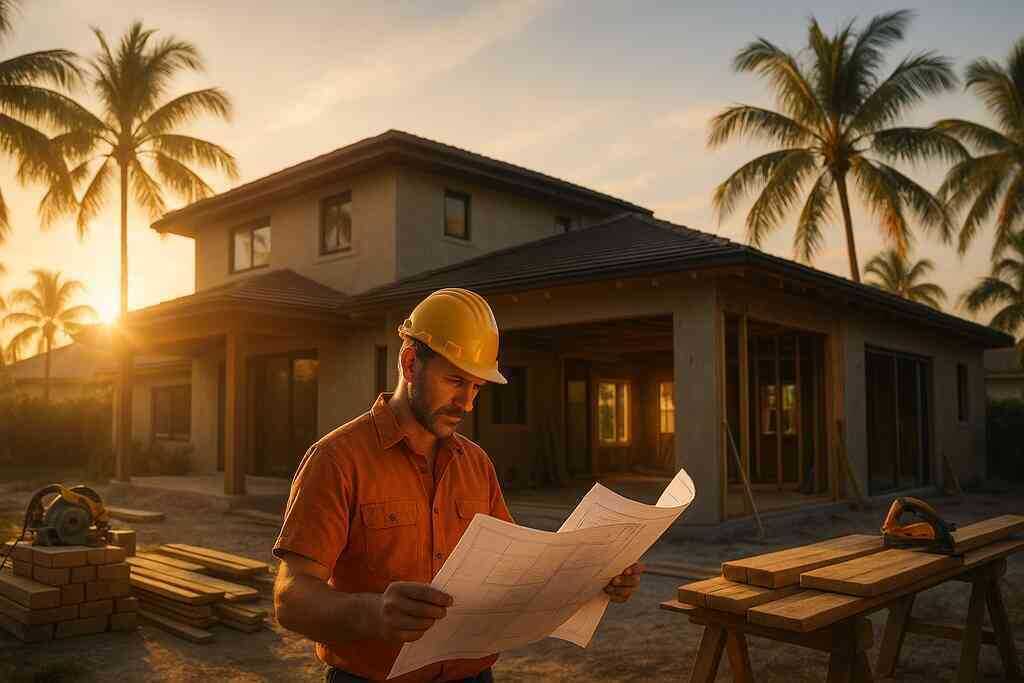
How South Florida Contractors Meet Hurricane Code 2025
December 25, 2025
Welcome to the Eye of the Code Storm
Why South Florida hurricane construction standards are rewriting the rulebook
South Florida hurricane construction standards evolve faster than the storms that test them. The building code now demands Miami-Dade wind load compliance for nearly every coastal structure. High-velocity hurricane zone requirements push contractors to treat each wall like a shield against catastrophic uplift. Homeowners seeking guidance often start with the directory of trusted South Florida contractors to compare credentials quickly. That single resource reveals which South Florida general contractor teams already embrace the rewritten rulebook.
Unlike prior guidelines, today’s code scrutinizes every connector, fastener, and sealant along the building envelope. Engineers must document load paths from the ridge cap to the slab, ensuring continuous strength under 180-mph gust simulations. Inspectors now test anchor pullout, window impact resistance, and roof uplift in a single integrated audit. These layered assessments mean contractors in South Florida refine detailing long before concrete trucks arrive on site. The result is fewer change orders, tighter insurance underwriting, and communities that recover faster after landfall.
The rise of net zero hurricane resilient homes near you
Sustainability no longer conflicts with strength; it reinforces it. Net zero hurricane resilient homes combine rooftop photovoltaics with fortified roof decking techniques for dual duty performance. Energy efficient hurricane glazing traps conditioned air while blocking wind-borne debris travelling faster than highway traffic. Builders integrate sustainable hurricane safe materials such as recycled steel panels and fly-ash concrete blocks. Smart home storm monitoring sensors track structural vibration, maximizing both energy insight and safety alerts.
Achieving net zero status begins with orientation analysis that captures prevailing breezes yet deflects direct wind loads. Designers model flood resistant foundation design options, including helical piles and elevated piers, to minimize storm surge exposure. Once the shell stands, hurricane tie-down straps and code approved storm shutters complete the protective envelope without thermal loss. Homeowners can then locate annual energy savings through advanced insulation and adaptive ventilation routines guided by artificial intelligence. Neighborhood demand for these innovations drives additional local trade training and keeps skilled construction services near you.
Anchoring Structures to the New Hurricane Code
Miami-Dade wind load compliance and high velocity hurricane zone essentials
South Florida hurricane construction standards place Miami‐Dade wind load compliance at the core of every design discussion. Engineers start by mapping pressure zones across each elevation, then they verify that uplift forces travel through continuous load paths. Because high velocity hurricane zone requirements amplify those forces, a South Florida general contractor now specifies tighter nail spacing and thicker sheathing as baselines, not upgrades. Inspectors double-check every connector to confirm that the ridge, wall, and slab act like a single welded frame during peak gusts. Consequently, homeowners see fewer change orders and faster approvals, proving that strict rules can accelerate schedules.
Yet technical mastery alone does not guarantee success; cultural discipline also matters. General contractors in South Florida now hold mandatory job-site wind audits before pouring the first bucket of concrete. Crews walk through tie-down locations, anchor embedment depths, and sealant specifications until every worker can recite them from memory. This rigorous preparation allows subcontractors to spot potential weak points long before they become inspection failures. The result is a proactive quality culture where every crew member feels accountable for community safety rather than just project completion.
Fortified roof decking techniques with corrosion resistant fasteners
A roof still ranks as the building’s most vulnerable surface, so home builders in Florida fortify it with layered defense systems. First, they install tongue-and-groove plywood treated to resist delamination under cyclic uplift. Then crews add self-adhering membranes that bond directly to decking, creating an airtight secondary barrier. However, none of these layers works without corrosion resistant fasteners that maintain clamping force after years of salt-laden humidity. By specifying stainless or epoxy-coated screws, contractors stop galvanic breakdown long before the next storm arrives.
Additionally, roof designs now integrate aerodynamic edges and ventilation baffles that reduce pressure differentials. South Florida contractors model wind tunnels virtually, ensuring hips, valleys, and overhangs share loads rather than concentrate them. During installation, supervisors verify that every panel lands on staggered seams, preventing straight-line failure paths. Such attention to micro details transforms a simple deck into a fortified roof capable of shrugging off 180-mph gusts. Homeowners gain peace of mind and long-term energy savings from reduced infiltration.
Impact resistant windows installation and energy efficient glazing
Modern impact resistant windows shield interiors from debris traveling faster than highway traffic. Installers begin by setting reinforced frames directly into wall bucks, then filling gaps with expanding foam that bonds to both surfaces. Glaziers use laminated glass composed of dual panes and an intermediate PVB layer, which maintains clarity while absorbing shock waves. When combined with low-emissivity coatings, these windows also deliver energy efficient hurricane glazing that cuts cooling loads without sacrificing daylight.
Precision installation is essential because even the strongest glass fails if the anchors loosen. Therefore, a South Florida contractor documents torque values for each fastener and photographs final sealant beads for inspectors. After curing, technicians water-test joints under controlled spray to expose unseen leaks. Those proactive tests stop minor flaws from evolving into costly interior damage during sideways rain. Ultimately, homeowners receive safety, comfort, and lower utility bills from one integrated upgrade.
Flood resistant foundation design and coastal home elevation solutions
Wind may dominate headlines, yet surge destroys more homes, so resilient concrete block construction begins beneath the slab. Engineers favor stem wall systems with concealed vents that equalize hydrostatic pressure during rapid rise events. Where soil liquefaction threatens, contractors switch to helical piles driven to stable strata, preventing settlement even in saturated ground. Elevated pier platforms then lift living areas clear of surge lines while preserving garage storage below.
Coastal neighborhoods looking for Boynton Beach remodel hurricane compliance often blend aesthetics with survival tactics. Designers wrap piers in architectural cladding that mimics stone, hiding the structural muscle inside. Waterproof exterior stucco systems cover block walls, channeling splash-back away from door thresholds. Finally, contractors integrate breakaway lattice panels that detach under extreme flow, relieving lateral loads without wrecking the main frame. These layered solutions turn foundations into lifeboats that hold fast when tides surge.
Smart permit expediting and insurance savings through wind mitigation
Navigating municipal checks can stall projects, but experienced construction companies near you streamline approvals with digital submittals and pre-scheduled inspections. They package structural calculations, manufacturer certifications, and third-party test reports into one cloud dossier that reviewers access instantly. Because every detail aligns with the latest code clauses, questions drop and permits land sooner. That speed protects budgets and lets families move in before storm season peaks.
The benefits extend beyond occupancy. Once construction wraps, a certified inspector completes a wind mitigation inspection, documenting roof geometry, decking attachment, and hurricane tie-down straps. Insurers reward the resulting report with premium discounts that compound yearly savings. Many clients reinvest those funds into further upgrades, such as shutters or photovoltaic panels, creating a virtuous cycle of resilience. For specialized components, homeowners consult roofing experts for hurricane rated systems listed in the directory, ensuring every improvement aligns with code and insurer expectations.
 Crafting Resiliency From Slab to Soffit
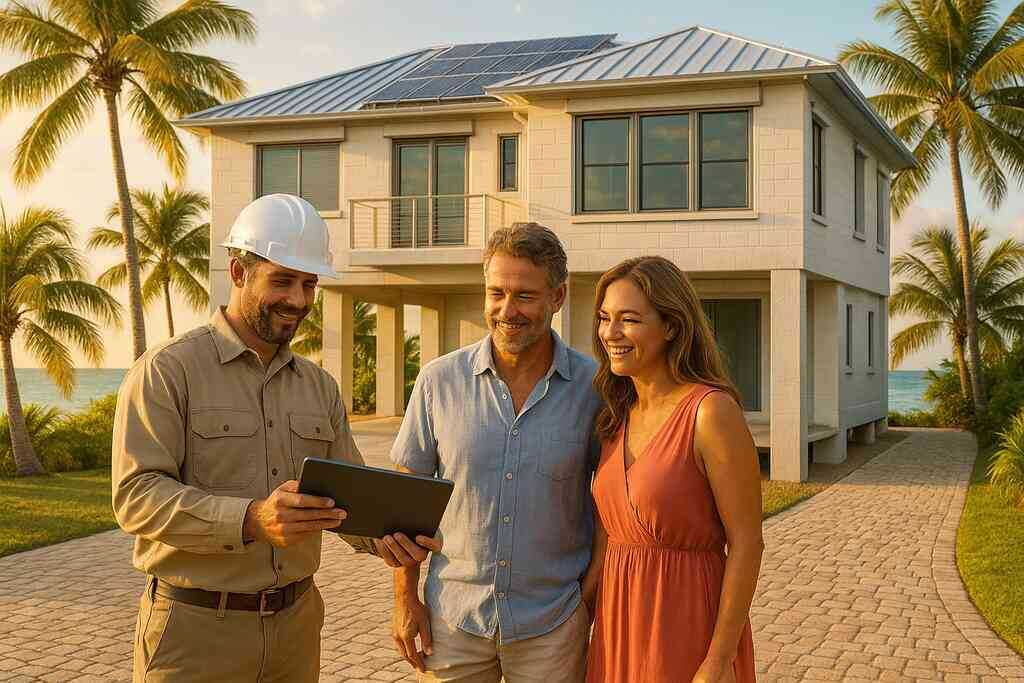 Crafting Resiliency From Slab to Soffit
Resilient concrete block construction and waterproof exterior stucco systems
Resilient concrete block construction begins with dense, fiber-reinforced masonry units that resist cracking under cyclic hurricane pressures. Crews align vertical cores so steel rebar threads uninterrupted from the footing to the bond beam. Grout fills every cavity, creating a monolithic shell that shrugs off wind-borne debris. Builders then wrap the exterior with high-permeability stucco, leaving expansion joints that flex instead of fracture. Finally, they seal finish coats with exterior stucco and waterproof coatings in South Florida, locking moisture out without trapping vapor within.
Contractors test this layered envelope using electronic moisture meters long before furniture arrives. Any reading above threshold triggers immediate patching, preventing hidden rot later. The system also earns premium insurance credits because water intrusion claims drop sharply. Neighbors notice the crisp façade remains blemish-free through intense ultraviolet exposure, proving aesthetics can coexist with fortitude. South Florida hurricane construction standards now treat such redundancy as baseline rather than a luxury.
Hurricane tie down straps and code approved storm shutters integration
Hurricane tie down straps form the skeletal handshake between the roof and foundation, transferring uplift into reinforced concrete. Installers pre-punch truss heels, allowing galvanized straps to loop over lumber before slab placement. Inspectors from contractor listings in Boca Raton for HVHZ verify that each strap meets design tension, ensuring Miami-Dade wind load compliance. After framing, crews attach structural rated sheathing, sealing joints with acrylic tapes that refuse to peel under heat. This continuous load path keeps walls plumb even when gusts attempt to twist them apart.
Protection continues at the openings. Code approved storm shutters mount on recessed tracks, minimizing protrusions that invite failure. Homeowners pursuing whole home remodeling for wind compliance enjoy options from transparent polycarbonate panels to motorized rolling armor. Electric shutters tie into backup batteries, closing automatically when sensors detect pressure drops. This automation guards homes when occupants travel, providing peace of mind across storm seasons. Regular drills teach families how to lock shutters manually if power fails.
Hurricane rated roofing systems from Boynton Beach remodelers to Boca Raton renovation contractor expertise
Roof assemblies start with stainless ring-shank nails clinching tongue-and-groove decking at enhanced spacing. Boynton Beach crews applying contractor services in Boynton Beach for storm retrofits prefer self-adhered membranes that self-heal after puncture. Above, tapered insulation improves drainage, lowering live loads during tropical downpours. Metal panels with concealed clips then glide into place, each seam curving to disrupt uplift vortices. Ridge vents include baffle geometry that expels heat while rejecting driven rain.
Boca Raton renovation contractor teams refine details further by specifying corrosion-proof fastener plates at every penetration. West Palm Beach hurricane retrofit professionals confirm torque values with calibrated drivers, documenting results for insurers. Attic sensors measure pressure differentials during test storms, revealing micro-leaks before occupancy. When combined with reflective coatings, these roofs slash cooling costs while meeting stringent high-velocity hurricane zone requirements. The finished surface glimmers, but its real brilliance hides in the math behind every connection.
Sustainable hurricane safe materials sourced by home builders in Florida
Material selection now balances embodied energy, recyclability, and structural stamina. Composite cladding uses reclaimed wood fibers fused with UV-stable polymers, refusing to warp under tropical humidity. Spray-applied soy-based foam insulates while reinforcing wall strength, stopping flutter under gust loads. Builders reference energy efficiency in storm-proof Florida homes to validate each choice against thermal models. Even decorative trim employs recycled aluminum, sidestepping rust common to coastal environments. Sustainability and safety walk hand in hand throughout the specification sheet.
Supply chains favor regional mills to shrink transport emissions and support local economies. Innovations in coastal home designs near you showcase basalt-reinforced concrete that needs less Portland cement, trimming carbon yet boosting tensile capacity. Life-cycle assessments quantify gains, turning environmental stewardship into quantifiable return. Clients appreciate homes that protect both family and planet without compromise. Financial institutions reward these strategies with green loan incentives, reflecting decreased risk and operating costs.
Smart home storm monitoring and post build wind mitigation inspection services
Digital resilience begins with vibration sensors embedded within trusses, transmitting real-time data to cloud dashboards. The system pings owners and South Florida general contractor hurricane expertise teams when readings exceed safe thresholds. Installers refer to the navigating 2025 hurricane wind codes article to calibrate alert levels precisely. During storms, cameras verify exterior conditions, allowing remote professionals to advise interventions instantly. Battery backups ensure connectivity even if grid power drops.
After storms pass, certified inspectors perform detailed wind mitigation inspection services, documenting roof geometry, decking attachment, and hurricane tie down straps. Reports feed insurers evidence of superior risk reduction, unlocking premium discounts. Owners then review the 2025 secrets for resilient buildings in Florida to plan additional upgrades proactively. Continuous monitoring converts compliance into ongoing insight, making structures smarter with each season. The result is a feedback loop where data shapes future code, and every home becomes part of a living laboratory.
The Calm After the Build
Long term performance tracking with South Florida general contractor hurricane expertise
Continuous feedback turns a finished project into living research. Sensors hidden inside trusses record strain, temperature, and moisture every hour. When data drifts outside safety thresholds, alerts reach project dashboards managed by South Florida general contractor hurricane expertise teams. Field technicians then schedule targeted inspections before minor shifts evolve into structural threats. Homeowners gain confidence because their roofs, windows, and foundations speak directly to experts, not only during storms, but throughout every season.
Performance archives also shape future designs. Contractors compare readings across neighborhoods to refine connector details for similar climate loads. If a particular fastener pattern excels, it becomes the new baseline specification. Insurance carriers notice the evidence-driven upgrades and reward proactive clients with additional premium incentives. The result is a virtuous cycle where measurement, adjustment, and savings reinforce each other without disrupting daily life.
Community wide upgrades from Delray Beach custom home wind resistance to West Palm Beach hurricane retrofit
Strength multiplies when neighbors improve together. One Delray Beach custom home wind resistance success often inspires adjacent owners to review existing tie-downs or window anchors. Local carpenters host curbside demonstrations, revealing how small sheath overlaps stop big failures. Building officials, seeing unified interest, create express permitting lanes for block-by-block retrofit campaigns. This shared momentum quickenthe s adoption of next-generation membranes and impact resistant glazing across entire streets.
Regional contractors then scale that knowledge outward. West Palm Beach hurricane retrofit crews exchange field notes with Delray mentors, translating lessons into taller multifamily projects. Suppliers respond by stocking higher volumes of corrosion resistant fasteners, lowering prices through bulk purchasing. When storms approach, these connected communities seal shutters in coordinated drills, reducing emergency response strain. Collective resilience grows stronger than any isolated upgrade ever could.
Turning compliance into a competitive advantage for construction companies near me
Meeting code is mandatory; leveraging it is strategic. Construction companies near me now spotlight hurricane certifications in every proposal, differentiating themselves from out-of-region rivals. Marketing teams publish case studies showing zero failure incidents after recent tropical events. Prospective clients reading those stories perceive reliability as tangible, not theoretical, value.
Savvy builders extend that narrative online. They embed live monitoring charts on portfolio pages, letting prospects witness real-time structural health. Industry conferences invite these leaders to explain how verified data cuts insurance costs and accelerates financing approvals. Investors follow, seeing lower risk in measured performance. One standout example is RENOVA’s general contractor hurricane expertise, which showcases continuous monitoring as an integral service layer. By transforming compliance into innovation, forward-thinking firms capture larger market share without sacrificing integrity.
Frequently Asked Questions
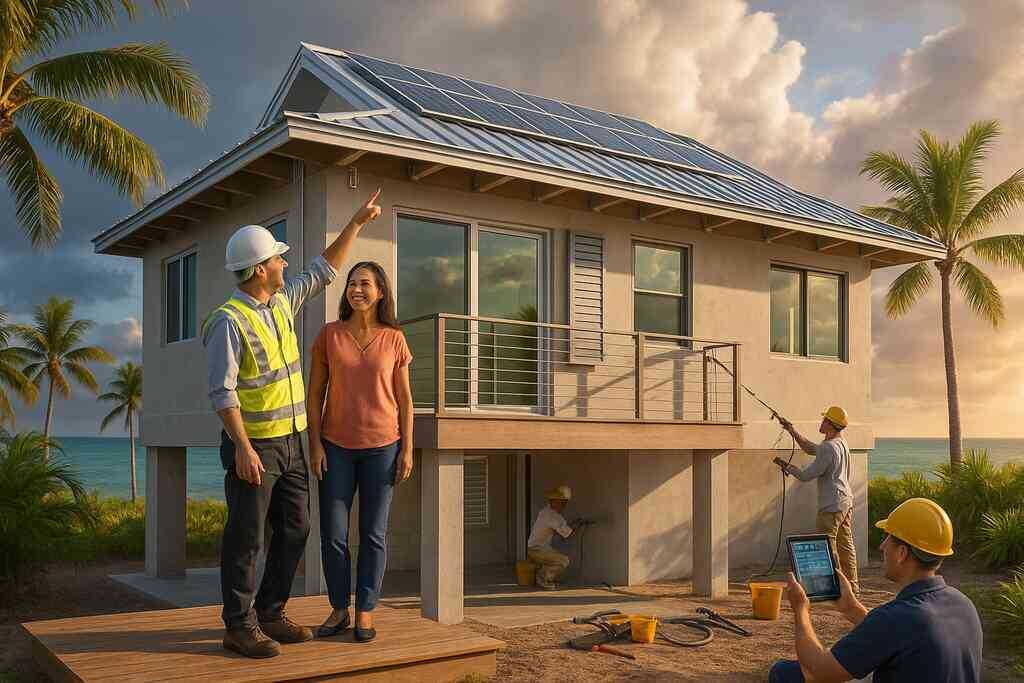 Frequently Asked Questions
Question: How do South Florida Contractors listed in the directory guarantee Miami-Dade wind load compliance and satisfy high-velocity hurricane zone requirements on every build?
Answer: Every South Florida contractor in our directory starts with a certified engineering plan that maps pressure zones and continuous load paths from slab to ridge. Field crews install hurricane tie-down straps, corrosion resistant fasteners, and fortified roof decking techniques exactly to the Miami-Dade Product Control approval sheets. Before concrete is poured, supervisors perform pull-out tests on anchors and photo-document each connection for inspectors and insurance carriers. This rigorous process, coupled with mandatory job-site wind audits, ensures that homes and commercial spaces exceed high-velocity hurricane zone requirements and stand strong against 180-mph gust simulations.
Question: What advantages do corrosion resistant fasteners and fortified roof decking techniques provide under the new 2025 hurricane code?
Answer: The 2025 South Florida hurricane construction standards require roof systems to remain intact after hours of cyclic uplift and salt-spray exposure. Stainless or epoxy-coated fasteners keep their clamping force for decades, stopping galvanic corrosion that can weaken traditional screws. Fortified roof decking techniques add tongue-and-groove plywood, self-adhering membranes, and aerodynamic ridge vents that share wind loads instead of concentrating them. This layered defense lowers the chance of roof failure, earns premium discounts during wind mitigation inspection services, and delivers long-term energy savings by tightening the building envelope.
Question: How does the South Florida Contractors directory help homeowners quickly find a South Florida general contractor for impact resistant windows installation and energy efficient hurricane glazing?
Answer: Simply enter your zip code, choose your city-Boca Raton, Delray Beach, West Palm Beach, Boynton Beach, and more-and filter by window or whole home remodeling categories. Each listing shows licensing, Miami-Dade approvals, and past project photos of impact resistant windows installation. Clicking View Details reveals direct contact information so you can book an on-site estimate the same day. Because our screened contractors specialize in energy efficient hurricane glazing, homeowners secure stronger protection, lower cooling bills, and faster permitting from local authorities.
Question: In the article How South Florida Contractors Meet Hurricane Code 2025, net zero hurricane resilient homes were highlighted. How do your listed builders integrate sustainable hurricane safe materials and smart home storm monitoring?
Answer: Home builders in Florida listed with us select recycled steel panels, basalt-reinforced concrete, and soy-based spray foam to combine structural muscle with low embodied carbon. Rooftop solar arrays clamp onto hurricane-rated roofing systems, turning the roof into both a power plant and a wind shield. Embedded sensors track vibration, humidity, and roof pressure, sending live data to a cloud dashboard that alerts owners and their South Florida general contractor hurricane expertise teams before small anomalies become major repairs. These smart, sustainable systems qualify projects for green financing while exceeding the strict 2025 hurricane code.
Question: What permit expediting and insurance savings can I expect after a wind mitigation inspection from construction companies near me listed on South Florida Contractors?
Answer: Our construction companies package structural calculations, manufacturer certificates, and high-resolution photos into a digital dossier that local building departments review in hours, not weeks. Once the project is complete, a certified wind mitigation inspection documents roof geometry, decking attachment, hurricane tie-down straps, and code-approved storm shutters. Most insurers apply immediate premium reductions of 15-30 %, and some offer additional credits for flood-resistant foundation design or coastal home elevation solutions. Homeowners often reinvest those annual savings into further upgrades, such as waterproof exterior stucco systems or smart home storm monitoring, compounding resilience and value year after year.