How South Florida Contractors Navigate Complex Coastal Codes
January 2, 2026
Introduction: Surfacing the Challenge
Why South Florida coastal building code compliance matters
Coastal living offers spectacular views, yet every ocean breeze carries engineering responsibilities. Strict South Florida coastal building code compliance protects families, investments, and community resilience. Homeowners expect climate-resilient home construction that endures salt air, punishing sun, and unrelenting wind. Therefore, architects, engineers, and builders collaborate early to verify load paths, corrosion-resistant fasteners, and impact-rated openings. When each stakeholder understands the code’s intent, projects advance smoothly and insurance premiums shrink.
Still, the rulebook evolves whenever researchers uncover fresh hurricane insights or legislators tighten safety thresholds. Contractors who dismiss incremental updates risk costly stop-work orders or denied certificates of occupancy. In contrast, proactive teams track every memorandum, supplement, and technical bulletin issued by local jurisdictions. That diligence earns trust from lenders and underwriters who demand documented compliance before closing. Ultimately, code mastery converts into higher property values and smoother closings for coastal buyers.
The high velocity hurricane zone reality for every South Florida contractor
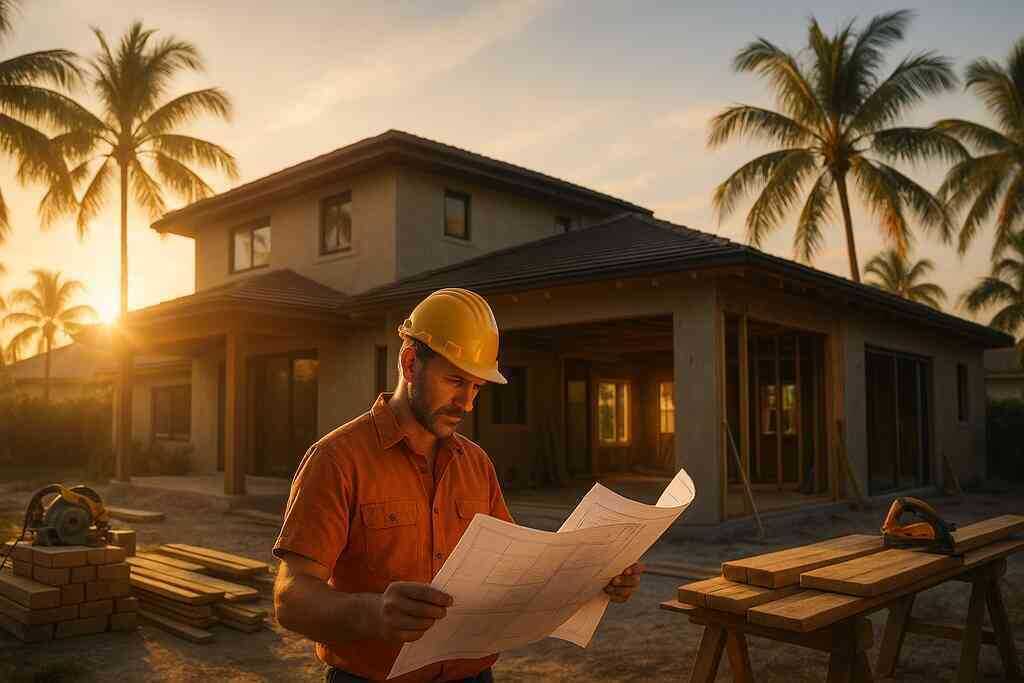
Designing within a high velocity hurricane zone means assuming gusts can exceed 180 miles per hour. South Florida general contractor teams must calculate wind uplift roof design, certify anchor schedules, and confirm debris impact resistance. Engineers employ Miami-Dade NOA assemblies, while site supervisors verify that field installations mirror laboratory test data. Continuous load-path inspections confirm that structural sheathing, straps, and hold-downs create one reinforced shell.
Furthermore, municipal inspectors demand photographic evidence of concealed connections before concrete or drywall conceals the work. Builders therefore integrate digital inspection platforms that time-stamp images and geolocate every detail. Through rigorous oversight, crews catch minor deviations early, preventing larger failures later. As a result, owners gain peace of mind, and communities minimize post-storm rebuilding costs. Every successful project proves that disciplined preparation outperforms the fiercest squall.
Finding the right general contractors in South Florida through the South Florida Contractors directory
Locating a qualified partner begins with a quick search of the directory for licensed contractors across South Florida. The platform filters by zip code, specialty, and past client ratings, ensuring homeowners shortlist only vetted firms. Users can compare Boca Raton remodelers, Delray Beach custom home builders, or Boynton Beach renovation experts without hopping across multiple websites. Instant call buttons streamline first contact, while integrated calendars simplify on-site consultation scheduling.
Savvy property owners also review each candidate’s coastal portfolio to confirm fluency with high-velocity hurricane zone construction. Listings feature project photos, NOA certificates, and wind mitigation reports that verify real-world performance. By tapping into trusted local data, clients avoid costly trial-and-error relationships and accelerate their path to a code-compliant dream residence.
 Navigating the Regulatory Rip Current
 Navigating the Regulatory Rip Current
Decoding Miami Dade NOA and wind uplift roof design without the headaches
South Florida project managers never underestimate the force of uplift. Each design sheet cites exact pressures so every Miami-Dade NOA certified contractor can pre-select connectors, sheathing patterns, and truss hardware. Owners often consult wind-rated roofing specialists near the coast to confirm assembly mirror laboratory tests. That early collaboration eliminates costly field substitutions and protects inspection timelines. By pairing precise calculations with trusted suppliers, high-velocity hurricane zone construction moves forward with confidence.
Equally important, foremen document every strap before concrete hide-outs. Photographic logs, stamped by South Florida Contractors’ cloud platform, create a verifiable wind uplift roof design that South Florida inspectors appreciate. Engineers then sign off on continuous load paths that meet Florida Building Code coastal chapter insights. The result is a roof that remains seated when gusts reach extreme thresholds. Homeowners sleep easier, and lenders release funds without hesitation.
FEMA flood zone permitting and flood elevation certificate assistance for oceanfront builds
Oceanfront blueprints may sparkle, yet FEMA flood zone permitting guidance quickly grounds any romantic vision. Coastal builders first order a preliminary elevation study to gauge base flood height. Surveyors deliver the flood elevation certificate assistance needed for accurate slab positioning. With that data, architects raise finished floors above regulation minimums, protecting personal property and insurance ratings. Every inch matters when storm tides surge.
During permitting, municipalities request detailed coastal drainage system installation plans. Teams show how permeable pavers, swales, and check valves redirect water rather than invite it indoors. Inspectors then stamp drawings because compliance is obvious on paper and in calculations. Once approvals land, subcontractors stage materials knowing floodplain rules are mastered. Forward planning shortens the critical path and keeps trades productive day after day.
Coastal setback regulations and zoning variance expertise that clears red tape
Even seasoned investors can misread coastal setback lines drawn on mailed tax maps. South Florida contractors translate those cryptic overlays into buildable envelopes, saving clients weeks of redesign. When lots require extra square footage, coastal zoning variance expertise becomes essential. Consultants prepare neighbor notifications, environmental studies, and photographic context that persuade boards to grant relief. Success comes from respecting both habitat concerns and property rights.
Jurisdictions differ, so familiarity with the Broward County coastal permitting process or Palm Beach County coastal code enforcement prevents surprises. Specialists leverage digital submittal portals and schedule pre-application meetings, cutting corrections later. Clear communication demonstrates good-faith stewardship, and boards reciprocate with timely votes. Consequently, owners avoid carrying costs that balloon when hearings drag on. Red tape loosens when professionals speak the language of local planners.
Salt air corrosion resistant materials selection for climate resilient home construction
Salt spray corrodes unprotected steel faster than most newcomers expect. Therefore, project specifications call for hot-dip galvanized anchors, stainless fasteners, and fiber-reinforced polymer rebar. Suppliers verify mill certifications, while on-site crews reject any scratched coating. This disciplined salt air corrosion resistant materials selection underpins climate resilient home construction that lasts for generations. Owners notice the difference as finishes remain bright year after year.
Builders also recommend seawall reinforcement contractors near me to integrate structural shore protection with the living space. Coated tie-backs and composite whalers withstand brackish splash without spalling. When hardware outlives several storm seasons, maintenance budgets shrink and appraisal values climb. Long-term durability, not cosmetic trend, guides every purchasing decision. The coastline may be unforgiving, yet sound material science levels the playing field.
Impact window installation requirements and hurricane resistant construction techniques
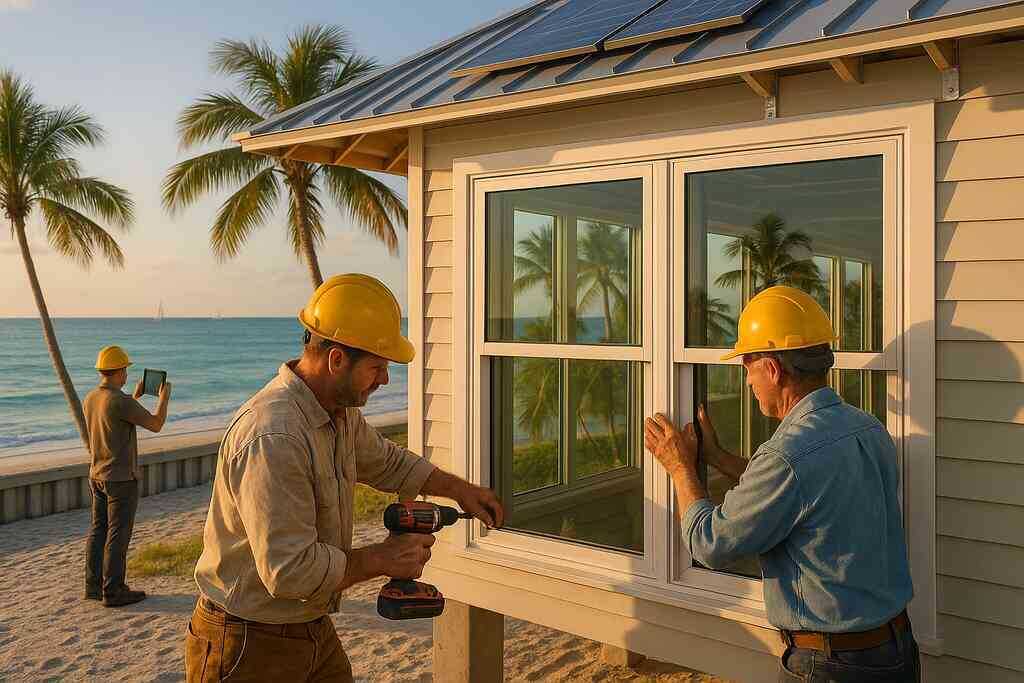
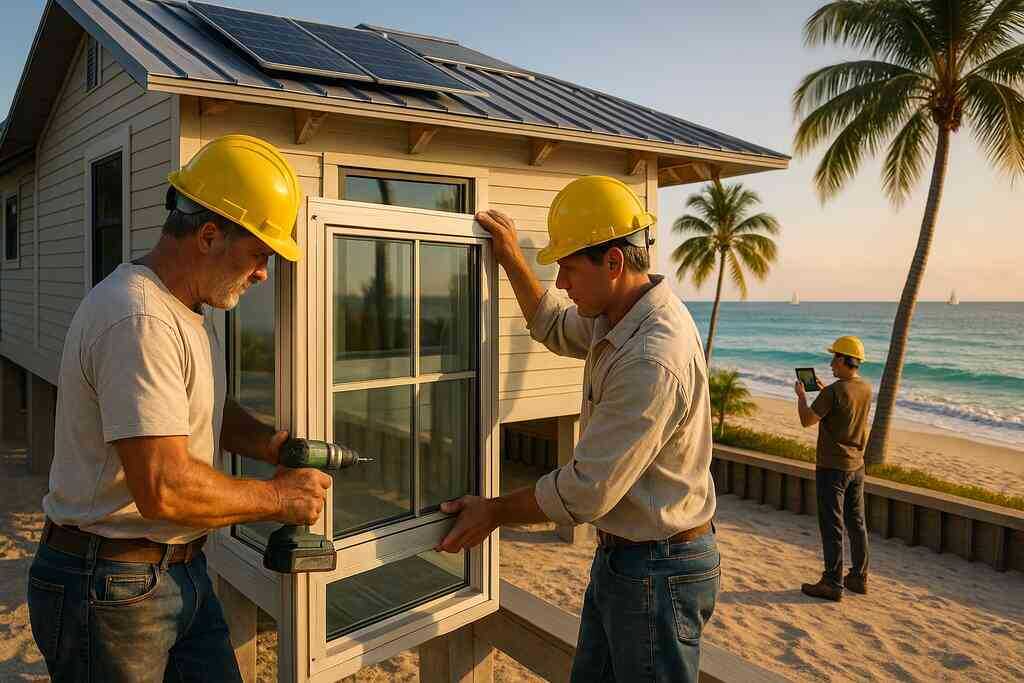
Glazed openings present the most vulnerable points in any envelope. Impact window installation requirements dictate laminated glass, heat-strengthened layers, and heavy aluminum frames anchored to concrete. Installers reference the manufacturer’s torque charts so that screws develop full capacity. Combined with hurricane-resistant construction techniques such as secondary water barriers, dwellings achieve coveted insurance credits. Documentation packages then supply underwriters with clear evidence of risk reduction.
Experienced crews manage Boca Raton coastal remodel compliance by staging windows in climate-controlled storage before placement. Moisture-free handling preserves seal integrity, and end users receive flawless clarity. Inspectors probe each fastener, ensuring embedment meets design depth. Surpassing code earns additional insurance wind mitigation documentation support that pays dividends every policy term. Quality control today becomes lower premiums tomorrow.
Oceanfront foundation design standards and storm surge mitigation construction methods
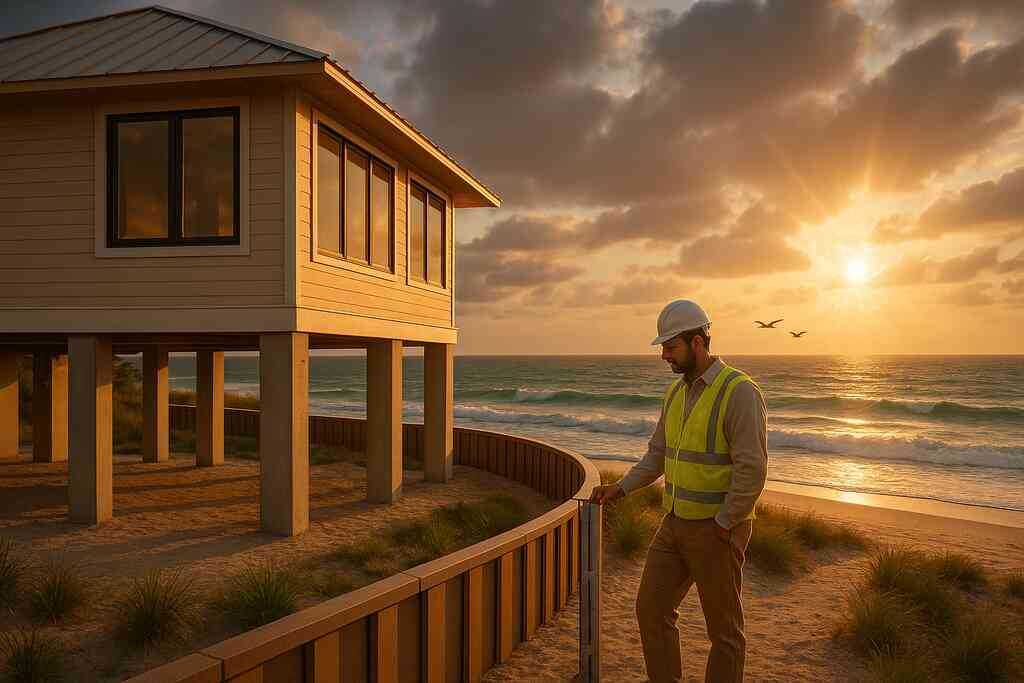
Deep foundations anchor homes against scour and shifting sands. Engineers model oceanfront foundation design standards using geotechnical borings, wave run-up data, and historical erosion rates. Helical piles or augered cast-ins provide stability without heavy vibration, preserving nearby seawalls. Elevated grade beams then keep living areas safely above surge levels. As waves recede, structures remain unscathed, proving the merit of rigorous calculations.
Storm surge mitigation construction methods extend beyond piles. Breakaway walls allow sacrificial panels to release hydraulic pressure, while vented crawl spaces equalize forces swiftly. Builders integrate corrosion-proof clips that maintain load paths even after outer sheathing departs. South Florida coastal building code compliance rewards such forethought through streamlined certificate of occupancy issuance. Clients gain a fortress able to greet sunrise after every tempest.
Integrating sustainable coastal construction practices from Delray Beach to West Palm Beach
Modern buyers demand green credentials alongside storm hardening. Resilient coastal home builders in Florida blend low-VOC products with rooftop solar arrays that function after grid failures. Designers orient overhangs to shade glass and reduce cooling loads in summer heat. Rainwater harvesting pairs with drought-tolerant landscaping, easing municipal supply demands. Sustainability thus complements structural strength rather than competing with it.
Local case studies illustrate success. Delray Beach custom coastal home builders showcase reclaimed wood interiors that avoid landfill waste. West Palm Beach coastal renovation experts retrofit existing slabs with insulated sheathing, improving thermal performance without expanding footprints. Boynton Beach coastal remodeling regulations now encourage permeable driveways, supporting aquifer recharge. Throughout these communities, South Florida contractors’ coastal code consultation sessions keep teams aligned with evolving rules. Frequent South Florida Contractors directory search reviews help professionals track new specialists who champion sustainable coastal construction practices every day.
Anchoring Success Conclusion
Broward County and Palm Beach County coastal inspections and approvals made simple
Securing a permit feels daunting until seasoned teams break each milestone into predictable steps. Inspectors in Broward County demand meticulous photos of concealed straps before concrete placement. Palm Beach reviewers prioritize elevation benchmarks that keep finished floors above the projected surge. Contractors who follow the Broward County permitting solutions article anticipate documentation requests weeks ahead. As a result, coastal area inspections and approvals conclude without last-minute drama.
Digital submittal portals now synchronize engineer stamps, zoning affidavits, and survey uploads in one secure dashboard. Municipal algorithms flag missing signatures instantly, allowing project managers to correct gaps before queues form. That proactive loop shortens average review cycles and keeps trades scheduled with confidence. When Palm Beach County coastal code enforcement arrives onsite, foremen display QR-coded plans that link directly to approved sheets. Transparency builds trust and accelerates the coveted green tag.
Insurance wind mitigation documentation support and future hurricane retrofits
Insurance carriers evaluate every screw, clip, and gasket long before quoting coastal premiums. Detailed insurance wind mitigation documentation support therefore becomes a financial weapon for prudent owners. South Florida general contractor hurricane retrofits document roof deck attachment, secondary water barriers, and impact openings in high-resolution photo sets. Adjusters compare that evidence against actuarial models, often rewarding policyholders with substantial discounts. Organized records guarantee faster claims processing after any future hurricane event.
Forward-thinking builders install retrofit blocking and conduit chases during original construction. Those hidden pathways simplify later upgrades, including solar tie-ins and generator transfer switches. By anticipating tomorrow’s technologies, teams eliminate invasive demolition down the line. The same mindset drives storm surge mitigation construction methods such as preplanned pile sleeves for extension. Preparedness today means minimal downtime when codes evolve or storms intensify.
Partnering with resilient coastal home builders in Florida for long term compliance
Selecting partners who live and work near the shoreline fosters accountability and institutional memory. Resilient coastal home builders in Florida track how materials age in relentless salt air. Their field data informs smarter specifications for new clients, reinforcing a feedback loop across communities. Local artisans also navigate cultural review boards that govern historic districts, preserving cherished streetscapes while reinforcing structures. Together, these skills elevate every project beyond minimum compliance into enduring craftsmanship.
Owners often start discovery sessions on the South Florida Contractors directory, then vet shortlisted teams through site walks. Watching crews test anchor torque or measure slab moisture reveals a commitment that marketing brochures cannot fake. Transparent demonstrations build trust long before a proposal is signed. Clients who embrace this collaborative selection process rarely face unpleasant surprises mid-construction. Instead, they enjoy confident progress reports and on-budget closings.
Keeping pace with the evolving Florida Building Code coastal chapters through ongoing consultation
Coastal codes shift as storm research uncovers new loading patterns and climate models adjust surge forecasts. Dedicated firms schedule quarterly South Florida contractor coastal code consultation workshops to dissect every bulletin. Engineers translate dense language into actionable checklists for foremen and suppliers. Because updates ripple through pricing and lead times, early awareness safeguards both budgets and timelines. Continuous education keeps teams agile in the high-velocity hurricane zone construction arena.
Peer networks complement formal sessions by sharing field discoveries over coffee, boat slips, or virtual channels. One supervisor may highlight a fastener line recently been granted new Miami-Dade NOA approval. Another might warn that a popular sealing compound failed salt-spray testing under revised protocols. This collective intelligence feeds directly into the Florida Building Code coastal chapter insights before the ink dries. Commercial and residential clients alike reap the rewards of such real-time collaboration.
Frequently Asked Questions
 Frequently Asked Questions
Question: How does South Florida Contractors help homeowners achieve consistent South Florida coastal building code compliance from the first sketch to the final coastal area inspections and approvals?
Answer: From the moment you enter your ZIP code, the South Florida Contractors directory filters only licensed, insurance-ready professionals who understand high-velocity hurricane zone construction. Each listed South Florida general contractor supplies recent Miami-Dade NOA certificates, continuous load-path photo logs, and Broward County coastal permitting process checklists. Because every stage-design, material sourcing, and inspection scheduling-runs through one verified network, owners avoid stop-work orders and earn faster green tags. The result is a smoother build, lower insurance premiums, and a climate resilient home construction experience you can trust.
Question: What advantages do Miami-Dade NOA certified contractors find through your directory provide when tackling wind uplift roof design South Florida requirements?
Answer: Miami-Dade NOA certified contractors inside our platform pre-load job files with exact uplift pressures, connector schedules, and approved sheathing patterns. They then sync daily site photos to the cloud so municipal inspectors see every strap, clip, and truss tie before concrete or drywall conceals them. This documentation not only speeds coastal area inspections and approvals but also feeds directly into insurance wind mitigation documentation support that can shave thousands off annual premiums. Choosing a directory-vetted roofer means your shingles, fasteners, and secondary water barriers already match laboratory test data-no costly field substitutions required.
Question: In your blog How South Florida Contractors Navigate Complex Coastal Codes, you highlight FEMA flood zone permitting guidance; how do your members streamline flood elevation certificate assistance and coastal drainage system installation?
Answer: Our surveyed surveyors and civil engineers issue digital flood elevation certificates within 48 hours, syncing the data to architects in real time. That speed lets designers lift finished floors above FEMA minimums without re-drawing slabs mid-submission. On site, coastal drainage system installation crews implement swales, permeable pavers, and check valves pre-approved by local reviewers, eliminating costly redesigns. By bundling permitting, surveying, and drainage under one project manager, South Florida Contractors members cut weeks off the critical path and protected clients from flood-related insurance surcharges.
Question: Can South Florida Contractors connect me with specialists who meet impact window installation requirements and employ hurricane-resistant construction techniques for a Boca Raton coastal remodel compliance project?
Answer: Absolutely. A quick South Florida Contractors directory search for Boca Raton Renovation Contractor or Boca Raton Remodelers returns firms that stock laminated, heat-strengthened glass rated for debris impact up to 180 mph. Installers follow manufacturer torque charts, provide peel-and-stick secondary water barriers, and upload post-installation photos for Palm Beach County coastal code enforcement review. Because these pros pair impact window installation with roof deck attachment upgrades, homeowners often secure bundled insurance credits while achieving flawless coastal remodel compliance.
Question: How do resilient coastal home builders in Florida listed on your site stay ahead of evolving Florida Building Code coastal chapter insights while still offering robust insurance wind mitigation documentation support?
Answer: Directory members attend quarterly South Florida contractor coastal code consultation workshops, where engineers decode every new bulletin into field-ready checklists. Those updates feed directly into purchasing systems, ensuring salt air corrosion resistant materials selection-like stainless fasteners and fiber-reinforced rebar-arrives on site before framing begins. The same platform generates standardized wind mitigation packages that insurers recognize instantly, speeding both policy discounts and future claim approvals. Continuous education plus airtight documentation is why buyers, lenders, and underwriters consistently favor projects built by South Florida Contractors-vetted teams.