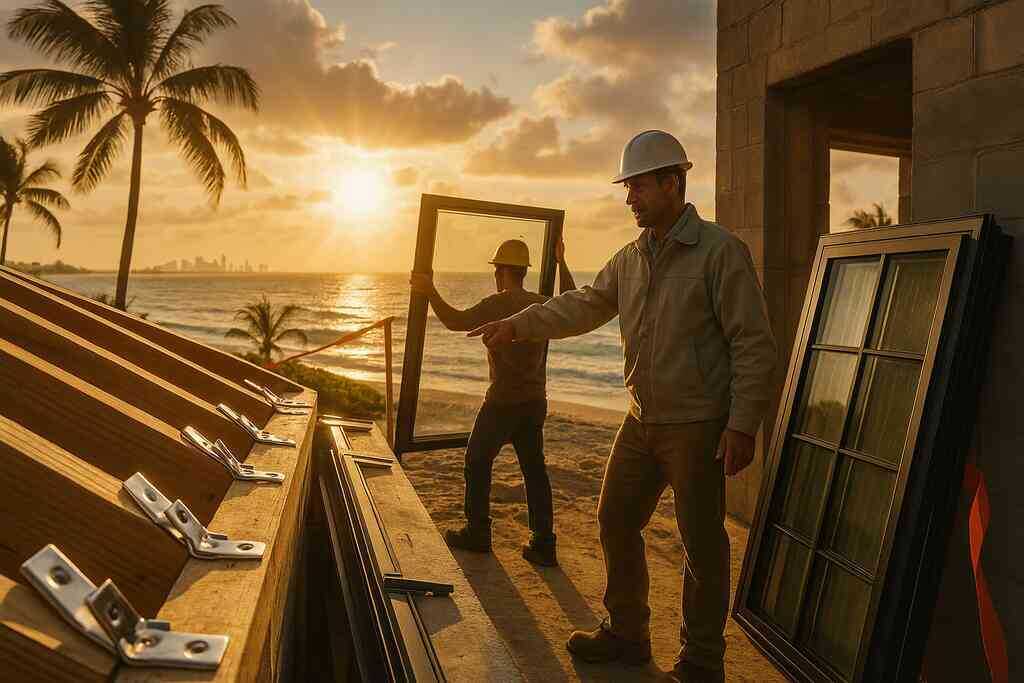
How South Florida Contractors Navigate Wind Codes 2025
December 11, 2025
Opening Gale: The New Reality of South Florida Wind Codes
Force multipliers within Miami Dade wind load standards
Miami-Dade’s High Velocity Hurricane Zone remains the toughest proving ground for any South Florida contractor. Local crews constantly reference laboratory pressure charts while inspecting slab elevation, wall sheathing, and truss fastening patterns. Those demanding numbers feel less intimidating when teams partner with wind code specialists in South Florida who translate equations into field-ready checklists. Because every neighborhood rests inside a distinct microclimate, precise wind maps confirm where corner zones require denser nailing. Consequently, projects stay compliant without wasting lumber, clips, or schedule days.
Force multipliers extend beyond roof edges; they include secondary water barriers, corrosion-resistant screws, and pre-engineered straps. Each component cooperates to control load paths that once ripped older homes apart. By specifying Miami-Dade-approved fastener spacing, builders achieve roof uplift resistance strategies that outperform many national standards. Furthermore, inspectors recognize the rigorous documentation, shortening punch-list cycles and trimming hidden costs. In short, science meets craftsmanship when clear data guides every fastening decision.
Surge in contractor continuing education on wind laws
Code revisions arrive frequently, so general contractors in South Florida carve out classroom hours the way others schedule job walks. Local associations host interactive labs where pros test shearwall assemblies, exchange design pressure calculations, and debate Florida residential wind inspection checklist updates. Such sessions reinforce why contractor continuing education on wind laws is never optional here. When new provisions appear, certified supervisors already know adoptive dates, inspection thresholds, and cost impacts.
Education also strengthens collaboration. Electricians, plumbers, and framers learn shared vocabulary, preventing miscommunication that could compromise a building envelope. Apprentices witness how roof-to-wall connection solutions intersect with vapor barriers and HVAC chases. As knowledge spreads, field crews identify early warning signs-like incorrectly oriented hurricane clips-before inspectors arrive. The result is smoother scheduling, fewer reworks, and stronger homeowner confidence.
Homeowner demand for hurricane rated building materials near me
Homeowners now scroll specification sheets the way past generations compared paint colors. Queries for hurricane-rated building materials near me fill contractor inboxes every morning. Impact window installation guidelines top the list, followed closely by multi-layered roof membranes and ICC 500 shutter assemblies. This informed demand pushes construction companies to stock stronger fasteners, thicker laminates, and smarter sealants even for modest renovations.
Because today’s buyers research energy scores too, contractors balance comfort and strength. Laminated low-E glass paired with reinforced frames blocks flying debris while trimming utility bills. Likewise, composite roof tiles withstand uplift pressures yet deflect radiant heat. By presenting such dual-purpose solutions, home builders in Florida secure faster approvals from HOAs and exceed insurance carrier expectations. Clients notice, and referrals multiply quickly.
Why general contractors in South Florida lead the national resilience conversation
Storms affecting the peninsula often headline national news, so each South Florida general contractor operates under a bright spotlight. Years of field experience make these builders unofficial ambassadors for coastal construction best practices. They routinely brief product manufacturers, policy writers, and out-of-state engineers on lessons learned from every season’s landfall. Consequently, innovations like structural anchoring techniques near me often originate here before spreading nationwide.
Leadership also stems from the region’s diverse building stock. Crews juggle legacy masonry cottages, towering glass condos, and sprawling mixed-use campuses. That variety forces flexible thinking around windborne debris protection methods and allows rapid prototyping of new membranes, clips, and sealants. In turn, national code councils consult South Florida case studies when drafting broader resilience language. Local professionals thus shape standards that ultimately safeguard homes far beyond the peninsula.
Blueprint for Compliance: Decoding the Florida Building Code
High velocity hurricane zone expertise every South Florida contractor needs
Field supervisors working inside the high-velocity hurricane zone treat the Florida Building Code like a living playbook. Each South Florida contractor studies regional wind maps, pressure tables, and exposure categories before touching concrete. That discipline prevents overlooked corner loads that could compromise a home’s entire load path. Crews also memorize Miami-Dade product approvals, ensuring every fastener, clip, and membrane already carries a local stamp. When inspectors arrive, documentation aligns perfectly with onsite assemblies, streamlining approvals.
Experience matters even more during renovations of older masonry cottages. General contractors in South Florida often uncover outdated anchors, corroded straps, or insufficient truss spacing. Instead of improvising fixes, seasoned teams reference code-approved retrofit diagrams for immediate guidance. They then stage materials in sequence, reducing idle labor and weather exposure. Homeowners notice the methodical flow and gain confidence that their upgrades meet modern wind mitigation benchmarks.
Design pressure calculations that keep construction services on budget
Accurate design pressure analysis separates profitable projects from financial headaches. Estimators start by identifying building height, terrain, and internal pressure coefficients before selecting window and door ratings. That data guides procurement, preventing over-specification that inflates bids. When questions arise, teams rely on a permit assistance contact for Miami-Dade wind loads to verify spreadsheet assumptions. This collaboration avoids costly plan revisions and keeps schedules intact.
Software has replaced napkin math, yet judgment still rules. A South Florida general contractor compares program outputs against historical storm records, ensuring no hidden exposure remains. Value-engineering follows, balancing product strength with client budgets through alternate mullion layouts or reinforced jambs. Crews then stage mock-ups for inspector review, eliminating reworks later. The combined approach preserves both structural integrity and financial health.
Roof to wall connection solutions for roof uplift resistance
Uplift failures often start at the humble truss heel, not the shingle layer everyone sees. Modern codes demand continuous load paths from ridge to foundation, so builders specify double-sheathed corners, galvanized straps, and sealed blocking. These roof uplift resistance strategies transform isolated components into a unified shell. Framing teams follow printed nailing schedules, using colored fasteners to flag inspection milestones.
Coordination extends to specialty trades. HVAC installers route ducts without cutting essential blocking, while electricians avoid drilling through strap clusters. If late-stage adjustments become necessary, the supervising contractor in South Florida recalculates uplift margins before approving changes. Such vigilance means homeowners receive a roof that remains anchored even when winds surpass design thresholds.
Windborne debris protection methods that satisfy Florida residential wind inspection checklists
Inspection checklists place heavy emphasis on debris impact zones, especially around glazed openings. Contractors therefore blend laminated glass, structural silicone, and properly sized anchors to achieve hurricane-rated assemblies. They also pre-label shutters, ensuring homeowners can deploy protection quickly when warnings are issued. Inspectors appreciate these proactive touches and often complete site visits faster.
Legacy homes demand creative solutions. Some walls cannot support modern shutter loads without added blocking, so Boynton Beach remodelers inject foam-filled anchors or steel plates behind stucco. Others retrofit garage doors with four-track reinforcement systems that resist both pressure and debris strikes. Throughout, crews document every step for insurance carriers, unlocking potential premium reductions. The integrity of the building envelope-and the neighborhood-rises with each compliant retrofit.
 Material Arsenal: From Impact Windows to Roof Uplift Resistance
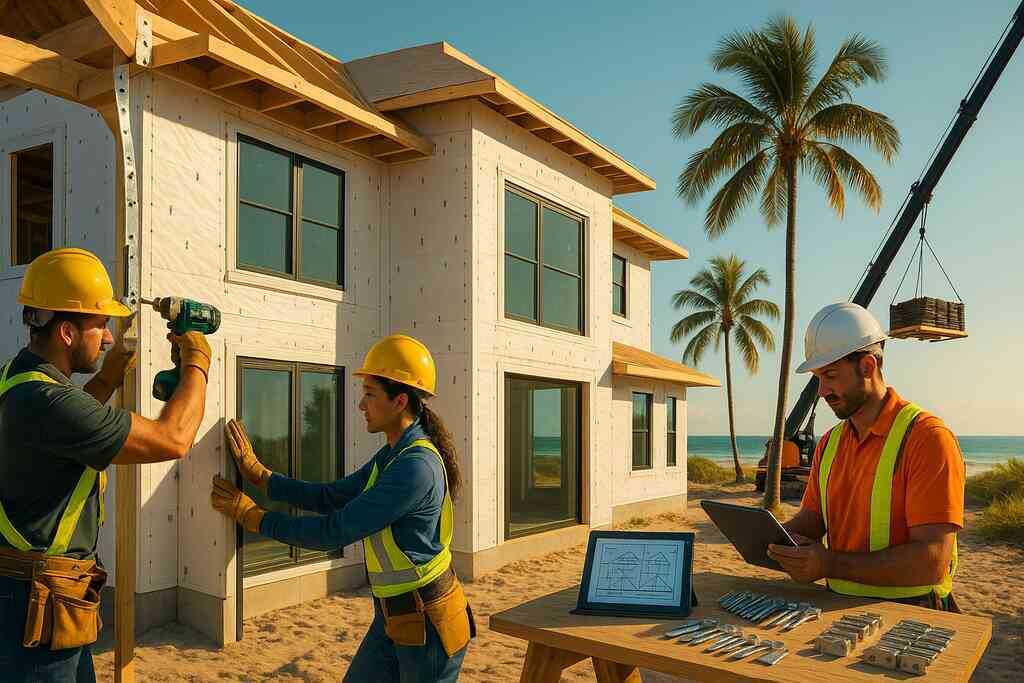 Material Arsenal: From Impact Windows to Roof Uplift Resistance
Impact window installation guidelines for Boca Raton renovation contractor teams
Impact windows remain the first shield against storm-blown lumber, roofing gravel, and palm fronds. Boca Raton renovation contractor crews start by confirming design pressure values for every opening. They then select Miami-Dade-approved frames with reinforced mullions that match those pressures exactly. Installers use stainless steel anchors, driven through pre-drilled holes into the masonry substrate, to stop pull-out during gusts. Finally, they bed each frame in non-shrinking sealant, ensuring no water sneaks around the perimeter.
Once glazing arrives, technicians verify the low-E laminate orientation before setting panes. Spacers keep glass centered while fasteners seat against structural members, not fragile jamb material. Crews clean excess sealant immediately, preventing future adhesion failures. Because every step follows the written impact window installation guidelines, inspectors rarely flag deficiencies. Homeowners gain crystal-clear views and documented peace of mind.
Hurricane shutters or ICC 500 storm shelter integration choosing the right defense
Contractors often debate whether shutters alone suffice or if an ICC 500 storm shelter belongs inside the plan. Shutters offer cost-effective coverage, especially on upper stories where debris impacts the peak. Rolling systems tuck neatly above fenestration and deploy within minutes when alerts sound. Accordion styles fold beside openings, letting daylight pour in during calm seasons. Both options demand corrosion-resistant tracks and bolts that withstand salt-laden air.
Storm shelters, however, transform a single interior room into a fortress of layered steel and concrete. Engineers design walls to resist missile impacts, roof uplift, and internal overpressure simultaneously. Shelters also serve as safe zones for pets, valuable documents, and small generators when grid power fails. Although pricier, their all-hazard performance appeals to hospitals, schools, and multigenerational households. Contractors guide clients through benefits, letting budgets and risk tolerance drive final selection.
Energy efficiency amid wind code upgrades balancing comfort and strength
Strengthening a building envelope can ironically raise cooling loads if details get ignored. Modern South Florida contractor teams therefore pair thicker roof sheathing with radiant barriers beneath. They install insulated nail-base panels that block conductive heat while boosting uplift resistance. Around openings, insulated bucks reduce thermal bridging without weakening anchor capacity. Foam-in-place gaskets further tighten the envelope, slashing airborne moisture infiltration.
Because energy codes grow stricter each cycle, crews embrace low-E, argon-filled impact glass and high-seer heat pumps in tandem. Balanced ventilation systems recover conditioned air, maintaining indoor air quality even during shelter-in-place situations. Homeowners notice smaller electricity bills immediately, proving resilience can coexist with sustainability. Industry educators highlight these synergies during contractor continuing education on wind laws, reinforcing the holistic mindset.
Coastal construction best practices for updating legacy homes
Legacy masonry cottages charm buyers but hide vulnerabilities under plaster and tile. Contractors begin assessments by mapping load paths from ridge to foundation, pinpointing gaps created by decades of remodels. They add corrosion-proof anchors where original builders relied on gravity alone. Secondary water barriers go over existing sheathing, sealing every nail and joint against driven rain. Finally, crews apply breathable elastomeric coating to stucco, preventing salt crystals from prying cracks open.
Neighborhood boards often request documented guidance before approving exterior changes. Teams therefore share a concise coastal construction best practices article that outlines scientific reasoning behind every retrofit step. Clear visuals reassure owners that new straps will disappear under trim and fresh paint. As trust grows, project timelines accelerate and warranties carry greater weight. The entire street gains value as resilient upgrades ripple outward.
Selecting roof coverings through Find Roofing Contractors for maximum uplift performance
Roof covering choice dictates how well all preceding upgrades perform when cyclonic winds arrive. Clay tiles look traditional yet require stainless hooks, foam adhesives, and mechanical clips tested for extreme uplift. Metal panels shed rain quickly but demand continuous underlayment and factory-notched ribs to prevent flutter. Architectural shingles remain popular; however, only those with reinforced nail zones and self-sealing strips meet updated Miami-Dade thresholds.
Homeowners can simplify selection by exploring roofing contractors for uplift resistance in Florida within the South Florida Contractors Directory. Search filters sort firms by product specialization, manufacturer certifications, and recent inspection scores. After comparing portfolios, owners schedule site visits where contractors measure corner zones and calculate net uplift forces. Recommendations arrive in days, paired with itemized pricing that respects budget boundaries. The resulting roof system locks to walls like a lid on a pressure cooker, ready for the next gale.
Permit Pathways and Insurance Wins
Contractor permit navigation services near you that streamline approval
Securing a permit in the High Velocity Hurricane Zone feels overwhelming without guidance. A seasoned South Florida contractor transforms the maze into an orderly path. First, teams audit plans against municipal wind‐load charts, catching red flags before submittal. Next, runners track each application through electronic dashboards, responding to comments within hours rather than weeks. Consequently, reviewers rarely issue major corrections, and jobsite momentum never falters.
Technology speeds the journey further. Cloud repositories store truss calculations, roof uplift resistance strategies, and Florida Building Code citations in one searchable vault. Inspectors therefore access proof of compliance instantly, eliminating repeated visits. Because every drawing carries a digital signature, clerks approve revisions without physical queues. Homeowners witness progress in real time, enhancing trust and shortening overall schedules.
Insurance premium savings through airtight code compliance
Insurers reward buildings that exceed baseline standards because risk models favor verifiable resilience. When general contractors in South Florida document every strap, anchor, and secondary water barrier, underwriters see reduced exposure. Agents often request photographs and test reports, which organized teams supply within minutes. The thorough evidence helps carriers classify the property as fortified, unlocking meaningful premium credits. Over a policy’s lifespan, those savings offset many upfront strengthening costs.
Transparency matters as much as hardware. Contractors draft post‐construction packets listing hurricane‐rated building materials and their Miami‐Dade approval numbers. Owners then forward the packet to insurers without scrambling for paperwork. As renewal dates approach, updated maintenance logs confirm continued performance. The closed information loop keeps discounts intact while motivating routine inspections.
Wind risk assessment strategies for Boynton Beach remodelers and Delray Beach construction companies
Microclimates across Palm Beach County vary by only a few miles, yet gust profiles differ sharply. Boynton Beach remodelers therefore start each project with site‐specific anemometer data, not county averages. They map corner zones, roof spans, and exposure categories, translating numbers into fastening diagrams that crew members can follow. Delray Beach construction companies layer historical storm tracks over those findings, identifying dominant wind directions. Together, these steps create tailored mitigation plans that avoid costly overbuilding.
Communication turns data into action. Supervisors brief electricians, plumbers, and HVAC installers on critical shear walls so trades avoid weakening them. Drone imagery highlights vulnerable overhangs, prompting early design tweaks. Because teams share one wind risk dashboard, everyone references the same real‐time metrics. The unified approach slashes surprises and preserves budgets.
Cost effective hurricane retrofitting options for West Palm Beach renovations
Historic cottages lining the Intracoastal hold charm yet demand urgent upgrades. Crews begin by replacing outdated roof‐to‐wall nails with galvanized straps rated for modern uplift forces. Next, low‐profile ridge vents with integral baffles reduce internal pressure without altering classic silhouettes. Walls receive injected epoxy anchors that strengthen masonry while preserving original stucco. These selective moves produce dramatic resilience gains for modest investment.
Homeowners often search online for guidance and discover wind retrofit experts in West Palm Beach who specialize in phased improvements. Consultants prioritize the highest return items first, such as impact door replacements before luxury finishes. Financial advisors then bundle qualified measures into insurance mitigation loans, spreading payments across several years. As a result, families enjoy safer living conditions without delaying daily routines.
Leveraging the South Florida Contractors Directory to assemble multidisciplinary teams
Complex wind mitigation projects succeed when every specialty aligns under one vision. The South Florida Contractors Directory curates vetted profiles across structural, mechanical, and exterior trades. Users filter by proximity, license status, and verified hurricane experience, forming balanced shortlists within minutes. Because contact details and portfolio images sit side by side, decision-makers schedule interviews quickly and confidently.
Once a core team forms, the directory continues adding value. Integrated scheduling widgets coordinate overlapping scopes, preventing roofers and painters from competing for the same scaffold. Review features encourage continuous accountability; each completed milestone generates peer feedback visible to future clients. Over time, this ecosystem raises industry standards, ensuring the next generation of coastal construction best practices flourishes.
Beyond Survival Building Resilient Communities with South Florida Contractors
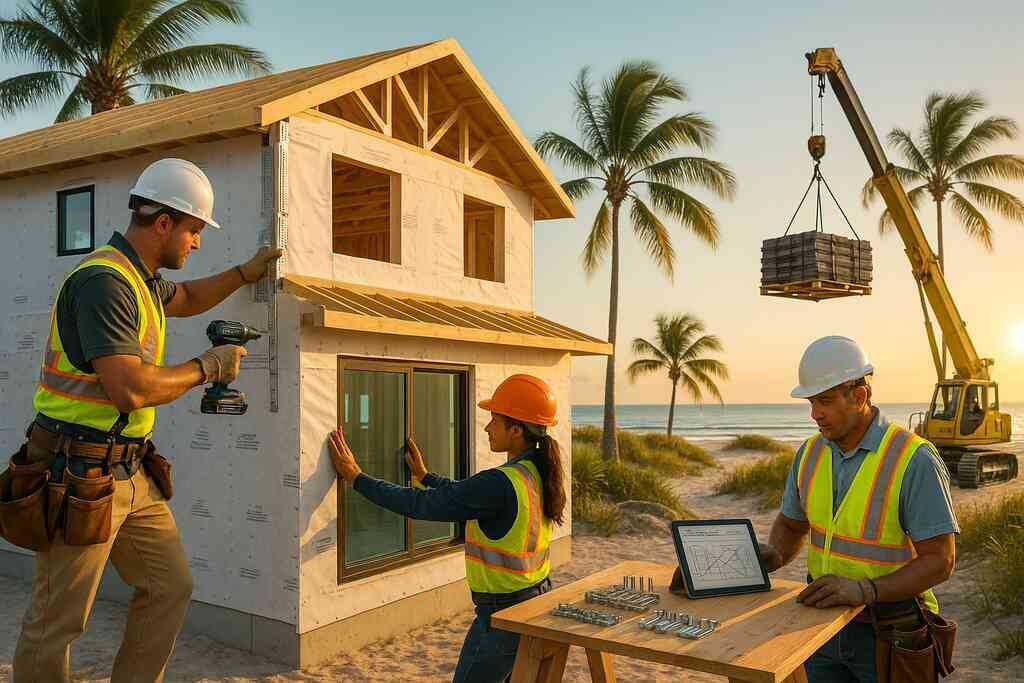 Beyond Survival Building Resilient Communities with South Florida Contractors
Collaborative storm hardening across plumbing HVAC and electrical trades
Every South Florida contractor knows walls and roofs alone cannot guarantee survival; mechanical systems must fight the storm too. Plumbers now specify vent stacks with hurricane caps that stop wind-driven rain from flooding attics. Electricians route feeder cables through reinforced chases so conductors stay anchored even when sheathing shakes. HVAC technicians suspend air handlers on vibration‐damped hangers that double as seismic clips, protecting ducts and drywall alike. Project managers coordinate these details through cloud dashboards that list torque specs, gasket types, and inspection targets for every trade.
Such synergy flourishes when teams share one code vocabulary and verified supply chain. Schedulers invite trades to joint preconstruction meetings instead of isolated site walks, ensuring condensate lines never pierce shearwalls and panels never block emergency egress. Many builders leverage licensed contractors near South Florida for hurricane compliance to fill knowledge gaps quickly. The directory’s vetting shields owners from inexperienced crews while strengthening the entire labor ecosystem. When plumbers, HVAC techs, and electricians pull together, the collective shell withstands gusts that once collapsed piecemeal retrofits.
Future ready home builders in Florida are shaping the next generation of safe housing
Forward-thinking home builders in Florida treat every slab as a prototype for climate resilience. They integrate smart sensors that monitor wall moisture and roof uplift in real time, transmitting alerts to maintenance apps before minor leaks snowball. Structural engineers pre-design expansion areas, allowing families to add solar canopies or battery rooms without weakening truss bracing. Because these innovators embrace modular framing, future retrofits require swapping panels, not demolishing facades, saving both money and embodied carbon.
Education fuels their momentum. Field superintendents sponsor apprentices at wind-mitigation boot camps where students practice installing hurricane-rated building materials under timed drills. Manufacturers join workshops, introducing recyclable fasteners that resist salt corrosion yet disassemble cleanly during remodels. As design studios adopt these methods, South Florida general contractors export know-how to other coastal markets, expanding career paths while raising safety baselines nationwide. Each completed subdivision therefore becomes a living classroom for better construction services.
Building envelope reinforcement that protects investments and neighbors alike
A fortified home does more than shelter its occupants; it reduces debris fields that threaten neighboring properties. Roof uplift resistance strategies, like double-bead foam adhesives beneath tiles, keep fragments from becoming airborne missiles. Impact window systems defeat windborne debris, preventing interior pressurization that can blow roofs off and shower streets with shards. Wall sheathing upgrades further limit smoke spread during post-storm fires, safeguarding entire blocks.
Investors notice these community benefits and reward projects that exceed Florida Building Code compliance. Insurance carriers grant additional premium credits when documentation shows continuous load paths and redundant moisture barriers. Realtors highlight structural anchoring techniques near me in listings, pushing market demand for resilient designs. Over time, municipalities record fewer cleanup expenses and quicker utility restoration because reinforced envelopes hold strong. The ripple effect transforms resilience from individual choice to neighborhood norm.
Invitation to explore South Florida Contractors resources and start your wind code journey
Successfully navigating wind codes can feel daunting, but you are never alone. The South Florida Contractors Directory organizes articles, checklists, and expert contacts that translate dense regulations into clear action steps. Interactive maps reveal microclimate data down to individual zip codes, helping you estimate design pressures before breaking ground. A built-in scheduling tool matches project timelines with inspector availability, preventing last-minute cancellations that cost money and momentum.
Whether you are planning Boynton Beach renovations or a Delray Beach custom home, start by browsing case studies of projects similar to yours. Compare bids, verify licenses, and read peer reviews without leaving the platform. When questions emerge, live chat connects you to experienced South Florida contractor wind mitigation consultants who clarify code passages in minutes. Click through the resource center, assemble your multidisciplinary team, and watch your vision rise stronger than any approaching storm.
Frequently Asked Questions
Question: How does the South Florida Contractors Directory simplify permit navigation and guarantee Florida building code compliance for wind-mitigation projects?
Answer: The directory lists pre-vetted South Florida contractor wind mitigation specialists who already operate digital permit navigation services near you. Because these general contractors in South Florida upload roof uplift resistance strategies, Miami-Dade wind load standards tables, and truss calculations into cloud dashboards, municipal reviewers can approve plans in record time. Homeowners see real-time status updates, runners answer comments within hours, and every drawing carries a digital signature that satisfies the Florida residential wind inspection checklist. The result is faster start dates, fewer change orders, and complete confidence that your project meets the latest Florida Building Code requirements.
Question: In the blog How South Florida Contractors Navigate Wind Codes 2025, you discuss roof uplift resistance strategies-what specific roof-to-wall connection solutions do your listed contractors use to meet Miami-Dade wind load standards?
Answer: Contractors sourced through South Florida Contractors specify double-sheathed corners, galvanized hurricane straps, and structural anchoring techniques near me that create a continuous load path from ridge to foundation. They follow printed nailing schedules with colored fasteners so inspectors can verify spacing quickly. For tile or metal roofs, crews add foam-adhesive beads and stainless hooks tested for extreme uplift. Because every component carries a Miami-Dade Notice of Acceptance, these roof-to-wall connection solutions surpass national codes and keep homes anchored even when gusts exceed design pressure calculations.
Question: What advantages do hurricane-rated building materials and impact window installation guidelines provide Boca Raton renovation contractor teams found through the directory?
Answer: Boca Raton renovation contractor crews gain instant access to laminated low-E impact glass, reinforced frames, and stainless anchors-all pre-approved for the High Velocity Hurricane Zone. Installers follow detailed impact window installation guidelines that include non-shrinking sealants and exact anchor embedment depths, eliminating costly inspection failures. Homeowners enjoy lower energy bills, stronger debris protection, and faster insurance approvals because every product meets or exceeds ICC 500 and Miami-Dade standards.
Question: How do general contractors in South Florida balance energy efficiency amid wind code upgrades while still satisfying the Florida residential wind inspection checklist?
Answer: Listed construction companies pair thicker roof sheathing with radiant barriers and insulated nail-base panels that boost both strength and R-value. Around openings, insulated bucks reduce thermal bridging without weakening anchor capacity, and low-E, argon-filled impact windows cut cooling loads. By integrating high-seer HVAC systems and balanced ventilation, these home builders in Florida storm prep for hurricanes and heat simultaneously, achieving code compliance and significant utility savings.
Question: Can homeowners in West Palm Beach or Boynton Beach use your directory to find cost-effective hurricane retrofitting experts for legacy homes and unlock insurance premium savings through code compliance?
Answer: Absolutely. Simply enter your zip code to locate Boynton Beach remodelers or West Palm Beach renovations specialists who focus on cost-effective hurricane retrofitting. These contractors prioritize high-ROI upgrades-such as galvanized roof straps, secondary water barriers, and impact doors-then document every step for insurance carriers. Detailed photo packets and Miami-Dade approval numbers help owners secure premium credits that often offset the retrofit investment within a few policy cycles.