
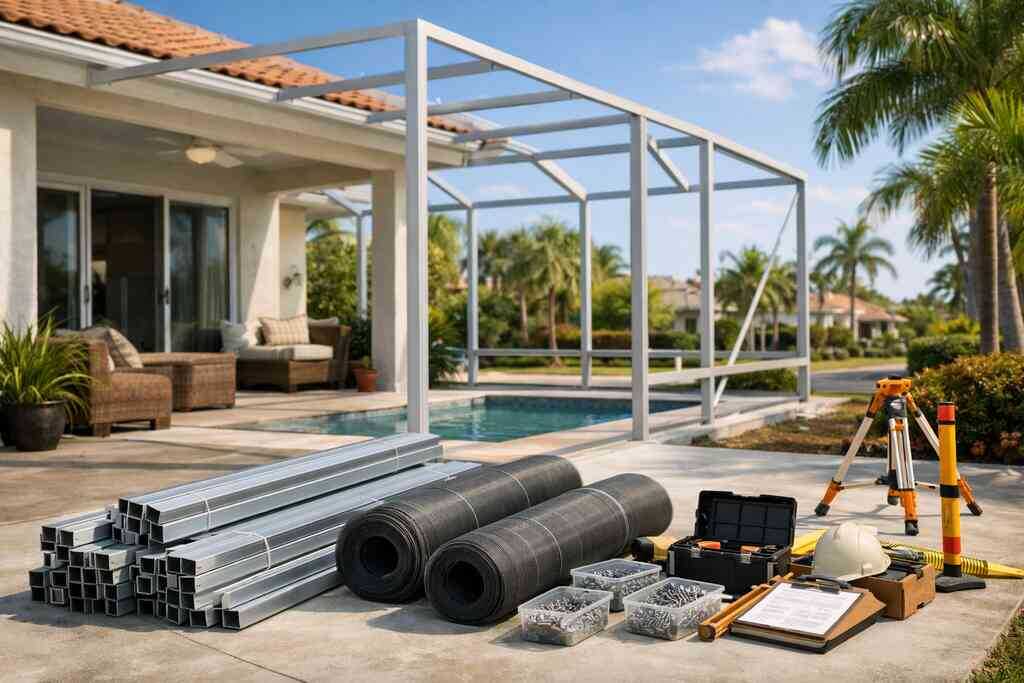
A good screen enclosure contractor South Florida should prove they understand permitting, hurricane-code requirements, corrosion-resistant materials, and local inspections before you sign anything. If the bid looks tidy but the paperwork, licensing, or engineering is vague, you can end up with delays, change orders, or a failed final inspection.
Key Takeaways
- Hire for compliance first, price second. In South Florida, a screen enclosure must fit local wind loads, corrosion exposure, HOA rules, and permit requirements.
- Verify the license, insurance, and bonding. A contractor should be able to show active Florida licensing, current insurance, and clear paperwork before work starts.
- Do not treat a patio cage like a simple add-on. Coastal conditions, hurricane code compliance, and structural fastening details can change the entire design.
- The permit process shapes the project. Palm Beach County, Broward County, and Miami-Dade may each affect drawings, materials, and engineering needs.
- Use a directory built for the region. If you want to find a contractor South Florida, start with a local directory that helps you compare by trade and location.
Why a screen enclosure quote can look perfect and still fail inspection
A screen enclosure quote can look complete and still fail inspection if it ignores wind loads, fastening details, or local permit rules. In South Florida, the cheapest bid often leaves out engineering, corrosion-resistant hardware, or hurricane code compliance. That is where projects get expensive, because corrections usually happen after materials are ordered and posts are already set.
The hidden difference between a patio cage and a code compliant enclosure in South Florida
A patio cage and a code-compliant enclosure are not the same thing. One may cover your pool or lanai, but the other must satisfy South Florida building codes, local setbacks, structural connections, and inspection requirements. If your home is in Palm Beach, Broward, or Miami-Dade, the contractor should design for the site, not just the square footage.
Here is the part most homeowners miss: the enclosure is not only a screen job. It is a structural exterior project, especially if it ties into a deck, roofline, or existing slab. That means the contractor should think like a screen enclosure installation South Florida specialist, not a general handyman.
I once saw a homeowner near a canal-side property accept a very clean-looking bid for a pool enclosure. The drawings were neat, but the contractor had not planned for the site’s exposure or the owner’s HOA review. The result was a redesign, a delay, and a second round of approvals. The lesson was simple: a tidy quote is not the same as a buildable quote.
Why coastal wind loads, corrosion resistance, and hurricane code compliance change the entire job
Coastal wind loads, salt air, and storm exposure change everything about an enclosure. You need the right aluminum framing, rust-resistant fasteners, and engineering that accounts for hurricane code compliance. If you are near the ocean, waterfront, or a high-exposure block, the contractor should also discuss corrosion-resistant materials for coastal homes and post-hurricane enclosure repair planning.
A strong proposal should mention these details plainly:
- Wind-load engineering for enclosures
- Rust-resistant fasteners for enclosures
- Termite- and moisture-resistant construction where relevant
- Screen replacement and rescreening options
- Screen enclosure retrofit considerations for older structures
If the contractor brushes off these items, keep looking. South Florida weather punishes weak details. A cheap fastener or sloppy connection can become a recurring problem long before you need a full replacement.
What a real screen enclosure contractor in South Florida should prove before you sign
A real screen enclosure contractor in South Florida should prove they are licensed, insured, and familiar with local permitting before you sign. They should also explain scope clearly, show you who will pull permits, and give you paperwork that protects you if the job changes. A polished sales pitch is not enough.
How to verify a contractor license in Florida plus insurance, bonding, and lien waiver basics
Start with the license. Ask for the contractor’s Florida license number and verify it yourself through state records. If you need a refresher on the process, use this licensed contractor guide before you move forward. Then confirm insurance, ask about bonding if applicable, and request a sample lien waiver. A lien waiver is a document showing the contractor or supplier gives up the right to place a lien for work already paid for. It matters because it helps protect you from hidden payment disputes down the line. Also ask for proof of: 1. General liability insurance
- Workers’ compensation coverage, if required
- Bonding, when the job or municipality calls for it
- Written change order procedures
- Clear payment milestones tied to progress

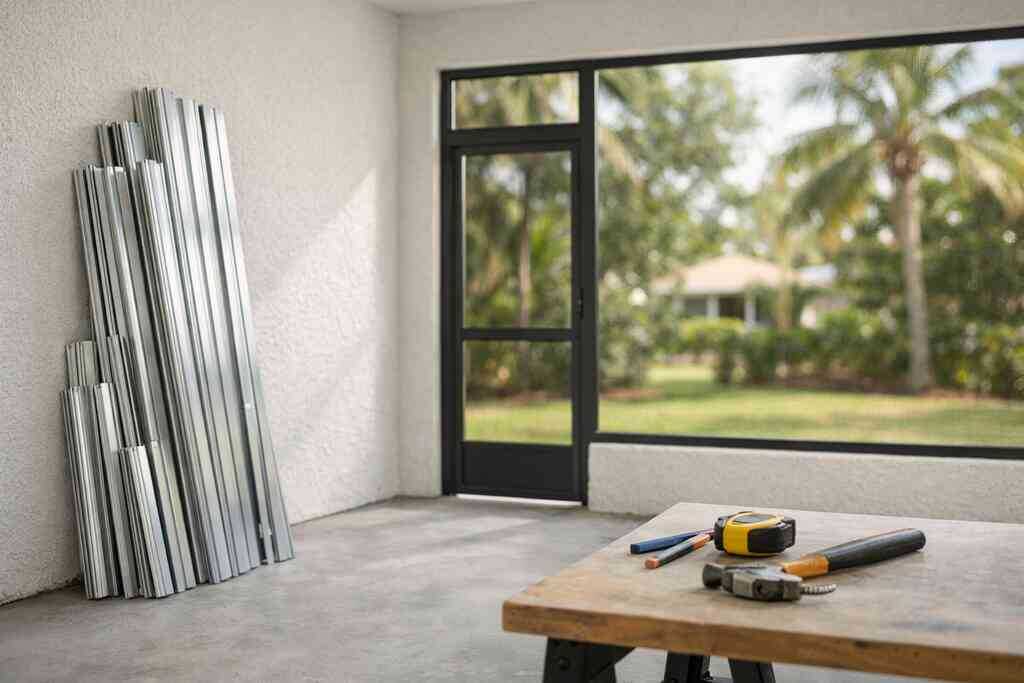
If anything is vague, pause. The easiest time to fix a paperwork problem is before the first post goes in.
Why a licensed contractor Palm Beach County is not the same thing as a qualified screen enclosure contractor South Florida
A licensed contractor Palm Beach County may still not be the right fit for a screen enclosure if they lack experience with screen-specific structures, coastal fastening, or HOA approvals. A general license does not automatically mean the contractor understands custom screen room design, pool enclosure details, or screened patio contractor work near salt air.
Think of it this way: a general contractor near me South Florida can be useful for broad projects, but a screen enclosure needs trade-specific judgment. The right contractor should speak comfortably about aluminum framing contractor details, hurricane impact resistance for screen enclosures, and how the enclosure connects to an existing slab or deck.
Use this comparison to spot the difference:
QuestionBasic bidderQualified screen enclosure contractorLicense checkSays “yes”Gives license number and proofMaterialsGeneric aluminumCorrosion-resistant, coastal-suitable materialsPermits“We can handle it”Explains the permit path clearlyStorm planningVagueTalks about hurricane code compliancePaperworkMinimalProvides contract, insurance, and lien waiver processIf you are expanding into a lanai builder South Florida scope, or even a sunroom contractor South Florida package, that distinction becomes even more important. Bigger scope means more moving parts, more inspections, and more chances for an avoidable mistake.
The permit trail that separates a smooth build from a costly redo
The permit trail is what separates a smooth enclosure project from a costly redo. Palm Beach County, Broward County, and Miami-Dade may each affect drawings, engineering, HOA review, and inspection expectations. If a contractor tells you permits are optional, that is your signal to walk away.
How Palm Beach County permit, Broward County permit, and Miami-Dade permit requirements can shape the design
Permit requirements can change enclosure size, attachment details, and even material choices. A Palm Beach County permit may call for different submittal details than a Broward County permit or a Miami-Dade permit, especially when the structure is exposed to wind or located near the coast. Miami-Dade projects often face especially careful scrutiny because of the region’s storm exposure and code culture.
For a South Florida permit process, the contractor should expect to coordinate:
- Site measurements and enclosure placement
- Drawings or engineered details
- Product approvals, when required
- Inspections at the right project stages
- Final sign-off before closeout
If the project touches a roof edge, slab edge, or existing patio cover, the permit path can get more complex. That is normal. What is not normal is skipping the review or assuming the inspector will “work it out later.”
The same goes for HOA approvals and condo rules. A South Florida HOA permit can add appearance standards, height limits, or placement restrictions. If you live in a condo, townhome, or planned community, the contractor should confirm that the enclosure design fits the association rules before fabrication begins.
One homeowner in a townhome community learned this the hard way. The enclosure itself met code, but the HOA objected to the visibility and finish details. The fix was not structural; it was procedural. A simple pre-review could have saved weeks.
If you are comparing contractors across trades, South Florida Contractors can also help you how to find a screen enclosure specialist who understands permit-driven work in this region. That matters because the right fit is not just a builder. It is a builder who knows how South Florida actually inspects projects.
What HOA approval, condo rules, and South Florida building codes mean for enclosure size, placement, and materials
HOA approval, condo rules, and South Florida building codes can control how large the enclosure can be, where it sits, and what it looks like. That is especially true for coastal homes, oceanfront home contractor projects, and waterfront home builder South Florida properties where wind and visibility standards can be tighter. The contractor should coordinate all of this before ordering materials.
If your project is part of a larger outdoor renovation, the scope may overlap with a pool deck contractor South Florida, paver installation South Florida, or outdoor kitchen contractor South Florida job. In that case, ask for a single plan that shows the enclosure, deck, and utility layout together. Coordinated design reduces change orders and keeps the final result cleaner.
For homeowners comparing options, South Florida Contractors is a practical place to start because it helps you compare local trades by city, ZIP code, and project type. If you want to speak with a local contractor next, call 18443112703 and use the directory to narrow down screened enclosure pros in South Florida before you commit. You do not have to sort out every detail alone, and you do not have to do it blindly.
Frequently Asked Questions
Question: What should I check first when hiring a screen enclosure contractor South Florida for my project?
Answer: Start with the basics: contractor licensing Florida, insurance, and permit experience. A real screen enclosure contractor South Florida should be able to provide a license number, proof of insurance, and a clear plan for the South Florida permit process before any work begins. That matters even more for exterior projects because hurricane code compliance, wind-load engineering for enclosures, and corrosion-resistant materials for coastal homes can all affect the final design. South Florida Contractors helps you find a contractor South Florida by location and trade, so you can compare options across Palm Beach, Broward, and Miami-Dade counties before you commit.
Question: How does How to Hire a Screen Enclosure Contractor in South Florida apply to Palm Beach County permit, Broward County permit, and Miami-Dade permit requirements?
Answer: The blog title How to Hire a Screen Enclosure Contractor in South Florida is really about making sure the contractor understands local rules before fabrication starts. A Palm Beach County permit, Broward County permit, or Miami-Dade permit can each affect drawings, attachments, inspections, and even material choices. That is why you should work with a licensed contractor Palm Beach County, licensed contractor Broward County, or licensed contractor Miami-Dade who knows the local review process and can coordinate with South Florida building codes and HOA requirements. South Florida Contractors is a practical place to start because it helps homeowners compare screened patio contractor options that are familiar with permit-driven work in the region.
Question: Why does hurricane code compliance matter so much for screen enclosure installation South Florida?
Answer: Hurricane code compliance matters because a screen enclosure is not just a cosmetic add-on in South Florida; it is a structural exterior system that has to stand up to wind, salt air, and storm exposure. A qualified pool enclosure contractor South Florida or aluminum screen enclosure builder should discuss hurricane impact resistance for screen enclosures, rust-resistant fasteners for enclosures, and corrosion-resistant materials for coastal homes. If your project is near the coast, on a waterfront lot, or tied into a roofline or slab, the contractor should also account for structural fastening and screen enclosure retrofit needs. South Florida Contractors connects you with local pros who understand these realities, which is especially important for oceanfront home contractor and waterfront home builder South Florida projects.
Question: Can a general contractor near me South Florida handle a patio enclosure contractor or lanai builder South Florida project?
Answer: Sometimes, but not every general contractor near me South Florida is the right fit for screen-specific work. A patio enclosure contractor or lanai builder South Florida should know how to handle custom screen room design, screened-in porch addition details, and how the enclosure connects to an existing deck, slab, or roof edge. If the project is part of a larger renovation, such as a pool deck contractor South Florida job, paver installation South Florida, or outdoor kitchen contractor South Florida scope, coordination becomes even more important. South Florida Contractors makes it easier to find a contractor South Florida who matches the exact trade and service area you need, instead of guessing based on a broad label.
Question: What paperwork should I ask for before signing with a screen enclosure contractor South Florida?
Answer: Before signing, ask for a written contract, insurance proof, a sample lien waiver Florida document, and a clear change order contractor Florida process. You should also confirm who will handle permits, what inspections are expected, and whether the contractor is prepared for contractor bonding requirements if needed for the municipality or job type. This is especially important for South Florida design build projects where the scope may overlap with home remodeling contractor South Florida work, South Florida home additions, or even sunroom contractor South Florida and outdoor living contractor South Florida services. South Florida Contractors encourages homeowners to verify every contractor carefully, because the right paperwork protects you from delays, misunderstandings, and avoidable contractor dispute resolution issues later.
Question: How can South Florida Contractors help me compare screen enclosure contractor South Florida options more confidently?
Answer: South Florida Contractors helps you compare local professionals by city, ZIP code, and project type, which is useful when you need a screen enclosure contractor South Florida who understands your county, your HOA, and your site conditions. Instead of relying on a random search, you can use the directory to review contractors in Palm Beach, Broward, and Miami-Dade and narrow the list to those who fit your project, whether that is a weatherproof outdoor living space, a screen replacement and rescreening job, or a full outdoor living upgrade. If you are also planning related work such as how to hire a hurricane impact window installer, hurricane shutter contractor work, or a South Florida luxury renovation, it helps to compare qualified trades in one place. For homeowners who want to move forward, South Florida Contractors is designed to make the search simpler while still reminding you to verify licensing and insurance before hiring.