

Hire a South Florida tile contractor by comparing scope, verifying licensing and insurance, confirming permit requirements, and demanding details on prep, waterproofing, and change orders before you sign. If you are staring at a low bid and feeling uneasy, that instinct is usually right.
Key Takeaways
- The cheapest tile quote often leaves out subfloor preparation, waterproofing, leveling, and grout details, which are the parts that protect the finished surface.
- In South Florida, humidity, slab movement, coastal exposure, and hurricane-code realities can change material choice, labor, and warranty risk.
- Before hiring anyone, verify the contractor license, insurance, and bonding, and ask who will actually do the work in your home.
- Permits and HOA approvals are not optional for many condo, townhome, bathroom, and full-remodel tile projects in Palm Beach, Broward, and Miami-Dade.
- A strong contract should spell out tile type, layout, allowances, payment terms, lien waivers, and change-order rules in plain language.
Why the cheapest tile quote can turn into the most expensive mistake
The cheapest tile quote usually misses the hidden work that makes a floor last: surface prep, crack isolation, waterproofing, and proper setting materials. In South Florida, those omissions can lead to hollow tiles, grout failure, moisture intrusion, and rework that costs far more than the original savings.
What South Florida homeowners miss when a tile bid skips subfloor prep and waterproofing
A low bid often looks fine until you read the exclusions. If a quote does not clearly include demolition, substrate repair, waterproofing for showers, membrane work over cracked slabs, and expansion joints, you are not comparing the same job. A true South Florida tile contractor should explain exactly what is being installed under the tile, not just the tile itself.
Here is the part most homeowners miss: tile is only as good as the surface below it. On recent bathroom projects, we have seen beautiful porcelain fail because the subfloor was not flattened enough before setting, or because the shower pan was built without a proper waterproofing system. That is where a small bid becomes a large repair.
A practical way to compare proposals is to put the scope side by side:
Line itemLow-risk proposalProblem proposalSurface prepListed in detail”Prep as needed”WaterproofingNamed product/systemNot mentionedMovement controlExpansion joints includedMissing or vagueGrout and sealantSpecific type listedGeneric wordingCleanup and haul-awayClearly includedExcludedIf you are planning tile installation for South Florida homes, remember that moisture moves differently here. Bathrooms, kitchens, lanais, and first-floor slabs all deserve a contractor who understands tile underlayment for humidity and crack isolation membrane work. A little extra up front can prevent a full tear-out later.
How coastal humidity, slab movement, and hurricane code realities change tile pricing across Palm Beach Broward and Miami-Dade
South Florida pricing is not just about tile size or style. Coastal humidity, slab movement, and hurricane-code expectations can affect the materials and labor needed in Palm Beach, Broward, and Miami-Dade. A licensed contractor Palm Beach County homeowners trust may price the same floor differently from a licensed contractor Miami-Dade because site conditions, condo rules, and inspection demands can differ.
The region also influences practical tile choices. Large-format tile requires flatter floors and more labor. Natural stone tile needs more care than ceramic or porcelain. Outdoor tile installation South Florida projects need slip resistance, drainage awareness, and products that handle salt air and rain exposure. If your project touches exterior transitions, treat it like a coastal home tile installation, not a basic interior refresh.
One homeowner in Broward came to us with a “simple” living room tile plan that turned into a slab repair once the old flooring came up. The original quote had no allowance for leveling or patching. Once the slab was opened, the honest contractor had to price the real work, and the job still came out cheaper than pretending the issue did not exist.
For current labor and business context, it helps to know the tile trade is part of a busy construction market with many small firms competing for work; that is one reason vetting matters. The U.S. Bureau of Labor Statistics and U.S. Census business data both show how broad and fragmented the construction field can be, which is exactly why you should verify who is actually licensed and insured before hiring.
The vetting sequence that separates a licensed contractor from a smooth talker
The safest way to hire is to verify the contractor first, then compare the scope, then review the contract. A legitimate South Florida flooring installer will not pressure you to skip this step. They will expect it, because proper licensing, insurance, and clear paperwork protect both sides.
How to verify a contractor license insurance and bonding before you sign anything
Start with the license. In Florida, you should confirm the contractor’s active status and scope through state or local records before any deposit changes hands. If the job is in a condo or involves remodel work beyond tile alone, make sure the business is qualified for the actual scope, not just the surface trade. For a simple starting point, use How To Find A Licensed Contractor. Then ask for proof of insurance and bonding, and read it carefully. You are looking for current coverage that matches the work being done on your property. A contractor should also be willing to provide a certificate of insurance and explain the difference between general liability and workers’ compensation in plain English. Do not rely on a verbal promise. Use this checklist before signing: 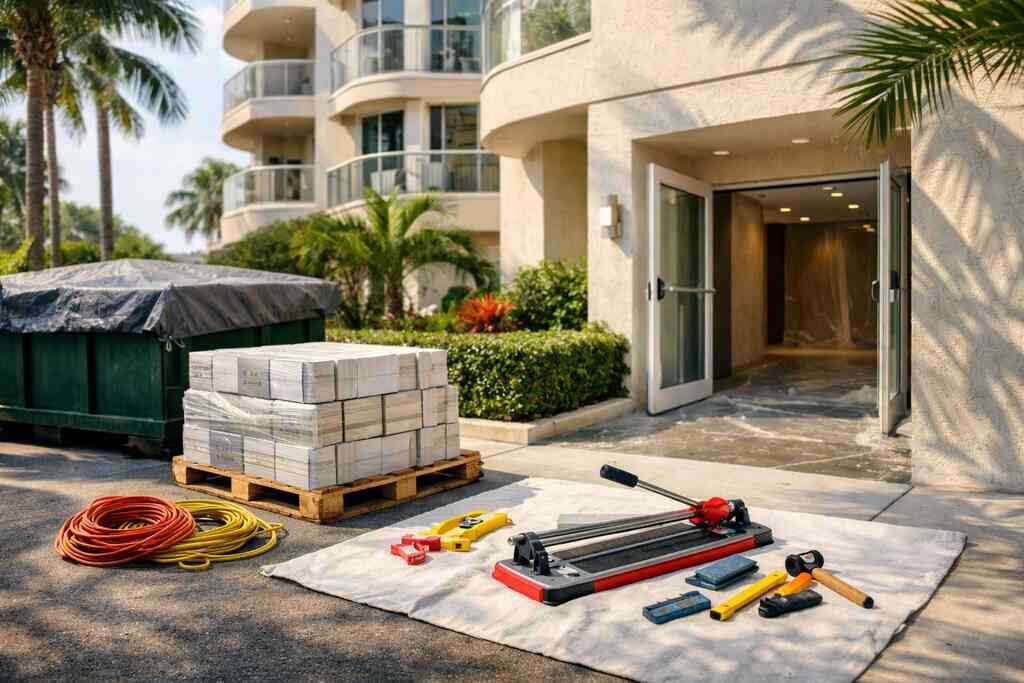
- Confirm the license is active.
- Ask who will supervise the job daily.
- Request proof of insurance.
- Ask whether subcontractors are covered.
- Confirm the company will supply lien waivers.
- Verify the proposal matches the permit scope.
The FTC advertising guidance is useful here because it reinforces a simple rule: claims should be clear, accurate, and not misleading. That standard matters when a contractor says they are “licensed and fully covered” without showing you paperwork.
What to ask a South Florida tile contractor about tile type layout crews warranty language and change orders
Ask direct questions. A good contractor will answer them without getting defensive. You want to know who sets the tile, who handles prep, what grout will be used, and how the layout will be centered in your main sight lines. You also want to know whether they have experience with porcelain tile installation, ceramic tile installation, natural stone tile contractor work, or large-format tile installer projects.
These questions separate a polished sales pitch from real field experience:
- What prep is included for my slab or subfloor?
- Will you install a crack isolation membrane?
- Who selects the grout, and why?
- How many crews do you use?
- What is excluded from the price?
- How are change orders handled?
- What warranty do you provide in writing?
If the contractor uses vague warranty language, stop and ask for specifics. A fair contract should define what is covered, for how long, and what voids the warranty. It should also explain how a change order contractor Florida process works, meaning any extra work gets approved in writing before labor continues. That one rule prevents most disputes.
For comparison shopping, local directories can help you build a short list quickly. A targeted listing such as Contractors Tile Installation or a city-specific page like Contractors Tile Installation Coral Springs can help you find a contractor South Florida residents can contact by location and trade. If you are weighing other related trades too, the same directory approach works for a home remodeling contractor South Florida project, not just tile.
The permit and protection checks that keep a tile project from stalling
Many tile jobs need more than a crew and a truck. Condo approvals, HOA rules, plumbing work, waterproofing, and broader remodel scopes can all trigger the South Florida permit process. If you skip that step, the project can stall, fail inspection, or create a problem at resale.
When tile work in condos townhomes and full remodels triggers the South Florida permit process and HOA approval
In South Florida, permits are common when tile work is part of a bathroom remodel, kitchen remodel, shower rebuild, or larger interior renovation. Condo renovation South Florida projects often add association review on top of municipal permits. Townhome remodeling South Florida projects may also need approval if flooring changes affect sound transmission, waterproofing, or structural elements.
The honest answer is simple: ask before demolition begins. If the contractor says a permit is unnecessary, ask them to explain why and to show the basis for that decision. For regulated work in Palm Beach County permit, Broward County permit, or Miami-Dade permit areas, you want the contractor to speak clearly about the process, not casually around it. The same is true for HOA permit review and building management rules.
Tile work commonly needs extra attention in these areas:
- Bathroom showers and tub surrounds
- Kitchen backsplashes tied to electrical or cabinet changes
- Flooring over cracked slabs or repaired subfloors
- Lanai and patio tile near exterior openings
- Multifamily buildings with noise and waterproofing requirements
South Florida building codes, including hurricane code compliance where exterior or structural conditions are involved, are not something to guess about. If the tile project connects to a lanai, outdoor kitchen, or other exterior living space, the contractor should know when additional approvals or weather-resistance details apply. On a few projects near the coast, we have seen perfectly good tile rejected only because the documents did not match the building’s rules.
You do not need to master the code book. You do need a contractor who respects it. If you want a clearer starting point, browse the Category South Florida Contractor Guides and compare local options before you call.
For homeowners who want one place to begin, South Florida Contractors is a practical directory because it helps you search by service, ZIP code, and city across Palm Beach, Broward, and Miami-Dade. It is useful when you want to find a contractor South Florida homeowners can actually reach, compare, and contact without guessing at who does what.
If you are ready to move forward, pick three licensed contractors, verify their insurance, and compare written scopes line by line. Then use the directory and call 18443112703 to start with local options that fit your project and your county rules.
Frequently Asked Questions
Question: How do I find a contractor South Florida homeowners can trust for tile installation for South Florida homes?
Answer: Start by using a South Florida Contractors directory to compare licensed contractor South Florida options by city, ZIP code, and service area across Palm Beach, Broward, and Miami-Dade. Then verify contractor licensing Florida records, ask for proof of insurance and bonding, and confirm who will actually manage the job on-site. A trustworthy South Florida tile contractor should be comfortable discussing subfloor preparation, waterproofing for tile showers, grout selection for South Florida humidity, and how they handle change orders in writing. That is the safest way to avoid vague bids and surprise costs.
Question: What should I ask before hiring a South Florida tile contractor for a bathroom remodel, kitchen backsplash, or large format tile installer project?
Answer: Ask what is included in the scope, not just the tile itself. A strong home remodeling contractor South Florida homeowners can rely on should explain demolition, subfloor preparation for tile, crack isolation membrane use, waterproofing, expansion joints for tile floors, and cleanup. For bathroom tile contractor South Florida projects, ask how they handle shower tile installation and moisture control. For kitchen tile backsplash installer work, ask how they protect cabinets and finishes. If you are comparing porcelain tile installation, ceramic tile installation, or natural stone tile contractor services, make sure the proposal clearly states materials, labor, layout, and what happens if unexpected repairs are needed.
Question: How do permits and HOA approvals work for tile contractor for condos and townhome remodeling South Florida projects?
Answer: Many tile projects in South Florida require more than a crew and materials. Condo renovation South Florida jobs, townhome remodeling South Florida projects, and bathroom remodel tile work may trigger the South Florida permit process, plus South Florida HOA permit review. If the work touches waterproofing, plumbing, slab repairs, or exterior transitions, you may also need a Palm Beach County permit, Broward County permit, or Miami-Dade permit depending on location. A licensed contractor Palm Beach County, licensed contractor Broward County, or licensed contractor Miami-Dade should be able to explain the permit path clearly and never suggest skipping it. For exterior or structural-related work, hurricane code compliance and South Florida building codes matter, so the contractor should be familiar with the approval process before demolition begins.
Question: Why can the cheapest quote from a general contractor near me South Florida turn into a bigger repair later?
Answer: Because low bids often leave out the hidden work that makes tile last. The most common omissions are tile removal and replacement details, slab leveling, waterproofing for showers, crack control, and proper grout and sealant products. In South Florida, humidity, slab movement, and coastal conditions can make these issues worse if they are ignored. A reliable South Florida flooring installer or South Florida tile contractor should spell out exactly what is being prepared under the tile and what products are being used. If a quote says prep as needed or waterproofing not included, that is usually a warning sign. South Florida Contractors helps homeowners compare written scopes so they can find a contractor South Florida residents can hire with fewer surprises.
Question: What makes South Florida Contractors a useful place to start for How to Hire a Tile Contractor for South Florida Homes?
Answer: South Florida Contractors is a practical starting point because it helps you search by ZIP code, city, and service area across South Florida, instead of guessing which company handles your project. Whether you need a South Florida bathroom remodeler, South Florida kitchen remodeler, outdoor tile installation South Florida specialist, patio tile contractor, or lanai tile installation contractor, the directory makes it easier to compare options. You can review contractor details, contact them directly, and then ask the right questions about licensing, insurance, warranty terms, lien waiver Florida paperwork, and change order contractor Florida procedures. That is especially important for luxury tile renovation South Florida projects, oceanfront home contractor needs, and any job where hurricane code compliance or South Florida permit process rules may apply. Always verify licensing and insurance before hiring, but the directory gives you a smart place to begin.