
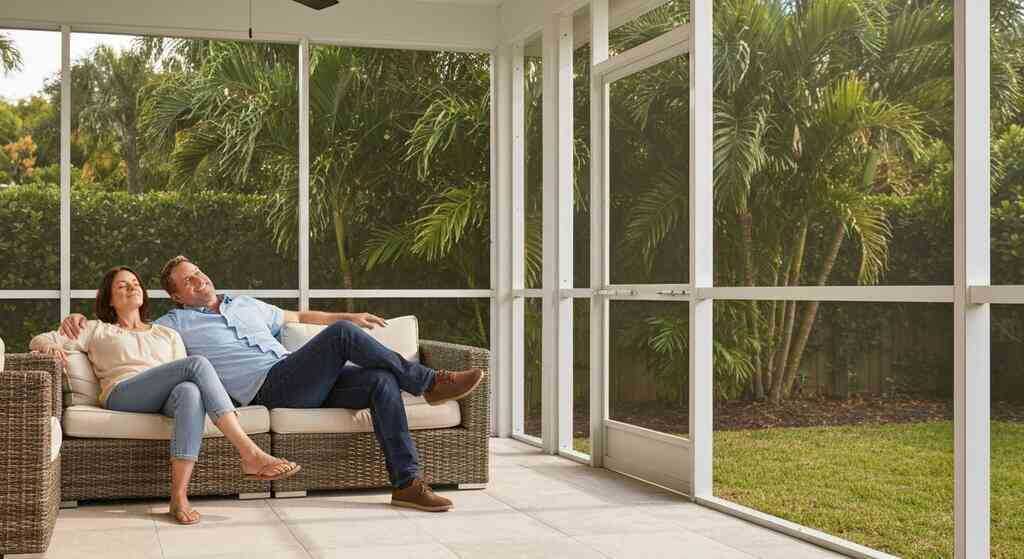
Why Your South Florida Backyard Is Begging for a Screened Porch
You step outside on a Friday evening in May, ready to enjoy your backyard. Within thirty seconds, the mosquitoes find you. The humidity settles on your skin like a wet blanket. You retreat back inside, defeated. This scenario plays out in thousands of South Florida homes every single night. The problem is not your yard. The problem is the missing barrier between you and the elements. A screened porch changes the entire equation.
The idea of outdoor living in Florida is appealing in theory. In practice, our subtropical climate throws constant obstacles at anyone who wants to use their yard. Bugs swarm after sundown. Sudden downpours appear from nowhere. The sun beats down with an intensity that makes sitting outside feel like an endurance test. South Florida general contractors see this frustration repeatedly when they visit homes for initial consultations. Homeowners point at their patios and say, “I want to use this space, but I just can’t.”
Building a screened enclosure installation in Boca Raton or anywhere along the coast solves three core problems at once. First, it keeps the bugs out without blocking the view. Second, it provides shade and shelter from rain while still allowing fresh air to flow. Third, it creates a defined space that feels like a room but lives like the outdoors. That combination transforms the way families actually use their property. Suddenly, the backyard becomes an extension of the house rather than an ornament you look at through the sliding glass door.
The shift in how people use outdoor space has accelerated in recent years. Families now expect their homes to support multiple ways of living, working, and relaxing under one roof. A screened porch delivers that flexibility without the cost or complexity of a full interior addition. For anyone researching bug-free outdoor living near Delray Beach, the decision usually comes down to understanding what life looks like after the screens go up. The answer is almost always more time spent outside, more meals enjoyed with family, and more value pulled from every square foot of the property.
The Real Cost of Not Having a Bug-Free Outdoor Living Space
Let’s talk about the cost of doing nothing. You might think you are saving money by skipping the porch project. Look closer at what you are actually losing. Every nice evening you spend indoors because the insects are unbearable is a missed opportunity. Every cookout cut short by a sudden swarm of mosquitoes means wasted food, wasted effort, and wasted time. Families in South Florida spend hundreds of dollars each year on citronella candles, bug sprays, foggers, and repellent devices that barely work. That money adds up fast.
Beyond the direct expenses, consider the opportunity cost of unused square footage. A typical South Florida home sits on a lot where outdoor space represents a significant portion of the total property value. When you cannot use that space comfortably for six to eight months each year, you are essentially paying for a feature you cannot enjoy. A 400-square-foot patio that remains empty most evenings is an expensive decoration. A contractor in South Florida will tell you that adding a screened enclosure flips that math completely. Now the space becomes usable year-round, often for less money than finishing a basement or adding a room inside the house.
There is also the hidden cost of deferred maintenance. Patios and decks exposed to direct sun, rain, and salt air deteriorate faster. Furniture fades. Cushions rot. Wooden structures warp and splinter. By adding a screen room, you extend the life of everything underneath it. The protection from UV rays and rain alone can save thousands of dollars in replacement costs over a five-year period. When you factor in the health benefits of spending more time outdoors without being bitten, the argument for building becomes even stronger.
How a Screened Enclosure Turns Rainy Season Into Prime Time
South Florida’s rainy season runs roughly from May through October. During these months, afternoon thunderstorms are almost a daily certainty. The sky looks beautiful in the morning, and by three o’clock the clouds roll in. Rain pours hard for an hour, then vanishes. This pattern frustrates anyone trying to plan outdoor activities. You cannot guarantee that your dinner party will stay dry. You cannot set up outdoor furniture with confidence. The unpredictability forces many homeowners to simply give up on summer entertaining altogether.
A screened porch eliminates that uncertainty. When the rain comes, you stay dry underneath the roof and behind the screens. You hear the storm. You smell the fresh air. You watch the water run off the roof and the yard turn green. But you remain comfortable and dry. This experience is one of the greatest Florida room advantages in Fort Lauderdale and throughout the region. The ability to enjoy the weather without being battered by it changes the whole relationship between the homeowner and the environment.
Families who install screen rooms report using their outdoor space three to four times more often than before. Evening dinners move from the kitchen table to the porch. Kids do homework at a desk overlooking the yard. Adults read books or scroll through their phones in a space that feels both inside and outside. The rainy season stops being a limitation and becomes part of the atmosphere. That shift in perception alone makes the investment worthwhile for most homeowners.
Screened Porch vs Sunroom Which One Survives a Florida Summer
Many homeowners confuse screened porches with sunrooms or three-season rooms. The difference matters enormously in our climate. A sunroom is a fully enclosed space with windows, insulation, and often heating and cooling. It acts as an interior room with lots of glass. A screened porch, on the other hand, uses mesh panels to keep bugs out while allowing air to circulate freely. Each option serves a different purpose and fits a different budget.
The screened porch vs sunroom in South Florida comparison usually comes down to how you want to experience the outdoors. A sunroom gives you climate control and protection from everything. It feels like a bright living room. A screened porch gives you fresh air and natural breezes while blocking pests and debris. During the spring, fall, and many winter months, the screened porch provides the more pleasant experience because you feel connected to the yard. You smell the jasmine. You hear the birds. You feel the breeze.
Cost differences are substantial. A sunroom requires foundations, electrical work, HVAC connections, and impact-rated windows that meet the Florida Building Code. A screened porch uses lighter materials, simpler foundations, and much less labor. Most homeowners find that a screened porch costs forty to sixty percent less than a comparable sunroom. That savings can fund other upgrades like better flooring, outdoor kitchen elements, or higher-quality furniture. For the typical Florida family, the screened porch delivers more usable space per dollar than any other home improvement. And when properly designed with hurricane-rated components, it holds up through storm season with minimal issues.
What You Need to Know Before Building a Screened Porch in South Florida
Knowledge separates a successful porch project from a frustrating one. Too many homeowners sign a contract without understanding the building codes, material options, and structural requirements specific to our region. They end up with a porch that fails inspection or deteriorates within a couple of years. Taking time to learn the basics before you start saves money, time, and headaches. The best general contractor in South Florida will walk you through these details during the consultation process. But knowing them in advance helps you ask the right questions and evaluate bids more effectively.
The Florida Building Code treats screened enclosures differently depending on size, location, and structural connections. A small porch attached to the house with a lightweight roof follows one set of rules. A large pool cage enclosure spanning forty feet requires engineering stamps and wind load calculations. A standalone structure built away from the house has foundation requirements that a simple attached porch does not. These distinctions matter when you apply for permits and schedule inspections.
Local municipalities in South Florida enforce the code with varying levels of strictness. Broward County and Miami-Dade County both have additional requirements beyond the state code. Miami-Dade requires a Notice of Acceptance (NOA) for any product used in the building envelope, including screen mesh and framing components. Broward County mandates specific wind load ratings based on the site’s proximity to the coast. A Delray Beach construction company with experience in multiple jurisdictions will already know these nuances and factor them into the design.
Hurricane-Rated Screen Rooms vs Standard Enclosures What the Building Code Requires
Not all screen rooms are built to the same standard. A standard enclosure uses lightweight aluminum framing and standard mesh. It provides basic bug protection and light wind resistance. A hurricane-rated screen room uses thicker aluminum extrusions, reinforced corners, heavier gauge mesh, and stronger attachment points to the house or foundation. The difference in cost is noticeable but so is the difference in peace of mind.
The Florida Building Code requires that any screened structure must withstand specific wind loads based on its location. Properties within one mile of the coast face higher requirements than those further inland. A home in Fort Lauderdale or Miami Beach needs a stronger enclosure than one in Weston or Parkland. Your contractor must calculate these loads during the design phase and submit them with the permit application. Skipping this step or using standard components in a high-wind zone leads to failed inspections and potentially dangerous structures.
Many homeowners looking at hurricane-rated screen rooms in Palm Beach County choose the upgraded option even when the code allows a lower standard. The logic is simple. A storm-rated enclosure survives not just hurricane season but also the daily stress of salt air, strong thunderstorms, and occasional tropical storms. The extra investment pays for itself the first time a severe weather system passes through. When you ask local contractors about this choice, most will recommend the stronger option for anyone planning to stay in their home longer than five years.
Aluminum vs Fiberglass Screen Mesh Which One Lasts Longer in Salt Air
The type of mesh you choose directly affects how long your porch stays tight and clear. Two main options dominate the market. Aluminum screen mesh has been the traditional choice for decades. It offers excellent durability, good visibility, and strong resistance to tearing. Fiberglass screen mesh has become more popular in recent years because it does not dent, it resists corrosion better, and it costs less to replace when damaged.
In coastal environments like Boca Raton, Delray Beach, and any property within a few miles of the ocean, salt air accelerates corrosion on metal surfaces. Aluminum screen mesh holds up reasonably well, but it eventually develops oxidation, especially if the coating wears off. Fiberglass screen repair in Pompano Beach is common because the material handles salt exposure better than metal alternatives. Fiberglass does not corrode at all. It flexes under impact rather than tearing. And when it does get damaged, patching or replacing a section costs less than aluminum repair.
The trade-off comes down to aesthetics and longevity. Aluminum mesh maintains a tighter, more rigid appearance. It does not sag or stretch over time. Fiberglass can develop slight sagging in large panels, though modern tensioning systems minimize this issue. For pool cage enclosures in South Florida, many contractors recommend fiberglass mesh because it stands up to chlorine exposure, salt spray, and the occasional volleyball hitting the screen. For applications where pets or children test the mesh regularly, the flexibility of fiberglass often outperforms the rigidity of aluminum.
Pool Cage Enclosure or Standalone Porch How Your Backyard Layout Decides
Your existing backyard configuration drives the design more than any other factor. Homes with in-ground pools almost always benefit from a pool cage enclosure. The structure surrounds the pool and creates a full outdoor room that includes the water, the deck, and the seating area. This setup keeps leaves, bugs, and debris out of the pool while creating a comfortable environment for swimmers and loungers alike. A pool contractor South Florida recommends can coordinate with your porch builder to ensure the enclosure fits perfectly around the pool equipment and cleaning access points.
Properties without pools face a different set of considerations. A standalone porch attached to the house at the back door or off the master bedroom creates a private retreat without covering the entire yard. This approach leaves more of the yard open for gardening, pets, or children’s play areas. The screened porch becomes a specific destination rather than an enclosure that defines the entire backyard space. For homeowners considering an ADU builder in Palm Beach County for future projects, a standalone porch can serve as a transitional structure that enhances the main house without complicating future additions.
The shape and orientation of your lot also matter. Narrow lots in older neighborhoods like those in Fort Lauderdale or parts of Miami benefit from a porch that runs the length of the house. Wider lots in suburban areas like Coral Springs or Weston allow for square or L-shaped designs that create multiple zones within one enclosure. A good South Florida general contractor will measure your property, note the sun path, and suggest orientations that maximize shade during the hottest parts of the day while capturing evening breezes.
The Hidden Costs of Porch Screen Replacement and How to Avoid Them
Every screened porch will need maintenance over its lifetime. Screens get torn. Framing gets bent. Roofing materials degrade. The owners who budget for these costs upfront avoid unpleasant surprises later. Screen replacement costs vary based on the material, the size of the panels, and the complexity of the framing. A typical 400-square-foot enclosure might require screen replacement every seven to ten years, with costs ranging from a few hundred dollars for DIY fiberglass up to two thousand dollars for professional aluminum replacement.

You can extend the life of your screens by choosing higher-quality mesh from the start. Cheap mesh saves money today but costs more over time. Pet owners should consider pet-resistant screen mesh that uses heavier strands and tighter weaves. This material costs more per square foot but resists scratches, punctures, and tears far better than standard mesh. Homeowners who invest in a pet-proof screen porch in South Florida report that the upgrade pays for itself within two years by eliminating constant repair calls.
Regular maintenance also prevents bigger problems. Rinse the screens with a garden hose every few months to remove salt residue and pollen buildup. Check the tension of the mesh at the beginning of hurricane season each year. Tighten any loose fasteners on the framing before wind can work them loose. Replace damaged screens immediately rather than waiting until the tear grows. These small habits extend the life of your enclosure by years and keep it looking clean and professional.
Permits and Inspections in Broward and Miami-Dade What Your Contractor Must Pull
Building a screened porch without permits is a gamble that rarely pays off in South Florida. Local building departments in Broward and Miami-Dade counties actively enforce permit requirements for any structure exceeding certain size thresholds. Even small enclosures often require permits because they attach to the house and affect the building envelope. Property owners who skip permits risk fines, forced removal of the structure, and complications when selling the home.
A licensed contractor in South Florida knows the permitting process in each municipality. The contractor pulls the permit, schedules inspections at the correct stages of construction, and ensures that the final structure meets the code. Homeowners who attempt to pull their own permits often discover that the requirements are more complex than expected. You need stamped engineering drawings for wind loads. You need product approvals for the framing and mesh. You need site plans showing property lines and setback distances.
The inspection process typically includes three stages. The footing inspection checks the foundation before concrete is poured. The framing inspection verifies that the structural connections meet the approved plans. The final inspection confirms that screens, doors, and roofing are installed correctly. Any contractor who tries to skip these steps or asks you to sign off on work that has not been inspected should raise immediate red flags. A legitimate construction permit in Broward for a screen room provides protection for both you and the contractor.
Designing a Screened Porch That Adds Real Value to Your Home
A properly designed screened porch does more than keep bugs out. It becomes a living space that adds usable square footage and increases property value. The design decisions you make today determine how much enjoyment you get from the porch over the next decade. Smart choices around materials, layout, and connections to the house maximize both daily utility and resale appeal.
The most valuable screened porches feel like natural extensions of the home rather than afterthoughts attached to the back. Matching the roof pitch, exterior finishes, and color palette to the main house creates visual continuity. Using doors and windows that complement the existing architecture ties the spaces together. A porch that looks like it was always part of the house adds more value than one that appears bolted on.
Flooring selection deserves serious attention because the wrong choice leads to constant maintenance. Porcelain tile that mimics wood or stone handles moisture well and cleans easily. Outdoor-rated luxury vinyl plank offers a softer feel underfoot while resisting water damage. Avoid natural wood or standard laminate, which swell and warp in our humid climate. A screened porch builder will show you samples and explain which options work best for your specific exposure level and usage patterns.
Pet-Proof Screen Porch Ideas That Don’t Sacrifice the View
Pet owners face a unique challenge with screened porches. Dogs love to lean against screens. Cats love to climb them. Both activities damage standard mesh quickly. The solution is not to give up on the porch but to choose materials and designs specifically for animals. Pet-resistant screen mesh uses heavier denier strands that resist tearing even when animals push against them. This mesh also has a tighter weave that prevents small paws from pushing through.
Install a kick plate along the bottom two feet of the screen frame. This solid panel protects the most vulnerable area where pets typically make contact. You can use aluminum, composite, or clear polycarbonate panels depending on your budget and aesthetic preferences. The kick plate maintains the clean look of the porch while eliminating the most common failure point. Homeowners who choose this option report that their screens last three to four times longer than standard installations.
Consider the door configuration as well. A pet door built into the screen room door allows dogs to come and go without scratching at the mesh. Magnetic screen doors with heavy-duty magnets work well for frequent pet traffic. Train your pets early to use the designated entry point rather than pushing through the screen panels themselves. With the right materials and a few design modifications, your pet-proof screen porch in South Florida becomes a space that works for both humans and animals equally.
Connecting Your Kitchen Remodel to a Screened Porch for Indoor-Outdoor Flow
Kitchens and screened porches form a natural pair. Moving meals from the indoor kitchen to the outdoor porch creates the kind of seamless living that Florida homes do best. When you plan a kitchen remodel, think about how the new layout connects to the porch. A pass-through window or a sliding door system that opens fully eliminates the barrier between cooking and dining spaces.
For homeowners considering a West Palm Beach kitchen remodeling project alongside a porch addition, the timing matters. Coordinate both projects so that the contractor can align the floor heights, door openings, and material transitions. A flush threshold between the kitchen and the porch allows easy movement and prevents tripping hazards. Consistent flooring materials or complementary designs help the two spaces feel connected even when they serve different functions.
Consider adding an outdoor kitchen element to the porch itself. A small countertop with a sink, a built-in grill, or a beverage refrigerator turns the porch into a complete cooking and dining destination. This combination works especially well for homeowners who love entertaining. Guests gather on the porch while the host moves between the indoor kitchen and outdoor cooking area. The screened enclosure keeps bugs away from food and drinks while allowing the party to flow naturally between inside and out.
Flooring Options That Handle Pool Splash and Florida Humidity
Florida humidity destroys most flooring materials within a few years. The constant moisture in the air, combined with water tracked in from pools and rain, challenges even the most durable products. Choose flooring specifically rated for outdoor or covered exterior applications. Porcelain tile leads the market for screened porch flooring because it resists moisture, does not fade in sunlight, and cleans with a simple mop.
Textured porcelain tile that mimics stone or wood offers slip resistance that smooth tiles lack. The texture prevents accidents when the floor gets wet from pool splash or rain blowing through the screens. Large format tiles with minimal grout lines reduce maintenance and create a cleaner appearance. Install the tile with a slight slope away from the house to direct any water that blows through the screens toward the yard rather than toward the foundation.
Outdoor-rated luxury vinyl plank provides a warmer, softer alternative to tile. Modern formulations resist UV damage and temperature extremes better than earlier versions. Luxury vinyl also offers better impact resistance if you drop things on the floor. The material stays cooler underfoot than dark tile during the summer months. Whichever option you choose, install a proper vapor barrier beneath the flooring to prevent moisture from wicking up through the concrete slab. This simple step prevents mold, mildew, and premature flooring failure.
Lighting and Ceiling Fans the Difference Between a Porch and a Room You Actually Use
Lighting transforms a dark, buggy porch at night into an inviting extension of your home. Install multiple layers of light rather than relying on a single fixture. Recessed lights in the ceiling provide general illumination. Pendant lights over a dining table or seating area create focal points. Accent lighting along the roofline or floor perimeter adds ambiance without overwhelming the space.
Ceiling fans are essential for year-round comfort on a screened porch. The fans move air through the screens, creating a cooling effect even on still, humid days. Choose fans rated for damp or wet locations because the porch experiences higher humidity than interior rooms. Outdoor-rated fans use sealed motors and corrosion-resistant materials that hold up to salt air exposure. Install fans at the center of each distinct seating area to maximize air movement where people actually sit.
Dimmers allow you to adjust the lighting to match the mood and time of day. Bright settings work well for meals and activities. Dimmer settings create a relaxed atmosphere for evening conversations. Smart switches let you control the lights and fans from your phone or set them on timers. These small conveniences make the difference between a porch you occasionally use and a porch that becomes your favorite room in the house.
How a Screened Porch Boosts Your Home’s Resale Value in Boca Raton and Delray Beach
Real estate data consistently shows that screened porches add measurable value to homes in South Florida. Buyers actively seek properties with existing screened enclosures because they understand the cost and complexity of building one themselves. A well-designed porch that integrates with the house and the yard commands a premium in the resale market.
Homes in Boca Raton and Delray Beach with screened porches sell faster than comparable homes without them. Real estate agents in these markets report that buyers rank screened outdoor space as one of their top priorities, especially families with young children. Parents appreciate having a safe, enclosed space where kids can play without direct sun exposure or bug bites. Older buyers value the ability to sit outside comfortably without battling insects and humidity.
The return on investment for a screened porch varies based on the quality of construction and the local market conditions. Industry estimates suggest that homeowners recoup fifty to seventy percent of the porch cost at resale. That number rises when the porch connects thoughtfully to the interior living spaces and includes desirable features like ceiling fans, good flooring, and attractive lighting. For homeowners who plan to stay in their home for five years or more, the daily enjoyment of the porch far outweighs any calculation of resale value. The porch becomes the place where memories are made, meals are shared, and life slows down a little. That kind of value does not show up on an appraisal, but every homeowner feels it.
Frequently Asked Questions
Question: After reading the blog post South Florida Contractors Explain Screened Porch Benefits, what are the first steps I should take to get a bug-free outdoor living space installed at my home in Delray Beach?
Answer: The first step is to visit the South Florida Contractors directory and enter your zip code to find a screened porch builder near you. You will want to contact several local specialists to discuss your specific outdoor living space needs. During the consultation, a general contractor in South Florida will evaluate your yard to determine the best layout, whether that is a pool cage enclosure or a standalone porch. They will also explain the cost estimate for your screened enclosure installation, factoring in materials like aluminum screen porch or fiberglass screen repair options. It is crucial to ask about hurricane-rated screen rooms and how they comply with the Florida DBPR license check and construction permit Broward requirements. The contractor will guide you through the design ideas and handle the permitting process, ensuring your new porch adds maximum outdoor living space value to your Delray Beach home.
Question: How does a screened porch compare to a sunroom in terms of cost and value for a home in Fort Lauderdale, and do home builders Florida typically recommend one over the other?
Answer: For a Fort Lauderdale renovation, a screened porch is generally the more cost-effective choice compared to a sunroom. The screened porch vs sunroom decision hinges on how you want to use the space. A screened porch offers Florida room advantages like natural airflow and a direct connection to the outdoors, while a sunroom provides full climate control. Many home builders Florida recommend a screened porch because it costs forty to sixty percent less to build and integrates more naturally with coastal construction. A contractor in South Florida will note that when you consider the renovation cost calculator for a porch project, you are getting more usable square footage for your investment. This space also adds significant outdoor living space value when you eventually sell. Our directory lists Boca Raton remodelers and Fort Lauderdale renovation experts who can provide a detailed kitchen remodel estimate if you are also planning to connect the porch to your kitchen.
Question: I have a pool and want to build an enclosure, but I am worried about maintenance and the cost of patio screen replacement. What materials should a pool contractor South Florida recommend for longevity?
Answer: A pool contractor South Florida will tell you that the choice of screen mesh is critical for longevity, especially in salt air. For a pool cage enclosure, fiberglass screen repair in Pompano Beach is common because the material resists corrosion from chlorine and salt better than aluminum. However, aluminum screen porch options offer a tighter, more rigid appearance that some homeowners prefer. To avoid frequent patio screen replacement costs, consider upgrading to a pet-proof screen porch design that uses heavier mesh. Your pool contractor South Florida should also discuss hurricane-rated screen rooms to ensure your structure meets Miami-Dade building code requirements. Regular screen porch maintenance, like rinsing off salt residue, will extend the life of your enclosure. A Delray Beach custom home builder can coordinate with a pool specialist to ensure your screened enclosure installation complements your existing pool and deck, providing years of bug-free enjoyment.
Question: How can a West Palm Beach kitchen remodeling project be integrated with a new screened porch to improve indoor-outdoor flow?
Answer: A West Palm Beach kitchen remodeling project is the perfect opportunity to create seamless indoor-outdoor flow by connecting your kitchen to a new screened porch. Your contractor can install a large sliding glass door or a pass-through window system that opens the kitchen directly to the porch. When planning the kitchen remodel estimate, you should include the cost of impact doors installation for the transition, which also provides hurricane-proof windows benefits. The contractor will ensure the flooring heights match, creating a flush threshold. For the porch, choose durable outdoor-rated flooring like porcelain tile to handle pool splash and Florida humidity. This integration allows you to expand your entertaining space and make the most of your home addition Florida project. Our directory can help you find Miami general contractor professionals or ADU builder Palm Beach experts who specialize in blending historic home renovation charm with modern outdoor living.
Question: What are the most important factors I need to verify about a contractor in South Florida before hiring them to build a screened porch, especially regarding building codes and hurricane season prep?
Answer: Before hiring a contractor in South Florida for a screened porch build, you must verify their credentials and knowledge of local building codes. Start by performing a Florida DBPR license check to ensure they are licensed and insured. Ask if they are experienced with coastal construction and understand the specific construction permit Broward and Miami-Dade building code requirements for screened enclosures. A reputable contractor will have a portfolio of hurricane-rated screen rooms and can explain how their designs incorporate hurricane season prep. They should also be able to provide a detailed renovation cost calculator for your porch project, including the cost of materials like impact doors installation and hurricane-proof windows if needed. Use the South Florida Contractors Directory to find a screened porch builder who has verifiable experience with pool contractor South Florida collaborations and can show you examples of their work in Boca Raton or Delray Beach. This due diligence is crucial for protecting your investment and ensuring your bug-free outdoor living space is safe and built to last.