
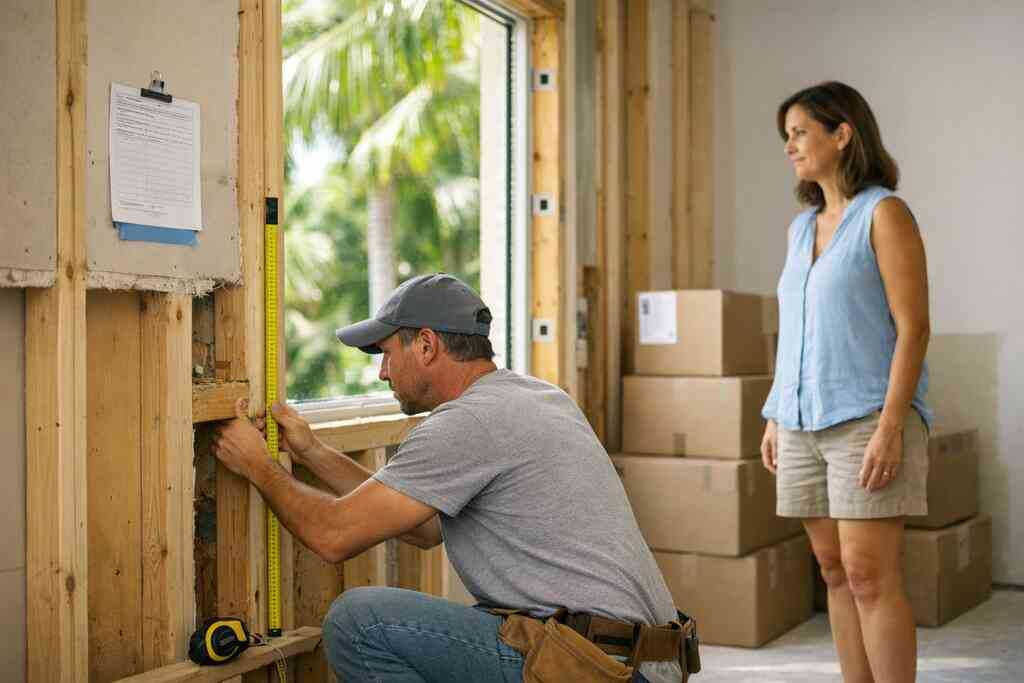
Most people think permits slow a project down. In South Florida, they often do the opposite. If you are staring at a remodel quote and feeling uneasy, that reaction makes sense. The hard part is not just choosing finishes. It is understanding how South Florida building codes, hurricane requirements, and county review shape the real scope.
We hear this from clients almost every week. A “simple” update starts with paint and ends with framing, electrical, and permit questions. That is especially true across Palm Beach, Broward, and Miami-Dade Counties. If you want to find a contractor in South Florida for code-ready remodels, start by assuming the code conversation matters from day one. That mindset saves time, money, and stress.
Why a simple remodel can trigger a full code conversation in South Florida
When a cosmetic update turns into structural work that pulls in permit review
A kitchen facelift can become a structural job fast. Remove one wall, and you may uncover load-bearing framing, outdated wiring, or plumbing that no longer matches the planned layout. The same thing happens with a bathroom refresh when you move a shower, replace a tub, or open a wall for new tile and waterproofing. That is why a home remodeling contractor South Florida should always look beyond surface finishes. The code follows the work, not the marketing description.
One client in Broward wanted new cabinets, a larger island, and better sightlines to the family room. The demo exposed a doubled-up wall with hidden electrical runs, so the plan changed before the first cabinet arrived. The permit review became the safety net. That is frustrating in the moment, but it is far better than discovering the problem after drywall is closed. If you need a South Florida contractors guide to the 2026 Florida Building Code, this is the first thing to understand: scope drives review.
What homeowners in Palm Beach, Broward, and Miami-Dade usually underestimate about the permit chain
Most homeowners underestimate how many hands touch a project. You may start with a designer, then a contractor, then a city reviewer, then an inspector, then possibly an HOA board or condo association. Each step can ask for something different. That is why the South Florida permit process feels heavier than many other markets. It is not just paperwork; it is sequencing.
The permit chain also changes by location. A licensed contractor in Palm Beach County may face a different submittal path than a licensed contractor Broward County or licensed contractor Miami-Dade. That difference matters for timing, drawings, product approvals, and inspection expectations. Here is the part most homeowners miss: the fastest quote is rarely the fastest project. If you are comparing a general contractor near me South Florida, ask how they handle approvals before you compare price.
The hidden difference between a fast quote and a code-ready scope of work
A fast quote is often based on visible work only. A code-ready scope of work includes demolition allowances, permit notes, structural review, product approvals, and inspection planning. The second version is more honest. It also creates fewer surprises after you sign. That matters for a South Florida kitchen remodeler, South Florida bathroom remodeler, or South Florida custom home builder alike.
The best estimates explain exclusions clearly. They define what happens if framing is damaged, if electrical must be updated, or if a window opening needs reinforcement. A clean proposal also reduces conflict later. If a contractor uses vague language, you may be buying assumptions instead of construction. For homeowners who want clarity, a licensed contractor in Palm Beach County is only useful if the scope is equally precise.
What the 2026 Florida Building Code changes in real life for South Florida contractors
Where hurricane-code compliance shows up first in windows, roofs, doors, and exterior openings
Hurricane-code compliance usually shows up first at the building envelope. That means windows, doors, garage doors, roof connections, soffits, and other exterior openings. If you are working with a hurricane impact window installer South Florida or a hurricane shutter contractor, expect product approval questions. Expect fastening details too. The assembly matters as much as the glass.
The same is true for roofing. A roofing contractor South Florida does not just replace shingles or underlayment. They must consider tie-downs, attachment patterns, and the roof’s connection to the structure. On many jobs, hurricane roof tie-downs become the detail that separates a routine replacement from a structural discussion. For that reason, hurricane code compliance is not a side issue. It is the core of exterior work.
Why coastal homes and inland homes do not face the exact same construction pressure
A coastal home feels wind, salt, and moisture differently than an inland home. That does not mean inland homes escape scrutiny. It means the pressure points differ. Oceanfront home contractor projects and waterfront home builder South Florida work often demand a sharper eye on corrosion, exposure, and elevated risk. Coastal homes also face tougher conversations around openings, attachments, and materials.
An inland property still has to meet the same code framework, but the design risk may be lower in some categories. That difference shows up in hardware choice, envelope detailing, and inspection focus. A coastal home builder Florida knows that salt air can punish exposed connectors and fasteners. Meanwhile, a South Florida custom home builder working farther inland may prioritize different site and drainage concerns. In both cases, the code is the baseline, not the finish line.
How impact ratings tie into storm protection without assuming every product or assembly is equal
An impact rating is not a magic shield. It tells you a product or assembly has been tested for certain conditions. It does not guarantee every installation performs the same way. A window can have an excellent rating and still fail if installed poorly. That is why installation quality matters as much as the label.
This is especially important for hurricane impact window installation in South Florida. The opening size, attachment method, surrounding substrate, and approved product listing all matter. A homeowner may think two windows are interchangeable because both say “impact.” They often are not. The difference can affect insurance documentation, permit approval, and long-term performance. If you are considering hurricane impact window installation in South Florida, ask for the full product and installation package, not just the sales pitch.
What changes matter most for South Florida building codes on remodels, additions, and rebuilds
The biggest code pressure points are usually openings, structure, drainage, and life safety. Remodels that stay inside finishes may be straightforward. Additions, second story work, and rebuilds are not. A South Florida home additions project can trigger engineering, energy compliance, and more inspections. A second story addition South Florida is even more likely to pull structural review into the schedule.
What we have seen in 2026 specifically is that homeowners want more open layouts and better storm resilience at the same time. That combination raises the stakes. It also creates smarter buildings when handled correctly. South Florida sustainable home builder teams and energy efficient remodeler crews can align performance and code compliance without sacrificing durability. The key is planning before demolition starts.
The permit paper trail that separates a smooth project from a stalled one
How the South Florida permit process differs across Palm Beach County, Broward County, and Miami-Dade
The permit process is regional, but it is not identical. Palm Beach County permit review may ask for one set of supporting documents, while Broward County permit and Miami-Dade permit paths can look different in practice. Plan reviewers may focus on separate product approvals, engineering details, or documentation formats. That is not a reason to panic. It is a reason to coordinate early.
If you are comparing quotes, ask how each contractor handles submittals. A South Florida permit process for remodels should include drawings, product approvals, scope clarity, and inspection sequencing. The best contractors explain the steps before you sign. If you want a South Florida permit process for remodels, keep your expectations realistic: permits are part of the job, not an obstacle to be dodged.
When HOA approval, condo rules, or townhome restrictions become part of the job before construction starts
HOA approval can be just as important as the city permit. Condo renovation South Florida work often involves association rules on noise, elevator use, debris removal, and hours. Townhome remodeling South Florida projects may have shared-wall concerns or architectural restrictions. In some communities, even the style of a door or the color of a shutter can require approval. That is especially true in tighter neighborhoods and waterfront communities.
The question we get from clients most often is simple: “Can we start once the contractor is ready?” The answer is usually no. You may need HOA approval, board review, or building management signoff first. That is why a South Florida HOA permit conversation should happen early. If your building has strict rules, a Miami-Dade permit rules for condo renovation resource can help you understand the paperwork pressure before demo day.
What should be checked before calling a licensed contractor Palm Beach County, licensed contractor Broward County, or licensed contractor Miami-Dade
Before you hire, verify the basics. You need an active license, matching business name, clear scope, and proof of insurance. You also want to know who will pull the permit. Some homeowners assume every estimator is the actual builder. That assumption causes problems fast. Ask directly.
Use a simple checklist:
- Confirm the contractor’s license status.
- Verify insurance and ask what it covers.
- Ask who will supervise the job daily.
- Request a written scope and payment schedule.
- Confirm permit responsibility before signing.
If you want to how to verify a contractor license in South Florida, do it before any deposit changes hands. For extra caution, you can also how to verify Florida DBPR license for a contractor. Never skip this step, especially on structural or exterior work.
Why change orders, lien waivers, and contractor bonding requirements matter long before the first hammer swings
A change order is a written change to the original scope, price, or timeline. It protects both sides. A lien waiver is a document stating a contractor or subcontractor has been paid for work completed, reducing the chance of a payment claim later. Bonding requirements, when applicable, provide another layer of financial protection. These terms sound administrative, but they are really project control tools.
The mistake we see most often is waiting until a dispute starts. By then, the paperwork feels like a fight instead of a safeguard. Ask how your contractor handles revisions. Ask when waivers are issued. Ask what happens if hidden damage appears behind a wall or under a slab. If the answer is vague, keep looking. Good documentation is not bureaucracy; it is how you keep the job moving.
Which projects are most likely to feel the new rules first
Hurricane impact window installer South Florida work and the details that can slow down an opening replacement
Window replacement sounds simple until you measure the opening. A hurricane impact window installer South Florida has to match product approvals, opening dimensions, attachment details, and sometimes sill or framing repairs. If the opening has shifted over time, the replacement can become a larger carpentry job. That slows everything down. It also affects inspection readiness. 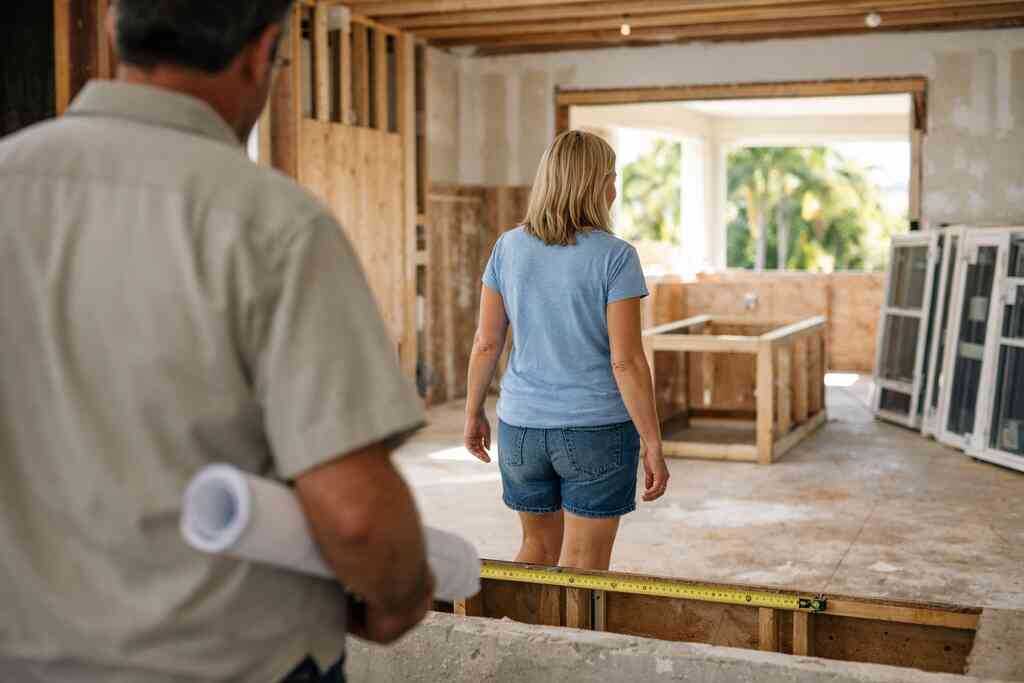
One client in Miami-Dade expected a same-week window swap on a front elevation. The existing frame was out of square, the surrounding stucco had damage, and the approved product required a different anchoring pattern. The job stayed on track only because the contractor caught it early. That is the value of a code-aware scope. It keeps a small replacement from becoming an expensive delay.
Roofing contractor South Florida projects that involve hurricane roof tie-downs and structural signoff
Roofing work is never just roofing in South Florida. A roofing contractor South Florida has to think about fastening, underlayment, tie-downs, decking condition, and code-specific inspection points. When a roof is older or the sheathing is compromised, structural signoff can enter the picture. That is especially true after storm damage or repeated leak repairs.
If you are comparing bids, ask what is included under the roof system. Ask whether deck replacement is included. Ask how the contractor handles hurricane roof tie-downs and inspection scheduling. If a proposal sounds too clean, it may be missing the very items that protect your home. A Florida Building Code 2026 roof compliance review can help you ask smarter questions before signing.
South Florida kitchen remodeler and South Florida bathroom remodeler work that can unexpectedly touch plumbing, electrical, or framing
Kitchen and bath work often crosses into multiple trades. A South Florida kitchen remodeler may need plumbing, electrical, cabinet, drywall, and flooring coordination. A South Florida bathroom remodeler may also need waterproofing, venting, and niche framing changes. If a wall moves, the job can trigger load-bearing review. If the layout changes, the permit scope may change too.
This is where expectations matter. A South Florida cabinet maker can build beautiful work, but the cabinet package still depends on the rough openings underneath. A South Florida tile contractor may do excellent finish work, but a failed substrate will ruin the result. That is why South Florida kitchen remodeling permits and South Florida bathroom remodeling permits deserve attention early.
South Florida concrete contractor and South Florida foundation repair work where coastal conditions raise the stakes
Concrete and foundation work carries higher risk near the coast. A South Florida concrete contractor dealing with slab repairs, new pads, or structural changes has to think about settlement, moisture, and reinforcement. South Florida foundation repair often starts with a symptom, like cracks or sticking doors, and ends with a deeper discussion about soil movement or drainage. That is normal here.
In coastal zones, small issues can become structural faster than people expect. Salt exposure, water intrusion, and inconsistent drainage all make repairs more delicate. An oceanfront home contractor or waterfront home builder South Florida should treat these conditions as standard, not exceptional. That is the difference between patching a problem and solving it.
Pool deck contractor South Florida, paver installation South Florida, and screen enclosure contractor South Florida projects that often trigger more scrutiny than homeowners expect
Outdoor work looks straightforward from the backyard. It often is not. A pool deck contractor South Florida may need to address drainage, elevation, slip resistance, and structural transitions. Paver installation South Florida can affect runoff and property lines. A screen enclosure contractor South Florida may also face wind-load and attachment questions. These projects can trigger more review than homeowners expect.
Here is what almost no online guide mentions: exterior comfort projects are often code-sensitive because they interact with the home’s shell. An outdoor kitchen contractor South Florida may need utility approvals. A lanai builder South Florida may need permits for framing and openings. A sunroom contractor South Florida may touch insulation, structure, and glazing requirements. The outdoors is not exempt just because it feels informal.
The smart way to choose a contractor before the code chooses for you
How to verify a contractor license and insurance before signing anything in South Florida
Start with proof, not promises. Ask for the license number and verify it independently. Ask for insurance certificates and confirm the name matches the contracting entity. Ask whether subcontractors are insured too. That is basic protection. It is also where many bad experiences start or stop.
If you want how to verify a contractor license in South Florida, make that step part of your hiring routine. Do the same with contractor insurance requirements Florida and contractor bonding requirements where relevant. A legitimate company will not resent the question. It will welcome it. That tells you something useful before work begins.
Why a low bid from a general contractor near me South Florida can become the most expensive line item on the project
Low bids can hide missing work. They may exclude permit costs, engineering, inspections, debris haul-off, or code-required corrections. They may also rely on allowances that are far too small for real materials. That is how a cheap estimate becomes a costly surprise. South Florida homeowners see this all the time.
A better bid is usually the one that explains more. It should identify assumptions, describe exclusions, and show how the contractor handles changes. If a number seems unusually low, ask what it leaves out. The answer tells you far more than the price. For larger projects, general contractor in South Florida for additions search behavior should always be paired with document review.
What to ask a South Florida design build team about hurricane code compliance, scheduling, and inspection strategy
Design-build teams can be excellent for coordination, but only if they think beyond drawings. Ask how they handle hurricane code compliance. Ask what inspections are needed and in what order. Ask how they schedule product lead times, permit submittals, and rough inspections. Those questions reveal whether the team thinks like builders or just salespeople.
A strong South Florida design build team should explain sequencing in plain English. They should also be able to discuss energy efficient remodeler choices, sustainable home builder priorities, and aging in place contractor details when those goals matter. The best teams balance aesthetics with compliance. They do not treat those as competing values.
When to bring in a coastal home builder Florida, waterfront home builder South Florida, or oceanfront home contractor for higher-risk properties
Bring in a specialist when exposure rises. That includes waterfront lots, oceanfront properties, elevated wind exposure, or projects with major structural changes. A coastal home builder Florida understands corrosion, envelope details, and the realities of salt air. A waterfront home builder South Florida knows how moisture and site conditions shape long-term performance. An oceanfront home contractor has to think even harder about attachment, access, and durability.
The same logic applies to South Florida luxury renovation work. High-end finishes do not reduce code obligations. They often increase them. If the home is exposed, valuable, or structurally complex, the right contractor should say more than “we can handle it.” They should show you how.
The next decision to make for South Florida home additions, second story addition South Florida, sunroom contractor South Florida, lanai builder South Florida, or outdoor kitchen contractor South Florida work
The next move is simple. Make a short list of three licensed firms. Ask each one for a permit-aware scope, insurance proof, and an inspection strategy. Then compare those documents, not just the totals. That is the cleanest way to separate a real builder from a polished guess.
If you are ready to find a contractor South Florida who understands the permit chain, start with licensed, documented, local options. You do not have to figure this out alone, and you do not have to figure it all out today. Start with one phone call, one license check, and one scope review before the next quote expires.
Frequently Asked Questions
Question: What should I know before hiring South Florida contractors for a remodel that may trigger the South Florida permit process?
Answer: The biggest mistake homeowners make is assuming a project stays cosmetic when it actually touches framing, electrical, plumbing, drainage, or exterior openings. In South Florida, that often means permits, inspections, and code review are part of the job from the start. A good home remodeling contractor South Florida will explain the full scope, not just the visible finishes. That includes whether the work needs a Palm Beach County permit, Broward County permit, or Miami-Dade permit, plus any HOA approval if you are in a condo or townhome.
When comparing bids, ask each contractor to spell out who handles drawings, product approvals, and inspections. Also verify contractor licensing Florida status, insurance, and whether the contractor will pull the permit in their own name. Never skip this step or accept a vague quote that leaves out code-related work. If you want to find a contractor South Florida homeowners can actually trust, use a directory that helps you verify local, licensed professionals before any deposit changes hands.
Question: How does the South Florida Contractors Guide to 2026 Florida Building Code affect hurricane impact window installer South Florida projects and other exterior upgrades?
Answer: Exterior work is where hurricane-code requirements show up fastest. Windows, doors, garage doors, roofs, shutters, and screen enclosures all need to be evaluated for hurricane code compliance, product approvals, and proper installation details. A hurricane impact window installer South Florida should not just sell a window labeled impact-rated. The opening size, fastening method, surrounding framing, and approved installation package all matter too.
The same idea applies to a hurricane shutter contractor or roofing contractor South Florida. For roofing, hurricane roof tie-downs and fastening details can change the scope significantly. For shutters and windows, the installation has to match the approved product and the structure underneath it. That is why South Florida building codes and Florida Building Code 2026 conversations are so important before work begins. The safest path is to use a licensed contractor Palm Beach County, licensed contractor Broward County, or licensed contractor Miami-Dade who can explain the code implications clearly and provide documentation for the permit file.
Question: What kinds of remodels most often turn into larger projects with a South Florida kitchen remodeler or South Florida bathroom remodeler?
Answer: Kitchens and bathrooms often expand beyond the original plan because they cross multiple trades. A South Florida kitchen remodeler may uncover plumbing changes, electrical upgrades, framing issues, or cabinet layout problems once walls come open. A South Florida bathroom remodeler may need waterproofing, venting, subfloor repair, or shower and tub relocation that affects the permit scope. Even a simple design update can turn into a larger job if the layout changes or hidden damage is discovered.
That is why a detailed scope matters more than a fast quote. A good contractor should explain what happens if the walls reveal damaged wiring, outdated plumbing, or structural concerns. The same is true for South Florida flooring installer work, South Florida tile contractor projects, and South Florida cabinet maker coordination. If the plan changes, the paperwork should change too. This is also where change order contractor Florida practices matter, because written changes protect both the homeowner and the builder if the job expands after demolition.
Question: Why are coastal, waterfront, and oceanfront projects treated differently by a coastal home builder Florida or waterfront home builder South Florida?
Answer: Coastal properties face more exposure to wind, salt, and moisture, so the construction details have to be tighter. A coastal home builder Florida or waterfront home builder South Florida will pay closer attention to corrosion resistance, envelope detailing, fasteners, drainage, and durability over time. In oceanfront or high-exposure areas, even small installation choices can have a bigger impact on long-term performance.
This matters for everything from South Florida custom home builder work to South Florida luxury renovation projects. It also affects South Florida concrete contractor and South Florida foundation repair work, where moisture and soil conditions can become part of the conversation. The same applies to pool deck contractor South Florida jobs, paver installation South Florida, and screen enclosure contractor South Florida projects because they connect directly to the home’s exterior shell. The best approach is to choose a contractor who understands hurricane code compliance, can explain the permit path, and will not downplay the added pressure that comes with coastal construction.
Question: How do I verify a contractor before starting South Florida home additions, a second story addition South Florida, or a South Florida design build project?
Answer: Start with the basics: confirm the license, verify insurance, and check whether the business name matches the person or company presenting the estimate. Ask who will supervise the job daily, who will pull the permit, and whether subcontractors are covered appropriately. For larger projects like South Florida home additions, second story addition South Florida work, or a South Florida design build project, those details are not optional. They are essential.
You should also ask about contractor insurance requirements Florida, contractor bonding requirements if applicable, and how the contractor handles lien waiver Florida paperwork as payments are made. Good builders are also clear about change order contractor Florida procedures and contractor dispute resolution if the scope shifts. If you are comparing a general contractor near me South Florida search result with a more established local firm, the difference usually shows up in documentation, not just price. Use a verified source to find a contractor South Florida residents can evaluate with confidence, and always insist on proof before work begins.
Question: Can South Florida Contractors help me find the right contractor for condo renovation South Florida, townhome remodeling South Florida, or South Florida HOA permit issues?
Answer: Yes, the right starting point is understanding that association rules can be just as important as the city or county permit. Condo renovation South Florida projects often involve noise rules, elevator reservations, debris removal, work-hour limits, and board approval. Townhome remodeling South Florida projects may also include shared-wall concerns, exterior restrictions, or architectural review. In many cases, you need HOA approval before demolition can start.
South Florida Contractors is built to help homeowners begin with local, licensed, and documented options instead of guesswork. That matters whether you need a South Florida bathroom remodeler, South Florida kitchen remodeler, sunroom contractor South Florida, lanai builder South Florida, or outdoor kitchen contractor South Florida. For any exterior or structural work, hurricane-code requirements still apply, so you want a contractor who understands both the permit process and the realities of South Florida weather. Always verify licensing and insurance before signing, and use the directory to compare qualified professionals across Palm Beach, Broward, and Miami-Dade Counties.