

The bond certificate that proves a contractor can still make things right
A contractor bond is not paperwork theater. It is a financial backstop that can help if a job goes sideways and someone fails to meet obligations. In South Florida, that matters because wind, water, and tight timelines expose weak contractors fast. If you are uneasy, that is normal. Most homeowners do not learn the difference between bonding, licensing, and insurance until something already looks wrong.
Why a surety bond matters when a job goes sideways in South Florida
A surety bond gives you a path to make a claim against a contractor if the work or business obligations break down. It does not guarantee a perfect project. It does, however, add another layer of accountability when a contractor disappears, abandons work, or fails to correct a problem. That is especially important for South Florida contractors handling roofs, additions, and exterior upgrades after storm season pressure builds. If you are searching for a general contractor near me South Florida, bond proof should be part of the first conversation.
Here is the part most homeowners miss: a bond is about financial responsibility, not craftsmanship. A contractor can still be weak on scheduling, communication, or code awareness and remain bonded. One homeowner in Broward hired someone for a small lanai repair, then found repeated delays after hidden framing damage appeared. The bond did not fix the project by itself, but it gave the family leverage when the job stalled. That leverage matters when you are trying to protect your deposit and your sanity.
Where homeowners can verify contractor bonding without taking a sales pitch at face value
Do not rely on a logo, a brochure, or a confident handshake. Ask for the bond issuer, the bond number, and the exact legal business name. Then compare those details against public records and the contractor’s licensing information. If the paperwork feels vague, that is your answer. You are not being difficult; you are being careful.
For a practical starting point, use a source that explains how to verify contractor bonding in Florida. When you check a contractor bond online, look for consistency across the certificate, license record, and business entity. If a company name has changed or the certificate lists a different entity, ask why. Bond verification should feel boring. Boring is good.
How bond proof differs from being licensed and insured in Palm Beach, Broward, and Miami-Dade
Bonded, licensed, and insured are three separate things. A licensed contractor can hold a valid state credential. An insured contractor can carry liability and workers’ compensation coverage. A bonded contractor can provide an added financial promise tied to specific obligations. In Palm Beach, Broward, and Miami-Dade, you want all three checked, not just one. A licensed contractor Palm Beach County may still be the wrong fit if the bond or insurance is weak.
For exterior work, the stakes rise quickly. Roof replacements, impact windows, and structural repairs often intersect with hurricane code compliance and the Florida Building Code 2026 expectations. That means the bond is only one piece of the puzzle. You need confirmation that the contractor can actually perform within the rules. If they cannot explain the bond clearly, they may not explain the permit or inspection process clearly either.
The license lookup that exposes the difference between legit and convenient
A contractor license lookup is one of the fastest ways to separate real accountability from polished marketing. This step feels uncomfortable because it can puncture a persuasive sales pitch. That discomfort is useful. If a contractor resists basic verification, imagine how they may act when a change order or inspection issue appears. You deserve better than convenience dressed up as competence.
How to verify a contractor license before anyone steps onto your property
Start by confirming the license through an official lookup or a trusted local verification guide. Use the contractor’s exact legal name, not just the brand name on the truck. Then verify the status, classification, and any disciplinary history you can access. If you are comparing a licensed contractor Broward County with one from another county, the classification still has to match your project type.
The phrase how to verify a contractor license should lead you to a clean, repeatable process. Do not stop after checking whether the license is active. Check whether it is active for the work you need. A roofer is not automatically qualified for a load-bearing wall removal. A bathroom remodeler is not automatically right for a seawall-adjacent addition. Precision protects your budget.
What matching names, business entities, and license classifications should look like
The name on the estimate should match the license record, the insurance certificate, and the bond paperwork. Small mismatches can happen. Large mismatches should stop the project until they are clarified. If the company claims a DBA name, ask for the underlying entity. That is basic contractor credential verification, not suspicion.
You also want to see the correct license classification for the scope. A South Florida home remodeling contractor project may need different credentials than a South Florida custom home builder or coastal home builder Florida job. For larger scopes, the entity handling the contract should match the entity pulling permits. That detail matters in South Florida permit process work, especially when the project touches structural systems or exterior openings.
Why a licensed contractor Palm Beach County may still be the wrong fit for your project
A license proves permission, not suitability. A contractor can be completely valid and still wrong for your home, your budget, or your timeline. Maybe they excel at interior updates, but your job requires hurricane-rated exterior coordination. Maybe they are excellent at one county’s process, but your project needs a different municipal workflow. That is why you should treat licensing as the floor, not the finish line.
We hear this from clients almost every week. They found someone licensed, assumed that settled everything, then discovered the contractor had never handled a Palm Beach County permit for a complex addition. The result was delays, resubmittals, and tension. If your project involves a South Florida kitchen remodeler, South Florida bathroom remodeler, or home additions project, ask how often they handle your exact scope in your exact area. The right license is necessary. It is not enough.
The insurance documents that actually protect your roofline and bank account
Insurance is where many homeowners get vague answers and uneasy feelings. That is a problem, because insurance is the shield between a jobsite accident and your finances. A contractor can sound professional and still provide outdated paperwork. Never accept “we’re covered” as a substitute for documentation. Ask for the certificates. Read them.
Which contractor insurance requirements Florida homeowners should ask for in writing
Ask for written proof of general liability and workers’ compensation, if applicable. Ask whose name is on the certificate and who is listed as the insured entity. Then compare that to the license and bond. A bonded and insured contractor checklist should include expiration dates, policy holders, and project relevance. If the contractor hesitates, that is not a minor delay. That is a warning.
For roof work, exterior finishes, and structural changes, the stakes are higher. A roofing contractor South Florida should be able to show current coverage without drama. The same is true for a hurricane impact window installer South Florida or hurricane shutter contractor. If they cannot, move on. You are not buying a promise. You are buying risk reduction.
How to confirm liability and workers comp coverage without guessing
Do not assume an insurance certificate equals active coverage. Call the carrier or verify through the issuer if needed. Confirm that the policy has not lapsed and that the business name matches exactly. If a subcontractor is doing part of the work, ask whether they are also covered. This matters on busy residential sites where multiple crews show up and leave in a hurry.
A homeowner in Miami-Dade once showed us a certificate that looked fine until we checked the entity name. The contractor was using a sister company for marketing, but the policy covered a different business. That mismatch created confusion before demo even started. The homeowner avoided a much bigger mess by pausing the project and demanding corrected paperwork. That pause felt awkward. It saved the job.
Why bonded and insured contractor language is useful only when the paperwork holds up
The phrase “bonded and insured” sounds reassuring because it should be. Still, the words mean nothing if the documents are stale, mismatched, or incomplete. You need active proof, not a slogan. If the contractor tries to rush you past documentation, that is often where future disputes begin. The paper trail is the warning system.
For owners planning South Florida home additions, second story addition South Florida work, or a sunroom contractor South Florida scope, insurance protects more than the structure. It protects your schedule, your neighbors, and your claim posture if something breaks. That is why you should keep copies in one folder with your contract, permit documents, and lien waivers. Organized homeowners recover faster when trouble shows up. Disorganized homeowners pay for avoidable chaos.
The permit file that tells you whether the contractor respects the rules
A contractor who treats permits casually will usually treat inspections casually too. That is the connection. Permit discipline is a sign of professional seriousness, not bureaucratic fussiness. In South Florida, that matters because wind load, flood exposure, and municipal review all affect your project. If you feel frustrated by permit talk, you are not alone. It is one of the least glamorous parts of building, and one of the most important.
What a permit-ready contractor Florida should explain before demolition starts
A permit-ready contractor should explain what requires approval, what does not, and who pulls the permit. They should tell you when inspections happen and what cannot begin before approval. They should also explain if the work affects structure, egress, electrical, plumbing, or exterior openings. If they skip that conversation, you should slow down. Fast demolition with no permit plan is a classic mistake.
The best contractors explain the South Florida permit process for remodels before the first hammer swings. That includes how drawings, product approvals, and contractor credentials fit together. For a South Florida design build project, the permit strategy should be part of the design strategy. For a South Florida HOA permit or condo renovation South Florida project, the approval path may be even more layered. The contractor should show you they understand that reality.
How the South Florida permit process changes across Palm Beach County permit, Broward County permit, and Miami-Dade permit filings
Every county has its own rhythm, even when the underlying code principles overlap. A Palm Beach County permit may move differently than a Broward County permit or Miami-Dade permit filing, especially for renovation scopes that touch wind-rated assemblies or structural changes. The process also changes by city and by HOA. That is why a contractor experienced in one area may still need local support for another.
A homeowner in Boca asked why a window project felt slower than expected. The answer was not the windows. It was the paperwork chain: product approvals, contractor info, and municipal review all had to line up. If you are comparing a licensed contractor Miami-Dade option to one from elsewhere, ask how they handle permit submittals and inspection coordination. A solid contractor makes the file easier. A weak one turns the file into a fight.
Why skipping permit questions is a warning sign for structural and exterior work
If a contractor discourages permit talk, pause immediately. Exterior and structural work can trigger code requirements that affect safety, insurance, and resale. That includes roof replacements, openings, additions, and major alterations. When a contractor treats permits like an inconvenience, they are telling you something about their tolerance for shortcuts. Believe them the first time.
For South Florida concrete contractor, South Florida foundation repair, and screen enclosure contractor South Florida projects, permit questions are not optional. They are part of the job. The same applies to paver installation South Florida when drainage or hardscape scope changes matter. You should never be pressured to skip the permit conversation to “save time.” Time saved that way often returns later as fines, failed inspections, or resale headaches.
The code compliance test for hurricane-prone work that cannot be shrugged off
South Florida does not forgive casual thinking about exterior work. Wind, rain, and debris exposure change what “good enough” means. Code compliance is not only about passing inspection. It is about making sure the system performs when weather turns serious. That is why bonding conversations should always include code awareness. A contractor who understands code usually understands responsibility.
What hurricane code compliance means for roofs, windows, shutters, and exterior additions
Hurricane code compliance means the contractor understands the required standards for the specific product and installation method. For roofs, that includes fastening patterns, underlayment, edge details, and, in some cases, roof tie-down coordination. For windows and shutters, it means proper approval and installation methods for impact-rated systems. For additions, it means the building envelope and structure must be designed and installed for local conditions. These details matter more near the coast and around exposed corridors.
If you need hurricane code compliance for South Florida roofing, ask the contractor to explain their installation approach in plain English. They should be able to explain how the roof system resists uplift. They should also explain how product approvals connect to the permit file. If they cannot do that, they may be selling confidence, not compliance. That is a costly difference.
How Florida Building Code 2026 expectations shape contractor bonding conversations
Code expectations shape bonding because code-related failures create expensive disputes. If a contractor installs the wrong product or follows the wrong method, the repair can become a claim, a reinspection issue, or a legal headache. Bonding does not replace compliance. Instead, it becomes more important when the work itself carries higher risk. That is why the conversation should include how the contractor documents code-related work.
This is especially true for hurricane-impact exterior contractor projects, oceanfront home contractor scopes, and waterfront home builder South Florida jobs. Those projects often face stronger scrutiny, tighter review, and more exposure if something fails. A contractor who is calm, specific, and documentation-driven usually handles bonding and code conversations better than one who promises everything will be “fine.” Fine is not a plan. Documentation is a plan.
Why hurricane roof tie-downs and impact-rated installations require more than a verbal promise
A verbal promise cannot prove fastening patterns, approved products, or installation methods. It cannot stand up to wind, water, or an inspector’s questions. Ask for the product approval, the scope language, and the install details. Then make sure the bond, license, and insurance align with the scope. That is the practical version of contractor bonding requirements Florida homeowners actually need.
If your project involves impact-rated openings or roof work, the contractor should be able to explain the connection between the product and the wall or roof assembly. They should also know when a manufacturer’s details matter. A hurricane impact window installer South Florida who shrugs at that question is not giving you a good answer. The safest projects are the ones where the paperwork, the code, and the installation method all agree.
The document trail that separates a careful contractor from a risky one
A good contractor leaves paperwork behind that tells a clean story. A risky contractor leaves confusion, missing signatures, and uncomfortable follow-up calls. The document trail matters because disputes almost always become evidence disputes. If the scope was vague, the changes were verbal, or payments were undocumented, you will feel the pain later. That is why careful documentation protects homeowners before it protects anyone else.
Why contractor bonding proof should be paired with contract terms and scope clarity
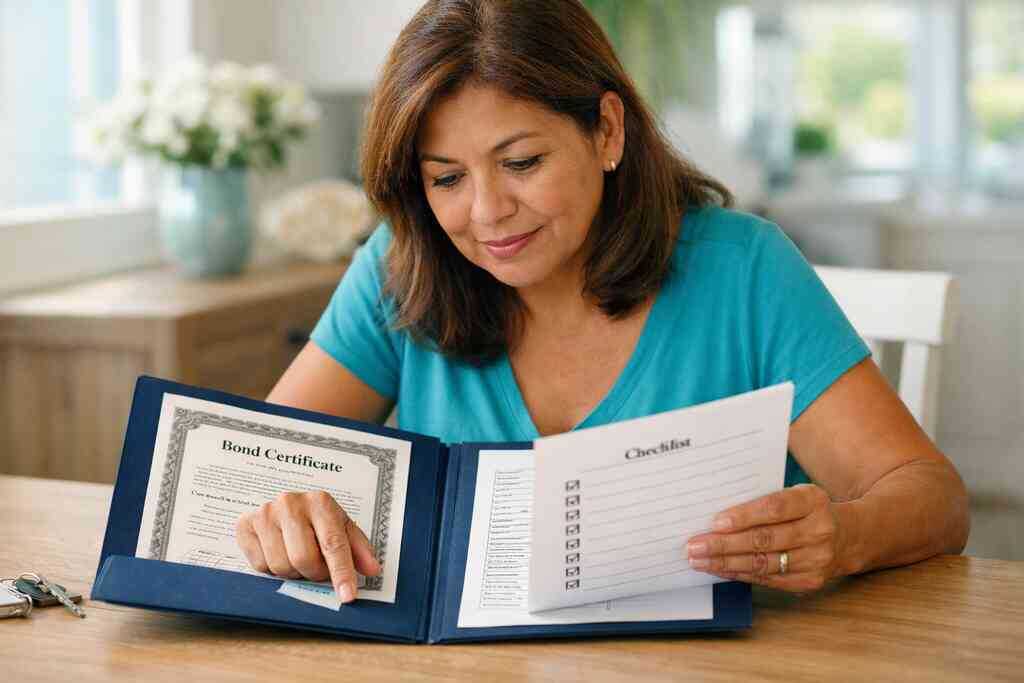
Bond proof is helpful, but it should sit beside a clear contract. The contract should describe materials, labor, exclusions, allowances, and cleanup. It should also state who handles permits and inspections. If the scope is fuzzy, the bond cannot save you from misunderstanding. A clean contract reduces friction before the first dispute starts.
This is where construction contract risk management for homeowners becomes real. For South Florida luxury renovation and South Florida ADA renovation projects, scope clarity is not optional because the details drive everything. If you are hiring a South Florida bathroom remodeler or South Florida cabinet maker, ask for line-item clarity. The more custom the work, the more exact the contract should be. Vague language is expensive language.
How lien waiver Florida paperwork protects homeowners from payment disputes
A lien waiver is a document showing a contractor or subcontractor gives up certain payment claims after being paid. In plain language, it helps protect you from someone later claiming they were not paid for work already covered. Ask for partial waivers during the project and a final waiver at closeout. Keep them with your payment records. This is one of the simplest protections homeowners overlook.
For a South Florida concrete contractor or South Florida flooring installer, waiver discipline matters because multiple suppliers and crews may be involved. If someone on the job is not paid properly, you do not want that problem landing on your house. Make sure the waiver matches the payee and the project name. Paperwork that is merely “close enough” usually fails when there is real tension. You want exact.
What a missing change order process reveals about construction contract risk management
Change orders are written approvals for work that was not in the original contract. Without them, scope creep can become a payment conflict. A contractor who refuses a formal change order process is telling you they prefer ambiguity. That might work for them. It does not work for you.
One client in Coral Springs had a kitchen wall opening reveal unexpected wiring and a patched vent chase. The contractor paused, priced the change, and wrote it up before continuing. The homeowner was frustrated for a day. Then the work stayed clean, the payment stayed defensible, and there was no fight at the end. That is how real projects stay survivable. A missing change order process is not efficiency. It is risk.
The complaint history that shows whether a contractor has been tested under pressure
Perfect marketing means very little if the complaint history tells a different story. Pressure reveals character. Missed deadlines, inspection failures, and payment disputes show how a contractor behaves when things are not easy. That is why complaint history belongs in your verification process. You are not hunting for perfection. You are looking for patterns.
How to use contractor credential verification to spot repeat patterns and red flags
Check whether the contractor has repeated complaints about abandonment, poor communication, or unresolved disputes. One complaint may be a bad season. Several similar complaints are a pattern. If the language keeps repeating, believe the pattern. The goal is not gossip. The goal is consumer protection for homeowners Florida values.
This is especially important when you search for contractor license lookup in Florida. Look at the whole picture. A clean license with a messy history can still spell trouble. A contractor with years of work but no meaningful complaint trail often shows better operational discipline. That does not make them perfect. It makes them easier to trust.
Why contractor dispute resolution history matters more than polished marketing
Polished websites can hide weak follow-through. Dispute resolution history tells you how a contractor behaves after a problem starts. Did they respond? Did they correct the work? Did they document the fix? Those details matter far more than a glossy photo gallery. Good marketing is easy. Hard conversations are the real test.
This is where South Florida homeowners should be especially alert. Our markets move fast, and some contractors rely on constant new leads rather than long-term reputation. A South Florida contractors directory for local projects can help you compare options, but you still need to verify every credential yourself. If a contractor claims extensive experience in South Florida, ask what types of disputes they have actually resolved. Calm answers are good. Defensive answers are not.
What to ask when a contractor claims extensive experience in South Florida contractors markets
Ask for examples of project types, not just years in business. Ask about permit problems, inspection corrections, and how they handled homeowner concerns. Ask whether they have completed work similar to your scope in Palm Beach, Broward, or Miami-Dade. Then listen for specificity. Specific answers usually mean real experience.
If you need a licensed contractor on Miami-Dade, ask how often they work in your exact neighborhood type, not just your county. Condo towers, coastal homes, and inland subdivisions each create different pressure points. A contractor who knows the terrain usually knows the paperwork. A contractor who only knows sales language may know very little else.
The specialty match that matters when your project is not generic
Not every contractor should be judged by the same yardstick. A roof job has different risks than a kitchen job. A window replacement has different issues than flooring. That is why specialty matching matters so much in South Florida. When a project has a narrow technical scope, the contractor’s bonding and documentation should feel equally specific.
Why a roofing contractor South Florida must be judged differently than a kitchen remodeler or flooring installer
A roofing contractor is dealing with weather exposure, fast-moving material work, and hurricane-related expectations. A kitchen remodeler is dealing with cabinetry, trades coordination, and interior sequencing. A flooring installer is dealing with substrate prep, moisture, and finish quality. Each trade has its own risk profile. If you judge them all the same, you may miss the real issue.
For a South Florida kitchen remodeler or South Florida tile contractor, ask how they document specialty work. For a roofing contractor South Florida, ask about product approvals, fastening, and inspection workflow. For a South Florida cabinet maker, ask who is responsible for measurements and corrections. The more specialized the trade, the more you should insist on trade-specific proof.
When hurricane impact window installer South Florida claims deserve extra scrutiny
Impact windows are not a place for casual promises. The product, the frame, the anchor pattern, and the opening prep all matter. If a contractor says they do impact work, ask what products they install and how they handle verification. A contractor should be able to explain the difference between the product rating and the installation quality. That distinction matters when storms test the envelope.
If you are comparing a hurricane impact window installer South Florida with another provider, ask for bond proof, insurance, and permit history together. The same goes for a hurricane shutter contractor. The installer should understand both compliance and coordination, especially when the project intersects with HOA review or condo association rules. Smart homeowners ask those questions before signing. Regret is more expensive than caution.
How to vet a pool deck contractor South Florida, paver installation South Florida, or screen enclosure contractor South Florida for bonding strength
Exterior specialty work often seems simple until drainage, anchors, or structural support enter the picture. A pool deck contractor South Florida should know how surface work connects to safety and water management. Paver installation South Florida can involve slopes, base prep, and municipal concerns. A screen enclosure contractor South Florida must understand wind exposure and attachment details. Those are not minor details.
Ask whether the contractor has completed similar jobs in coastal or high-wind zones. Ask what bonding and insurance paperwork supports the scope. Then ask how permits and inspections will be handled if the design changes. Specialty projects punish vague planning. If you need an outdoor kitchen contractor South Florida or lanai builder South Florida, treat bonding as part of the specialty match, not a side note.
The county and community factors that change the risk level fast
South Florida is not one uniform market. Local rules, community restrictions, and coastal exposure change the risk level quickly. A contractor who shines in one setting may stumble in another. That is why county and community context should shape your verification process. Good homeowners think locally, not generically.
Why oceanfront home contractor and waterfront home builder South Florida projects carry extra bonding pressure
Coastal projects face more exposure, more scrutiny, and often more complex logistics. Salt air, wind, and water intrusion all raise the cost of mistakes. An oceanfront home contractor or waterfront home builder South Florida should be able to discuss these realities without sounding vague. Bonding matters more here because the cost of failure can climb fast. You are not only protecting the build. You are protecting the setting.
If your project is a coastal home builder Florida scope or a South Florida custom home builder project, ask how they handle site conditions and permit coordination. On larger jobs, the margin for error is smaller. A good contractor will explain how their bond, insurance, and license align with the scale of work. A weak one will keep talking about aesthetics while ignoring risk. A nice rendering does not make a safe structure.
How HOA permit rules and condo renovation South Florida restrictions can complicate verification
HOAs and condo boards add another layer of review. They may control work hours, material choices, elevator use, parking, noise, or even color selections. That means your contractor must know more than construction. They must know administrative patience. If you are in a condo or townhome, ask how often they handle community approvals.
For a townhome remodeling South Florida or condo renovation South Florida project, the contractor should understand how community rules intersect with county permits. They should also understand that a board’s approval does not replace a permit. The paperwork stack is real. Missing one layer can delay everything. That is why a contractor who works only from the truck may not be the best fit for shared-community work.
What to ask for in coastal home builder Florida and South Florida luxury renovation projects
Ask for examples of similar communities, similar scopes, and similar paperwork loads. Ask how the contractor handles schedule coordination with residents or property management. Ask what happens if the scope changes after approval. In higher-end work, the answer matters because delays become more expensive. Your contractor should sound organized, not merely enthusiastic.
For South Florida luxury renovation work, the verification bar should be higher, not lower. Ask for bond proof, permit history, and code familiarity together. If the project touches additions, custom finishes, or owner-driven design changes, the contractor should already have a change order rhythm. That is how you avoid costly friction. The fancy finish does not matter if the foundation of trust is weak.
The final go or no go decision before you sign anything
This is the moment to slow down, not speed up. You have the paperwork, the license checks, the insurance details, and the permit questions. Now you need to decide whether the contractor feels consistent across all of them. That consistency matters more than charm. A good decision here saves months later.
How to compare two contractors using a practical contractor vetting checklist
Use a side-by-side checklist and score each contractor on the same facts. Include license status, bond proof, insurance, permit experience, communication quality, and project fit. Then compare how each one responds to detailed questions. Calm, specific answers usually beat polished vague ones. A contractor who welcomes verification is usually easier to work with later.
CheckpointContractor AContractor BLicense matches scopeBond proof currentInsurance documentation clearPermit plan explainedCode familiarity confirmedChange order process clearThis kind of contractor vetting checklist helps you think with evidence instead of emotion. If one contractor is cheaper but vague, that lower number may be hiding risk. If another is slightly higher but organized, that difference may pay for itself. You do not need the cheapest path. You need the safest one.
What to do when the bond looks valid but the project still feels off
Trust that feeling and test it with more questions. Ask for references from similar projects. Ask what could go wrong and how they would handle it. Ask whether they will pull the permit, who supervises the crew, and how inspections are scheduled. If the answers stay slippery, stop there. A valid bond does not erase a bad gut feeling.
This is the moment many homeowners wish they had slowed down earlier. You can still do it now. If you are comparing a home remodeling contractor South Florida or a South Florida design build firm, the right fit should feel organized across every document and conversation. If it does not, that mismatch is information. Use it.
Why the safest next step is to confirm licensing, insurance, bonding, and permits together before you hire
The safest decision is never based on one document. It comes from the full picture. License, insurance, bonding, permits, scope, and code compliance should all line up. If one piece is missing, the whole setup is weaker. That is especially true for hurricane-prone exterior work and structural changes.
If you are ready to find a contractor South Florida, start with one verified phone call and one document request today. You do not have to figure this out alone, and you do not have to figure it all out today. Pick three candidates, confirm every credential, and compare them on the same checklist before you sign.
Frequently Asked Questions
Question: What should I check first when verifying contractor bonding in Florida before I hire a general contractor near me South Florida?
Answer: Start with the bond certificate, the exact legal business name, and the bond issuer. Then compare those details with the contractor license lookup Florida record, insurance documents, and the project scope. A valid bond is helpful, but it is only one part of a proper Florida contractor compliance check. For exterior or structural work in South Florida, also confirm hurricane code compliance, permit responsibility, and whether the contractor is actually suited for your county and project type. South Florida Contractors helps homeowners find a contractor South Florida by organizing local options across Palm Beach, Broward, and Miami-Dade, but you should still verify licensing and insurance before signing anything.
Question: How does South Florida Contractors help me compare a licensed contractor Palm Beach County, licensed contractor Broward County, and licensed contractor Miami-Dade for bonding and permit readiness?
Answer: The best way to compare contractors is to use the same checklist for all of them: license status, contractor bonding proof, insurance documents, permit history, and experience with your exact scope. A permit-ready contractor Florida should be able to explain the South Florida permit process, including Palm Beach County permit, Broward County permit, or Miami-Dade permit requirements depending on where your project is located. South Florida Contractors is built to help you find a contractor South Florida by city and zip code, so you can review nearby contractors side by side instead of relying on a sales pitch. That makes it easier to identify which contractor is organized, bonded, and prepared for the realities of South Florida building codes.
Question: In Top 10 Ways to Check Contractor Bonding in Florida 2026, why is bonding still important if a contractor is licensed and insured?
Answer: Licensing and insurance are important, but bonding adds another layer of financial accountability if the contractor fails to meet obligations. A bonded and insured contractor can give homeowners more protection when a job stalls, a dispute arises, or the work does not match the contract. That matters for South Florida contractors handling roofing contractor South Florida work, hurricane impact window installer South Florida projects, or other exterior jobs where hurricane roof tie-downs and code compliance are critical. Bonding does not guarantee perfect workmanship, so you still need contractor credential verification, contract clarity, and a full contractor vetting checklist before you hire.
Question: Can South Florida Contractors help me choose the right contractor for a South Florida kitchen remodeler, South Florida bathroom remodeler, or South Florida home additions project?
Answer: Yes, South Florida Contractors is designed to help homeowners find the right local match for their project type, whether that is a South Florida kitchen remodeler, South Florida bathroom remodeler, South Florida home additions job, or even a second story addition South Florida scope. For these projects, bonding should be checked alongside the license, insurance, change order contractor Florida process, and permit support. The right contractor should be able to explain how they handle inspections, subcontractors, and the South Florida permit process without skipping any steps. If you are comparing options, use the directory to review multiple contractors, then verify each one’s credentials before you move forward.
Question: What should I ask a contractor about bond verification, lien waiver Florida paperwork, and contractor dispute resolution before I sign a contract?
Answer: Ask for the bond number, issuer, and legal business name, then confirm that the same entity appears on the license and insurance documents. Also ask how they handle lien waiver Florida paperwork, because that helps protect you during progress payments and project closeout. A reliable contractor should be able to explain their contractor dispute resolution process, how they manage change orders, and what happens if the scope changes during the job. This is especially important for South Florida flooring installer, South Florida tile contractor, South Florida concrete contractor, and South Florida cabinet maker projects where multiple trades may be involved. South Florida Contractors encourages homeowners to verify every document and not rely on a logo or verbal promise.
Question: Does South Florida Contractors only help with large projects, or can I use it for smaller jobs like pool deck contractor South Florida, paver installation South Florida, or screen enclosure contractor South Florida?
Answer: You can use South Florida Contractors for both larger and smaller projects. Whether you need a pool deck contractor South Florida, paver installation South Florida, screen enclosure contractor South Florida, hurricane shutter contractor, or sunroom contractor South Florida, it is still smart to confirm bonding, insurance, and license status before work begins. Smaller jobs can still involve permit requirements, hurricane code compliance, and safety issues, especially in South Florida where weather and building standards matter. The directory helps you compare local contractors, but the final hire should always be based on verified credentials, clear scope, and a permit-ready approach.