
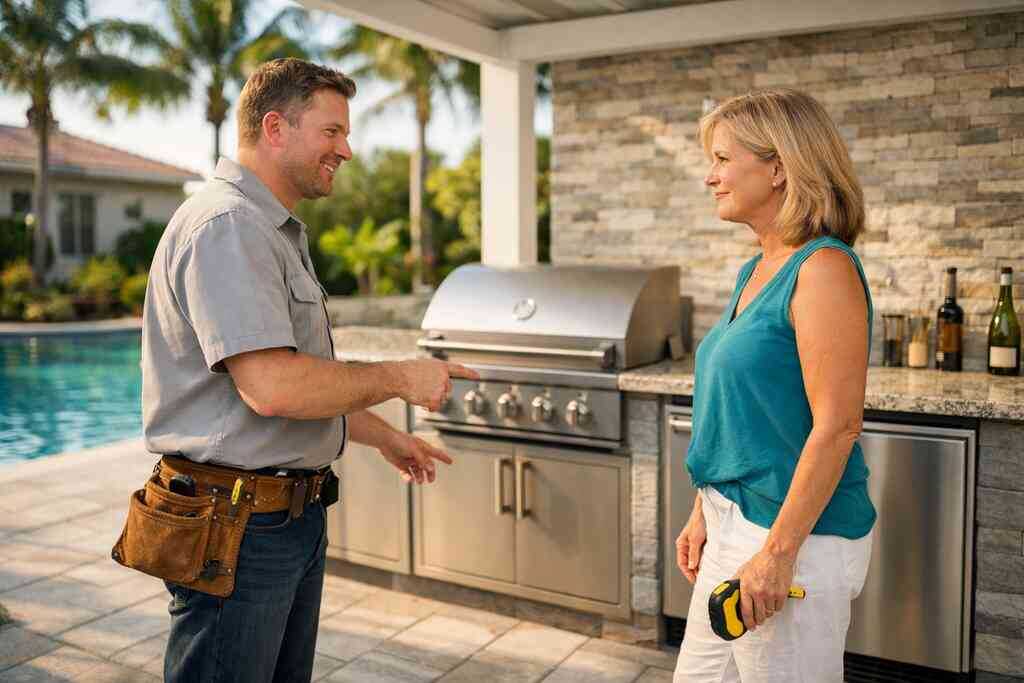
The permit question that can make or break an outdoor kitchen in South Florida
The first question most homeowners ask is also the one that causes the most delays: do you need a permit? In South Florida, the answer is often yes. That feeling of dread is normal, especially when you just want a better backyard before the next cookout. Still, permits protect your home, your insurance coverage, and your resale value. They also ensure the project meets South Florida building codes, which matter more here than almost anywhere else.
Why Palm Beach, Broward, and Miami-Dade permit rules are never a detail to ignore
Palm Beach County, Broward County, and Miami-Dade County each have their own review habits and local enforcement realities. That means a South Florida outdoor kitchen builder near Palm Beach County may approach documentation differently than a team used to another part of the region. The permit package may need site plans, utility details, and proof of code compliance. You should never assume a patio project is “too small” for review. In South Florida, small projects can still trigger structural, electrical, plumbing, or HOA review.
Here is the part most homeowners miss. A grill island can look simple and still involve multiple trades. If gas, water, drainage, or electrical lighting are part of the plan, the city may classify it as a construction project rather than outdoor furniture. That changes everything. It also changes who can legally pull the permit and how the inspection path works. If you want an outdoor kitchen contractor in South Florida to give you a credible quote, ask how they handle permits before they talk about finishes.
When an outdoor kitchen becomes a structural or utility project instead of simple patio furniture
An outdoor kitchen becomes more than a backyard accessory the moment it connects to building systems. That includes a gas line, sink, drain, outlet, hood, or mounted structure. It can also happen when the kitchen sits under a roof extension, lanai, pergola, or other framed cover. In those cases, the work may require a licensed contractor, engineered details, and inspections. That is why a covered patio kitchen builder in South Florida should be comfortable explaining both structure and utilities.
We saw this recently on a project near Fort Lauderdale where the homeowner only wanted a grill and counter. Once demolition started, the slab slope sent water toward the house, and the plan had to change. The team added drainage corrections and new electrical routing before the kitchen could move forward. The project cost more than the homeowner expected, but the fix prevented long-term water damage. That is what permit review is supposed to catch early, not after the first storm.
How HOA approval and condo renovation rules can slow a backyard build before work even starts
HOA approval can be just as important as the building permit. Some associations care about sightlines, equipment noise, gas appliance placement, and even cabinet color. Condo renovation South Florida projects add another layer, especially when common elements, balconies, or shared utility lines are involved. Townhome remodeling South Florida jobs can face similar restrictions if the roofline, setback, or drainage changes. A backyard entertainment space contractor in South Florida should ask about these rules early.
If you live in a gated community, read the covenant documents before signing anything. You may need architectural committee approval before permit submission. That is not a bad thing. It simply means the paper trail starts earlier. If you are trying to find a contractor South Florida homeowners trust, choose someone who respects that process instead of promising speed they cannot control.
The license and insurance checks that separate a real South Florida contractor from a risky quote
A polished quote can sound reassuring. So can a confident sales pitch. Neither proves the contractor is qualified. What you actually need is proof of licensing, insurance, and jobsite responsibility. That is especially true for coastal work, where wind, moisture, and code compliance magnify every mistake.
How to verify a contractor license in Florida without relying on a polished sales pitch
Ask for the contractor’s license number, then verify it yourself through state and local records. Do not stop at a business card or website badge. A real pro will expect that question and answer it clearly. If someone avoids it, that is your signal to walk away. A licensed contractor in Broward County should not mind basic verification.
You should also confirm that the contractor’s trade scope matches the work. A general contractor near me South Florida search can surface plenty of names, but not every license covers outdoor kitchens, gas, electrical, or structural work. Some projects need a team, not a solo salesperson. If the kitchen includes cabinets, masonry, plumbing, and wiring, ask who actually performs each trade and who supervises it. That question protects you more than any glossy brochure ever will.
What contractor insurance requirements Florida homeowners should ask about before signing
Insurance is not a formality. It is the buffer between your home and a very expensive problem. Ask for current proof of general liability and workers’ compensation, and ask what tasks are covered. If the contractor uses subcontractors, you should know whether those subs are also insured. The phrase contractor insurance requirements Florida sounds dry, but it can save a project when something goes wrong. A licensed contractor in Miami-Dade County should be able to explain this without hesitation.
One client in Boca asked why the insurance discussion felt so serious for a “simple outdoor kitchen.” Then the electrician’s saw nicked a hidden line during demo. The contractor’s coverage determined how quickly the repair moved and who paid for the restoration. That is not fearmongering. That is routine risk management in South Florida construction.
Why bonding, lien waiver paperwork, and business registration matter on coastal projects
Bonding gives you another layer of financial protection, though it does not replace good workmanship. You should also ask about lien waiver Florida documents. A lien waiver says the contractor or subcontractor has been paid for a specific stage of work. Without those waivers, you can face payment disputes later. Contractor bonding requirements matter more on larger exterior projects, especially where materials and labor costs move quickly.
Business registration matters too. You want a real entity, not a disappearing act. Ask who holds the contract, who invoices you, and who signs change orders. Also ask whether the company is operating as a legitimate local business in South Florida. If you are comparing a licensed contractor in Palm Beach County with a cheaper alternative, the paperwork often explains the price difference.
Why a low quote often costs more once weather, codes, and change orders show up
A low quote can feel like relief. Then the extras arrive. Here in South Florida, weather, salt air, and code requirements do not politely stay out of the budget. They show up in the fine print, and sometimes they show up after demo. That is why the cheapest number is rarely the safest number.
What a detailed outdoor kitchen estimate should spell out before anyone breaks ground
A serious estimate should identify labor, materials, permits, utility work, cabinet type, appliance allowances, finish level, and cleanup. It should also tell you what is excluded. If you see vague phrases like “allowance as needed,” ask for specifics. A solid estimate for outdoor kitchen installation in Broward County should read like a construction roadmap, not a sales flyer.
You also want clarity on who handles engineering, site prep, and inspections. If a contractor tells you those items are “probably covered,” keep asking. Probable is not precise enough for a project that may involve gas, drainage, and wind-rated attachments. The more detailed the scope, the less room there is for unpleasant surprises. That is especially true when comparing a summer kitchen contractor in Florida against a broader remodel firm.
How change order contractor Florida language can turn a bargain into a budget surprise
A change order is any written revision to the original scope, price, or timeline. That can happen when you upgrade finishes, move a sink, or discover hidden site conditions. It is not always a bad thing. It becomes a problem when the contractor treats every small adjustment like a blank check. Change order contractor Florida disputes often start with a vague original estimate.
The best defense is simple. Get every change in writing before the work proceeds. That includes labor, material differences, and any added permit steps. On one project in Coral Springs, a homeowner approved a cabinet upgrade over text, then learned the entire countertop support had to be reworked. The lesson was painful but useful: informal approval can still create real cost. Make the paperwork catch up before the crew moves on.
Why salt air, wind exposure, and hurricane code compliance change the real price of building
South Florida price differences are not random. A waterfront kitchen faces salt corrosion, higher fastening standards, and more conservative material choices. A backyard that feels quiet can still have serious wind exposure during storm season. That is why hurricane code compliance affects both labor and materials. A hurricane-code compliant outdoor kitchen design often costs more up front and less over time.
The materials, anchors, and framing details matter more near the coast. So does maintenance. Stainless steel, corrosion-resistant fasteners, and sealed substrates cost more than bargain alternatives. But replacement costs in a year or two can wipe out any savings. If a quote seems unusually low, ask what it leaves out. In South Florida, missing code items usually come back with interest.
The materials South Florida outdoor kitchen builders choose when humidity and salt air are the enemy
Materials are where the project either ages gracefully or starts looking tired before the first holiday season. Humidity, rain, sun, and salt spray punish anything flimsy. That is why South Florida outdoor kitchen builder choices look different from inland design trends. The right material list should start with durability, not just style.
Which weather-resistant outdoor cabinetry options hold up better near the coast
Weather-resistant outdoor cabinetry should resist moisture, swelling, and UV breakdown. Powder-coated aluminum, marine-grade materials, and properly sealed composite options tend to perform better than wood-based products. That does not mean every wood look is bad. It means the structure behind the finish matters. A South Florida kitchen remodeler with exterior experience should be able to explain substrate choices clearly.
Ask how the cabinets are fastened, ventilated, and sealed at the base. Water intrusion usually starts low, not high. Also ask what happens if the door hardware corrodes. The best outdoor kitchen installation South Florida homeowners get is the one that still closes cleanly after years of humidity. Function should lead design here.
Why stainless steel outdoor appliances and fire-resistant finishes matter in waterfront homes
Stainless steel outdoor appliances are not just about style. They are about resistance to rust and easier maintenance in a salty environment. Even stainless steel varies by grade and quality, so do not assume all shiny appliances are equal. Fire-resistant finishes also matter around grills, pizza ovens, and warming drawers. That is particularly true for waterfront home outdoor kitchen layouts where wind can carry heat and debris in unpredictable ways.
A lanai outdoor kitchen contractor in South Florida should know which finishes tolerate heat zones and which ones discolor fast. The same is true for backsplashes and enclosure panels. If the kitchen is near a pool deck or under a roof edge, ask how heat will behave against adjacent surfaces. Cheap material decisions often look fine on day one. They look very different after repeated cooking sessions and summer storms.
How granite, porcelain, and concrete surfaces compare for heat, moisture, and upkeep
SurfaceStrengthsWatchoutsGraniteNatural look, durable, heat resistantNeeds sealing and careful edge detailsPorcelainLow absorption, clean lines, strong stain resistanceInstallation quality matters a lotConcreteCustom appearance, versatile shapesCan crack or stain without proper detailingGranite countertop outdoor kitchen designs remain popular because granite handles heat well and feels substantial. Porcelain paver patio kitchen applications work nicely when you want a lower-maintenance routine and a modern look. Concrete can be beautiful, but it must be properly sealed and detailed for movement. The choice should match your usage, not just your Pinterest board.
One family in Hollywood wanted a sleek finish that could handle kids, sunscreen, and weekly grilling. They chose porcelain for the work surface and granite for a few accent zones. That balance gave them durability without making the kitchen feel cold. Good material selection should feel practical and calm, not precious.
When plumbing, gas, electrical, and drainage turn a patio upgrade into a true build
The moment utilities enter the plan, the project becomes real construction. That is not a warning. It is just the truth. Outdoor kitchens need safe fuel, clean power, and water management that respects South Florida rain. Skipping this planning stage usually creates the most expensive surprises. 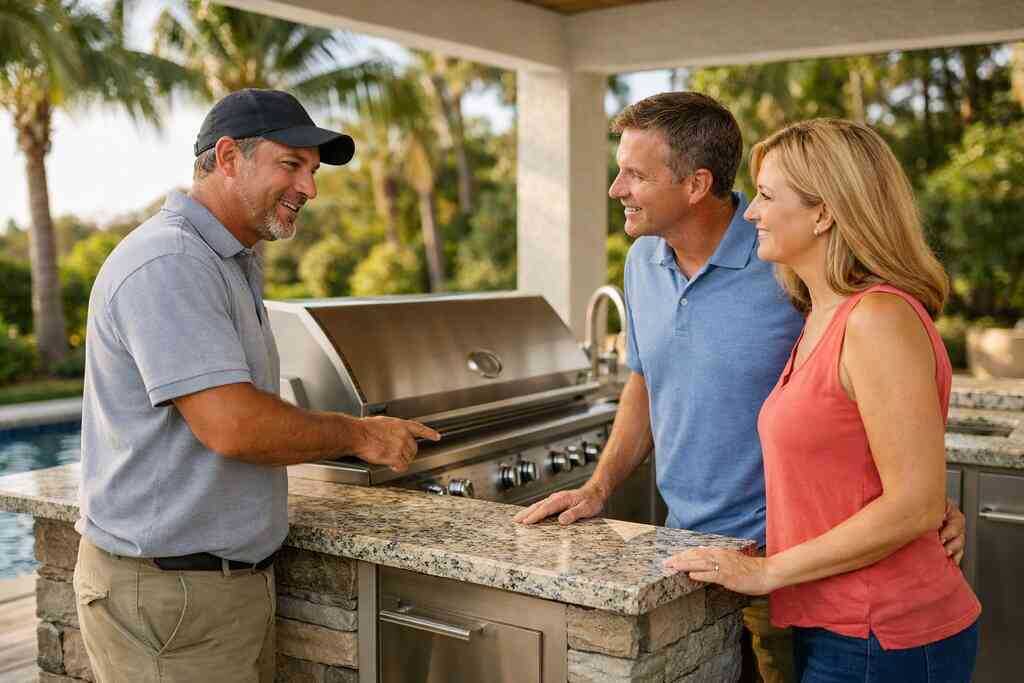
What outdoor gas line installation should trigger a closer look from your contractor
Outdoor gas line installation for a patio kitchen should trigger questions about routing, shutoff access, depth, protection, and inspection. You want to know who is licensed to perform the work and how the line will be tested. If the grill island sits far from the main supply, the trenching and restoration can change the budget quickly. A built-in BBQ kitchen contractor in South Florida should not gloss over those details.
Also ask about appliance compatibility. Natural gas and propane are not interchangeable without proper planning. If the wrong assumption gets made early, the fix can be tedious. Good contractors explain this plainly. Riskier ones make it sound effortless until the invoice arrives.
How sink and drainage for outdoor kitchen layouts can affect both usability and permitting
Sink and drainage for outdoor kitchen work may seem minor until you realize water has to go somewhere. That “somewhere” must follow local code and site conditions. A sink without a proper drain plan can create puddles, odors, and permit headaches. On some lots, especially older homes, the routing can be more complicated than the kitchen itself. A sink and drainage for an outdoor kitchen should always be coordinated with the full layout.
This is where a South Florida design build team can help. They can plan plumbing with the cabinet footprint, slab elevation, and utility access in mind. That reduces rework later. It also keeps the kitchen comfortable to use. Nobody enjoys a gorgeous grill island that drains poorly after every rinse.
Why exterior kitchen ventilation and energy-efficient outdoor lighting need planning early
Exterior kitchen ventilation matters when a cooktop sits under cover or near walls. Smoke, grease, and heat have to move away safely. Lighting matters too, and not just for atmosphere. You need task lighting, path lighting, and energy-efficient outdoor lighting that works at night without turning the patio into a runway. Electrical wiring for an outdoor kitchen should be planned before cabinets arrive.
If you want the kitchen to feel pleasant after sunset, think beyond the grill. Add light where you prep, serve, and walk. That makes a bigger difference than decorative fixtures alone. It also supports safer use during summer storms, when daylight fades early and weather changes fast. Practical lighting is part of good design, not an afterthought.
The design choices that make an outdoor kitchen feel built in instead of bolted on
A truly good outdoor kitchen does not look dropped into the yard. It belongs there. The lines make sense. The circulation feels natural. The dining area, pool zone, and cooking zone work together instead of competing for space. That is the difference between a backyard that looks staged and one that feels lived in.
How a South Florida design build approach changes the flow of the whole backyard
A South Florida design build approach keeps the architect, contractor, and trade coordination moving in one direction. That matters because outdoor kitchens touch so many systems. When the design and build phases talk to each other early, the layout tends to fit the property better. You get cleaner utility runs, better storage, and less wasted patio space. A South Florida design build team can also adapt faster when permits or HOA rules change.
This approach helps with proportion too. The kitchen should relate to the pool, the home, and the seating area. If the grill island blocks circulation, people will feel it every time they entertain. Good design solves those problems before the first block is laid. That is where experienced contractors earn their keep.
When a covered patio kitchen builder or pergola kitchen builder makes more sense than a fully open layout
A covered patio kitchen builder makes sense when you want shade, rain protection, and a more permanent outdoor room. A pergola kitchen builder can work when you want filtered light and a lighter visual feel. Both options can be smart in South Florida because sun exposure is relentless. Still, each option changes permit needs, structural detailing, and maintenance. A lanai outdoor kitchen contractor in South Florida should be able to explain those tradeoffs before you choose.
Open layouts are not wrong. They just demand more material durability and more weather planning. A covered layout may protect appliances and seating better, but it also has more code implications. The right answer depends on your lot, your exposure, and how often you cook outside. Your contractor should help you think through use patterns, not just aesthetics.
How to think about poolside outdoor kitchen contractor planning, fire pit integration, and shaded dining zones
Poolside kitchen planning is about traffic, heat, and moisture. You need enough room between the cooking zone and the splash zone. Fire pit integration should also respect safety clearances and prevailing wind patterns. Shaded dining zones help the space get used more often, especially during the hottest months. A poolside outdoor kitchen contractor should think about all three from the start.
One owner in Davie wanted a grill, fire pit, and dining table in a tight rectangle. The first layout looked crowded. The revised plan moved the grill slightly, added a shade structure, and opened a cleaner path to the pool. The space suddenly felt twice as large. That kind of adjustment is why design matters as much as construction.
What hurricane-code compliant really means for outdoor kitchen and backyard structures
Hurricane-code compliant is not a marketing phrase. In South Florida, it is a practical standard shaped by wind, anchoring, and the way structures behave under stress. Outdoor kitchens, shade structures, and nearby enclosures all need to be considered together. If they are not, the most beautiful backyard in the neighborhood can still be vulnerable.
Why hurricane-code compliant outdoor kitchen details matter more in South Florida than in inland markets
A hurricane-code compliant outdoor kitchen design addresses anchoring, connections, material durability, and exposure. That matters more in South Florida than inland markets because wind conditions, storm surge potential, and corrosion are real design factors here. A cabinet box that seems sturdy on a calm day may not stay that way under storm stress. That is why code-focused detailing is not optional.
Ask how the base is anchored, how the countertop is supported, and how exposed equipment is protected. The contractor should also know when a wind-rated or engineer-reviewed detail is appropriate. The exact requirements can vary, so do not let anyone guess. A professional should explain the approach without pretending every property is the same.
How hurricane roof tie-downs, anchoring, and wind exposure affect nearby shade structures and enclosures
Hurricane roof tie-downs and anchoring matter when your kitchen sits under a cover, beside a pergola, or near a screen enclosure. The structure may need to resist uplift and lateral movement. Wind exposure also changes based on lot position, tree cover, and nearby water. That means one backyard may need a stronger detail than the next house over. A screen enclosure contractor South Florida can help explain how nearby structures interact.
If your outdoor kitchen is attached to a lanai or patio cover, ask about the connection points carefully. The way the roof load transfers matters. So does the fastening pattern. These are not cosmetic details. They are the bones of the project, and bones matter most when the weather turns rough.
What coastal home builder Florida standards can mean for oceanfront, waterfront, and exposed properties
A coastal home builder Florida mindset is useful even if your property is not directly on the ocean. Waterfront and exposed homes need stronger corrosion resistance, better drainage, and smarter material selection. Salt air travels farther than many owners expect. That is why oceanfront home contractor experience can be helpful for any highly exposed lot. It teaches the contractor to think about long-term performance, not just first impressions.
If your property sits near open water, you may need more durable finishes, upgraded fasteners, and stricter weather detailing. That is not overbuilding. It is realistic building. South Florida homeowners who ignore exposure often replace beautiful features too soon. A more disciplined approach usually costs less over the life of the kitchen.
The decision frame that helps you choose the right outdoor kitchen contractor South Florida homeowners can trust
At this point, the real question is not “Can someone build it?” It is “Who can build it correctly, legally, and with enough local judgment to protect my home?” That question matters whether you live in a single-family home, townhouse, or condo. It also matters if you are balancing budget, family schedules, and a yard that needs to work hard for entertainment.
When to compare a South Florida outdoor kitchen builder against a home remodeling contractor South Florida
A South Florida outdoor kitchen builder may be the better fit if the project is highly exterior-focused and utility-light. A home remodeling contractor South Florida may be the better choice when the kitchen ties into larger renovations, structural changes, or broader backyard upgrades. The right answer depends on scope, not branding. A South Florida kitchen remodeler with outdoor experience can sometimes bridge both worlds.
Ask who has handled similar outdoor projects in South Florida weather. Ask about permit experience, HOA coordination, and subcontractor management. The more integrated the project, the more you benefit from one accountable lead. The wrong choice is usually the contractor who says yes to everything but explains nothing.
What to ask before hiring for outdoor kitchen installation South Florida in a single-family home, townhouse, or condo
Start with five direct questions:
- Are you licensed for this scope?
- Can you show insurance and bonding documentation?
- Who pulls the permit?
- What trades are included?
- How are change orders handled?
Those questions sound simple. They are not aggressive. They are basic homeowner protection. If a contractor hesitates, that tells you something. If they answer clearly, you are moving in the right direction. That is especially important for outdoor kitchen installation in Broward County or anywhere with tighter neighborhood rules.
How to use find a contractor South Florida tools to shortlist licensed contractor Palm Beach County, licensed contractor Broward County, and licensed contractor Miami-Dade options
Use a directory to compare more than price. Look at location, trade scope, and responsiveness. Then verify license status, insurance, and recent project fit. A good find a contractor South Florida search should help you create a shortlist of real options, not random leads. From there, compare a licensed contractor Palm Beach County, a licensed contractor Broward County, and a licensed contractor Miami-Dade candidate side by side.
Do not rush the first call. Pick three contractors, ask the same questions, and request written scopes. You do not have to figure this out alone, and you do not have to figure it all out today. Start with one phone call, then make the paperwork prove the promises.
Frequently Asked Questions
Question: In Top 8 Outdoor Kitchen Contractor South Florida Questions, do I really need a permit for an outdoor kitchen in South Florida?
Answer: In many cases, yes. If your project includes gas, plumbing, electrical wiring, drainage, a mounted structure, or any work tied to a roofed area, it usually falls under the South Florida permit process rather than a simple backyard update. That matters because Palm Beach County permit, Broward County permit, and Miami-Dade permit requirements can differ, and South Florida building codes are especially important for exterior work. South Florida Contractors helps homeowners find a contractor South Florida residents can trust by encouraging permit-first planning, not shortcuts. A licensed contractor South Florida homeowners hire should be able to explain what needs approval, who pulls the permit, and how HOA approval for outdoor kitchen projects may affect the timeline. That kind of guidance is especially valuable for outdoor kitchen installation South Florida projects where weather, utilities, and hurricane-code compliant details all come into play.
Question: How do I know if an outdoor kitchen contractor South Florida homeowners hire is actually licensed and insured?
Answer: Start by asking for the contractor license number and verifying it yourself through Florida records. That is the simplest way to confirm contractor licensing Florida standards are being met. Then ask for proof of insurance, and if subcontractors are involved, make sure they are covered too. A trustworthy outdoor kitchen contractor South Florida homeowners rely on should be comfortable explaining contractor insurance requirements Florida, contractor bonding requirements, and lien waiver Florida paperwork before work starts. South Florida Contractors is built to help you compare real professionals, including licensed contractor Palm Beach County, licensed contractor Broward County, and licensed contractor Miami-Dade options. The goal is not to pick the cheapest quote first. It is to choose a team that can safely handle outdoor gas line installation, plumbing for outdoor kitchen work, electrical wiring for outdoor kitchen needs, and any code-driven details without creating avoidable risk.
Question: What should I look for in a custom outdoor kitchen design for South Florida weather and salt air?
Answer: A strong custom outdoor kitchen design should prioritize durability, airflow, and easy maintenance. In South Florida, that means weather-resistant outdoor cabinetry, stainless steel outdoor appliances, fire-resistant outdoor kitchen materials, and finishes that resist salt-air corrosion resistance. If your home is near the coast, a waterfront home outdoor kitchen or oceanfront outdoor kitchen design should be even more carefully planned. Granite countertop outdoor kitchen surfaces can work well when properly sealed, while porcelain paver patio kitchen finishes often offer low maintenance and strong moisture resistance. South Florida Contractors connects homeowners with South Florida outdoor kitchen builder and South Florida kitchen remodeler options that understand coastal outdoor living design and hurricane-code compliant outdoor kitchen requirements. A good contractor will also think beyond the grill and consider exterior kitchen ventilation, energy-efficient outdoor lighting, and where smoke, water, and foot traffic will actually go.
Question: How does a South Florida design build approach help with covered patio kitchen builder or lanai outdoor kitchen contractor projects?
Answer: A South Florida design build approach helps coordinate the project from the start so the layout, permits, structure, and utilities all support each other. That is especially useful when you are working with a covered patio kitchen builder, a lanai outdoor kitchen contractor, or a pergola kitchen builder South Florida homeowners hire for shaded outdoor living. These projects often involve hurricane roof tie-downs, shade structure for outdoor kitchen support, and possible screen enclosure contractor South Florida coordination. With one accountable process, it becomes easier to align the outdoor kitchen installation South Florida scope with the home’s existing structure and the local permit process. South Florida Contractors can help you find a contractor South Florida residents use for integrated projects, whether you are pairing the kitchen with a poolside outdoor kitchen contractor, a backyard entertainment space contractor, or even a larger home remodeling contractor South Florida team. The main advantage is fewer surprises, cleaner scheduling, and better compliance with South Florida building codes.
Question: What questions should I ask before hiring a summer kitchen contractor Florida homeowners can trust?
Answer: Ask five basics before you sign anything: Are you licensed for this scope? Can you show insurance? Who pulls the permit? What trades are included? How are change orders handled? Those questions help protect you from vague pricing and contractor dispute resolution problems later. If the project includes outdoor gas line installation, sink and drainage for outdoor kitchen needs, or electrical wiring for outdoor kitchen features, you want a contractor who can explain exactly how those pieces are managed. A reliable summer kitchen contractor Florida homeowners choose should also understand HOA approval for outdoor kitchen rules, condo renovation South Florida restrictions, and townhome remodeling South Florida limitations when applicable. South Florida Contractors makes it easier to compare real South Florida contractors by location, scope, and responsiveness, so you can narrow down the right fit instead of relying on a polished sales pitch. Always verify licensing and insurance before moving forward.