Top Ten Coastal Myths Debunked By South Florida Contractors
January 27, 2026
Coastal Construction Mythology Unveiled
Why South Florida general contractors navigate rumor over rigor
Coastal construction myths spread quicker than a tropical squall along the Intracoastal. Each unverified claim can inflate budgets or jeopardize safety. A seasoned South Florida general contractor spends countless hours separating folklore from physics. That discipline begins long before concrete trucks arrive on site. It starts with code literacy, material science, and local climate data. Contractors learn which wind loads apply in different municipalities. They study salt air corrosion prevention standards set by laboratories. They compare hurricane resistant building techniques proven after recent storms. They log lessons in internal knowledge bases for team training. By doing so, they keep homeowners from paying for ineffective upgrades. They also ensure legitimate safeguards never get omitted because of rumor fatigue.
Fortunately, residents do not have to navigate this technical labyrinth alone. The South Florida coastal construction experts hub aggregates vetted professionals who champion evidence based practice. Each listed contractor in South Florida discloses licensure, insurance, and specialty credentials. Transparent profiles let clients filter by seawall inspection experience, elevated slabs, or flood zone remodeling expertise. Homeowners can cross-check testimonials against county records for additional confidence. That synergy between public data and private craftsmanship curbs misinformation even before contract signing. Builders also host workshops where engineers explain wind load structural engineering in plain language. Such sessions transform anxious residents into informed partners, streamlining decision making during pre-construction meetings. The result is a collaboration rooted in rigor rather than rumor. That foundation remains the first defense against every myth debunked later in this guide.
Energy efficient coastal homes and the new shoreline standard
Sustainability once felt like a luxury add-on for coastal builds. Today, it defines the minimum shoreline standard alongside strength and longevity. Energy efficient coastal homes reduce operating costs while easing stress on municipal grids during peak heat indices. A knowledgeable contractor in South Florida selects high R-value insulation that resists moisture wicking caused by humid air differentials. They specify reflective roofing membranes that bounce solar radiation yet withstand hurricane-rated uplift pressures. Triple-layered sheathing creates an airtight envelope, enhancing HVAC performance without compromising impact resistance. Home builders in Florida also integrate smart ventilation systems that modulate fresh air based on interior humidity sensors. When designed correctly, these systems protect against tropical mold while preserving conditioned air. Proper detailing doubles as a flood zone remodeling advice blueprint, ensuring resiliency merges with efficiency. Together, these strategies prove that green building and hurricane readiness are mutually reinforcing goals.
Early adopters once feared that advanced materials would exceed reasonable budgets. Data from pilot projects now shows paybacks drop below three rainy seasons when incentives apply. Contractors use the energy-smart coastal home guide for South Florida residents to rank upgrades by payback. That resource compares insulated concrete forms, spray foam, and corrosion resistant concrete mix life-cycle costs. Readers also learn why Miami Dade impact window requirements dovetail with low-e glass technologies to slash solar heat gain. By aligning structural mandates with efficiency targets, South Florida general contractors avoid redundant expenditures. They procure materials in bulk, passing volume discounts directly to clients who commit to comprehensive packages. The methodology positions efficiency not as an upsell but as the unavoidable new shoreline norm. Informed homeowners thus reach both ecological and financial break-even points faster than previous generations believed possible. That progress erodes the myth that strength and sustainability cannot coexist in coastal architecture.
From Boca Raton remodelers to West Palm Beach coastal roofing experts the stakes are real
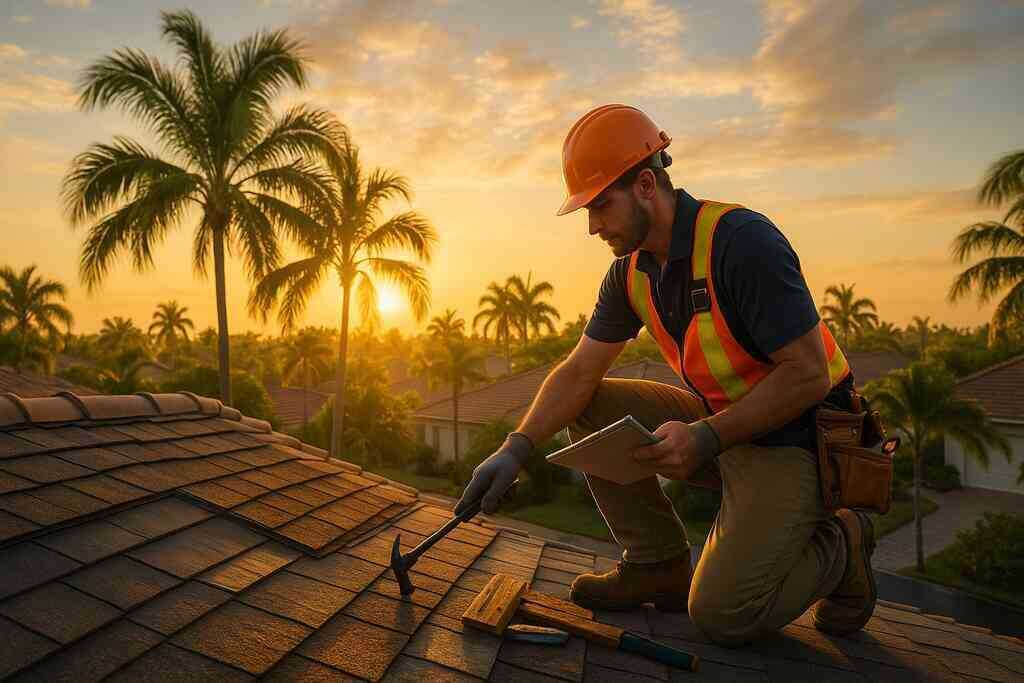
Geography within South Florida changes dramatically in mere miles, and so do building pressures. Boca Raton Remodelers confront brackish canal breezes laden with chlorides that corrode unprotected metal in months. Travel north, and West Palm Beach coastal roofing experts battle squalls funneled through Lake Worth Lagoon. General contractors in South Florida therefore customize marine grade roofing systems, fasteners, and underlayments for each micro-climate. They also adjust elevated slab foundation benefits calculations based on groundwater tables mapped by county geologists. Such hyperlocal engineering keeps clients’ insurance premiums manageable and extends service intervals between major capital repairs. When myths push one-size-fits-all solutions, localized science quickly exposes the risk. Clients soon realize that ignoring regional nuances invites costly callbacks, warranty disputes, and structural fatigue. Choosing experts grounded in data transforms the narrative from reaction to prevention. That shift drives community-wide resilience from Delray Beach Remodeling projects to Boynton Beach Renovations alike.
Access to the right specialist no longer requires endless searching or risky guesswork. Homeowners simply scan the roster of hurricane-rated roofing pros in South Florida to secure certified crews. Meanwhile, remodeling specialists near Boynton Beach for flood zones emphasize flood vent integration and waterproof finishes. Delray Beach Custom Home teams coordinate with seawall inspectors to align foundation depths with long-term shoreline projections. West Palm Beach Renovations often include solar arrays, demanding extra attention to wind uplift coefficients and panel anchoring systems. Each locality delivers a lesson: credible South Florida contractors never treat coastal addresses as interchangeable. Instead, they weave regional insights on South Florida climate and geography into every step from permit to punch-list. That commitment protects investments today and preserves community value for decades of hurricanes yet unseen. By drawing on shared databases, contractors collectively push myth-busting knowledge deeper into the marketplace. The stakes feel personal because every roof, deck, or window influences neighborhood safety when the next warning siren sounds.
 Ten Tall Tales and the Tidal Truths
 Ten Tall Tales and the Tidal Truths
Concrete is already a corrosion proof myth versus corrosion resistant concrete mix reality
Concrete naturally hardens underwater, yet seaside chlorides infiltrate unprotected pores quickly. Homeowners therefore assume strength means immunity. Unfortunately, coastal ions accelerate rebar oxidation and spalling. Cracks appear, water seeps deeper, and structural capacity plummets. Replacing delaminated concrete later costs several times the initial prevention. A myth born from inland experience falls apart under briny breezes.
Seasoned South Florida general contractors specify corrosion resistant concrete mix with supplementary cementitious materials. Fly ash and silica fume densify the matrix while minimizing permeability. Contractors also add epoxy-coated rebar, offering belt-and-suspenders security against salt air corrosion prevention mandates. County inspectors applaud because the strategy lengthens maintenance cycles and meets stringent Palm Beach County coastal building permits. For additional context, see the in-depth coastal code guidance for Florida homeowners that clarifies material classes acceptable along our shoreline.
Impact windows are optional myth versus Miami Dade impact window requirements reality
Old-timers recall taping glass before storms and believe modern windows suffice. That nostalgia ignores windborne debris testing now codified. Standard double panes shatter under eight-inch timber missiles traveling at hurricane speed. Shards turn interior rooms into hazardous wind tunnels. Optional upgrades therefore sound expensive yet unnecessary, feeding the myth.
Reality in South Florida starts with Miami Dade impact window requirements and corresponding ASTM certifications. Engineers model wind load structural engineering forces by neighborhood exposure category. They then match laminated glass thickness, frame anchorage, and sealant elasticity. Homeowners exploring Boca Raton hurricane retrofit services often consult general contractors in Boca Raton on hurricane retrofits to confirm correct product labels. Upgraded fenestration lowers insurance premiums, improves energy efficient in coastal homes, and provides priceless peace when warnings arise.
Any paint works by the sea myth versus salt spray resistant exterior paints reality
Paint marketing sometimes promises mythical “all climate” performance. Yet beachfront turbulence showers salt crystals onto facades daily. Generic acrylics lack additives that block chloride ion penetration. They fade faster under ultraviolet assault and chalk within months. Resulting pores welcome moisture, raising repair costs sharply.
Contractors combat deterioration using salt spray resistant exterior paints formulated with marine polymers and 100-percent acrylic binders. The coatings flex with temperature swings, sealing hairline cracks before corrosion begins. Crews trained by salt-spray proof exterior finishing teams in South Florida sandblast, prime, and topcoat in controlled humidity windows. That disciplined sequence extends color vibrancy well beyond standard warranty cycles while supporting storm proof outdoor living spaces that still look pristine.
Standard roofing suffices myth versus marine grade roofing systems reality
Some property owners compare inland shingle catalogs and assume equal suitability near coasts. Standard asphalt quickly fails when wind-driven rain and salt particles pry granules loose. Uplift pressures then exploit weakened edges, peeling sheets off like paper. The impression that “a roof is a roof” became costly after the first tropical cyclone.
Marine grade roofing systems integrate stainless fasteners, high-temperature underlayment, and class-four impact shingles or standing-seam metal. West Palm Beach coastal roofing experts overlap panels precisely, sealing ribs with butyl tape that resists chemical breakdown. This combination meets 150-mile-per-hour uplift testing, a benchmark far surpassing generic products. Homeowners researching upgrades often consult West Palm Beach coastal building advisors for site-specific recommendations. Such guidance embodies South Florida contractor myth busting at its finest.
Ground level slabs survive floods: Myth versus elevated slab foundation benefits reality
Developers once poured slabs directly on grade to save concrete. Coastal residents copied the trend, believing occasional ponding posed little threat. Flood insurance rates now reveal the flaw. Rising groundwater pushes hydrostatic pressure against flooring systems, leading to cracking, mold, and warped finishes. Myth-driven savings vanish with remediation bills.
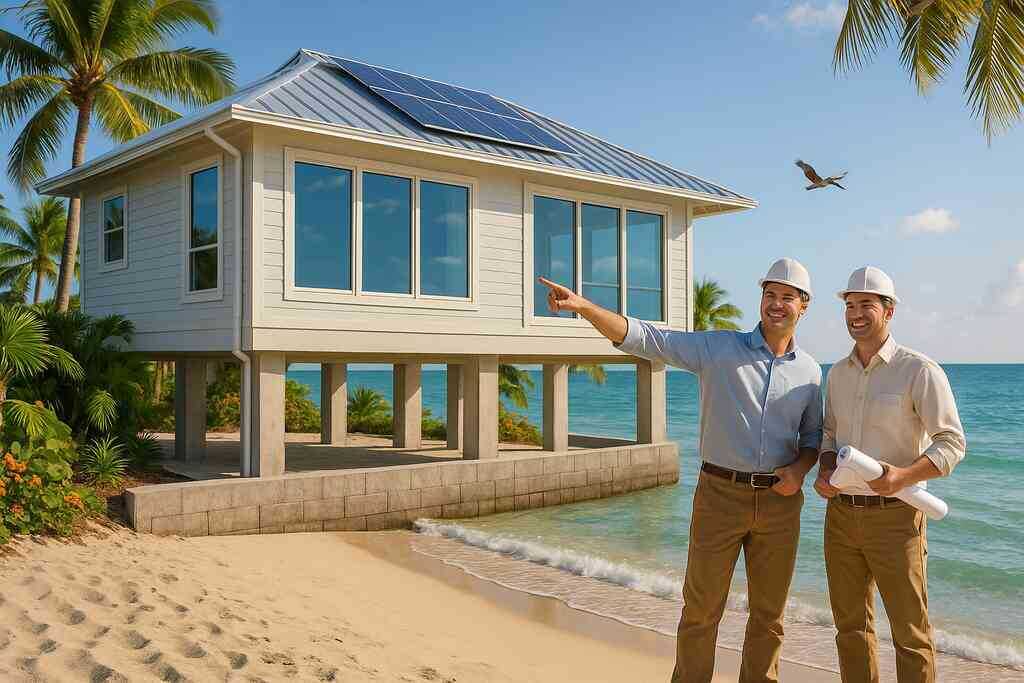
Elevated slab foundation benefits include vented crawl spaces that relieve pressure and speed drying after surge events. Engineers recommend pile-supported caps or stem walls adjusted to FEMA base flood elevations. Builders also integrate breakaway panels, preserving structural integrity when debris collides. Design teams frequently coordinate with builders of storm-ready decks across South Florida so outdoor platforms align with new floor heights. The cohesive plan supports Delray Beach flood resistant remodels and safeguards long-term property value.
Storm surge only matters for oceanfront properties: Myth versus storm surge mitigation design inland reality
Many inland homeowners assume barrier islands shield them entirely. Hydrodynamic models disagree. Bays, canals, and rivers funnel surge miles inland, multiplying velocity around bends. Water then deposits sediment and contaminants inside living spaces previously deemed safe. Misplaced confidence delays protective measures, magnifying losses.
Storm surge mitigation design inland blends graded landscaping, flood vents, and sacrificial enclosures. Engineers calculate flow paths to prevent pressure imbalances that topple walls. Verified data informs smart material choices, such as fiber-cement cladding over gypsum board. Searching the directory of contractors around the South Florida coast helps homeowners find teams experienced with these inland realities. Their expertise turns misunderstood risk into manageable engineering.
Wind codes are bureaucratic fluff myth versus wind load structural engineering science reality
Skeptics frame wind codes as government red tape blocking creativity. Truthfully, decades of post-storm forensics crafted today’s tables and nailing schedules. Engineers studied roof failures, door blowouts, and soffit collapses to refine numbers. Ignoring them invites repeat catastrophes, not artistic freedom. Compliance actually unlocks design latitude by quantifying real constraints.
Wind load structural engineering embraces fluid dynamics, terrain coefficients, and gust factors. Software models predicted pressures long before they reached code pages. Builders now value clear targets that help size connectors and sheathing thickness accurately. Anyone wanting deeper comprehension can explore decoding hurricane regulations with Florida contractors. Understanding the science behind the statute converts perceived hassle into enlightened protection for coastal construction myths debunked.
Moisture barriers are an overkill myth versus moisture barrier installation tips necessity
Some budget proposals omit vapor retarders, citing “breathable” walls as healthy. Unfortunately, humid subtropical air pushes moisture inward most months. Without a continuous barrier, condensation forms within insulation and spawns microbial colonies. Rotting studs then compromise lateral strength, silently undermining safety. Skipping this layer becomes an unforced error.
Moisture barrier installation tips emphasize seam taping, proper perm ratings, and integration with flashing. Contractors schedule blower-door tests to verify airtightness before drywall hides defects. Advanced membranes even allow outward drying while blocking inward vapor, balancing performance. Clients needing clarification simply connect with the South Florida contractor support team for product comparisons. Expertise transforms a mysterious sheet into critical armor against tropical dampness.
Mold dies in tropical sun myth versus tropical mold remediation practices evidence
Sunlight disinfects patios, so owners presume interior mold dries away once the weather clears. However, spores thrive in shaded cavities behind baseboards where ultraviolet light never reaches. Warm temperatures actually accelerate growth, releasing allergens that linger. Waiting for sunshine wastes valuable response time and worsens air quality.
Tropical mold remediation practices start with moisture source elimination, HEPA containment, and antimicrobial coatings. Dehumidifiers then maintain ideal indoor relative humidity below sixty percent. Contractors integrate energy efficient coastal homes strategies ensuring balanced ventilation keeps spores dormant. Residents in canal communities often rely on remodeling specialists near Boynton Beach for flood zones for targeted abatement. Quick action prevents chronic respiratory complaints while preserving finishes.
Seawalls guarantee insurance discounts myth versus seawall inspection checklist and insurance nuance
Building a seawall provides obvious erosion control, so owners anticipate automatic premium reductions. Insurers, however, evaluate condition, height, tieback capacity, and maintenance records. An uninspected wall may fail suddenly, causing greater payouts. Assuming coverage perks without documentation leaves policyholders disappointed at renewal.
A seawall inspection checklist includes structural cracks, cap elevation, corrosion of anchors, and adjacent soil settlement. Professional divers often photograph submerged footers, supplying insurers with quantifiable evidence. Contractors schedule timely grout injections and replace rods before degradation accelerates. Property owners around Delray rely on Delray Beach contractors for seawall and retrofit services to keep reports current. Accurate data supports insurance dialogue, turning nuanced requirements into achievable benchmarks.
Building Forward Blueprint for Resilient Shorelines
Sea level rise adaptation strategies and South Florida contractor collaboration
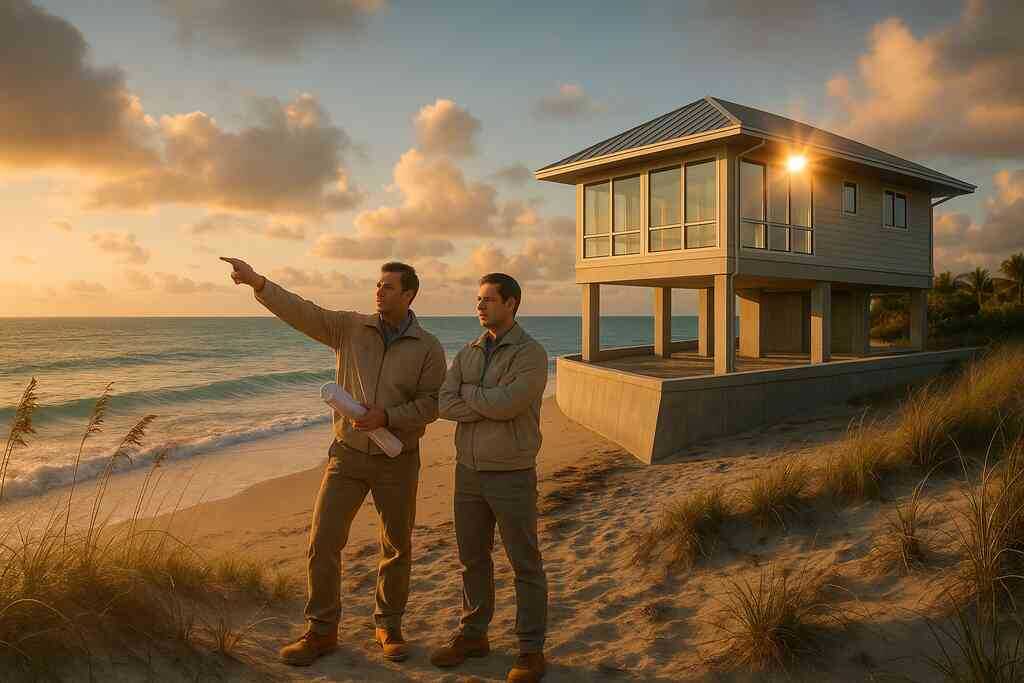
Coastal engineers now model sea level projections in quarterly increments rather than distant decades. South Florida general contractors convert those projections into actionable site plans before permits. They coordinate adjustable sea walls, elevated mechanical rooms, and amphibious landscaping that channels floodwater harmlessly. Collaborative charrettes with municipalities reduce redesign cycles and strengthen grant applications. Homeowners also gain clarity when contractors map phased retrofits aligned with budget comfort. By following top coastal building best practices in South Florida teams maintain momentum while satisfying stringent reviewers.
Contractor collaboration extends further through shared digital dashboards that visualize tide gauge trends against structural tolerances. The dashboards alert project managers when new research suggests design tweaks for foundation pilings. As a result crews schedule field changes proactively instead of scrambling after warnings. Local universities contribute predictive analytics, nurturing a feedback loop that benefits every neighborhood. Continuous learning empowers even small renovation firms to offer flood zone remodeling advice that once required large corporate resources. Such democratized knowledge keeps the entire shoreline moving forward together.
Ethical coral reef friendly building materials shaping tomorrow
Traditional bulkheads can release alkaline plumes that damage nearby coral nurseries. Conscious South Florida contractor teams now specify geopolymer concrete that lowers leached calcium hydroxide. They also source stainless fasteners produced with closed-loop water recycling, reducing offshore heavy-metal runoff. Suppliers must present life-cycle assessments before bids receive approval, tightening accountability across the chain. This rigor proves that ethical sourcing and high performance can harmonize rather than compete.
Designers increasingly integrate bio-enhancing textures onto seawall panels to foster coral recruitment. These subtle ridges mirror natural reef microhabitats, encouraging larvae settlement and boosting local biodiversity. Regulatory boards support experiments because ecological gains dovetail with erosion control goals. Homeowners benefit through increased water clarity and long-term shoreline stability that raises property appeal. By valuing ocean health, construction companies gain community trust while protecting their most scenic asset.
Next steps to connect with a South Florida contractor near you
Choosing the right partner begins with clarifying project priorities, from hurricane resistant building techniques to energy efficient coastal homes. Draft a concise wish list that outlines must-have features, acceptable timelines, and budget borders. When you contact a South Florida general contractor, share this document early so conversations stay focused on outcomes instead of guesswork. Seasoned firms immediately match goals with recent case studies, revealing realistic benchmarks. That transparency builds momentum and eliminates costly mid-course corrections.
After refining objectives, use the South Florida Contractors directory search tool to filter by license, insurance, and specialty tags. Geographic filters reveal Boca Raton remodelers, West Palm Beach roofing experts, or Boynton Beach renovation specialists on one concise screen. Detailed profiles display client reviews, permitting histories, and photos that verify craftsmanship beyond marketing claims. The platform’s call option connects you instantly, turning research into real dialogue within minutes. Rapid outreach keeps your project ahead of fast-moving coastal weather patterns.
Once you shortlist candidates, request written proposals that reference wind load structural engineering calculations and moisture barrier installation tips. Compare how each contractor sequences trades, sources marine grade roofing systems, and schedules seawall inspection checklists. Look for contingency allowances covering unexpected soil discoveries or supply delays, indicators of professional construction management. Finally, confirm communication protocols, because timely progress reports build trust as surely as steel ties build strength. These practical steps transform directory searches into resilient shorelines that stand confident against tomorrow’s tides.
Frequently Asked Questions
 Frequently Asked Questions
Question: In the recent blog post Top Ten Coastal Myths Debunked By South Florida Contractors, which myths usually create the biggest hidden costs for homeowners and how does the South Florida Contractors directory help prevent them?
Answer: The myths that drain wallets fastest involve skipping Miami Dade impact window requirements, pouring ground-level slabs without flood analysis, and assuming any paint will survive salt spray. These shortcuts trigger expensive emergency repairs, insurance hikes, and premature material replacement. By searching the South Florida Contractors directory first, you are matched with a vetted South Florida general contractor who already understands hurricane resistant building techniques, salt air corrosion prevention, and local shoreline zoning insights. Their bids reference real wind load structural engineering data and corrosion resistant concrete mix specs, so the budget you approve is the budget that endures.
Question: How do I figure out whether my specific address actually needs Miami Dade impact windows or a full marine grade roofing system?
Answer: Exposure categories change every few blocks along the coast. A contractor in South Florida will pull GIS wind maps, review Palm Beach County coastal building permits, and calculate storm surge mitigation design pressures for your parcel. If debris impact tests show standard glass or shingles would fail, they will specify certified impact windows and marine grade roofing systems that meet or exceed local wind codes. The South Florida Contractors platform lets you filter West Palm Beach coastal roofing experts or Boca Raton hurricane retrofit services near you, so you never rely on guesswork.
Question: What are the real elevated slab foundation benefits for a property inside a FEMA flood zone, and can South Florida Contractors connect me with builders who specialize in this technique?
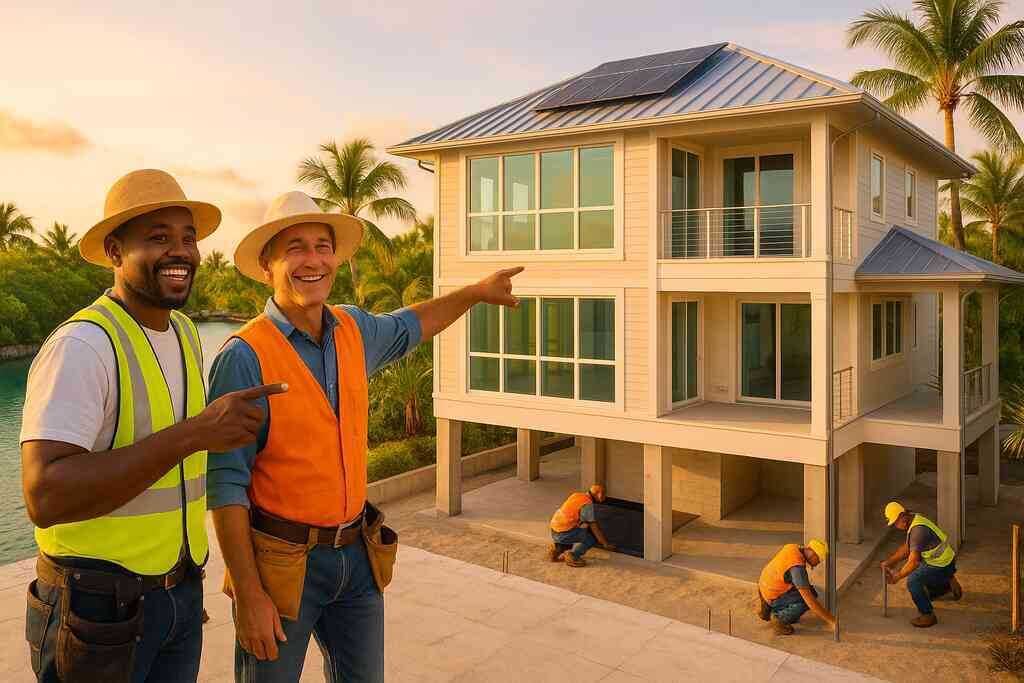
Answer: Elevated slabs reduce hydrostatic pressure, speed post-storm drying, and lower flood-insurance premiums. They also make it easier to integrate storm proof outdoor living spaces that stay above surge levels. By entering your ZIP code on South Florida Contractors, you can instantly locate Delray Beach flood resistant remodels or Boynton Beach remodelers who have completed dozens of elevated slab projects. Profiles include photos, permit numbers, and homeowner reviews, so you are confident the crew understands both structural science and local inspection protocols.
Question: I heard that adding a seawall automatically guarantees cheaper insurance. Can South Florida Contractors assist with the seawall inspection checklist and the documentation insurers really want?
Answer: Insurers care less about simply having a seawall and more about its documented condition-tie-back tension, cap elevation, corrosion status, and maintenance history. South Florida Contractors lists Boynton Beach seawall contractors near me as well as Delray Beach construction companies that provide diver reports, photo logs, and stamped engineering letters. Uploading this package during renewal typically secures the maximum discount available under your policy tier.
Question: I want to use ethical coral reef friendly building materials in a Boca Raton renovation. Does that limit my choices or raise costs?
Answer: Not anymore. Geopolymer concrete, stainless fasteners sourced from closed-loop plants, and salt spray resistant exterior paints are now price within 3-5 % of conventional options when bought through local supply chains. South Florida Contractors maintains a roster of Boca Raton remodelers and Delray Beach custom home teams that already specify these products. They bulk-order materials, pass volume savings to you, and provide documentation that satisfies both environmental grant programs and strict coastal code requirements.