
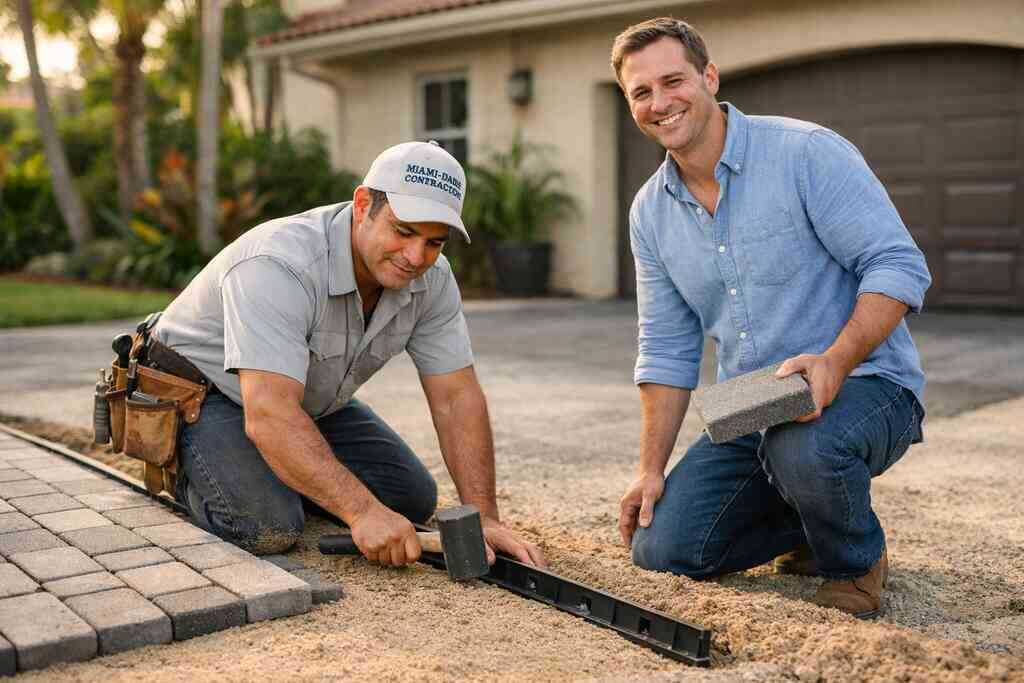
Why a paver project in Miami-Dade can stall before the first stone is set
A paver project can look simple on paper. Then the rain starts, the yard holds water, and the bid falls apart. If you are reading this because the estimate felt high or vague, take a breath. That reaction is normal, especially in South Florida, where weather and permitting can reshape a plan fast. The smartest homeowners start by looking for a paver installation in South Florida that is actually buildable, not just attractive.
The hidden difference between a pretty bid and a buildable paver plan
A pretty bid lists square footage and a price. A buildable plan explains excavation depth, base material, drainage, and edge restraint. That difference matters because pavers fail from what sits underneath them, not from the color on top. Here is the part most homeowners miss: the cheapest number often leaves out the steps that prevent sinking, shifting, and ponding. On the projects we’ve finished this year, the cleanest jobs began with a hardscape contractor in South Florida who documented the base and slope before demo started.
One client in a Coral Gables neighborhood had a driveway redesign that looked straightforward until we checked the existing grade. The yard pushed runoff toward the garage slab. That meant the paver layout had to change before any material arrived. We adjusted the grade, rebuilt the sub-base, and avoided a future flood complaint that would have cost far more than the redesign. That is why a driveway paver installation in South Florida should always be treated as a drainage project first.
Why Miami-Dade soil, drainage, and storm conditions change the entire installation strategy
Miami-Dade soil can be unpredictable, especially where fill, sand, and older landscaping have been disturbed. Heavy rain exposes weak planning quickly. If water has nowhere to go, pavers move, joints wash out, and edges fail. Coastal wind, salt exposure, and saturated ground also demand more attention than a dry inland project would. That is why coastal home hardscaping in South Florida needs a stronger base and a smarter water path.
Storm season changes the sequence too. Crews must think about staging, material storage, and site protection before they think about aesthetics. A patio that looks flawless in a showroom can become a maintenance headache if the slope sends water toward a lanai or pool cage. For many homes, the right answer is a patio paver installation in South Florida designed around drainage, not against it. That approach protects both the surface and the surrounding structure.
When a licensed contractor Miami-Dade homeowners can verify matters more than the lowest price
Price matters. So does accountability. But in Miami-Dade, a low bid from an unverified crew can become expensive very quickly. A licensed contractor in Miami-Dade understands the permit path, inspection expectations, and hurricane-code compliant exterior improvements in South Florida. An unlicensed installer may promise speed yet leave you with a failed inspection or a repair bill later.
If you need to find a contractor in South Florida, ask for license verification, insurance, and written scope details before anyone digs. We hear this from clients almost every week: the project looked simple until the homeowner asked for paperwork. That is the right moment to slow down. A verified contractor protects the schedule, the budget, and the resale value of your home.
What HOA approvals and condo rules can quietly add to a paver project in South Florida
HOA approval is not just a formality. In some communities, the board cares about color, pattern, border style, drainage direction, and delivery hours. Condo and townhome projects can also trigger additional rules about access, common areas, and debris removal. If your project is part of a larger South Florida home exterior renovation, the paperwork can outlast the labor.
In a Brickell-area condo project, the owners wanted a clean terrace finish and assumed the association only cared about appearance. They were wrong. The board required a submittal package showing material choice, noise control, and waterproofing coordination. That slowed the start, but it prevented a costly redo. For many owners, the real win is not the fastest install. It is an approved install that does not get pulled back apart by management.
The paper trail that keeps a paver installation legal and storm ready
Permits and paperwork do not slow good projects down. They keep them from failing in the middle. If you are dealing with a driveway, patio, pool deck, or any work near drainage features, the paperwork matters before the first truck arrives. A careful Miami-Dade permit process for exterior work helps you avoid stop-work headaches, HOA friction, and inspection delays. In South Florida, skipping this step is never worth it.
Which Miami-Dade permit path usually applies to driveway paver installation and patio upgrades
Most driveway and patio jobs need review based on scope, location, and whether the work changes drainage or structural conditions. Some projects fit a simple repair path, while others require fuller review. The right answer depends on the site, not on guesswork. A responsible contractor should explain which steps apply before scheduling demolition. If the work touches a driveway apron, swale, or pool deck, assume the permit conversation is real.
For homeowners comparing Miami-Dade paver installation for homes, the safest approach is to ask who pulls the permit, what drawings are needed, and what inspections are expected. Never accept “we can handle it later” as an answer. Later usually means after something has already gone wrong. That is not a place you want to be.
How South Florida building codes and hurricane-code compliance shape exterior hardscaping
Exterior hardscaping may not seem like a hurricane issue, but it often is. Water management, edge stability, and wind-blown debris all matter. South Florida building codes and hurricane-code compliance shape how surfaces tie into adjacent structures, drains, and grade transitions. A paver field that traps water near a slab can create problems during intense rain. A loose border can become a maintenance issue after repeated storms.
If your project touches a porch, lanai, or pool enclosure, the design should reflect hurricane-code compliant exterior improvements in South Florida. That does not mean every paver job needs heavy structural engineering. It does mean the work should respect wind, runoff, and impact conditions around the home. On the coast, small mistakes become visible quickly.
What to verify before work starts when choosing a contractor licensing Florida check over a handshake
A handshake is friendly. It is not protection. Before work begins, verify the license, confirm the business name matches the permit documents, and ask who will supervise the job. You should also confirm the contractor’s insurance status and ask for copies, not just verbal reassurance. If you need guidance on how to verify a contractor license in Florida, make that check part of your hiring routine.
Here is a simple pre-start checklist:
- Verify active license status.
- Confirm the scope in writing.
- Ask who pulls the permit.
- Review material specs and drainage notes.
- Confirm site protection and cleanup.
- Get the start order in writing.
That list sounds basic. It saves projects all the time.
Why insurance, bonding, lien waiver Florida paperwork, and change order contractor Florida rules protect the homeowner
Insurance protects you if something gets damaged. Bonding adds another layer of financial accountability, depending on the job and contractor. A lien waiver shows who got paid and helps reduce payment disputes. Change orders matter because paver projects often uncover soft soil, hidden drainage issues, or border changes after layout begins. If the scope changes, the paper should change too.
The cleanest jobs are the ones with clear expectations from day one. That is why contractor insurance requirements in Florida and lien waiver and change order rules in Florida deserve attention before anyone places the first pallet. A homeowner who asks for those documents is not being difficult. You are being prudent. And in South Florida, prudence pays.
How the best paver systems are built for coastal heat, heavy rain, and curb appeal
Good pavers are only as good as the system beneath them. That system includes excavation, compaction, bedding, drainage, edging, and finish grading. If one piece is weak, the whole surface suffers. The most durable outdoor spaces balance structure and style, especially in coastal neighborhoods where heat and rainfall hit the surface hard. That is why the best paver installation in South Florida looks simple but is built with discipline. 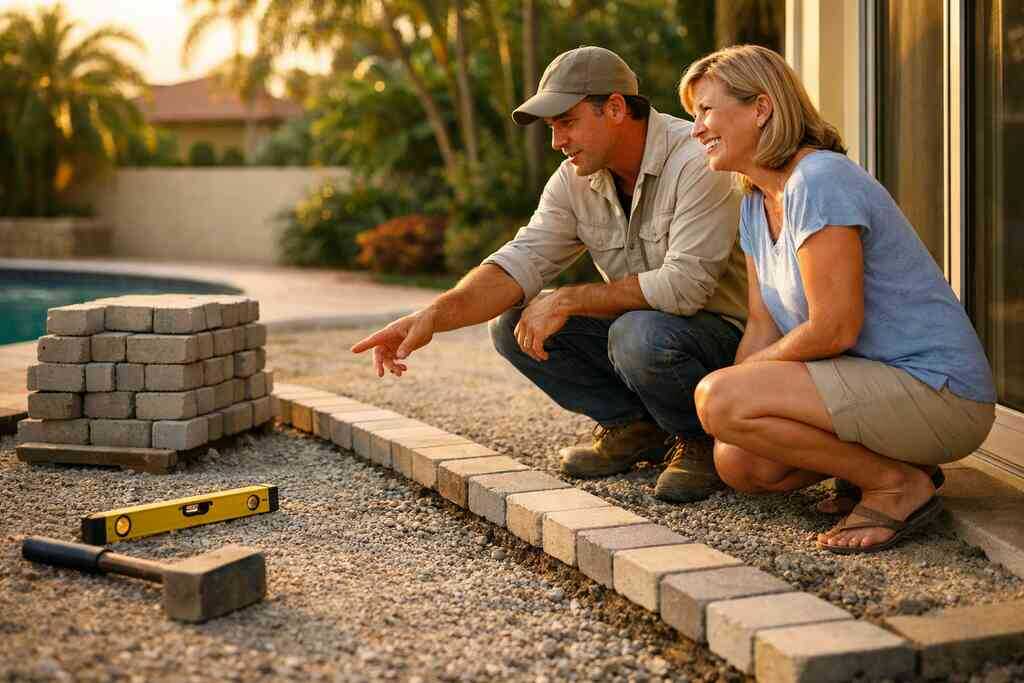
The base preparation process that separates a long-lasting hardscape contractor South Florida job from a sinkhole later
Base preparation starts with removal of unstable material. Then comes grading, geotextile when appropriate, and a properly compacted aggregate base. The bedding layer follows, but only after the base is level and firm. If a contractor rushes this part, the pavers may look fine for a few months and then settle unevenly. That is the classic sinkhole-later problem. We see this most often in older homes where a previous surface was patched over instead of rebuilt. The ground beneath had already moved. A careful paver base preparation and drainage plan reduces that risk, especially near pool decks and driveways. On a recent Miami-Dade backyard project, a soft corner near the fence line needed extra compaction before the pavers could be set. That extra day saved months of repair.
Compacted base for pavers, edging, and border installation for driveways, walkways, and pool decks
A compacted base for pavers creates strength. Edging keeps the field from spreading. Borders help lock the design together and make the project look finished. Without those pieces, traffic and water slowly separate the system. That is why a compacted base for pavers and paver edging and border installation matter as much as the paver style itself.
For walkways, borders often define the layout and prevent edge creep. For driveways, they absorb repeated wheel pressure. For pool decks, they help protect the perimeter where movement is most visible. The best crews treat these details as structural finishing, not decoration. That mindset produces cleaner lines and fewer callbacks.
Choosing between interlocking concrete pavers, natural stone paver installation, brick paver driveway styles, and permeable pavers for Florida homes
Material choice affects appearance, maintenance, heat, and drainage. Interlocking concrete pavers offer flexibility and broad style options. Natural stone paver installation can give a softer, more upscale look. A brick paver driveway adds classic character, but it needs careful base work and routine care. Permeable pavers for Florida homes can help manage runoff where drainage is a priority.
MaterialBest useMain advantageMain cautionInterlocking concrete paversDriveways, patios, walkwaysVersatile and durableColor and texture vary by productNatural stone paversHigh-end patios, entriesElegant lookMore expensive and sometimes more maintenanceBrick paversDriveways and traditional designsTimeless styleCan show movement if base work is weakPermeable paversDrainage-sensitive areasHelps with runoff controlNeeds the right sub-base and maintenanceIf you are planning permeable pavers for Florida homes, make sure the drainage design is actually appropriate for the site. Not every yard needs the same solution. The best choice depends on slope, soil, and surrounding structures. Style should never outrun function.
Drainage solutions for standing water, erosion-resistant hardscaping, and proper slope around lanais, patios, and pool decks
Standing water is a warning sign, not a minor inconvenience. Proper slope moves water away from walls, thresholds, and vulnerable transitions. Erosion-resistant hardscaping also depends on how the edges tie into landscaping and adjacent soil. If the paver field ends abruptly beside loose mulch or low soil, water can undermine the edge.
That is why proper drainage for pavers should be discussed before materials are ordered. A lanai, patio, or pool deck often needs more than a level surface. It needs a water strategy. The more mature the property, the more likely the drainage solution will need adjustment.
Slip-resistant pool deck pavers and heat-resistant paver materials for barefoot comfort in South Florida
Pool decks demand two things at once: safety and comfort. Slip-resistant pool deck pavers help reduce accidents when feet are wet. Heat-resistant paver materials matter because South Florida sun can make some surfaces uncomfortable by midday. If you have kids, guests, or pets using the space, those details become daily realities. A good pool deck paver contractor in South Florida will talk about texture, color, and surface temperature before installation begins.
The best outdoor spaces balance beauty with feel. Travertine paver patio finishes can stay cooler than many darker products, while lighter concrete pavers often reduce surface heat. That does not mean one material is always right. It means you should test ideas against real use. Barefoot comfort matters more than a brochure photo.
What to ask before you sign so the project keeps moving after the first rainstorm
The strongest projects start with good questions. You want to know how the contractor thinks, not just how they sell. You also want to see how they respond when weather interrupts the schedule or when an existing surface reveals a hidden problem. A paver project is not only a product purchase. It is a coordination test. The right South Florida design-build mindset helps keep everyone aligned from the first sketch to the final sweep.
How to compare a South Florida concrete contractor, design-build team, or paver specialist without getting lost in sales talk
A sales pitch can sound polished and still miss the essentials. Ask each bidder to explain excavation depth, base thickness, drainage direction, and joint sand selection. Then ask who will supervise the site and who answers when conditions change. A skilled team should explain the work in plain language. If they cannot, keep looking.
Use these comparison points:
- Permit handling
- Insurance proof
- Base preparation method
- Drainage plan
- Edge restraint details
- Cleanup and restoration
If you are reviewing a South Florida concrete contractor against a dedicated paver team, compare scope, not just price. A broad remodeler may be excellent, but the project still needs direct hardscape experience. The best fit is the team that understands your exact site conditions. That is where expertise shows up.
The questions that reveal whether a contractor understands Miami-Dade permit realities, driveway resurfacing with pavers, and outdoor living space upgrade goals
Ask who pulls the permit and how inspections are scheduled. Ask whether the design changes drainage. Ask what happens if the existing driveway base is too soft. Ask how they handle driveway resurfacing with pavers when the slab below is cracked. Those questions reveal whether the contractor is thinking ahead.
You can also ask how the work supports the larger outdoor plan. A paver patio may need to connect with a pergola, grill pad, or future seating wall. If you are planning an outdoor living space upgrade, the paver layout should support that vision now. The wrong layout can box you in later. That is expensive to fix.
When paver sealing and maintenance, repair and replacement, or sunken paver correction should be part of the original scope
Paver sealing is not always required immediately, but maintenance should be discussed up front. Some homeowners want color enhancement and easier cleanup. Others prefer to wait until the surface settles. Either approach is fine if the contractor explains the tradeoffs. The same is true for repair and replacement planning.
If the project is replacing an older surface, ask about paver repair and replacement in the original bid. If the yard has prior settlement, ask about sunken paver correction before installation begins. These are not “extra” issues. They are common South Florida realities. Planning for them early keeps surprise costs down.
The smartest next step for front entry paver makeover, pool deck paver contractor South Florida work, or full outdoor kitchen paver foundation planning
A front entry paver makeover can change curb appeal fast. A pool deck can improve safety and the way your yard feels every day. An outdoor kitchen paver foundation can set the stage for a full entertaining area. The smartest next step is not to sign the first proposal that sounds friendly. It is to compare written scopes from verified professionals who understand local rules.
If you are ready to start, focus on one clear action: collect three quotes from licensed, insured companies and compare the permit language line by line. If you need help finding the right fit, South Florida Contractors can help you begin the process with a practical local search. You do not have to figure this out alone, and you do not have to solve every detail today. Start with one call, then ask the questions that protect your home.
Frequently Asked Questions
Question: What should I ask before hiring for paver installation South Florida so I know the project will meet Miami-Dade permit and South Florida building codes?
Answer: Start with the basics that protect your home: ask who will pull the Miami-Dade permit, what the drainage plan is, how deep the paver base preparation will go, and whether the contractor is licensed and insured in South Florida. A trustworthy team should explain the compacted base for pavers, edge restraint, slope, and cleanup in writing before any excavation starts. This matters even more for driveway paver installation, patio paver installation, and pool deck paver contractor South Florida work, because those areas often affect runoff and inspections. If you are comparing bids, do not focus only on price. Compare scope, permit handling, and proof of contractor licensing Florida. And if you need to find a contractor South Florida, use a directory that lets you verify license details instead of relying on a handshake. Always confirm hurricane-code compliant exterior improvements are part of the discussion when the work touches an exterior surface or drainage feature.
Question: In the Ultimate Guide to Paver Installation for Miami-Dade Homes, why is drainage such a big deal for a driveway paver installation or pool deck paver contractor South Florida project?
Answer: Drainage is one of the biggest reasons paver projects succeed or fail in South Florida. Heavy rain, storm season, and uneven soil can cause standing water, settling, and washed-out joints if the site is not graded correctly. A solid design should include proper drainage for pavers, paver base preparation, and a compacted base for pavers that supports the surface over time. That is especially important for driveway resurfacing with pavers, lanai paver flooring, and slip-resistant pool deck pavers, where water can collect near slabs, thresholds, or pool enclosures. In Miami-Dade and across South Florida, a buildable plan must account for runoff, not just looks. South Florida Contractors helps homeowners connect with contractors who understand these realities and can explain whether permeable pavers for Florida homes, erosion-resistant hardscaping, or another drainage solution is the best fit for the site. The goal is not just curb appeal improvement. It is a surface that performs through heat, rain, and daily use.
Question: How do I know whether I need interlocking concrete pavers, natural stone paver installation, brick paver driveway, or permeable pavers for Florida homes?
Answer: The right material depends on the look you want, how the space will be used, and how the site handles water. Interlocking concrete pavers are a popular choice for many South Florida homeowners because they are versatile, durable, and available in many colors and patterns. Natural stone paver installation can create a higher-end finish for entries and patios, while a brick paver driveway brings a classic style that works well when the base and edging are done correctly. Permeable pavers for Florida homes may be worth considering where drainage is a major concern, but they need the right sub-base and maintenance plan to perform well. A good contractor should also talk about heat-resistant paver materials, slip-resistant pool deck pavers, and landscape integration with pavers so the final result is both attractive and practical. If you are planning a South Florida home exterior renovation or outdoor living space upgrade, the paver choice should support the whole design, not just one area.
Question: Do HOA approval and condo rules matter for a South Florida HOA permit when I want a patio paver installation or front entry paver makeover?
Answer: Yes, they absolutely matter. In many South Florida communities, the HOA or condo board may review color, pattern, border style, delivery hours, drainage direction, and even how debris will be handled. For condo renovation South Florida projects and townhome remodeling South Florida jobs, the approval process can be just as important as the installation itself. A patio paver installation, front entry paver makeover, or outdoor kitchen paver foundation may require submittals before work starts. That is why it is important to work with South Florida contractors who understand the permit process and can help you avoid delays or rework. South Florida Contractors is a practical place to begin your search because it helps homeowners find a contractor South Florida who is familiar with local rules, licensing, and project coordination. Never assume the board only cares about appearance. In many cases, drainage, waterproofing coordination, and access rules matter too.
Question: How can South Florida Contractors help me compare a licensed contractor Miami-Dade with a South Florida concrete contractor or South Florida design-build team for paver repair and replacement?
Answer: South Florida Contractors makes it easier to compare local professionals in one place, whether you need a licensed contractor Miami-Dade, a South Florida concrete contractor, or a team that handles South Florida design-build work. For paver repair and replacement, sunken paver correction, or driveway resurfacing with pavers, the best contractor is the one who can explain the scope clearly and provide the paperwork to match. Ask for proof of license, insurance, and bonding if applicable, and request a written scope that includes paver edging and border installation, drainage solutions for standing water, and any change order contractor Florida procedures before work begins. That protects you if hidden soil issues or drainage problems appear once excavation starts. South Florida Contractors is designed to help homeowners connect with contractors across South Florida, including Miami-Dade, Broward County, and Palm Beach County, so you can compare options with more confidence. You still need to verify every contractor license and insurance status yourself, but the directory gives you a strong starting point and a more organized way to choose the right pro for your project.