
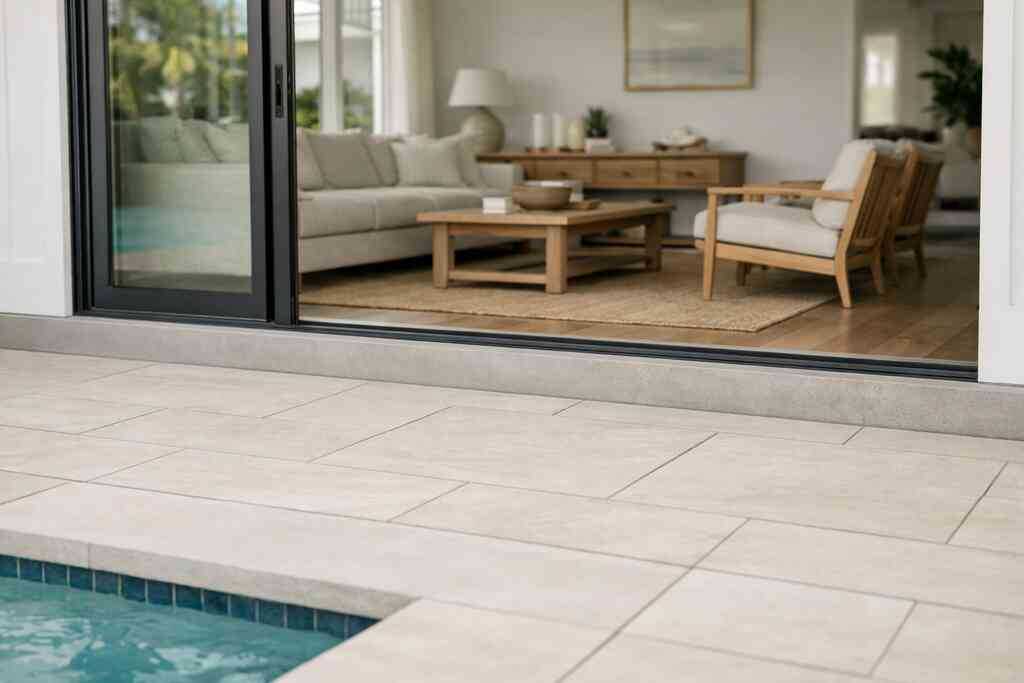
The best pool deck materials for South Florida are porcelain pavers, travertine, coral stone, and properly finished concrete systems because they handle heat, moisture, UV exposure, and heavy rain better than most alternatives. For waterfront or coastal homes, the right choice also needs slip resistance, drainage, and hurricane-code-compliant installation.
Key Takeaways
- Porcelain pavers and travertine are top choices for many South Florida pool decks because they stay cooler, resist moisture, and offer strong durability.
- Slip resistance matters as much as appearance in South Florida, where daily rain, pool splash, and humidity can make a beautiful surface unsafe.
- Drainage and base preparation are non-negotiable; even a premium material can fail if water pools under the deck or expansion joints are ignored.
- Coastal homes need extra attention to salt air, UV exposure, and corrosion-resistant installation details.
- If you want help narrowing options, use a South Florida Contractors Guide To Choosing and always verify licensing, insurance, and permit requirements before hiring any contractor.
Why the wrong pool deck material turns a great South Florida backyard into a maintenance problem
The wrong pool deck material in South Florida usually fails for one of three reasons: it gets too hot, gets slick, or traps water. In this climate, a deck has to handle intense sun, salty air, daily rain, and constant splash exposure without becoming uncomfortable or unsafe. That is why material choice matters as much as the installer.
How heat, salt air, UV exposure, and daily rain change the rules for pool deck materials in South Florida
South Florida pool decks live in a harsher environment than most inland projects. Heat-reflective decking is valuable, but it is only part of the equation. UV exposure can fade coatings, salt air can stress finishes near the coast, and humidity encourages algae growth on porous surfaces that never fully dry. A deck that looks fine in a showroom can perform very differently outside in Palm Beach, Broward, or Miami-Dade.
Here is the part most homeowners miss: the substrate matters as much as the finish. A cool-looking paver or stone can still fail if the slope is wrong or the base stays damp. On the projects we see most often, the biggest long-term complaints are not color changes. They are hot feet, standing water, and slippery edges after rain.
Why a pool deck that works in inland neighborhoods can fail faster in waterfront and coastal home conditions
A material that performs well in an inland neighborhood may struggle near the water because coastal homes face more salt exposure and wind-driven moisture. That is especially true for waterfront pool deck materials, where fasteners, edges, and hidden structural components need more attention. If you are near the coast, the installation details often matter more than the product brochure.
One homeowner in Broward liked the look of a decorative deck finish, but the original surface kept developing dark patches near the pool coping. The problem was not the color. It was trapped moisture and poor drainage under a slab that had been patched several times. Once the deck was rebuilt with a better slope and a more moisture-tolerant finish, the maintenance dropped sharply.
When slip resistance and drainage matter more than the look of the finish
A pool deck should be judged first by safety and water management, then by style. A slip-resistant pool deck surface is not optional in a climate where afternoon storms can leave the deck wet in minutes. The best decks shed water quickly, dry fast, and still feel comfortable under bare feet. Use this as a quick filter when comparing materials: – Non-slip finish for wet areas: essential around steps, tanning ledges, and pool edges
- Pool deck drainage solutions: critical if the yard has low spots or heavy runoff
- UV-resistant deck materials: useful for decks exposed to all-day sun
- Algae-resistant pool deck surface: especially helpful in shaded or humid areas
- Moisture-resistant outdoor flooring: best for long-term stability near the pool

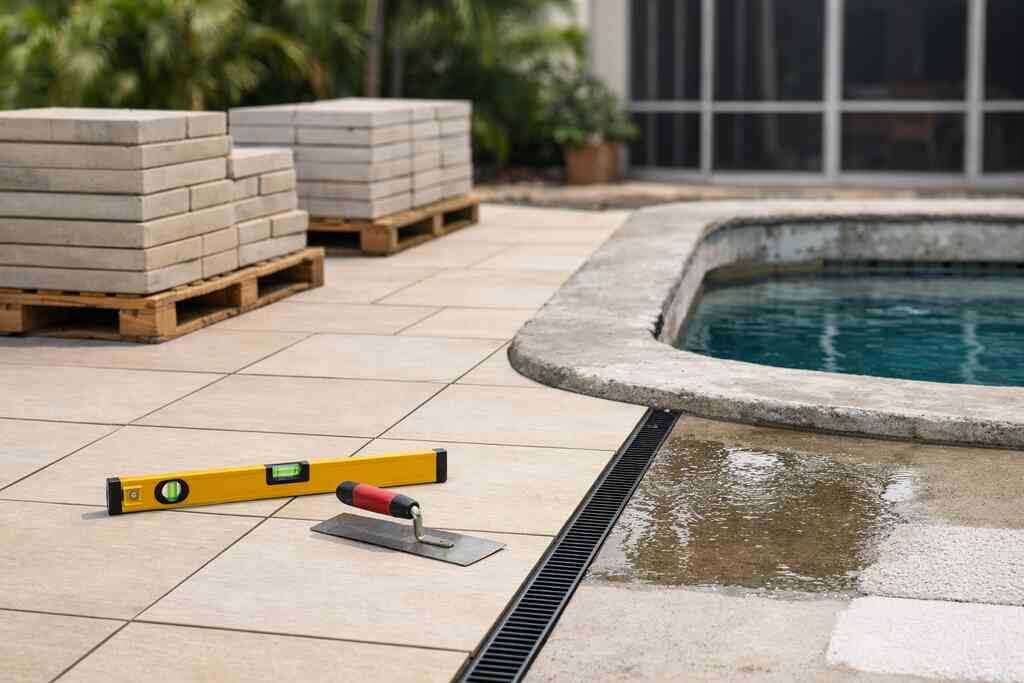
If you are planning a larger pool deck resurfacing guide, ask about slope, drains, and expansion joints before you talk finish. That order saves money.
The materials that actually hold up when South Florida weather tests every surface
The best South Florida pool deck materials are the ones that balance cool surface temperature, traction, durability, and upkeep. Porcelain pavers, travertine, coral stone, and well-executed concrete systems all have a place, but they solve different problems. The right answer depends on your budget, your maintenance tolerance, and how close you are to the coast.
Travertine, coral stone, porcelain pavers, and natural stone pool decking compared for heat, traction, and durability
Here is a practical comparison of the most common best pool deck materials for South Florida:
MaterialHeat performanceTractionDurabilityMaintenanceBest useTravertine pool deckStays relatively coolGood with the right finishStrong if installed wellModerateUpscale residential decksCoral stone pool deckNaturally coolerGood, but depends on finishGood, but softer than porcelainModerate to higherLuxury coastal projectsPorcelain pavers for pool decksExcellentVery good in textured finishesExcellentLowModern, low-maintenance decksNatural stone pool deckingVaries by stone typeVariesVaries widelyModerate to highCustom designs with proper sealingTravertine remains a favorite because it looks refined and feels cooler underfoot than many other hardscape options. It works well when sealed properly and installed over a well-prepared base. Still, it needs more care than porcelain, and lower-quality stone can stain or pit over time.
Coral stone gives a distinctly South Florida look and performs well in the luxury pool deck design South Florida homeowners want. It is attractive around oceanfront homes and outdoor living spaces, but the material is more sensitive than porcelain, so installation quality and sealing matter a lot.
Porcelain pavers are often the smartest low-maintenance pool deck option. They resist stains, handle moisture well, and can deliver a strong cool deck coating effect without the upkeep of a coating system. A textured porcelain surface also gives you solid traction, which is a major benefit around children, guests, and wet feet.
Natural stone pool decking can look beautiful, but it is not one-size-fits-all. Some stones hold up well; others become a maintenance issue in humid, algae-prone conditions. If you want natural stone, ask the contractor how the stone behaves in South Florida heat, what sealer they recommend, and how often it will need attention.
A good pool deck resurfacing cost conversation should include more than material price. Ask about base repair, drainage correction, and whether the installer expects expansion joint repair. Those line items often decide whether the deck lasts or becomes a recurring problem.
If you are comparing options and want a cleaner starting point, the 2026 Guide To South Florida Pool lays out common resurfacing paths in plain language. It is also smart to compare it with the What Are Best Pool Deck Options resource if you are deciding between repair, resurfacing, or full replacement.
For homeowners trying to keep the process organized, South Florida Contractors is a practical place to find a contractor South Florida by location and trade. Just remember the basics: verify the contractor’s license, confirm insurance and bonding, and do not skip permits. If you are in Palm Beach County, Broward County, or Miami-Dade, the permit path can differ, and South Florida building codes matter on any exterior project tied to drainage, structural work, or hurricane-code compliance.
If you are ready to compare local options, search the directory and call 18443112703 to start with a few licensed contractors.
Frequently Asked Questions
Question: What are the best materials for South Florida pool decks in a hot, humid, coastal climate?
Answer: The best South Florida pool deck materials are usually porcelain pavers, travertine, coral stone, and properly finished concrete systems because they handle heat, moisture, UV exposure, and daily splash better than many other surfaces. Porcelain pavers for pool decks are a top low-maintenance pool deck option because they resist stains and moisture well, while travertine pool deck surfaces stay relatively cool underfoot and look high-end. Coral stone can be beautiful for luxury pool deck design South Florida homeowners want, especially near the coast, but it needs proper sealing and expert installation. The right choice depends on how much maintenance you want, how close you are to the water, and whether you need a slip-resistant pool deck surface that meets South Florida building codes and hurricane-code-compliant pool deck requirements. South Florida Contractors can help you compare options and find a contractor South Florida homeowners can trust, but always verify licensing, insurance, and permit requirements before starting any project.
Question: How do I choose between travertine pool deck, coral stone pool deck, and porcelain pavers for pool decks?
Answer: Start by comparing heat performance, traction, durability, and maintenance. Travertine pool deck materials are popular because they feel cooler and offer a refined look, but they usually need more care than porcelain. Coral stone pool deck materials deliver a distinctive coastal feel and can work beautifully for oceanfront home contractor projects, though they are generally more sensitive than porcelain and require careful sealing. Porcelain pavers for pool decks are often the strongest choice for homeowners who want moisture-resistant outdoor flooring and long-lasting pool deck finishes with minimal upkeep. If your project is near the coast, ask your pool deck contractor South Florida about saltwater-resistant pool deck performance, drainage, and expansion joint repair before you decide. A good contractor should also be familiar with the South Florida permit process, Palm Beach County permit, Broward County permit, or Miami-Dade permit requirements as applicable.
Question: What makes a pool deck safe and durable in South Florida weather?
Answer: Safety and durability come down to more than just the surface material. In South Florida, a pool deck needs a non-slip finish for wet areas, strong drainage, and a base that is prepared correctly so water does not collect underneath. Even premium materials can fail if the slope is wrong or if expansion joints are ignored. That is why a South Florida concrete contractor or paver installation South Florida specialist should inspect the substrate, drainage path, and any crack or settlement issues before recommending a finish. For many homeowners, a concrete pool deck resurfacing project with an acrylic texture deck finish or cool deck coating can improve comfort and traction, while stamped concrete pool deck systems can add style if installed correctly. South Florida Contractors is a practical place to find a contractor South Florida residents can compare by location and trade, but you should still confirm contractor licensing Florida requirements, contractor insurance requirements Florida, and hurricane-code compliance before signing anything.
Question: Does What Are the Best Materials for South Florida Pool Decks cover resale value and long-term maintenance?
Answer: Yes. One of the biggest takeaways from What Are the Best Materials for South Florida Pool Decks is that the best-looking deck is not always the best long-term investment. Materials like porcelain, travertine, and properly detailed concrete systems can help protect resale value because they age better in South Florida heat, sun, and humidity when installed correctly. Homeowners often prefer low-maintenance pool deck options because they reduce staining, algae buildup, and recurring repair costs. If you are planning an outdoor living space renovation or luxury pool deck design South Florida project, it is smart to ask about UV-resistant deck materials, algae-resistant pool deck surface options, and pool deck drainage solutions before committing. South Florida Contractors can help you connect with a licensed contractor Palm Beach County, licensed contractor Broward County, or licensed contractor Miami-Dade homeowners may need, but you should always review scope, permits, and lien waiver Florida protections carefully.
Question: Why should I use South Florida Contractors to find a pool deck contractor South Florida homeowners can trust?
Answer: South Florida Contractors is built to help homeowners quickly compare South Florida contractors across Palm Beach, Broward, and Miami-Dade Counties without having to start from scratch. If you need a pool deck contractor South Florida residents can call, the directory helps you find local professionals and then verify the important details yourself: license status, insurance, bonding, permit knowledge, and relevant experience with exterior work. That matters for projects like pool deck repair after storm damage, hurricane-impact-resistant exterior finishes, waterproofing, and other work tied to South Florida building codes. The same cautious approach applies whether you are looking for a general contractor near me South Florida, a home remodeling contractor South Florida, or a coastal home builder Florida. South Florida Contractors is a strong first step, but the final decision should always be based on verified credentials, clear written scope, and confidence in the contractor’s familiarity with the South Florida permit process and hurricane-code-compliant pool deck installation.