What Is Green Concrete For South Florida Contractors
January 28, 2026
Awakening to Green Concrete in the South Florida Buildscape
The evolution from conventional to eco-friendly concrete mix
South Florida’s skyline rose on ordinary Portland cement for decades, yet sustainability remained an afterthought. Contractors saw concrete as a commodity, ignoring its massive embodied carbon. The past decade ignited a revolution toward green concrete solutions as research revealed cleaner binders, recycled aggregates, and nano additives. Builders now swap fossil-heavy clinkers for fly ash cement alternatives and carbon capture cement technology with measurable success. Contractors showcase these cutting-edge green concrete breakthroughs in South Florida, proving eco-friendly concrete mix outperforms legacy blends under tropical stress.
Traditional concrete consumed water, limestone, and high kiln temperatures that pumped carbon dioxide into already humid air. Researchers responded with sustainable construction materials that capture industrial byproducts and demand less energy. Low VOC concrete sealers now protect floors while keeping interior air free from chemical haze. Recycled aggregate concrete reduces landfill pressure, and permeable surfaces curb neighborhood flooding. This shift equips South Florida contractors with knowledge, positioning them as stewards of coastal resilience.
Why every South Florida contractor now champions sustainable construction materials
Rising sea levels and aggressive storm cycles make resource efficiency more than a marketing badge; it is risk management. Insurance providers offer premium reductions for properties documented with sustainable construction materials, especially salt resistant concrete mix design. To meet demand, builders consult the sustainable contractors directory in South Florida and locate peers mastering low carbon concrete. Clients appreciate transparent sourcing that verifies recycled aggregate content and energy-efficient concrete production methods. These factors translate to healthier margins and greater community trust for home builders in Florida.
Policy momentum also drives adoption. Municipal codes increasingly reference LEED compliant concrete and outline incentives for projects exceeding baseline energy scores. Builders study the state of Florida regulations for green building and realize proactive compliance prevents costly redesigns. Because rules emphasize water-conserving curing and low VOC products, suppliers race to certify new blends. Early adopters such as Boca Raton remodelers reap goodwill and enjoy repeat referrals from environmentally conscious homeowners.
Low carbon footprint concrete as a competitive edge near you
Marketing teams once highlighted granite countertops; now they spotlight embodied carbon metrics. Real estate listings that feature low carbon footprint concrete pavements fetch noticeable price premiums. Savvy developers partner with engineers who quantify reductions through lifecycle software, then broadcast achievements on social media. Prospective buyers use the find eco-minded builders around the South Florida portal to compare claims and verify certifications. Those builders who deliver measurable impact close deals faster and secure larger presale deposits.
Competitive advantage extends beyond residential sales. Public bids for school, airport, and park upgrades now award points for carbon savings, tipping decisions toward progressive teams. Studies into why regional contractors lead with low-carbon concrete report show emissions drop by forty percent without harming the budget. Such results convince skeptical investors that sustainable construction materials lower long-term risk. Consequently, general contractors in South Florida secure broader portfolios and cultivate resilient reputations.
Alchemy of Sustainable Mix Design
Recycled aggregate concrete turns demolition waste into strength
Demolition debris once clogged landfills and drained project budgets, yet recycled aggregate concrete converts that burden into valuable strength. Contractors collect crushed masonry, screen it, and grade the particles for a fresh, eco-friendly concrete mix that rivals virgin stone. This practice slashes trucking emissions, lowers material costs, and supports circular economy targets for South Florida construction companies. Property owners appreciate that their driveways or slabs quietly hide yesterday’s rubble while showcasing tomorrow’s aesthetics. Many teams lean on concrete paving experts near South Florida driveways to verify compaction, moisture, and finishing techniques for lasting performance.
Successful recycled aggregate concrete also demands rigorous quality control. Crews test chloride content, density, and absorption to prevent unexpected shrinkage or corrosion. Mix designers balance water reducers with supplementary cementitious materials to compensate for the recycled stone’s rough texture. The result delivers green concrete solutions that withstand daily traffic and tropical downpours equally well. Engineers document embodied carbon savings, which now influence permitting incentives and insurance premiums. This data-driven transparency empowers every South Florida contractor to justify sustainable choices without sacrificing schedule or strength.
Fly ash alternatives and carbon capture cement technology are reducing emissions
Fly ash once seemed like the ultimate low carbon footprint concrete fix, yet supply chain shifts encourage diversified pozzolans. Ground glass pozzolan, calcined clay, and silica fumes now step in when coal byproducts run scarce. These options replace up to fifty percent of Portland clinker, cutting thermal demand and greenhouse gases substantially. Meanwhile, carbon capture cement technology injects purified CO₂ into fresh paste where it mineralizes into solid calcium carbonates. Early trials show compressive strengths rising while lifecycle emissions plunge, delighting structural engineers.
Adoption accelerates because contractors swap traditional binders with minimal retooling, keeping batch plants profitable. Specifications list proper dosages, curing times, and verification procedures so inspectors remain confident. Local suppliers collaborate with green construction specialists in Boca Raton FL to pilot these mixtures on residential towers and parking podiums. Their case studies demonstrate smoother placement, lighter color, and reduced thermal cracking-all critical in relentless sunshine. As word spreads, general contractors in South Florida position themselves as leaders in climate resilient construction.
Salt resistant concrete mix design protecting coastal structures
Salt-laden breezes accelerate rebar corrosion and spall concrete on seawalls, balconies, and pool decks. A salt resistant concrete mix design combats this threat by lowering permeability through tight air void structures, high slag replacements, and specialty admixtures. Designers specify low water-cement ratios alongside corrosion-inhibiting additives that form protective layers on embedded steel. Contractors also pause finishing until the bleed water evaporates, preventing chloride wicking toward reinforcement. These tactics collectively extend service life and reduce costly repairs on prized waterfront properties.
Coastal developers demand proof, pushing laboratories to simulate tidal cycles and measure chloride diffusion. Results confirm meaningful durability upgrades without bloated budgets, encouraging mainstream acceptance. Several projects led by coastal resilient contractors in West Palm Beach FL showcase pristine facades years after completion, validating the strategy. Insurance carriers now reward such specifications with lower premiums, reinforcing market momentum. Consequently, salt resistant green concrete solutions have become a standard clause in coastal bid documents statewide.
Low VOC concrete sealers enhance indoor air quality
Concrete shines in modern interiors, yet traditional sealers emit unpleasant solvents that linger in closed rooms. Low VOC concrete sealers replace those compounds with water-based polymers and bio-derived resins. During application, installers note negligible odor, reduced flammability, and easy cleanup, improving jobsite safety. Once cured, the surface forms a breathable membrane that resists staining, mold, and UV degradation without trapping moisture. Indoor air quality monitors record dramatic reductions in volatile organic compounds, supporting healthy living certifications.
Designers pair these sealers with exposed, thermal mass floors that stabilize indoor temperatures, lowering HVAC loads. Finishes range from matte to high gloss, meeting diverse aesthetic expectations for home builders in Florida. Training modules on mastering green building know-how among Florida experts equip crews to apply products under varying humidity. Maintenance cycles lengthen because modern polymers resist abrasion and chemical attack far better than their predecessors. Tenants applaud surfaces that look pristine while aligning with wellness-driven design philosophies.
Water conserving curing and energy efficient concrete production methods
Curing keeps concrete strong, yet unrestricted water spray wastes thousands of gallons during long heat waves. Contractors now deploy moisture-retaining blankets, curing membranes, and fogging systems that deliver targeted hydration. These tools cut water use by more than half while ensuring full cement hydration for durable surfaces. Simultaneously, remote sensors track internal temperatures and moisture, allowing crews to adjust methods in real time. Data logging also satisfies new municipal reporting requirements on resource conservation.
Energy efficiency begins earlier at the batch plant. Variable frequency drives, recycled wash water loops, and solar-powered silos shrink operational footprints. Optimized aggregate stockpile layouts further minimize loader travel, cutting diesel consumption. Suppliers share performance metrics with architects, supporting carbon accounting for LEED compliant concrete submittals. Together, smart curing and production upgrades reinforce climate resilient construction that South Florida clients now demand.
 Integrating Green Concrete into Real World Projects
 Integrating Green Concrete into Real World Projects
Permeable cool pavements for superior stormwater management in humid climates
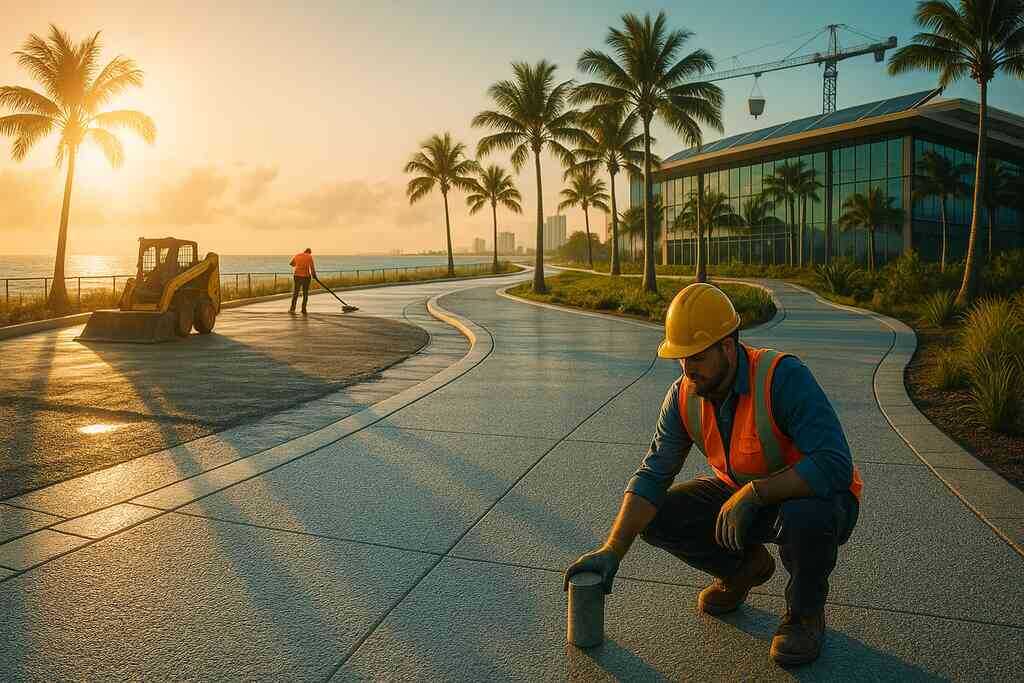
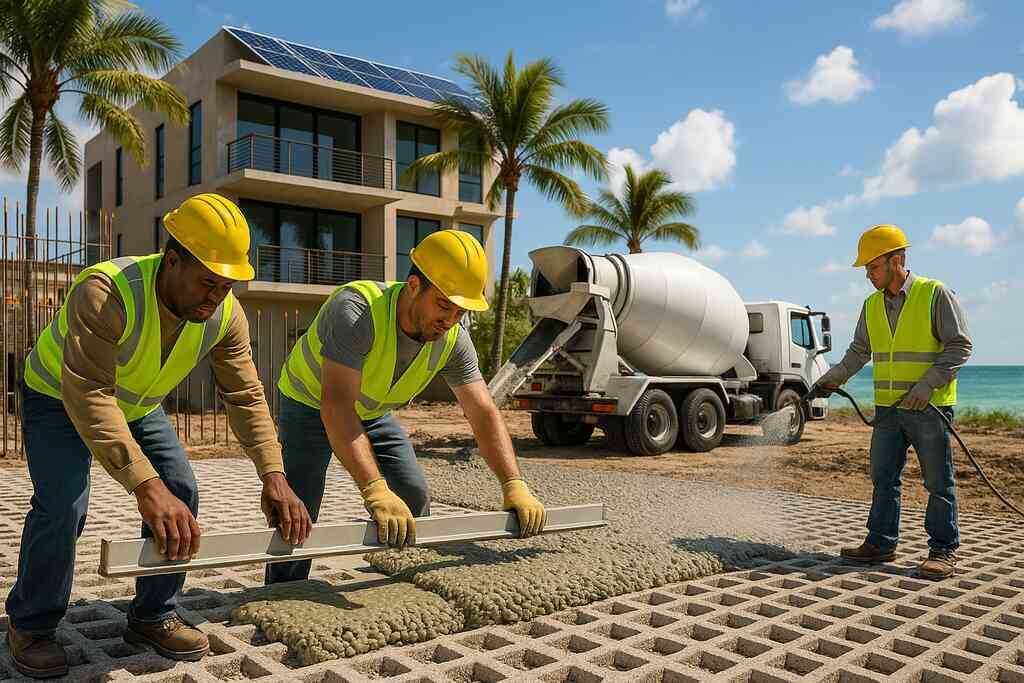
Permeable cool pavements are engineered with open pore structure that lets rain filter quickly through the slab. Tropical downpours no longer pond, reducing slip risks and mosquito breeding. Reflective pigments also keep surface temperatures lower than asphalt, supporting neighborhood walkability. Designers analyze infiltration rates against the sandy soils mapped in South Florida. Those figures align with geographic insights on South Florida climate and guide mix gradation.
General contractors in South Florida deploy grain size curves tuned for high permeability yet strong enough for garbage trucks. Crews place concrete over geotextile and graded stone reservoirs that store runoff and release it slowly. This method satisfies municipal stormwater mandates while sidestepping costly retention vaults. Homeowners appreciate cooler driveways and lower flood insurance. As a result, South Florida Contractors list permeable systems among their most requested construction services.
Thermal mass benefits driving energy savings for home builders in Florida
Green concrete’s high thermal mass absorbs daytime heat and releases it overnight, flattening interior temperature swings. Architects orient walls to capture prevailing breezes then use deep roof overhangs for shading. With stable indoor conditions, HVAC equipment cycles less, slashing energy bills for home builders in Florida. Energy modeling shows double digit savings without premium insulation. The trusted Boca Raton Renovation Contractor for eco upgrades routinely documents these gains during post occupancy audits.
Contractor in South Florida teams further enhance mass by incorporating phase change microspheres that melt silently during peak loads. The additive stores latent heat that would otherwise spike cooling demand. Because the spheres are inert, they do not compromise structural performance. Buyers welcome the comfort, while realtors highlight the feature as a selling point near you. Such intelligent concrete places local construction companies ahead of conventional competitors.
Boca Raton remodelers and Delray Beach construction company field insights
Boca Raton Remodelers tested salt resistant mixes on oceanfront balconies, observing zero rust staining after multiple hurricane seasons. Their crews combined recycled aggregate concrete with nano silica to tighten capillaries. Across town, the Delray Beach Construction Company sustainable builder monitored similar projects with embedded corrosion sensors. Data confirmed chloride ingress rates were fifty percent lower than legacy decks. These findings help every South Florida general contractor calibrate specifications confidently.
Both firms stress the value of early collaboration between structural engineers, suppliers, and finish trades. Preconstruction workshops let trades share placement constraints, reducing rework. Delray Beach Custom Home clients also tour mock-ups to see finishing quality firsthand. Clear communication accelerates schedules and preserves budgets, enhancing trust near me and near you. Industry forums now cite these case studies as benchmarks for climate resilient construction in South Florida demands.
Achieving LEED compliant concrete through strategic additive selection
LEED points reward reduced embodied carbon, regional sourcing, and heat island mitigation objectives green concrete addresses simultaneously. Mix designers substitute up to forty percent clinker with supplementary cementitious materials, lowering cradle-to-gate emissions. Recycled steel fibers further raise post-crack toughness, allowing slimmer slabs. Project teams reference the role of a general contractor in sustainable projects to coordinate procurement and documentation. Accurate submittals streamline certification reviews and prevent costly delays.
Specifiers also select pigments that keep solar reflectance above mandatory thresholds for roofs and hardscape. Low VOC curing compounds complete the system, safeguarding air quality for occupants and workers. South Florida contractor teams rely on lifecycle assessment software to validate environmental claims before bidding. Verified metrics strengthen grant applications and public relations campaigns. Consequently, LEED compliant concrete becomes a standard deliverable for many construction services portfolios.
Lifecycle cost savings compelling West Palm Beach renovations and Boynton Beach remodelers
Investors evaluate the total cost of ownership rather than the lowest bid, and green concrete consistently excels on that metric. Durability extensions cut recurring maintenance, while energy reductions lower utility exposure. Quantified savings feed directly into pro-forma models, raising internal rates of return. The region-wide push gains momentum as West Palm Beach Renovations using green materials publishes five-year performance dashboards. Transparency reassures lenders and accelerates approvals.
Meanwhile, sustainable remodel pros in Boynton Beach FL showcase permeable patios and reflective pool decks that moderate microclimates. Boynton Beach Remodelers report fewer warranty calls after adopting low carbon footprint concrete. Realtors leverage these features to justify higher resale prices and faster market absorption. The pattern validates lifecycle economics across residential, hospitality, and civic sectors. Forward-looking clients now request green concrete solutions before design begins.
From Blueprint to Legacy Sustainable Futures
Leveraging the South Florida Contractors Directory to find green concrete experts
First, every South Florida contractor searching for green concrete solutions should open the South Florida Contractors Directory. The platform filters by zip code, skill set, and sustainability certificates, guiding owners toward climate-ready teams. Smart tags highlight firms experienced with recycled aggregate concrete and low VOC products, saving valuable research hours. Because the database updates constantly, builders access fresh contact details rather than outdated numbers. This streamlined approach accelerates bidding and reinforces confidence in eco-friendly concrete mix adoption.
Next, ambitious firms showcase their expertise by choosing the option to list their green contracting firm on the South Florida directory. The listing process verifies licenses, insurance, and documented sustainable construction materials performance. Verified badges improve search ranking, placing responsible companies before eco-conscious clients. Contractors also upload project photos featuring permeable pavements and salt resistant concrete mix design. Prospects immediately visualize outcomes, further shortening the decision timeline.
Finally, property owners appreciate the “near me” filter that displays general contractors in South Florida within driving distance. This localized search reduces travel emissions for site visits, quietly supporting the low carbon footprint concrete narrative. Reviews describe punctuality, craftsmanship, and adherence to green building practices. The transparency drives trust, ensuring fewer misunderstandings once construction services begin. Community feedback therefore becomes a powerful quality control mechanism for everyone involved.
Training crews and clients on climate resilient construction practices
Successful deployment of sustainable construction materials demands continuous education among field teams and stakeholders. Supervisors hold toolbox talks explaining the role of supplementary cementitious materials in carbon reduction. Hands-on workshops demonstrate proper water conserving curing techniques under Florida’s relentless sun. Such sessions clarify why new admixtures improve durability yet require adjusted finishing times. Workers who understand the science rarely cut corners, preserving project integrity.
Forward-thinking educators often invite the RENOVA general contractor embracing eco concrete to share case studies with local crews. Their presentations include sensor data comparing traditional and carbon capture cement technology slabs. Attendees witness stronger compressive gains alongside measurable emission drops. Clients attending these events leave convinced that eco upgrades protect both budgets and property value. This shared learning culture elevates regional craftsmanship and reinforces South Florida green building practices.
Marketing sustainable credentials to eco-conscious homeowners and investors
Marketing teams convert technical achievements into compelling stories that resonate with modern buyers. They spotlight embodied-carbon metrics, not just square footage or tile options. Social media posts translate lifecycle assessments into relatable equivalents, like trees planted or miles of car travel avoided. Visual infographics featuring low carbon footprint concrete patios attract clicks faster than generic project photos. Homeowners appreciate straightforward data presented in a friendly tone.
Developers also partner with climate savvy builders in Delray Beach FL to produce walkthrough videos. In these clips, site managers explain salt resistant concrete mix design benefits while standing beside shining balconies. Drone footage reveals permeable driveways channeling rainwater toward lush native landscaping. Investors see real-world evidence rather than abstract promises, increasing funding confidence.
Finally, press releases emphasize third-party validations like LEED points or municipal resilience awards. Journalists prefer verifiable numbers and transparent sourcing, traits abundant in South Florida contractor green projects. The resulting coverage improves search rankings and broadens brand awareness. Over time, consistent messaging positions firms as indispensable partners for future climate resilient construction in South Florida. The legacy extends beyond individual builds, influencing regional standards and inspiring the next generation of builders.
Frequently Asked Questions
 Frequently Asked Questions
Question: How do South Florida Contractors vet general contractors in South Florida who specialize in green concrete solutions?
Answer: Every listing on the South Florida Contractors Directory is screened for active licenses, insurance, and a verified track record with sustainable construction materials. Our team reviews submittals that document experience with eco-friendly concrete mix designs, recycled aggregate concrete, low VOC concrete sealers, and energy efficient concrete production. Contractors that can demonstrate successful climate resilient construction in South Florida projects-such as salt resistant balconies in Boca Raton or permeable cool pavements in Delray Beach-receive a Green Verified badge. This extra layer of due diligence means property owners can hire with confidence, knowing their selected South Florida contractor is qualified to deliver high-performance, low carbon footprint concrete on schedule and within budget.
Question: What practical advantages does an eco-friendly concrete mix offer for coastal projects compared to traditional concrete?
Answer: Coastal structures face relentless salt spray, humidity, and thermal cycling. A modern eco-friendly concrete mix combats these threats by using supplementary cementitious materials like fly ash cement alternatives, slag, or calcined clay to refine pore structure and reduce chloride permeability. Carbon capture cement technology and corrosion-inhibiting admixtures further protect embedded steel. The result is a salt resistant concrete mix design that extends service life, lowers maintenance costs, and qualifies projects for insurance discounts. Because these mixes often incorporate recycled aggregate concrete, they cut haul-away fees and trucking emissions as well-making them both durable and environmentally responsible for waterfront builds in West Palm Beach, Boynton Beach, and beyond.
Question: Can South Florida Contractors help my team integrate low carbon footprint concrete and recycled aggregate concrete into LEED compliant builds?
Answer: Absolutely. When you use the directory to find a general contractor in South Florida, you can filter for firms with documented LEED experience, knowledge of lifecycle assessment software, and established relationships with suppliers of recycled aggregate concrete and low carbon footprint concrete admixtures. These experts understand how to balance clinker replacement percentages, specify low VOC curing compounds, and compile the material disclosure forms that earn LEED points. They can also coordinate field testing, moisture-retaining curing methods, and energy efficient concrete production techniques, ensuring your submittals sail through certification reviews while still hitting performance targets.
Question: In the blog What Is Green Concrete For South Florida Contractors you highlight permeable concrete for stormwater management; how can I find a contractor near me with this expertise?
Answer: Simply enter your ZIP code in the South Florida Contractors search bar and select the Permeable or Cool Pavement tag. The directory will display contractors near you-such as Boca Raton remodelers, Delray Beach construction company crews, or Boynton Beach remodelers-who have completed permeable driveway, patio, and parking projects using environmentally safe concrete additives. Each profile includes project photos, client reviews, and one-click contact options so you can schedule an on-site evaluation and receive a detailed quote for integrating permeable concrete into your stormwater management plan.
Question: Does using sustainable construction materials like fly ash cement alternatives and carbon capture cement technology actually save money over the lifecycle of my project?
Answer: Yes. Studies across South Florida green building practices show that initial material premiums-often less than 3 percent-are quickly offset by lower curing water consumption, reduced maintenance cycles, and enhanced durability. Low carbon footprint concrete with carbon capture cement technology delivers higher early strength, allowing faster formwork turnover and schedule savings. Recycled aggregate concrete cuts disposal fees, while salt resistant mixes avoid costly spall repairs common in coastal climates. Over a 30-year horizon, owners typically realize double-digit ROI through energy savings, extended service life, and higher resale values while meeting investor and regulatory demands for sustainable construction materials.