
The best way to verify contractor insurance is to check the contractor’s license status, call the insurer or agent listed on the certificate, and confirm that workers’ compensation and general liability are active before you sign. If you already feel uneasy, that is reasonable; a certificate can look official and still leave you exposed.
Key Takeaways
- A certificate of insurance is not enough by itself. You should verify the policyholder, coverage dates, and insurer directly.
- Workers’ compensation verification matters as much as general liability insurance for contractors. Missing coverage can leave you exposed if a worker gets hurt.
- Always match the contractor’s license and insurance check to the actual company name doing the work. Mismatched names are a warning sign.
- Exterior and structural work in South Florida needs extra caution. Roofing, shutters, windows, decks, and additions often tie into hurricane code compliance and permit rules.
- For South Florida projects, use local verification steps. A licensed contractor Palm Beach County, licensed contractor Broward County, or licensed contractor Miami-Dade job should be checked against the right county and state records.
Why a contractor’s insurance can look real and still leave you exposed
A contractor’s insurance can look real on paper and still fail you when a claim happens. The safest approach is to verify the policy directly, confirm the named insured matches the company, and check whether the work scope is covered. That matters even more for South Florida contractors handling roofs, impact windows, or structural changes.
The coverage gaps most South Florida homeowners miss when they only ask for a certificate of insurance contractor
A certificate of insurance contractor is just a snapshot. It usually shows policy dates, insurer name, and coverage types, but it does not guarantee the policy is active, paid, or broad enough for your job. Here is the part most homeowners miss: a certificate may list general liability insurance for contractors, yet the actual work may be excluded, subcontractors may be uninsured, or the policy may have lapsed after the certificate was issued.
That is why you should ask for more than a PDF. Request the policyholder name, the declarations page if available, and workers’ compensation verification. If the contractor says they “have coverage” but cannot explain who is insured and what the policy covers, pause. On projects we’ve seen across Palm Beach, Broward, and Miami-Dade counties, the problems usually start with assumptions, not bad intentions.
A quick comparison helps:
DocumentWhat it showsWhat it does not proveCertificate of insuranceBasic coverage summary and datesThat the policy is active right nowDeclarations pageNamed insured and policy detailsThat every job type is coveredDirect insurer verificationCurrent status and policy matchThat the contractor is properly licensed### Why roofing contractor South Florida, hurricane shutter contractor, and exterior remodel jobs need stronger proof than a quick email attachment
Roofing contractor South Florida work, hurricane shutter contractor jobs, and exterior remodels carry higher risk because weather, access, and code compliance all matter. One storm-related failure can trigger a claim, and one uninsured worker can turn into a costly dispute. The stakes rise again if the work touches hurricane impact windows, roof tie-downs, or other exterior systems tied to hurricane code compliance.
A homeowner in a coastal Broward neighborhood once brought us a certificate that looked perfect for a lanai enclosure. The name on the certificate did not match the company name on the truck, and the workers on site were subcontractors with no visible comp paperwork. That mismatch was enough to stop the job until the paperwork was cleaned up. It felt annoying in the moment. It was cheaper than learning the hard way.
For jobs like a hurricane impact window installer South Florida project or a screen enclosure contractor South Florida build, ask for proof that covers the actual installer and the actual scope. If the contractor hesitates, that is useful information. It usually means you need more vetting, not less.
The paper trail that tells you whether a contractor is actually covered
The paper trail is simple, but it has to be checked in the right order. Start with the license, then confirm the insurance policyholder, then verify workers’ compensation, and only then move toward a contract or deposit. That sequence gives you a cleaner contractor license and insurance check and helps you spot fraud, lapsed coverage, or borrowed paperwork. 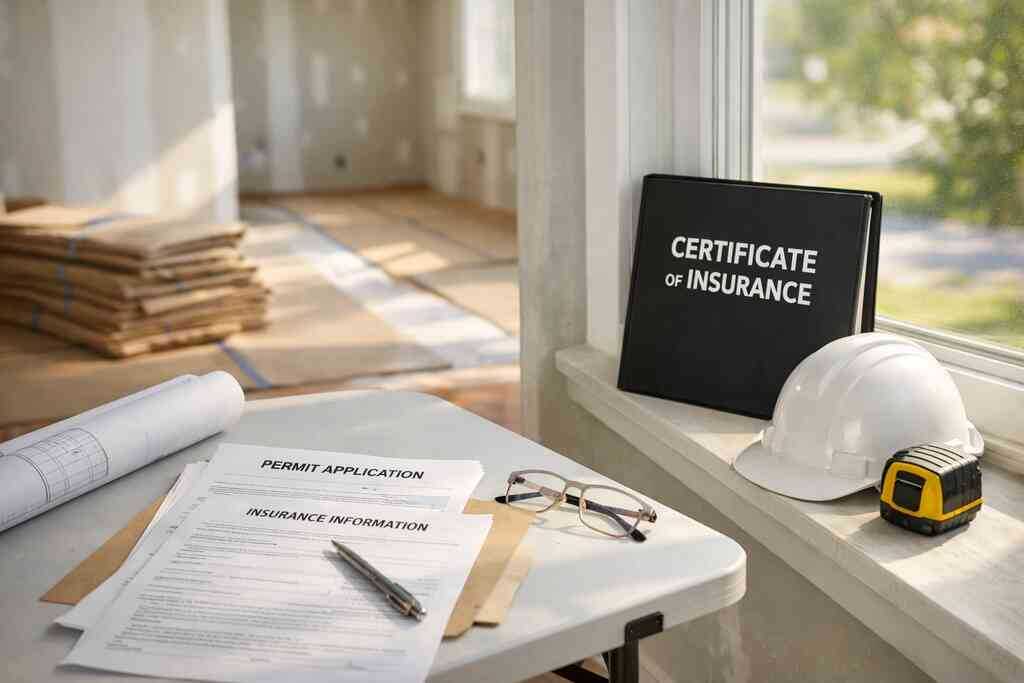
How to verify contractor license and insurance by checking the license status, policy holder, and workers compensation verification before you sign
Begin with how to verify a contractor license through the Florida licensing system or the local authority that applies to the trade. Then compare the legal business name on the license with the named insured on the insurance certificate. If those names do not align, ask why before you proceed. The same goes for workers’ compensation verification, especially if crews, helpers, or subcontractors will be on your property.
Use this order:
- Confirm the contractor’s active license status.
- Compare the exact business name to the insurance certificate.
- Call the insurance agent or carrier to verify that the policy is active.
- Ask whether the policy covers your specific project type.
- Confirm workers’ compensation coverage for employees and subcontractors.
- Save every document before you sign anything.
For many homeowners, the hardest part is knowing what to ask. A clean proof of insurance for contractors should answer three questions: who is insured, what is covered, and whether the policy is active today. For South Florida projects, that matters for everything from a home remodeling contractor South Florida kitchen job to a coastal home builder Florida addition.
For workers’ comp basics, the U.S. Department of Labor is a useful reference point because it explains why coverage matters when employees are injured on the job. That does not replace verification, but it helps you understand why asking for it is not being difficult. It is being careful.
What a legitimate proof of insurance for contractors should show for licensed contractor Palm Beach County, licensed contractor Broward County, and licensed contractor Miami-Dade work
A legitimate proof of insurance for contractors should clearly identify the insured business, policy number, effective dates, and carrier. For licensed contractor Palm Beach County, licensed contractor Broward County, and licensed contractor Miami-Dade work, the paperwork should also match the business operating in your county and the project scope you are hiring for. If the company is doing a South Florida permit process job, that paper trail should be easy to trace.
Look for these items on the certificate or supporting documents:
- Exact legal business name
- Policy number and effective dates
- General liability insurance for contractors
- Workers’ compensation status
- Additional insured contractor coverage, if you requested it
- Carrier or agent contact information
- Project-specific exclusions, if listed
If the contractor is handling a South Florida concrete contractor job, South Florida foundation repair, or a pool deck contractor South Florida project, ask whether the policy covers structural and exterior work. Some contractors carry insurance that fits basic interior remodeling but does not fully fit exterior or hurricane-exposed work. That distinction matters on jobs like paver installation South Florida, condo renovation South Florida, or townhome remodeling South Florida, where HOA rules, permits, and exposure can all overlap.
One Miami-Dade homeowner we spoke with had a bathroom remodeler whose insurance was current, but the contractor had not pulled the permit and had no clear subcontractor insurance compliance process. The insurance was only half the story. The project needed a change order contractor Florida discussion, a permit correction, and a fresh look at lien waiver Florida paperwork before the next phase could begin. That is normal. It is also why insurance verification should happen before demolition starts.
For a deeper local checklist, this guide to contractor license checks is a practical next step, and the broader contractor tips category covers related homeowner questions. If you want a county-specific starting point, South Florida Contractors also helps you find local contractors by trade and area before you ever make the first call.
If you want one final filter, ask for a signed lien waiver Florida document before final payment and keep every change order in writing. That does not replace insurance verification, but it protects you if there is a payment dispute later. For South Florida homeowners, especially near the coast, the safest move is simple: verify first, sign second, and never let anyone tell you permits or insurance can wait.
If you are planning a project and want a practical place to start, search the South Florida Contractors directory, compare active licenses, and then call 18443112703 to begin the vetting process with real documentation in hand.
Frequently Asked Questions
Question: What Is the Best Way to Verify Contractor Insurance before hiring South Florida contractors for a project?
Answer: The best way is to verify both the contractor license and the insurance directly, not just rely on a certificate of insurance contractor. Start by confirming the company’s legal name, checking that the license is active, and then calling the insurer or agent listed on the proof of insurance for contractors to confirm the policy is current. You should also ask for workers’ compensation verification and make sure the general liability insurance for contractors actually fits the work you are hiring for. This is especially important for exterior or structural projects in South Florida, where hurricane code compliance, permits, and weather exposure can raise the stakes. If you are hiring for roofing contractor South Florida work, hurricane impact window installer South Florida services, or a hurricane shutter contractor job, do not move forward until the insurance details match the exact company doing the work. South Florida Contractors helps homeowners find a contractor South Florida by comparing active listings and encouraging careful vetting before any contract is signed.
Question: How do I use a contractor license and insurance check for a licensed contractor Palm Beach County, licensed contractor Broward County, or licensed contractor Miami-Dade project?
Answer: A proper contractor license and insurance check should follow a simple sequence: confirm the license status first, compare the business name on the license with the name on the certificate of insurance contractor, and then verify the policy directly with the insurer. For licensed contractor Palm Beach County, licensed contractor Broward County, and licensed contractor Miami-Dade jobs, that paper trail matters because local permitting and South Florida building codes can apply differently depending on the county and scope of work. If the project involves a home remodeling contractor South Florida search, a South Florida kitchen remodeler, or a South Florida bathroom remodeler, also ask whether subcontractor insurance compliance is in place. For larger exterior jobs like a pool deck contractor South Florida project, paver installation South Florida, or a screen enclosure contractor South Florida build, you should confirm that the policy covers the actual work being done and not just general office operations. South Florida Contractors is built to help homeowners compare contractors with more confidence and avoid the kind of paperwork surprises that can delay a project.
Question: What insurance documents should I ask for when hiring a roofing contractor South Florida or a hurricane impact window installer South Florida?
Answer: Ask for more than a basic certificate. A strong set of documents should include the policyholder name, policy number, effective dates, general liability insurance for contractors, workers’ compensation verification, and any available additional insured contractor coverage if you requested it. For roofing contractor South Florida work, hurricane impact window installer South Florida installations, and hurricane shutter contractor projects, the details matter because these jobs are closely tied to hurricane code compliance and weather risk. If the contractor is vague about what is covered, or the company name on the paperwork does not match the crew or truck doing the work, that is a warning sign. This is also true for coastal home builder Florida projects, oceanfront home contractor work, or waterfront home builder South Florida jobs where exposure and code requirements are higher. South Florida Contractors encourages homeowners to verify first, especially before signing anything or making a deposit.
Question: Why does proof of insurance for contractors matter so much for South Florida permit process jobs like condo renovation South Florida or townhome remodeling South Florida?
Answer: Proof of insurance for contractors matters because permit-heavy jobs involve more than craftsmanship. They often include inspections, HOA requirements, municipal rules, and coordination with the South Florida permit process. In condo renovation South Florida and townhome remodeling South Florida projects, you may also need to satisfy building management, South Florida HOA permit rules, and county permitting requirements before work begins. If the contractor’s insurance is not current, or if workers’ compensation coverage is missing, you could be exposed if someone gets injured or if a claim arises during the project. This is especially important for South Florida home additions, second story addition South Florida work, or sunroom contractor South Florida projects where structural changes and permit compliance cannot be ignored. South Florida Contractors helps homeowners vet these projects carefully so they can move forward with the right documentation in hand, not with assumptions.
Question: Can South Florida Contractors help me find a contractor South Florida who meets contractor insurance requirements Florida and contractor bonding requirements?
Answer: Yes. South Florida Contractors is designed to help homeowners find a contractor South Florida by searching local listings, checking availability by area, and giving you a practical starting point for vetting. That means you can compare South Florida contractors across Palm Beach, Broward, and Miami-Dade, then ask the right questions about contractor insurance requirements Florida, contractor bonding requirements, licensing, and permits before you hire. Whether you are looking for a South Florida concrete contractor, South Florida foundation repair specialist, South Florida flooring installer, South Florida tile contractor, South Florida cabinet maker, or South Florida custom home builder, the key is to verify credentials before work starts. For bigger projects like South Florida luxury renovation, South Florida design build, South Florida ADA renovation, aging in place contractor South Florida work, or energy efficient remodeler South Florida upgrades, that verification becomes even more important. South Florida Contractors gives homeowners a clear place to begin, but we always recommend confirming licensing, insurance, and permit readiness before signing a contract.