

The five best hurricane window installer checks in South Florida are permit readiness, license and insurance verification, accurate opening measurements, product approval and code fit, and a final inspection with permit closeout. If you are looking at a quote and feeling unsure, that uncertainty is normal. This is where careful homeowners save time, money, and a lot of headaches.
Key Takeaways
- A trustworthy hurricane impact window installer South Florida should show you the permit packet, product approvals, and structural details before work starts.
- Always verify contractor licensing Florida records, insurance, and bonding before you sign, especially for work in Palm Beach County, Broward County, and Miami-Dade.
- The opening measurement matters more than the sales pitch. Older frames, stucco repairs, and anchoring details can change the entire job.
- Product approval documents must match the exact window model, impact rating, and opening protection verification required by South Florida building codes.
- Final inspection, secondary water barrier checks, and permit signoff are not paperwork extras; they are the real finish line.
Check the permit packet before you ever sign a hurricane window contract
A serious hurricane window installer should hand you a complete permit packet before you sign. That packet should include drawings, product approvals, anchoring details, and the exact scope of work. In South Florida, permit-ready paperwork is not a courtesy. It is the first sign that the installer understands hurricane code compliance and the local approval process.
Which drawings, product approvals, and structural details should a South Florida contractor provide up front
You should see a clear scope that shows each opening, the impact window model, the fastening method, and any stucco or trim repairs tied to the job. If the contractor cannot explain the structural opening details in plain language, pause. That is often where change orders show up later.
A good package should also identify the permit path, especially for homes with replaced headers, older framing, or unusual opening sizes. On many South Florida homes, the difference between a straightforward replacement and a problem job is a hidden framing issue behind the old unit.
How Palm Beach County, Broward County, and Miami-Dade permit rules change the documents your installer must submit
Permit expectations can change across South Florida. A licensed contractor Palm Beach County may need a different submittal set than a licensed contractor Broward County or licensed contractor Miami-Dade, even for similar window work. That is why you should never assume one county’s paperwork will work everywhere.
For exterior openings, local building departments often want product approvals, permit forms, contractor information, and details tied to impact resistance and attachment. The safest approach is to confirm the South Florida permit process early, not after demolition starts. If you want a broader reference point, the South Florida Contractors Guide To Hurricane Window Installers is a practical place to compare project expectations.
Why HOA approval and condo renovation rules can slow a window job even when the quote looks ready to go
HOA permit approval South Florida can hold up a job even when the installer is ready. Condos and townhomes may require board approval, specific product colors, sound or appearance rules, and access notices. In condo renovation South Florida projects, the building manager may also want insurance certificates and written notice before any window removal begins.
One homeowner in a gated Broward community thought the job would start in a week. The permit was fine, but the HOA wanted an extra product sheet and a color sample for the trim. It took longer, but the delay was manageable because the contractor had already warned them to expect it.
Verify the license, insurance, and bonding trail like a skeptic, not a shopper
You should verify the license, insurance, and bonding trail before you hire anyone. A polished quote means very little if the company cannot prove it is authorized and covered to do the work. This is especially important for a general contractor near me South Florida search, because ads can look professional even when the paperwork is thin.
How to verify a contractor license in Florida before trusting a hurricane impact window installer South Florida
Start with Florida’s official license lookup and confirm the business name matches the contract exactly. Then check that the license type fits the work. A handyman profile is not the same as a licensed contractor Palm Beach County or a contractor cleared for structural exterior work.
You should also verify the business entity and ask who will pull the permit. If the person selling the job is not the person responsible for the permit, get that relationship in writing. The FTC advertising guidance is useful here because it reminds consumers to verify claims before relying on them.
What contractor insurance requirements Florida and contractor bonding requirements should you confirm in writing
Ask for proof of general liability and workers’ compensation, if required for the crew. Do not just ask if they are insured. Ask for a current certificate naming the business and showing the coverage that applies to your job.
Bonding matters too. It does not replace good workmanship, but it gives you another layer of protection if the contractor walks away from the project or fails to meet permit obligations. Keep the certificate with your contract and permit records.
DocumentWhy it mattersWhat to checkLicense recordConfirms legal authorityExact business name and statusInsurance certificateProtects against jobsite claimsActive dates and insured companyBond informationAdds financial protectionBond holder and coverage typePermit responsibilityClarifies accountabilityWho signs and pulls permits### Why lien waiver Florida paperwork and change order contractor Florida language matter before the first opening is measured
Lien waiver paperwork helps prove subcontractors and suppliers have been paid. That matters because a clean project can still become a mess if a material bill or labor claim is left unresolved. Ask how and when the waiver will be delivered.
Change order language matters just as much. If the installer discovers hidden rot, uneven stucco, or a framing issue after opening the wall, the price can change. A written change order should explain the reason, the added cost, and the schedule impact before anyone proceeds. For more detail on this step, see How to Read a Contractor Change Order in Florida 2026 and South Florida Contractors on Lien Waivers and Payment Rules.
Measure the opening, not the sales pitch
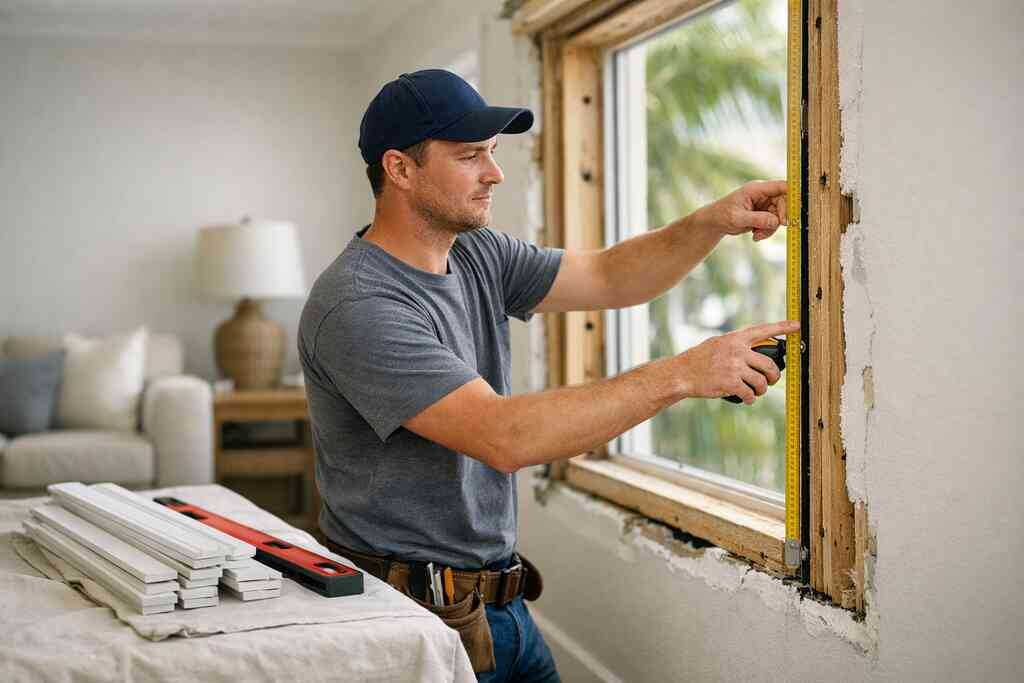
Accurate measurements decide whether the window fits, seals, and passes inspection. In South Florida, older homes often have frame irregularities, stucco buildup, or prior patchwork that hides the real opening size. The installer who measures carefully is usually the one who avoids expensive surprises later.
What a structural opening measurement verification should catch in South Florida homes with older frames or stucco
The measurement should confirm the rough opening, not just the old window size. That means checking width, height, squareness, sill condition, and evidence of movement or decay. If the frame is out of square, the window may still fit, but the install method may need to change.
This is the part most homeowners miss. A window can look standard from the street and still have a warped opening behind the stucco. One Lake Worth homeowner expected a simple swap, but the old opening had shifted enough that the crew had to correct the framing before installation could continue.
How window frame anchoring inspection and flashing and sealant inspection reveal whether the install is built for hurricane code compliance
Anchoring is not decorative. It is what ties the window to the structure. A proper window frame anchoring inspection should show the fastener type, spacing, and attachment points that support hurricane code compliance. Flashing and sealant inspection matter just as much. Poor flashing can let water behind the wall, even if the window passes a quick visual check. Sealant should be continuous, compatible with the materials, and applied where the manufacturer calls for it. For coastal work, the details matter more than the sales pitch.
Why coastal homes in Boca Raton, Pompano Beach, and West Palm Beach need corrosion resistant installation materials and wind borne debris compliance
Coastal homes face salt, humidity, and wind-borne debris. That means corrosion-resistant installation materials are not an upgrade; they are basic good practice. Fasteners, clips, and associated hardware should be chosen for the coastal environment, not for an inland job.
The South Florida Contractors For Impact Window page is a useful starting point if you are comparing local specialists for coastal properties. It helps you think beyond price and look at the installer’s fit for a real South Florida site.
Demand proof of product approval and code fit before installation day
You should never let an installer begin without matching the product approval documents to the exact window being installed. The approval must match the model, size, rating, and intended opening. If those pieces do not line up, the job can fail inspection even if the window itself is high quality.
What Florida product approval documents should match the exact impact window rating and opening protection verification
Ask for the Florida product approval or other accepted approval documents before installation day. Those papers should identify the exact product family and confirm the impact rating used for the project. Generic brochures are not enough.
Opening protection verification should also match the home’s exposure and the specific opening. A window rated for one configuration may not be acceptable in another if the framing, size, or installation method changes. If you want a broader overview of how installers are evaluated, Ultimate Guide to Impact Window Installers in South Florida can help you compare the right factors.
How Florida Building Code compliance and hurricane impact glass inspection affect homes from Palm Beach to Miami-Dade
Florida Building Code compliance is not a slogan. It is the standard that determines whether the installation can be signed off. Hurricane impact glass inspection often focuses on documentation, labels, fastening, and how the unit was integrated into the wall system.
From Palm Beach to Miami-Dade, the smartest homeowners ask two questions: does the product match the permit, and does the install match the product? That simple check prevents a lot of rework. It is also why South Florida Contractors and the 2026 Building Code Update is a helpful related read if your exterior project includes more than windows.
Why oceanfront home contractor and waterfront home builder South Florida standards are different from a typical remodel job
Oceanfront and waterfront properties take more abuse from wind, salt, and water intrusion. An oceanfront home contractor or waterfront home builder South Florida should be thinking about corrosion, drainage, seal continuity, and long-term exposure, not just the install date.
That standard is different from a typical interior remodel. A window on an exposed elevation can fail because a small detail was ignored. For homeowners weighing a larger exterior scope, Top 5 Coastal Home Builders in South Florida for 2026 is a useful way to compare related trades without losing the code and permit focus.
Treat the final inspection as the real finish line
The final inspection is the real finish line because that is where the permit gets closed and the work is proven complete. A clean punch list, a secondary water barrier check, and signed permit closeout are what separate a finished job from a nearly finished one. Do not accept “it’s basically done” as the final answer.
What a secondary water barrier inspection and final permit signoff should confirm before the job is truly closed
The secondary water barrier inspection should confirm that any disturbed wall area was restored correctly and that water intrusion risk was addressed. The final permit signoff should show the local authority accepted the work, not just the contractor.
Ask for copies of the final inspection report, permit closeout, and any warranty paperwork. Keep those records with your home documents. If you ever sell the property, that file can save you time and questions.
How to decide whether problems need contractor dispute resolution or a documented correction plan with a licensed contractor Broward County or licensed contractor Miami-Dade
If you find a problem, document it immediately with photos, dates, and a written description. Minor issues often need a correction plan, not a fight. Bigger issues may require contractor dispute resolution, especially if the installer is avoiding responsibility or delaying the closeout.
A correction plan should say what will be fixed, who will fix it, and when the follow-up inspection will happen. If you are dealing with a licensed contractor Broward County or licensed contractor Miami-Dade, keep the paper trail organized. Clear records make it easier to resolve the issue without guessing.
What the smartest South Florida homeowners do next when choosing between impact-resistant window replacement, storm prep upgrades, or a broader South Florida residential exterior remodeling plan
Smart homeowners do not stop at the window quote. They look at the whole exterior: seals, framing, roof edges, and other openings that affect storm performance. Sometimes a simple impact-resistant window replacement makes sense. Sometimes it is better to combine it with a broader South Florida residential exterior remodeling plan.
If you are ready to compare local options, South Florida Contractors is a practical place to start because it helps you find a contractor South Florida by trade, city, and ZIP before you make the first call. Use the directory, compare licenses, then call 18443112703 to take the next step with a contractor who fits your project and your county’s permit requirements.
Frequently Asked Questions
Question: What should I check first when reviewing a hurricane impact window installer South Florida quote?
Answer: Start with the permit packet, not the price. A reputable South Florida Contractors directory listing should lead you to a contractor who can explain the South Florida permit process, show product approvals, and outline the scope of work before demolition begins. That includes drawings, attachment details, and the exact window model being installed. If the paperwork is vague, the job can turn into change orders, delays, or inspection problems later. For exterior work in South Florida, hurricane code compliance is not optional, and a clear permit package is one of the best signs you are dealing with a serious installer.
Question: How do I verify a contractor license in Florida before hiring a licensed contractor Palm Beach County, licensed contractor Broward County, or licensed contractor Miami-Dade?
Answer: Verify the license through Florida’s official lookup, then match the business name, license type, and contract exactly. Do not rely on a polished website or a sales presentation alone. Ask for proof of contractor insurance requirements Florida, confirm whether workers’ compensation applies, and request bonding information if available. You should also confirm who will pull the permit and whether the company has experience with Palm Beach County permit, Broward County permit, or Miami-Dade permit requirements. If you are searching for a general contractor near me South Florida, this due diligence protects you from hiring someone who is not set up for code-compliant work.
Question: Why is structural opening measurement verification so important for Best 5 Hurricane Window Installer Checks in South Florida?
Answer: Because the opening, not the old window size, determines whether the new unit fits, seals, and passes inspection. Older South Florida homes often have hidden frame movement, stucco buildup, or previous patchwork that changes the true rough opening. A careful installer should perform structural opening measurement verification, window frame anchoring inspection, and flashing and sealant inspection before installation starts. That is especially important for coastal homes where corrosion-resistant installation materials and wind-borne debris compliance matter. A contractor who measures carefully is usually one who understands hurricane code compliance and Florida Building Code compliance, not just sales tactics.
Question: How do I know if the product approval for impact windows matches the exact installation my home needs?
Answer: Ask for the Florida product approval documents and confirm they match the exact model, size, rating, and opening protection verification for your project. Generic brochures are not enough. The approval should line up with the window family being installed and the conditions of your home, especially if you are in a coastal or waterfront area. For South Florida contractors, this is a key sign of professionalism because it shows they understand product approval for impact windows, Florida Building Code compliance, and hurricane impact glass inspection requirements. If your project involves an oceanfront home contractor standard or a waterfront home builder South Florida level of exposure, these details matter even more.
Question: What should I expect during final inspection and permit closeout after impact-resistant window replacement?
Answer: Final inspection is the real finish line. The inspector should confirm the installation was completed correctly, that any disturbed areas were restored, and that the work matches the permit. A proper closeout should also include a secondary water barrier inspection, final permit signoff, and your warranty paperwork. If a problem is found, document it and ask for a correction plan rather than guessing. That is where contractor dispute resolution and clear communication matter. Whether you hired a home remodeling contractor South Florida for a small upgrade or a broader South Florida residential exterior remodeling project, a complete permit closeout proves the job was actually finished the right way.
Question: Can South Florida Contractors help me find a contractor South Florida for hurricane shutters, roofing, or other exterior remodeling projects too?
Answer: Yes. South Florida Contractors is built to help homeowners compare South Florida contractors by trade, city, and ZIP so they can find a contractor South Florida for the right project. That means you can look beyond windows and also compare specialists such as a hurricane shutter contractor, roofing contractor South Florida, pool deck contractor South Florida, screen enclosure contractor South Florida, South Florida concrete contractor, South Florida flooring installer, or even a South Florida bathroom remodeler and South Florida kitchen remodeler. The key is to verify licensing, insurance, and permit readiness before hiring anyone. For exterior work, always make sure the contractor understands hurricane code compliance, South Florida building codes, and the permit requirements for your county before you sign.