Best Coastal Building Practices South Florida Contractors
January 16, 2026
Harnessing the Atlantic Edge: Introduction to Coastal Construction Mastery
Why every South Florida contractor must think like a coastal engineer
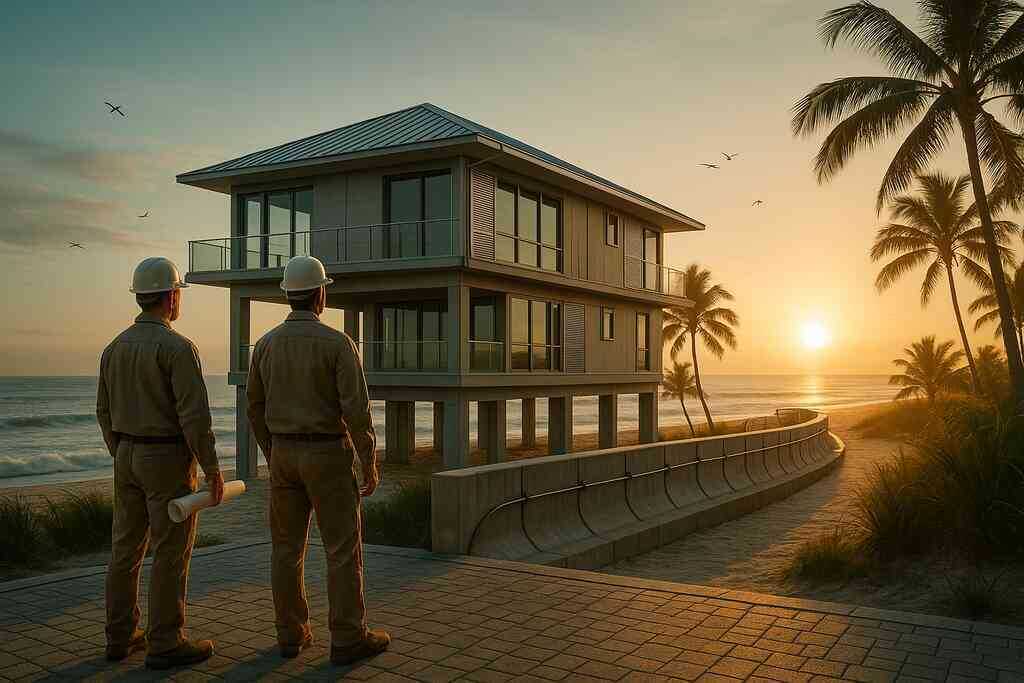
The tide, the wind, and the salt spray never clock out, so neither can the mindset of a South Florida contractor. Treating each project as an engineering puzzle, rather than routine framing, shields budgets from surprise corrosion and code violations. Many professionals now lean on the coastal builders resource hub in South Florida for field-tested guidelines, supplier contacts, and regulatory updates. Embracing that knowledge early keeps crews from guessing at pile depths, uplift loads, or FEMA flood classifications. It also builds homeowner confidence before the first footing is poured.
True coastal thinking demands a granular look at storm surge physics, salt-air chemistry, and dune dynamics. The process starts during site selection when soil stabilization for sandy lots gets assessed. It continues through design reviews where hurricane-resistant home builders in Florida model wind loads with digital twins. Finally, it culminates in inspection day, when impact windows installation South Florida contractor teams present airtight documentation. The holistic habit of thinking like a coastal engineer replaces reactive fixes with proactive strength.
From Boca Raton remodelers to West Palm Beach renovations shifting mindsets from landlocked to oceanfront
Seasoned Boca Raton remodelers once focused on granite counters and pool waterfalls, yet tides are changing fast. Today those same artisans work closely with a Boca Raton coastal contracting team in Florida to evaluate wind-borne debris zones, corrosion-resistant fasteners, and tropical storm proof roofing systems. The collaboration shortens construction timelines because all details are settled before materials arrive on barrier-island bridges. Homeowners notice fewer change orders and stronger insurance negotiations.
Heading north, West Palm Beach renovations follow parallel paths, but local seawall reinforcement takes center stage. Many crews consult West Palm Beach seawall & remodel specialists in FL for joint testing, tidal scouring data, and bulkhead cap designs. Sharing research among trade partners elevates every craft, from concrete finishers to exterior paint teams. As contractors see the oceanfront as an engineering laboratory, even small upgrades, such as permeable paver driveways, gain a scientific rationale.
Economic and climate trends are steering demand for resilient waterfront structures
South Florida’s housing demand keeps climbing, yet insurance premiums climb even faster, creating a resilience dividend for forward-thinking builders. Insights from the industry insights blog for hurricane-ready construction reveal that every dollar invested in wind mitigation can save six dollars in post-storm repairs. Developers now pitch “storm-rated” living rather than just coastal luxury, and buyers respond with record-breaking absorption rates.
Climate data reinforce this market shift. Warmer sea surface temperatures feed higher storm intensities, making code minimums feel obsolete. Contractors tracking smart coastal building trends for 2026 notice a surge in requests for LEED certified coastal projects near you. Lenders also favor builders that integrate FEMA flood zone construction compliance into early budgeting. The combined economic and climate forces reward firms that embed resilience as a core value rather than a costly add-on.
Regulatory Compass: Navigating Codes Permits and FEMA Flood Realities
Decoding coastal building codes in South Florida for general contractors in South Florida
South Florida coastal contractor teams confront some of the nation’s strictest structural mandates, and for good reason. The region’s amplified wind speeds require reinforced connections that exceed standard continental thresholds. Knowing which chapters govern soffit details versus uplift anchors protects schedules from costly plan revisions. General contractors in South Florida therefore start every bid with a code matrix cross-referencing wind, flood, and energy provisions. Early alignment keeps architects, engineers, and fabricators rowing in the same regulatory direction.
Many professionals bookmark the in-depth guide to decoding hurricane building codes for coastal projects before their first drawing review. The resource translates dense legal language into field-ready checklists that superintendents can tack in trailers. By pairing those lists with municipal bulletins, crews avoid mismatched nail patterns or unapproved sheathing products. This disciplined approach minimizes red tags, which otherwise derail inspections and erode profit margins. Code literacy becomes a strategic asset rather than a bureaucratic hurdle.
FEMA flood zone construction compliance without budget fatigue
FEMA flood maps dictate minimum elevation, breakaway wall design, and mechanical equipment placement for every coastal parcel. Builders often fear compliance will bankrupt a project, yet disciplined pre-construction modeling shows otherwise. By overlaying hydrologic data with 3D cost simulations, estimators reveal the most economical elevation strategies. Raising a slab twelve inches higher than minimum can sometimes slash long-term insurance premiums dramatically. Smart math reframes perceived expense as lifetime savings.
Material selection also influences FEMA compliance costs. Lightweight composite decking reduces structural load, letting engineers specify smaller pilings without sacrificing resistance. Similarly, corrosion-resistant fasteners for beachfront homes curb maintenance expenses that insurers scrutinize. When combined with South Florida coastal drainage solutions like pervious landscaping, total ownership costs fall even further. The key lies in treating flood regulations as an investment portfolio rather than an invoice.
Coastal wetland permitting guidance and dune preservation obligations
Permitting within sensitive wetlands demands early ecological reconnaissance. Surveyors first identify existing mangroves, turtle nests, and dune vegetation needing protection. These biological inventories inform setbacks, access roads, and staging zones long before heavy equipment mobilizes. Respecting ecological layers keeps regulators cooperative and reduces fines that quickly eclipse planning fees.
Contractors then collaborate with coastal dune preservation practices specialists to draft mitigation blueprints. Techniques include geotextile tubes, native grass plantings, and low-impact boardwalks that distribute pedestrian weight. Integrating such measures satisfies both state statutes and local aesthetics, winning homeowner support. Project managers also schedule construction outside nesting seasons, further streamlining approvals. Harmonizing construction ambition with environmental stewardship elevates brand reputation across waterfront communities.
Storm surge elevation design near me translating maps into footing heights
Engineering teams translate NOAA surge atlases into tangible numbers for pile heights and grade beams. They begin by overlaying parcel contours onto digital surge models, producing clear design elevations readable by field carpenters. The resulting charts show exactly where habitable floors must start, removing ambiguity that causes costly over-excavation. Clear communication accelerates foundation work and reduces waste.
South Florida general contractor firms then validate these elevations through third-party surveying before concrete trucks arrive. This verification catches centimeter-level errors that later threaten certificate of occupancy issuance. Accurate storm surge elevation design near me also simplifies lender risk assessments, speeding draw approvals. Ultimately, disciplined elevation planning creates resilient waterfront structures while keeping investors calm.
Wind mitigation inspection Boca Raton remodelers preparing for the next audit
Before the inspector walks the site, Boca Raton remodelers conduct internal audits using the same state checklist. Crews confirm that impact windows installation South Florida contractor teams have documented pane thickness and anchorage spacing. They photograph strap connections inside attics, labeling each image for swift retrieval. Detailed prep reduces inspection time and virtually eliminates re-inspection fees.
Successful wind mitigation inspection Boca Raton remodelers also plan to extend beyond structural hardware. Teams verify that tropical storm proof roofing systems include sealed underlayment edges and energy-reflective surfacing. HVAC mounts receive additional brackets to stop vibration during gusts, aligning with climate-smart HVAC for oceanfront properties guidelines. By closing every loop before officials arrive, remodelers transform audits into quick formalities rather than stressful cliffhangers.
 Material Alchemy Salt Air Tested and Storm Hardened
 Material Alchemy Salt Air Tested and Storm Hardened
Salt air corrosion mitigation techniques that outlast seasonal cycles
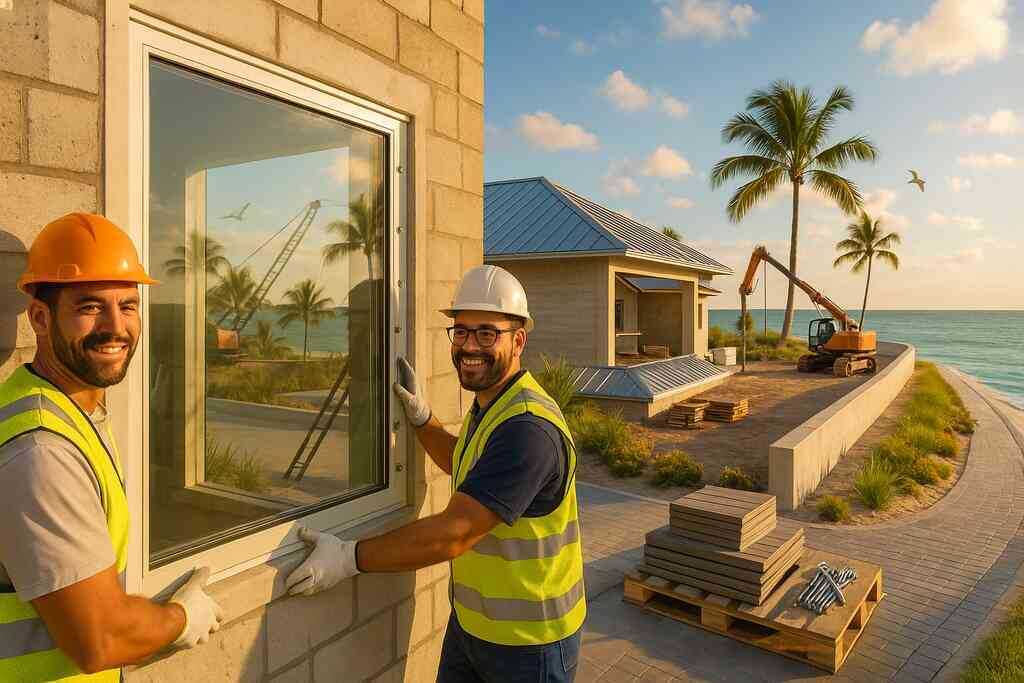
Salt crystals settle on metal surfaces long before homeowners finish unpacking. If left unchecked, they trigger galvanic reactions that chew through structural steel. Coastal contractors deploy triple-layer barrier systems: epoxy primer, inorganic zinc intermediate, and polysiloxane topcoat. Each layer interrupts the electrochemical pathway, slowing oxidation to a crawl. Ventilated soffits and dehumidifying attic fans further reduce airborne salt concentration, extending the coating’s service life.
Builders also design assemblies that shed water rather than trap it. Sloped ledger brackets, open-cell drainage mats, and capillary breaks behind cladding keep metals dry. Stainless steel weep screeds under stucco release hidden moisture before corrosion starts. Field teams reference the coastal construction best practices explained guide whenever they draft maintenance plans. Proactive detailing transforms impossible conditions into manageable routines.
Marine grade concrete mix Delray Beach case studies of strength in brine
Standard concrete absorbs chlorides like a sponge, eventually corroding rebar from the inside. Marine grade blends swap ordinary cement for low-permeability slag and silica fume, sealing microscopic pores. Delray crews working with Delray Beach oceanfront builders in South Florida report compressive strengths surpassing 8,000 psi after curing. That robustness keeps docks, pilings, and seawalls uncracked despite relentless tidal cycles. Clients appreciate that the mix achieves durability without exotic additives.
Case studies track slabs poured a decade ago that still exhibit chloride penetration under 0.05 percent. Engineers attribute success to strict water-cement ratios and integral corrosion inhibitors. Post-tensioning cables stay pristine because moisture can’t find a path. Annual core samples validate laboratory predictions, reinforcing investor confidence. Lessons learned travel north along the coast, raising performance expectations for every batch truck that rolls onto barrier islands.
Corrosion resistant fasteners for beachfront homes the small parts that save fortunes
A hurricane’s uplift forces target nails and screws first, so weak fasteners jeopardize entire assemblies. Crews now specify duplex-coated, 316 stainless, or silicon-bronze anchors depending on exposure zones. Purchasing managers use the find licensed coastal contractors near South Florida directory to vet suppliers who meet ASTM A153 standards. Consistency matters because one inferior box of screws can compromise hundreds of joists. Builders document every lot number, creating traceability that reviewers love.
Installation practices matter as much as metallurgy. Drivers are calibrated to avoid stripping heads, which exposes raw steel. Workers clean salt residue from countersink pockets before seating plugs, preventing crevice corrosion. Finally, crews topcoat fastener heads with elastomeric sealant for added redundancy. Homeowners rarely notice these details, yet they underpin decades of worry-free living.
Exterior paint and stucco for salt spray environments color that refuses to peel
Ultraviolet radiation breaks down typical acrylic paints within seasons, but elastomeric silicones expand and contract without cracking. Formulators embed ceramic microspheres that scatter light, lowering surface temperatures and delaying chalking. Contractors partner with salt-spray exterior paint & stucco specialists to match hues that resist fading under relentless glare. The result is curb appeal that endures long after neighboring façades require touch-ups. Warranties often extend past ten years, a rarity in marine zones.
Stucco assemblies also evolve. Vapor-permeable waterproof membranes sit behind cementitious coats, allowing trapped moisture to escape while blocking wind-driven rain. Alkali-resistant fiberglass mesh prevents spider cracks even when temperature swings exceed thirty degrees. Finish coats incorporate hydrophobic additives that cause water to bead and roll away, carrying salt crystals with it. The synergy of chemistry and craftsmanship keeps façades vibrant and intact.
Sustainable deck materials Boynton Beach remodelers balancing beauty with bio based science
Pressure-treated pine warps when saturated by salt spray, prompting remodelers to explore alternatives. Reclaimed tropical hardwoods rate high for strength, yet raise sustainability concerns. Instead, composite boards blend recycled polyethylene with rice hull fibers, producing planks immune to rot and splinters. Crews sourced through Boynton Beach renovation contractors on barrier islands report installation times similar to wood, reducing labor budgets. Color options mimic teak without requiring harvest from endangered forests.
Fastening systems evolve alongside decking. Hidden clip assemblies prevent water pooling around screw heads, which would otherwise invite corrosion. Boards expand uniformly because manufacturing processes align fibers along lengthwise axes. Maintenance involves simple soap washes rather than annual sealants, saving homeowners countless weekend hours. Lifecycle assessments show composites outlasting lumber by double, justifying slightly higher material invoices.
Permeable paver driveway Boynton Beach renovations coupling drainage with curb appeal
Monsoon-like downpours overwhelm traditional concrete driveways, funneling polluted runoff into adjacent canals. Permeable pavers interlock atop gravel beds, allowing stormwater to percolate on site. Void spaces between units capture heavy metals and oils, protecting fragile mangrove ecosystems downhill. Texture choices range from coastal cobble to modern slate, harmonizing with diverse architectural styles. Clients marvel at the dual achievement of beauty and environmental stewardship.
Installation crews stage pallets to minimize crane time, preserving neighboring dunes. They compact sub-base layers in thin lifts to avoid future settlement, even under SUV loads. Joint infill uses angular crushed shell that resists washout while complementing seaside vibes. Optional infrared heating cables prevent algae bloom by drying surfaces quickly after storms. The finished driveway becomes a silent workhorse, channeling water away while enhancing property value.
Fortress Framework Foundations to Rooflines
Beachfront foundation systems contractor in South Florida choosing helical piles versus deep driven
Helical piles twist into sand like oversized screws, distributing loads along their entire shaft instead of relying solely on tip bearing. That distribution limits vibration, a benefit when neighboring homes sit inches away on narrow lots. Deep-driven precast piles, by contrast, hammer through strata until they hit dense limestone, offering unrivaled end capacity for multi-story oceanfront estates. A seasoned South Florida coastal contractor weighs both options by studying geotechnical borings, FEMA base flood elevations, and local scour data. Whichever system wins, corrosion-resistant coatings and grout sleeves become non-negotiable shielding against chloride intrusion.
Budget conversations often steer owners toward shorter helical piles, yet storm surge elevation design near me calculators sometimes recommend deeper driven alternatives for wave-runup zones. Engineers compare life-cycle costs that include potential lift during future remodels, not just today’s invoice. Many resilient waterfront structures’ general contractors in South Florida now model pile behavior with finite-element software, revealing hidden lateral forces from shifting dunes. That foresight prevents differential settlement, preserving luxury flooring while safeguarding insurance discounts.
Seawall reinforcement West Palm Beach renovations integrating landscape and load paths
Seawalls once stood as stark concrete monoliths, but modern West Palm Beach renovations blend engineering with aesthetics. Contractors tie deadman anchors deep into firm soil, redirecting hydrostatic pressure away from brittle capstones. Simultaneously, terraced planters and native mangroves dissipate wave energy before it slams the wall, extending service life while nurturing coastal ecology. Achieving this harmony demands navigating complex coastal regulations near Boca, a process streamlined through early collaboration with marine biologists and surveyors.
Load-path continuity also stretches landward into patios and pool decks, preventing shear cracks where hardscape meets seawall caps. Designers specify stainless tie-rods that link deck beams to reinforced seawall panels, creating one holistic diaphragm. Quick-drain weep holes relieve trapped groundwater, avoiding the blowouts seen after king-tide events. Owners enjoy uninterrupted Gulf Stream views while knowing their waterfront edge silently resists uplift, scour, and salt-driven decay.
Impact windows installation South Florida contractor exceeding baseline code
Code-minimum impact glazing stops basic debris, yet savvy homeowners now demand laminated panes that surpass Miami-Dade’s strictest missile tests. Installers embed reinforced frames into continuous structural bucks, then seal perimeters with silicone rated for 50-year salt exposure. Interior screws use 316 stainless steel, eliminating hidden corrosion that compromises anchorage over time. Crews photograph each fastening sequence, producing digital dossiers that speed wind mitigation inspection for Boca Raton remodelers later schedule.
Performance gains extend to thermal comfort. Low-emissivity coatings bounce infrared heat outward, trimming HVAC loads during scorching afternoons. Meanwhile, argon-filled cavities blunt noise from Jet Skis and pelicans alike, elevating serene living. Insurance carriers notice the upgrade, frequently shaving premiums when documentation proves windows exceed baseline impact criteria. The payback horizon, therefore, shortens even before the next tropical system prowls offshore.
Tropical storm proof roofing systems from underlayment to edge metal
A storm-rated roof begins beneath shingles, where self-adhered membrane seals every nail penetration and laps high over fascia boards. Next comes high-temperature synthetic underlayment that resists uplift while allowing vapor to escape, preventing trapped moisture from rotting sheathing. Truss tails receive hurricane clips tested for 200-pound uplift, creating an unbroken load path straight to piles. Finally, corrosion-proof edge metal wraps eaves, stopping wind from gaining the leverage that peels lesser roofs.
Selecting the right assembly becomes simpler when homeowners tap roofing experts for tropical storm proof systems. Specialists compare standing-seam aluminum, Class 4 impact tiles, and modern composite shakes, balancing aesthetics with aerodynamic performance. Reflective coatings, vetted through energy-smart storm-rated roofing guidance, bounce solar heat and slash cooling bills. Every component arrives pre-tagged for traceability, ensuring inspectors verify exact manufacturer specs. The result is a rooftop fortress that partners resilience with year-round comfort.
South Florida hurricane shutters installation rapid deployment technologies
Permanent accordion shutters once creaked along rusty tracks, but new aluminum alloys glide effortlessly even after seasons of salt spray. Installers align rails with laser levels, guaranteeing panels close tightly without binding-critical when residents have mere hours to prepare. Integrated locking pins resist pry attempts, adding security during post-storm blackouts. Some systems pair with motorized gearboxes powered by solar trickle chargers, allowing remote deployment when homeowners travel.
Design customization now complements architectural styles rather than detracting from them. Clear polycarbonate panels protect arched windows without blocking natural light, maintaining curb appeal while meeting wind-borne debris standards. Fabric-based roll-downs store in compact header boxes, freeing balconies for coastal sunsets. Contractors document every torque setting and anchor embedment, furnishing insurers with proof of compliance. Peace of mind starts the moment the first bolt slides home.
Barrier island construction logistics sourcing materials and workforce across bridges
Material delivery across narrow causeways demands clock-like coordination to avoid tourist traffic snarls and costly crane idle time. Project managers stagger flatbed arrivals at dawn, unloading steel, marine-grade concrete, and corrosion-resistant fasteners for beachfront homes before bridge curfews tighten. On-site storage uses elevated platforms to dodge rising tides, while RFID tags track inventory, preventing costly duplicate orders. Collaboration with RENOVA general contractor for oceanfront builds often secures barge transport, bypassing congested roads entirely.
Labor logistics prove equally intricate. Skilled tradespeople ride dedicated shuttles that stage near mainland park-and-rides, ensuring crews arrive punctually without clogging residential lanes. Temporary workforce housing barges sometimes anchor offshore, reducing commute fatigue during critical concrete pours. Weather monitoring apps alert supervisors to closing wind windows, allowing cranes to swing panels safely between gusts. Efficient orchestration protects budgets and keeps barrier-island neighbors supportive of ongoing development.
Beyond Survival Toward Regenerative Coastline Conclusion and Next Steps
 Beyond Survival Toward Regenerative Coastline Conclusion and Next Steps
Energy efficient coastal homes Boca Raton renovation contractor merging resilience and ROI
Energy-efficient coastal homes do more than lower utility bills; they unlock capital for stronger structural upgrades. A seasoned Boca Raton renovation contractor starts with a well-sealed envelope. High-impact, low-E windows pair with reflective roof membranes to cut heat gain dramatically. Spray-foam insulation fills rim joists, stopping salty air from breeding condensation. Furthermore, covered porches shade openings, turning searing afternoons into breezy lounges. These passive tactics lighten mechanical loads, allowing for smaller HVAC units. Smaller equipment means lower upfront costs that instantly offset premium materials.
Return on investment then snowballs during ownership. Reduced energy demand slashes monthly expenses while enhancing appraisal performance for refinancing conversations. Owners who partner with custom coastal home design services in Palm Beach County also unlock spatial efficiencies, such as clerestory vents that exhaust heat without electricity. Mortgage lenders increasingly reward this synergy of resilience and efficiency with favorable terms. Consequently, South Florida coastal contractor teams find it easier to sell the concept of upfront sustainability.
Climate smart HVAC for oceanfront properties taming humidity without excessive kilowatts
Oceanfront humidity creeps into every joint, yet oversized air conditioners are not the cure. Climate-smart HVAC for oceanfront properties relies on variable-speed compressors that match output to real-time demand. Those compressors run longer at lower amperage, wringing moisture from the air without harsh cycling. Dedicated dehumidifiers then polish indoor relative humidity, protecting impact windows from condensation streaks. Together, these systems maintain fifty percent indoor humidity, a sweet spot for both comfort and mold control.
Engineers begin sizing equipment by modeling latent loads rather than simple square footage. That discipline stems from the fundamentals of construction science, which emphasize performance over raw capacity. Next, insulated ductwork runs within conditioned spaces, avoiding attic heat that forces compressors to overwork. Corrosion-resistant drain pans collect condensate without rust, preserving indoor air quality. Finally, smart thermostats integrate weather forecasts, pre-cooling spaces during off-peak utility rates.
LEED certified coastal projects near you are proving that sustainability can thrive in salt storms
Achieving LEED status on the coast once seemed impossible, yet recent projects prove otherwise. Builders now combine storm-rated envelopes with recycled finishes, earning both durability and points. Rainwater harvesting cisterns double as ballast, lowering the structure’s center of gravity against hurricane winds. Low-flow fixtures cut potable water demand, a relief for aquifers stressed by saltwater intrusion. Each measure feeds the credit matrix while fortifying homes against the next cyclone.
Roof assemblies often deliver the final credits and serve as marketing headlines. Specifying reflective metal panels in concert with a regional overview of South Florida’s climate helps teams model solar loads accurately. When photovoltaic laminates attach directly to seams, homeowners earn renewable-energy points without compromising wind uplift resistance. Inspectors appreciate documented fastening schedules, streamlining certification. Prospective buyers, meanwhile, recognize LEED plaques as symbols of lower risk and higher resale value.
Connecting with the South Florida Contractors directory to find kitchen remodeling contractors plumbers electricians and more
Even the most visionary design fails without the correct trade execution. The South Florida Contractors directory simplifies procurement by listing vetted specialists across every discipline. Users filter by zip code, licensure, and project scope, revealing kitchen remodelers, electricians, or seawall engineers within minutes. Transparent reviews spotlight craftsmanship, avoiding the roulette of random search results. As a result, project managers compress bidding cycles and devote saved time to innovation.
Moreover, the directory showcases niche talents often overlooked by broad platforms. Need a specialist who understands capillary breaks in limestone decks? A quick search unearths beachfront pool deck resurfacing pros who already work under salt-spray conditions. Their portfolios, complete with before-and-after photos, build trust faster than sales pitches. Collaboration becomes seamless when every stakeholder speaks the same coastal language.
Future proof checklists for home builders in Florida turning today’s challenges into tomorrow’s value
Staying ahead of code cycles demands disciplined self-assessment. Forward-thinking home builders in Florida maintain living checklists that track evolving wind-speed maps, updated FEMA elevations, and new material chemistries. Each item links to supplier specifications, simplifying submittal packages during permitting. Regular audits ensure classroom theory becomes field reality, preventing costly retrofits. Continuous refinement transforms compliance from a deadline scramble into a repeatable advantage.
Checklists also support workforce development. Apprentices study them alongside the principles of residential home construction, gaining context for every fastening pattern and sealant bead. Supervisors then quiz crews before critical milestones, ensuring shared mental models. This culture of knowledge transfer shortens punch lists and boosts morale. Ultimately, the home stands as a physical archive of lessons learned and value earned.
Frequently Asked Questions
Question: How does the South Florida Contractors directory help homeowners meet the toughest coastal building codes South Florida requires?
Answer: The directory pre-screens every South Florida coastal contractor for proper licensure, insurance, and proven experience with hurricane-resistant home builders in Florida. When you search near me or near you, the platform instantly filters general contractors in South Florida who already understand wind-borne debris zones, FEMA design elevations, and local energy provisions. Because these pros come armed with field-ready checklists derived from current coastal building codes in South Florida, you avoid red-tag delays, secure faster permits, and gain a smoother path to certificates of occupancy.
Question: What salt air corrosion mitigation techniques do South Florida Contractors’ vetted teams use to extend the life of oceanfront structures?
Answer: Listed contractors specify marine-grade concrete mix Delray Beach proven, apply multi-layer epoxy-zinc-polysiloxane coatings, and install corrosion-resistant fasteners for beachfront homes, such as 316 stainless or silicon-bronze. They also design assemblies that shed water-think sloped ledger brackets, ventilated soffits, and capillary breaks-while scheduling periodic rinses to remove chloride residue. These best practices, combined with exterior paint and stucco for salt spray environments, give your investment decades of protection against South Florida’s relentless salt air.
Question: In the blog Best Coastal Building Practices South Florida Contractors you highlight FEMA flood zone construction compliance. How can your directory help control those costs without sacrificing safety?
Answer: The platform connects you to resilient waterfront structures general contractors in South Florida who use 3-D cost modeling to compare elevation options, lightweight composite materials, and South Florida coastal drainage solutions. By overlaying hydrologic data with real-time pricing, they often find that raising the slab a foot higher or choosing a permeable paver driveway Boynton Beach renovations style can slash lifetime insurance premiums. Their expertise reframes compliance as a long-term savings strategy, not a budget killer.
Question: How do South Florida Contractors’ specialists handle impact window installation in South Florida contractor services to guarantee a smooth wind mitigation inspection in Boca Raton remodelers face?
Answer: Approved installers embed reinforced frames into continuous structural bucks, use 316 stainless screws, and seal perimeters with 50-year silicone. Every step is photographed and cataloged so the wind mitigation inspector sees pane thickness, anchor spacing, and product approvals in seconds. This documentation, paired with tropical storm proof roofing systems overhead, often earns homeowners substantial insurance discounts the day the inspection passes.
Question: Can South Florida Contractors connect me with a beachfront foundation systems contractor in South Florida experienced in storm surge elevation design near me?
Answer: Absolutely. Enter your ZIP code and select foundation under construction services. The directory will display helical-pile and deep-driven specialists who routinely integrate storm surge elevation design near me data, coastal dune preservation practices, and barrier island construction logistics. You can review portfolios, call instantly, and schedule site walks-all while knowing each contractor has a verified track record of building foundations that stand firm against scour, uplift, and shifting sands.