
Guide to Coastal Codes by South Florida Contractors
January 20, 2026
Navigating the Coastal Code Maze
Why South Florida Contractors crafted this guide
South Florida’s shoreline beauty hides a labyrinth of rules that intimidate even seasoned builders. Homeowners often hear conflicting advice about the coastal building codes South Florida relies on and grow anxious. Our directory team gathered veteran engineers, inspectors, and project managers to bridge that knowledge gap. The result is a clear, reader-friendly resource that translates hurricane resistant construction guidelines into everyday language. By following this guide, property owners gain confidence before ever calling a South Florida contractor.
Every paragraph and checklist comes from field experience, not theory alone. We tracked inspection failures, insurance disputes, and emergency repairs to identify repeating mistakes. Then we reverse-engineered the solutions that local officials approved most consistently. Because the directory hosts thousands of contractors in South Florida, we see patterns others miss. Sharing those insights supports safer communities while positioning readers to hire the right South Florida general contractor the first time.
Scope of coastal regulations from Boca Raton to West Palm Beach
Regulations shift as you move along the coast, yet many residents assume one rule fits all. Boca Raton enforces strict dune protection setbacks, whereas West Palm Beach prioritizes riverine flood walls. Between them, Delray Beach applies hybrid standards that mix municipal ordinances with FEMA flood zone elevation requirements. Our guide traces these differences street by street, so readers avoid the costly surprise of redesigning half-built foundations. Think of it as a living coastal construction rulebook in South Florida that travels with you.
The scope also includes embedded wind maps, salt exposure charts, and environmental overlays. We reference state mandates, county amendments, and Miami-Dade wind load standards without drowning you in legal jargon. Interactive callouts show when a project must involve structural engineers versus when a licensed tradesperson suffices. Readers can click our linked keyword-coastal construction rulebook in South Florida to explore deeper clauses on demand. This layered approach streamlines research while satisfying building departments across multiple jurisdictions.
The stakes of coastal compliance for homeowners and builders
Ignoring code nuances invites more than fines; it jeopardizes lives and generational wealth. Storm surge can obliterate unreinforced walls, turning a dream renovation into debris within minutes. Insurance carriers now audit hurricane straps, impact window certifications, and floodproofing records before quoting premiums. Consequently, a small oversight might double yearly costs or void coverage during peak storm season. Compliance therefore becomes a financial and ethical imperative for every contractor in South Florida.
For builders, reputation hinges on passing inspections the first time. Delays tied to code violations trigger liquidated damages clauses and erode client trust. Municipal databases publicly list failed inspections, meaning prospects can research a company’s history with one click. By mastering the coastal setback regulations Florida enforces, firms position themselves as reliable partners instead of reactive repair crews. In turn, homeowners enjoy peace of mind that their investment meets the region’s most demanding safety benchmarks.
Foundations Against the Tide
Flood zone elevation requirements decoded
Many owners still confuse survey heights with the mandatory flood zone elevation requirements that dictate safety clearances. In coastal South Florida, inspectors compare your planned finished floor to FEMA’s base flood elevation before approving permits. South Florida contractors therefore begin every feasibility study with a certified elevation certificate, not architectural sketches. Without that document, revisions pile up, draining budgets and optimism faster than stormwater during king tides. Early validation of heights keeps design teams aligned and lenders comfortable.
Understanding subtleties inside AE, VE, and Coastal A zones separates routine builders from elite general contractors in South Florida. VE zones demand breakaway walls and deep pilings, while Coastal A zones accept closed foundations if vented properly. Experienced South Florida general contractor crews also plan emergency egress stairs above projected surge depths. Because codes evolve, reputable construction companies schedule quarterly training to track updated flood insurance rate maps. This disciplined approach reduces surprises when final inspectors compare as-built elevations to the approved datum.
Coastal setback regulations in Florida explained
Setback rules prevent erosion by keeping permanent structures away from migrating dunes and fragile mangroves. The Coastal Construction Control Line establishes the baseline; however, counties add additional buffers, confusing newcomers. A contractor in South Florida must therefore overlay municipal GIS layers on topographic surveys before advising exact pool or balcony locations. Skipping that step can trigger stop-work orders, even if the structure meets structural codes.
Municipal variance boards rarely grant leniency unless homeowners prove minimal environmental disruption. Seasoned home builders in Florida document vegetation preservation plans and reversible foundation techniques to strengthen their case. They also remind clients that generous setbacks increase resale value by framing unobstructed sunrise views. Forward-thinking designers use outdoor living zones, rather than enclosed spaces, to keep personal enjoyment inside allowable footprints. Such strategies transform perceived restrictions into lifestyle upgrades.
Seawall construction regulations for lasting defense
Seawalls represent the last barrier between investment and relentless surf, yet approvals involve more than pouring concrete. Engineers must certify toe-depths that resist scouring, while municipalities require water-ward batter slopes that diffuse wave energy. Proper filter fabric selection prevents soil loss behind the wall, keeping adjacent decks level. Equally important, tie-back rods must anchor deep enough to avoid uplift during storm surge pulses.
Contractors earn credibility by presenting inspectors with drawings that follow county, state, and Army Corps guidelines line-by-line. Homeowners researching field-tested best practices for beachfront construction will notice that successful projects always include hydrostatic relief valves. These weep holes equalize pressure, extending wall life while reducing future maintenance costs. Integrating polished capstones simultaneously protects rebar from salt exposure and provides an elegant seating ledge for evening gatherings. Such dual-purpose detailing turns regulatory compliance into tangible lifestyle perks.
Miami Dade wind load standards integrated into design
Miami-Dade wind load standards push designers far beyond the baseline International Building Code. They demand that roof assemblies withstand uplift forces resembling aircraft takeoff speeds. South Florida hurricane-ready architects therefore specify ring-shank nails, closed-cell spray foam adhesion, and continuous-load paths from ridge to slab. Window and door openings receive engineered bucks, preventing frame deflection even when debris strikes at triple-digit velocities.
Because material substitutions void approvals, project managers maintain meticulous product data binders for every fastener, clip, and sealant. Local jurisdictions often request onsite pull tests to confirm theoretical calculations. Passing those tests on the first attempt bolsters a contractor’s reputation among insurance adjusters. Clients benefit from premium discounts and heightened peace of mind when skies darken. Strict adherence converts intimidating regulations into marketing assets.
Coastal concrete mix for high salinity durability
Standard inland concrete degrades quickly when exposed to salt-laden spray that permeates pores and corrodes reinforcing steel. A specialized coastal concrete mix for high salinity durability substitutes fly ash and silica fume to reduce permeability. Designers also specify epoxy-coated rebar and increased cover depth, blocking chloride ions before they reach steel. Water-cement ratios remain below 0.40, producing dense matrices that shrug off micro-cracking.
Batch plants near the shoreline sometimes struggle with aggregate salt contamination. Vigilant South Florida contractor teams therefore request chloride content test results before placing each truckload. Post-pour curing involves continuous hydration via misting or curing blankets to maximize compressive strength. Once cured, penetrating sealers further extend service life, lowering lifecycle costs. These precautions allow waterfront patios to remain pristine even after decades of salty breezes.
South Florida hurricane straps best practices
Hurricane straps form the hidden skeleton that keeps roofs attached when gusts try to peel them away. Inspectors verify strap spacing, embed depth, and nail count because any missing connector becomes a catastrophic weak link. South Florida hurricane straps best practices start with stainless or hot-dip galvanized coatings for corrosion resistance. Installers pre-punch pilot holes to prevent wood splitting, ensuring each nail achieves full withdrawal resistance.
Seasoned crews sequence framing so rafters, trusses, and wall plates align with strap orientations, avoiding awkward retrofits later. They photograph each strap before sheathing conceals the hardware, creating an auditable record that accelerates final approvals. Clients wanting upgrades near me can request heavier-gauge straps to exceed code, adding valuable redundancy. By blending robust connectors with disciplined documentation, contractors fortify homes against the fiercest Atlantic tempests.
 Building Envelopes Built to Withstand
 Building Envelopes Built to Withstand
Impact window installation code compliance
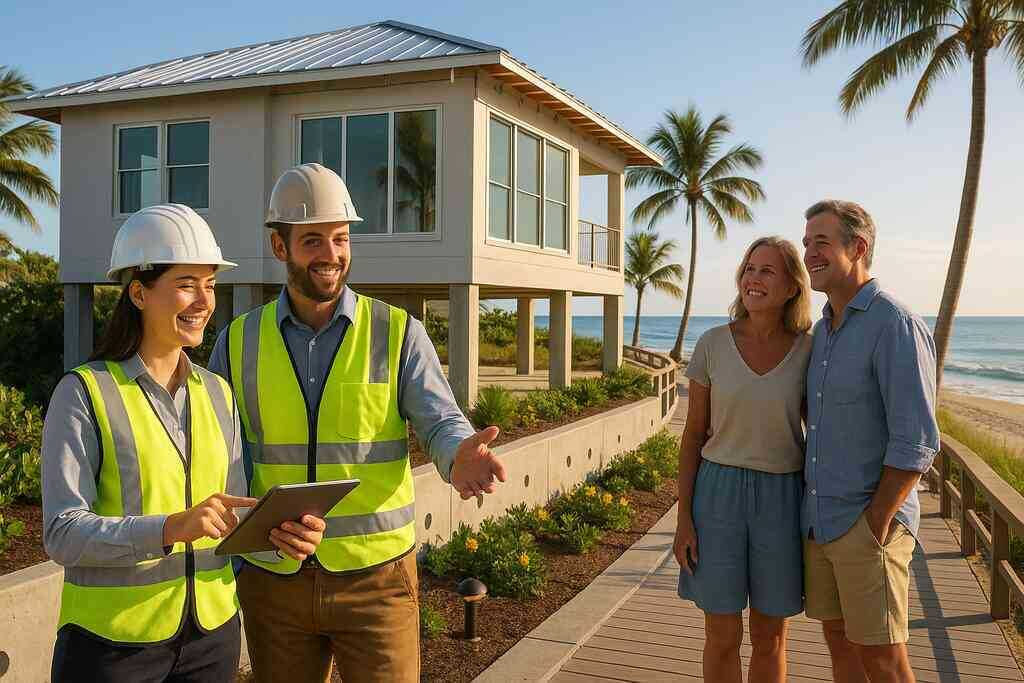
Every coastal renovation begins with glass that refuses to shatter under hurricane assault. Florida statutes now weave impact window installation code compliance directly into permitting workflows, forcing contractors to verify anchorage, glazing thickness, and frame strength before rough openings are inspected. Those requirements align with Miami-Dade wind load standards as well as broader hurricane resistant construction guidelines, making them a cornerstone of coastal building codes South Florida homeowners face. Because inspectors cross-check manufacturer NOA numbers against site elevations, seasoned project managers keep a laminated chart on-site to eliminate last-minute confusion. Readers wanting a deeper primer can explore our decoding hurricane building codes on Florida’s coast resource for additional technical citations.
Field experience shows that sloppy shimming or uneven sill pans cause more inspection failures than glass defects. Installers therefore level openings with non-compressible composite shims that resist saltwater swelling. They also back-bed frames in compatible sealant, creating a continuous air-water barrier that meets energy efficient coastal home design targets. After fastening, crews torque each screw to engineer-specified values, photographing every step for the South Florida contractor permit checklist. Those images later speed coastal renovation permits near me because reviewers visually confirm attachment patterns without revisiting the jobsite.
Resilient roofing systems for coastal homes
Roofs shoulder the region’s fiercest winds, so resilient roofing systems for coastal homes rely on redundant layers, sealed edges, and smart ventilation. Designers specify high-temperature underlayments, stainless ring-shank nails, and continuous ridge straps that tie sheathing to top plates. Such assemblies surpass baseline Miami-Dade uplift tests, qualifying many clients for insurance credits. Homeowners wanting product catalogs often consult Miami-Dade compliant roofing services to compare membrane ratings before signing contracts. Early selection prevents costly substitutions when inspectors demand exact material IDs.
Durability now merges with sustainability. Reflective coatings lower attic temperatures, advancing energy efficient coastal home design goals while earning green building certifications in coastal areas. Where views demand low-slope profiles, architects integrate ballast pavers that add weight and protect membranes from flying debris. Meanwhile, drip edges receive epoxy primer, blocking chloride ions that attack galvanized coatings. By balancing structural tenacity with thermal performance, South Florida general contractor coastal expertise transforms roofs into year-round guardians, not seasonal liabilities.
South Florida stucco code requirements and salt air protection
Exterior walls must battle salt crystals that creep into tiny pores and pop finishes like over-inflated balloons. South Florida stucco code requirements now mandate vapor-permeable, water-resistive barriers beneath every cementitious layer. Installers double-wrap corners, embed fiberglass mesh, and maintain expansion joints at prescribed intervals. To verify compliance, inspectors probe cured panels with moisture meters, checking that readings stay below threshold values. When failures occur, fines escalate quickly because hidden corrosion can undermine framing within months.
Smart builders combine code mandates with proactive salt air corrosion mitigation. They specify polymer-modified topcoats that flex with temperature swings, resisting hairline cracks. Stainless stucco accessories replace standard zinc to prevent rust bleeds. Homeowners seeking specialized crews often turn to salt-safe stucco crews for coastal homes to ensure warranties remain valid through multiple storm seasons. Routine surface sealing every few years then locks in color vibrancy and structural integrity alike.
South Florida pool enclosure wind code essentials
Screened lanais extend living spaces without inviting mosquitoes, yet they must survive wind loads rivaling small aircraft thrust. South Florida pool enclosure wind code requires engineers to calculate lateral pressures based on exposure category, structure height, and site elevation. Aluminum members gain thicker walls near coastlines, while fasteners upgrade to 316 stainless to deter pitting. Installers pre-assemble gusseted corners on the ground, lifting entire bays to reduce joint count and increase rigidity. Officials examine welded connections carefully, so fabricators log every filler rod batch for traceability.
Owners often overlook door hardware strength, leading to blow-outs that compromise whole cages. Updated guidelines now dictate multi-point latches and hydraulic closers that prevent sudden swings during gusts. Clear polycarbonate panels sometimes replace screens on windward faces, adding brute resistance without blocking sunset views. Wind-rated builders in West Palm Beach coordinate these enhancements early, shortening approval cycles and avoiding expensive field retrofits.
Boynton Beach coastal deck code compliance checkpoints
Waterfront lifestyles depend on decks that stay level, dry, and splinter-free despite relentless humidity. Boynton Beach coastal deck code compliance checkpoints start with marine-grade pilings driven below scour depth to counter storm surge scour. Ledger boards must sit over continuous flashing, keeping rot from infiltrating the rim joists. Stainless hidden fasteners secure tropical hardwoods, eliminating surface penetrations where moisture infiltrates. Finally, guardrails withstand 200-pound lateral loads, proven through onsite deflection testing.
Because enforcement is strict, many owners hire storm-hardening pros in Boynton Beach to shepherd drawings through plan review. These specialists map coastal setback regulations Florida imposes against proposed footprints, saving weeks of redesign. They also document preservative treatments that align with sustainable coastal landscaping requirements, ensuring eco-sensitive mangroves remain unharmed. The result is a social hub sturdy enough for sunset gatherings yet gentle on the shoreline ecosystem.
Coastal ADA accessibility standards and multilevel decks
Elevated homes must welcome every guest, even when the terrain drops toward the water. Coastal ADA accessibility standards insist on ramp slopes no steeper than 1:12, with landings large enough for full wheelchair rotation. Multilevel decks complicate matters because supporting columns already carry significant uplift loads. Engineers therefore design helical pier clusters that share both vertical and lateral stresses, keeping ramps steady during cyclonic winds. Continuous handrails transition between levels, with returns that prevent clothing snags.
Integrating these requirements demands close collaboration between architects, structural consultants, and FEMA coastal zone mapping contractors. Early charrettes align deck elevations with required flood zone elevation requirements, reducing later conflicts. Designers also specify slip-resistant composite boards infused with UV inhibitors, extending life while enhancing safety. When executed properly, accessible promenades grant independence without compromising aesthetic goals or structural resilience. Such thoughtful planning showcases South Florida general contractor coastal expertise at its finest.
Systems Sustainability and Serenity
Energy efficient coastal home design aligned with green building certifications
Cutting heat gain while welcoming sea breezes forms the backbone of energy efficient coastal home design. Orientation, deep overhangs, and high-performance glass block harsh sun without sacrificing Atlantic views. Builders specify foam-insulated roof decks and continuous air barriers that meet strict green building certifications in coastal areas. Because every penetration can become a leak path in hurricane season, crews tape seams meticulously and verify them with blower-door tests. The payoff appears in reduced cooling loads, smaller mechanical systems, and lower lifetime utility costs.
Net-zero goals become realistic when photovoltaic panels work alongside reflective roofing membranes. Miami-Dade uplift tests now include PV racks, ensuring they stay attached during cyclonic winds. Homeowners who want turnkey solutions can find licensed builders near the South Florida coast that bundle solar design, battery storage, and permitting under one contract. Those teams also chase local incentives that offset upfront investment. As a result, seaside residences gain resilience and financial predictability simultaneously.
Coastal lighting turtle friendly code and landscape planning
Golden nighttime glows may charm humans, yet they disorient nesting sea turtles. Municipal turtle-friendly codes therefore restrict luminaires facing the shoreline. Acceptable fixtures direct beams downward, use long-wavelength amber LEDs, and switch off automatically after curfew. Coastal building codes in South Florida enforces now enforce bundling these mandates into final inspection checklists, so ignoring them delays occupancy certificates. Experienced South Florida contractor crews prewire low-voltage circuits and smart controls to streamline compliance.
Landscape planning supports dark-sky goals while withstanding salt spray. Designers favor silver buttonwood, sea grape, and dune sunflower because they thrive without fertilizer runoff. Those plants double as windbreaks, reducing erosion around foundations against the tide. Pathways meander behind dune lines, keeping foot traffic off fragile nesting zones. By fusing biology and aesthetics, green builders protect wildlife and property value alike.
Salt air corrosion mitigation for HVAC and electrical systems
Salty aerosols attack condenser fins, breaker panels, and even buried conduit. Skilled general contractors in South Florida order factory-coated HVAC coils and marine-grade disconnect boxes for every oceanfront build. They elevate equipment platforms above predicted surge levels, ensuring continued operation after storms. Regular freshwater rinses are woven into maintenance contracts then flush corrosive residue before it crystallizes. Together, these steps extend system life far beyond regional averages.
Electrical strategies also evolve under the relentless coastal mist. Copper conductors receive tinned plating, and stainless hardware secures all terminations. Drip loops and weep holes let moisture escape rather than pool inside enclosures. Grounding networks integrate extra rods driven into moist sand, lowering resistance for lightning dissipation. Such comprehensive salt air corrosion mitigation keeps lights on and air conditioners humming when neighbors scramble for repairs.
South Florida contractor permit checklist for renovations near me
Seasoned project managers begin every renovation by confirming flood zone elevation requirements and current Miami-Dade wind load standards. The South Florida contractor permit checklist groups these tasks into color-coded phases: pre-design, plan review, field inspections, and close-out. During pre-design, teams obtain updated surveys and FEMA coastal zone mapping overlays. Plan review demands engineered drawings stamped for structural, mechanical, and electrical scopes. Field inspectors then verify anchor patterns, impact window NOAs, and hurricane straps best practices documented with photos.
Homeowners seeking coastal renovation permits near me often underestimate paperwork volume. Proof of registered subcontractors, signed waste-management plans, and turtle-friendly lighting diagrams all accompany the package. Digital portals speed submission, yet accurate file names and revision logs still matter. A disciplined checklist prevents redraws that stall momentum. Ultimately, smoother approvals translate to fewer loan interest charges and quicker move-in dates.
Delray Beach floodproofing renovations and West Palm Beach storm surge construction planning
Fine-grained municipal code variations require hyperlocal expertise. Delray Beach floodproofing renovations often involve dry-floodproof walls below design flood elevation, paired with automatic closure devices on vents. Contractors install water-resistant gypsum and epoxy-coated wiring to survive temporary inundation. Planners also coordinate with RENOVA coastal building specialists for hydrodynamic analysis, ensuring retrofits complement neighborhood drainage upgrades. These technical layers preserve both heritage cottages and modern townhomes along Atlantic Avenue.
Farther north, West Palm Beach storm surge construction planning centers on breakaway lower levels and robust seawall tiebacks. Wind-rated builders in West Palm Beach specify stainless helicals that anchor slabs into deep substrata, countering suction forces when waves recede. Projects integrate redundant sump pumps linked to standby generators, safeguarding valuables even during extended outages. By tailoring strategies to each city’s topography, construction companies protect families and future equity.
Coastal renovation permits near me and timeline tips
Obtaining coastal renovation permits demands patience, but proactive sequencing shortens the calendar. Submit environmental assessments first because they often dictate structural revisions later. Reserve inspection windows in advance, aligning trades so no day is idle while awaiting sign-offs. Seasoned South Florida general contractor teams share Gantt charts with clients, clarifying dependencies and avoiding stressful surprises. Clear communication becomes a stealth scheduling tool.
Expect at least two plan corrections, so budget buffer weeks rather than scrambling. When corrections arrive, address every comment even if it seems minor. Partial replies trigger additional reviews and fresh fees. Finally, schedule material deliveries only after stamped plans return, preventing storage nightmares and moisture damage. Following these timeline tips transforms red tape into a predictable, almost routine, part of waterfront living.
Futureproofing the Shoreline Home
 Futureproofing the Shoreline Home
Harnessing South Florida general contractor coastal expertise
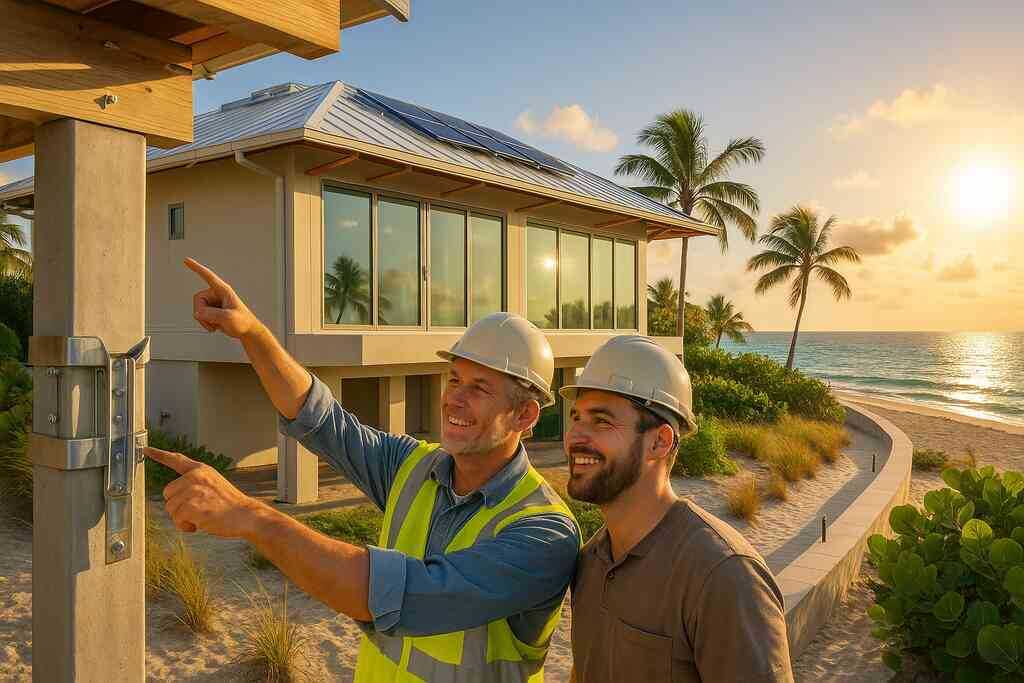
Seasoned builders recognize that every wave, gust, and grain of sand shapes structural decisions. South Florida general contractor coastal expertise therefore begins with anticipating nature instead of reacting later. Specialists calculate cumulative salt exposure, not just peak storm data, when selecting fasteners and finishes. They also track shifting dune lines so today’s safe distance remains tomorrow’s buffer. By weaving predictive science into daily practice, these professionals turn hard-won insights into durable design choices.
Collaboration multiplies that knowledge. Engineers, surveyors, and architects regularly workshop storm scenarios with plumbers and electricians. Such cross-trade dialogue uncovers hidden vulnerabilities before concrete cures. Homeowners who partner with wind-rated builders in West Palm Beach gain access to this collective brain trust, ensuring every component earns its keep during hurricane season. The result is holistic resilience that feels invisible during calm months yet stands firm when skies darken.
Integrating FEMA coastal zone mapping from concept to inspection
FEMA flood maps are more than colorful charts; they are the legal heartbeat of coastal building approvals. Designers overlay proposed footprints on digital contour layers to confirm flood zone elevation requirements before sketching walls. Early alignment prevents costly plan revisions that derail enthusiasm and financing alike. Trusted teams also coordinate with certified FEMA coastal zone mapping contractors who verify datum points. This independent confirmation satisfies reviewers and accelerates schedule milestones.
During construction, inspectors compare as-built elevations to the approved survey. Any deviation, even inches, can trigger mandates for breakaway walls or extra vents. Understanding the role of a general contractor in code compliance keeps accountability clear and paperwork tidy. Veterans document each stage with geo-tagged photos, proving that pilings, slabs, and finished floors respect the mapped vertical benchmarks. Diligent records convert potential disputes into swift sign-offs.
From blueprint to blessing keeping inspections smooth
Smooth inspections start with organization, not luck. Crews post laminated copies of the South Florida contractor permit checklist in trailers and digital dashboards. Every trade initial tasks once complete, creating transparent progress snapshots for managers and clients. This disciplined rhythm reduces failed inspections that stretch budgets and patience. It also reassures lenders monitoring draw schedules.
When codes evolve, teams study changes together rather than rely on scattered memos. Interactive sessions review connector spacing, Miami-Dade wind load updates, and coastal setback regulations that Florida recently amended. Project leaders then update checklists and subcontractor scopes the same day. Readers seeking deeper direction can consult our step-by-step guide to complex coastal rules before breaking ground. Proactive learning transforms code books from obstacles into roadmaps.
Connect with the South Florida Contractors Directory for the next steps
A coastal project deserves partners who respect the shoreline’s power and promise. The South Florida Contractors Directory streamlines that search by curating vetted professionals skilled in hurricane resistant construction guidelines. Users simply enter a zip code and compare credentials, reviews, and specialties within seconds. Filters highlight experts in seawall construction regulations or energy efficient coastal home design. Decision-making becomes confident, not chaotic.
Once you shortlist providers, request elevation certificates, sample inspection reports, and material spec sheets. These documents reveal whether a “near me” listing truly masters salt air corrosion mitigation or only claims to. Schedule interviews, walk past projects, and verify active insurance. When satisfied, lock in timelines early to secure top talent before storm season drives demand. Your futureproof shoreline home begins with an informed click and a well-timed call.
Frequently Asked Questions
Question: What sets the Guide to Coastal Codes by South Florida Contractors apart from other references on coastal building codes that South Florida homeowners read?
Answer: Most resources simply quote statutes, but our guide reverse-engineers real inspection failures collected from thousands of projects across Boca Raton, Delray Beach, Boynton Beach and West Palm Beach. We translate hurricane resistant construction guidelines into practical checklists that any South Florida contractor can follow-covering everything from Miami-Dade wind load standards to coastal setback regulations that Florida counties add on top of state rules. The result is a living playbook that keeps you compliant, lowers insurance premiums and helps you hire a vetted South Florida general contractor with confidence.
Question: How do I verify flood zone elevation requirements before I spend money on design plans, and can South Florida Contractors connect me with the right experts?
Answer: Absolutely. Start by securing a certified elevation certificate that compares your site to FEMA coastal zone mapping. Inside our directory you’ll find surveyors and FEMA coastal zone mapping contractors who deliver this document in days, not weeks. Once elevation is confirmed, general contractors in South Florida listed on our platform overlay those numbers onto proposed floor heights and setbacks, ensuring the project passes plan review the first time. This early step prevents costly redesigns and accelerates coastal renovation permits near me for everything from Delray Beach floodproofing renovations to West Palm Beach storm surge construction planning.
Question: What specific construction services do your listed builders use to meet Miami-Dade wind load standards and South Florida hurricane straps best practices?
Answer: South Florida Contractors highlights companies that create continuous load paths from ridge to slab. Expect ring-shank nails, closed-cell spray-foam adhesion, stainless or hot-dip-galvanized hurricane straps every 24 inches, and impact window installation code compliance verified with NOA numbers on site. Many of our roofing pros also install resilient roofing systems for coastal homes featuring high-temperature underlayments and sealed ridge straps. By combining these measures, your roof, walls and openings stay locked together when 150-mph gusts strike.
Question: How can South Florida Contractors help me handle seawall construction regulations while fighting salt air corrosion mitigation on mechanical systems?
Answer: Our directory includes seawall engineers who design toe depths, tie-backs and hydrostatic relief valves that meet state, county and Army Corps requirements line-by-line. At the same time, you can hire HVAC and electrical specialists who specify factory-coated coils, marine-grade disconnects, tinned copper conductors and epoxy-sealed breaker panels. By sourcing every discipline in one place, you build a unified strategy that shields concrete, steel and critical equipment from relentless salinity.
Question: I need permits for a Boca Raton coastal home remodel code update and Boynton Beach coastal deck code compliance-how does the South Florida contractor permit checklist make that easier?
Answer: The South Florida contractor permit checklist, downloadable from our site, breaks approvals into color-coded phases-pre-design, plan review, field inspections and close-out. It reminds you to attach impact-rated product sheets, South Florida stucco code requirements, coastal lighting turtle friendly code diagrams and sustainable coastal landscaping requirements in one organized PDF set. Because every item aligns with each municipality’s portal, reviewers rarely kick back applications. That means faster start dates, fewer surprise fees and a smoother path to enjoying your upgraded waterfront oasis.