
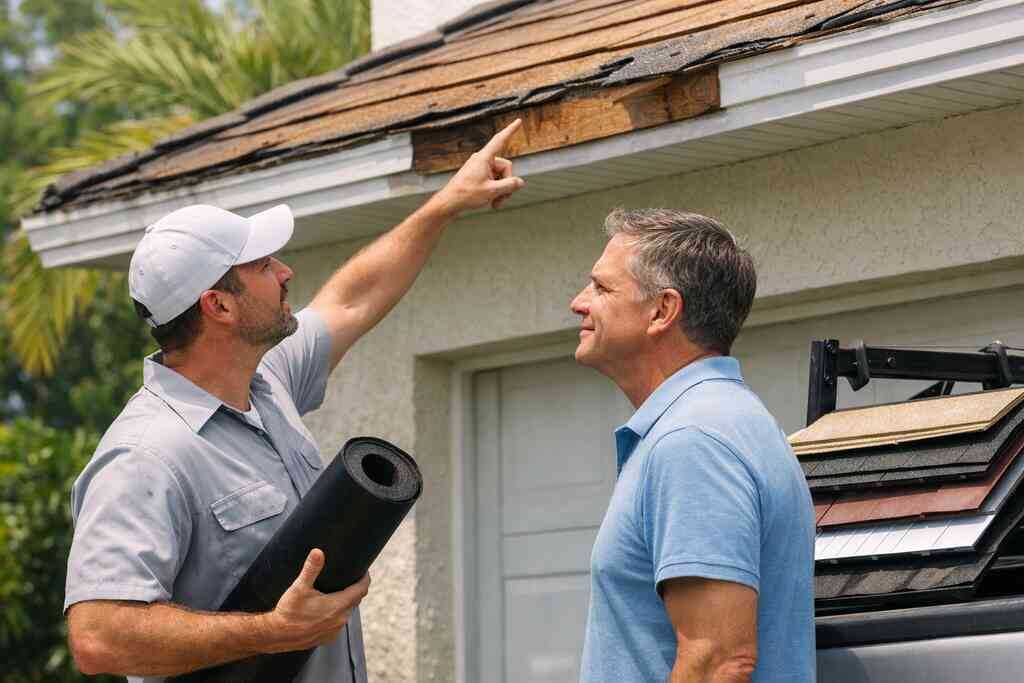
A homeowner in Broward called during a thunderstorm and said the ceiling stain had doubled in one hour. That panic is familiar. If you are reading this while comparing roofing quotes, take a breath. The cheapest number often hides the costliest future repair. South Florida contractors see that pattern constantly across Palm Beach, Broward, and Miami-Dade.
Why the cheapest coastal roof is usually the most expensive mistake
What salt air, wind uplift, and driving rain do to roof systems across South Florida
Salt air is relentless. Wind does not just push on a roof; it tries to peel it up. Driving rain finds every weak seam, every loose fastener, and every tired flashing detail. That is why how South Florida contractors recommend coastal roofing materials starts with performance, not price. A roof that looks affordable on paper can age fast in South Florida heat, humidity, and storms.
Here is the part most homeowners miss. Coastal failure rarely starts with the visible surface. It starts at the edges, underlayment, penetrations, and attachment points. The roof may look fine from the street while moisture slowly damages decking and insulation. We see this most often after a storm, when the repair bill includes more than shingles or tile.
Why oceanfront homes, waterfront homes, and inland neighborhoods do not need the same material strategy
Not every South Florida roof faces the same punishment. An oceanfront home gets more corrosion risk and more direct wind exposure. A waterfront home may face similar moisture pressure, even without direct surf spray. Inland neighborhoods still need hurricane-resistant roofing, but the exposure profile changes. That difference matters when a roofing contractor South Florida recommends materials.
One client near the Intracoastal wanted the same budget roof used on a house miles inland. The contractor stopped that plan early. The home needed stronger fastening, better corrosion resistance, and a different edge detail because the wind load and moisture exposure were simply harsher. That conversation saved the owner from a cheap-looking decision that would have become expensive quickly. This is why oceanfront home contractor experience matters so much.
How hurricane code compliance changes the real cost of a roofing choice
A roof is never just a roof here. It is a code-driven assembly. Hurricane code compliance affects deck attachment, nailing patterns, underlayment choice, and the final material selection. South Florida building codes and the Florida Building Code 2026 expectations place real weight on uplift resistance and water protection. That means the “best bargain” often becomes the one with the strongest permitted system.
The wrong comparison is material-only. The right comparison is total installed system. A lower-cost roof with weak underlayment, poor attachment, and no secondary water barrier may cost more after the first serious storm. Ask for permit-ready roofing specifications, not just a product name. That one shift in language can change the quality of the entire bid.
Which coastal roofing materials actually hold up in Palm Beach, Broward, and Miami-Dade
When standing seam metal roof systems make the most sense for wind and corrosion resistance
Metal earns its reputation for a reason. A standing seam metal roof can perform very well in high-wind roofing systems when installed correctly. It sheds water efficiently, handles uplift well, and can offer strong wind uplift resistance. The catch is simple: installation quality matters as much as the panel itself. Poor fastening or weak flashing can ruin a good material choice.
Metal also makes sense when you want long-term salt air corrosion resistance. That does not mean every metal roof is equal. Fasteners, coatings, roof slope, and penetrations all affect durability. On a coastal home, corrosion-resistant fasteners and sealed roof penetrations are not upgrades; they are basics. If you are comparing metal options, ask how the contractor handles rooftop drainage design and edge detailing.
Where concrete roof tile and clay roof tile fit into South Florida building codes and HOA expectations
Tile remains common throughout South Florida. Concrete roof tile often fits well where homeowners want durability and a classic look. Clay roof tile can be a strong option too, especially in neighborhoods where aesthetics or HOA rules favor it. Both can work beautifully when installed with code-compliant fastening and a proper underlayment system. Both can also fail badly if the assembly beneath them is weak.
HOA-approved roofing materials can narrow your choices. That can feel frustrating, especially in communities where the board wants a certain profile or color. Still, you should not pick tile only because it matches the street. Ask whether the roof assembly meets hurricane code compliance and whether the chosen profile works for your roof slope and structure. A South Florida contractors on hurricane roof code compliance resource can help you understand the bigger picture before you sign anything.
Why flat roof coastal materials and modified bitumen still show up on many South Florida homes
Flat and low-slope roofs are common across South Florida. That is why flat roof coastal materials remain part of the conversation. Modified bitumen still appears on many homes because it can be practical, economical, and familiar to local crews. It works best when the roof is detailed carefully and drainage is addressed honestly. A flat roof with standing water is not a material problem alone; it is often a slope or maintenance problem too.
These systems demand discipline. Seams, terminations, and flashing matter more than marketing language. The roof must move water away fast and predictably. If you are dealing with an addition, a lanai builder South Florida project, or a sunroom contractor South Florida scope, the roof transition deserves extra scrutiny. Low-slope assemblies punish shortcuts.
How roof underlayment for coastal climate and a secondary water barrier change performance after a storm
Underlayment is not an afterthought. In coastal conditions, roof underlayment for coastal climate can be the difference between a repair and a major interior loss. A secondary water barrier adds another layer of protection when wind-driven rain gets past the outer roofing surface. That does not make a roof storm-proof. It does make the assembly more forgiving.
Here is a simple way to think about it. The visible roof sheds the bulk of the water. The hidden layers buy you time when the storm wins a few inches. That matters in South Florida, where rain can move sideways and pressure can shift quickly. On the projects we have seen this year, the homes with better underlayment recovered faster and with less drywall damage.
Material TypeBest UseMain AdvantageMain CautionStanding seam metalHigh-wind and coastal exposureStrong uplift performanceRequires skilled installationConcrete roof tileBroad South Florida useDurable and widely acceptedHeavy, needs proper structureClay roof tileHOA-sensitive or style-driven projectsAttractive and durableCost and weight can be higherModified bitumenLow-slope roofsFamiliar and practicalDetail work must be preciseThe paper trail that separates a solid roofing plan from a permit headache
What a South Florida permit process really looks like before work starts
Permits are not red tape for the sake of annoyance. They are the paper trail that proves the roof was designed, reviewed, and installed properly. The South Florida permit process usually begins before the first tear-off. Plans, product approvals, scope details, and contractor information should line up before work starts. If they do not, you may face delays, resubmittals, or inspection trouble.
Most homeowners find this step uncomfortable, and that is completely normal. You are juggling weather, schedules, and a stack of technical terms. Still, never let anyone suggest skipping permits. A permit headache is better than a roof failure with no clear approval trail. If you are trying to find a contractor South Florida, start with the paperwork, not the pitch.
Why Palm Beach County permit, Broward County permit, and Miami-Dade permit rules can feel different even on similar projects
Three counties. Three sets of local habits. Palm Beach County permit, Broward County permit, and Miami-Dade permit processes may all follow Florida law, yet the practical experience can still feel different. Review times, document expectations, and inspection flow can vary. That does not mean one county is arbitrary. It means local administration matters.
A homeowner in Miami-Dade may hear different terminology than someone in Palm Beach County. The underlying goal stays the same: confirm the roof meets local structural and code requirements. If you want a licensed contractor Miami-Dade, ask how they handle submittals, revisions, and inspection scheduling. A contractor who knows the local process can save you real stress. The same is true for a licensed contractor Palm Beach County or licensed contractor Broward County.
How South Florida HOA permit approvals can delay coastal roofing materials choices
HOA approval can be the slowest part of a roof project. South Florida HOA permit rules often affect color, profile, material type, and even edge detail. That matters when you want a metal roof but the association expects tile. It also matters when your community only allows certain colors or visible finishes. You need the HOA decision before you order materials.
This is where planning pays off. A contractor can help you match code compliance with community rules, but the board still has its own timeline. If you live in a condo, townhome, or planned community, ask for HOA submittal requirements immediately. We hear from clients almost every week who assumed the county permit was the only hurdle. It almost never is.
What to verify before signing with a licensed contractor Palm Beach County, licensed contractor Broward County, or licensed contractor Miami-Dade
Before you sign, verify more than the price. Ask how to verify a contractor license in Florida, and actually do it. Confirm contractor insurance requirements Florida, contractor bonding requirements, and who will pull the permit. Ask for written scope language and a clear change order contractor Florida process. A good contractor should welcome those questions. 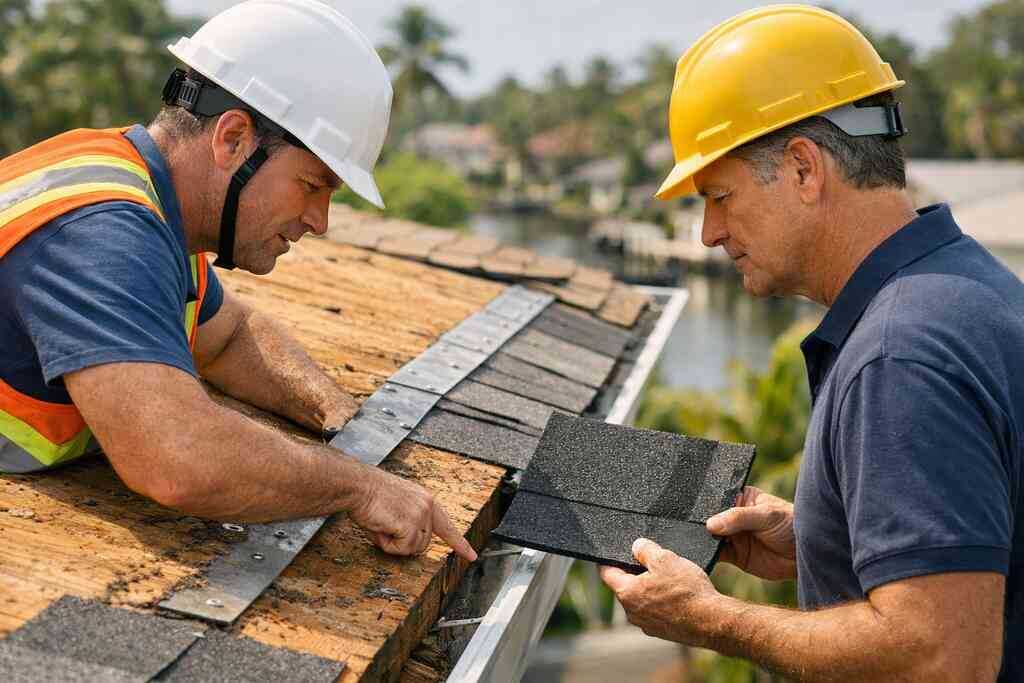
- Confirm active licensing and the right classification.
- Ask for proof of insurance before work begins.
- Review lien waiver Florida language before final payment.
- Make sure the contract names the exact roof system.
- Confirm who handles inspections and permit closeout.
If you need a second opinion, use a how to verify a South Florida contractor license in 2026 resource before you commit. That small step can prevent a very large mistake.
What contractors check before they recommend a roof for a coastal home
How roof-to-wall connection, roof deck attachment, and hurricane roof tie-downs affect material selection
A smart contractor does not start with color charts. They start with structure. Roof-to-wall connection strength, roof deck attachment, and hurricane roof tie-downs influence what the building can safely support. Some homes need additional reinforcement before a new roof makes sense. In those cases, the best material may not be the heaviest one.
This is especially true for older homes, additions, and roof replacements after storm damage. If the structure is weak, even premium materials cannot perform as intended. The contractor should inspect the deck, framing, and load path before recommending the final system. That is why coastal home builder Florida experience and South Florida construction knowledge matter together.
Why corrosion-resistant fasteners, sealed roof penetrations, and uplift-rated roof assembly matter near salt air
Salt air attacks weak metal first. That includes fasteners, clips, flashing, and trim. Corrosion-resistant fasteners help the roof hold together longer, especially near the coast. Sealed roof penetrations matter because every pipe, vent, and skylight is a potential leak point. An uplift-rated roof assembly ties all those pieces together under storm pressure.
Here is what almost no online guide mentions. The smallest details often determine the biggest failures. A loose fastener can become a leak path. A poorly sealed penetration can become a ceiling stain. A weak assembly can turn a routine storm into an emergency call. That is why South Florida contractors obsess over the hidden parts.
How ventilation, drainage, and moisture intrusion prevention change the best choice for humid South Florida homes
Heat and humidity shape roof performance. A roof that traps moisture can shorten the life of the underlayment and decking below. Good ventilation helps, but it must work with the roof design. Drainage matters too, especially on low-slope sections, porches, and transitions. Moisture intrusion prevention is not just about storms; it is about everyday humidity.
If you live in a home with a second story addition South Florida or a sunroom connected to the main roof, airflow can get complicated. That is where a South Florida home improvement contractor or general contractor near me South Florida can help coordinate roof, attic, and interior conditions. The best roof choice often depends on how the entire structure breathes. Ignore that, and you may win on looks but lose on comfort and durability.
When storm damage roof replacement calls for a different material strategy than a planned upgrade
Storm damage changes everything. A planned upgrade lets you compare options carefully. A storm damage roof replacement may force faster decisions, insurance documentation, and temporary repairs. Still, do not let urgency push you into a poor material match. A rushed quote can miss structural issues, hidden water damage, or code-driven upgrades.
One homeowner in Broward thought the roof only needed a surface replacement. The inspection revealed deck damage around several penetrations and an attic moisture problem. The final plan included better underlayment, improved ventilation, and a different fastening schedule. The result was a stronger roof and fewer surprises later. That is the difference between patching and protecting.
The next move that protects your home and your budget
How to compare roofing contractor South Florida bids without getting fooled by a low quote
Low bids are tempting. They are also incomplete more often than people realize. Compare scope, not just price. A proper roofing contractor South Florida bid should show materials, underlayment, fastening details, permit responsibilities, and cleanup terms. If one quote looks dramatically lower, find out what it excludes.
A useful comparison usually includes:
- Material brand and product class
- Underlayment type
- Permit responsibility
- Inspection support
- Warranty terms
- Debris removal and disposal
- Change order language
If you are stuck between similar bids, ask for a side-by-side explanation from a how to choose a roofing contractor in Broward County in 2026 guide or a comparable local resource. Clarity is worth more than a tiny savings on paper.
What to ask about contractor licensing Florida, insurance, bonding, and lien waiver Florida before work begins
Do not treat paperwork as optional. Ask for contractor licensing Florida verification first. Then ask for proof of insurance and bonding, if applicable. Next, ask how lien waiver Florida documents will be handled as payments are made. A lien waiver simply confirms payment for work completed, so no one can later claim the same amount again.
You should also ask about dispute resolution before the job starts. Good contracts explain how to handle disagreements, delays, and revisions. If the contractor hesitates, that is information. A trustworthy pro will answer clearly and in plain English. If needed, consult how South Florida contractors verify license and insurance before you sign.
When to involve a South Florida home improvement contractor or general contractor near me South Florida for roof-adjacent work
Some roof projects stop at the shingles. Many do not. If your project includes fascia repair, soffit work, hurricane impact window installer South Florida coordination, or related exterior improvements, a South Florida home improvement contractor may help streamline the sequence. If the roof connects to additions, structural changes, or a lanai builder South Florida scope, a broader general contractor may be the better lead.
That coordination matters because roof work often exposes other issues. You may uncover trim rot, insulation problems, or deck damage near a pool deck contractor South Florida project or screen enclosure contractor South Florida area. It is smarter to plan those interfaces early. Otherwise, one trade waits on another, and your schedule slips.
How to turn coastal roofing materials into a permit-ready plan for the next hurricane season
The best move is simple. Build your roof plan before the weather demands it. Ask for coastal roofing materials that match your home, your county, and your HOA. Ask for code-compliant details, not vague promises. And do not hire without verification, especially if you are searching for a general contractor near me South Florida after a storm.
If you want a calmer process, start with three active bids and one licensing check today. Use the county permit office early. Keep the scope tight. You do not have to figure this out alone, and you do not have to figure it all out today. Start with one phone call to South Florida Contractors and compare your options before the next storm arrives.
Frequently Asked Questions
Question: How do South Florida contractors choose the right coastal roofing materials for hurricane-resistant roofing in Palm Beach, Broward, and Miami-Dade?
Answer: South Florida contractors usually start with the home’s exposure, structure, and code requirements before talking about color or price. A roof near the coast faces salt air corrosion resistance issues, wind uplift resistance demands, and driving rain, so the best choice is the one that fits the building, not just the budget. That may mean a standing seam metal roof for high-wind roofing systems, concrete roof tile or clay roof tile for tile roofing in South Florida, or modified bitumen roofing for flat roof coastal materials on low-slope sections. The key is making sure the full system includes roof deck attachment, hurricane roof tie-downs, corrosion-resistant fasteners, sealed roof penetrations, and a roof underlayment for coastal climate. When South Florida Contractors helps homeowners compare options, the focus is always on the complete assembly, permit readiness, and hurricane code compliance—not just the material label.
Question: What makes the blog How South Florida Contractors Recommend Coastal Roofing Materials different from a basic roofing guide?
Answer: This blog is more than a product overview because it explains how South Florida building codes, Florida Building Code 2026 expectations, and local permit steps shape the real decision. A basic guide may tell you metal or tile looks good, but South Florida Contractors looks at the whole project: roof-to-wall connection, uplift-rated roof assembly, secondary water barrier, moisture intrusion prevention, rooftop drainage design, and whether the home is oceanfront, waterfront, or inland. It also explains why a homeowner should verify a contractor license, confirm contractor insurance requirements Florida, review contractor bonding requirements, and never skip the South Florida permit process. That practical, regionally aware advice helps homeowners avoid the common mistake of choosing a cheap roof that turns into a costly repair after the next storm.
Question: Do I need a licensed contractor Palm Beach County, licensed contractor Broward County, or licensed contractor Miami-Dade for a roof replacement?
Answer: Yes, you should always work with a properly licensed contractor for roofing work in South Florida, and you should verify the licensing before signing anything. Roofing is code-driven work, and the county-level process can vary between Palm Beach County permit, Broward County permit, and Miami-Dade permit requirements even when the overall Florida rules are similar. South Florida Contractors advises homeowners to ask how to verify a contractor license, request proof of insurance, confirm who will pull the permit, and review lien waiver Florida documents before final payment. That matters whether you are hiring a roofing contractor South Florida for a full replacement or a South Florida home improvement contractor for roof-adjacent work. Licensing and insurance are not optional in this climate; they are part of protecting your home, your budget, and your claim history.
Question: How does the South Florida permit process affect coastal roofing materials and project timing?
Answer: The South Florida permit process can significantly affect both the schedule and the final materials chosen because the roof must be documented as a code-compliant system before work starts. South Florida Contractors encourages homeowners to treat permits as a built-in part of the job, not a delay to work around. Plans, product approvals, scope details, and contractor information need to line up so the project can move through review and inspection without avoidable problems. This is especially important for hurricane-resistant roofing, HOA-approved roofing materials, and roof systems that require specific fastening, underlayment, or edge details. If your project also involves a second story addition South Florida, sunroom contractor South Florida scope, or lanai builder South Florida work, the permit review may become even more important because the roof interacts with structural and drainage decisions.
Question: Can South Florida Contractors help homeowners compare standing seam metal roof, concrete roof tile, clay roof tile, and modified bitumen roofing?
Answer: Yes. South Florida Contractors helps homeowners think through the tradeoffs between standing seam metal roof systems, concrete roof tile, clay roof tile, and modified bitumen roofing based on exposure, structure, HOA rules, and maintenance expectations. Metal can be a strong fit for coastal homes that need wind uplift resistance and corrosion resistance, while tile often works well for homeowners who want durability and a traditional South Florida look. Modified bitumen may still be practical for flat or low-slope areas, especially when drainage and flashing are detailed correctly. The best choice is not always the most expensive one; it is the one that best matches the home’s structural capacity, the county permit requirements, the hurricane code compliance rules, and the homeowner’s long-term goals. South Florida Contractors can help you compare bids intelligently so you understand what each system includes and what each one leaves out.
Question: What should I ask before hiring a roofing contractor South Florida or any general contractor near me South Florida for storm damage roof replacement?
Answer: Before hiring anyone, ask for proof of licensing, insurance, and bonding, then ask exactly how the contractor will handle permits, inspections, and change orders. You should also ask for permit-ready roofing specifications, the exact underlayment type, fastening schedule, warranty details, and who will manage inspections and closeout. If the roof was damaged in a storm, make sure the contractor inspects for hidden issues such as deck damage, moisture intrusion, or roof-to-wall connection problems before recommending materials. South Florida Contractors also recommends confirming lien waiver Florida procedures and asking whether the scope includes corrosion-resistant fasteners, sealed roof penetrations, hurricane roof tie-downs, and a secondary water barrier. Those details are often what separate a long-lasting repair from a short-term patch. For homeowners comparing bids in South Florida, the safest approach is to use verified professionals and review every line item carefully before signing.