
Pool Deck Material Comparison By South Florida Contractors
February 5, 2026
From Sand to Signature: Welcome to the South Florida Pool Deck Renaissance
Why choosing the right deck material changes everything
Every pool gathering in South Florida begins on the deck. Homeowners weigh travertine pavers Boca Raton artisans love against sleek composite planks. That choice governs slip resistant pool deck materials, water temperature, and barefoot comfort. A properly selected surface prevents algae blooms and emergency pressure washes. It also frames the waterline like jewelry framing a gem. The wrong surface, however, can drain budgets and enthusiasm alike.
Beyond day-to-day feel, material selection shapes long-term value. Cost comparison of pool deck materials reveals life-cycle surprises that stun first-time buyers. Travertine demands sealing yet maintains resale cachet for decades. Composite saves on sealing but may fade under relentless ultraviolet glare. Choosing wisely turns an expense into an appreciating curb appeal pool deck upgrade. Therefore the conversation about surface finishes deserves front-row attention before any shovel touches sand.
The role of a South Florida contractor in crafting outdoor living
Material knowledge alone never guarantees success; execution matters more. A seasoned South Florida contractor turns sketches into living, breathing terraces. Through the trusted South Florida pool deck installers portal, owners effortlessly connect with Boca Raton Remodelers. They can also reach Delray Beach Construction Company crews for specialized pours. These specialists tame permits, equipment logistics, and inspection timelines. Their involvement transforms scattered ideas into a synchronized build schedule.
Selecting the right team also influences engineering decisions. A South Florida general contractor knows when to specify thicker concrete footings or add moisture barriers. General contractors in South Florida regularly navigate elevation changes caused by shifting coastal soils. They coordinate with pool plumbers, electricians, and lighting designers so that decking channels hide every conduit. That holistic approach elevates plain slabs into luxury pool deck design trends locals crave. Home builders in Florida without similar expertise often miss those subtle yet vital integrations.
Climate cues that make construction in South Florida unique
Building beside the Atlantic demands respect for heat, humidity, and salt blown inland by afternoon breezes. Surface temperatures routinely exceed ninety degrees, so heat reflective pool deck coatings become indispensable. Saltwater pool deck durability also matters because many homeowners embrace saline systems over chlorine. Even tropical hardwood pool decks must receive algae resistant deck coatings to survive monsoon-like rains. Every specification, from polymeric sand depth to joint width, responds to these relentless environmental assaults.
Wind load presents the final, dramatic challenge. Hurricane resistant pool decks rely on concealed anchoring systems that keep coping stones secure during gusts. The latest guidance in updates on coastal building codes 2026 clarifies spacing for expansion joints and drainage channels. Experienced designers integrate those rules without compromising aesthetics. As a result, homeowners obtain peace of mind along with postcard-worthy backdrops. Ignoring such mandates can void insurance and jeopardize family safety.
The Material Matrix: Choosing Between Stone, Wood and Innovative Composites
Travertine pavers and marble coping elegance meet traction
Travertine pavers Boca Raton homeowners favor deliver an immediate resort ambiance without sacrificing safety. The porous surface naturally channels splash water away, boosting slip resistant pool deck materials performance. Neutral beige and gold tones reflect sunlight, so midday temperatures remain kinder to bare feet. Skilled South Florida contractor crews often combine varying tile sizes, generating mosaics that disguise grout lines. Consequently, traffic flow feels seamless, and cleaning routines stay simple.
Palm Beach estates elevate that elegance with marble pools coping at the waterline. The stone’s crisp edges give lounges a gallery-like frame, yet the honed finish keeps traction high. Marble also pairs beautifully with heat reflective pool deck coatings applied to adjoining slabs. However, sealing schedules must stay rigid because local humidity magnifies staining risks. For deeper material comparisons, explore our best pool deck material options guide.
Coral stone decking and its cool touch in Delray Beach projects
Coral stone decking Delray Beach designers celebrate offers a fossil-flecked texture prized for tactile charm. Microscopic cavities capture air, producing a surface that feels noticeably cooler than solid limestone alternatives. That temperature advantage reduces thermal shock when swimmers exit briny water under intense sun. Yet installers must respect stone fragility by using gentle pneumatic chisels instead of vibrating saws. Proper handling preserves edges and minimizes expensive wastage.
Once placed, coral patios integrate seamlessly with adjacent planting beds fed by subsurface drip lines. The stone’s pale palette amplifies tropical hardwood pergolas and bronze shower fixtures. Because pores remain open, algae resistant deck coatings become necessary to halt rapid green bloom. Regular soft-wash treatments every quarter further maintain brightness without etching. Homeowners who prioritize barefoot comfort consistently rank coral among the top sustainable pool deck options Florida offers.
Modern concrete finishes microtexture to cool deck resurfacing near me
Concrete’s reputation has evolved from bland slabs to artistic canvases engineered for extreme climates. Modern concrete pool deck finishes include spray-on microtextures that mimic limestone grain while remaining cost friendly. Installers broadcast polymer beads across wet coats, creating a non-slip sealant for pool surround edges. Color hardeners infused with titanium dioxide bounce ultraviolet rays, lowering deck temperatures substantially. These enhancements turn everyday cement into a luxury pool deck design trend driver.
When aging patios show cracking, cool deck resurfacing near me searches soar among South Florida homeowners. Overlay systems bond new polymer cement to existing substrates, avoiding full demolition stress. Contractors grind surfaces, fill spalls, then spray color-matched blends, rebooting curb appeal and pool deck upgrades quickly. Savvy clients request moisture barriers beneath overlays to thwart vapor pressure and efflorescence. This layered strategy stretches lifespan while meeting budget constraints.
Tropical hardwood and composite decking for pools warmth without warping
Ipe, cumaru, and garapa headline tropical hardwood pool decks sought by boutique resorts. Dense fibers resist termite attacks and tolerate saltwater pool deck durability challenges admirably. Contractors predrill boards and apply stainless clips to allow expansion during humid swings. Annual oil treatments renew luster while blocking ultraviolet bleaching. Despite maintenance, few materials rival the organic warmth underfoot that hardwood supplies.
Composite decking for pools emerged to mimic that warmth minus oiling chores. Manufacturers blend recycled plastics with sawdust, producing planks that shrug off splinters and mildew. Hidden fastening systems create clean sightlines, complementing contemporary waterline tiles. However, dark composite shades can absorb heat unless paired with shade structures for pool decks. Therefore, designers often mix lighter border boards to balance temperatures and aesthetics.
Emerging permeable surfaces and sustainable pool deck options in Florida
New permeable paver grids transform stormwater from nuisance to resource by channeling runoff into soil reservoirs. Open-cell concrete blocks filled with crushed shells allow rainfall to percolate, easing pressure on municipal drains. Those water permeable pool deck surfaces also qualify for insurance incentives promoting resilient landscapes. South Florida general contractor tips emphasize installing geotextile layers beneath grids to deter root intrusion. Proper grading guarantees water travels vertically, not laterally toward foundations.
Rubberized tiles crafted from recycled tires represent another eco-friendly pool deck sealer innovation. Their cushioned feel protects toddlers while suppressing echoing footsteps around screened enclosures. Pigments resist chlorine fading, and interlocking edges simplify DIY replacement of damaged squares. Furthermore, soy-based binders lower volatile organic compound emissions during curing. Collectively, such breakthroughs illustrate how sustainability now intersects with stylish, low maintenance pool decking solutions.
 Stress Tests Heat and Hurricanes
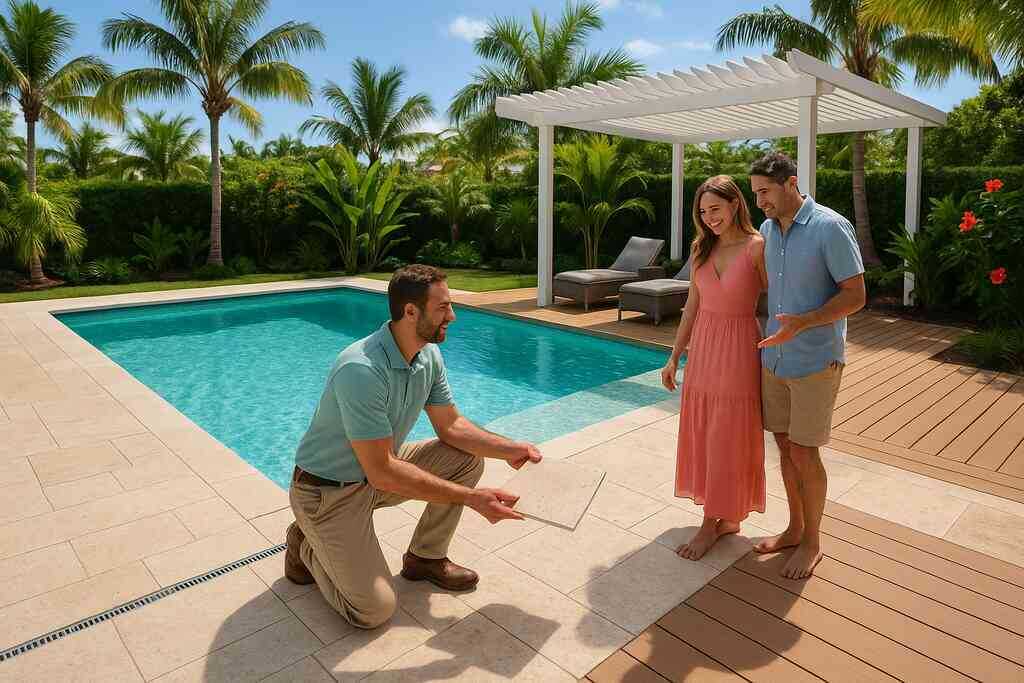 Stress Tests Heat and Hurricanes
Heat reflective coatings and slip resistant sealers for midday comfort
The South Florida sun feels relentless, heating unprotected concrete until walking barefoot becomes impossible. Heat reflective pool deck coatings convert that radiation into harmless infrared waves and lower surface temperatures quickly. Because the product bonds chemically with cement paste, reapplication intervals stretch for many seasons. Contractors often pair these coatings with slip resistant pool deck materials such as silica-infused sealers. Together, the duo reduces burning risk while preserving a secure footing during energetic children’s cannonballs.
Application techniques matter as much as chemistry. A South Florida contractor will lightly profile the slab, creating microgrooves that increase mechanical adhesion without visible roughness. They spray in even passes, back-rolling to eliminate puddles that could trap air. After twenty-four hours, crews test with a dynamic coefficient device, verifying that the non-slip sealant for the pool surround meets commercial standards. Only then does furniture return, ensuring the deck delivers lunchtime comfort and evening elegance alike.
Saltwater pool deck durability and algae resistant deck coatings
Many homeowners now choose chlorine-free systems, yet saline water accelerates corrosion near metal fasteners. Installers specify stainless or polymer anchors when attaching railings, preserving structural integrity under salty oversplash. They also recommend dense stones like travertine because open-grained materials absorb brine faster and stain. Still, every surface benefits from algae resistant deck coatings that seal pores and discourage microscopic spores from rooting.
Regular maintenance forms the second defense layer. Monthly hose rinses remove crystallized salt before it etches finishes. When coating gloss wanes, specialists lightly abrade, then reapply, extending saltwater pool deck durability for another cycle. Choosing products labeled vapor permeable allows trapped moisture to escape, preventing blistering during humid spells. Consequently, beauty endures, and slippery biofilm never gains a foothold.
Hurricane resistant pool decks anchoring systems and moisture barriers
Wind-borne debris transforms loose pavers into dangerous projectiles, so hurricane resistant pool decks rely on concealed tie-down grids. Engineers run stainless cables through hollow paver cores, locking rows together while permitting thermal expansion. At stair noses, epoxy-set rebar pins anchor coping stones securely to bond beams. These details rarely appear in glossy photos, yet safeguard families when storms approach.
Waterproof subsystems require equal attention. Moisture barriers for concrete decks block hydrostatic pressure that can crack slabs once atmospheric pressure drops rapidly. A South Florida general contractor integrates elastomeric membranes beneath new pours, then installs perimeter vents to relieve trapped vapor. Because codes evolve, teams monitor local bulletins, ensuring each anchor or barrier aligns with current mandates. Performance, not guesswork, defines true coastal resilience.
Drainage design from polymeric sand to integrated channel runs
Abundant rainfall tests every joint and slope, making robust drainage non-negotiable. Interlocking paver patios utilize polymeric sand for paver joints, which hardens after wetting yet remains semi-permeable. The material stops ants’ tunnels while directing water toward hidden French drains. Concrete decks require alternative tactics; contractors saw expansion cuts with subtle grades guiding runoff into stainless channels.
Those channels connect seamlessly to pool deck drainage systems that carry water beyond foundation walls and landscaped beds. Grates feature slip-resistant textures, maintaining uninterrupted walking safety. Routine vacuuming clears leaves before clogs form, proving that maintenance links directly with engineering. When executed correctly, guests hardly notice complex hydraulics operating underfoot, yet they stay dry even during tropical downpours.
Lighting and shade structures increase safety after sunset
Safety considerations extend past daylight. Low-voltage LED strips embedded beneath coping illuminate step edges without harsh glare. Photocell timers synchronize lights with dusk, eliminating manual switches and reducing energy waste. Shade structures for pool decks deliver complementary comfort, lowering daytime surface temperatures and protecting delicate finishes from ultraviolet degradation.
Homeowners often consult patio covering installers for shade structures to integrate pergolas that match decking colorways. Aluminum frames resist salt corrosion, while adjustable louvers welcome breezes yet deflect driving rain. Wiring channels inside beams conceal cabling for speakers and fans, maintaining architectural purity. By combining strategic lighting with engineered shade, South Florida backyards remain inviting, secure, and beautiful long after twilight settles.
Budget Green Metrics and Lifespan
Cost comparison of pool deck materials upfront and long term
Travertine pavers often carry the highest sticker price, yet their resale value frequently compensates for that initial outlay. Because stone survives decades of Florida heat, owners spread replacement costs over a longer horizon. Composite decking arrives cheaper per square foot, though ultraviolet fading can invite mid-life color corrections. Concrete remains the budget hero early on, but repeated sealing sessions build cumulative expense. Therefore, a true cost comparison pool deck materials worksheet must include labor, maintenance, and expected replacement intervals.
Insurance incentives further shift the equation because some carriers reward hurricane resistant pool decks with lower premiums. Slip resistant pool deck materials also reduce liability exposure, indirectly affecting homeowner finances. Savvy buyers request life-cycle bids from several South Florida contractor teams before signing. When numbers appear side by side, commodity pricing illusions vanish, and performance data steers final decisions. That disciplined review prevents unpleasant financial surprises years after the ribbon cutting.
Low maintenance solutions balancing curb appeal and effort
Homeowners crave Saturday relaxation, not endless scrubbing, so low maintenance pool decking solutions command growing attention. Composite boards impregnated with anti-fungal agents deliver that convenience, shedding algae with a simple rinse. Likewise, modern concrete pool deck finishes incorporate integral color, eliminating periodic staining sessions. Travertine still demands sealing, yet wide grout joints reduce weed intrusion, trimming yard work hours. Consequently, lifestyle expectations must guide every specification sheet.
Curb appeal remains vital; neighbors notice finishes before noticing landscaping upgrades. Mixing materials helps: a concrete field surrounded by marble pool coping Palm Beach designers favor balances cost against luxury perception. Shade structures for pool decks also preserve surfaces by blocking ultraviolet rays, extending intervals between refinish cycles. Before committing, ask local deck builders for backyard pools to show maintenance logs from past projects. Real-world data beats glossy brochures when gauging future workload.
Eco-friendly sealers and water permeable surfaces protecting aquifers
Sustainability metrics now influence permitting boards and eco-minded buyers alike. Permeable pavers channel rainfall into soil, easing pressure on municipal drains and replenishing coastal aquifers. Soy-based, low-VOC sealants then lock out stains without releasing harsh solvents into the breeze. These innovations align perfectly with the green concrete and eco-decking innovations initiative championed across the region. Because codes increasingly reference heat-island reduction, reflective additives further help projects pass inspections smoothly.
Material sourcing also shapes environmental footprints. Tropical hardwood pool decks gain credibility when lumber carries verified plantation certifications. Composite makers bolster credentials by blending reclaimed plastics and sawdust otherwise destined for landfills. Contractors document every supply chain choice, allowing homeowners to showcase carbon savings during neighborhood gatherings. By thinking holistically, projects achieve both bragging rights and measurable ecological benefits.
Resurfacing versus replacing: Knowing when to call a South Florida general contractor
Hairline cracks and faded pigments rarely justify full demolition, yet ignoring them accelerates deterioration. Cool deck resurfacing near me search queries spike when families notice concrete growing hotter underfoot. Skilled crews grind, patch, then overlay polymers that bond chemically, delivering fresh aesthetics without disrupting buried plumbing. To locate expertise quickly, savvy owners simply find pool deck resurfacing experts near South Florida through the directory.
However, structural heaving, widespread spalling, or failing drainage often signal replacement rather than cosmetic fixes. A seasoned South Florida general contractor performs core sampling and drainage tests before recommending the expensive route. Their report quantifies load capacity, moisture movement, and code compliance, giving homeowners defensible data. Replacing in time prevents surrounding tiles, screens, and landscaping from suffering collateral damage. Thoughtful timing preserves budgets and peace of mind alike.
Partnering with licensed contractors near you to lock in value
Material excellence falters without precision installation, making contractor selection crucial for lasting value. Homeowners vet licensing status, insurance coverage, and hurricane anchoring experience before awarding contracts. Many clients favor Boca Raton general contractors for pool decks because coastal familiarity accelerates permitting. Still, projects in interior neighborhoods might lean on West Palm Beach outdoor living contractors who master clay-rich soils. Matching expertise to site conditions shortens timelines and curbs change orders.
Signed maintenance plans further protect investments by scheduling inspections, resealing dates, and drainage cleanouts. Those agreements often bundle discounted service calls, reducing long-range costs while securing reliable labor slots. Licensed contractors near you also stand behind workmanship warranties, transferring confidence to future buyers during real-estate transactions. Ultimately, collaboration with accredited professionals cements every financial and environmental advantage detailed throughout this section.
Choosing the Right Path Forward with South Florida Contractors
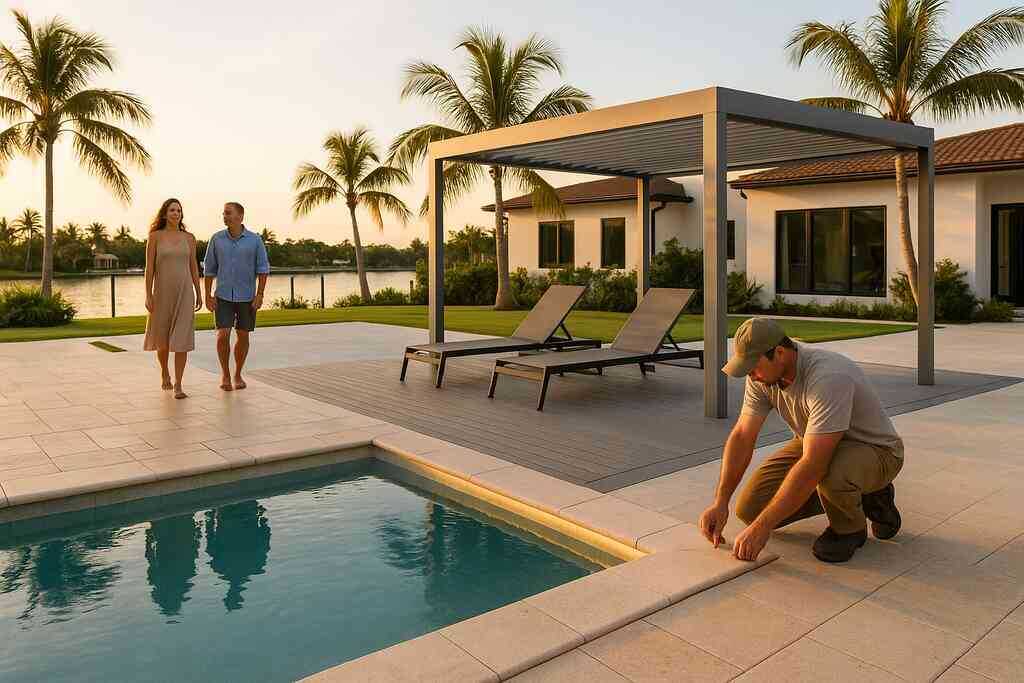 Choosing the Right Path Forward with South Florida Contractors
Local expertise from Boca Raton remodelers to West Palm Beach renovations
Regional insight separates an average build from an extraordinary oasis. Boca Raton Remodelers understand limestone drainage quirks near Intracoastal lots. West Palm Beach renovation teams anticipate clay pockets that shift during wet summers. Boynton Beach Remodelers track salt spray patterns that quickly corrode steel rails. For compact yards, homeowners trust local deck builders for backyard pools who translate tight dimensions into seamless lounging areas. Their hyper-local expertise keeps construction surprises off invoices.
Selecting a South Florida contractor with cross-county partnerships unlocks specialist talent for every stage. A West Palm Beach crew pours the slab while a Delray Beach Construction Company finishes coping details without delay. Coordinated scheduling prevents downtime and keeps permit inspectors moving. General contractors in South Florida orchestrate these handoffs like seasoned conductors. Consequently, homeowners witness steady progress rather than scattered job-site chaos. Local collaboration thus turns regional complexity into predictable momentum.
Creating an action plan schedule permit and build
Every successful deck begins with a written roadmap that clarifies tasks before demolition starts. Experienced South Florida general contractor teams divide the roadmap into design, engineering, permitting, procurement, and build phases. Designers finalize material palettes while engineers test soil bearing capacity and drainage velocity. Parallel processing shortens timelines because permit drawings can be submitted even as product orders ship. Homeowners who approve milestones quickly avoid holiday slowdowns that often affect supplier lead times. Regular status meetings keep everyone accountable and adjust sequencing when weather shifts unexpectedly.
Permitting remains the longest pole in the tent, yet proactive document packages accelerate reviews. Contractors attach hurricane anchoring calculations, drainage diagrams, and slip resistant pool deck materials specifications to anticipate examiner questions. Once the permit clears, crews receive a detailed Gantt chart that sequences labor and inspections precisely. Suppliers deliver travertine pavers to the Boca Raton warehouse store two days before cutting begins. This just-in-time logistics prevents pallets from staining lawns during heavy rain. Clear sequencing therefore protects budgets and landscapes alike.
Final checklist for material selection and contractor vetting
Before signing, homeowners should evaluate each material through performance, aesthetics, maintenance, and cost lenses. Compare heat reflective pool deck coatings’ temperature reductions against composite decking for pools’ color longevity. Review saltwater pool deck durability ratings when selecting fasteners or railings. Ask suppliers for slip coefficient certificates and verify warranties cover tropical humidity exposure. Document every promise in the contract to avoid memory gaps after the groundbreaking. Transparency here eliminates costly disputes later.
Vetting a builder follows a similar checklist that emphasizes license, insurance, portfolio, and communication style. Request references from recent coral stone decking Delray Beach installations and verify code compliance through municipality portals. South Florida contractor recommendations carry extra weight when they include photo-dated progress logs. Interview multiple home builders in Florida to benchmark clarity of proposals and depth of hurricane mitigation strategy. Finally, confirm bonded warranties transfer to future owners, protecting long-term resale value. A disciplined checklist today secures peace of mind tomorrow.
Frequently Asked Questions
Question: How do slip resistant pool deck materials compare to traditional finishes in the South Florida climate?
Answer: The combination of heat, humidity and sudden rain showers in South Florida makes traction a year-round concern. Modern slip resistant pool deck materials-such as silica-infused non-slip sealant for pool surround areas, spray-on micro-texture concrete overlays and naturally porous travertine pavers-maintain grip even when wet. Traditional broom-finished concrete gets slick once algae forms, while glazed tiles can become hazardous under a light drizzle. By choosing textured or chemically enhanced surfaces, you not only reduce fall risk but also gain an easier-to-clean deck that resists green buildup. South Florida Contractors can match you with vetted South Florida pool deck installers who understand how to profile slabs correctly and verify coefficient-of-friction ratings before final inspection.
Question: In the Pool Deck Material Comparison By South Florida Contractors blog, travertine pavers that Boca Raton homeowners love are highlighted. What makes travertine a smart long-term investment versus composite decking for pools?
Answer: Travertine excels in three areas important to South Florida homeowners: heat reflectivity, resale value and timeless aesthetics. Light-colored stone stays up to 20°F cooler than darker composite boards, meaning bare feet stay comfortable during August afternoons. Properly sealed travertine can last 30-40 years, so its higher upfront price is balanced by minimal replacement costs and strong curb appeal pool deck upgrades when you decide to sell. Composite decking for pools wins on low maintenance-you avoid annual sealing-but darker planks may fade under relentless UV and feel warmer without shade structures for pool decks. South Florida Contractors will connect you with Boca Raton Remodelers that can supply side-by-side samples and create a cost comparison pool deck materials worksheet so you can see the numbers and maintenance schedules for both options.
Question: What should I look for when hiring South Florida pool deck installers to ensure my deck is hurricane resistant and low maintenance?
Answer: First, verify the company is a licensed South Florida general contractor with current insurance and coastal anchoring experience. Ask to see details on hurricane resistant pool decks, such as concealed stainless-steel tie-downs for pavers, epoxy-set rebar in coping and moisture barriers for concrete decks. Next, confirm they specify low maintenance pool decking solutions like heat reflective pool deck coatings, algae resistant deck coatings and polymeric sand for paver joints that lock out weeds. Finally, request a written maintenance plan that includes inspection intervals, resealing timelines and pool deck drainage systems cleaning. The South Florida Contractors directory lets you filter installers near you by license status, reviews and specialties, so you get a short list of pros who tick every box.
Question: Can you explain the cost comparison of pool deck materials over their full life cycle, including resurfacing versus replacing?
Answer: Upfront, poured concrete ranges from $7-$12 per square foot, travertine pavers from $14-$18 and premium composite boards from $10-$15. Over 20 years, however, concrete often requires three to four reseals and at least one cool deck resurfacing near me style overlay, adding $5-$7 per square foot to its real cost. Travertine needs regular sealing but rarely full resurfacing, so total ownership cost remains stable. Composite may need color-restoration coatings after 10-12 years, but boards themselves usually stay structurally sound. When cracks, heaving or drainage failure appear, replacing rather than resurfacing may be cheaper long-term. A South Florida contractor can run numbers for both scenarios, factoring labor, materials, insurance discounts for slip resistance and hurricane upgrades, so you see a true apples-to-apples comparison.
Question: How do eco-friendly pool deck sealers and water permeable pool deck surfaces help me meet local regulations and protect my property?
Answer: Coastal municipalities now reward projects that reduce stormwater runoff and limit volatile organic compounds. Water permeable pool deck surfaces-like open-cell concrete pavers filled with crushed shell-channel rain into the soil instead of overloading drains, helping you comply with watershed ordinances and potentially lowering local fees. Eco-friendly pool deck sealers made with soy-based, low-VOC resins meet new air-quality standards while still blocking stains and salt intrusion. By pairing sustainable pool deck options Florida municipalities endorse with reflective additives that cut heat-island impact, you speed up permitting and safeguard your landscape from erosion. South Florida Contractors maintains a list of construction companies trained in these green methods, so you can choose a partner who delivers both environmental compliance and long-term durability.