
A homeowner called us after a thunderstorm pushed water through a window frame and into a hallway. That kind of panic is familiar. If you are reading this because your home feels one storm away from a headache, take a breath. The hard part is not just buying stronger products. The hard part is choosing upgrades that actually satisfy hurricane code compliance in South Florida without creating permit trouble later. In Miami-Dade, Broward, and Palm Beach, the right upgrade depends on the opening, the structure, and the paperwork.
1) The impact window upgrade that stops windborne debris before it becomes a structural problem
Why Miami-Dade homes face a different window standard than inland South Florida properties
Miami-Dade homes live under tougher expectations than many inland South Florida properties. That is not marketing language. It is the reality of coastal wind exposure, debris risk, and stricter approval pathways. If you are comparing options, start with Miami-Dade building code compliance for 2026 renovations and then check how the product fits your exact opening.
The question we hear most often is simple: “Do I really need impact glass?” Sometimes yes, sometimes not. The answer depends on exposure, insurance goals, and South Florida building codes. A good hurricane impact window installer South Florida should explain the difference between a window that merely looks sturdy and one that has proper approvals. You want a system, not a sales pitch.
How to compare impact glass ratings, frame quality, and certified installation without getting lost in sales language
Here is the part most homeowners miss. The glass is only one piece. Frame reinforcement, mullion design, anchors, and installation quality matter just as much. If a representative cannot explain the product approval, keep shopping. Use South Florida contractors for impact window installation 2026 as a reference point, then ask for the actual rating documents.
On recent projects, we have seen homeowners focus on visible glass thickness and ignore the frame. That creates disappointment later. A window can be strong and still fail if the anchor spacing is wrong or the surrounding opening is compromised. Ask for uplift and impact documentation in plain English. If the explanation sounds vague, it usually is.
When a hurricane impact window installer South Florida should also inspect surrounding stucco, headers, and seals
A solid installer should inspect the opening, not just the unit. Cracked stucco, rotten framing, and weak header conditions can quietly undermine a new window. That matters even more in older homes and remodeling-heavy neighborhoods. In waterfront areas, moisture finds weak points fast.
One client in Broward thought the window project was finished until we found hairline cracking around a header. The issue was not dramatic, but it mattered. We repaired the opening first, then installed the unit correctly. That saved them from chasing leaks for months. This is why you should also think like a home remodeling contractor South Florida owner, not just a window buyer.
Why permit paperwork, product approvals, and final inspection matter as much as the window itself
Permits are not the annoying extra; they are part of the protection. For a Miami-Dade permit, you usually need approved product documentation, contractor information, and final inspection signoff. Skipping that step can create problems with insurance, resale, and code enforcement. It can also slow down future work.
If you want a cleaner process, review Miami-Dade permit steps for hurricane-resistant remodels. Then verify that your contractor understands the local process before signing. A rushed install with no paperwork is not a bargain. It is a future dispute.
2) The roof system upgrade that keeps the whole house from lifting in a storm
What hurricane roof tie-downs actually do in a South Florida roofing system
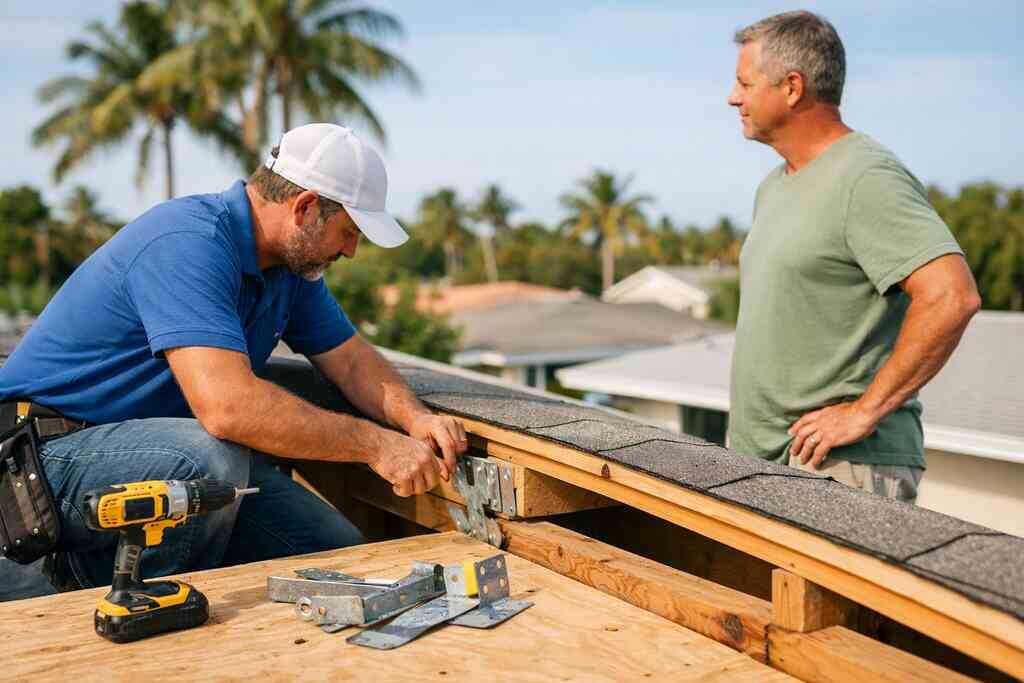
A roof does not just keep rain out. It resists uplift. Hurricane roof tie-downs connect the roof structure to the walls and foundation path in a way that helps the building stay intact under wind pressure. That is why a roofing conversation in South Florida should never stop at shingles.
If you are comparing contractors, start with Hurricane roof code compliance in South Florida. Then ask how the tie-downs relate to the whole load path. The best roofing contractor South Florida will explain the connections without jargon. That matters more than a glossy brochure.
When reroofing means more than shingles and why roof deck attachment can make or break compliance
Reroofing is often sold as a surface upgrade. It is not always that simple. In many homes, the real issue is the roof deck attachment beneath the surface. If the deck is under-fastened, the rest of the system cannot perform properly. That is where compliance problems start.
A licensed roofer in Miami for hurricane roof upgrades should inspect deck condition, fastener spacing, and visible signs of movement. If you are in Broward, Roofing contractor in Broward County for storm-resistant roofs is the kind of resource that can help frame the right questions. The wrong patch job may look neat. It still may not protect your home when the pressure rises.
How a roofing contractor South Florida should explain underlayment, nailing patterns, and uplift resistance in plain English
A good roofer should explain the system like a coach, not a salesman. Underlayment helps block water if the outer layer is damaged. Nailing patterns affect how securely each section stays attached. Uplift resistance tells you how well the roof resists wind trying to peel it away.
If those terms sound fuzzy, ask for a drawing. Ask for the product approval. Ask where the edges, hips, and ridges are detailed. What we have seen in 2026 specifically is that homeowners feel more confident once the contractor slows down and explains the load path. Clarity is a sign of competence.
Which signs suggest your roof needs a deeper structural conversation, not just a patch job
A patch is fine for a temporary leak. It is not enough for repeated movement, lifted edges, or chronic ceiling stains. Watch for these signs:
- Shingles curling or loosening near edges
- Water marks that return after heavy rain
- Soft spots or sagging in the deck
- Rusted fasteners around critical areas
- Previous repairs that do not match the surrounding roof
If you see two or more of those, ask for a deeper review. A South Florida concrete contractor may not be the right trade here, but the structural mindset is the same. You want someone who understands the whole system, not just the visible symptom.
3) The shutter strategy that buys time when the forecast turns ugly
How to choose between accordion shutters, roll-downs, panels, and impact glass for South Florida homes
There is no single shutter answer for every South Florida house. Accordion shutters are practical for many openings. Roll-downs offer speed and convenience. Panels cost less upfront, but they require storage and handling. Impact glass reduces setup time entirely. The right choice depends on budget, exposure, and how quickly you want the home secured.
A hurricane shutter contractor should compare access, maintenance, and daily use, not just price. In some homes, impact glass makes the most sense on front-facing openings, while shutters handle the rest. In others, roll-downs are worth the premium because the homeowner travels often. The best decision is the one you will actually use under pressure.
Where hurricane shutter contractor work often fails when attachment points are rushed or corroded
Shutters fail at the attachment points more often than people expect. Rust, stripped fasteners, old anchors, and poor substrate conditions all create weak links. The mistake we see most often is assuming the metal itself is the problem. It is usually the connection to the wall.
That matters even more for an oceanfront home contractor or a waterfront home builder South Florida project. Salt air attacks hardware. Paint hides corrosion. If a contractor does not inspect the anchors carefully, the shutter may look ready and still underperform when it counts.
Why oceanfront home contractor and waterfront home builder South Florida projects demand extra corrosion awareness
Coastal projects need a different eye. Stainless fasteners, protective coatings, and better moisture control details become part of the conversation. That is not overbuilding; it is realism. A home near Biscayne Bay or along the Atlantic side faces conditions that inland properties do not.
This is why coastal home builder Florida experience matters. Salt, wind, and repeated moisture cycles are relentless. The same applies to a South Florida custom home builder working on elevated or open-exposure homes. Corrosion resistance is not optional in these settings. It is part of durability.
What to verify with HOA rules, permit requirements, and egress concerns before ordering anything
Before you order shutters, check your HOA rules, permit requirements, and emergency exit needs. Some communities limit color, visibility, or hardware style. Some openings also need to remain usable for egress. That means you must be able to exit quickly in an emergency.
A South Florida HOA permit review can slow the process, but that delay is better than a correction order later. If you live in a condo or townhome, the rules may be even tighter. Ask first. Buy later. That order saves money.
4) The garage door and opening protection most homeowners forget until the last minute
Why the garage door can be one of the weakest pressure points in a storm
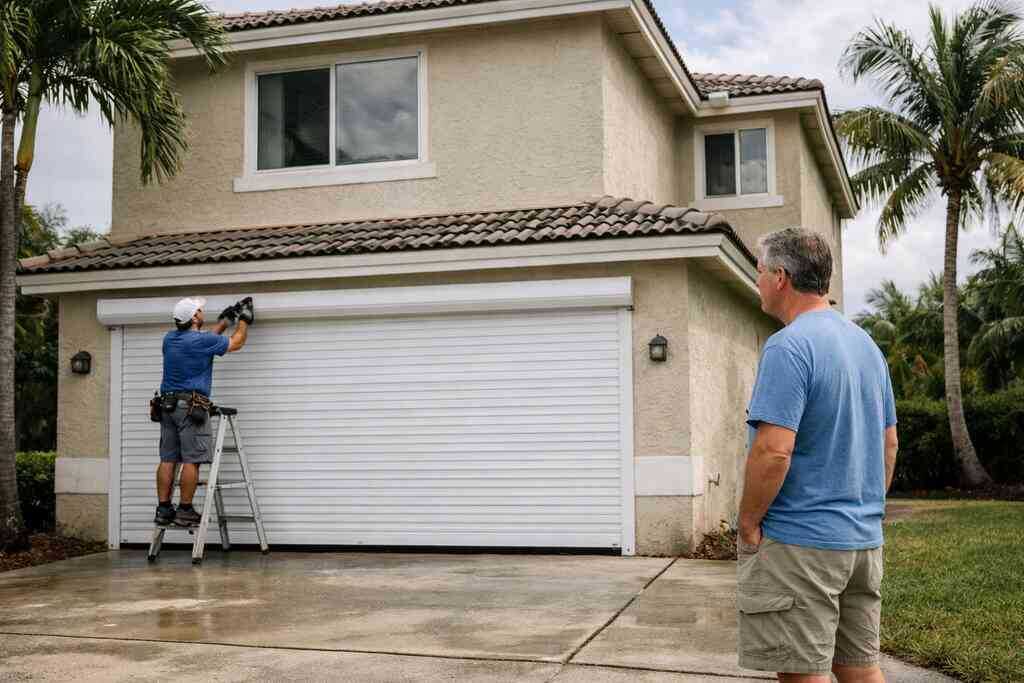
The garage door is often the largest opening in the house. That makes it a pressure point. If it fails, wind can rush in and increase internal pressure fast. That can push against the roof and other openings in ways homeowners do not expect.
This is why garage protection belongs on the same list as windows and roofs. Many homeowners focus on the visible sides of the house and ignore the biggest opening in the front. That is a costly oversight. It is also a common one.
How bracing systems, reinforced tracks, and wind-rated doors affect hurricane code compliance
A wind-rated door is more than a stronger panel. Bracing systems help the door resist bending. Reinforced tracks help it stay aligned. Hardware matters too. The whole assembly must work together. A door that looks heavy can still fail if the tracks or supports are weak.
A licensed contractor Miami-Dade or licensed contractor Broward County should be able to explain the door rating and installation method. If they only mention style or insulation, keep asking questions. A door upgrade should support hurricane code compliance, not merely improve curb appeal.
When a permit and inspection are required for door replacement in Miami-Dade and across South Florida
Door replacement often triggers permit review, especially when structural openings, wind ratings, or framing changes are involved. Do not assume a simple swap avoids paperwork. In Miami-Dade and across South Florida, the permit process protects both you and the next inspector. It also helps document that the opening was done properly. If you want a broader view of county-level process, a general contractor near me South Florida search should still lead you back to license verification. Better yet, use How to verify a South Florida contractor license before anyone touches the opening. Paperwork first. Demo second.
What to ask a licensed contractor Miami-Dade or licensed contractor Broward County before the opening is upgraded
Ask direct questions. You will get better answers. Use these:
- Is the door wind-rated for this opening?
- Does the frame need reinforcement?
- Will the project require a permit?
- Who handles inspection scheduling?
- What documents will I keep for insurance?
A good contractor welcomes those questions. A vague contractor resists them. That difference tells you a lot before you sign.
5) The exterior wall and envelope upgrades that keep water from turning a storm into a gut job
How stucco repairs, flashing, sealants, and window-to-wall transitions protect the building envelope
Water rarely enters through one giant hole. More often, it sneaks through transitions. Stucco cracks, missing flashing, failed sealants, and weak window-to-wall details create the path. If the envelope is loose, the storm does not need to be dramatic to create damage.
That is why South Florida luxury renovation projects often start with an envelope review. The visible finish matters less than the water management behind it. A careful contractor checks transitions before paint. That saves walls, flooring, and cabinets later. It also protects nearby trim and finishes from hidden moisture.
When South Florida concrete contractor or South Florida foundation repair work becomes part of hurricane resilience
Sometimes the issue is not above the window line. It is below it. A South Florida foundation repair review may be needed if water collects near the slab, cracks widen, or doors start binding. A South Florida concrete contractor may also help address spalling, settlement, or exterior slab separation.
One homeowner in Miami thought they had a wall leak. The real issue was a tiny slab slope problem that kept pushing water toward the threshold during heavy rain. Once we corrected drainage and repaired the affected concrete edge, the recurring leak stopped. Small movement can create big indoor problems.
Why coastal home builder Florida projects often include corrosion-resistant fasteners and moisture control details
On coastal jobs, the details matter more than the brochure. Corrosion-resistant fasteners last longer. Better flashing resists hidden intrusion. Moisture control details reduce the chance that a small leak becomes a large interior repair. That is why a coastal home builder Florida approach is so valuable.
The same logic applies to an energy efficient remodeler South Florida or sustainable home builder South Florida mindset. Durability and efficiency often overlap. Dry assemblies last longer. Better-sealed openings waste less conditioned air. Practical improvements can do both jobs at once.
How to tell whether your home needs a targeted repair or a broader South Florida luxury renovation approach
If damage is isolated, a targeted repair may be enough. If multiple systems are aging together, a broader plan may make more sense. For example, failing stucco, outdated windows, and recurring moisture around a kitchen wall can justify a larger scope. In that case, the work may be more like a South Florida design build project than a one-off repair.
The key is honesty. Do not let anyone oversell a full renovation if a focused fix will do. At the same time, do not keep patching a home that is telling you it needs more. Good judgment saves money.
6) The drainage and hardscape fixes that stop water from attacking your slab, pool, and patio
Why grading, gutters, downspouts, and yard drainage matter as much as the obvious storm upgrades
A strong roof does not help much if water pools at the slab. That is why drainage belongs on the hurricane upgrade list. Proper grading moves water away from the structure. Gutters collect runoff. Downspouts direct it safely. Yard drainage helps the soil stop acting like a sponge.
This is not glamorous work. It is essential work. In Broward and Miami-Dade, heavy rain can overwhelm a small drainage mistake fast. If the ground slopes toward the home, the storm finds the easiest path. It always does.
How pool deck contractor South Florida, paver installation South Florida, and screen enclosure contractor South Florida work can affect water flow
Hardscape changes can help or hurt drainage. A pool deck contractor South Florida should think about slope, runoff, and slip resistance. A paver installation South Florida project needs proper base prep and edge restraint. A screen enclosure contractor South Florida should also avoid creating new channels that send water back toward the house.
If you are planning an outdoor project, coordinate it with drainage. That is the part people forget. The deck should not trap water. The pavers should not settle into a bowl. And the enclosure should not redirect stormwater into the wrong corner of the yard.
When patio surfaces, driveway edges, and expansion joints should be reviewed before the next hurricane season
Look at surfaces with a critical eye. Cracked patio joints, sunken driveway edges, and clogged expansion joints can channel water toward the structure. They also create trip hazards when storms leave debris behind. A South Florida flooring installer or South Florida tile contractor may not handle the exterior grading itself, but the same precision mindset helps indoors and out.
If your patio surface is older, ask whether it still sheds water correctly. If pavers have shifted, fix them before the next rainy stretch. The smallest low spot can become a standing-water problem. Standing water becomes a longer repair conversation.
What a South Florida permit process conversation should cover for exterior concrete, paving, and decking changes
Not every hardscape job is permit-free. Talk through the South Florida permit process before you pour, pave, or expand. Ask whether the scope touches drainage, setbacks, HOA standards, or existing structures. If you are near the coast, those details matter even more.
A South Florida kitchen remodeler or South Florida bathroom remodeler may not seem relevant here, but the same lesson applies: scope defines the permit. If the project changes structure or water management, assume review is needed. That assumption keeps you out of trouble.
7) The permit and contractor checklist that keeps a good upgrade from becoming a costly redo
How to verify a contractor license before hiring for a Miami-Dade permit or a broader South Florida project
Before you sign anything, verify the license. Do not rely on a truck logo, a website, or a confident voice. Use the state’s lookup tools and confirm the scope matches the job. If you need a quick starting point, Florida DBPR license check steps for property owners 2026 is worth reading.
This matters for every project, from a South Florida home additions job to a second story addition South Florida plan. A licensed contractor Palm Beach County, licensed contractor Broward County, or licensed contractor Miami-Dade should have no problem showing proof. If they hesitate, that is your answer.
Why contractor insurance requirements Florida, contractor bonding requirements, and lien waiver Florida documents protect the homeowner
Insurance is not a courtesy. It is protection. Bonding helps provide another layer of accountability. A lien waiver Florida document helps confirm you are not paying twice for the same labor or materials. These documents matter because construction disputes often begin with paperwork, not hammers.
A solid South Florida contractor license and insurance verification process should happen before deposit, not after the first deliverable. Ask for certificates, keep copies, and read them. You do not need to be a lawyer. You do need to be careful.
How change order contractor Florida issues happen and how to keep scope, materials, and inspections aligned
Change orders happen when the scope shifts. Sometimes the change is legitimate. Sometimes it happens because the original estimate was too vague. The best way to reduce problems is to define materials, finishes, and inspection responsibilities clearly from the start.
One homeowner in a condo renovation learned this the hard way after a hidden wall condition turned into a pricing dispute. The issue was not the repair itself. It was the missing paperwork trail. A clear written scope would have prevented the argument. That is why change order contractor Florida language should never be left undefined.
When South Florida HOA permit rules, condo renovation South Florida approvals, and townhome remodeling South Florida restrictions slow the process down
HOAs and condo boards can slow a project, but they rarely do so without reason. They may need product approvals, color samples, engineering details, or noise controls. Townhomes add another layer because shared walls and limited access can complicate work. That is normal, not personal.
If you are planning condo renovation South Florida work or townhome remodeling South Florida upgrades, build time for approval into your schedule. The same applies to Ultimate Guide to Hiring South Florida Contractors for Additions and Best South Florida Bathroom Remodeler Options for 2026 Projects. The more coordinated the paperwork, the fewer surprises later.
You do not have to figure this out alone, and you do not have to figure it all out today. Start with one phone call, ask for license and insurance proof, and get three written quotes from active local pros. If you are comparing options for a storm-ready upgrade, use South Florida Contractors to find a contractor South Florida homeowners can actually verify before work begins.
Frequently Asked Questions
Question: What should I verify before hiring a hurricane impact window installer South Florida for a Miami-Dade permit project?
Answer: Before hiring anyone, verify the contractor license, insurance, bonding, and product approvals. For hurricane code compliance in South Florida, the window is only part of the job; the frame, anchors, opening condition, and installation method all matter too. A reputable hurricane impact window installer South Florida should be able to explain whether the product fits your opening, what documents are needed for the Miami-Dade permit, and how final inspection will be handled. If the contractor cannot clearly explain South Florida building codes or Florida Building Code 2026-related permit expectations, keep looking. South Florida Contractors can help you find a contractor South Florida homeowners can compare by area, but you should always confirm licensing and insurance before signing anything.
Question: How do I know whether my home needs hurricane roof tie-downs, a reroof, or a deeper structural review from a roofing contractor South Florida?
Answer: If you are seeing lifted shingles, repeated leaks, soft spots, rusted fasteners, or signs that the roof deck may be under-attached, the project may be bigger than a simple patch. A roofing contractor South Florida should inspect the roof system as a whole, including deck attachment, underlayment, edge details, and the load path that hurricane roof tie-downs support. In South Florida, roof upgrades are not just about appearance; they are about hurricane code compliance and how well the structure resists uplift. If your home is in Miami-Dade, Broward, or Palm Beach County, ask for documentation, permit guidance, and written scope before work begins. South Florida Contractors is a good place to start when you need to find a contractor South Florida residents can verify for roofing, structural, or remodeling work.
Question: In Top 7 Hurricane Code Upgrades for Miami Dade Homes, which upgrade gives the fastest protection if a storm is approaching: shutters, impact glass, or garage door reinforcement?
Answer: The fastest option depends on your home and your daily routine, but many homeowners choose a combination approach. Impact glass offers convenience because it is always in place, while a hurricane shutter contractor can provide accordion shutters, roll-downs, or panels for openings that do not need everyday access. Garage door reinforcement is also critical because the garage can become a major pressure point during a storm. The best answer is not one product alone; it is the system that gives you reliable coverage, proper permits, and a setup you will actually use under pressure. A licensed contractor Miami-Dade, licensed contractor Broward County, or licensed contractor Palm Beach County should be able to explain the tradeoffs clearly and help you choose what fits your budget and hurricane code compliance goals. Always verify licensing and insurance before hiring.
Question: Can South Florida Contractors help with more than storm protection, such as South Florida concrete contractor, South Florida foundation repair, or South Florida luxury renovation work?
Answer: Yes. Storm-ready upgrades often lead into broader exterior and interior improvements, especially when water intrusion, drainage, cracked stucco, or slab movement are part of the problem. That is where a South Florida concrete contractor or South Florida foundation repair professional may be needed alongside a home remodeling contractor South Florida homeowners trust for coordinated repairs. If your project grows into a South Florida luxury renovation, South Florida design build, or even a South Florida home additions plan, the same rules still apply: verify the license, confirm insurance and bonding, and make sure the scope is aligned with the South Florida permit process. South Florida Contractors is useful because it helps homeowners compare options across the region, including coastal home builder Florida experience, oceanfront home contractor work, and waterfront home builder South Florida projects, while reminding you to check credentials before you proceed.
Question: What permits and documents should I expect for a condo renovation South Florida project or townhome remodeling South Florida upgrade that includes hurricane code compliance?
Answer: For condo renovation South Florida and townhome remodeling South Florida projects, you should expect a combination of building permits, HOA or association approvals, product documentation, and sometimes engineering-related paperwork depending on the scope. If the work affects windows, doors, roofing, structural openings, or exterior components, the South Florida permit process becomes even more important. You may need a Miami-Dade permit, Broward County permit, or Palm Beach County permit depending on the location, and the contractor should know how to manage the paperwork without asking you to cut corners. Ask for clear written scope, product approvals, contractor licensing Florida verification, contractor insurance requirements Florida proof, contractor bonding requirements details, and lien waiver Florida documents as the job progresses. South Florida Contractors helps homeowners find a contractor South Florida property owners can vet carefully, which is especially important when the project touches hurricane code compliance, HOA rules, or structural work.