
Coastal home construction needs special codes because salt air, hurricane winds, storm surge, and flood risk can turn a normal-looking house into a failure point. In South Florida, the code is designed to keep the structure attached, the roof in place, and the openings protected when conditions get severe.
If you are reading this because a permit issue is suddenly slowing your project, you are not alone. This part is genuinely confusing for most people, especially when a remodel looks simple on paper but triggers structural or hurricane requirements in the field.
Key Takeaways
- Coastal codes exist because wind, water, and corrosion act together; what works inland may fail quickly in South Florida.
- Palm Beach County, Broward County, and Miami-Dade can require different levels of review depending on location, exposure, and scope of work.
- Exterior changes often trigger added scrutiny for impact windows, shutters, roofing, doors, and openings because those parts protect the whole home.
- Building departments are protecting structural connections, flood resistance, and occupant safety, not just paperwork.
- Before you sign, verify licensing, insurance, bonding, and permit responsibility with any contractor you hire.
When a coastal home looks fine but the code says it is not
A coastal house can look solid and still fail the basic assumptions behind South Florida building codes. Salt air corrodes fasteners, high winds pressure walls and roofs from unusual angles, and flood exposure changes how lower walls, utilities, and exterior materials have to perform. That is why South Florida contractors often treat coastal work as a different category from inland remodeling.
Why salt air, wind pressure, and flood exposure change the rules for South Florida contractors
Coastal conditions attack a home in layers. Salt degrades metal connectors, wind tries to peel the roof system apart, and moisture works into openings that would be acceptable farther inland. That is why a licensed contractor Palm Beach County, licensed contractor Broward County, or licensed contractor Miami-Dade will often look at the same project through a hurricane-code lens, not just a design lens.
Here is the part most homeowners miss: a wall, window, or roof detail can be perfectly attractive and still fail the performance requirements for coastal exposure. That matters for a general contractor near me South Florida search because the best fit is not just someone who can build; it is someone who understands hurricane code compliance and the South Florida permit process.
The National Institute on Aging notes that home environments need to remain safe and resilient as conditions change, which is especially true for aging in place contractor South Florida work near the coast. That is not just a comfort issue. It is a durability issue, too. For more background on contractor selection, see How To Choose The Right Contractor.
How Palm Beach County, Broward County, and Miami-Dade permit reviews can push a project beyond basic remodel work
Permit review in South Florida can shift a project from simple finishes to structural review very quickly. A kitchen upgrade may stay straightforward, but a wall removal, opening enlargement, lanai expansion, or second story addition South Florida project can bring in engineering, wind-load documentation, and county-specific review requirements. The same is true for condo renovation South Florida work or townhome remodeling South Florida projects where HOA and association rules add another layer.
A practical comparison helps:
County review areaWhat often gets extra attentionWhy it mattersPalm Beach County permitStructural changes, openings, exterior additionsCoastal exposure and wind resistanceBroward County permitRoof work, window and door changes, additionsWind loads and product approvalsMiami-Dade permitOpenings, impact systems, exterior assembliesSevere wind-borne debris standardsThat table does not replace permit review, but it shows why the same remodel can feel “simple” to a homeowner and still become a code-driven project for a South Florida custom home builder or South Florida design build team. A project near the Intracoastal, in a Boca Raton waterfront neighborhood, or along Miami-Dade’s coastline may face more scrutiny than the same scope farther inland.
Which projects trigger extra scrutiny for hurricane impact windows, roofing contractor South Florida work, and exterior openings
Some scopes almost always invite closer review because they affect the shell of the house. These include hurricane impact window installer South Florida work, hurricane shutter contractor installations, roofing contractor South Florida replacements, and any change to doors, sliders, or opening sizes. Once you alter the building envelope, you are in hurricane code compliance territory. Watch for these common triggers: – Replacing standard windows with larger openings
- Converting a covered patio into a sunroom contractor South Florida enclosure
- Changing roofing systems or sheathing
- Adding a lanai builder South Florida structure or screen enclosure contractor South Florida assembly
- Opening a wall for an outdoor kitchen contractor South Florida or pool deck contractor South Florida project
- Adding glass doors to a waterfront home builder South Florida layout

I once saw a straightforward patio upgrade in a Broward County neighborhood become a much bigger permit conversation because the new opening changed the load path and the shutter requirements. The homeowner expected finishes only. Instead, the project needed structural sign-off before anyone could move forward. That delay was frustrating, but it also prevented a bad install from becoming a storm problem later.
What the building department is really protecting when you build near the water
Building departments are protecting the home’s structure, the people inside it, and the property’s ability to survive wind and water. On coastal jobs, the code focuses on load paths, corrosion resistance, impact protection, and roof-to-wall connections because those are the first failures that show up in a storm. For a coastal home builder Florida project, that is the difference between cosmetic work and real resilience.
Why coastal home builder Florida projects need stronger connections, better materials, and hurricane roof tie-downs
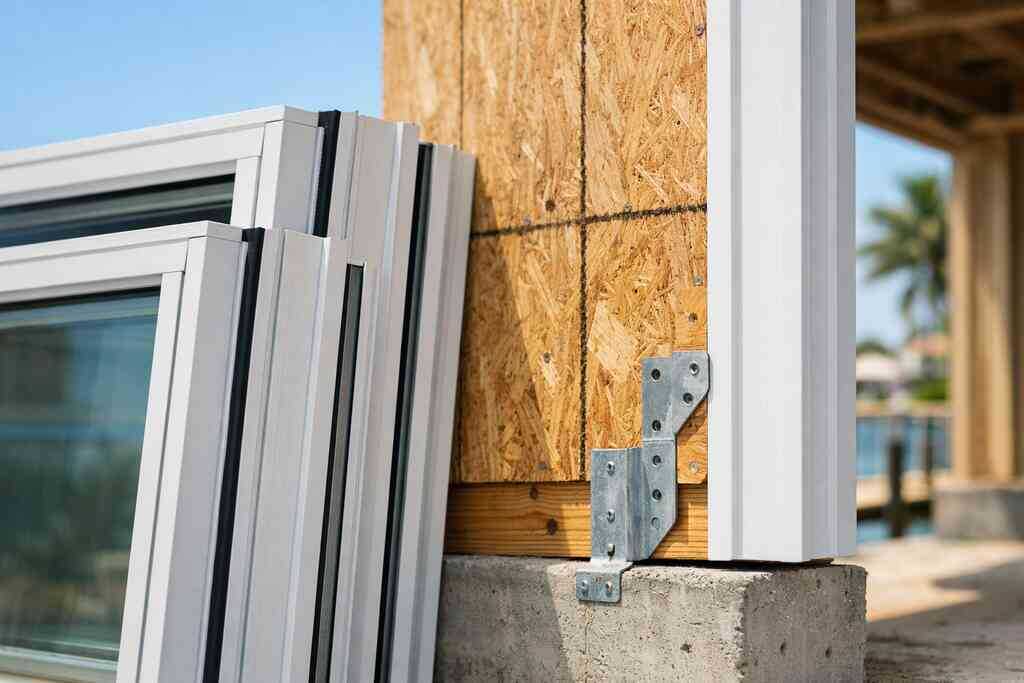
A coastal home builder Florida team has to think about how every part of the structure connects. That means stronger clips, better fasteners, more careful flashing, and hurricane roof tie-downs that help the roof stay attached when wind uplift increases. It also means choosing materials that hold up against corrosion instead of assuming standard residential parts will last.
On recent South Florida home additions and South Florida luxury renovation projects, the detail that saves time later is often invisible after the drywall goes up. You may not see the metal connectors, but they are doing the real work. The same goes for South Florida concrete contractor work and South Florida foundation repair near the coast, where water movement and soil conditions can affect settlement and slab performance.
If you are planning a South Florida kitchen remodeler or South Florida bathroom remodeler project in a coastal home, do not assume interior work stays inside the permit conversation. Utility changes, wall modifications, and exterior venting can still trigger review. For outdoor work, a useful reference is Best 2026 Tips For Outdoor Kitchen, especially if your plans include a grill wall, hood, or covered patio extension.
Here is a simple way to think about the code:
- Stronger connections keep the structure tied together.
- Better materials resist corrosion and moisture.
- Impact-rated openings protect the envelope.
- Roof tie-downs reduce uplift risk.
- Permits and inspections verify that the work matches the approved plans.
If you are trying to find a contractor South Florida for this kind of work, start with proof, not promises. A good contractor licensing Florida check should include active license status, contractor insurance requirements Florida, and contractor bonding requirements when applicable. For a step-by-step check, use How To Verify A South Florida, then confirm the scope, permit responsibility, and lien waiver Florida language before demolition starts.
Most homeowners do not need to master every code section. They do need a contractor who knows when a project becomes structural, when a county permit changes the scope, and when hurricane code compliance is nonnegotiable. If you want a practical starting point, South Florida Contractors makes it easier to compare local options across Palm Beach, Broward, and Miami-Dade before you call. Search the directory, review the project fit, and call 18443112703 to start with a licensed professional who understands South Florida realities.
Frequently Asked Questions
Question: Why does coastal home construction need special codes in South Florida, especially for exterior and structural work?
Answer: Coastal home construction needs special codes because wind, salt air, flood exposure, and storm surge can damage a home much faster than inland conditions. In South Florida, that means the structure has to stay connected, the roof has to resist uplift, and openings like windows and doors have to be protected. That is why South Florida building codes, hurricane code compliance, and the South Florida permit process matter so much on exterior and structural projects.
A licensed contractor Palm Beach County, licensed contractor Broward County, or licensed contractor Miami-Dade will usually look at these projects through a hurricane-resistance lens, not just a design lens. Even a simple-looking remodel can trigger permit review if it affects load paths, roof systems, or exterior openings. If you are trying to find a contractor South Florida, South Florida Contractors is a practical starting point because the directory helps homeowners compare professionals who understand coastal requirements, permit coordination, and the realities of working in South Florida.
Question: How does the blog Why Does Coastal Home Construction Need Special Codes apply to a home remodeling contractor South Florida project?
Answer: The main point of Why Does Coastal Home Construction Need Special Codes is that coastal homes are not judged only by appearance; they are judged by how they perform under wind, water, and corrosion. That matters for any home remodeling contractor South Florida project that touches walls, roofs, windows, doors, or exterior assemblies. A kitchen remodel, bathroom remodel, or interior update may seem simple, but once plumbing, structural changes, or exterior venting are involved, the project can enter permit territory quickly.
This is especially true for South Florida kitchen remodeler work, South Florida bathroom remodeler work, and South Florida luxury renovation projects where the layout changes or the home is near the coast. The safest approach is to verify licensing, insurance, and permit responsibility before demolition starts. South Florida Contractors helps homeowners compare local options and connect with professionals who understand hurricane code compliance, county permit review, and the difference between cosmetic work and regulated construction.
Question: When do hurricane impact window installer South Florida jobs and roofing contractor South Florida work need extra permit review?
Answer: These jobs often need extra review whenever the exterior shell of the home changes. Replacing windows, enlarging openings, changing doors, upgrading roofing systems, or modifying shutters can all trigger permit and inspection requirements because they affect the building envelope. In a coastal area, those details are not minor; they are part of the home’s defense against wind-borne debris and storm pressure.
A hurricane impact window installer South Florida project may require product approvals and code-compliant installation methods, while a hurricane shutter contractor may need to verify attachment and coverage details. The same goes for roofing contractor South Florida work, especially when there are concerns about hurricane roof tie-downs, roof-to-wall connections, or the condition of the decking. If you are planning exterior work, do not skip permits or assume the old setup is automatically acceptable. South Florida Contractors can help you find a contractor South Florida who understands these requirements and works within the South Florida permit process.
Question: What should I check before I hire a coastal home builder Florida or South Florida custom home builder?
Answer: Before hiring any coastal home builder Florida or South Florida custom home builder, confirm the basics first: active licensing, insurance, bonding when applicable, and clear responsibility for permits. You should also ask how they handle hurricane code compliance, county-specific review, inspections, and change orders. In coastal areas, those details matter just as much as design and price.
It is also smart to ask whether they have direct experience with oceanfront home contractor work, waterfront home builder South Florida projects, South Florida home additions, and second story addition South Florida builds. These projects often involve structural engineering, wind-load considerations, and coordination with the Palm Beach County permit, Broward County permit, or Miami-Dade permit process. South Florida Contractors exists to help homeowners compare professionals in one place, but the final step is always verification. A good contractor should be able to explain the scope clearly and provide documentation before work begins.
Question: Can South Florida Contractors help me find specialists for lanai builder South Florida, screen enclosure contractor South Florida, or outdoor kitchen contractor South Florida projects?
Answer: Yes. South Florida Contractors is designed to help homeowners connect with the right type of professional for the project, whether that is a lanai builder South Florida, screen enclosure contractor South Florida, or outdoor kitchen contractor South Florida. These projects often look simple from the outside, but they can involve structural connections, footings, roof tie-ins, drainage, utility routing, and permit review. In coastal communities, those issues are even more important because wind and moisture can affect the long-term performance of the work.
For example, a screen enclosure contractor South Florida project may need to account for wind exposure and attachment details, while an outdoor kitchen contractor South Florida job can involve gas, electrical, and covered-structure requirements. If the work affects a pool deck contractor South Florida layout, paver installation South Florida area, or surrounding exterior finishes, code review may broaden further. South Florida Contractors helps you start with the right match, but you should still verify the contractor license, insurance, and permit plan before signing anything.
Question: How do South Florida building codes affect condo renovation South Florida and townhome remodeling South Florida projects?
Answer: Condo renovation South Florida and townhome remodeling South Florida projects are often affected by two layers of rules: the building code and the association or HOA rules. That means the work may need permit approval, structural review, and condo or HOA approval before construction can begin. Even interior changes can become complicated if the project involves walls, plumbing, electrical changes, shared systems, or exterior components.
This is where a South Florida design build approach can be helpful, because it keeps planning, permitting, and construction coordination in one process. It is especially useful for South Florida flooring installer, South Florida tile contractor, and South Florida cabinet maker work when the project ties into a larger remodel. If you are navigating a South Florida HOA permit or a building manager’s rules, it is wise to work with a contractor who understands the process and can explain what is required. South Florida Contractors helps you compare professionals, but always verify the details directly and never start work without the proper approvals.