
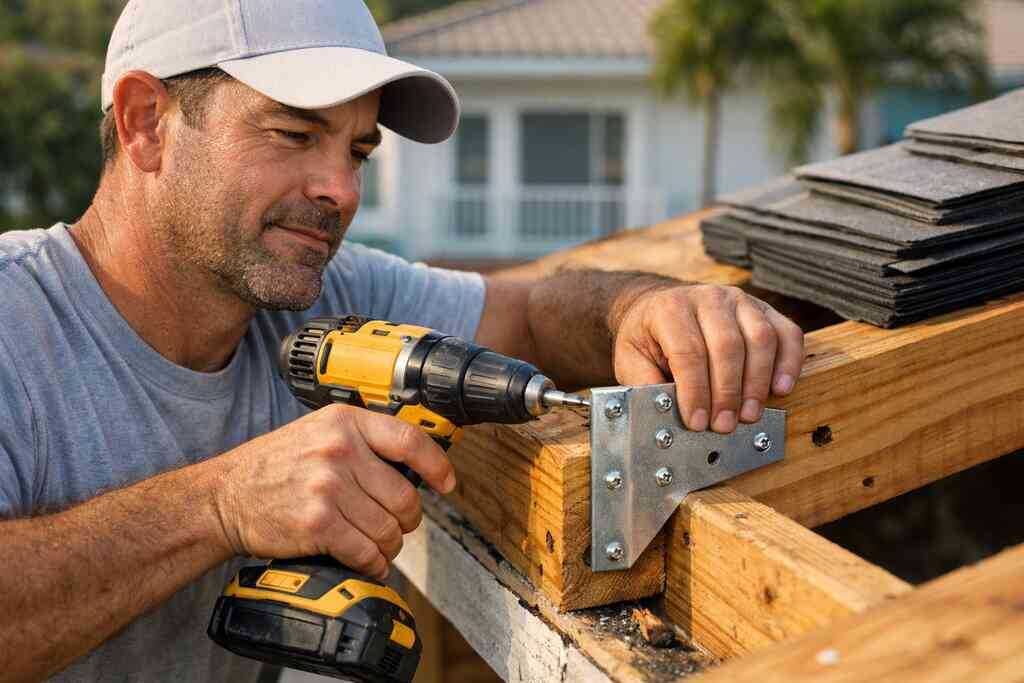
South Florida needs hurricane roof tie-downs because high winds try to lift a roof off a house, not just push it sideways. In Palm Beach, Broward, and Miami-Dade, stronger wind exposure and hurricane code requirements make roof-to-wall connections a structural necessity, not an upgrade. If you are worried after a storm, that concern is justified.
Key Takeaways
- Hurricane roof tie-downs help keep roof trusses attached to the walls when wind uplift tries to peel the roof system away.
- Coastal South Florida homes face higher structural demands because wind, corrosion, and water intrusion all work against the roof assembly.
- Roof deck attachment matters as much as the straps; weak nailing or damaged sheathing can fail even when the framing looks solid.
- Florida Building Code compliance and local permit review matter for reroofing, structural upgrades, and hurricane-code compliance.
- Before hiring a roofing contractor South Florida homeowners should verify licensing, insurance, bonding, and permit responsibility rather than assuming it is all included.
Why a roof in South Florida fails differently than one inland
A South Florida roof fails differently because hurricane winds create uplift-resistance problems, not just visible shingle damage. The weak point is often the connection between the roof structure and the walls. That is why hurricane roof tie-downs, roof deck attachment, and roof-to-wall connection details matter so much here.
How hurricane roof tie downs keep roof trusses from peeling away in a wind event
Hurricane roof tie-downs help keep roof trusses from peeling away by transferring wind loads into the wall framing and, ultimately, the structure below. Without that load path, strong gusts can loosen the roof system piece by piece. This is exactly why wind uplift protection is treated as a structural issue in South Florida hurricane roofing.
On a recent job, a homeowner near a coastal corridor had no obvious roof leak, but the attic showed fastener movement and a few lifted truss connections after a storm. The roof did not “fail” in one dramatic moment. It weakened in stages, which is how many South Florida roofs get in trouble.
Here is the part most homeowners miss: a roof can look intact from the street and still have a compromised connection in the attic. That is why a roof inspection after storm events should include more than shingles and flashing. It should look at framing, connectors, and any signs of separation.
Why coastal exposure in Palm Beach, Broward, and Miami-Dade changes the structural math
Coastal exposure changes the structural math because wind speed, salt air, and moisture all increase risk. In Palm Beach County, Broward County, and Miami-Dade, the same roof detail that might survive inland can be underbuilt for a coastal site. That is why searches for a licensed contractor Palm Beach County, licensed contractor Broward County, or licensed contractor Miami-Dade should lead you to people who understand local code pressure, not just general roofing basics.
ConditionInland homeCoastal South Florida homeWind exposureLowerHigher and more frequentCorrosion riskModerateElevated from salt airConnection demandsStandardMore demanding roof anchoringPermit scrutinyTypicalOften stricter for exterior structural upgradesA coastal roof retrofit is not just about putting on better shingles. It often means checking the complete structural chain: trusses, connectors, sheathing, fasteners, and roof edges. If you own an oceanfront home or waterfront property, the margin for error is smaller.
What homeowners often miss about roof uplift resistance and roof deck attachment
Homeowners often miss that roof uplift resistance depends on the entire assembly, not one product. A strong tie-down cannot fully compensate for weak sheathing attachment, corroded nails, or skipped code-required details. That is why roof deck attachment is one of the quietest but most important parts of hurricane preparedness for homes.
A contractor may talk about shingles, underlayment, and ventilation, and those all matter. But if the deck is under-nailed or the truss-to-wall connection is weak, the roof still has a problem. On South Florida projects, we see that issue most often when a homeowner only prices the visible roofing layer and not the hidden structural work.
For planning purposes, keep this simple:
- Deck attachment holds the roof skin in place.
- Connectors and straps keep the roof structure anchored.
- Secondary water barrier details help if the roof system is breached.
- Corrosion-resistant fasteners matter in humid, coastal conditions.
If you are comparing a roofing contractor South Florida homeowners trust, ask what they will inspect in the attic, not just what they will replace on top.
The hidden mechanics behind hurricane roof tie downs and code compliance
Hurricane roof tie-downs only work as part of a system. Roof-to-wall connectors, hurricane straps installation, roof truss reinforcement, fasteners, and code-required roofing details all have to work together. If one part is weak, the whole assembly can underperform in high winds, which is why Florida Building Code compliance matters so much. 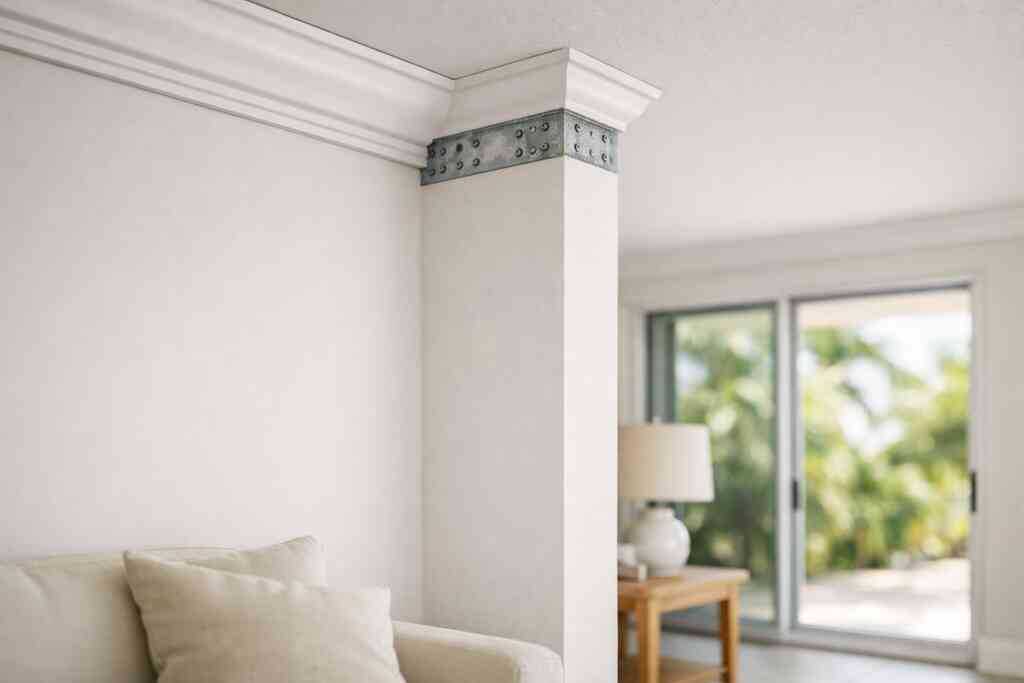
How roof to wall connection upgrades, hurricane straps installation, and roof truss reinforcement work together
Roof-to-wall connection upgrades tie the roof structure into the home’s load path, while hurricane straps installation strengthens the actual junction between trusses and wall framing. Roof truss reinforcement may be needed when framing is damaged, undersized, or altered by prior work. Together, they improve structural roof anchoring and reduce the chance of progressive failure.
A good contractor will not treat this as a one-line item. They will evaluate whether the project needs new connectors, added blocking, fastener upgrades, or limited framing repair before the roofing layer goes back on. That is especially important in a residential roof retrofit South Florida project where older construction may not match current standards.
For homes with mixed-age additions, the weak point is often not the original roof. It is the transition area where an addition, porch enclosure, or remodel altered the load path. A home remodeling contractor South Florida homeowner should vet carefully will notice that during inspection.
Why Florida Building Code compliance matters more for reroofing permit South Florida projects than most owners expect
Florida Building Code compliance matters because reroofing is not just a surface replacement when structural issues are present. If the project touches connectors, deck repair, or framing adjustments, the permit scope can change quickly. That is why a reroofing permit South Florida project should be reviewed carefully before work starts, not after demolition.
The permit process may also differ by jurisdiction. A Palm Beach County permit, Broward County permit, or Miami-Dade permit can affect submittals, inspections, and documentation requirements for exterior structural upgrades. If you are dealing with HOA review, condo rules, or townhome restrictions, those layers can add another approval step.
For reference, South Florida contractors often use county and municipal permit guidance alongside state code requirements. If you want a deeper starting point, see Understanding Hurricane Codes With South Florida and What Is Included in a South Florida Permit Set for a clearer view of why coastal construction standards are taken so seriously in this region. The key point is simple: skipping permits is not a shortcut. It usually creates bigger delays later.
When corrosion resistant fasteners, secondary water barrier details, and wind mitigation improvements become non negotiable
Corrosion-resistant fasteners become non-negotiable when salt air, humidity, and rooftop water exposure can shorten the life of standard hardware. A secondary water barrier also matters because wind-driven rain can find its way under roofing materials after a storm. Together, these details support wind mitigation improvements that help the roof system perform better under stress.
If you are comparing bids, ask whether the contractor plans to address all three:
DetailWhy it mattersWhat to askCorrosion-resistant fastenersReduces rust and connector lossWhat hardware will be used?Secondary water barrierHelps with water intrusion after damageIs it included in the scope?Wind mitigation improvementsStrengthens storm performanceWhich structural details are being upgraded?One of the most common mistakes we see is a bid that covers visible reroofing work but leaves out connector replacement or attic-level reinforcement. That is where change orders start. It is also where homeowners feel blindsided if the contractor did not explain the scope clearly up front.
If you are ready to compare options, use a directory that lets you find a contractor South Florida by location and trade. South Florida Contractors is a practical place to start because it helps you sort local firms by service area before you make the first call. For broader roof planning, you can also review Best Practices For Roof Repair In South Florida and How South Florida Contractors Meet Hurricane Code 2025.
Before you sign anything, verify the contractor’s license, insurance, bonding, and who is handling permit submittals. If you need a starting point for a broader search, call 18443112703 and use the South Florida Contractors directory to find a local professional who can explain the structural scope clearly.
Frequently Asked Questions
Question: Why does South Florida need hurricane roof tie downs, and how does Why Does South Florida Need Hurricane Roof Tie Downs apply to my home?
Answer: South Florida needs hurricane roof tie-downs because hurricane winds try to lift a roof off the house, not just push it sideways. In Palm Beach, Broward, and Miami-Dade, high wind exposure and hurricane code compliance make roof-to-wall connection details a structural necessity. Hurricane roof tie-downs, roof truss reinforcement, and roof deck attachment all work together to improve roof uplift resistance and reduce the chance of progressive failure during a storm.
If you are a homeowner comparing roofing contractor South Florida options, this is exactly why it matters to work with a local professional who understands South Florida building codes and the South Florida permit process. A roof can look fine from the street and still have hidden issues in the attic, including loose connectors, corrosion, or weak deck nailing. That is why a roof inspection after storm damage should always look at the full system, not just shingles.
South Florida Contractors is a practical place to start if you want to find a contractor South Florida homeowners can vet by service area. Always verify licensing, insurance, bonding, and permit responsibility before you sign anything, especially for exterior structural upgrades.
Question: What should I ask a licensed contractor Palm Beach County, licensed contractor Broward County, or licensed contractor Miami-Dade about hurricane straps installation and structural roof anchoring?
Answer: You should ask how they plan to connect the roof structure to the walls, whether hurricane straps installation is included, and whether the existing framing needs roof truss reinforcement. The right contractor should explain the load path in plain language: deck attachment holds the roof skin in place, connectors keep the roof anchored, and corrosion-resistant fasteners help the system last in South Florida’s humid coastal conditions.
A good roofing contractor South Florida homeowners trust will not only talk about replacement materials. They will also inspect the attic, identify any weak roof-to-wall connection points, and explain whether the project needs a secondary water barrier or wind mitigation improvements. If the home has an addition, enclosed porch, or prior remodel, the weak point may be in the transition area, which is why a home remodeling contractor South Florida homeowners hire should understand structural details, not just finish work.
When comparing bids, ask for a clear scope, not just a price. That includes permit handling, material specifications, and whether the contractor will coordinate inspections under the Palm Beach County permit, Broward County permit, or Miami-Dade permit process as needed. South Florida Contractors can help you start the search, but you should always confirm contractor licensing Florida requirements and contractor insurance requirements Florida before work begins.
Question: How do Florida Building Code compliance and reroofing permit South Florida requirements affect hurricane roof tie-down upgrades?
Answer: Florida Building Code compliance matters because roof tie-down upgrades are not always just a reroofing job. If the project involves connectors, framing repairs, or deck replacement, the permit scope can change. That is why a reroofing permit South Florida project should be reviewed before demolition starts, not after the roof is already open.
Local permit review can differ across Palm Beach County, Broward County, and Miami-Dade. The exact submittal requirements may vary by jurisdiction, and a South Florida permit process can involve additional review if the property is in an HOA, condo, or townhome community. That is why homeowners should never assume a structural upgrade is automatically included in a basic roofing quote.
A trustworthy South Florida contractor should be able to explain how hurricane code compliance affects the job, what the scope covers, and who is responsible for permits and inspections. If you are evaluating a South Florida general contractor near me search, make sure the company can speak clearly about structural roof anchoring, exterior structural upgrades, and permit coordination. South Florida Contractors helps homeowners identify local firms, but you should still verify the license, insurance, and bonding status yourself.
Question: What makes coastal roof retrofit work different from regular roof replacement in South Florida?
Answer: Coastal roof retrofit work is different because South Florida homes face more wind, more moisture, and more corrosion than inland homes. That means the job is not just about replacing shingles. It may also require roof uplift resistance improvements, corrosion-resistant fasteners, stronger roof-to-wall connection details, and a better secondary water barrier to help manage wind-driven rain.
For oceanfront and waterfront homes, the stakes are even higher. Salt air and repeated storm exposure can weaken connectors over time, which is why coastal home storm protection must be treated as a system. A storm-resistant roof system depends on the framing, fasteners, deck attachment, and edge details all working together.
This is where a South Florida design build team or home remodeling contractor South Florida homeowners trust can be especially helpful, because they understand how roofing, structure, and permitting interact. If your project also includes hurricane impact home upgrades, exterior structural upgrades, or even related work like a hurricane impact window installer South Florida homeowner might need, it is smart to coordinate the scope so the permit path stays organized.
Always use a contractor you can verify. Ask how to verify a contractor license, confirm contractor insurance requirements Florida, and request proof of bonding where appropriate. South Florida Contractors is a directory built to help you locate qualified local pros, but final verification should always be done by the homeowner.
Question: How do I know if I need a roof inspection after storm damage or a full residential roof retrofit South Florida project?
Answer: If a storm caused visible damage, missing shingles, leaks, attic moisture, or signs of movement in the framing, you should schedule a roof inspection after storm conditions right away. Even if the roof looks intact from the outside, hidden issues can include loose connectors, weak roof deck attachment, or damaged roof truss reinforcement points. These problems do not always show up until the next wind event.
A full residential roof retrofit South Florida project may be needed if the roof has repeated storm damage, aging materials, corrosion at connectors, or a structure that does not meet current hurricane code compliance expectations. In older homes, especially in coastal areas, the issue is often not one single failure but a combination of age, exposure, and outdated detailing.
A reliable roofing contractor South Florida homeowners can trust should explain whether a repair, partial retrofit, or full replacement makes the most sense. They should also discuss wind mitigation improvements, the South Florida building codes that may affect the scope, and whether the job triggers a Palm Beach County permit, Broward County permit, or Miami-Dade permit review.
If you are ready to compare options, South Florida Contractors can help you find a contractor South Florida residents can contact by location and trade. Just remember: verify the company’s license, insurance, bonding, and permit responsibility before authorizing work.