
The quote that looks cheap until the roof starts leaking
A roofing quote can look tidy on paper and still leave you exposed. That is the trap. In South Florida, a roofing contractor South Florida estimate often leaves out details that matter after the first hard rain. Missing decking, hidden flashing damage, dumpster fees, and permit-related line items can all surface later. If you are already stressed about roof leak prevention, you are not overreacting.
Why a roofing contractor South Florida estimate can hide missing decking, flashing, or disposal costs
Most homeowners want a clear number, and that is completely normal. The problem is that a roof replacement estimate can use vague allowances instead of a real scope. A contractor may price shingles or tile, then quietly leave out rotten decking replacement. Flashing around chimneys, valleys, and walls may appear as “minor repairs,” which is a dangerous phrase. Disposal can also get buried, especially when old layers, nails, and underlayment fill a full container fast.
Here is the part most homeowners miss. A low bid may simply mean the contractor plans to charge more later. On a recent project in Plantation, a homeowner brought us two estimates that were almost identical in length, but one included decking allowances and debris hauling. The other looked cheaper by several thousand dollars until we compared the exclusions line by line. The first one was honest. The second one was incomplete.
If you are comparing a roofing contractor in South Florida estimate, ask what happens if hidden damage appears after tear-off. Ask about underlayment, flashing, fasteners, disposal, and final cleanup. Then ask again in writing. That is not being difficult. That is being protected.
How to compare roof replacement estimate line items without getting fooled by vague allowances
The best way to compare quotes is to force clarity. Look for itemized labor, materials, permit handling, decking replacement, flashing repair, and cleanup. Ask whether the quote assumes a single layer or multiple layers. Ask whether the contractor included drip edge, starter course, ridge ventilation, and sealants. If the answer sounds fuzzy, the estimate probably is.
A useful comparison is simple.
Line ItemClear EstimateVague EstimateDecking repairsSpecific price or per-sheet allowance”If needed”FlashingListed and describedIncluded in general laborDisposalDumpster or haul-away includedNot mentionedPermit supportNamed taskHandled laterCleanupFinal jobsite cleanup includedUnclearThat table matters because vague language usually becomes extra invoices. If you want to compare bids fairly, use the same scope for each contractor. Ask for the same material brand, same roof square count, and same tear-off assumptions. Then the pricing starts making sense. Without that discipline, the cheapest quote is often the most expensive outcome.
When a low bid is actually a warning sign for roofing contractor licensing Florida and insurance gaps
A price that is dramatically lower than the others deserves suspicion. Sometimes the contractor missed something. More often, they planned to cut corners. Those corners can involve licensing, insurance, or labor quality. In South Florida, that is not a small issue. It becomes a storm-season problem fast.
If a bid feels too low, ask whether the contractor holds the right license for the job and the county. Ask about workers’ compensation, general liability, and whether the company can provide proof before work starts. A legitimate contractor will not get offended. They will expect the question. If they dodge it, move on.
We hear this from clients almost every week. Someone finds a bargain, then feels uneasy after the first phone call. That uneasy feeling usually has a reason. When you are trying to find a contractor South Florida, trust the quote, but verify the company behind it. Price matters. Paperwork matters more.
The license and insurance paper trail that should exist before anyone climbs the ladder
This is the uncomfortable part, and that is okay. Most homeowners do not want to interrogate a contractor. They want the roof fixed. But if someone is working on your home in Palm Beach, Broward, or Miami-Dade County, the license and insurance paperwork is not optional. It is the foundation of the whole job. Without it, your “savings” can vanish into a claim, a stop-work issue, or a dispute you never wanted.
How to verify a contractor license for a licensed contractor Palm Beach County Broward County or Miami-Dade
Start with the license. Then verify it yourself. Do not accept a business card, a truck wrap, or a confident handshake as proof. Ask for the legal company name, the license number, and the exact scope of work. Then check it through the state’s public tools. If you need a shortcut, use a How to Verify a Florida Contractor’s License resource and compare the name against the documents you were given.
A licensed contractor Palm Beach County homeowners hire should match the project type and local requirements. The same logic applies to a licensed contractor Broward County and a licensed contractor Miami-Dade. For example, a roofer who is fine for a simple repair may not be the right fit for a full replacement with structural work. Ask who is pulling the permit. Ask who supervises the crew. Then ask who is responsible if the city inspector rejects the work.
If you want a licensed contractor in Palm Beach County, do not rush past the license check because the roof is leaking. That urgency is exactly when people skip steps. Slow down for ten minutes. It can save you months of trouble.
What contractor insurance requirements Florida and contractor bonding requirements should look like in plain English
Insurance sounds technical, but it is not complicated once you strip away the jargon. You want proof that the contractor carries general liability and workers’ compensation, or a lawful exemption where applicable. General liability helps cover property damage. Workers’ compensation helps if a worker gets hurt on your property. Bonding can matter when the project involves financial or performance protection.
Ask for certificates, not promises. Then make sure the certificate names the company doing your job. If the paperwork names a different entity, ask why. If the expiration date is close, ask for updated proof. This is not rude. It is responsible. You should never assume a policy exists because someone says it does.
Many homeowners think this only matters on large projects. It matters on any job with ladders, power tools, and roof edges. If you are dealing with a licensed contractor in Broward County, that paper trail should be ready before the first shingle comes off. The same goes for Miami-Dade, where the weather and inspection pressure can expose weak contractors quickly. A real pro will hand over the documents without drama.
Why lien waiver Florida paperwork matters before the final payment is ever discussed
A lien waiver is a simple document with serious value. It says the contractor or subcontractor has been paid for work covered by that payment. Without it, you can pay in full and still face a payment dispute later. That is a terrible surprise to have after your roof is done.
Ask for lien waivers at the right stages, not just at the end. Progress payments, material deliveries, and final closeout may all need documentation. Keep copies. Read them carefully. If waiver language seems broad or confusing, ask for clarification before you sign. This is exactly where a lien waiver paperwork in Florida guide can help you understand the sequence.
One homeowner in Coral Springs learned this the hard way after a subcontractor claimed they had not been paid. The roof was complete. The invoices were paid. The missing waiver became a very real headache. The project got resolved, but only after extra calls and extra stress. You can avoid that. Put the paperwork in place early.
The summer roof inspection that separates real pros from smooth talkers
A real roofing professional does not just talk about replacement. They inspect. That inspection should tell you whether the roof needs a full repair, a targeted fix, or immediate protection. In South Florida, summer heat, sudden storms, and high humidity expose weak points quickly. If a contractor barely looks at the roof, that is not efficiency. That is laziness.
What a roofing inspection checklist should catch before storm season roof prep turns urgent
A strong roofing inspection checklist should look beyond the visible surface. It should check missing or lifted shingles, cracked tile, rusted fasteners, soft decking, clogged drains, and signs of water intrusion. It should also note flashing conditions around vents, skylights, chimneys, and wall transitions. If the contractor skips those areas, they are not really inspecting the roof.
You can use a roofing inspection checklist for summer roof maintenance as a baseline when you speak with bidders. Ask what they saw, not just what they sell. Ask whether they took photos. Ask whether the roof needs immediate tarping or if the issue can wait. That level of detail helps you separate a repair-minded contractor from a sales-minded one.
The mistake we see most often is timing. People wait until water appears inside the house. By then, the problem is no longer a simple maintenance item. If your roof is already showing staining, bubbling paint, or granule loss, you need action now. Not later. Not after another rainstorm.
Why roof flashing inspection roof deck condition and attic ventilation check all belong in the same conversation
Flashing, decking, and ventilation are connected. If you inspect only one, you may miss the real cause. Flashing failures let water enter. Weak decking lets it spread. Poor attic ventilation traps heat and moisture, which shortens roof life. A contractor who understands all three is thinking like a builder, not a salesperson. 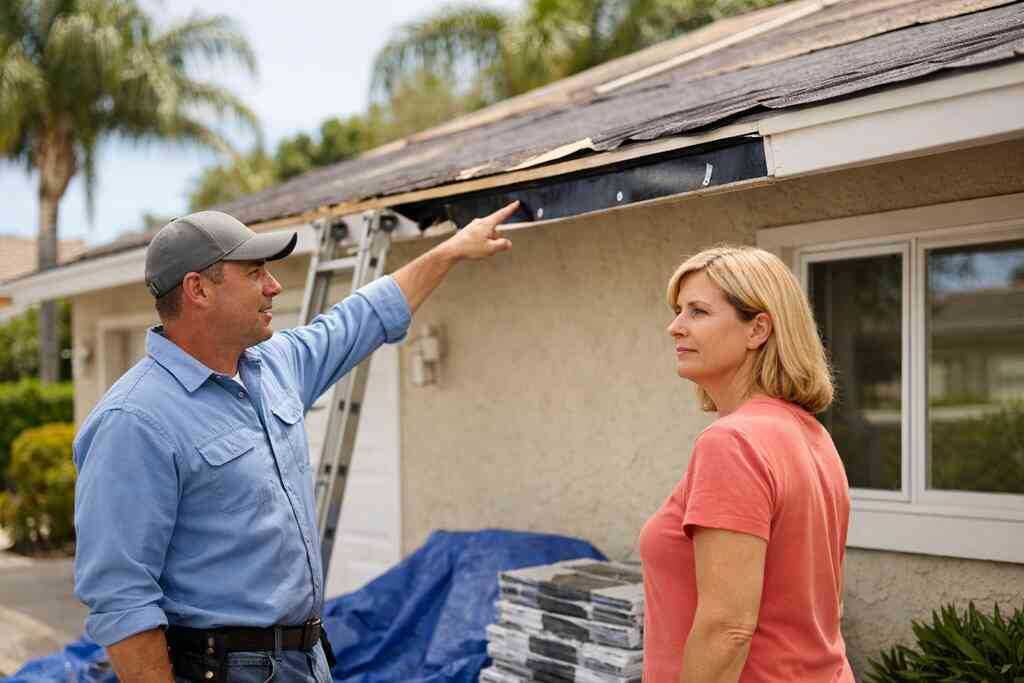
Ask for a roof flashing inspection that includes valleys, penetrations, and sidewalls. Then ask about roof deck condition underneath the visible finish. If the roof has an attic, request an attic ventilation check too. Good airflow can reduce heat buildup and help protect the underlayment. That matters for shingle, tile, and flat roof systems alike.
A homeowner in Davie once called after repeated ceiling spots near the garage. Another company had patched the flashing twice. When we inspected, the attic told the story: trapped heat, staining on the decking, and a venting problem nobody had mentioned. The repair changed from a small patch to a more honest solution. That is why inspection has to be holistic. Roofs fail as systems, not in isolation.
When leak detection roof inspection and post-storm roof assessment should trigger emergency roof tarping
If you see active dripping, swollen drywall, or wet insulation, you need immediate attention. That is where leak detection roof inspection and emergency roof tarping come in. A post-storm roof assessment should happen quickly when wind or heavy rain has passed through. If the roof is open, shifted, or punctured, tarp it before more water enters the structure. Waiting rarely improves the outcome.
Emergency tarping is not a repair. It is protection. That distinction matters because some contractors use a temporary cover as if it solves the problem. It does not. It simply buys time. Still, that time can protect framing, finishes, and electrical systems from additional damage.
If you ever need a roofing inspection checklist for summer roof maintenance after a storm, ask for photographs and a written explanation. That helps with insurance and keeps everyone honest. The best contractors explain the immediate risk first, then the next step. They do not bury the urgency under sales language.
Permits HOA approvals and hurricane code compliance are where good roofing jobs get saved or sunk
This is the section many people dread. It is also the section that protects your investment. In South Florida, roof work often touches permits, HOA approvals, and storm-related code requirements. If a contractor tells you those steps are “usually fine” or “can be handled later,” be careful. Later is where projects get delayed, rejected, or expensive.
What the permit process for roof work usually demands in South Florida and why skipping it backfires
The permit process for roof work usually asks for plans, scope details, product information, and contractor credentials. It may also require inspection checkpoints during the work. That is normal. It protects you and the city. It also creates a record if something goes wrong.
Never let anyone suggest skipping permits to save time. That is a false shortcut. Unpermitted work can cause insurance issues, resale problems, and inspection delays later. If you want a straight overview, a South Florida Construction Permit Guide can help you understand the basics before the job starts. The point is not to become a permit expert. The point is to avoid being surprised.
Local rules can be strict for good reason. South Florida weather is unforgiving. Roof systems must be documented, inspected, and properly tied to the structure. That is not bureaucracy for its own sake. That is storm survival.
How Palm Beach County permit Broward County permit and Miami-Dade permit expectations can change the plan
County expectations can change details quickly. A Palm Beach County permit may ask for one set of product documents, while Broward County may require another review step. Miami-Dade can be even more specific, especially on coastal properties and systems exposed to wind-driven rain. The contractor should know this before they quote the job.
Ask how the contractor handles a Palm Beach County permit, a Broward County permit, or a Miami-Dade permit on roofs similar to yours. Ask whether they have worked under the local inspection rhythm before. Then ask how that affects scheduling. That question matters more than most people realize. A contractor who understands the local process will plan better and communicate better.
If your property sits near the coast, you may also hear about impact-rated components, fastening requirements, or enhanced attachment details. Those concerns are not theoretical. They shape the actual roof assembly. This is where a contractor’s local experience really shows.
Why South Florida HOA permit rules and Florida Building Code 2026 hurricane code compliance affect coastal roofing standards
HOAs can be surprisingly strict. They may control colors, profiles, material choices, and visible details. They may also require review before the city even sees the package. If you live in a condo, townhome, or managed community, HOA rules can shape the timeline and the material list. That is why you should ask early.
You also need a contractor who understands Florida Building Code 2026 for coastal homes and hurricane code compliance. That does not mean every roof uses the same method. It means the contractor should know how attachment, water resistance, and coastal conditions work together. Roof underlayment review, secondary water barrier details, and fastening patterns all matter on exposed properties.
We have seen projects stall because the contractor ignored HOA submittals. We have also seen strong jobs delayed by missing product approvals. The frustrating part is that both problems are avoidable. If you want to protect your schedule and your sanity, treat permits and HOA approvals as part of the work, not a side note.
The next call you make should force a clear decision not another sales pitch
By now, you know what to ask and what to avoid. The last check is deciding who actually belongs on your shortlist. The right contractor will fit the scale of your project, explain the system in plain English, and put commitments in writing. The wrong one will keep talking until you stop asking questions. That difference matters.
When to choose a residential roofing contractor commercial roofing contractor or general contractor near me South Florida
Start with the property type. A residential roofing contractor is usually right for single-family homes, townhomes, and smaller reroofing projects. A commercial roofing contractor may be better for flat systems, larger structures, and more complex drainage. Sometimes you need a general contractor near me South Florida because the roof work connects to framing, additions, or other trades.
If your roof work touches a lanai, sunroom, or addition, the scope can shift fast. You may need coordination with a general contractor near me South Florida instead of a roofer alone. That is especially true when the project includes soffits, fascia, structural repairs, or waterproofing transitions. The best contractor will tell you when their scope ends. That honesty saves money.
On the projects we have finished this year, the cleanest jobs started with a clear role for each trade. No overlap. No confusion. No last-minute finger-pointing. If a contractor cannot explain that division clearly, keep looking.
How to ask about roof underlayment review secondary water barrier and hurricane roof tie-downs without sounding inexperienced
You do not need to speak like a roofer to ask smart questions. Simply ask what underlayment they plan to use, whether a secondary water barrier is included, and how the roof will be tied down against wind loads. Those are practical questions. They show you care about the system, not just the appearance.
If the contractor pauses, that tells you something. A confident pro will explain the materials and the fastening method without making you feel foolish. If your roof is coastal, ask about hurricane roof tie-downs and code compliance directly. That is especially important for exposed neighborhoods and waterfront properties. Strong fastening is not a bonus. It is the point.
A homeowner in Aventura asked this exact question before signing. The contractor explained the tie-down approach, the underlayment layers, and the inspection sequence in plain language. That conversation took ten minutes. It prevented weeks of second-guessing later. Good contractors welcome informed questions.
What to demand in writing for roof warranty verification change order contractor Florida terms and final closeout before you sign
Before you sign, ask for roof warranty verification in writing. You want to know what the manufacturer covers and what the contractor covers. You also want the dates, the transfer terms, and any maintenance requirements. If the roof ever needs service, these details matter.
Next, ask about change order contractor Florida procedures. A change order is a written update to the original contract. It records extra work, added material, or a scope adjustment before the bill changes. That protects both sides. It prevents “surprise” charges from becoming arguments. Also ask for final closeout items, including inspection sign-off, warranty paperwork, and lien waivers.
If you are still comparing options, this is where a how to compare contractor estimates approach helps you stay objective. Do not let charm replace documentation. Do not let urgency replace clarity. You do not have to figure this out alone, and you do not have to figure it all out today. Start with one call, ask for the paperwork, and choose the contractor who answers like a professional.
Frequently Asked Questions
Question: What are the most important checks in Best 5 Roofing Contractor Checks for Summer 2026 when hiring a roofing contractor South Florida?
Answer: The biggest checks are the ones that protect you before work starts: compare the roof replacement estimate line by line, verify contractor licensing Florida, confirm contractor insurance requirements Florida, ask about contractor bonding requirements, and make sure the permit process for roof work is clearly explained. For South Florida homeowners, those steps matter even more because hurricane code compliance, South Florida building codes, and summer storm exposure can turn a small oversight into a major problem. A trustworthy roofing contractor South Florida should be willing to explain decking, flashing, disposal, cleanup, and warranty terms in writing. South Florida Contractors is a practical place to begin your search because it helps you find a contractor South Florida by city and distance, then connect with licensed professionals you still need to verify before signing anything. That combination of convenience and caution is exactly what homeowners need in Palm Beach, Broward, and Miami-Dade Counties.
Question: How do I verify a licensed contractor Palm Beach County, licensed contractor Broward County, or licensed contractor Miami-Dade before I schedule a roof inspection?
Answer: Start by asking for the legal business name, license number, and proof of insurance, then use a public license lookup or a How to Verify a Florida Contractor’s License resource to confirm the information matches the company you were given. If the contractor is truly qualified, they should have no problem showing documentation for the exact scope of work, whether it is roof repair, a full replacement, or a larger project with a general contractor near me South Florida. This matters because a roof crew working under an unverified name can create permit delays, insurance disputes, and liability issues later. When you use South Florida Contractors to find a contractor South Florida, you can compare companies across the region and then do the due diligence yourself. That is the safest path for coastal roofing standards, especially when the project may involve hurricane roof tie-downs, roof underlayment review, and local permit requirements in Palm Beach County permit, Broward County permit, or Miami-Dade permit jurisdictions.
Question: What should a roofing inspection checklist include for summer roof maintenance, roof leak prevention, and storm season roof prep?
Answer: A strong roofing inspection checklist should include visible damage and hidden risk factors. That means checking shingles or tile for lifting or cracking, inspecting roof flashing inspection points around chimneys, walls, skylights, and vents, evaluating roof deck condition for softness or staining, and asking for an attic ventilation check if your home has attic access. In South Florida, summer roof maintenance should also consider clogged drainage areas, worn sealants, and signs that water may already be entering the system. If a contractor only glances at the surface, they are not doing a real inspection. A good roof repair contractor will also tell you whether you need leak detection roof inspection, post-storm roof assessment, or emergency roof tarping right away. South Florida Contractors helps homeowners connect with local professionals who understand the realities of hurricane code compliance and coastal roofing standards, which is essential before storm season ramps up.
Question: How does the permit process for roof work affect a roof replacement estimate in South Florida?
Answer: The permit process for roof work can affect pricing, scheduling, inspections, and final closeout, so it should always be included in the conversation before you sign. A complete roof replacement estimate should clearly state whether the contractor is handling permit applications, inspection coordination, product documentation, cleanup, and any follow-up required by the city or county. In South Florida, the permit process for roof work may differ depending on whether the home falls under a Palm Beach County permit, Broward County permit, or Miami-Dade permit, and that can change the paperwork and inspection steps. This is why a low bid is not always a good bid. If the estimate leaves out permits, decking allowances, or disposal, you may pay more later. South Florida Contractors helps homeowners find a contractor South Florida who can explain the process clearly, but you should still confirm they understand South Florida building codes and Florida Building Code 2026 expectations before work begins.
Question: Why do roof warranty verification, lien waiver Florida paperwork, and change order contractor Florida terms matter so much before final payment?
Answer: These documents protect you when the job is done and the stakes are highest. Roof warranty verification tells you what is covered, for how long, and whether maintenance or transfer rules apply. Lien waiver Florida paperwork helps confirm that the contractor and subcontractors have been paid for the work tied to each payment stage, which helps reduce the risk of future payment disputes. Change order contractor Florida terms are just as important because they make sure any added work, hidden damage, or scope adjustments are approved in writing before the bill changes. In South Florida, where weather, permits, and hurricane code compliance can complicate even a simple roofing project, paperwork matters as much as workmanship. That is why homeowners should choose a contractor who communicates clearly, documents everything, and respects the process from estimate to closeout. South Florida Contractors is a useful starting point because it helps you locate and compare contractors across the region, including residential roofing contractor and commercial roofing contractor options, while reminding you to verify licensing and insurance before hiring.