
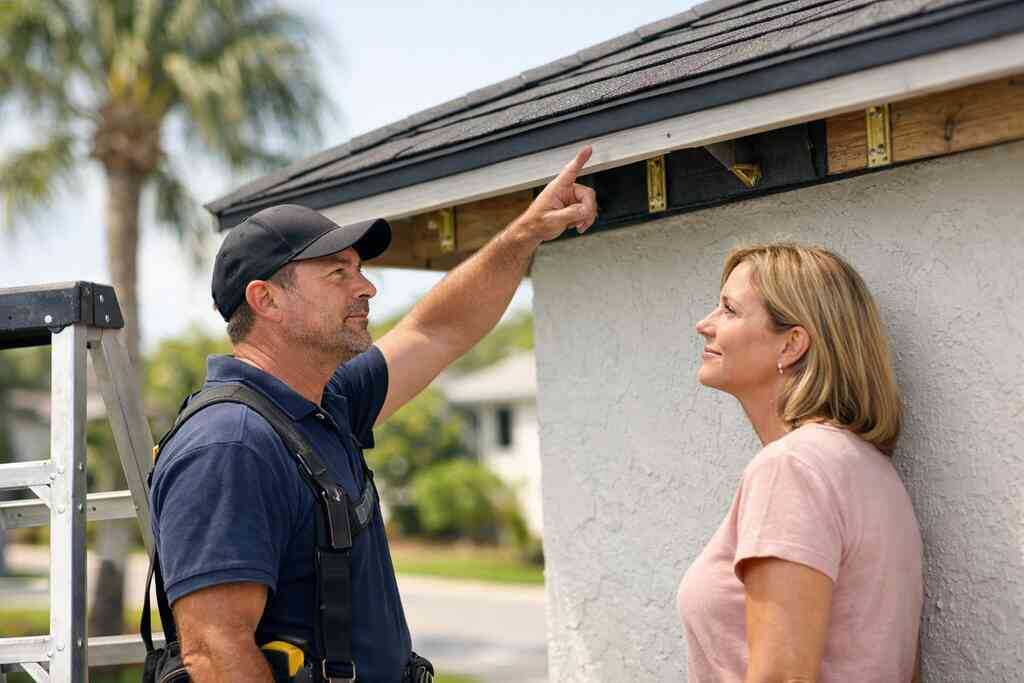
A homeowner in Broward called during a thunderstorm, staring at water stains spreading across the ceiling. That panic is real. If you are reading this because a roofer’s quote feels confusing, you are not alone. Most homeowners feel uneasy here, especially after storm damage or a leak that appears out of nowhere. The good news is that the right questions expose weak contractors quickly and protect your budget.
Is this roofer actually licensed, insured, and allowed to work in South Florida?
This is the first question because everything else depends on it. A polished estimate means very little if the contractor cannot legally perform the work. In South Florida, you should verify the license before any deposit changes hands. That matters in Palm Beach, Broward, and Miami-Dade, where roof work often intersects with hurricane code requirements and strict inspection standards. If you are trying to find a contractor in South Florida, start here, not with color charts or discounts.
How to verify a contractor license in Palm Beach, Broward, and Miami-Dade before any deposit changes hands
Ask for the license number, legal business name, and qualifying party name. Then verify the record yourself through state and county resources. Do not rely on a logo, a truck wrap, or a social media page. We hear this from clients almost every week: the contractor sounded perfect until the paperwork came up short. That is exactly why how to verify a contractor license in South Florida should be part of every roof replacement consultation.
A licensed contractor Palm Beach County residents can trust should also line up with local permitting rules. The same applies to a licensed contractor Broward County homeowners hire and a licensed contractor Miami-Dade residents bring onto the roof. Ask whether the company is in good standing, and ask who will actually pull the permit. If the answer feels vague, keep looking. Here is the part most homeowners miss: a valid-looking estimate is not the same as legal authority to do the job.
What contractor insurance requirements Florida homeowners should confirm and why a certificate alone is not enough
Insurance sounds simple until something goes wrong. Ask for general liability and workers’ compensation information, then confirm it directly. A certificate alone can be outdated, altered, or no longer active. You need to know the policy is current and tied to the company doing the work. That is why contractor insurance requirements in Florida deserve real attention, especially for roof leak repair and storm damage roof repair.
A short story: one homeowner in Delray Beach nearly hired a crew that could not show active workers’ compensation. The price looked great. The risk was not. After a quick verification step, the family avoided a situation that could have turned a roof repair into a personal liability problem. If the contractor dodges this question, that tells you enough.
When contractor bonding requirements matter for larger roofing jobs and storm damage repairs
Bonding matters more on bigger jobs, especially when the work includes structural repairs, extensive tear-off, or storm damage roofing. It adds another layer of accountability. You should ask whether bonding applies and, if so, what it covers. For large-scale projects, how to check contractor bonding in Florida is worth your time before signing anything. Not every roof needs a bond, but every homeowner needs clarity.
If the job involves coastal home roofing, hurricane roof tie-downs, or visible damage after a major storm, the stakes rise quickly. A bonded contractor is not automatically better. Still, the presence or absence of bonding can tell you a lot about the company’s size, discipline, and project profile. You want a roofer who welcomes the question, not one who acts offended by it.
Red flags in estimates that suggest a roofer may be unqualified for coastal home roofing or hurricane code compliance
Some estimates reveal trouble immediately. Watch for missing license numbers, no insurance mention, and generic language about “weatherproofing” without detail. Coastal projects need more than vague promises. They require hurricane code awareness, proper flashing, and clear fastening practices. If the roofer cannot explain South Florida building codes in plain language, that is a warning sign.
Other red flags include cash-only pressure, no permit discussion, and unrealistic promises about speed. A contractor who shrugs off South Florida building code requirements for roofs probably does not belong on a waterfront home. The same caution applies to any company claiming expertise without showing proof. Ask the question. Then ask it again differently.
What exactly is included in the roofing estimate, and what is being left out?
This question saves money. It also saves arguments. Many homeowners compare totals and miss the fine print, which is where surprises hide. A good estimate should read like a scope of work, not a teaser. If you are looking at a roofing contractor in South Florida, demand line-item clarity before you think about signing.
How to compare roofing estimates line by line without getting distracted by the lowest number
The lowest number is not always the best value. Compare materials, labor, debris removal, permit handling, and cleanup. Ask what is included and what is excluded. A careful roof replacement consultation in South Florida should spell out the exact roofing assembly, not just the price. If one bid is dramatically lower, there is usually a reason.
On the projects we have seen this year, the cheapest bid often left out flashing or disposal. That creates problems later. You may save a little upfront, then pay twice when the omissions surface. Use a simple table if you need it:
ItemShould it be listed?Why it mattersTear-offYesPrevents hidden labor chargesUnderlaymentYesProtects against leaksVentilationYesReduces heat and moistureFlashingYesHelps seal transitionsDebris haul awayYesAvoids cleanup disputes### What should be spelled out for roof replacement scope, underlayment, ventilation, flashing, tear-off, and debris haul away
Every major scope item should appear in writing. That includes the roof deck inspection, underlayment type, flashing replacement, ventilation strategy, tear-off method, and disposal plan. If your home has a tile roof, the contractor should explain what happens under the tiles. If it is a flat roof, they should clarify membrane details and drainage. These are not minor details. They determine whether the roof performs during heavy rain and heat.
Ask about roof ventilation standards, because South Florida heat punishes poor airflow. Ask about roof underlayment options too. The right contractor will explain why one material fits your home better than another. A clear scope is also where the contractor should describe warranty terms. Good contractors do not hide essentials in tiny print.
Why change order contractor Florida language matters when the crew finds rotten decking or hidden water damage
A change order is a written adjustment to the contract when unexpected conditions appear. In roofing, that often means rotten decking or water damage under the old system. The key is not whether change orders happen. They do. The key is whether the process is defined before work starts. That is why change order contractor Florida language matters so much.
One client in Plantation had hidden decking damage across a section of the roof. The original estimate assumed a simple tear-off. Once the crew opened the system, the contractor documented the issue, priced the repair, and paused for approval. That is how it should work. No pressure. No surprise invoice. No mystery labor line.
How workmanship warranty, material warranty, and cleanup terms should be written for South Florida homeowners
Warranties are only as strong as their wording. A workmanship warranty covers installation errors. A material warranty comes from the manufacturer. Cleanup terms should explain who removes nails, debris, and protection materials. A good roofer puts all three in writing. You should also ask how claims are handled if something leaks after the job.
Make sure the contractor explains roofing warranty terms without jargon. If they offer a material warranty, ask who honors it and what voids it. If the job includes a metal roofing contractor South Florida installation, the details can differ from shingles or tile. That is normal. What is not normal is vague language that leaves you guessing after payment.
Which materials and roof system can really stand up to South Florida weather?
South Florida roofs live a hard life. Sun, salt air, wind, and heavy rain all attack the system at once. So the right material is not just a style choice. It is a performance choice. A homeowner in coastal Broward should think differently than someone inland in Palm Beach. That is especially true for coastal roofing materials in South Florida.
When shingle roofing contractor, metal roofing contractor South Florida, or flat roof contractor South Florida is the better fit
Different roofs solve different problems. A shingle roofing contractor may be the best fit for many suburban homes. A metal roof can perform well when wind resistance and long-term durability matter. A flat roof contractor South Florida homeowners trust should understand drainage, membrane selection, and heat exposure. The right answer depends on structure, slope, budget, and exposure.
Ask the contractor why they recommend a system for your specific home. If they cannot explain the choice, that is a problem. You do not want a one-size-fits-all pitch. You want a roof system matched to the building. That is how you protect the home before the next storm season tests it.
What wind-resistant roofing materials and impact-rated roofing systems actually do during hurricane season
Wind-resistant materials help the roof stay attached and intact under pressure. Impact-rated systems are designed to better handle debris strikes. Neither one makes a roof invincible. Both improve your odds when weather turns severe. Ask which parts of the system are rated, and ask how the installation supports the rating.
This is where hurricane code compliance becomes more than a buzz phrase. Fasteners, adhesives, edge details, and tie-downs all matter. A roofer who works near the coast should explain the system without sounding theatrical. If they use fear to sell, slow down. If they explain the mechanics, listen carefully.
How roof underlayment options and roof ventilation standards affect heat, moisture, and long-term performance
Underlayment is the hidden layer beneath the visible roof surface. It helps defend against moisture intrusion. In South Florida, that layer matters more than many homeowners realize. Roof ventilation standards matter too, because trapped heat shortens roof life and stresses attic systems. Poor airflow can also contribute to mold and humidity issues.
A strong contractor will explain the difference between underlayment choices and why they matter for your home. They should also tie ventilation into the roofing plan, not treat it as an afterthought. This is especially important if you are comparing a flat roof contractor South Florida homeowners use versus someone who mostly handles slopes and shingles. The roof system must work as a whole.
Why hurricane roof tie-downs and South Florida building codes matter more on waterfront and coastal home roofing
Waterfront homes live with more exposure. Salt air, stronger gusts, and constant moisture create harsher conditions. That is why hurricane roof tie-downs and the local code framework matter so much. You want a contractor who understands the difference between ordinary roofing and coastal detailing. A coastal home builder Florida mindset is useful here, because the roof cannot be isolated from the rest of the structure.
If you live near the beach or on an exposed waterway, ask how the contractor approaches edge metal, attachment patterns, and flashing transitions. Ask how the plan changes if the home is tied into a broader exterior renovation. A roofer who understands hurricane code upgrades for South Florida homes will not shrug at those questions. They will welcome them.
What permits, inspections, and HOA approvals will slow the job down if you ignore them?
Permits are not optional paperwork. They are part of a legal roofing project. In South Florida, skipping them can stop the job, trigger fines, or create sale-time problems later. The permit path may feel annoying, especially when you just want the leak fixed. Still, the right contractor should treat permitting as a basic duty, not a nuisance. If they do not, keep walking.
How the South Florida permit process changes across Palm Beach County, Broward County, and Miami-Dade permit offices
Each county has its own process, requirements, and review culture. A good contractor should understand the differences without guessing. That includes the Palm Beach County permit steps for roofing projects, the Broward County permit tips for roofing projects, and the Miami-Dade permit process for roofing work. Those offices do not all move the same way. That is normal.
If your contractor works mainly in one county, ask how they adjust when the job crosses county lines. That question tells you a lot. A company used to a roofing contractor South Florida workflow should not struggle with permit basics. If they do, your timeline may drift fast.
What roof permit requirements usually trigger inspections and why skipping them can backfire
Most roof permits lead to inspections at some stage. The exact path depends on the scope. Tear-off, replacement, structural work, and some repair categories commonly trigger review. If the contractor tells you permits are optional, that is a major red flag. The same goes for anyone suggesting you can “handle it later.”
The inspection protects you as much as the municipality. It documents compliance and catches errors early. It also becomes part of the paper trail if you ever sell the home. For a homeowner who cares about long-term value, that matters more than shaving a few days off the schedule.
How South Florida HOA permit rules and condo renovation South Florida approvals can reshape the project schedule
HOAs can slow a job more than the county sometimes does. Condo associations can slow it even further. A South Florida HOA permit process may require color approvals, work-hour restrictions, parking plans, or advance notice to neighbors. If your home sits in a condo or townhouse community, the schedule should reflect that reality. I once saw a roof project in a townhouse community delayed because the association needed additional documentation on dumpster placement and roof access. Nothing was technically wrong. The paperwork just had not been coordinated. That is the kind of problem a good contractor prevents. If your roofer also handles condo renovation approvals in South Florida, they should be used to this maze. 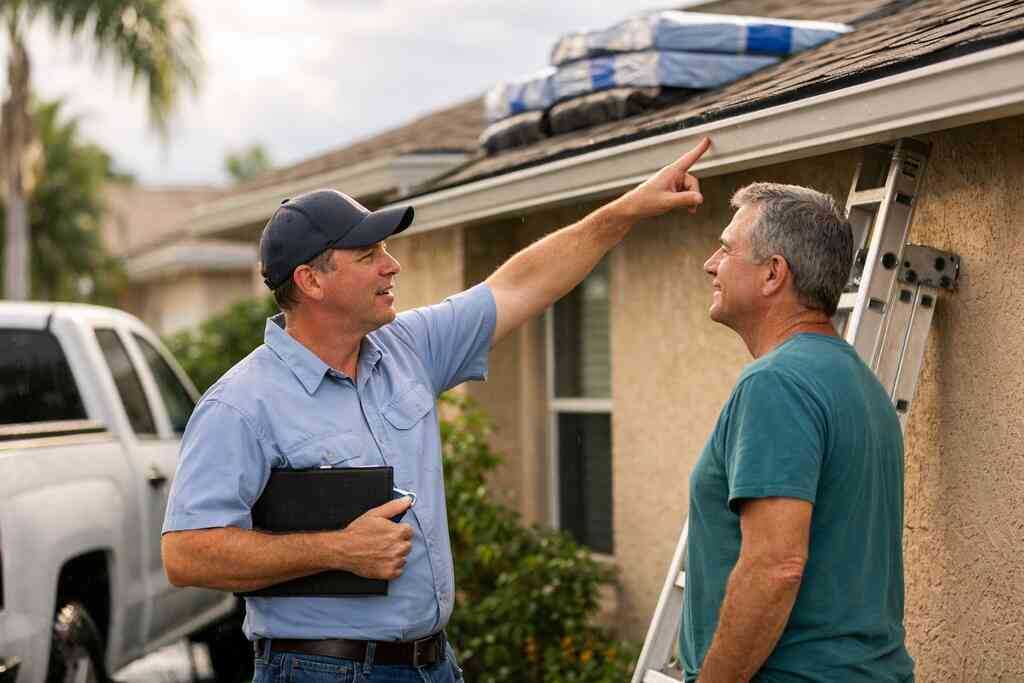
Which documents you should expect for lien waiver Florida compliance and contractor dispute resolution protection
A lien waiver is a document that helps show subcontractors and suppliers have been paid, or will be paid under agreed terms. That protects you from surprise claims later. Ask how and when waivers are issued. Ask who signs them. Ask whether the contractor uses them at each payment stage.
You should also keep every contract, permit, inspection, and change order in one folder. If a dispute ever happens, that paperwork becomes your best defense. Good contractors understand this and respect it. Strong documentation is not distrust. It is professionalism.
How do you know this contractor understands storm risk, not just normal roofing?
Storm experience changes everything. A roofer who only handles ordinary wear and tear may miss the subtleties of wind-driven rain, lifted edges, or hidden intrusion paths. South Florida homeowners need someone who understands how storms behave, not just how shingles look on a dry day. That is especially true after a heavy rain or a fast-moving squall line.
What to ask about roof inspection questions after heavy rain, wind-driven leaks, or emergency roof repair South Florida needs
Ask what they look for first after storm damage. A smart roofer checks flashing, penetrations, edges, valleys, and attic symptoms. They should also know how to separate a temporary leak path from the actual source. That is why roof inspection questions after a storm are so useful. They reveal whether the contractor thinks like a diagnostician.
If you need emergency roof repair in South Florida, ask what the temporary fix includes. Ask how it will be documented. Ask when permanent repair should follow. Temporary is fine when explained honestly. Vague is not.
How a roofer should explain hurricane code compliance without hand-waving or sales pressure
A contractor should be able to explain code compliance in plain English. They do not need to recite code sections to prove competence. They do need to describe why fastener patterns, edge protection, and attachment details matter. That is where Florida Building Code updates for roofs become practical, not academic.
If the roofer leans on fear, be careful. If they say every roof is “stormproof,” be skeptical. Good storm talk is specific, calm, and measurable. It should make you feel informed, not cornered.
Why coastal home roofing and waterfront home builder South Florida projects demand tougher detailing than inland jobs
Salt air and exposure accelerate wear. That changes the detailing. Coastal projects need stronger edge protection, careful flashing, and attention to water intrusion points. A waterfront home builder South Florida professional usually understands this broader exposure mindset. A roofer working on those homes should understand it too.
The mistake we see most often is assuming an inland roof standard is enough near the water. It often is not. Ask how the roof ties into walls, trim, and penetrations. Ask how the contractor protects against recurring wind-driven rain. Those answers separate a true coastal roofer from a basic installer.
What emergency roof repair promises are realistic and what should be documented before any temporary fix begins
Emergency work should stabilize the home, not pretend to finish the job. Before any tarp or temporary patch goes on, document the visible damage with photos. Get the scope in writing. Ask what the temporary repair covers and what it does not. Ask whether the follow-up permanent repair will be quoted separately.
A good contractor will not overpromise. They will tell you what can be done safely and what must wait for proper materials or permits. That honesty is valuable. It keeps a bad night from becoming a bigger problem.
Does this roofer actually understand the rest of your home, not just the shingles?
A roof does not exist in isolation. It connects to framing, drainage, exterior finishes, and sometimes additions or specialty structures. That is why the best roofer sees the whole building, not just the surface. If your project touches a broader remodel, ask how the roofing plan fits the rest of the structure. That question matters in South Florida, where homes often evolve over time.
When a roofing contractor South Florida should coordinate with a South Florida concrete contractor for structural issues or settlement concerns
If the roofline shows sagging, cracking, or settlement, a roofing crew may not be enough. A South Florida concrete contractor may need to evaluate slab issues, structural movement, or foundation concerns first. Roof work over a compromised structure is money spent in the wrong order. Coordination prevents wasted effort.
If the contractor dismisses visible movement without checking further, be cautious. You do not want new roofing over an unresolved structural problem. Good contractors know when to bring in the right trade. That is a sign of maturity, not weakness.
How roof work intersects with South Florida home additions, second story addition South Florida, and sunroom contractor South Florida projects
Roofing often changes during an addition or expansion. A South Florida home additions project can alter pitch, drainage, and tie-in points. A second story addition South Florida job can affect loads and waterproofing details. Even a sunroom contractor South Florida project can create roof intersections that need careful planning.
If your contractor acts like a roof is separate from the remodel, that should concern you. Roof tie-ins are where leaks love to begin. The right contractor will coordinate sequencing, flashing, and permit timing. That coordination keeps you from paying twice.
Why screen enclosure contractor South Florida, lanai builder South Florida, and outdoor kitchen contractor South Florida work can affect roof tie-ins
Exterior projects often meet the roofline. A screen enclosure contractor South Florida may affect drainage or fascia points. A lanai builder South Florida may change how water moves away from the home. An outdoor kitchen contractor South Florida could add penetrations, utilities, or structural interfaces that matter later. Small changes in one trade can create big consequences in another.
Here is what almost no online guide mentions: the prettiest exterior project can become a leak source if the roof tie-in is careless. That is why cross-trade coordination matters. Ask how the roofer communicates with other contractors on the job. If they say they do not need to, they probably have not done enough of these projects.
What aging in place contractor South Florida and South Florida ADA renovation requirements can mean for roof access and safety planning
Accessibility and roofing intersect more than people realize. If your home includes an aging-in-place update, roof access, ladders, staging, and temporary barriers may matter more than usual. A South Florida ADA renovation may also affect how crews move through the property. Safety planning should reflect the people who live there, not just the work to be done.
A thoughtful contractor will ask about pets, mobility limits, entry paths, and daily routines. That sounds small, but it reduces risk. If the project includes seniors or anyone with mobility concerns, mention it early. Good planning protects everyone.
What should you do after the interview so the project stays on track?
The interview is not the finish line. It is the decision point. After you meet the contractor, compare what you heard against what they put in writing. That is where weak proposals start to unravel. You do not need to rush. You need to choose carefully and document everything.
How to compare contractor references and reviews without treating them as proof of licensing or insurance
References and reviews are useful, but they are not proof of legal standing. A glowing review does not replace a license check. A friend’s recommendation does not replace insurance verification. Ask for references, then ask specific questions about communication, cleanup, and change orders. That gives you a better picture than stars alone.
If possible, ask about recent projects that resemble yours. A homeowner with a tile roof should not rely on a testimonial from someone with a simple patch job. You want pattern recognition, not hype. Good references help; they just do not end the vetting process.
What should happen before signing so the roofing project scope, financing questions, and payment schedule are clear
Before signing, make sure the scope, materials, payment schedule, and financing questions are settled. Ask when deposits are due. Ask what milestones trigger payments. Ask what happens if weather delays the work. These are basic questions, but they prevent a lot of conflict later.
If financing is involved, read the terms carefully. Never let urgency replace clarity. A good contractor will not pressure you into a rushed signature. They will give you time to read and ask more questions.
How to spot trouble early using lien waiver Florida paperwork, change orders, and jobsite communication
Trouble often shows up early. Missed calls, shifting timelines, and undocumented changes are signs to pay attention to. Keep every change order in writing. Keep every payment receipt and waiver. Keep notes from phone calls. That paper trail matters more than most homeowners think.
If the job starts drifting, ask for a reset meeting. Calm, direct, and documented. That approach resolves many issues before they grow. It also signals that you are an organized client who expects professional work.
What a smart South Florida homeowner should do next when choosing between a roof repair, roof replacement consultation, or a second opinion
If the first estimate feels off, get a second opinion. If the damage is minor, ask whether a repair makes more sense than replacement. If the roof is older, request a full replacement consultation and a written scope. A smart homeowner does not choose based on pressure. You choose based on facts, clarity, and confidence.
South Florida Contractors can help you start that process by making it easier to compare qualified local pros. That does not replace your due diligence. It supports it. Pick three contractors, verify each license, confirm insurance, and compare written scopes side by side. You do not have to figure this out alone, and you do not have to figure it all out today. Start with one phone call.
Frequently Asked Questions
Question: What should I ask a roofing contractor South Florida before I sign anything?
Answer: Start with the essentials: are you a licensed contractor Palm Beach County, licensed contractor Broward County, or licensed contractor Miami-Dade; do you carry active contractor insurance requirements Florida homeowners should confirm; and who will pull the permit. Then ask for a line-item roofing estimate comparison that clearly lists tear-off, underlayment, flashing, ventilation, debris haul away, and any possible change order contractor Florida items if hidden damage is found. For South Florida homeowners, this is the fastest way to separate a professional roofing contractor South Florida from a crew that is guessing. South Florida Contractors makes this easier by helping you find a contractor South Florida residents can review, contact, and compare in one place. Just remember: always verify licensing and insurance yourself before signing, because a directory is a starting point, not a substitute for due diligence.
Question: How do I know whether a roofer understands hurricane code compliance and South Florida building codes?
Answer: Ask how they approach hurricane roof tie-downs, edge protection, roof underlayment options, and wind-resistant roofing materials for your specific home. A contractor who truly understands hurricane code compliance should be able to explain the system in plain language without pressure or vague promises. They should also know how the South Florida permit process works across Palm Beach County permit, Broward County permit, and Miami-Dade permit offices, because permitting and inspections are part of doing the job right. If your project touches coastal home roofing or waterfront home builder South Florida conditions, the answers should be even more detailed. South Florida Contractors is a practical place to start because it connects homeowners with local pros who work across South Florida, but you should still verify the contractor’s license, insurance, and permit responsibilities before hiring anyone.
Question: What should be included in a roofing estimate and how do I compare roof replacement consultation quotes fairly?
Answer: A good roofing estimate should read like a full roofing project scope, not a teaser price. At minimum, it should spell out the roof replacement consultation findings, the roofing estimate comparison details, material type, labor, flashing, ventilation, cleanup, debris removal, and how the contractor handles hidden issues like rotten decking or storm damage roof repair. It should also explain workmanship warranty, material warranty, and roofing warranty terms in writing. If a bid is much lower than the others, it may be missing critical work. South Florida homeowners benefit from comparing multiple estimates side by side, especially when deciding between a shingle roofing contractor, metal roofing contractor South Florida, tile roof contractor South Florida, or flat roof contractor South Florida. South Florida Contractors can help you identify the right type of local professional, but the final comparison should always include license verification, insurance confirmation, and permit clarity.
Question: What should I do if my roof leak happened after a storm and I need emergency roof repair South Florida right away?
Answer: First, document the damage with photos if it is safe to do so. Then ask the contractor specific roof inspection questions about the leak source, the temporary repair plan, and what happens next if a full replacement or larger repair is needed. A strong roofer should explain the difference between a temporary stabilization and a permanent fix, and they should not minimize roof permit requirements if the work needs one. In South Florida, storm damage roof repair often connects to insurance, code compliance, and inspection requirements, so documentation matters. If you are comparing contractors after a storm, use South Florida Contractors to find a contractor South Florida homeowners can contact quickly, but do not skip the verification step. Emergency work should protect your home, not create a future contractor dispute resolution problem.
Question: Why is Best 7 Questions to Ask a Roofing Contractor South Florida such an important guide for homeowners?
Answer: Because it helps you ask the right questions before money changes hands. South Florida roofing is not just about materials and price. It is about hurricane code compliance, South Florida building codes, roof permit requirements, contractor bonding requirements, roofing warranty terms, and whether the company truly understands coastal home roofing and waterfront exposure. The guide also helps homeowners think beyond the roof itself, especially if the project touches South Florida home additions, a second story addition South Florida, sunroom contractor South Florida work, or other exterior trades like a screen enclosure contractor South Florida or outdoor kitchen contractor South Florida. South Florida Contractors supports that bigger-picture approach by helping homeowners find local contractors across roofing, remodeling, additions, and related services. The safest path is simple: compare a few written quotes, verify licensing and insurance, ask about permits, and choose the contractor who answers clearly and transparently.