
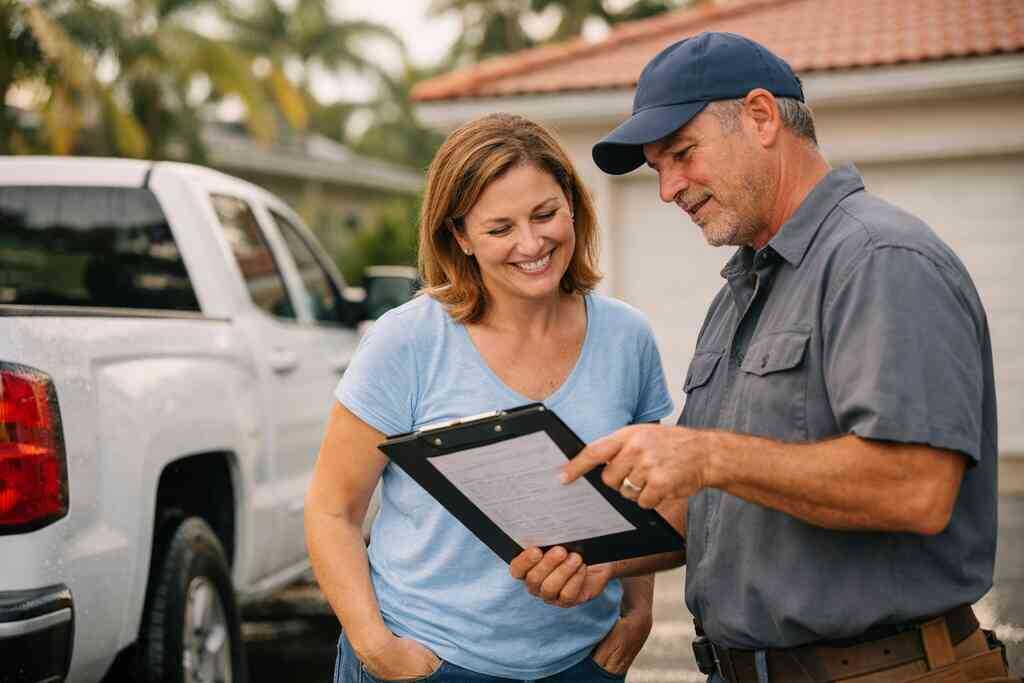
A homeowner called us during a sudden afternoon storm, worried that a contractor had already started roofing prep without showing real paperwork. That panic is familiar. If you are reading this late at night because a quote looks good but something feels off, trust that feeling. Contractor insurance verification is not busywork in Broward County. It protects your home, your budget, and your peace of mind.
Most homeowners do not enjoy this part, and that is completely normal. Insurance language sounds dry, but the risks are very real. One missing policy can turn a simple remodel into a claim dispute, a delay, or a problem with your lender or insurer. For South Florida homeowners, especially after storms, the stakes rise fast. Exterior work, roof work, and structural work demand a closer look because hurricane code compliance and permit requirements are always in the background.
At South Florida Contractors, we see the same pattern again and again. The contractor with the smoothest pitch is not always the safest choice. The good news is that you do not need to be an adjuster, attorney, or inspector to spot warning signs. You just need a practical checklist, a sharp eye, and the discipline to verify before you sign.
The proof that matters when a Broward contractor says they are fully covered
Why a verbal assurance is useless without a certificate of insurance you can actually read
A contractor can say “I’m covered” all day long. That means very little until you see a certificate of insurance. Ask for it before anyone steps on site. The document should clearly name the business and list active coverage dates. If the answer is vague, you already have your answer.
This is where contractor insurance verification becomes real. You are not looking for a promise. You are looking for documentation that can be checked, compared, and questioned. A certificate should at least show general liability insurance for contractors and, when applicable, workers compensation insurance contractor coverage. If the person sending it seems irritated by the request, treat that as a warning sign. Good professionals expect due diligence.
Here is the part most homeowners miss: a certificate of insurance is not the policy itself. It is a summary. That means it helps, but it is not the whole story. Still, it is the first and most practical filter when you are hiring a contractor in South Florida. If you want a deeper starting point, our how to check contractor insurance requirements in Florida guide walks through the basic checks.
How to confirm general liability insurance and workers compensation insurance contractor coverage before anyone steps on site
General liability insurance helps cover property damage or certain third-party injuries. Workers compensation insurance contractor coverage is different. It addresses injuries to workers on the job. You need both concepts clear in your mind, because one does not replace the other. A contractor can carry one and still leave you exposed on the other side.
Ask three direct questions: Who is insured? What policy is active now? And what exclusions apply? Keep the conversation simple. If the work involves ladders, saws, heavy materials, or demo dust, you should not hear excuses. For a home remodeling contractor South Florida project, this is not overkill. It is basic protection.
We once saw a Broward homeowner preparing for a kitchen removal and asking only about price. That contractor had a great number, but the certificate showed expired coverage. The homeowner walked away, found a different team, and later told us the replacement crew saved them from a claim after a broken water line during demo. That is the point. Insurance matters before the first hammer swings.
What Broward County homeowners should ask for when the job involves roofing, impact windows, stucco, or other hurricane-code exterior work
Exterior work raises the stakes. Roofing contractor South Florida projects, hurricane impact window installer South Florida jobs, and hurricane shutter contractor installs all interact with storm exposure and building code expectations. You should ask for more than a certificate. Ask whether the policy covers the specific trade being performed. Ask who actually performs the labor. Ask whether the contractor uses subcontractors, because that changes the risk profile.
For stucco, roof tie-down work, and envelope repairs, hurricane code compliance matters. South Florida building codes are not a casual detail. They shape workmanship, the inspection path, and liability exposure. If the contractor seems surprised by that, you should be concerned. A serious coastal home builder Florida homeowner would expect this conversation. So would a South Florida custom home builder or anyone working near the coast.
A useful question is simple: “If something goes wrong, what part of this job is covered, and what is not?” That question cuts through sales language fast. It also helps you judge whether the contractor understands hurricane code compliance or is just repeating buzzwords. In Broward, that distinction can save you time, money, and regret.
The license lookup that separates a licensed contractor Broward County from a polished sales pitch
How to verify a contractor license through Florida credential verification and spot mismatched business names
Insurance alone is never enough. You also need to verify the license. That means using Florida credential verification and checking the business name carefully. Many homeowners stop too early and assume the logo on the truck means legitimacy. It does not. The name on the quote, the license, and the insurance should line up closely.
This is where a proper how to verify a contractor license process pays off. Look for the exact company name, the qualifying person, and the trade classification. If the paperwork says one entity and the proposal says another, ask why. A mismatched name can be harmless, or it can signal a shell game. You want the first explanation, not the second.
If you are comparing South Florida contractors, be consistent. Use the same lookup steps for a licensed contractor Broward County, a licensed contractor Palm Beach County, and a licensed contractor Miami-Dade. The counties may differ in permitting culture, but the license should stand up everywhere. For a quick reference, our how to verify a Florida contractor’s license resource is a practical place to begin.
What license status, disciplinary history, and trade classification can reveal about a general contractor near me South Florida
License status tells you more than “active” or “inactive.” It can show whether a contractor has restrictions, disciplinary history, or a trade scope that does not fit your project. That matters for a general contractor near me South Florida search, because polished marketing can hide weak credentials. The wrong classification on a remodel, addition, or exterior job is a serious issue. You do not want a cabinet-focused trade handling structural work without proper authority.
Disciplinary history is not always disqualifying, but it does deserve attention. Repeated complaints, unresolved actions, or abrupt company changes should prompt questions. Most homeowners never ask because they feel awkward. Do not feel awkward. You are the one carrying the risk.
On one condo renovation South Florida project, a homeowner discovered the contractor’s trade classification did not match the proposed scope. The kitchen looked simple on paper, but the plan involved structural changes and permit review. Because the mismatch was caught early, the homeowner avoided a long delay with the Broward County permit process. That is the kind of problem you want to find before demolition, not after.
Why Palm Beach County, Broward County, and Miami-Dade permitting expectations make license verification more than a box to check
Permits change the stakes. Palm Beach County permit requirements, Broward County permit expectations, and Miami-Dade permit review can all affect how the license is interpreted and how the project moves forward. A contractor may be licensed, but not prepared for the documentation a permit office expects. That is why license verification is tied to permit readiness, not just legal status.
This matters for South Florida kitchen remodeler work, South Florida bathroom remodeler work, and especially South Florida home additions. It also matters for second story addition South Florida projects, sunroom contractor South Florida jobs, and lanai builder South Florida scopes. The bigger the project, the less forgiving the paperwork becomes. Add HOA review or condo board approval, and the margin for error shrinks again.
If you are using a South Florida Contractors Directory Guide for 2026 Permits, do not stop at the listing. Confirm the license independently. The directory helps you find contractors near South Florida, but your job is to verify the details before work begins.
The insurance documents that actually tell you whether a contractor can survive a claim
How to review the certificate of insurance for expiration dates, policy limits, and the right named insured
A certificate of insurance should answer three questions quickly: Is the policy active? Is the coverage amount appropriate for the project? And is the named insured the same entity you are hiring? If any answer is unclear, pause. A policy that expires mid-project can leave everyone exposed. That is especially important for energy efficient remodeler work, South Florida flooring installer work, and South Florida tile contractor jobs that stretch across several weeks.
Policy limits deserve attention, even when you are not given exact dollar details. You do not need to guess the right amount. You do need to know whether the contractor carries meaningful coverage for the scope. A small drywall repair is different from a full coastal home builder Florida project. So is a cabinet swap versus a South Florida luxury renovation. Ask the insurer or agent to confirm the certificate if the paperwork feels thin.
The named insured matters because it reveals who is truly carrying the policy. A DBA name alone is not enough. If the company on the certificate is different from the company on the contract, stop and reconcile the mismatch. Our how to check contractor insurance requirements in Florida article explains this part in more detail.
When additional insured verification protects a homeowner during a remodel or addition
Additional insured verification sounds technical, but the idea is simple. It is a way to confirm that another party, often a homeowner or property owner, has some protection under the contractor’s policy for the job. Not every project requires this setup. Still, on remodels and additions, it is worth asking about. That is especially true when the work affects occupied spaces or shared property lines.
You may hear this term during South Florida design build meetings or during contractor questions before signing a contract in South Florida. Do not let the jargon throw you. Ask the contractor to explain it plainly. If they cannot explain the purpose in normal language, they probably do not handle risk management carefully enough. That matters more than a flashy presentation.
Here is a practical check: if the project touches structural walls, waterproofing, utility reroutes, or a new addition, ask whether the policy can reflect additional insured verification. That extra question often separates organized contractors from improvisers. It also helps with contractor dispute resolution later, because paperwork is clearer from day one.
Why subcontractor insurance verification matters on South Florida home additions, condo renovation South Florida, and townhome remodeling South Florida
Subcontractors change the risk picture fast. A general contractor may have solid coverage, but the electrician, roofer, or installer working under them may not. That is why subcontractor insurance verification matters on South Florida home additions, condo renovation South Florida, and townhome remodeling South Florida projects. If someone else is swinging the hammer, their coverage matters too. This is the part many homeowners never see. The primary contractor may handle the estimate, while the actual labor comes from multiple crews. If one of those crews lacks proper coverage, problems can spread quickly. 
Ask who is responsible for verifying each subcontractor. Ask how often the contractor reviews those documents. On larger jobs, that should be routine.
A homeowner in a waterfront neighborhood once hired for a lanai rebuild and assumed the main contractor covered everyone. Halfway through, a subcontractor issue surfaced during permit review, and the paper trail got messy. The fix was not glamorous. It was methodical. The homeowner asked for updated subcontractor insurance verification, then paused work until everything matched. That pause saved months of avoidable stress.
The project details that decide whether insurance is real protection or just paperwork
Why roofing contractor South Florida work, hurricane shutter contractor installs, and hurricane impact window installer South Florida jobs need tighter documentation
Some jobs demand more scrutiny because the weather does not forgive mistakes. Roofing contractor South Florida work, hurricane shutter contractor installs, and hurricane impact window installer South Florida jobs all sit close to hurricane code compliance. That means the insurance file should be cleaner, the license should be current, and the scope should be obvious. You do not want vague answers on a job that protects the whole house.
Ask for proof that the contractor understands the permit path and the inspection sequence. Exterior work is not just labor. It is compliance, documentation, and accountability. If a contractor talks as if permits are optional, stop immediately. South Florida building codes exist because wind, water, and debris are not theoretical here. They are annual reality.
For a homeowner near the coast, this is also where the right contractor becomes obvious. A roofing contractor in Palm Beach team that knows the local permit process, hurricane roof tie-downs, and inspection timing will answer clearly. A less prepared contractor will dodge specifics. That is a difference you can hear in the first conversation.
How change orders, lien waiver Florida forms, and contractor bonding requirements can expose gaps in coverage
Change orders are normal. They are written changes to the original scope. The trouble starts when they are undocumented or rushed. If the contractor adds work after demo, your insurance and liability picture can change. That is why change order contractor Florida practices matter so much. Every change should be written, priced, and signed.
Lien waivers matter too. A lien waiver Florida form is a document showing a contractor or subcontractor gives up the right to file a lien for work already paid. It is not the same as insurance, but it tells you who got paid and when. If someone refuses to provide clean paperwork, that is a warning sign. Payment disputes often start there.
Contractor bonding requirements also deserve a look. Bonding is different from insurance, but both reduce risk. If a contractor claims to be fully protected and cannot explain the bond, the policy, and the waiver process in plain English, keep looking. The South Florida permit guide for remodels and exterior work is useful when you want the paperwork side explained without fluff.
What to confirm for pool deck contractor South Florida, paver installation South Florida, and other outdoor project contractor insurance situations
Outdoor jobs seem simple until they are not. Pool deck contractor South Florida work can involve drainage, slip resistance, deck coating, and structural edges. Paver installation South Florida projects can affect grading, runoff, and trip hazards. Screen enclosure contractor South Florida work can intersect with wind load requirements and HOA review. These are not small issues in a region where storms and humidity punish weak workmanship.
Ask the contractor what happens if the site causes damage to irrigation, windows, or neighboring property. Ask how they protect against claims during concrete cutting, hauling, and staging. Ask whether their coverage matches the jobsite realities. Outdoor project contractor insurance should reflect the messiness of actual field work, not just the clean version in a brochure.
We have seen homeowners focus only on color samples and paver patterns while the coverage questions got skipped. That is a mistake. A beautiful patio is not much comfort if the insurance trail collapses after a crack, flood, or drainage complaint. Good contractors expect these questions. Bad ones hope you will not ask.
The final go or no-go check before you sign in South Florida
How to compare proof of insurance, license status, and permit readiness without getting distracted by the lowest bid
The lowest bid is tempting. It always is. But price alone tells you very little about risk. A stronger comparison looks at proof of insurance, license status, scope, permit readiness, and communication quality together. If one contractor is cheaper because they skipped coverage or underestimated the permit burden, that bargain will not last.
Use a simple checklist before you sign. Confirm the certificate. Confirm the license. Confirm the scope. Confirm the permit plan. Then compare the bids on equal terms. If you want a stronger reference for this process, our how to compare contractor estimates guide is built for exactly that kind of review.
This is also where a licensed contractor in Broward County becomes more than a phrase. You are not just hiring labor. You are hiring judgment. That judgment should show up in the paperwork before it shows up on the job site.
Why South Florida permit process details, HOA rules, and hurricane code compliance should be confirmed before the contract is signed
The South Florida permit process can be frustrating, but skipping it is worse. HOA rules can add another layer. Hurricane code compliance can add yet another. If your contractor acts as if those steps are optional, that is a deal breaker. Never let anyone minimize a Palm Beach County permit, Broward County permit, or Miami-Dade permit requirement.
This is especially true for condo renovation South Florida work, townhome remodeling South Florida projects, and South Florida HOA permit situations. Those jobs often need more coordination than homeowners expect. The contractor should be able to explain what is permitted, what is inspected, and what is deferred. If the explanation gets fuzzy, the project may be fuzzy too.
One couple near the Intracoastal nearly signed for a Florida room expansion without checking HOA documents. The contractor said it would “probably be fine.” Probably is not a plan. They stopped, verified the submission path, and avoided a costly redo after the board requested revisions. That is the value of slowing down before signing.
When to stop the conversation and look for another South Florida contractors listing if the paperwork feels incomplete or evasive
You do not need to argue with a contractor who will not provide basics. If the insurance certificate is missing, the license information is inconsistent, or the permit answers keep changing, stop. That is not overreacting. That is contractor fraud prevention in practical form. A trustworthy professional will not punish you for being careful.
Look for another South Florida contractors listing if the conversation feels slippery. The right team will respect your questions and answer them directly. That matters for home remodeling contractor South Florida projects, South Florida foundation repair, South Florida concrete contractor work, and South Florida luxury renovation scopes alike. Serious work deserves serious paperwork. The same goes for oceanfront home contractor and waterfront home builder South Florida projects, where exposure is higher and documentation matters more.
You do not have to figure this out alone, and you do not have to do it all today. Start with one phone call. Ask for the certificate, the license, and the permit plan in writing. Then compare two more bids before you move forward.
Frequently Asked Questions
Question: What is the fastest way to do contractor insurance verification before hiring a contractor in South Florida?
Answer: Start with a certificate of insurance check and make sure the business name, policy dates, and coverage type all match the contractor you are considering. Then confirm the information directly with the insurer or agent if anything looks off. For hiring a contractor in South Florida, that quick check should include contractor liability insurance, workers compensation insurance contractor coverage, and an insurance policy expiration check. South Florida Contractors recommends verifying before any work begins, especially for roof work, structural work, or other exterior projects where hurricane code compliance and South Florida building codes matter. If you are using the South Florida Contractors directory to find a contractor South Florida wide, use it as a starting point, then verify licensing and insurance independently before signing anything.
Question: How do I know if a licensed contractor Broward County or licensed contractor Miami-Dade is actually qualified for my project?
Answer: A license lookup is only the beginning. You should use how to verify a contractor license through Florida credential verification, then compare the license status, trade classification, and business name against the proposal and certificate of insurance. That matters whether you are hiring a licensed contractor Broward County, licensed contractor Palm Beach County, or licensed contractor Miami-Dade. For larger projects like a home remodeling contractor South Florida job, condo renovation South Florida, or South Florida home additions, the license must fit the actual scope. If the contractor is handling roofing, windows, or structural work, confirm that the scope lines up with hurricane code requirements and the South Florida permit process, including the correct Broward County permit or Miami-Dade permit path when applicable.
Question: What should I look for in the Best 5 Ways to Verify Contractor Insurance in Broward County when comparing bids?
Answer: The biggest mistake homeowners make is comparing price without comparing protection. In Best 5 Ways to Verify Contractor Insurance in Broward County, the real goal is to compare proof of insurance from contractor, license status, permit readiness, and communication quality side by side. Ask for proof of insurance, check for additional insured verification when appropriate, and confirm whether subcontractor insurance verification is part of the contractor’s process. This is especially important for roofing contractor South Florida projects, hurricane impact window installer South Florida jobs, hurricane shutter contractor work, and other outdoor project contractor insurance situations. A lower bid is not a better bid if the contractor cannot explain contractor bonding requirements, lien waiver Florida paperwork, or change order contractor Florida procedures in plain language.
Question: Why does South Florida Contractors emphasize permit verification for projects like kitchen remodels, additions, and exterior upgrades?
Answer: Because the South Florida permit process is part of protecting your home, not just checking a box. Whether you are planning a South Florida kitchen remodeler project, South Florida bathroom remodeler project, sunroom contractor South Florida work, lanai builder South Florida job, or a second story addition South Florida project, the permit path affects safety, inspections, and compliance. Exterior and structural work also need hurricane code compliance, which is why South Florida building codes and the Florida Building Code 2026 framework matter so much in this region. A contractor who understands Palm Beach County permit, Broward County permit, and Miami-Dade permit expectations is more likely to manage your project responsibly. South Florida Contractors helps homeowners find a contractor South Florida wide, but always with the reminder to verify licensing and insurance before signing.
Question: Can South Florida Contractors help me choose between a coastal home builder Florida, South Florida custom home builder, or general contractor near me South Florida?
Answer: Yes, South Florida Contractors is built to help homeowners compare qualified professionals across Palm Beach, Broward, and Miami-Dade Counties, but the final decision should always come down to verification. A coastal home builder Florida project, South Florida custom home builder scope, or general contractor near me South Florida search should be filtered through contractor credential verification, contractor insurance requirements Florida, and permit readiness. If you are building or renovating near the water, you should also ask about hurricane roof tie-downs, hurricane code compliance, contractor liability insurance, and subcontractor insurance verification. The right match may be a South Florida design build team, oceanfront home contractor, waterfront home builder South Florida, or South Florida luxury renovation specialist, but only after confirming the paperwork and making sure the contractor is licensed and insured for the exact scope of work.