

A homeowner in Boca called during a thunderstorm, worried about a leaking roof and a contractor who “had everything covered.” He had a license number. He had a polished estimate. He even had a logo on the truck. Still, one missing insurance detail could have turned a repair into a mess with no easy cleanup. If you feel uneasy about that kind of uncertainty, you are not being dramatic. You are being careful, and in South Florida, careful saves money.
The insurance gap that turns a good contractor into a legal headache
Why a South Florida project can look licensed on paper but still leave you exposed
A contractor can look legitimate and still leave you exposed. That is the part most homeowners miss. A license alone does not tell you whether the company can absorb an accident, a claim, or a subcontractor mistake. In South Florida, where exterior work, moisture, and wind exposure are constant realities, that gap matters fast. A South Florida contractors directory for homeowners helps you start the search, but it should never replace verification.
We hear this from clients almost every week. They find a licensed contractor Palm Beach County, licensed contractor Broward County, or licensed contractor Miami-Dade, then assume the rest is automatic. It is not. A contractor may be properly licensed and still carry expired coverage, weak exclusions, or no workers’ compensation at all. That is why contractor insurance requirements Florida deserve the same attention as pricing.
Here is the part most homeowners miss. The legal headache often starts after the job, not during it. A ladder falls. A tile stack slides. A subcontractor gets hurt. Suddenly, the difference between a good bid and a safe bid becomes painfully clear. If you are trying to find a contractor South Florida, slow down long enough to check the protection behind the proposal.
The difference between proof of insurance for contractors and a real contractor insurance certificate review
Proof of insurance for contractors is a starting point, not the finish line. A certificate can show a policy number, carrier name, and effective dates. That is useful, but it is not the same as understanding what is actually covered. A real contractor insurance certificate review checks whether the policy matches the job, the contract, and your property risk. That is especially important before you approve demolition or pay a deposit.
A certificate review should answer practical questions. Does the policy include general liability insurance for contractors? Is workers compensation insurance Florida contractors coverage active? Are the dates current? Are there exclusions for roofing, height work, or subcontractors? If a contractor hesitates to provide clear documents, treat that hesitation as information.
On one kitchen remodel in Fort Lauderdale, a homeowner nearly signed with a company that looked clean on paper. The certificate was real, but the policy had lapsed two weeks earlier. The contractor blamed an accounting error. The homeowner paused, asked for updated documents, and avoided a very expensive problem. That kind of patience feels awkward in the moment. It feels brilliant later.
Why hurricane-prone exterior work raises the stakes for roofing contractor South Florida and window crews
Exterior work in South Florida is not routine. Wind loads, rain intrusion, and impact resistance change the risk profile of the entire project. That is why a roofing contractor South Florida, a hurricane impact window installer South Florida, or a hurricane shutter contractor should face stricter scrutiny than a crew doing simple cosmetic repairs. If the work touches the shell of the house, the insurance and permit picture matters more. So do hurricane code compliance details.
Roofing and window projects also attract more subcontractors, more material movement, and more ladder time. That increases the chance of injury and property damage. If a crew is replacing shingles, setting impact units, or anchoring shutters, you want to know exactly who is covered. You also want to know whether the policy reflects the actual scope. A cheap bid can become expensive quickly when water gets in during a summer storm.
What every homeowner should verify before anyone touches the jobsite
How to verify a contractor license Florida without relying on a business card or ad
Do not rely on a truck decal, ad, or social media post. Verify a contractor license Florida through the state record and confirm the name matches the company that sent the proposal. The business name on a website and the license holder on paper are not always the same thing. That mismatch is common enough to deserve caution. If you are comparing contractors, start with a contractor license and insurance check before you talk scope.
You should also confirm the license type fits the job. A home remodeling contractor South Florida may be right for interior work, but a structural project may require different qualifications. The same logic applies to a coastal home builder Florida, a South Florida custom home builder, or a South Florida luxury renovation team. Bigger work demands cleaner documentation. Smaller work still deserves the same verification.
For homeowners juggling kids, work, and three bids on the counter, this step feels annoying. That is normal. But a ten-minute check can save weeks of contractor dispute resolution later. If the contractor cannot point you to current license details, move on. Good professionals expect the question.
What general liability insurance for contractors should cover on a South Florida job
General liability insurance for contractors should protect against property damage and certain third-party claims. That means the policy should respond if the crew damages a window, dents a garage door, or causes water intrusion from a work mistake. It does not mean every loss is covered. It also does not replace the contractor’s obligation to work carefully. Still, this coverage is a core part of contractor risk management.
For South Florida jobs, look closely at the job type. A South Florida kitchen remodeler, South Florida bathroom remodeler, South Florida flooring installer, or South Florida tile contractor may need coverage that matches dust, demolition, and material handling. A South Florida concrete contractor or South Florida foundation repair company may need stronger attention to excavation and adjacent-property issues. If you are planning a South Florida home additions project, the risk grows again because framing, roofing tie-ins, and waterproofing all intersect.
One homeowner in Coral Springs hired a contractor for a bathroom update with new tile, a vanity wall, and a shower pan replacement. The contractor had a clean estimate but no clear explanation of liability coverage. The homeowner asked for it anyway. Good thing. A failed supply line during demo could have soaked the unit below. Insurance does not stop every mistake, but it prevents one mistake from becoming a household crisis.
Why workers compensation insurance Florida contractors matters even when the crew looks small
Workers compensation insurance Florida contractors is not optional just because the crew looks tiny. A two-person crew can still create a serious exposure if someone gets hurt. If the contractor has no coverage, the injured worker may look to the homeowner’s policy, the contractor’s assets, or the jobsite relationship for recovery. That is a bad place to be. You do not want your home involved in that chain.
This matters for almost every category of work. A pool deck contractor South Florida, paver installation South Florida crew, screen enclosure contractor South Florida, or outdoor kitchen contractor South Florida team may all use ladders, saws, lifts, or subcontract labor. Even a South Florida cabinet maker moving heavy boxes through a tight hallway can trigger injury risk. The size of the crew is not the point. The exposure is.
Here is a simple rule. If somebody says they are “small enough not to need it,” ask for the policy anyway. Ask calmly. Ask early. If they get defensive, that tells you something useful. Safe contractors understand the question.
When contractor bonding requirements Florida become part of the decision and why bonding is not insurance
Contractor bonding requirements Florida come up in some projects, public work, and larger private jobs. A bond is a promise that certain obligations will be met or that a claim process exists if they are not. But bonding is not insurance. Insurance protects against accidents and covered losses. Bonding is more about financial assurance and compliance. The distinction matters.
Bonding can be useful when you want another layer of accountability. It may be relevant for a South Florida custom home builder, South Florida design build firm, or contractor handling a second story addition South Florida project. It can also show financial discipline. Still, do not let a bonded contractor talk you out of checking actual insurance. You need both concepts clear in your head.
The paper trail that separates a trusted bid from a risky one
How to ask for insurance documents the right way before you sign anything
Ask for the documents before you sign the contract. Not after. Not “sometime next week.” Right away. Say you want current proof of insurance, license details, and any subcontractor coverage they rely on. If the contractor is professional, that request will feel routine. If it causes friction, you have learned something valuable before any money leaves your account.
Use direct language. Ask for a contractor policy expiration check, the carrier name, and the certificate holder information. If the job includes impact windows, roofing, or exterior doors, ask whether the coverage specifically fits that scope. That is especially smart for a hurricane impact window installer South Florida or hurricane shutter contractor. You are not being difficult. You are being precise.
A quick checklist helps:
- Current certificate of insurance
- Active license matching the business name
- Workers’ compensation status
- Liability coverage tied to the project scope
- Subcontractor coverage, if used
- Expiration dates that extend through the work period
What to look for in an additional insured contractor policy and why it can protect you
An additional insured contractor policy can offer extra protection to the homeowner or property owner when it is properly written. That means you may be added to the contractor’s policy for certain claims tied to the work. It does not make you untouchable. It does add another layer of defense when a claim emerges from the project. That matters on larger remodels and exterior work.
This is especially relevant for condo renovation South Florida projects and larger South Florida luxury renovation jobs. When multiple parties are involved, the insurance trail gets complicated quickly. An additional insured endorsement can help clarify who gets notified and who may be defended if a claim arises. Always ask for the endorsement, not just a verbal promise. Paper beats reassurance.
How to spot a contractor policy expiration check problem before work begins
The easiest insurance mistake is also one of the most expensive. The policy expires during the project. You can avoid that by doing a contractor policy expiration check before work starts and again if the job stretches longer than expected. Long projects happen. Delays happen. Material shortages happen. Hurricane season happens. That is real life in South Florida.
If the certificate ends before your final inspection, you need updated proof. Do not assume renewal happened automatically. Do not accept “we always renew on time” as evidence. Ask for the new certificate. Ask again if work pauses and restarts. A clean paper trail prevents awkward arguments later.
Why lien waiver Florida language belongs in the same conversation as insurance and payment
A lien waiver Florida document says the contractor or supplier gives up certain rights to place a lien for the amount covered by payment. In plain English, it helps protect you from paying twice for the same work. That makes it part of the same conversation as insurance and payment timing. If the contractor wants a deposit, a progress payment, or a final draw, ask how the waiver will be handled. This matters on projects with multiple trades, such as South Florida home additions, lanai builder South Florida jobs, or sunroom contractor South Florida work. Materials may be ordered early. Subs may be paid in stages. Without lien waivers, your exposure can outlive the project. That is avoidable. Ask for clean paperwork every time money moves. South Florida realities that change the rules on exterior and structural work
How the South Florida permit process affects roofing, impact windows, and hurricane shutters
The South Florida permit process is not background noise. It is part of the job. Roofing, impact windows, and hurricane shutters usually trigger permit review, inspections, and code compliance checks. That is true across Palm Beach County permit, Broward County permit, and Miami-Dade permit jurisdictions, even though each can feel different in practice. Never let a contractor suggest otherwise. 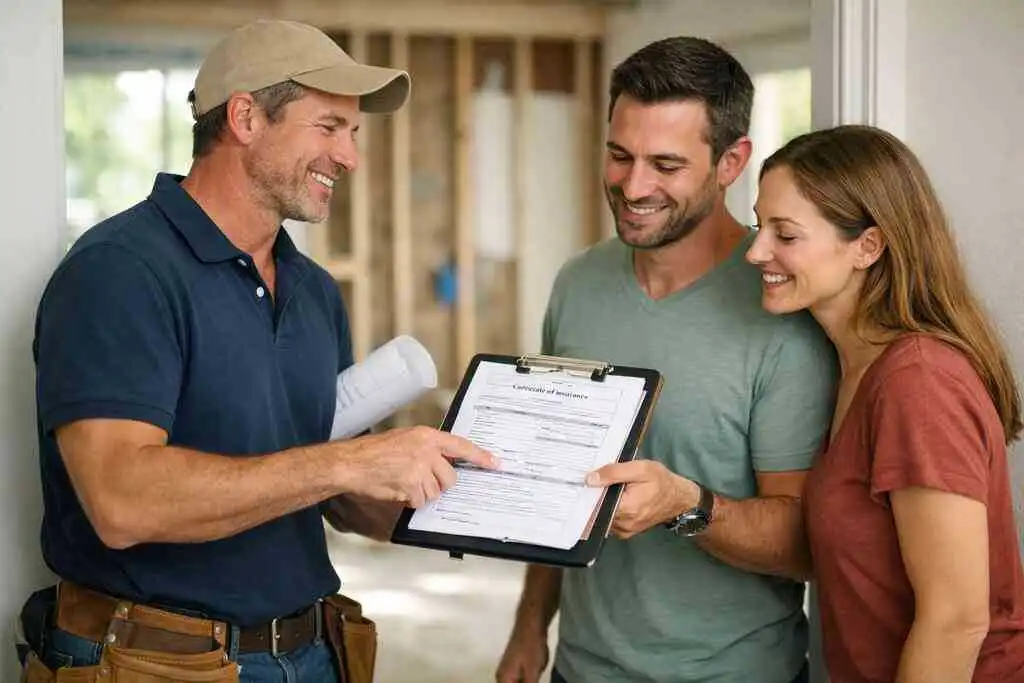
Permits and insurance belong together because they reveal how seriously the contractor treats the work. A roofing permit often means the contractor must coordinate inspections, product approvals, and installation standards. Impact windows and shutters add another layer, because the product has to fit the opening, the anchoring must be correct, and the paperwork must match the installed system. If your contractor shrugs off permits, ask why. Then listen carefully.
Why Palm Beach County permit, Broward County permit, and Miami-Dade permit rules can feel very different
These counties share a region, but their processes do not always feel the same. A Palm Beach County permit may involve one set of document expectations, while a Broward County permit or Miami-Dade permit may demand different submittal habits, plan notes, or correction cycles. You may feel that difference most on home additions, window replacements, or structural changes. That is not your imagination. It is the reality of local administration.
I have seen homeowners get frustrated when one county asks for revisions that another would not flag. That is normal, especially for a general contractor near me South Florida search that crosses county lines. The contractor should know the local routine before ordering materials or scheduling demolition. Good paperwork speeds the job. Sloppy paperwork slows everything.
What South Florida building codes and hurricane code compliance mean for coastal home builder Florida projects
South Florida building codes are not theoretical. They reflect wind, moisture, corrosion, and storm pressure. Hurricane code compliance shapes almost every exterior and many structural decisions, from roof fastening to opening protection. If you are hiring a coastal home builder Florida team, this is not a side issue. It is the foundation of the project.
For oceanfront and near-ocean properties, the stakes are higher. Salt air, wind-driven rain, and exposure patterns make small mistakes expensive. A detail that seems minor inland can become a leak path near the coast. That is why you want proof that the contractor understands the code path, not just the design concept. If they can explain the sequence clearly, you are in better hands.
Why oceanfront home contractor and waterfront home builder South Florida jobs deserve extra scrutiny
Oceanfront home contractor and waterfront home builder South Florida projects deserve extra scrutiny because the environment is unforgiving. Hardware corrodes faster. Moisture moves differently. Wind loads are often a bigger concern. The insurance file should reflect that seriousness. So should the permit plan.
A waterfront project may also involve higher scrutiny from neighbors, associations, and inspectors. If the contractor cannot explain how they will protect materials, stage the work, and document compliance, pause. You are not just hiring for labor. You are hiring for judgment. That matters more near the water than almost anywhere else.
When HOA permit rules and condo renovation South Florida approvals can slow the insurance check
HOA permit rules can add a second layer of approval before work begins. Condo renovation South Florida projects often require board notices, insurance certificates, elevator reservations, and specific contractor forms. This can slow the insurance check, but it should not weaken it. In fact, it should sharpen it.
If you live in a managed community, ask for the association packet early. Your contractor should know how to supply current insurance and licensing documents in the format the HOA wants. That is part of being organized. If they seem confused by the process, think twice. A well-run contractor should not treat association paperwork like an inconvenience.
The next move that protects your remodel before the first deposit clears
How to compare licensed contractor Palm Beach County, licensed contractor Broward County, and licensed contractor Miami-Dade options without chasing the lowest number
Price matters, but only after you compare the protection behind it. A licensed contractor Palm Beach County may quote differently from a licensed contractor Broward County or licensed contractor Miami-Dade because permitting, labor, and risk vary. That is normal. What is not normal is choosing the cheapest number when the insurance file is thin. That is how homeowners get burned.
Use a simple comparison:
ItemWhat you wantWhy it mattersLicenseMatches company and scopeConfirms legal authorityLiability insuranceCurrent certificateCovers certain property claimsWorkers’ compActive proofReduces injury exposureBondingIf applicableAdds financial assurancePermitsPlanned before workSupports code complianceThis is where how to verify contractor insurance requirements in Florida becomes practical, not theoretical. Compare documents, not just promises. The lowest bid is only valuable if the contractor can actually finish cleanly.
Why a change order contractor Florida conversation should happen before drywall, tile, or framing changes
A change order contractor Florida discussion should happen before scope shifts, not after the dust settles. A change order is a written update to the contract when the project changes in cost, labor, or materials. If you wait until after drywall, tile, or framing changes, you are already in a dispute zone. That is how budgets drift and trust erodes.
On a recent bathroom remodel, a homeowner wanted to move a vanity wall after demolition started. The change seemed simple. It was not. Plumbing, electrical, and tile layout all shifted. Because the contractor documented the change first, nobody argued later about who approved what. That one habit saved everyone time and frustration.
When contractor dispute resolution starts with documentation instead of frustration
Contractor dispute resolution usually starts long before anyone is angry. It starts with photos, certificates, permits, signed scopes, and payment records. If something goes wrong, that paper trail becomes your best friend. If you have it, the conversation stays calmer. If you do not, memory becomes the battlefield.
Keep copies of everything. Keep emails. Keep inspection notes. Keep lien waivers. Keep change orders. If a disagreement emerges, that documentation is far more useful than a heated phone call. In our experience, the homeowner who stays organized usually has the stronger position.
How to choose a general contractor near me South Florida with a clean permit and insurance file
A general contractor near me South Florida should bring more than a polished estimate. They should bring a clean permit plan, current insurance, and a clear explanation of scope. If they work on kitchens, baths, decks, additions, or exterior protection, they should also explain how they handle inspections and subs. That is basic professionalism. It should not be hard to get.
If you want a practical next step, start with three local candidates and ask each for the same packet. Ask for license, insurance, permit approach, and references from similar work. Then compare the answers side by side. You do not have to figure this out alone, and you do not have to figure it all out today. Start with one phone call, then request the documents before any deposit clears.
Frequently Asked Questions
Question: How do I verify contractor insurance requirements Florida before hiring a licensed contractor Palm Beach County, licensed contractor Broward County, or licensed contractor Miami-Dade?
Answer: Start with a contractor license and insurance check before you sign anything or send a deposit. Ask for current proof of insurance for contractors, confirm the business name matches the license, and review the certificate dates to make sure coverage is active for the full job. You should also ask whether the contractor carries general liability insurance for contractors and workers’ compensation insurance Florida contractors, because both matter on South Florida projects. If the work involves roofing, exterior openings, or structural changes, make sure the contractor can explain how the permit and insurance verification will work alongside the South Florida permit process. South Florida Contractors helps homeowners compare options across Palm Beach, Broward, and Miami-Dade, but you should always verify licensing and insurance directly before hiring any contractor.
Question: What should I look for during a contractor insurance certificate review for a roofing contractor South Florida or hurricane impact window installer South Florida?
Answer: A strong contractor insurance certificate review should go beyond a quick glance at a piece of paper. Check the carrier name, policy number, effective dates, and whether the coverage is still active. Then ask whether the policy actually fits the scope of your job. For example, a roofing contractor South Florida, hurricane impact window installer South Florida, or hurricane shutter contractor should be able to show coverage that makes sense for exterior work and hurricane code compliance. You should also ask about exclusions, subcontractor coverage, and whether the contractor policy expiration check shows the policy will stay active until the work is complete. If any detail is unclear, request updated documents before moving forward. That kind of caution is exactly what protects South Florida homeowners from costly surprises.
Question: How does the blog How to Check Contractor Insurance Requirements in Florida apply to South Florida kitchen remodeler, South Florida bathroom remodeler, and home remodeling contractor South Florida projects?
Answer: The blog is meant to help homeowners understand that a polished estimate is not enough. Whether you are hiring a South Florida kitchen remodeler, South Florida bathroom remodeler, or home remodeling contractor South Florida, you should verify licensing, insurance, and permit plans before work begins. Interior remodels can still involve water damage, electrical issues, demolition injuries, and subcontractor mistakes, so contractor risk management matters even when the job seems small. Ask for a contractor license Florida verification, current insurance, and a clear explanation of how change order contractor Florida requests will be handled if the scope shifts. South Florida Contractors is a useful starting point because it helps homeowners find a contractor South Florida while staying focused on the documents that protect both the project and the property.
Question: Do contractor bonding requirements Florida replace insurance for South Florida custom home builder, South Florida design build, or coastal home builder Florida projects?
Answer: No, bonding does not replace insurance. Contractor bonding requirements Florida may provide an added layer of financial assurance, but they are not the same as general liability insurance for contractors or workers’ compensation insurance Florida contractors. A bonded contractor can still be underinsured, and an insured contractor can still need a bond depending on the project. That is why homeowners should ask for both bonding and insurance details when hiring a South Florida custom home builder, South Florida design build firm, or coastal home builder Florida team. This is especially important on larger projects like South Florida home additions or second story addition South Florida work, where permits, inspections, and hurricane code compliance all raise the stakes. Always confirm the paperwork before construction starts.
Question: What makes permits and insurance especially important for oceanfront home contractor, waterfront home builder South Florida, and outdoor living projects like pool deck contractor South Florida or lanai builder South Florida work?
Answer: Exterior and structural projects in South Florida face more weather exposure, more code scrutiny, and more chances for damage if something goes wrong. That is why an oceanfront home contractor, waterfront home builder South Florida, pool deck contractor South Florida, paver installation South Florida crew, screen enclosure contractor South Florida, or lanai builder South Florida should be able to explain both the South Florida permit process and the insurance coverage behind the job. For work near the water or on the shell of the home, hurricane code compliance and South Florida building codes matter as much as craftsmanship. Ask how the contractor handles Palm Beach County permit, Broward County permit, or Miami-Dade permit requirements, and whether they can provide lien waiver Florida paperwork when payments are made. South Florida Contractors gives homeowners a practical way to compare contractors, but the final decision should always be based on verified licensing, current insurance, and a clean permit file.