

A homeowner called us during a rain-heavy week in Broward and said the payment had already been made, but a supplier still claimed unpaid work. That moment creates real dread. You start wondering who still has rights against your property, and that feeling is completely normal. In South Florida, where storms, permits, and subcontractors all overlap, a sloppy paper trail can become a costly headache. The good news is that a careful contractor can prevent most of that trouble before it starts.
When a payment gets released but the lien never does, what South Florida homeowners are really exposed to
Why a lien waiver Florida is not the same thing as proof that everyone got paid
A lien waiver Florida is a release document, not a money audit. It says a party gives up certain lien rights for a specific payment amount or scope. It does not automatically prove that every subcontractor, supplier, or lower-tier party received cash. That difference matters because unpaid parties can still create pressure, delays, or legal noise if the paperwork is loose. If you are trying to protect your home, that distinction is everything.
This is where many homeowners feel stuck. You paid the draw, the contractor smiled, and the next day you hear a rumor about an unpaid material bill. That is why smart South Florida contractors treat waivers as part of a broader payment control system, not as a standalone form. If you need to find a contractor in South Florida, ask how they tie waivers to actual pay applications. A reputable team will explain their process plainly.
One client in a West Palm Beach condo had a kitchen upgrade with new cabinets, upgraded lighting, and a backsplash tie-in. The owner assumed the final payment cleared everyone. Later, the cabinet supplier had not signed a release, and the contractor had to reconcile the file before closeout. The project still finished, but the homeowner lost time and sleep. That is the part most homeowners miss.
The hidden chain between owner payment controls, subcontractor pay application, and mechanics lien prevention
The safest projects use a chain of documentation. The owner pays according to a draw schedule. The contractor submits a pay application. Subcontractors and suppliers submit releases. Then the contractor collects the final documentation before the next payment. That sequence is how mechanics lien prevention actually works in the real world.
Here is the part most homeowners miss: a waiver should match the money and the work. If a subcontractor finished framing but the waiver covers full project completion, the file can become messy fast. Good construction payment protection depends on matching each release to the exact amount earned. That is why project accounting for contractors is not just back-office work. It protects your house, your budget, and your timeline.
For homeowners, the lesson is simple. Ask for payment documentation before each draw. Ask for subcontractor pay application records when relevant. Ask for supplier releases on material-heavy jobs. If you are hiring a general contractor near me in South Florida, that conversation should feel normal, not awkward. The best firms expect it.
What changes when the project is in Palm Beach, Broward, or Miami-Dade and the paperwork must match the work
South Florida is not one market. It is three major counties with overlapping but distinct permitting realities. A licensed contractor Palm Beach County may be very organized about local inspections, while a licensed contractor Broward County may structure draws differently because of county workflow and HOA rules. A licensed contractor Miami-Dade often deals with stricter building-envelope expectations and more complex condo coordination. The paperwork should mirror the actual scope and location.
That matters for South Florida building codes, especially when the work touches exterior systems. Roof work, impact openings, and structural connections all invite closer scrutiny. If your contractor handles an ocean-adjacent property or a high-wind area, the file should reflect hurricane code compliance and the permit record should stay clean. Never let anyone suggest that the waiver can replace the permit. It cannot.
A homeowner in Coral Springs once told us the paperwork looked “fine” until the final inspection flagged a mismatch between the scope and the release package. The job itself was solid. The recordkeeping was not. The contractor had to reissue documents, and everyone lost momentum. In South Florida, the work and the paperwork need to agree.
The paper trail that keeps a project from turning into a payment dispute
How conditional lien waiver, unconditional lien waiver, partial lien waiver, and final lien waiver actually work in real jobs
These forms sound similar, but they behave very differently. A conditional lien waiver becomes effective only after payment clears. An unconditional lien waiver releases rights immediately for the covered amount. A partial lien waiver covers only part of the claim, often tied to a progress draw. A final lien waiver is the broadest release and should appear only when the job and payment are truly complete.
On a well-run project, the contractor uses the right form at the right time. That protects both sides. The homeowner gets lien waiver compliance in Florida. The contractor gets documented proof that the draw was processed correctly. If you are comparing South Florida contractors, ask which form they use for each stage. Vague answers are a warning sign.
Waiver typeBest used forMain homeowner benefitMain risk if used too earlyConditional lien waiverBefore payment clearsProtects against premature releaseDelay if payment does not processUnconditional lien waiverAfter payment clearsConfirms release for paid workHard to unwind if issued by mistakePartial lien waiverProgress drawsMatches payment to completed workUnder-documenting remaining scopeFinal lien waiverCloseoutHelps end the payment cycle cleanlyReleases too much if a punch list remains### Why contractor invoice reconciliation and change order contractor Florida records matter before every draw
A clean waiver is only as good as the numbers behind it. Contractor invoice reconciliation means comparing invoices, work completed, approved draws, and prior payments line by line. If the project changed, the documents must show it. That is where change order contractor Florida records become essential. A change order explains added work, deleted work, or price shifts before money moves.
Most homeowners find this step uncomfortable, and that is completely normal. No one enjoys checking line items while living through dust, noise, and decision fatigue. Still, the file has to be accurate before each draw. If your contractor cannot explain why an amount changed, you should pause. Construction contract administration is not a luxury on South Florida projects. It is the structure that keeps the project from wobbling.
We see this often on South Florida kitchen remodeler and South Florida bathroom remodeler jobs. A homeowner upgrades fixtures, moves plumbing, and adds custom lighting, then wonders why the payment changed. The answer is usually in the paperwork, not the mood of the day. If the numbers are tracked correctly, the waivers stay clean and the finish line stays visible.
Retainage release, progress payment waiver, and supplier lien waiver as the three documents that protect both sides
Retainage is the withheld amount held until closeout. A retainage release should happen only when the punch list, inspections, and final paperwork are truly finished. A progress payment waiver covers work already completed during the draw cycle. A supplier lien waiver proves a materials vendor has released its claim for the billed goods. Together, those three documents create balance.
This is where good construction management and payment controls earn their keep. The owner does not want to pay twice. The contractor does not want to front cash without a record. Suppliers do not want to become the forgotten party. When those interests are documented properly, the project stays calm. That is especially important on larger South Florida luxury renovation work and South Florida design build projects.
If your project includes specialty trades, ask for the waiver chain early. That applies to South Florida flooring installer packages, South Florida tile contractor deliveries, and custom millwork through a South Florida cabinet maker. It also applies to material-heavy exterior scopes. The bigger the job, the more careful the file should be.
What South Florida contractors do before the last check goes out
How licensed contractor Palm Beach County, licensed contractor Broward County, and licensed contractor Miami-Dade teams verify contractor licensing Florida and insurance before signing
Before a final check goes out, a disciplined team confirms licensing, insurance, and bond status. That starts with how to verify a contractor license in Florida and continues with insurance review. It also includes contractor insurance requirements Florida and contractor bonding requirements where applicable. You should never assume the paperwork is current just because the crew showed up on time. Verify it.
A strong licensed contractor Palm Beach County or licensed contractor Broward County firm will not bristle at this request. They expect it. The same is true for a licensed contractor Miami-Dade who works on dense, permit-heavy projects. Licensing tells you the contractor is allowed to do the work. Insurance tells you there is a backstop if something goes wrong. Those are not optional details.
If you are comparing bids for a home remodeling contractor South Florida, ask for documentation before the contract is signed. That advice applies to a coastal home builder Florida, a South Florida custom home builder, and even a South Florida bathroom remodeler. Never skip this step just because a company sounds confident. Confidence is not a substitute for verification.
Why hurricane code compliance, South Florida building codes, and the permit record should line up with the waiver record
Exterior work in South Florida lives under the shadow of wind, water, and inspection. That means hurricane code compliance should line up with the permit history and the waiver file. If a contractor pulled a Palm Beach County permit, a Broward County permit, or a Miami-Dade permit, the inspection trail should match the scope paid for in the draw package. A release that conflicts with the permit record can create avoidable confusion later. This matters a lot for roofs, openings, and structural attachments. A roofing contractor South Florida should document code-driven scope clearly, especially where hurricane roof tie-downs are involved. A hurricane impact window installer South Florida should connect the product paperwork to the permit and inspection record. If your project includes a hurricane shutter contractor or an exterior enclosure, the waiver should never float free of the permit file. 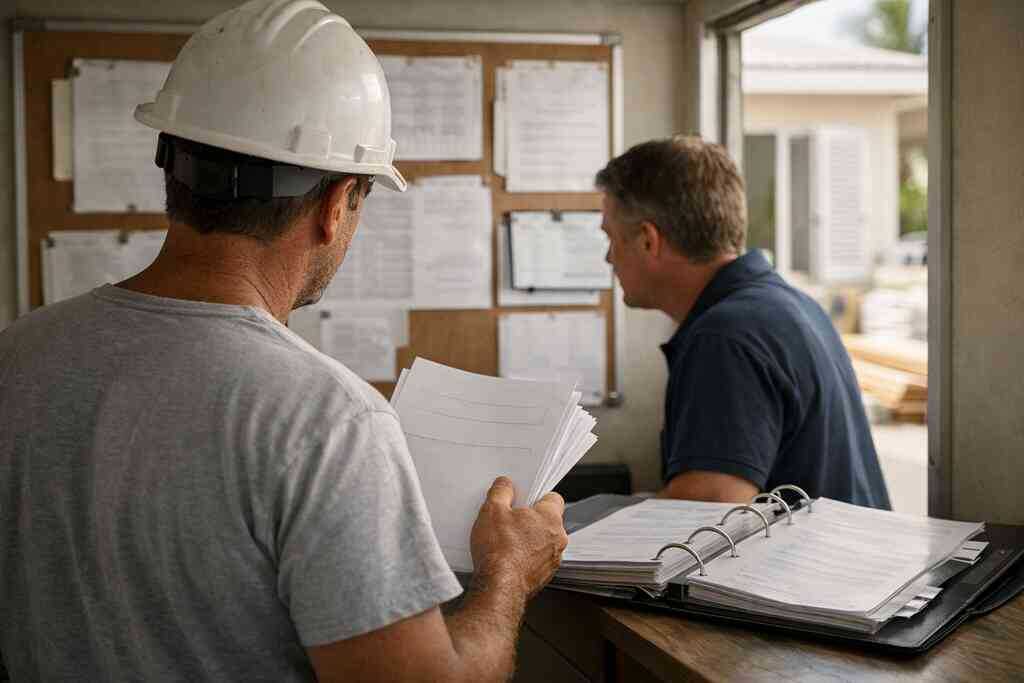
Here is a useful rule. If the work needed an inspection, the release package should acknowledge it. If the work involved code-sensitive details, the records should be organized before final payment. That practice protects the homeowner and helps the contractor finish without chasing signatures after everyone is tired.
The field realities for roofing contractor South Florida, hurricane impact window installer South Florida, and South Florida concrete contractor projects
Field conditions change the way waivers are handled. A roof replacement can uncover rotten decking. A window job can expose framing irregularities. A concrete scope can reveal subgrade problems or old patchwork. That is why roofing contractor South Florida teams often use staged releases instead of waiting for a single final stack. It is cleaner and safer.
On one project near the Intracoastal, a small roof repair turned into a larger decking replacement after inspection exposed hidden damage. The owner expected a simple release at the end. Instead, the contractor issued a partial lien waiver after the first phase, then held the final lien waiver until the corrected scope was inspected and paid. That extra step kept the file honest. It also kept the homeowner from paying for work that had not yet been verified.
The same principle applies to South Florida concrete contractor work, especially slabs, pool decks, and structural patches. It also matters for pool deck contractor South Florida jobs and paver installation South Florida projects that sit under HOA oversight. If you are doing a screen enclosure contractor South Florida project or a lanai builder South Florida scope, ask how the contractor ties each phase to the release packet. Good contractors welcome that question.
The safest next move when the job is still open and money is still moving
A contractor dispute resolution path that keeps the project alive without giving away lien rights Florida
Disputes do not have to become explosions. The best contractor dispute resolution starts with facts, not accusations. First, pause the next payment if the documentation is incomplete. Then request the invoice backup, waiver form, permit status, and change order history. That preserves lien rights Florida while keeping the conversation open.
A calm path works better than a dramatic one. Ask for a written explanation. Ask for dates, scope, and signatures. Ask what remains open before any final release is signed. If the contractor answers clearly, you often avoid the worst outcomes. If the answers drift, that tells you something important. Either way, you are protecting your position.
If you found the company through a directory and now need a reality check, that is fine. Many homeowners begin by trying to find a contractor South Florida and later discover they need better paperwork discipline. A reliable contractor should not fear a thorough closeout. The right process builds trust before the last dollar leaves your account.
What homeowners should demand from South Florida contractors before final payment on condo renovation South Florida, townhome remodeling South Florida, and South Florida home additions
Condo and townhome projects in South Florida add another layer. HOA rules, building access, elevator reservations, and shared-wall concerns can complicate payment timing. That is why condo renovation South Florida work often needs extra documentation. The same is true for townhome remodeling South Florida and South Florida home additions, where neighbors, common areas, and inspection timing all intersect.
Before final payment, ask for a tidy closeout package. That package should include the approved scope, final inspection status if applicable, remaining punch-list items, and every needed waiver. If the job involved a South Florida luxury renovation or a second story addition South Florida, the documents should be even more precise. Larger scopes create larger exposure. That is simple math.
Here is the practical standard. You should not sign the final release if the contractor cannot explain what is complete, what is pending, and what was already paid. You also should not feel rushed because the crew is packing up. Good contractors know that clean closeout protects everyone, including them.
The checklist for dispute-free project closeout so the next draw, final inspection, and final lien waiver all happen in the right order
Use a simple closeout sequence. It keeps the job moving and reduces mistakes. It also helps the contractor and owner stay aligned under pressure. For a dispute-free project closeout, the order matters more than the emotion of the day.
- Confirm the work scope against the signed contract and all approved change orders.
- Match the payment draw to the completed work only.
- Verify permits, inspections, and any HOA or condo approvals.
- Collect conditional or partial waivers before money clears, when appropriate.
- Release retainage only after punch-list completion.
- Sign the final lien waiver only when the project is truly closed.
That sequence works for South Florida contractors across the region, from energy efficient remodeler South Florida jobs to sustainable home builder South Florida projects. It also helps on South Florida bathroom remodeler closeouts, outdoor kitchen contractor South Florida jobs, and sunroom contractor South Florida work. In our experience, the biggest mistake is letting payment outrun documentation. You do not have to figure this out alone, and you do not have to figure it all out today. Start with one phone call, ask for one clean closeout packet, and verify one contractor before the next draw leaves your account.
Frequently Asked Questions
Question: What is the best way for South Florida contractors to manage a lien waiver Florida process without risking lien rights Florida on a residential project?
Answer: The safest approach is to treat the lien waiver Florida as part of a full payment-control system, not as a stand-alone form. Strong South Florida contractors tie each waiver to the payment draw schedule, invoice backup, and actual completed work. That means using the right document at the right time: a conditional lien waiver before payment clears, a partial lien waiver for progress draws, and a final lien waiver only at true closeout. This is how construction payment protection and mechanics lien prevention work in real projects. At South Florida Contractors, we encourage homeowners to verify the contractor’s licensing, insurance, and permit status before releasing the next draw. That applies whether you are working with a licensed contractor Palm Beach County, licensed contractor Broward County, or licensed contractor Miami-Dade. For exterior and structural work, the records should also align with hurricane code compliance, South Florida building codes, and the local permit file, because skipping permits or treating them lightly can create bigger problems later.
Question: How does Best Ways South Florida Contractors Handle Lien Waiver Florida help homeowners avoid payment disputes on kitchen, bath, and renovation projects?
Answer: The main value of Best Ways South Florida Contractors Handle Lien Waiver Florida is that it shows homeowners how good documentation prevents payment disputes before they start. On projects like a South Florida kitchen remodeler job, a South Florida bathroom remodeler project, or a South Florida luxury renovation, the contractor should reconcile invoices, approved change orders, and completed work before asking for the next payment. That contractor invoice reconciliation is what keeps the file clean. If there is added scope, the change order contractor Florida record should explain it before money moves. If a supplier has not issued a supplier lien waiver or a subcontractor has not signed a subcontractor lien release, the homeowner should ask for clarification before the next draw. South Florida Contractors helps homeowners look for these warning signs so they can make informed decisions, whether they are hiring a general contractor near me South Florida or reviewing bids from a home remodeling contractor South Florida. The goal is a dispute-free project closeout, not a rushed signature.
Question: What should I ask a licensed contractor Palm Beach County, licensed contractor Broward County, or licensed contractor Miami-Dade before signing a final lien waiver?
Answer: Before signing a final lien waiver, ask for a complete closeout package. That should include the approved contract scope, all change orders, final inspection status if required, permit records from the Palm Beach County permit, Broward County permit, or Miami-Dade permit process, and all required waivers from subs and suppliers. You should also confirm how to verify a contractor license and review contractor insurance requirements Florida and contractor bonding requirements. A reputable contractor should not hesitate to provide that information. This matters for any project, especially exterior or code-sensitive scopes like a roofing contractor South Florida job, a hurricane impact window installer South Florida project, or a hurricane shutter contractor installation. If the work touched the building envelope, hurricane roof tie-downs and hurricane code compliance should be reflected in the paperwork. South Florida Contractors advises homeowners to compare the paperwork against the work, because the final lien waiver should only be signed when the job is truly complete and the records are aligned.
Question: How do South Florida contractors handle retainage release, progress payment waiver, and supplier lien waiver on larger projects?
Answer: On larger jobs, the best South Florida contractors use staged documentation. A progress payment waiver covers work completed during an approved draw. A supplier lien waiver protects the owner from unpaid material claims. A retainage release is held until the punch list, inspections, and closeout documents are complete. This staged process helps both the owner and the contractor because it keeps cash flow moving while preserving lien waiver compliance. It is especially important on South Florida home additions, second story addition South Florida projects, condo renovation South Florida work, townhome remodeling South Florida, and South Florida design build jobs where multiple trades are involved. It also matters for specialty scopes like South Florida flooring installer, South Florida tile contractor, South Florida cabinet maker, pool deck contractor South Florida, and paver installation South Florida packages. South Florida Contractors recommends that homeowners ask for the waiver chain early so no one is surprised at the end.
Question: Why do permits and South Florida building codes matter when dealing with lien waiver Florida on exterior or structural work?
Answer: Permits and South Florida building codes matter because the release paperwork should match the actual scope of work and the inspection record. If a contractor pulled a Palm Beach County permit, Broward County permit, or Miami-Dade permit, that permit trail should connect to the work being paid for and released. This is especially important for a coastal home builder Florida, waterfront home builder South Florida, oceanfront home contractor, roofing contractor South Florida, South Florida concrete contractor, or South Florida foundation repair project. When the project involves hurricane code compliance, hurricane roof tie-downs, impact windows, or a screen enclosure contractor South Florida, the permit and waiver files should agree before the final check is released. South Florida Contractors reminds homeowners that a waiver is not a substitute for a permit. Never skip permitting, and never let anyone pressure you into signing final paperwork before the inspection and documentation are complete.
Question: How can South Florida Contractors help me find a contractor South Florida who handles lien waiver Florida paperwork correctly?
Answer: South Florida Contractors is built to help homeowners find a contractor South Florida who understands both the work and the paperwork. When you search our directory, you can compare contractors by location, review their details, and contact them directly before committing to a project. That makes it easier to find a general contractor near me South Florida, a home remodeling contractor South Florida, a South Florida custom home builder, or a South Florida ADA renovation specialist who takes contractor payment documentation seriously. We encourage homeowners to ask every candidate how they handle conditional lien waiver, unconditional lien waiver, partial lien waiver, and final lien waiver documents, plus whether they use subcontractor pay application tracking and contractor invoice reconciliation. For exterior work, ask how they coordinate with the South Florida permit process and local code requirements. For condo or HOA work, ask how they handle South Florida HOA permit requirements and closeout paperwork. The right contractor should be organized, transparent, and willing to verify licensing and insurance before work begins.