
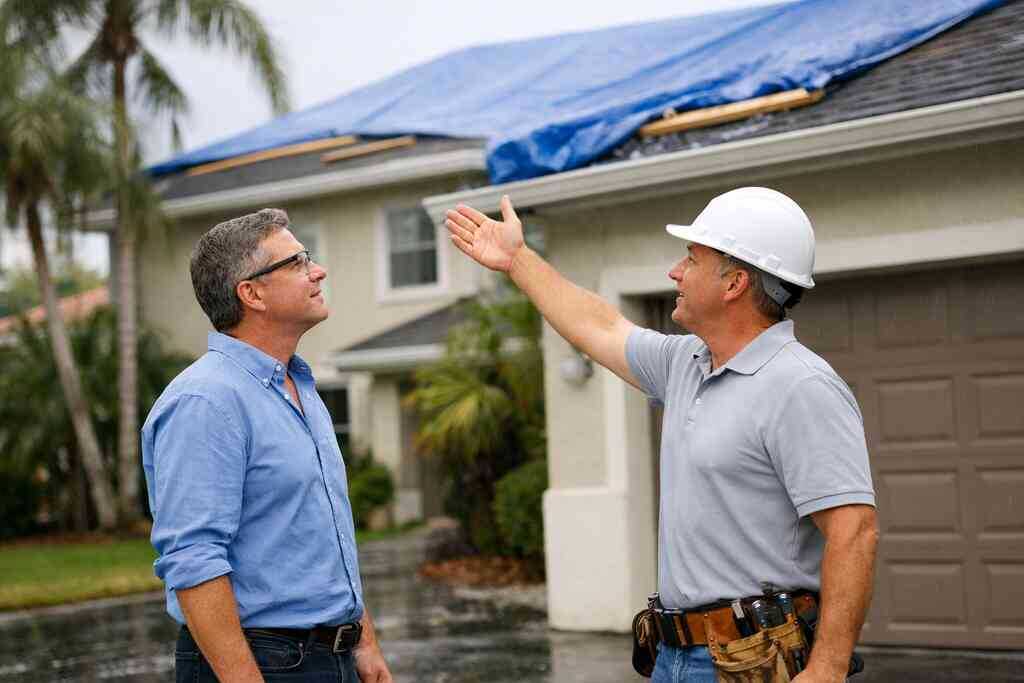
A homeowner called us during a thunderstorm because water was dripping onto a dining room table. The first quote looked affordable. The second looked suspiciously high. That tension is exactly where bad roofing decisions start in South Florida. If you are reading this while worrying about a leak, take a breath. There are real ways to sort this out without panic.
When a cheap roof quote becomes the most expensive decision on the block
Why South Florida contractors are not interchangeable when wind and water are in the picture
Not every roofing contractor South Florida homeowners meet understands the same risk profile. In South Florida, the roof has to fight wind, rain, salt air, and heat. A bid that ignores those forces is not a bargain. It is a future repair invoice waiting to happen. That is why South Florida contractors are not interchangeable, even when the numbers look close.
A seasoned roofer knows that hurricane roof tie-downs, decking attachment, and underlayment choices affect more than comfort. They affect code compliance and insurance conversations later. If you are comparing a roofing contractor South Florida company against a general contractor near me South Florida search result, do not assume they are equally prepared for roof-specific work. Roofing is specialized. Exterior systems fail in layers, not one at a time.
One client in Boynton Beach thought a low bid meant the same roof for less money. The contractor had skipped critical notes about damaged decking and never mentioned code-related upgrades. Two inspections later, the project cost far more than the original quote. The homeowner did not overpay for luxury. They paid for missing scope. That is the trap.
The first red flags in a roofing bid that suggest missing underlayment, decking, or code scope
A weak bid often sounds clean because it is vague. It may list only “remove and replace roof” with no detail. That should make you pause. A proper proposal should explain tear-off depth, underlayment replacement South Florida requirements, flashing, vents, drip edge, and disposal. If those items are missing, the contractor may be protecting the price by hiding the real work.
Here is the part most homeowners miss. Roofs rarely fail where you can see the damage first. They fail at seams, penetrations, and old decking that looks fine from the driveway. If a contractor does not mention roof decking inspection, ask why. If they brush off water intrusion history, ask again. The answer matters more than the tone.
A reliable proposal should also explain what happens if hidden damage appears. You want clarity on deck replacement pricing, shingle or tile matching, and code-triggered upgrades. You should also see references to Florida Building Code roof compliance and hurricane code compliance when the work touches the structure. If the bidder never mentions those items, the quote may be too incomplete to trust.
How a general contractor near me South Florida search can still lead you to the wrong person
Search results can be useful, but they can also mislead you. A polished website does not equal field competence. A person may appear after a general contractor near me South Florida search and still lack real roofing depth. That matters because roof work often turns into structural, permit, and drainage work. Experience in remodeling does not always translate into roof replacement South Florida execution.
This comes up often in Miami-Dade, where roof review standards are unforgiving. It also shows up in Broward and Palm Beach when older homes reveal hidden issues. You may need a licensed contractor Miami-Dade level of readiness, not just someone who answers quickly. The best sign is not speed. It is precision. Good contractors speak plainly about scope, permits, and what they will not guess about.
If you want a place to start your search, use a trusted local directory to find contractors near South Florida for roofing, then narrow by verified credentials and roofing experience. That keeps your search grounded in local reality. It also helps you avoid paying for someone to learn on your roof. In this market, learning curves get expensive fast.
The proof file every roofing contractor South Florida homeowners should ask for before signing
How to verify a contractor license in Florida without relying on a business card or website badge
A license number on a truck is not proof. A logo on a website is not proof either. You need a direct verification step. If you are wondering how to verify a contractor license, start with the state record, not the sales pitch. That is the safest way to verify contractor licensing Florida expectations before money changes hands.
Ask for the license number, the exact business name, and the qualifying individual. Then compare those details to state records. If anything does not match, stop. That mismatch can signal a business name issue, an expired credential, or a contractor who is borrowing authority from someone else. None of those are small problems. They all matter before roof demolition starts.
For a simple reference, use this how to verify a contractor license in Florida guide as a starting point. Then confirm what you found independently. In Palm Beach County, Broward County, and Miami-Dade, verified licensing is the baseline, not a bonus. If you are hiring a licensed contractor Palm Beach County, licensed contractor Broward County, or licensed contractor Miami-Dade, you still need to check the record yourself.
What contractor insurance requirements Florida and contractor bonding requirements really mean in plain English
Insurance sounds simple until something goes wrong. Then the details matter. Contractor insurance requirements Florida are about whether the company can respond when property damage, injuries, or jobsite problems happen. Bonding is different. Contractor bonding requirements are about a financial promise that helps protect you if the contractor fails to meet obligations. They are related, but they are not the same thing.
Do not accept vague statements like “we are fully covered.” Ask for current proof. Then check that the policy names and effective dates make sense for your project. If the roof work affects shared structures, condos, or major exterior systems, that check becomes even more important. One of the most common mistakes is assuming a policy exists just because someone says so. Assumptions are expensive.
If you want a plain-language overview, review contractor insurance requirements in Florida before you sign anything. Then ask how the contractor handles claims and jobsite safety. A serious roofer will answer without getting defensive. A defensive answer is a warning sign. You are hiring accountability, not just labor.
Why lien waiver Florida paperwork matters before the final payment clears
A lien waiver is simple in theory. It is a document that says the contractor or supplier has been paid for the work covered. In practice, it protects you from hidden payment claims after you release the final check. That matters because roof projects can involve material suppliers, subcontractors, and multiple billing layers. If one of them was not paid, you can inherit a problem you never expected.
This is where homeowners get uncomfortable, and that is normal. You are not trying to insult anyone. You are trying to protect your house. Ask for lien waiver Florida paperwork before final payment clears, not after. That small timing decision can save a huge headache later.
The best contractors do not resist this request. They expect it. They will explain what is being waived, who is signing, and when. If that conversation feels awkward, keep going anyway. Good process is rarely dramatic. It is usually just organized.
How change order contractor Florida language can protect you when the scope shifts after inspection
Change orders are not bad. Hidden damage, code triggers, and weather exposure make roof scope changes common. What matters is how the contractor documents them. Change order contractor Florida language should spell out what changed, why it changed, the added cost, and how it affects timing. If those details are missing, you are buying uncertainty.
A clear change order protects both sides. It keeps the job honest. It also helps if you need contractor dispute resolution later, because the paper trail shows what was approved. That is especially important when inspectors find damaged decking or additional flashing needs after tear-off. Surprise is normal. Poor documentation is not.
On the projects we’ve finished this year, the cleanest jobs were not the cheapest bids. They were the ones where the contractor explained every scope shift before work resumed. That is the standard you want. If a contractor talks fast but writes little, slow down.
What South Florida building codes and permits should control the whole conversation
Why roof permit South Florida rules change the job before the first shingle comes off
A roof permit South Florida process is not red tape for its own sake. It shapes the entire job before demolition begins. Permits tell you what drawings, product approvals, inspections, and code notes the contractor must provide. Skipping that step is never the answer. If someone suggests it, walk away.
Permits also protect you from surprise liability. If the work touches structure, materials, or wind resistance, the permit record becomes part of the project history. That matters later when you sell, refinance, or file an insurance claim. A roof without paperwork can become a very expensive question. In South Florida, that question is almost never worth the risk.
If you want a broader overview of local rules, Florida Building Code roof compliance is the lens to use. Then ask your contractor how they handle the South Florida permit process. A real professional will explain the sequence. They will not tell you permits are optional or “not a big deal.”
What Palm Beach County permit Broward County permit and Miami-Dade permit reviews often care about most
Review offices in Palm Beach, Broward, and Miami-Dade may focus on different details, but the themes are similar. They want proper product approvals, accurate scope, and code-aligned details. They also care about wind resistance, fastening methods, and how the roof assembly ties into the structure. A Palm Beach County permit, Broward County permit, or Miami-Dade permit is not just a formality. It is part of the job specification.
Local review can slow things down if the paperwork is weak. That is frustrating, especially when a leak is already active. Still, a clean review usually saves time overall. The contractor who knows the local process can often avoid back-and-forth corrections. The one who guesses will send you into delays.
A homeowner in Coral Springs once told us the permit review felt like a wall. The contractor had submitted incomplete product data for the roofing system, then had to resubmit. The actual roof was fine. The paperwork was not. The lesson was simple: the permit stage is part of the build, not a nuisance beside it.
How hurricane code compliance shapes tie downs decking attachment and wind rated materials
Hurricane code compliance is not marketing language. It is the reason roofs stay on houses when the weather gets ugly. That means tie-downs, nail patterns, decking attachment, and wind-rated roofing materials all matter. It also means the contractor must understand how roof components work together. One weak link can defeat the rest. If your house is older, ask specifically about hurricane roof tie-downs and wind mitigation roofing measures. Ask how the contractor handles nail spacing, edge details, and underlayment selection. If you have a tile or flat system, those details change again. A contractor who cannot explain those choices in plain English may not be ready for South Florida conditions. For a deeper look at local expectations, see hurricane roof code compliance in South Florida. The point is not to memorize code sections. The point is to hire someone who already lives inside them. That is what protects your house during the next storm cycle. 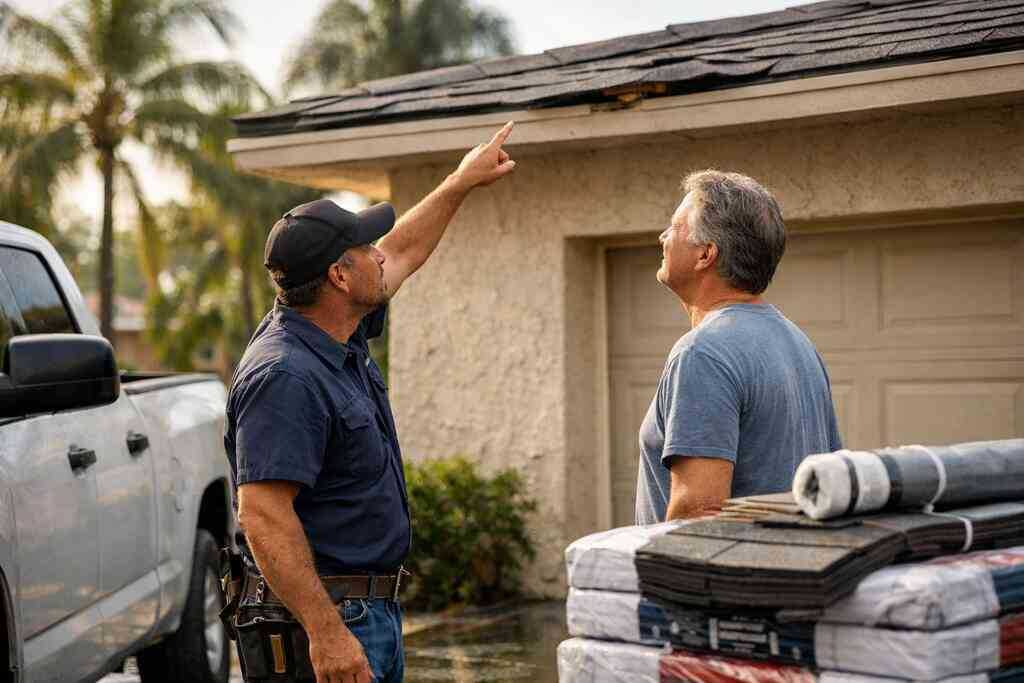
Why HOA roof approval South Florida and condo roof renovation South Florida can slow a project even when the contractor is ready
HOA roof approval South Florida rules can change everything. Condo roof renovation South Florida work can involve association review, architectural standards, insurance requirements, and board timelines. Even when the contractor is fully ready, the community process can become the pacing item. That is not a sign of trouble. It is just reality in a region full of managed properties.
If you live in a townhome or condo, ask for the approval path before you sign. Ask who submits drawings, who signs off, and what materials are allowed. Some communities care deeply about color, profile, and visible edge details. Others focus on coverage and maintenance access. Either way, do not assume the contractor can start immediately.
The same caution applies to South Florida HOA permit situations more broadly. The contractor should coordinate, but you should understand the timeline. That keeps expectations grounded and prevents emotional whiplash. Roofing work is stressful enough without board surprises.
When storm damage roof assessment and emergency roof tarping should happen before full replacement starts
If a storm has already hit, move quickly. A storm damage roof assessment should happen before the damage spreads. Emergency roof tarping can buy time and reduce interior loss, especially after active leaks or lifted materials. That step is not a repair. It is a short-term shield. Still, it often saves drywall, flooring, and cabinetry.
One homeowner near West Palm Beach called after a branch punctured the roof edge during a heavy squall. The tarp went on the same day, and the full replacement happened later after inspection and scope review. Because the opening was controlled fast, the kitchen ceiling stayed intact. That is what competent response looks like. Fast, but not sloppy.
Do not let anyone tell you to skip assessment because the roof “looks mostly fine.” Roof leak repair South Florida problems often hide under soaked insulation and damaged decking. If you see active intrusion, start with tarping and documentation. Then let the full plan follow the facts.
How to choose the roofer who fits your house not just your ZIP code
When a tile roof contractor South Florida makes more sense than a shingle roof contractor South Florida
Material matters more than many homeowners realize. A tile roof contractor South Florida homeowners trust should understand load, underlayment, broken tile replacement, and fastening details. A shingle roof contractor South Florida specialist, by contrast, may be better suited for systems that depend on different ventilation and fastening patterns. These are not interchangeable skill sets. Asking the wrong specialist is how projects get awkward.
Your neighborhood also matters. A coastal custom home in Boca Raton may not have the same roof demands as a modest inland home in Broward. If the structure is older or more exposed, choose the roofer who has handled similar houses. That includes understanding oceanfront home contractor challenges and waterfront home builder South Florida expectations where salt, wind, and moisture never really stop.
What low slope roofing South Florida and flat roof contractor South Florida projects demand that others do not
Low-slope roofing South Florida projects are different from pitched-roof work. Drainage is tighter. Seams matter more. Flashings, scuppers, and ponding risk become central issues. A flat roof contractor South Florida homeowner should trust needs real experience with membrane systems and water management. If a contractor talks about flat roofs like they are just “less material,” keep looking.
These systems demand careful attention to movement and maintenance. They also demand a contractor who knows how humid air and standing water interact over time. A roof that looks fine in a brief inspection can still fail if drainage is poor. That is why low-slope work should never be an afterthought. It is its own trade within the trade.
How coastal home builder Florida experience changes the answer for oceanfront and waterfront homes
Coastal home builder Florida experience matters because salt, wind, and exposure change the lifecycle of materials. An oceanfront home contractor must think about corrosion, fastener selection, and edge details with more seriousness than an inland roofer might. A waterfront home builder South Florida professional usually understands how persistent moisture changes the risk profile. That kind of experience is useful even in a roof replacement context.
It also helps when your project touches adjacent systems. Fascia, soffits, vents, and exterior trim can all age faster near the coast. A contractor with coastal background will usually spot those weak points sooner. That is better for you. It lowers the chance of repeated service calls after the new roof is finished.
Why roof ventilation for humid climates and energy efficient roofing South Florida matter in long term performance
Roofing is not just about keeping rain out. It is also about helping the house breathe. Roof ventilation for humid climates reduces trapped heat and moisture, both of which punish materials over time. Energy efficient roofing South Florida options can improve comfort and lower load on cooling systems. Those gains are not flashy. They are real.
On a humid roof, trapped heat can cook underlayment and shorten service life. Poor ventilation can also encourage mold in the attic. That is why the contractor should talk about intake, exhaust, insulation, and attic balance. Sustainable home builder South Florida thinking overlaps here too, because efficiency and durability usually point in the same direction.
What to do next when you compare three bids and still are not sure who to trust
If you have three quotes and still feel stuck, compare more than price. Compare scope detail, permit plan, warranty language, and how each contractor answers hard questions. Use a simple checklist:
- Does the bid mention decking, underlayment, and flashing?
- Does the contractor explain permit steps clearly?
- Are licensing and insurance verified?
- Did they note hurricane code compliance?
- Did they discuss change orders before they happened?
If one bid is much lower, ask what it excludes. If one is much higher, ask what it includes. Most confusion disappears when the same scope is placed side by side. If you still want a broader search path, start with a reputable Find Roofing Contractors directory result, then verify every credential yourself.
You do not have to figure this out alone, and you do not have to figure it all out today. Start with one phone call, one license check, and one written bid from a contractor who respects South Florida building codes.
Frequently Asked Questions
Question: In How to Choose a Roofing Contractor South Florida Homeowners Trust, what should I check first before hiring a roofing contractor South Florida homeowners can rely on?
Answer: Start with the basics: verify contractor licensing Florida records, confirm contractor insurance requirements Florida, and ask for proof of contractor bonding requirements before any work begins. Then compare the written scope, not just the price. A strong roofing contractor South Florida homeowners trust should clearly explain roof decking inspection, underlayment replacement South Florida needs, flashing, ventilation, and any hurricane code compliance items tied to the job. If you are searching to find a contractor South Florida, the South Florida Contractors Directory is a practical starting point because it helps you locate local pros across Palm Beach, Broward, and Miami-Dade counties. Even then, always verify licensing and insurance yourself before signing. That extra step protects your home, your budget, and your timeline.
Question: How do I know whether I need a tile roof contractor South Florida specialists use, a shingle roof contractor South Florida homeowners hire, or a flat roof contractor South Florida property owners choose?
Answer: The best choice depends on your roof system, your home’s structure, and your exposure to wind and water. A tile roof contractor South Florida homeowners hire should understand loading, underlayment, fastening, and broken tile replacement. A shingle roof contractor South Florida residents trust should know wind-rated roofing materials, nail patterns, and attic ventilation. A flat roof contractor South Florida property owners choose must be experienced with low-slope roofing South Florida conditions, drainage, seams, and ponding risk. In South Florida, roof systems are not interchangeable because hurricane roof tie-downs, moisture, and heat all affect performance differently. South Florida Contractors helps you find a contractor South Florida homeowners can evaluate by location and specialty, so you can compare the right experts instead of guessing from a generic search result.
Question: Do I need a roof permit South Florida homeowners often ask about, and how do Palm Beach County permit, Broward County permit, and Miami-Dade permit reviews affect the project?
Answer: Yes, permits matter, and they should never be skipped. A roof permit South Florida process helps ensure the work follows South Florida building codes and the Florida Building Code roof compliance expectations that apply to your project. Palm Beach County permit, Broward County permit, and Miami-Dade permit reviews may each focus on product approvals, attachment methods, and hurricane code compliance details, but the goal is the same: make sure the roof is built correctly and documented properly. A contractor who understands the South Florida permit process should explain what documents are needed, who pulls the permit, and how inspections fit into the schedule. South Florida Contractors can help you connect with local contractors who understand these requirements, but you should still confirm that they are licensed contractor Palm Beach County, licensed contractor Broward County, or licensed contractor Miami-Dade professionals as appropriate for your location.
Question: What paperwork should I ask for before final payment, especially for lien waiver Florida documents and change order contractor Florida updates?
Answer: Before you release final payment, ask for lien waiver Florida paperwork so you are protected from unpaid supplier or subcontractor claims later. Also ask for every change order contractor Florida update in writing, with the reason for the change, the added or reduced cost, and how it affects the schedule or materials. This matters because roof projects often reveal hidden damage only after tear-off, such as damaged decking, flashing issues, or unexpected code-related upgrades. A trustworthy contractor will not resist documenting these changes. They will also be comfortable explaining contractor dispute resolution steps if something needs to be clarified. South Florida Contractors encourages homeowners to work with organized, transparent professionals because good documentation is one of the simplest ways to avoid expensive misunderstandings.
Question: How can South Florida Contractors help me compare quotes and choose the right roofing contractor South Florida homeowners can trust for roof repair after hurricane or roof replacement South Florida work?
Answer: South Florida Contractors makes it easier to compare qualified local options instead of sorting through random search results or relying on a general contractor near me South Florida listing that may not be roofing-focused. You can use the directory to find a contractor South Florida by city and service area, then narrow your choices by roofing experience, license status, and project fit. That is especially helpful after storm damage roof assessment, emergency roof tarping, roof leak repair South Florida work, or a full roof replacement South Florida project. A good contractor should be able to explain hurricane roof tie-downs, roof ventilation for humid climates, energy efficient roofing South Florida options, and how hurricane code compliance affects the final system. South Florida Contractors is a directory, not a shortcut around due diligence, so the final step is always to verify licensing and insurance before hiring. That combination of local search help and homeowner verification is the safest way to move forward.