Top 5 ADA Renovation Upgrades for South Florida Commercial Sites
July 23, 2026
Most people think ADA work is a paperwork problem. It is not. It is a people problem, a weather problem, and a permit problem all at once. If you are reading this because your site feels dated, awkward, or hard to access, you are not alone. We hear this from South Florida owners every week, especially when a customer, tenant, or inspector points out what daily traffic has quietly exposed.
The hard part is that accessibility upgrades rarely happen in a neat vacuum. A ramp affects drainage. A door opener affects wiring. A restroom upgrade affects plumbing, partitions, and inspection timing. That is why South Florida ADA renovation for commercial sites should start with a realistic plan, not a guess. You still need to verify licensing, insurance, and bonding before anyone swings a hammer.
Accessible entry ramps that do not fight South Florida weather
When a ramp is the right fix instead of a full entrance rebuild
A ramp is often the smartest first move when the existing entrance is structurally sound. If the threshold is the main barrier, you may not need a full façade rebuild. That saves time, but only if the ramp is designed around the building, not tacked on like an afterthought. On an accessible entry ramp installation in South Florida, the real question is whether the new route feels natural, safe, and durable.
One client near downtown Fort Lauderdale had a shallow step that turned every delivery into a hassle. The first contractor wanted to replace the whole entry. Instead, a properly sized ramp solved the access issue without disrupting the storefront glass. That kind of judgment matters in South Florida, where exposure, HOA concerns, and tenant uptime all influence the final choice.
Ramp slope compliance and landing space without creating a trip hazard
Ramp slope compliance sounds simple until you measure the site. The slope must work with landings, edge protection, and maneuvering space. If any of those are off, the ramp may look finished and still fail review. That is why wheelchair accessible entrances and ramp slope compliance must be checked before concrete is poured.
You also need enough landing room at the top and bottom. Tight landings create a hazard, especially when guests arrive with carts, walkers, or strollers. Here is the part most property managers miss: the safest ramp is usually the one that gives people room to pause. In busy Palm Beach and Broward commercial corridors, that pause space reduces accidents and complaint calls.
What hurricane code compliance means for exterior access upgrades in Palm Beach, Broward, and Miami-Dade
Exterior access work in South Florida cannot ignore hurricane-code requirements. If the ramp includes railings, canopy tie-ins, or attached platform elements, the structure may face stricter review. That is especially true in Miami-Dade, where permitting culture is famously detailed, and in coastal Broward and Palm Beach properties exposed to wind and salt. Hurricane code compliance for exterior access upgrades is not a side note; it shapes the design.
Owners sometimes ask if a simple ramp can bypass structural review. Sometimes yes, sometimes no. The answer depends on attachment, load, and the broader site plan. On projects we’ve finished this year, the safer route has been to assume the permit reviewer will ask for more, not less. That approach keeps the job moving and avoids expensive redesigns later.
Drainage, slip resistant surfaces, and coastal corrosion details that get overlooked
South Florida rain finds weak points quickly. If your ramp drains toward the doorway, you have made the entry less accessible, not more. Slip resistant textures matter too, especially where afternoon storms leave a thin film of water. Commercial code compliance in South Florida means thinking about the rainy season, not just the plan view.
Coastal corrosion is another quiet problem. Fasteners, railings, and threshold details can deteriorate faster than the concrete itself. Stainless or coated hardware often pays for itself simply by staying usable longer. We have seen beautifully poured ramps fail early because the hardware looked fine on the day of install and weak six months later.
Why an accessible storefront renovation still needs a licensed contractor and permit review
A ramp is not a DIY weekend project for a commercial site. You need a licensed contractor Palm Beach County, licensed contractor Broward County, or licensed contractor Miami-Dade depending on location. You also need someone who understands the South Florida permit process and can tell you when a Palm Beach County permit, Broward County permit, or Miami-Dade permit is required. That review should happen before you order materials.
If you are trying to find a contractor in South Florida, ask how they handle inspections, lien waivers, and insurance verification. A lien waiver is the paper that confirms a subcontractor or supplier has been paid. It matters more than many owners realize. For an accessible storefront renovation in South Florida, the safest path is a contractor who knows accessibility and weather both.
Automatic door opener retrofits that make everyday traffic actually flow
Where automatic door opener retrofit work pays off fastest in commercial sites
An automatic opener is not glamorous. It is practical. It helps when your hands are full, when traffic is heavy, or when a customer cannot manage a heavy door alone. The fastest payoff usually comes at pharmacies, clinics, office suites, and busy retail entrances. In those settings, an automatic door opener retrofit for commercial buildings reduces friction immediately.
We worked with a small professional office in Broward where the front door looked fine but constantly jammed during afternoon rushes. The owner assumed the issue was the closer. It was partly hardware, partly usage, and partly poor placement of the activation control. After the retrofit, the front desk stopped fielding door-related complaints. Simple upgrades can change the daily rhythm of a site.
Power, hardware, and clear width issues that can make a retrofit fail inspection
This is where many retrofits stumble. The opener must work with existing power, door weight, hinge condition, and available clear width. If the door already drags or binds, automation can make the problem worse. That is why the best retrofit starts with the door frame, not the opener box. Commercial handicap accessibility depends on the whole system, not one device.
Inspectors also care about the remaining opening width after hardware is installed. A beautiful automatic system is useless if it narrows the usable path. Before approving work, ask your contractor to confirm clear opening dimensions, swing path, and activation reach. Those details sound small. They are not.
How to coordinate opener installs with South Florida building codes and ADA access rules
South Florida building codes and ADA access rules need to be treated together. The opener must function safely and consistently, but it also cannot create a pinch point or push traffic into a narrow threshold. In a mixed-use site, that means reviewing the door, the corridor, and the queue area as one system. For broader South Florida commercial accessibility upgrades, coordination is everything.
If the project touches an exterior entrance, remember hurricane-code requirements again. The door assembly may have wind-resistance implications, especially on exposed sites. In Miami-Dade, that review can be more exacting than owners expect. If you are planning an ADA compliant commercial remodel in South Florida, keep the door work in the permit conversation from day one.
What managers should verify before approving electrical tie-ins and control placement
Electrical tie-ins should never be casual. Ask where the power will come from, who is making the connection, and how controls will be mounted. Poor placement can make the system awkward, or worse, noncompliant. If the activation button is hidden behind merchandise or a host stand, the best equipment in the world becomes annoying.
Managers should also confirm who will reset the system after outages. South Florida storms make that question real. We hear this from clients almost every week during renovation planning. The best answer is usually a contractor who coordinates the electrical scope and trains the site team before turnover. That is where project management matters.
Common change order contractor Florida pitfalls when doors are older than the building plans
Older buildings hide surprises. Hidden conduit. Nonstandard framing. Replaced hardware that no longer matches the original drawings. When that happens, the project often turns into a change order discussion. A change order contractor Florida should explain the issue plainly, in writing, before extra work starts. No guessing. No vague approvals.
One South Florida retail owner learned this the hard way when a 1980s entry door had been repaired three times by different vendors. The opener retrofit uncovered misaligned framing and a damaged closer pocket. The change order was not fun, but it was honest. That honesty prevented a bigger failure later. If you want the smoother path, review the scope carefully and ask for photo documentation before any additions are approved.
Restroom renovations that fix the details inspectors actually measure
The restroom layout mistakes that quietly break commercial handicap accessibility
Restrooms are where good intentions meet hard measurements. A stall that feels spacious can still miss turning clearance. A sink that looks modern can still block access. The most common mistake is assuming a visual upgrade equals compliance. It does not. Accessible restroom renovation for commercial spaces demands more precision than most owners expect.
That precision matters because restroom complaints stick. Customers remember them. Tenants remember them. Inspectors remember them. If you are planning a restroom update for a restaurant, office lobby, or retail suite, start with the floor plan, not the tile sample board. That keeps the design practical and the approval path cleaner.
Grab bar installation for commercial restrooms and compliant toilet stall upgrades
Grab bars must be placed with intent. Height, length, location, and mounting strength all matter. A bar that is installed in the wrong position can look complete and still fail the functional test. The same is true for compliant toilet stall upgrades. Door swing, clearance, and accessory placement all have to work together.
We often tell owners to think about how a person actually uses the space. Can someone enter, close the door, transfer safely, and reach what they need without twisting? If not, the design needs revision. This is where grab bar installation for commercial restrooms becomes a structural issue, not a cosmetic one. Good installers know the difference.
Lavatory and sink accessibility upgrades that still work for daily operations
Sink work must balance accessibility with operations. A restroom can meet clearance targets and still be awkward for staff and guests if the faucet, trap, or dispenser placement is wrong. Lavatory and sink accessibility upgrades should support handwashing, maintenance, and cleaning, not complicate them. In busy sites, that practicality keeps the space usable. 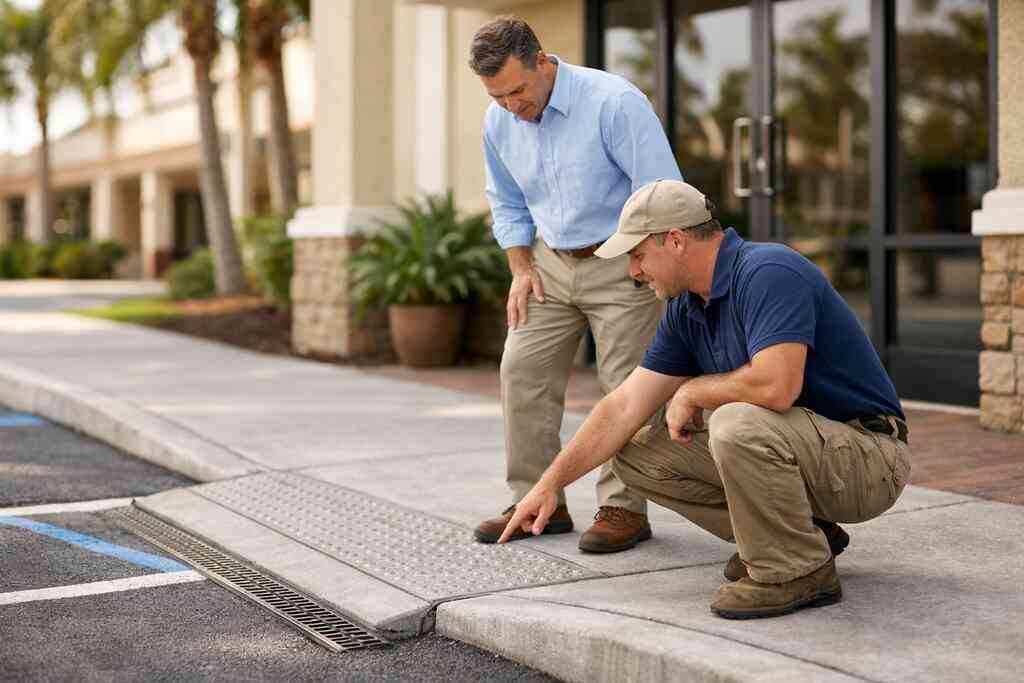
Here is what almost no online guide mentions: a restroom that is easy to clean gets used better. If mops cannot reach under fixtures, or staff have to work around tight cabinets, maintenance suffers. That is why an ADA renovation contractor South Florida should think like an operator, not just a code checker. The best result serves both.
Accessible counter height modifications and how they affect reception or retail areas
Counter height changes can affect more than the restroom. Reception desks, point-of-sale stations, and small retail counters often need the same thinking. Accessible counter height modifications should allow a seated guest to engage naturally without forcing staff into awkward posture. That is especially relevant in clinics, salons, and service counters. The challenge is keeping the design attractive. Nobody wants a counter that feels chopped up. With the right millwork and layout, you can create an accessible section that looks intentional. A South Florida cabinet maker or finish carpenter often becomes important here, especially in tenant spaces where branding matters. The detail should disappear into the whole. ### Permit process for commercial remodels when plumbing, electrical, and partitions all change at once
Once you touch plumbing, electrical, or partitions, the permit scope expands. The permit process for commercial remodels becomes less about a single fixture and more about coordinated trades. That is normal. It is also where delays happen if the drawings are incomplete. A good contractor should explain the sequence before demolition starts.
If the restroom sits inside a condo, office tower, or shared plaza, local rules can add another layer. South Florida HOA permit approvals and building management rules may come before the city even reviews the plan. For a deeper example of the process, a Palm Beach County permit process for remodels guide can help frame the sequence. The key is patience. Skipping steps usually costs more later.
Parking lot and arrival path upgrades that set the tone before the front door
ADA parking lot compliance and accessible curb ramp installation for busy sites
Your entrance begins in the parking lot. If the route from the car to the front door is confusing, steep, or broken, the building already feels unwelcoming. ADA parking lot compliance and accessible curb ramp installation should be planned together, not separately. Striping alone does not solve grade or drainage problems.
A retail center in Miami-Dade once had beautiful front doors and a terrible arrival path. The accessible space was technically present, but the route crossed a cracked curb and pooled water after storms. Guests used the wrong entrance instead. That is the kind of detail that hurts a site quietly. It also creates risk.
Why striping alone is not enough when the arrival route is out of grade
Repainting lines is useful, but it is not a cure-all. If the slope is wrong or the curb ramp lands into a puddle, the space still fails the practical test. You need the route to be safe from the vehicle to the door. Accessible curb ramp installation should be part of the larger grade plan, especially in older plazas.
This is where a South Florida concrete contractor or paving specialist should coordinate with the accessibility scope. If the concrete is cracked or settling, the route may need more than fresh paint. Sometimes that means a more substantial repair. Sometimes it means South Florida foundation repair before the striping even starts. The ground under the entrance matters.
Tactile signage and wayfinding that helps guests find the right entrance
People get lost easily when entrances are split across a façade. Tactile signage and wayfinding reduce that confusion fast. The best signs point people to the correct path before they have to ask. In a commercial setting, that means fewer interruptions and better flow. Tactile signage and wayfinding are small investments with outsized value.
For mixed-tenant sites, clear direction is even more important. A guest should not have to guess which door serves which business. Good wayfinding works with landscaping, curb ramps, and lighting. It is one of the simplest commercial accessibility upgrades you can make, and one of the most overlooked.
Slip resistant flooring for commercial sites in lobbies, thresholds, and covered walkways
Inside the building, the arrival problem does not stop. Thresholds, lobbies, and covered walkways can become slippery when wet shoes track in rain. Slip resistant flooring for commercial sites should be chosen with South Florida storms in mind. The wrong finish may look elegant and still create a hazard.
We have seen beautiful tile floors become daily liabilities near entrances. The fix is not always a full replacement. Sometimes a better finish, a mat system, or a threshold adjustment makes the difference. A reliable South Florida flooring installer or South Florida tile contractor should explain performance, not just appearance. Durability matters when humidity and foot traffic are constant.
How South Florida HOA permit rules and Miami-Dade permit reviews can shape exterior work
Exterior arrival work often collides with property rules. HOA boards can care about appearance, landscape impact, and work hours. Miami-Dade reviewers may focus on structural and storm-resistance details. Those layers affect the schedule and the design. That is normal in South Florida, but it needs planning.
If your project is part of a larger condo renovation South Florida or townhome remodeling South Florida property, approval timing can drive everything. For a broader look at the process, Miami-Dade permit review for commercial remodels is worth understanding before you start. An experienced team will coordinate around both the permit office and the property manager. That saves a lot of friction.
The upgrade stack that turns compliance into a smarter long term property strategy
Widened doorways for accessibility and corridor clearance improvements that support future growth
Some upgrades solve today’s problem and tomorrow’s too. Widened doorways for accessibility can improve traffic flow, reduce bottlenecks, and make tenant spaces easier to reconfigure later. The same is true for corridor clearance improvements. If you are already opening walls, the long-term value is real.
On office and retail projects, this is often where a South Florida design build approach helps. You can coordinate layout, structure, and access in one conversation instead of three. That matters if the tenant mix may change. A wider doorway today may prevent a costly rework later.
Elevator accessibility upgrades and when they belong in a phased plan
Elevators are a larger conversation, but they belong in the same strategy. Elevator accessibility upgrades can become necessary when a site has multiple floors, aging equipment, or tenant pressure for better access. These projects usually require more planning than ramp or restroom work. They also affect operations more.
Not every property needs an elevator upgrade right away. Sometimes a phased plan makes better financial sense. The trick is knowing where the accessibility gaps actually are. A smart South Florida general contractor will separate urgent compliance items from future capital improvements, then map the sequence honestly.
How restaurant ADA upgrades, office accessibility retrofit work, and retail space compliance upgrade needs differ
Different sites have different pain points. Restaurant ADA upgrades often focus on seating paths, restrooms, service counters, and door hardware. Office accessibility retrofit work usually centers on reception, meeting rooms, and restrooms. Retail space compliance upgrade projects may care more about circulation, fitting rooms, and point-of-sale access.
The best plans reflect how people use the space. A restaurant may need smoother guest flow during peak hours. An office may need clearer wayfinding for visitors. A retail site may need better queue management near checkout. One-size-fits-all thinking usually misses something important.
When aging in place design principles and inclusive commercial design overlap with ADA renovation contractor South Florida planning
Here is something people often miss: aging in place design and commercial accessibility overlap more than you think. Both favor clear routes, lower physical strain, and simpler decisions for the user. That is why aging in place design principles and inclusive commercial design can improve a business environment at the same time. They do not compete with compliance. They reinforce it.
A project focused on comfort and dignity usually creates better customer experiences. That matters in medical offices, salons, community spaces, and small-service businesses. If you are choosing between purely decorative changes and functional ones, function usually wins. Especially in South Florida, where weather, traffic, and turnover demand tougher solutions.
What to ask a licensed contractor Palm Beach County, licensed contractor Broward County, or licensed contractor Miami-Dade before signing a contract
Before you sign, ask five direct questions. Do they carry current insurance? Can they show active licensing? Will they handle permits? How do they manage change orders? Will they provide lien waivers from subs and suppliers? These are basic questions, and they matter.
If you want to find a contractor in South Florida, start by verifying the license, then review insurance and bonding. Ask for written scope details and a clear explanation of exclusions. For a final reference point, how to verify a contractor license in Florida should be part of your vetting process. You do not have to figure this out alone, and you do not have to figure it all out today. Start with one phone call, and get three qualified quotes from active local contractors before you commit.
Frequently Asked Questions
Question: What should I know before starting a South Florida ADA renovation for a commercial site, and how do I choose the right licensed contractor Palm Beach County, licensed contractor Broward County, or licensed contractor Miami-Dade?
Answer: The first thing to understand is that a South Florida ADA renovation is not just an accessibility update, it is also a permit, weather, and inspection project. Before work begins, you should verify that the contractor is licensed, insured, and bonded, and that they understand the local South Florida permit process for your specific location. For a commercial site in Palm Beach, Broward, or Miami-Dade, that usually means confirming whether a Palm Beach County permit, Broward County permit, or Miami-Dade permit is required and how the scope affects review. A qualified South Florida general contractor or ADA renovation contractor South Florida should also know when hurricane code compliance matters for exterior access work, especially for ramps, doors, canopies, and structural tie-ins. If a contractor cannot explain how they manage permits, inspections, lien waiver Florida paperwork, and change order contractor Florida issues, that is a sign to keep looking. South Florida Contractors is a good place to start because it helps you find a contractor South Florida by location and service type, so you can compare active local professionals instead of guessing.
Question: Which of the Top 5 ADA Renovation Upgrades for South Florida Commercial Sites usually delivers the biggest day-to-day improvement for customers and tenants?
Answer: In many commercial spaces, the biggest immediate improvement comes from accessible entry ramp installation or an automatic door opener retrofit. A ramp solves a physical barrier at the entrance, while an opener helps with traffic flow for visitors carrying bags, using mobility devices, or entering with staff assistance. For South Florida commercial sites, both upgrades need to be designed around ramp slope compliance, wheelchair accessible entrances, drainage, slip resistant surfaces, and hurricane code compliance for exterior access upgrades. A ramp that looks good but fights water, salt air, or tight landings will create more problems later. Likewise, an automatic door opener retrofit must preserve clear width, work with the existing hardware, and be coordinated with electrical tie-ins and South Florida building codes. South Florida Contractors emphasizes practical, code-aware planning because a commercial accessibility upgrade should make the property easier to use every day, not just pass a checklist.
Question: How do restroom remodels fit into an ADA compliant commercial remodel, and what details do inspectors usually focus on?
Answer: Restroom work is one of the most detail-sensitive parts of an ADA compliant commercial remodel. Inspectors usually pay close attention to compliant toilet stall upgrades, grab bar installation for commercial restrooms, lavatory and sink accessibility upgrades, turning clearance, door swing, and how the fixtures work together as a complete layout. A restroom can look modern and still fail if the clearances, reach ranges, or mounting heights are wrong. In South Florida, restroom remodels also need to fit the broader permit process for commercial remodels, especially when plumbing, partitions, and electrical are changed at the same time. If the project is in a shared building or managed property, South Florida HOA permit rules or building management approvals may add another layer. South Florida Contractors is useful here because it helps owners find a contractor South Florida who understands both commercial handicap accessibility and the real-world coordination needed to keep a restroom project moving.
Question: Can South Florida Contractors help me find a contractor South Florida for parking lot compliance, curb ramps, and arrival path upgrades?
Answer: Yes, and that is one of the most practical places to start when planning accessibility improvements. ADA parking lot compliance and accessible curb ramp installation are often overlooked because owners focus on the front door, but the arrival path sets the tone before a guest even reaches the building. If the route from the parking space to the entrance has drainage issues, cracking, uneven grade, or poor wayfinding, the site can feel inaccessible even if the door itself is compliant. That is why commercial accessibility upgrades should include tactile signage and wayfinding, slip resistant flooring for commercial sites near thresholds, and coordination with a South Florida concrete contractor or paving specialist when grade repair is needed. In some cases, South Florida foundation repair may even be part of the solution if settlement is affecting the route. South Florida Contractors helps you compare qualified local options, but you should still verify licensing, insurance, and bonding before signing anything.
Question: How does the blog Top 5 ADA Renovation Upgrades for South Florida Commercial Sites apply to restaurants, offices, and retail spaces differently?
Answer: The same ADA goals apply across property types, but the priorities are different. Restaurant ADA upgrades often focus on guest circulation, restroom access, seating paths, and counter reach. Office accessibility retrofit projects usually emphasize reception areas, meeting rooms, restrooms, and clear wayfinding for visitors. Retail space compliance upgrade work may place more attention on fitting rooms, checkout counters, corridor clearance improvements, and accessible counter height modifications. In all three settings, widened doorways for accessibility and corridor clearance improvements can improve traffic flow while supporting future growth. Many owners also use South Florida design build planning to coordinate layout, structure, and finishes more efficiently. The best results come from a contractor who thinks about inclusive commercial design and aging in place design principles, not just code minimums. South Florida Contractors can help you identify the right type of professional, whether you need a South Florida flooring installer, South Florida tile contractor, South Florida cabinet maker, or a broader South Florida general contractor for a phased commercial remodel.
Question: What should I ask before hiring an ADA renovation contractor South Florida for a commercial project?
Answer: Before hiring, ask for current licensing, proof of insurance, bonding details, and a clear explanation of how they handle permits, inspections, and change orders. You should also ask whether they have completed projects involving accessible storefront renovation, commercial handicap accessibility, multifamily common area accessibility, or South Florida ADA renovation work similar to yours. A trustworthy contractor should be able to explain how they manage the South Florida permit process, when a Palm Beach County permit, Broward County permit, or Miami-Dade permit may be needed, and how hurricane code compliance affects exterior work. Ask how they handle lien waiver Florida paperwork, subcontractor coordination, and contractor dispute resolution if something changes during construction. Most importantly, ask how they verify compliance without guessing. South Florida Contractors encourages owners to verify a contractor license before awarding a job, because that step protects your schedule, your budget, and your property. If you want to find a contractor South Florida with less guesswork, the directory is a practical starting point for getting multiple quotes from active local companies.