

The remodel that looked simple until the permit desk said otherwise
A homeowner in Kendall once called after a “quick” kitchen refresh stalled at the counter. The cabinets were fine. The backsplash was fine. Then the electrician said the panel needed upgrades, the plumber wanted to move a sink line, and the permit office wanted revised drawings. That is how a simple idea becomes a real Miami-Dade building permit issue. If you feel stressed already, that reaction is normal.
Most people think the permit process slows projects down. Often, it does the opposite. It forces the scope to become clear before demolition starts, which protects your budget and timeline later. That matters in South Florida, where weather, inspections, and contractor availability can all change quickly. If you are trying to find a contractor in South Florida, you need someone who respects that reality.
When a cosmetic update quietly becomes a Miami-Dade building permit issue
A cosmetic update sounds harmless. New tile, fresh paint, and new cabinets often stay simple. Yet the moment you touch wiring, plumbing, gas, windows, or structural elements, the project can shift into residential remodeling permits Miami-Dade. The same is true when a kitchen remodeler moves appliances or a bathroom remodeler relocates drains. In Miami-Dade, the permit desk cares about hidden systems, not just surface finishes.
Here is the part most homeowners miss. The permit review is not judging your taste. It is checking whether the work meets safety and code standards. A South Florida kitchen remodeler may need plans if the layout changes. A South Florida flooring installer may need extra review if the subfloor is altered. Even a South Florida cabinet maker can trigger permit questions when the cabinetry affects electrical clearances or appliance placement.
Why open walls, plumbing moves, and layout changes trigger residential remodeling permits Miami-Dade
Open walls reveal everything. That is why an interior renovation permit can quickly become a structural alteration permit. Once drywall comes off, old framing, outdated wiring, and surprise plumbing often show up. I have seen a Coral Gables bath update turn into a reroute of cast iron lines and a corrected vent path. The homeowner was annoyed at first, then relieved when the inspector caught it before finishing.
Layout changes matter because they affect the building’s core systems. Moving a sink changes plumbing. Moving a range may change gas or electrical requirements. Removing a wall may require engineering. If your plan includes a South Florida home additions scope, a second story addition in South Florida, or even a sunroom contractor South Florida project, the review becomes much more detailed. That is normal, not a setback.
The red flags that tell a homeowner to pause before hiring a general contractor near me South Florida
You should pause when a contractor says permits are “probably not necessary.” That sentence is a warning light. A reputable licensed contractor in Miami-Dade will talk about permitting early, not after demolition starts. The same caution applies if someone avoids discussing contractor licensing Florida, insurance, or bonding. If they dodge those questions, you should keep looking.
Other red flags show up fast. No written scope is a problem. No drawings is a problem. Cash-only pressure is a problem. So is a promise to “handle everything later.” If you are comparing a general contractor near me South Florida search result with a real permit-ready professional, ask who prepares plans, who files them, and who handles revisions. That one conversation reveals a lot.
What the Miami Dade permit process for remodels really asks for
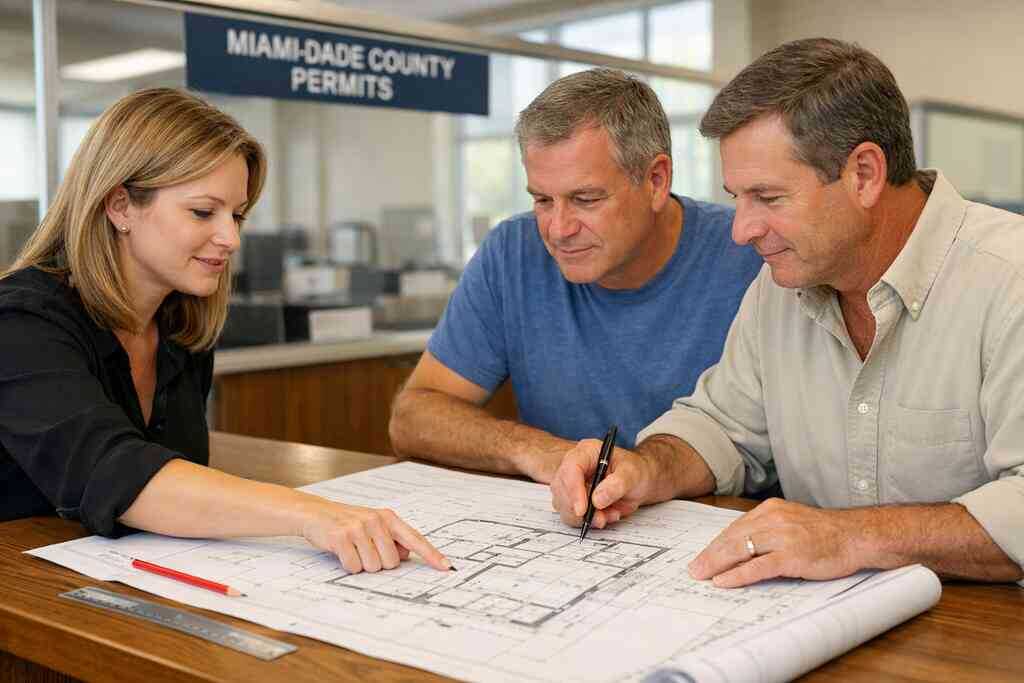
The Miami Dade permit process for remodels starts with paperwork, but it is really about proof. The county wants to see that your project is defined, safe, and properly authorized. That means drawings, scope details, ownership information, and contractor credentials all need to line up. On many jobs, the delays come from missing details, not from the review itself. That is why a South Florida construction permit guide for remodels mindset helps before you ever submit.
Most homeowners feel frustrated here because the rules seem layered. They are layered. Yet each layer protects you from a bigger mess later. If you are planning condo renovation South Florida work, a townhome remodeling South Florida project, or a full home update, the process asks for more than just a contractor’s signature. It asks for a clean trail from design to approval.
The permit application checklist that separates permit-ready remodel plans from revision cycles
Permit-ready remodel plans usually include a clear scope, site information, and drawings that match the actual work. If walls move, drawings should show it. If electrical changes, they should show that too. If plumbing fixtures shift, the plan should say where and how. In Miami-Dade, vague plans invite revision cycles. Clear plans reduce back-and-forth.
A solid checklist often includes:
- Current property information and owner details
- Scaled drawings or sketches prepared for the scope
- Product information for windows, doors, or roofing materials
- Contractor license information
- Insurance and bonding documentation when required
- Any structural notes or engineering support
- HOA or condo approval documents, if applicable
That checklist sounds simple, but missing one item can send you back to the start. The best home remodeling contractor South Florida professionals build permit steps into the schedule from day one. If you need an interior renovation permit, ask for the permit package before demolition. It is the difference between momentum and delay.
How zoning compliance for remodels, HOA approval, and condo renovation South Florida can all collide at once
Zoning compliance for remodels matters because a permit is not the only gate. Your property may also sit under an HOA, condo board, or local architectural review. That is especially true for condo renovation South Florida projects, where building management may require work hours, elevator protection, and insurance certificates. A Miami-Dade HOA permit can add another layer before the county even opens the file.
This is where timing matters. A project can look ready on paper and still sit idle while a board reviews finishes or engineering. A townhouse in Doral had a very ordinary bathroom remodel slowed for weeks because the association wanted floor-mat specs and noise-control details. The homeowner assumed the county was the bottleneck. It was the building. That is why Miami-Dade HOA approvals in 2026 should be part of the conversation early.
Why contractor licensing Florida, insurance, and bonding documents matter before the permit is even touched
Contractor licensing Florida is not a technicality. It is the foundation of the permit process. If the contractor is not properly licensed, the permit can stall or be rejected. The same goes for insurance and bonding, especially on larger remodels or exterior work. You should know how to verify a contractor license before any deposit moves.
You should also confirm that the contractor can actually cover the project type. A roofing contractor South Florida should carry the right coverage for roof work. A South Florida concrete contractor should be set up for structural and slab-related tasks. A coastal home builder Florida or waterfront home builder South Florida needs different documentation than a painter or handyman. If you need a reliable reference, start with How to verify a Florida contractor’s license and How to check contractor insurance requirements in Florida.
Where remodels get slowed down in South Florida and why the weather is part of the paperwork
South Florida weather shapes paperwork in ways outsiders rarely expect. Wind loads, flood exposure, salt air, and hurricane resistance all affect approvals. So do local building departments that enforce South Florida building codes with real scrutiny. What we have seen in 2026 specifically is more attention on exterior systems and product approvals. That is especially true after storm seasons remind everyone why hurricane code requirements exist. If your project touches the building shell, expect more review. That includes windows, roofs, enclosures, decks, and concrete elements near the coast. A permit is not just a formality here. It is part of resilience. That is why homeowners planning oceanfront home contractor work or coastal additions need realistic expectations from the start.
How Florida Building Code compliance and hurricane code compliance shape exterior and structural work
Florida Building Code compliance affects nearly every structural exterior scope. Hurricane code compliance adds another layer, especially near the coast and in high-wind zones. Plans may need product approvals, fastening schedules, and wind-resistance details. That matters for anything tied to the structure or opening protection. A project that seems purely aesthetic can become a technical submission quickly.
For example, hurricane roof tie-downs are not decorative details. They are structural protections. A lanai builder South Florida may need to show attachment methods and framing specifics. A South Florida ADA renovation may also need code review if ramps, thresholds, or clearances are involved. Even energy efficient remodeler South Florida work can require product documentation if the envelope changes. The county wants confidence that the finished work performs under South Florida conditions.
What changes when your project involves hurricane impact window installer South Florida, hurricane shutter contractor, or roofing contractor South Florida
Windows and roofs trigger some of the most detailed review. A hurricane impact window installer South Florida must match the product rating, opening size, and approval documents to the plan. A hurricane shutter contractor may need attachment and coverage information that aligns with the opening schedule. Roofing work brings its own set of approvals, especially where underlayment, nailing patterns, and deck attachment are involved. That is why roofing contractor South Florida work often takes more paperwork than homeowners expect.
I once saw a Hallandale homeowner assume new windows were the only permit item. Then the product approvals did not match the opening schedule. One frame dimension was off by a fraction, but it still forced a correction. That kind of mismatch is common. It is also avoidable when the contractor checks everything before submission. If you are comparing options, a builder familiar with Florida building code for coastal homes in 2026 is usually a safer starting point than someone guessing at compliance.
Why pool deck contractor South Florida, paver installation South Florida, screen enclosure contractor South Florida, and South Florida concrete contractor work can trigger extra review
Outdoor hardscape work can sound simple, but it often touches drainage, setbacks, structural loading, and flood rules. A pool deck contractor South Florida may need to address slope, drainage, and finish height. Paver installation South Florida can raise questions about base prep and water movement. A screen enclosure contractor South Florida usually needs structural detail because wind forces matter. A South Florida concrete contractor may face review if slab work changes grade or ties into existing structural elements.
That is especially true on waterfront properties and in older neighborhoods with drainage quirks. One Fort Lauderdale homeowner wanted a new paver patio and a larger outdoor kitchen. The plan looked straightforward until drainage and setback issues appeared. The team had to rework the layout before approval. That saved them from a more expensive fix later. These are the kinds of details that separate a clean permit from a painful revision cycle.
The cleanest path from application to final inspection without expensive detours
The fastest path is usually the most organized one. You submit clean plans, respond quickly to corrections, and keep every document in sync. That sounds basic. It is. Yet it is also where many remodels lose time and money. A solid Miami-Dade remodel permit process in 2026 approach is really about discipline, not luck.
You also want clear ownership of tasks. Who files? Who answers revisions? Who handles product approvals? Who schedules inspections? The answer should never be “we’ll figure it out.” That kind of uncertainty causes avoidable downtime. The cleanest projects move because everyone knows the next step before the current one ends.
How plan review and corrections usually unfold when Miami-Dade asks for revisions
Plan review and corrections usually begin with a comment list. The reviewer may ask for missing dimensions, more structural detail, product approvals, or clarification on scope. Sometimes the correction is minor. Sometimes it requires revised drawings. Either way, the response should be direct and complete. Partial answers often create more delay than the original issue.
Here is a simple way to think about it:
- Review the comments carefully.
- Match each comment to a drawing or document.
- Revise the plans, not just the note.
- Recheck all related sheets for consistency.
- Resubmit with a clear explanation.
That process sounds tedious because it is. But it works. The mistake we see most often is a contractor answering only the easiest comment and ignoring the rest. A better approach is to treat every revision as a full package. That is how you avoid a second or third round.
When a licensed contractor Miami-Dade should coordinate with the owner and when South Florida design build makes more sense
A licensed contractor Miami-Dade should coordinate closely with the owner when the project is small, defined, and mostly cosmetic. That might include a floor replacement, a modest bath update, or a kitchen refresh with no layout changes. In those cases, the owner can stay involved without too much friction. But once you add engineering, multiple trades, or HOA review, the coordination burden rises fast. Then South Florida design build can make more sense.
Design build helps because the designer, estimator, and construction team work from the same playbook. That reduces handoff errors. It also helps on South Florida luxury renovation projects, where detail coordination matters more than speed alone. The same logic applies to South Florida custom home builder work, oceanfront home contractor scopes, or complex South Florida home additions. If your project has many moving parts, fewer handoffs usually means fewer mistakes.
The practical next step after approval including inspections, lien waiver Florida, change order contractor Florida, and final inspection approval
After approval, do not relax too soon. Inspections still matter. So do lien waivers, change orders, and closeout paperwork. A lien waiver Florida is a document showing a contractor or supplier has been paid for the stated work. It helps protect you from future payment claims. A change order contractor Florida document records any approved scope or price change in writing. Both are worth taking seriously.
Keep inspections organized from the start. Post the permit where required. Keep approved plans on site. Save product documents and inspection records together. If a field condition changes, document it immediately. That habit prevents disputes later and supports final inspection approval. If you want one smart move today, collect three quotes from verified South Florida contractors, ask each one about permits, and compare their answers line by line. You do not have to figure this out alone, and you do not have to figure it all out today. Start with one phone call.
Frequently Asked Questions
Question: What Is the Miami Dade Permit Process for Remodels in 2026, and when does a cosmetic update turn into a Miami-Dade building permit issue?
Answer: In South Florida, the Miami-Dade permit process for remodels starts when your project goes beyond surface-level updates. Paint and simple cosmetic finishes may stay outside the permit scope, but once you touch plumbing, electrical, gas, windows, roofing, structure, or layout changes, you are usually entering residential remodeling permits Miami-Dade territory. A kitchen remodeler, bathroom remodeler, flooring installer, or cabinet maker may all trigger permit review if the work affects safety, clearances, or hidden systems. The safest approach is to treat every remodel as permit-relevant until a licensed contractor Miami-Dade confirms otherwise. South Florida Contractors helps homeowners find a contractor South Florida who understands the South Florida permit process, plans ahead for inspections, and never minimizes permit requirements. Always verify licensing and insurance before hiring any contractor.
Question: What should be included in permit-ready remodel plans for a home remodeling contractor South Florida project?
Answer: Permit-ready remodel plans should clearly show the full scope of work, including any wall changes, plumbing relocations, electrical updates, product selections, and structural details. A strong permit application checklist usually includes owner information, site details, scaled drawings, contractor license information, insurance and bonding documents when required, and HOA or condo approvals if applicable. If you are working on condo renovation South Florida or townhome remodeling South Florida projects, the paperwork often needs to line up with building management requirements too. This is where South Florida Contractors is useful: the directory helps you find South Florida contractors who are familiar with the permit application checklist and know how to reduce revision cycles. Whether you need a South Florida kitchen remodeler, South Florida bathroom remodeler, or South Florida design build team, always confirm how they handle contractor licensing Florida, contractor insurance requirements Florida, and contractor bonding requirements before signing anything.
Question: How do zoning compliance for remodels, South Florida HOA permit rules, and condo renovation South Florida approvals affect the timeline?
Answer: Zoning compliance for remodels can affect even a well-planned project because the county permit is not the only approval that may apply. In many South Florida communities, HOA review, condo board approval, and architectural review can all happen before or alongside the permit process. That means a project can look ready on paper and still pause if the building wants more details about work hours, floor protection, drainage, or materials. This is common in Miami-Dade, Broward County, and Palm Beach County, especially for condo renovation South Florida and townhome remodeling South Florida work. A qualified general contractor near me South Florida search should lead you to professionals who understand both the permit process and the approval layers that sit around it. South Florida Contractors helps you compare licensed contractor Broward County, licensed contractor Palm Beach County, and licensed contractor Miami-Dade options so you can choose someone who respects the paperwork, not someone who hopes to work around it.
Question: Why do hurricane code compliance, Florida Building Code compliance, and exterior work create extra permit review for South Florida contractors?
Answer: Exterior and structural projects often face stricter review because South Florida building codes must account for wind, moisture, corrosion, and storm risk. Hurricane code compliance matters for windows, roofs, enclosures, decks, and structural additions, and that is why projects involving a hurricane impact window installer South Florida, hurricane shutter contractor, roofing contractor South Florida, or South Florida concrete contractor may need detailed product approvals and attachment information. The same is true for hurricane roof tie-downs, lanai builder South Florida scopes, screen enclosure contractor South Florida work, and pool deck contractor South Florida projects where drainage, structural loading, or setback concerns may come up. South Florida Contractors supports homeowners looking for coastal home builder Florida, oceanfront home contractor, or waterfront home builder South Florida experience, but always recommends verifying contractor licenses, insurance, and bonding before hiring. Permits should never be skipped on hurricane-related or structural work.
Question: How can South Florida Contractors help me find a licensed contractor Miami-Dade for a remodel that needs inspections, change orders, and final inspection approval?
Answer: South Florida Contractors is designed to help homeowners find a contractor South Florida by zip code and city, then compare the details before making contact. That makes it easier to identify a home remodeling contractor South Florida who understands permit inspections, lien waiver Florida paperwork, and change order contractor Florida documentation. For a project involving South Florida home additions, a second story addition South Florida, a sunroom contractor South Florida, or an outdoor kitchen contractor South Florida, you want a contractor who keeps the permit file organized from day one and coordinates revisions quickly if plan review and corrections are needed. The right professional should also know when to flag South Florida foundation repair, South Florida ADA renovation, aging in place contractor South Florida requirements, or energy efficient remodeler South Florida upgrades that may affect code review. South Florida Contractors cannot guarantee outcomes or recommend a contractor without verification, but it can help you compare real local options in South Florida and ask the right questions about licensing, insurance, bonding, and permit responsibility before you sign.