
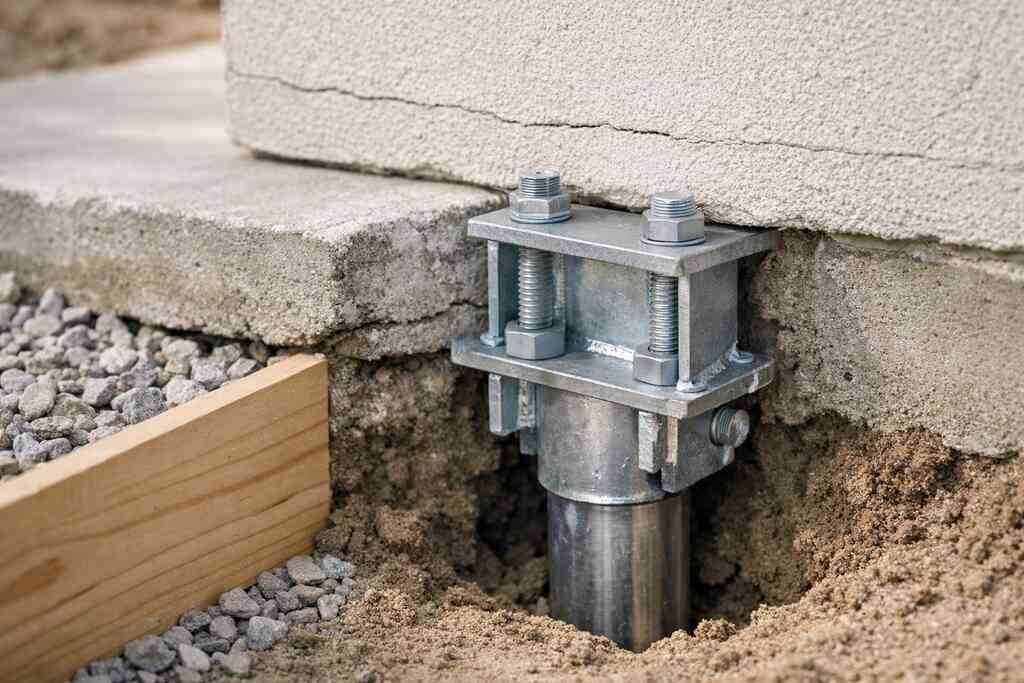
If you see cracking, sloping floors, sticking doors, or exterior separation, you likely need a South Florida foundation repair pro to inspect the structure before the damage spreads. In South Florida, soil movement, heavy rain, and storm exposure can turn a small symptom into a serious structural issue fast.
Key Takeaways
- Uneven floors, stair-step cracks, and doors that stop latching are common foundation settlement warning signs, especially in South Florida homes built on slab construction.
- Drainage problems around the home often show up before visible structural damage, so pooling water near patios, driveways, and pool decks matters.
- Storm exposure and flood-related moisture can create delayed structural stress, even if the home looked fine right after the weather event.
- Exterior cracks near stucco, lanais, and screen enclosures may require permits and code-aware repair planning, especially for hurricane code compliance.
- You should verify licensing, insurance, and bonding before hiring anyone, and never skip permits or rely on a handyman for structural work.
1) When cracks and sloping floors stop being cosmetic and start signaling movement
Cracks become a foundation problem when they widen, repeat, or appear with other symptoms like sloping floors and sticking openings. In South Florida homes, that combination often points to a cracked foundation in South Florida conditions, not just normal settling. A qualified house leveling contractor South Florida can tell the difference quickly.
How to tell the difference between normal settling and a cracked foundation in South Florida homes
Normal settling usually creates small, stable hairline cracks. Foundation movement creates patterns that keep changing. That is especially true in homes dealing with soil movement in South Florida, where sandy layers, moisture swings, and occasional expansive soil behavior can shift support under a slab.
Look for these signs together:
- Cracks wider than a hairline
- Doors that rub or will not latch
- Windows that bind
- Sloping or sinking floors
- Gaps at baseboards or trim
One homeowner in Palm Beach County thought a hallway crack was only cosmetic. The real issue was a section of slab that had dropped enough to pinch a bedroom door and split tile grout in two rooms. That is the pattern to respect.
Why uneven floors, sticking doors and windows, and stair-step wall cracks often show up together
These symptoms usually share one cause: movement beneath or beside the structure. Uneven floors in Florida homes often pair with sticking doors and windows because the frame shifts as the slab or support points change elevation. Stair-step wall cracks are especially important because they can reveal stress moving through masonry joints, not just drywall.
If you want a practical first step, document the cracks with photos and measure them. Then compare notes over a few weeks. If the pattern changes, bring in a structural foundation inspection before patching anything. For a broader homeowner checklist, see the Ultimate Guide to South Florida Foundation Repair Signs 2026.
2) Why drainage trouble around the slab is usually the first clue homeowners miss
Drainage problems around the foundation are often the earliest sign of trouble because water controls soil stability. If roof runoff, grading, or irrigation keeps saturating the perimeter, the soil can soften and shift under the slab. That is how moisture damage under slab foundations turns into settlement, cracking, or uneven floors.
How moisture damage under slab foundations builds from roof runoff, poor grading, and soaked soil
A home does not need flooding to suffer foundation stress. Roof water dumping too close to the house, downspouts missing extensions, or soil that slopes toward the slab can all create chronic saturation. In South Florida, that matters because wet soil loses support fast, then dries unevenly and moves again.
Watch for these drainage clues:
- Downspouts emptying near the foundation
- Muddy streaking along the perimeter
- Persistent damp spots after rain
- Soil that pulls away from the slab
- Cracks that worsen after heavy rainfall
The fix is usually not cosmetic. It may require drainage and grading correction, downspout extension, and in some cases waterproofing foundation walls or slab stabilization services.
What pooling near patios, driveways, and pool decks can reveal about foundation settlement
Pooling water near hardscapes often reveals more than a surface drainage issue. If water sits beside a patio, driveway, or pool deck, it can mean the grade has changed or the slab edge is settling. That is a common setup for settlement around pool decks and patio and driveway foundation sinking.
A South Florida concrete contractor can sometimes repair the surrounding flatwork, but the real question is why the slab moved. If you already need concrete slab repair South Florida services, ask whether the cause is water, soil loss, or structural movement. For related hardscape work, the driveway and paving section is a useful place to compare options.
3) The warning signs that point to structural stress after storms or flood exposure
Storms can leave delayed structural problems that do not appear immediately. After high wind, saturated soil, or flood exposure, a home may show hurricane-related foundation stress weeks later as the ground dries, shifts, and loses uniform support. That is why post-storm inspection matters, even if the damage looked minor at first.
How hurricane related foundation stress can show up long after the wind dies down
After a storm, homeowners often focus on roofs and windows first. That makes sense. But if water moved around the foundation, the structure can settle unevenly later. In South Florida, especially along the coast, the combination of wet soil, salt exposure, and repeated storm cycles can produce delayed movement that looks unrelated at first.
Common post-storm warning signs include:
- New drywall cracks
- Fresh gaps at trim
- Doors that suddenly drag
- Tile cracking in a straight line
- Exterior joints pulling apart
For homes with flood exposure, a structural review is not optional. A good foundation repair after flooding evaluation looks at slab edges, drainage, and hidden framing stress, not just visible cracks.
When coastal foundation damage, crawl space moisture, and hidden structural movement deserve a full inspection
Coastal homes face a different risk profile. Salt air, repeated moisture, and shifting water tables can all contribute to coastal foundation damage. If the home has a crawl space, crawl space moisture control becomes part of the structural conversation, not a separate issue.
The part most homeowners miss: movement can hide behind finishes. Fresh paint and repaired drywall do not prove the structure is stable. If you suspect hidden structural damage, ask for a pre-purchase foundation evaluation or post-storm inspection before making repair decisions. The Top 5 Signs Your South Florida Foundation Repair Needs Help guide expands on storm-related red flags in coastal Florida homes.
4) When your exterior starts separating from the house and permits become non optional
Exterior separation is rarely just cosmetic. Cracks near stucco, lanai openings, doors, and screen enclosures can signal movement at the structure itself. In South Florida, those repairs often trigger permit review, and South Florida building codes plus hurricane code compliance must be part of the plan.
Why cracks near stucco, doors, lanai openings, and screen enclosures can mean more than surface damage
When stucco cracks radiate from corners or openings, the issue may be frame movement, not a finish defect. The same is true when a lanai door sticks or a screen enclosure shifts out of square. On many coastal homes, these signs show up alongside slab settlement or footing movement. Here is the quick read: SignWhat it may indicateWhy it mattersStucco cracks near openingsStructural stressMay require engineering reviewGaps at lanai doorsFrame movementCan affect operation and sealingSeparation at screen enclosureSlab or footing shiftMay need permit-controlled repairRepeated crack repairsOngoing movementPatch work will not solve the causeIf the work touches structural elements, do not treat it like simple cosmetic repair. Ask for a scope that addresses the cause, not just the finish. 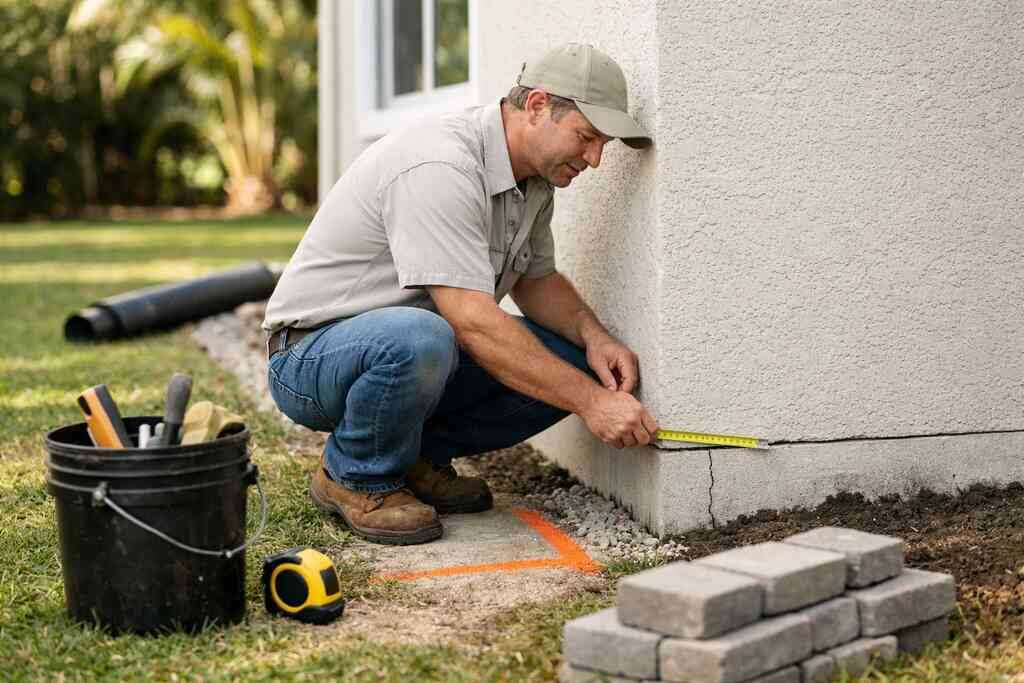
How South Florida building codes and hurricane code compliance shape foundation repair decisions for exterior work
Exterior foundation-related work can intersect with permit rules, engineering, and hurricane-resistant detailing. That is especially true where repairs affect openings, tie-downs, or structural continuity. If the project touches an exterior wall, addition, or enclosure, the contractor should explain the South Florida permit process before work starts.
For repairs that may involve tie-downs, openings, or adjacent structural work, a contractor should understand hurricane roof tie-downs and local code expectations. If you are comparing broader exterior specialists, a South Florida contractor guide can help you find the right trade fit without guessing.
5) The signs your repair needs a licensed contractor, not a general handyman
If the work involves structure, permits, or load-bearing concerns, you need a licensed contractor. In Palm Beach, Broward, or Miami-Dade, verify the license first and confirm insurance before any money changes hands. A handyman can patch finishes, but foundation repair should be handled by a licensed contractor Palm Beach County, licensed contractor Broward County, or licensed contractor Miami-Dade as appropriate.
How to verify a contractor license in Palm Beach County, Broward County, or Miami-Dade before work begins
Verification takes a few minutes and saves a lot of regret. Check the contractor’s state and local licensing status, confirm the business name matches the paperwork, and make sure the scope of work fits the license type. If the project is structural, ask who will pull the permit.
Use this quick checklist:
- Confirm active license status
- Check the exact business name
- Ask for the permit holder
- Verify the scope matches the license
- Review recent project photos and references
If you want a broader starting point, how to verify a contractor license matters because misleading claims are common. Also confirm that any exterior work follows the local permit path in your county.
What contractor insurance requirements Florida homeowners should confirm before signing anything
Ask for proof of general liability and workers’ compensation, then confirm the policy is current. If the contractor cannot provide it promptly, stop. Florida homeowners should also ask about contractor bonding requirements and whether the company uses proper lien waiver Florida paperwork when payments are made.
A good contractor will also explain change orders clearly. A change order contractor Florida process should spell out what changed, why, and how the price moved. That clarity prevents disputes later.
6) Why the cheapest foundation fix can turn into the most expensive change order
The lowest bid is often the most expensive path if it leaves out engineering, soil correction, permits, or cleanup. A real repair plan should define the problem, the stabilization method, and the finish restoration. If it does not, you may be buying a change order later.
How to spot vague scopes, missing lien waivers, and weak contractor bonding requirements before they become disputes
Vague language is the warning sign. If the estimate says “repair foundation as needed” without measurements, stabilization details, or permit responsibility, that is a problem. So is a contractor who avoids discussing lien waivers or bonding.
Look for these red flags:
- No written scope
- No mention of inspection or measurements
- No permit responsibility
- No lien waiver process
- No cleanup or finish repair allowance
A good contract should also define how disputes get handled. Clear documentation reduces the chance of a claim, a surprise add-on, or a prolonged argument after work starts.
What a real South Florida foundation repair plan should include for inspection, stabilization, and cleanup
A solid plan usually includes an inspection, a structural diagnosis, a repair method, and final restoration. Depending on the home, that may involve slab stabilization, pier and beam foundation repair, drainage correction, or localized concrete work. It should also include cleanup and a walkthrough so you know what was fixed.
For homeowners comparing broader project support, the general contractor page is a useful reference for how organized project oversight should look, especially when structural work affects multiple trades. A true plan treats the repair as a system, not a patch.
7) When to call a South Florida foundation repair pro before the problem gets negotiated by the bank or buyer
Call before the issue becomes part of a sale, refinance, or inspection report. Foundation concerns can affect negotiations fast, especially if a buyer’s inspector spots movement or a lender asks for further evaluation. Early action gives you more control over scope, timing, and documentation.
How pre purchase foundation evaluation and real estate foundation concerns change your timing
If you are buying or selling, foundation issues change leverage. A buyer may ask for repair credit, a lender may want proof of structural stability, and an appraiser may flag visible settlement. That is why real estate foundation concerns deserve a proper inspection before the deal gets tangled.
A quick pre-purchase review can identify whether you need:
- Structural engineer input
- Drainage correction
- Slab stabilization
- Permit-ready repair documentation
- Follow-up finish repairs
If you are searching across South Florida, the right contractor directory can help you compare options by area and trade. That is where a practical local resource matters.
What homeowners should do next when they suspect settlement, from structural inspection to permit ready planning
Start with a structural inspection, then get a repair scope in writing. Do not patch cracks first. Do not skip permits. And do not assume the problem is small because the house still “feels fine.”
If you are ready to find help, South Florida Contractors is a practical place to start because it helps you find a contractor South Florida by trade, city, and ZIP before you make the first call. It is especially useful when you want to compare a South Florida concrete contractor, a structural repair pro, or another licensed trade in one place. You can begin your search and then call 18443112703 to take the next step.
Frequently Asked Questions
Question: What are the most common foundation settlement warning signs in South Florida homes?
Answer: The biggest red flags are usually cracks that keep widening, sloping or sinking floors, sticking doors and windows, stair-step wall cracks, and gaps around trim or baseboards. In South Florida, these symptoms often point to a cracked foundation in South Florida conditions caused by soil movement in South Florida, drainage problems around the foundation, or moisture damage under slab foundations. If you notice more than one sign at the same time, it is smart to schedule a structural foundation inspection before the issue spreads. South Florida Contractors can help you find a contractor South Florida by city and ZIP so you can compare licensed contractor Palm Beach County, licensed contractor Broward County, or licensed contractor Miami-Dade options. Always verify licensing, insurance, and permits before any work begins.
Question: In the blog Top 7 Signs You Need a South Florida Foundation Repair Pro, when should I call for help instead of patching cracks myself?
Answer: You should call a South Florida foundation repair pro when the cracks repeat, get wider, or show up with uneven floors in Florida homes, sticking doors and windows, or separation at stucco, lanais, or screen enclosures. That combination often means the problem is structural, not cosmetic. DIY patching may hide the symptom for a short time, but it will not correct the cause if the slab is moving or if drainage and grading correction is needed. A qualified house leveling contractor South Florida can evaluate whether the home needs slab stabilization services, foundation crack repair, or another residential structural repair method. Because exterior and structural work can trigger South Florida permit process requirements, hurricane code compliance, and sometimes county permits, it is important to use a properly licensed contractor and never skip permits.
Question: Can South Florida Contractors help me find the right licensed contractor for foundation repair and related work?
Answer: Yes. South Florida Contractors is built to help homeowners find a contractor South Florida for the right trade, city, and project type. If your foundation concerns connect to related work like a South Florida concrete contractor, drainage and grading correction, waterproofing foundation walls, or even a screen enclosure contractor South Florida, the directory helps you compare options in one place. You can search by ZIP, review business details, and contact contractors directly. That is especially useful when your project may require a licensed contractor Palm Beach County, licensed contractor Broward County, or licensed contractor Miami-Dade and you want to verify contractor licensing Florida requirements before hiring. For any structural issue, always confirm contractor insurance requirements Florida, contractor bonding requirements, and whether the scope calls for a permit.
Question: What should I do after storm damage or flooding if I suspect hurricane-related foundation stress?
Answer: After a storm or flood, do not assume the structure is fine just because the damage is not visible right away. Hurricane-related foundation stress can show up weeks later as drywall cracks, tile cracking, new gaps at trim, or doors that suddenly stop latching. If your home had standing water, soft soil, or repeated flooding, you may need foundation repair after flooding and an inspection for hidden structural damage. In coastal areas, coastal foundation damage and crawl space moisture control concerns can make the problem more complex. The safest next step is to document the changes, avoid cosmetic patching, and schedule a structural foundation inspection. South Florida Contractors can help you locate a South Florida foundation repair specialist, but you should still verify licenses, insurance, and the South Florida permit process before any repair starts.
Question: What should a real South Florida foundation repair plan include so I do not get stuck with change orders later?
Answer: A real plan should start with inspection, diagnosis, and a written scope that explains the cause of the movement and the fix. It should clearly outline whether the work involves pier and beam foundation repair, slab stabilization services, drainage and grading correction, or foundation crack repair, and it should also explain cleanup and finish restoration. The estimate should not be vague. If it does not mention permits, measurements, or who is responsible for approvals under the South Florida permit process, that is a warning sign. A trustworthy contractor will also explain lien waiver Florida paperwork, contractor bonding requirements, and any change order contractor Florida process before work begins. South Florida Contractors helps you compare professionals, but you should still confirm hurricane code compliance, review references, and verify that the contractor is properly licensed for the scope of work.
Question: How do drainage problems around the foundation affect pool decks, patios, and driveways in South Florida?
Answer: Drainage problems around the foundation often show up first in hardscape areas. If water pools near a patio, driveway, or pool deck, it can mean the grade is sloping toward the home or the slab edge is settling. Over time, that can lead to settlement around pool decks, patio and driveway foundation sinking, and cracking in nearby concrete or pavers. In South Florida, this is often tied to wet soil, sandy soil movement, or poorly directed roof runoff. A South Florida concrete contractor may be able to repair the surface, but the underlying issue may still require foundation repair, drainage correction, or waterproofing foundation walls. If your project also affects exterior structures, remember that South Florida building codes, hurricane code compliance, and county permit rules may apply. South Florida Contractors can help you find the right pro, but always verify licensing and insurance before signing anything.