
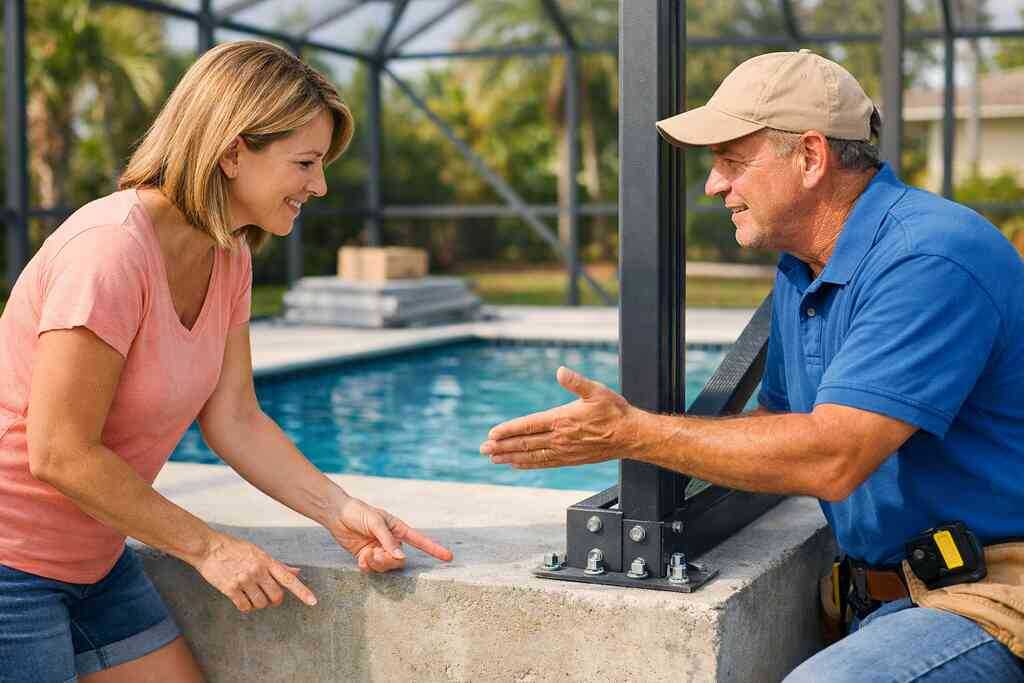
A homeowner called us after a thunderstorm pushed water across the patio and straight toward a new enclosure. The quote looked clean. The framing looked standard. The problem was hidden in the details nobody had asked about. If you are reading this because the numbers feel confusing, take a breath. That reaction is normal. Hiring a screen enclosure contractor South Florida homeowners can trust takes more than comparing prices. It takes asking the right questions before the first hole is dug.
Why a screen enclosure quote can look perfect and still become a problem
A polished quote can hide weak planning. That is the part most homeowners miss. In South Florida, a screen enclosure is not just an outdoor upgrade. It is a structure that must survive wind, rain, salt air, drainage issues, and strict local review. If the contractor cannot explain those realities clearly, the bid is already missing something important. That is true whether you are in Palm Beach, Broward, or Miami-Dade County.
If you are feeling overwhelmed, you are not alone. We hear this almost every week from people trying to compare three bids that all look “close enough.” They are not. One may include engineering support. Another may leave out permit coordination. A third may quietly assume your existing slab is fine. The differences show up later, usually after money has changed hands.
The questions that expose whether the contractor understands South Florida hurricane code compliance
Ask the contractor exactly how the enclosure will meet hurricane code compliance requirements. Do not accept a vague “we build to code” answer. Ask how they handle wind uplift, anchor spacing, and structural attachment to the slab or footer. Ask what they do if the existing patio edge or deck cannot support the new frame. A real professional should answer clearly and without irritation.
You should also ask whether the installer understands South Florida building codes as they apply to exterior additions. That matters more than many people think. Screen enclosures sit in the path of severe weather, flying debris, and salt corrosion. In coastal areas, the stakes are even higher. A contractor who builds as if this were a dry inland market is not thinking like a South Florida contractor.
One homeowner in Broward showed us a quote that looked inexpensive because it skipped engineering discussions entirely. The contractor assumed the existing deck would carry the load. It would not have. Catching that early prevented a far costlier rebuild and saved weeks of frustration. That is the kind of mistake a careful contractor should prevent before it becomes your problem.
What a real screen enclosure estimate should spell out for wind load engineering, drainage, and corrosion-resistant hardware
A proper estimate should not read like a single-line price tag. It should spell out the enclosure type, frame material, screen type, attachment method, and permit scope. It should also mention wind load engineering for enclosures, because that is not optional in this region. If the estimate leaves out engineering, ask whether it is included or excluded. Do not guess.
Drainage matters too. A screen enclosure can collect runoff from the roof, patio, or adjacent hardscape. If the contractor ignores drainage considerations for screen enclosure planning, water can pool where posts meet the slab. That leads to movement, staining, and corrosion. A good contractor thinks about slope, gutters, and water routing before the frame goes up.
Hardware is another tell. In South Florida, corrosion-resistant hardware is not a luxury. It is the baseline. Ask what fasteners, anchors, and connectors they use, especially if the property is near salt air. The right metal choices can add years of service life. The wrong ones can rust fast.
When a low bid usually means missing permit work, structural upgrades, or HOA approval support
Low bids feel good in the moment. They feel even better when you want the project started quickly. However, a surprisingly low quote often means something is missing. It may exclude engineering. It may exclude permit drawings. It may exclude HOA submittals. It may even assume the county will approve the existing conditions without review. That is rarely a safe assumption in South Florida.
Ask the contractor to list what is included and what is not. If the answer sounds fuzzy, keep pushing. A proper price should account for screen enclosure permit requirements, site measurements, and likely corrections. If your property has older concrete, prior additions, or prior repairs, the contractor should say so upfront. That kind of honesty is worth more than a shiny low number.
This is also where a good South Florida design build approach helps. The best contractors think through structure, permit, and finish together. They do not treat those items as afterthoughts. If your bid feels too good to be true, it probably is.
Why pool deck contractor and paver installation details matter before the enclosure frame ever goes up
Many people focus on the cage itself and forget the ground below it. That is a mistake. If your project includes a pool deck contractor South Florida scope or paver installation South Florida work, the surface must be ready before the enclosure is built. Uneven pavers, weak edges, or poor drainage can affect the whole system. The enclosure frame is only as good as the surface holding it.
Ask whether the contractor reviewed the deck condition, slab joints, and any signs of settlement. If you need a South Florida concrete contractor or even South Florida foundation repair input, you want to know that before the permit is filed. A good installer will not pretend the base does not matter. They will explain how the deck, footings, and frame will work together.
Here is the part most homeowners miss. Some of the cleanest-looking enclosures fail because the hardscape underneath was never properly evaluated. If your project also connects to a lanai builder South Florida, sunroom contractor South Florida, or patio enclosure contractor, the deck details become even more important. That is why the best bids start with site conditions, not with sales language.
The contract questions that separate a licensed contractor from a costly guess
A contract is not paperwork for later. It is the project itself in writing. If the contract is thin, the job will be thin too. You want every important promise spelled out before anyone starts cutting, drilling, or ordering materials. That includes licensing, insurance, permits, change orders, and lien protection. These are not fancy extras. They are the guardrails.
How to verify a contractor license in Florida before anyone touches your property
Start with the license. Always. Ask for the full legal business name, license number, and the name on the permit application. Then verify it yourself. If you are searching for a licensed contractor Palm Beach County property owners can trust, or a licensed contractor Broward County or licensed contractor Miami-Dade professional, do not rely on a logo or a verbal promise.
Use how to verify a contractor license as your starting point, then cross-check the name with the state record. The goal is simple: confirm that the person quoting your job is actually allowed to do the work. If the license does not match the company name, ask why. If the answer is messy, walk away. A licensed pro will expect this question and respect it.
What contractor insurance requirements Florida homeowners should ask for and why proof matters more than promises
Insurance is not a handshake. It is proof. Ask for current certificates showing general liability and workers’ compensation, if required for the crew. Do not accept “we’re covered” as an answer. Ask them to send documentation directly, not a screenshot from a phone. That is especially important for exterior work around pools, patios, and ladders.
Review contractor insurance requirements in Florida before you sign anything. This matters because an uninsured accident can become your headache fast. If someone gets hurt on your property and the contractor is not properly insured, the situation can get ugly. You do not want to discover that after demo has started. You want proof before the first deposit clears.
When contractor bonding requirements and lien waiver Florida paperwork protect you from surprise claims
Many homeowners do not hear about bonds or lien waivers until a problem appears. That is too late. Ask whether the contractor carries the appropriate bond and how they handle payment documentation. A lien waiver Florida form helps show that subcontractors and suppliers were paid. That reduces the risk of later claims against your property. It is plain protection, not legal theater.
If this sounds complicated, that is because construction payment chains can be messy. Learn the basics through contractor bonding requirements. A contractor who explains this clearly is usually the kind of professional you want. A contractor who avoids the topic may be hoping you will not ask. Ask anyway.
How change order contractor Florida language should be written so upgrades do not quietly blow up the budget
Every project changes a little. That is normal. What is not normal is letting changes live in casual text messages. Your contract should say exactly how change order contractor Florida pricing gets approved. It should state who can authorize a change, how it is priced, and whether work pauses until you sign. Otherwise, “small upgrades” can snowball into real budget pain. Ask for written procedures, not vague promises. If the crew discovers hidden slab damage, a footing issue, or a permit correction, you need a clear path. That protects both sides. It also keeps the project moving without arguments. A good contractor will welcome that structure because it prevents misunderstandings. 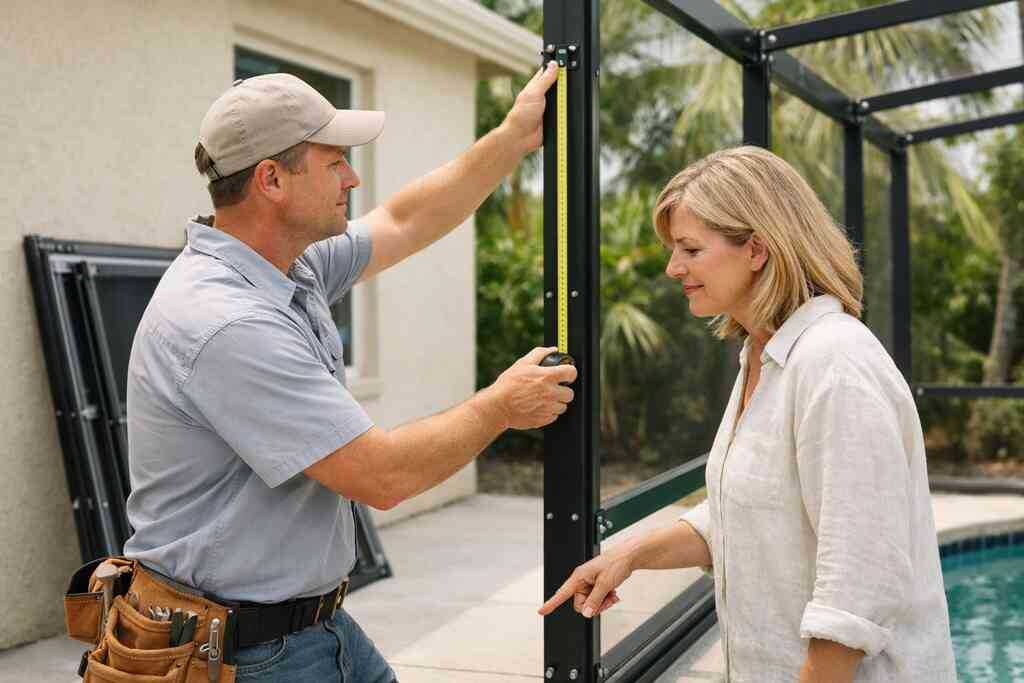
What a screen enclosure contractor South Florida should explain about Palm Beach County permit, Broward County permit, and Miami-Dade permit realities
Permits are not optional in this region. A contractor working in Palm Beach County permit territory, Broward County permit areas, or under Miami-Dade permit rules should explain the differences without pretending they are minor. Ask who prepares the permit set. Ask who handles revisions. Ask who responds if the reviewer requests corrections. That conversation tells you a lot.
If your contractor sounds unsure about the South Florida permit process, slow down. The paperwork may be routine for them, but it is still critical to your timeline. In fact, South Florida permit process for remodels is one of the best topics to review before you sign. A skilled contractor understands that permit work is part of the job, not a nuisance to be skipped. Never let anyone suggest otherwise.
The final walk-through that keeps the project standing long after the first storm
The last meeting should not feel rushed. This is where you protect the finished product. Before final payment, you want to confirm that the enclosure matches the approved plan, the hardware is correct, the screens are taut, and the drainage works as intended. You also want to confirm the paperwork is complete. A strong finish matters almost as much as a strong start.
What to confirm about South Florida building codes, Florida Building Code, and hurricane code compliance before signing off
Ask the contractor to walk you through what was built and why. You want to hear how the project aligns with Florida Building Code expectations and local review conditions. This is where hurricane details matter again. Make sure the contractor explains the anchoring, frame integrity, and any engineered components in plain language. If they cannot explain it simply, they may not understand it fully.
A good final walk-through should also confirm that the enclosure does not interfere with required egress, drainage, or existing roof systems. If a roof tie-in or nearby exterior component was involved, ask whether hurricane roof tie-downs or related structural elements affected the design. That kind of question is not overkill. It is how you protect your investment. Use Florida Building Code for coastal homes as a reference point if you want to understand the stakes.
How to decide whether your project needs an outdoor living contractor South Florida, a sunroom contractor South Florida, or a patio enclosure contractor
Not every project needs the same professional. A simple screened area may fit a patio enclosure contractor or a screen enclosure contractor South Florida specialist. A more integrated outdoor room may call for an outdoor living contractor South Florida team or even a sunroom contractor South Florida if walls, glass, or conditioned space are involved. The wrong scope description can cause delays, permit confusion, and budget drift.
Ask the contractor what they believe your project actually is. Are you building a screened patio, a lanai, or a fully enclosed room? That answer should match the plans. If you are also considering outdoor kitchen contractor South Florida work or broader home remodeling contractor South Florida changes, coordinate the scopes before construction starts. Mixed scopes get messy fast.
When HOA approval for screen enclosures, condo renovation South Florida, and townhome remodeling South Florida rules change the timeline
HOA and condo review can reshape the whole schedule. That is especially true for HOA approval for screen enclosures, condo renovation South Florida, and townhome remodeling South Florida projects. Some communities want color samples. Some want product specs. Some want structural drawings before they issue approval. Others want both association and city or county signoff before work begins. That sequence matters.
Ask who handles the submittal package. Ask whether the contractor has dealt with your community type before. If they have experience with a South Florida HOA permit process, that is a strong sign. Still, you should verify every requirement yourself. Communities near the beach, or around places like Boca Raton and coastal Palm Beach County neighborhoods, can be especially particular. Delay usually comes from missing paperwork, not from the physical work.
What to ask if your property sits near the coast and needs impact-resistant enclosure options, coastal corrosion protection, and oceanfront home contractor-level planning
Coastal properties need tougher planning. Salt air attacks metal. Wind pressure is a bigger concern. Fasteners, anchors, and frames all need to be chosen with that in mind. Ask whether the contractor offers impact-resistant enclosure options or at least designs that account for coastal exposure. If you are near the water, coastal corrosion protection should be part of the conversation from day one.
This is where an oceanfront home contractor mindset helps, even if you are not on the beach itself. The right professional understands how to pair enclosure design with neighboring features like hurricane impact window installer South Florida work or a hurricane shutter contractor upgrade. If your home already has impact openings, the enclosure should complement that strategy, not fight it. Ask these questions before you commit. They reveal whether the contractor thinks like a long-term steward of the property.
Which next step makes the most sense after you compare bids, whether you are building a lanai, a screened patio, or a full outdoor room
After you compare bids, do not choose only by price. Choose by clarity, permit handling, and confidence. If one proposal explains structure, drainage, insurance, and HOA support, that is meaningful. If another one feels vague but cheap, treat that as a warning, not a deal. The goal is a safe, durable result that fits your property and your neighborhood rules.
A simple next step works best. Pick three contractors, then compare their license status, insurance proof, and permit plan side by side. If you want help starting that search, a screen enclosure contractor in South Florida can be easier to find through a directory built for local homeowners. You do not have to figure this out alone, and you do not have to figure it all out today. Start with one call, ask the hard questions, and make the shortlist before the next storm pushes you to rush.
Frequently Asked Questions
Question: What should I ask before hiring a screen enclosure contractor South Florida homeowners can trust?
Answer: Start with the basics that reveal whether the contractor understands South Florida conditions: license, insurance, permits, hurricane code compliance, drainage, and how the enclosure will attach to your existing slab or deck. A reliable screen enclosure contractor South Florida homeowners hire should be able to explain wind load engineering for enclosures, corrosion-resistant hardware, and the South Florida permit process in clear language. If a bid looks unusually low, ask what is missing. Good contractors do not avoid hard questions, and they should never suggest skipping permits or gloss over South Florida building codes. If you need help finding the right pro, the South Florida Contractors directory is a practical place to find a contractor South Florida residents can compare by location and service area before they verify licensing and insurance themselves.
Question: How do I verify a licensed contractor Palm Beach County, licensed contractor Broward County, or licensed contractor Miami-Dade before signing anything?
Answer: Ask for the contractor’s full legal business name, license number, and the exact name that will appear on the permit application, then verify it against state records. This matters whether you are hiring for a screen enclosure, a pool deck contractor South Florida project, or a broader home remodeling contractor South Florida job. You should also confirm contractor insurance requirements Florida homeowners should expect, including current proof of liability coverage and workers’ compensation if applicable. If the contractor is not transparent about license status, insurance, or who will pull the permit, that is a red flag. South Florida Contractors helps homeowners start the search, but you should still independently confirm contractor licensing Florida details before any deposit is paid.
Question: What should a quote include for a screen enclosure permit, drainage, and corrosion-resistant hardware?
Answer: A complete quote should spell out materials, engineering, permit scope, hardware, and any site prep needed before the frame goes up. Ask whether the estimate includes screen enclosure permit requirements, Palm Beach County permit, Broward County permit, or Miami-Dade permit handling, because those steps can affect both schedule and budget. The contractor should also explain drainage considerations for screen enclosure placement so runoff does not pool near posts or the slab. In South Florida, corrosion-resistant hardware and coastal corrosion protection are not optional extras; they are part of building for long-term durability. If your property is near the coast, ask about impact-resistant enclosure options and how the design aligns with hurricane code compliance and Florida Building Code expectations.
Question: Why do pool deck contractor South Florida and paver installation South Florida details matter before the enclosure is built?
Answer: Because the enclosure is only as strong as the surface and structure supporting it. If the deck has settlement, weak edges, or drainage issues, the frame can be compromised later. A careful contractor should review the condition of the slab, pavers, footing areas, and any signs that South Florida concrete contractor or South Florida foundation repair input may be needed. This is especially important for screened patio installation, custom screen room design, lanai builder South Florida work, or sunroom contractor South Florida projects where the enclosure connects to a larger outdoor living area. Good planning also helps with South Florida design build coordination, so the hardscape, frame, and permit drawings all work together before construction starts.
Question: What should I know about HOA approval for screen enclosures, condo renovation South Florida rules, and townhome remodeling South Florida timelines?
Answer: HOA and community rules can change everything about your schedule, materials, and submittal package. Before work begins, ask who will handle HOA approval for screen enclosures, whether the contractor has experience with South Florida HOA permit requirements, and what documents the association wants before review. Some communities require drawings, product specs, color details, or even structural information before they will approve a project. That is true whether you are doing condo renovation South Florida work, townhome remodeling South Florida, or a larger outdoor living contractor South Florida scope. A contractor familiar with the South Florida permit process will explain the order of approvals clearly and will not recommend starting work early or skipping steps. When in doubt, compare bids carefully and verify that licensing, insurance, and permit handling are all included before you choose.
Question: What is the best way to compare bids for What to Ask Before Hiring a Screen Enclosure Contractor?
Answer: Compare more than price. Look at how each contractor explains structure, permits, drainage, engineering, hardware, and change orders. A professional quote should make it easy to see whether the company understands South Florida building codes, hurricane roof tie-downs if relevant, and the realities of coastal home builder Florida projects near salt air and high wind exposure. Ask how change order contractor Florida requests are handled, how lien waiver Florida paperwork is managed, and whether the contractor can coordinate with other scopes such as hurricane impact window installer South Florida, hurricane shutter contractor, outdoor kitchen contractor South Florida, or South Florida kitchen remodeler if your project is part of a larger upgrade. The strongest bid is usually the one that is clearest, most complete, and most realistic about permits and weather. South Florida Contractors can help you find a contractor South Florida homeowners can review side by side, but always verify license and insurance before moving forward.