
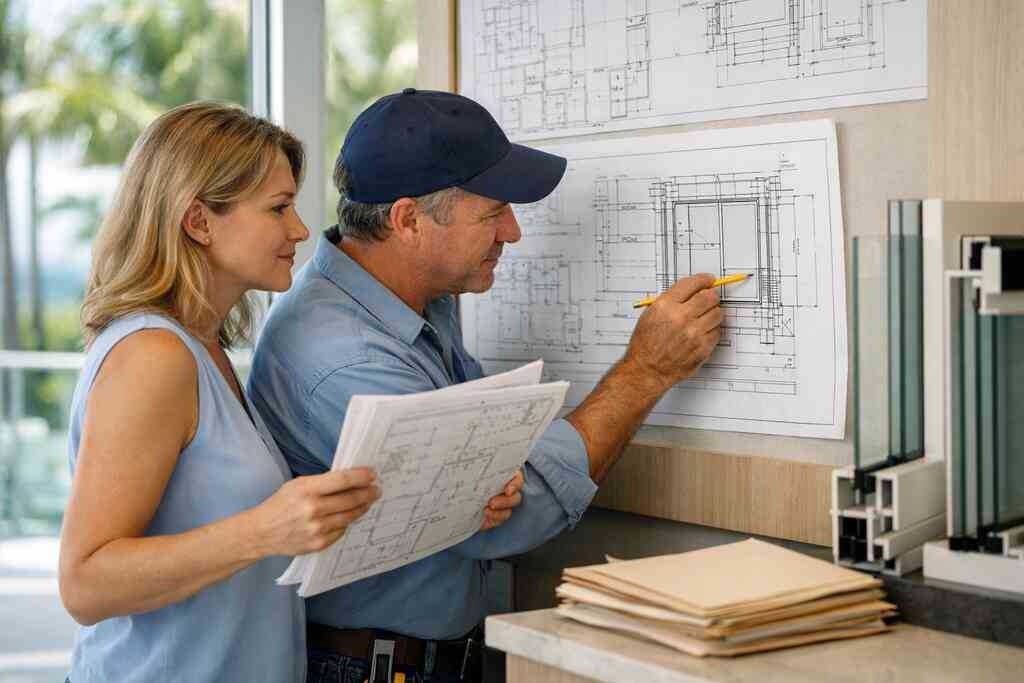
When a simple HOA approval still gets stopped at the permit desk
A homeowner called us during a thunderstorm, frustrated because the condo board had already approved the new windows. Then the permit desk flagged the drawings. That feeling is common, and it is maddening. Your HOA may approve the appearance, while the building department still checks safety, structure, and code compliance. In South Florida, those are not the same test.
Why Miami Dade HOA rules can approve the look of a project while the building department still rejects the work
Here is the part most homeowners miss. HOA approval vs permit approval is a real split, and it matters in Miami-Dade, Broward, and Palm Beach. An HOA focuses on appearance, community standards, and board rules. The permit office focuses on life safety, structural integrity, and South Florida building codes. So a board can approve the style of a project while the county still rejects the plans.
That gap shows up fast in condo renovation South Florida work. A board may accept a darker balcony finish, a new front door color, or updated railing details. The building department may still require engineering, hurricane-rated specifications, and a licensed trade professional. If your project touches framing, electrical, plumbing, or exterior openings, the permit office usually has the final say. That is true even when the board has already stamped the plans.
If you are reading this with a stack of emails open, take a breath. This confusion is normal. We hear it from clients almost every week, especially in townhome remodeling South Florida and condo board approval process situations. People think they are waiting on one green light. In reality, they need two. One approves community fit, and the other approves construction safety.
The quiet difference between cosmetic updates and structural changes in South Florida homes and condos
The difference between cosmetic and structural work can decide whether you need a simple board package or a full structural modification permit. Paint, cabinet faces, and some flooring swaps are often cosmetic. Opening a wall, changing a window opening, or altering roof components is not. Once the work affects load paths, weather protection, or life-safety systems, the rules change quickly. Under the Florida Building Code 2026 terms, exterior and structural work usually draws closer review.
One client in a Broward townhouse wanted a brighter kitchen and thought the job was simple. Then the design called for moving a sink wall and rerouting electrical service. The HOA loved the finishes. The permit reviewer wanted revised plans, trade drawings, and confirmation from a licensed contractor Miami-Dade or another properly licensed South Florida professional. That extra paperwork did not kill the project. It saved the homeowner from tearing open finished walls later.
This is why you should treat any wall removal, balcony change, or opening enlargement carefully. Even a small change can trigger engineering. That is especially true in coastal home builder Florida projects, oceanfront home contractor scopes, and waterfront home builder South Florida remodels. Wind exposure, corrosion, and hurricane-code requirements make the inspection lens much stricter. The prettier the project looks, the more likely it still needs technical review.
Where permit conflict shows up most often in roof work window replacements screen enclosures and outdoor kitchens
The most common permit conflict appears in exterior work. Roof replacement permit Miami-Dade reviews, hurricane impact window installer South Florida jobs, and screen enclosure contractor South Florida projects often collide with HOA rules. The board may approve frame color or screen style. The county still wants product approvals, attachment details, and hurricane-code compliance. That is where many projects stall.
Roofing is a classic example. A board may approve tile color. The permit office may still require documentation from a roofing contractor South Florida firm, plus proof that the system meets wind and fastening requirements. If the roof project includes updated connections, hurricane roof tie-downs may become part of the review. That sounds technical because it is. Your home’s shell has to resist South Florida weather, not just look finished.
Outdoor additions create similar trouble. A lanai builder South Florida crew may get HOA approval for the footprint, yet the city may still ask for drainage, footing, and structural data. The same is true for pool deck contractor South Florida work, paver installation South Florida, and outdoor kitchen contractor South Florida builds. If gas, electric, or concrete changes are involved, permits often become unavoidable. The lesson is simple: never assume the board’s yes means the county’s yes.
The paper trail that decides whether your project moves or stalls
The right paper trail keeps a remodel moving. The wrong one creates delays, finger-pointing, and surprise costs. In South Florida, paperwork is not admin fluff. It is your protection when weather, inspections, and subcontractors all hit at once. If you want your project to survive the permit desk, start with documents.
How to verify a contractor license in Florida before signing anything with a licensed contractor Miami Dade or anywhere in South Florida
Before you hire a general contractor near me South Florida search result, verify the license yourself. Do not rely on a logo, a social post, or a confident phone call. Use the state license lookup and confirm the exact business name, license status, and qualifier. If you need a simple reference, see How to verify a contractor license in Florida before hiring. A real contractor should not hesitate to share those details.
This matters across the region. A licensed contractor Palm Beach County project may face different local review steps than a licensed contractor Broward County job. Yet the baseline remains the same. The contractor should be properly licensed for the trade and scope. If the work involves major construction, you may need a general contractor or a South Florida design build team that understands South Florida permit process rules.
The best question is not, “Can you start tomorrow?” It is, “Can you show me your license and explain your permit path?” If the answer is vague, keep looking. That is especially true for home remodeling contractor South Florida jobs, South Florida kitchen remodeler scopes, and South Florida bathroom remodeler projects. The license is not a formality. It is the first filter against avoidable risk.
What contractor insurance requirements Florida and contractor bonding requirements really mean for homeowner risk
Insurance and bonding sound interchangeable, but they are not. Contractor insurance requirements Florida usually refer to coverage that helps protect against jobsite injuries, property damage, and other claims. Contractor bonding requirements involve a financial guarantee tied to performance or compliance, depending on the project and jurisdiction. Neither one should be treated as optional comfort. They are part of your homeowner defense.
Here is the practical version. If a worker gets hurt on your property, or a wind event damages open construction, insurance questions become very real. If the contractor walks away, bonding may affect your remedies. If you want a deeper primer, review The Difference Between Licensed and Insured Florida Contractors. You should also confirm the policy is active, not expired, and matches the actual company doing the work.
A lot of homeowners ask for the certificate and stop there. That is not enough. Ask who is listed on the certificate, what work is covered, and whether subcontractors are included. If you are hiring for South Florida concrete contractor, South Florida foundation repair, or South Florida custom home builder work, the stakes rise fast. One bad assumption can turn a normal change order into a dispute.
Why lien waivers change orders and written scope documents matter before demolition starts
The easiest way to avoid conflict is to document everything before demo begins. A lien waiver Florida form helps show that a contractor or subcontractor has been paid for specific work. A change order contractor Florida document records scope changes, price changes, or schedule shifts. A written scope tells everyone what is included, what is excluded, and what triggers extra cost. Without those papers, arguments grow fast. We saw this on a kitchen remodel in Miami-Dade. The homeowner wanted quartz counters, a new pantry wall, and a coffee bar. Once demolition started, hidden framing changed the electrical plan. Because the scope and change-order process were clear, the team priced the adjustment before moving forward. No guessing. No shouting. Just a clean paper trail and a finished kitchen. This is where contractor dispute resolution becomes easier. Good paperwork does not prevent every problem. It gives you a fair record when problems appear. That matters for South Florida flooring installer jobs, South Florida tile contractor projects, and South Florida cabinet maker work too. Start with signed scope documents, not verbal promises. 
The South Florida permit process for Palm Beach County Broward County and Miami Dade permit reviews without guessing at fees or timelines
The South Florida permit process is similar across the region, but each county handles details differently. Palm Beach County permit review may ask for one set of supporting documents. Broward County permit review may ask for another. Miami-Dade permit review often brings tighter scrutiny for exterior and storm-related work. I am not going to guess at fees or timelines, because they change and can be project-specific. What matters is preparing a complete submittal.
If you want a county-specific starting point, use What Is the Palm Beach County Permit Process for Remodels. For broader regional guidance, How South Florida Contractors Manage Permits in Miami-Dade is useful context. The point is not speed at any cost. The point is a clean review that avoids re-submittals.
In South Florida, permits are not paperwork for paperwork’s sake. They are part of hurricane code compliance, insurance protection, and resale confidence. That is true for South Florida permit process jobs in condos, single-family homes, and waterfront properties alike. If your contractor shrugs at permits, walk away.
The next move that keeps your remodel legal and your timeline realistic
The smartest projects line up the board review, the permit review, and the construction schedule before anyone starts demolition. That sounds simple. It rarely is. Still, this is where you regain control. If you plan carefully, you reduce surprises and protect your finish schedule.
How to align HOA approval architectural review committee signoff and permit approval without redoing plans
The best way to avoid rework is to submit one coordinated plan set. Your HOA, architectural review committee, and permit office should all see the same layout, finish notes, and product data. If the board wants one version and the county wants another, your timeline starts slipping immediately. In condo renovation South Florida and townhome remodeling South Florida work, that mismatch happens all the time. Coordination beats panic every time.
This is where a board-ready design matters. A strong team can prepare documents that satisfy community rules and building department expectations together. If your project is larger, a whole home remodeling contractor in South Florida for board-ready plans can help unify the process. That is especially useful for South Florida home additions and second story addition South Florida plans. One clean package is better than three conflicting versions.
Here is the part almost no online guide mentions. Boards often react to incomplete drawings, not bad ideas. If your plan is clear, the committee sees professionalism. If your permit set is clean, the county sees control. That combination lowers friction before the first hammer swings.
Which projects usually trigger extra scrutiny like hurricane impact windows hurricane shutter contractor work hurricane roof tie downs and structural modification permit requests
Exterior work gets the closest look because South Florida weather demands it. Hurricane impact window installation in South Florida often requires product approvals, anchoring details, and opening protection data. A hurricane shutter contractor may need to show attachment methods and wind design compatibility. Roof work can bring added attention to fastening and load transfer details. If the project affects the envelope, assume scrutiny.
These are the projects that usually trigger more questions:
- Window replacement or door replacement on a coastal property
- Roof replacement permit Miami-Dade reviews
- Balcony or porch enclosure work
- Structural modification permit requests
- Screen enclosure and lanai builds
- Outdoor kitchen and gas line additions
- Pool deck and paver work near drainage paths
If you need a local example, read South Florida Contractors for Impact Window Installation 2026. It helps explain why product approvals matter so much. The same logic applies to how to hire a licensed roofer in Miami for 2026 and other envelope trades. Exterior safety is not a place to improvise.
How to decide when to hire a home remodeling contractor South Florida design build team or specialist for kitchen bath roof pool deck paver installation or concrete work
Not every project needs the same delivery model. A kitchen refresh may do well with a focused South Florida kitchen remodeler. A bathroom gut may fit a South Florida bathroom remodeler. But once the scope includes multiple trades, structural changes, or permit coordination, a South Florida design build team can be the better fit. It keeps design, estimating, and permitting closer together.
A specialist makes sense for narrower work. A pool deck contractor South Florida company may be ideal for slab updates and finishes. A South Florida concrete contractor may be the right choice for structural pads or repairs. A roofing contractor South Florida should handle roof systems, not a generalist guessing at details. For bigger coordination, you may want a general contractor in South Florida for kitchen remodels who can manage the sequence.
A useful rule is this: if three or more trades must coordinate, think management, not just labor. That is especially true for aging in place contractor South Florida projects, sustainable home builder South Florida work, and energy efficient remodeler South Florida upgrades. The more moving parts you have, the more value you get from a disciplined lead contractor.
What to ask before you start a South Florida luxury renovation coastal home builder Florida or waterfront home builder South Florida project so the work stays code compliant and board ready
Ask direct questions before signing. Do not wait until framing is open. Ask who pulls the permit, who handles revisions, and who speaks to the HOA or board. Ask whether the plans account for hurricane code compliance and current South Florida building codes. Ask for examples of similar work in your county, especially if the home is coastal or waterfront.
If you are considering a South Florida luxury renovation, insist on board-ready documentation. A coastal home builder Florida or waterfront home builder South Florida team should understand corrosion, wind exposure, and the realities of exterior approvals. For larger jobs, Essential 2026 Remodeling Trends for Coastal Residences can help frame the level of planning these projects require. The right team protects both the design intent and the permit record.
You do not have to figure this out alone, and you do not have to figure it all out today. Start by verifying one license, reviewing one scope document, and asking one contractor to explain the permit path in plain language. If you want a practical place to begin, find a contractor South Florida through a directory that helps you compare licensed options, then verify insurance and bonding before you commit.
Frequently Asked Questions
Question: What is the difference between HOA approval vs permit approval in South Florida for condo renovation South Florida and townhome remodeling South Florida projects?
Answer: HOA approval and permit approval are two separate steps, and both may be required in South Florida. An HOA or condo board usually reviews appearance, community standards, and architectural consistency, while the Miami-Dade permit process and other county reviews focus on safety, structure, and South Florida building codes. That means your board might approve the look of new windows, a balcony finish, or a front door style, but the Miami-Dade permit or Broward County permit review can still reject the plans if they do not meet hurricane code compliance or structural requirements.
For condo renovation South Florida work and townhome remodeling South Florida projects, this split is especially common. If the work touches framing, electrical, plumbing, openings, roofing, or exterior systems, the permit office often has the final say. South Florida Contractors helps homeowners understand this process so they can find a contractor South Florida residents can trust, verify licensing, and avoid costly rework. Always confirm the contractor’s license, insurance, and permit path before starting any project.
Question: How do I know if my project needs a structural modification permit, roof replacement permit Miami-Dade review, or other exterior renovation permit Miami-Dade approval?
Answer: If your project affects load-bearing walls, roof systems, exterior openings, or weather protection, it may need more than HOA approval. A structural modification permit is often required when you remove walls, enlarge openings, change balcony components, or alter the building envelope. Roof replacement permit Miami-Dade reviews can also require product approvals, fastening details, and proof of hurricane roof tie-downs when applicable. The same is true for hurricane impact window installer South Florida projects, hurricane shutter contractor work, screen enclosure contractor South Florida builds, lanai builder South Florida jobs, and outdoor kitchen contractor South Florida additions.
The safest approach is to assume exterior or structural work will be reviewed carefully under the South Florida permit process. South Florida Contractors encourages homeowners to work with a licensed contractor Miami-Dade, licensed contractor Broward County, or licensed contractor Palm Beach County professional who can explain the permit path in plain language. Never skip permits, and never rely only on HOA approval when the work changes structure, safety, or code compliance.
Question: How can I verify a contractor license in Florida before hiring a general contractor near me South Florida or home remodeling contractor South Florida?
Answer: Before you hire any general contractor near me South Florida search result, verify the license through the state lookup and confirm the exact business name, license status, and qualifier. This is one of the most important steps in contractor licensing Florida because a real professional should be able to show proof without hesitation. You should also confirm contractor insurance requirements Florida and contractor bonding requirements, especially for larger remodels, coastal home builder Florida projects, and waterfront home builder South Florida work.
Ask the contractor who will pull the permit, how revisions are handled, and whether they have experience with Miami-Dade permit, Broward County permit, or Palm Beach County permit reviews. South Florida Contractors is built to help homeowners compare options and find a contractor South Florida residents can research with confidence. We recommend verifying licensing, insurance, and bonding for any South Florida kitchen remodeler, South Florida bathroom remodeler, roofing contractor South Florida, or South Florida concrete contractor before signing anything.
Question: Why do change order contractor Florida documents, lien waiver Florida forms, and written scope papers matter so much before demolition starts?
Answer: Written documentation protects everyone. A clear scope of work tells you what is included, what is excluded, and what triggers additional cost. A change order contractor Florida form records any design, material, or schedule change once hidden conditions appear. A lien waiver Florida document helps show payment has been made for the work covered, which reduces payment disputes and helps with contractor dispute resolution later if questions come up.
This matters for South Florida flooring installer, South Florida tile contractor, South Florida cabinet maker, South Florida kitchen remodeler, and South Florida bathroom remodeler projects just as much as it does for larger South Florida design build jobs. If the job changes after demolition, the paper trail keeps the project moving and reduces confusion. South Florida Contractors advises homeowners to insist on signed documents before work starts, especially when the project involves permit approvals, HOA review, or multiple trades.
Question: What should I ask before starting a South Florida design build, South Florida luxury renovation, or waterfront home builder South Florida project so it stays board ready and code compliant?
Answer: Start by asking who is responsible for permits, HOA submissions, and revisions if the board or building department asks for changes. Ask whether the plans are designed to meet South Florida building codes, hurricane code compliance, and current Florida Building Code 2026 expectations for the type of work you are doing. If your project is coastal or waterfront, ask how the team handles corrosion, wind exposure, and exterior approvals for items like hurricane impact window installer South Florida scopes, hurricane shutter contractor details, or roof work with hurricane roof tie-downs.
For South Florida luxury renovation, South Florida home additions, second story addition South Florida plans, and coastal home builder Florida projects, a coordinated plan set matters. The HOA, architectural review committee, and permit office should see consistent drawings and specifications. South Florida Contractors helps homeowners think through these steps before choosing a home remodeling contractor South Florida or general contractor near me South Florida option. The best projects are the ones that are board ready, permit ready, and built by properly licensed professionals with the right insurance and experience.