
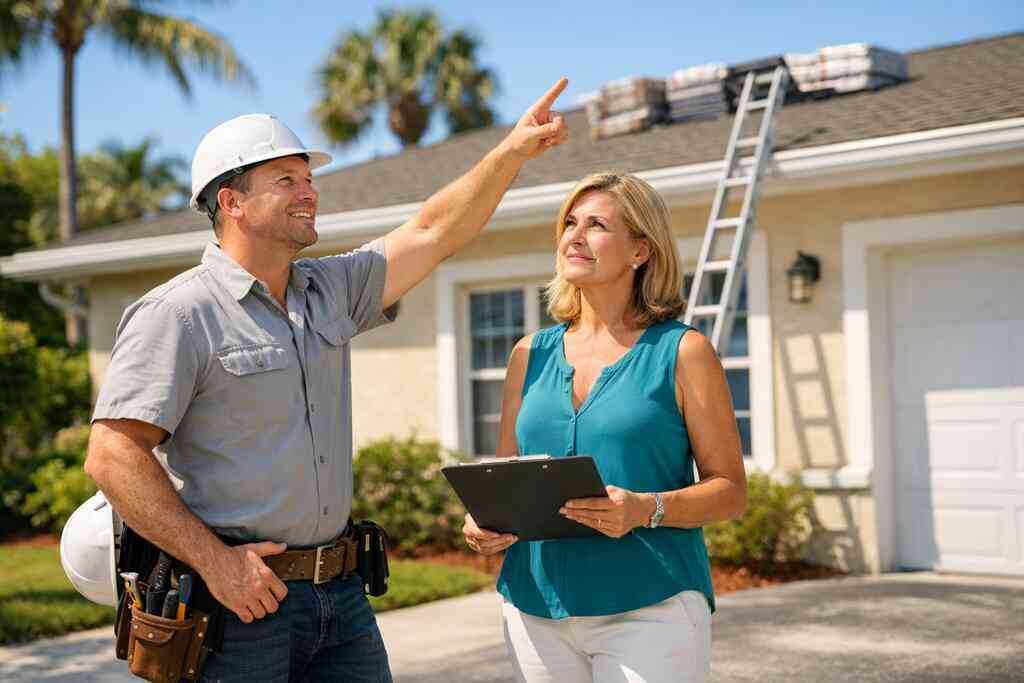
The roof tie-down mistake that only shows up after the first serious storm
A homeowner called us after a hard rain and a restless night. The shingles looked fine, but the ceiling stain told another story. That is the part people hate most. A roof can look complete while its weakest points stay hidden until wind load tests them. If you are feeling that quiet dread about your own roof, you are not overreacting.
Why older South Florida roofs can look fine until wind load exposes weak roof-to-wall connections
Older South Florida roofs often fail at the connection, not the surface. The shingles, tiles, or membrane may survive everyday weather. However, weak roof-to-wall connections can let wind start lifting the roof assembly. Once that starts, damage spreads fast. That is why hurricane-code requirements matter for exterior structural work.
On many homes, the visible roof covering hides aging fasteners, undersized connectors, or patch repairs from earlier storms. A roof can pass a casual look from the driveway and still have poor roof uplift resistance. We see this most often in homes that have had piecemeal repairs over the years. The home may have been maintained, but not structurally upgraded. That difference matters when the wind turns violent.
One client in Broward had a roof that had been patched twice after minor leaks. The roof surface looked orderly. Inside the attic, though, several connection points were inconsistent, and the framing told a mixed story of old work and newer repairs. The owner thought he needed a few shingles replaced. Instead, he needed a permit-ready structural conversation. That is a painful surprise, but it is a fixable one.
What hurricane roof tie downs actually change in roof uplift resistance and structural roof reinforcement
Hurricane roof tie-downs are not cosmetic. They are structural connectors that help the roof stay attached to the walls during high-wind events. They improve load transfer from the roof framing into the wall system. In plain language, they help the house hold itself together when pressure tries to peel the roof up. That is the core of hurricane code compliance.
The upgrade usually involves truss tie-down straps, hurricane straps installation, rafter tie-downs, and related fastener improvements. Depending on the roof system, a contractor may also add roof anchor reinforcement and improve framing attachment. These upgrades are part of structural roof reinforcement, not just maintenance. They are meant to resist wind uplift and reduce the chance of progressive failure. That is why a roofing contractor South Florida should evaluate the entire load path, not just the visible roof.
Here is the part most homeowners miss: a tie-down upgrade is only meaningful if the rest of the assembly can carry the load. If the roof deck attachment is weak or the framing is inconsistent, the new connector is doing part of the job alone. That is like putting stronger hinges on a door with a broken frame. The result is better, but not enough.
The hidden difference between a patch repair and a permit-ready roof work upgrade in coastal homes
A patch repair treats the symptom. A permit-ready upgrade addresses the system. That distinction matters in coastal homes, especially where hurricane-code requirements are being enforced more closely. If the work affects structural connections, you may need engineering, inspections, and a tighter permit trail. Skipping that process creates risk later, especially during resale or insurance review.
A proper upgrade usually pairs roof work with documentation, photos, and approved attachment details. It may also involve a wind mitigation inspection after completion. That inspection can show whether the new work improved the home’s storm resilience. For many South Florida owners, that is the real value. You are not just fixing a roof. You are reducing the chance of a future emergency.
When a roof becomes a structural system instead of just a weather cover
The roof is often treated like a lid. That mindset misses the point. In South Florida, the roof is part of the structural system, especially in a hurricane zone. It has to resist uplift, transfer loads, and keep water out under pressure. Once you understand that, roof tie-downs stop sounding optional.
How truss tie-down straps, hurricane straps installation, and rafter tie-downs work together
These parts work as a chain. Truss tie-down straps connect roof trusses to supporting walls. Hurricane straps installation strengthens that connection where uplift forces are strongest. Rafter tie-downs serve a similar purpose on framed roof systems. Together, they help create a continuous path from roof to foundation.
That path is what code officials and inspectors want to see. They are not guessing. They are checking whether the house can manage wind load requirements without a weak link. The goal is not perfection. The goal is reliable performance under stress. That is why a roof retrofit upgrade should never be treated like a simple cosmetic job.
We have seen owners focus on the roof covering and ignore the attic. That is backwards. The attic often reveals whether the home needs attic framing reinforcement or better connection hardware. If the roof framing is inconsistent, the contractor may need to explain more than one solution. Good contractors do not hide that complexity. They show it clearly.
Why roof deck fastening and nail pattern upgrades matter as much as the shingles above them
A roof covering is only as strong as what holds it down. Roof deck fastening and nail pattern upgrades are crucial because they affect how the sheathing behaves under suction. If the fastener spacing is poor, the roof deck can fail before the shingles ever do. That is why uplift-rated roof assemblies include the layer beneath the surface.
This is also where roof sheathing attachment becomes a serious code issue. Even a beautiful new roof can underperform if the fasteners are too sparse or poorly installed. The pattern matters. The length matters. The substrate matters. Those details sound small, but they decide whether the roof stays intact when the wind spikes.
A Miami-Dade homeowner once asked why the inspector cared so much about nail spacing. The answer was simple. Wind does not care about appearances. It pulls at weak points and looks for repetition. If the deck is under-fastened, that weakness repeats across the whole roof. That is how a small detail becomes a major failure.
Where secondary water barrier and uplift-rated roof assemblies fit into hurricane code compliance
A secondary water barrier adds a backup layer of protection if the outer roof covering is compromised. It does not replace good installation. It adds resilience. In South Florida, that matters because wind-driven rain can enter quickly once the outer layer is disturbed. The barrier helps limit interior damage while the roof stays exposed.
Uplift-rated roof assemblies go further. They combine the covering, underlayment, deck fastening, and connection details into one tested system. That is the direction hurricane code compliance has taken across Florida Building Code enforcement. When homeowners ask about hurricane resistant roofing, this is usually what they mean. They want a roof that performs as a system, not just a patchwork of parts.
What the permit office is really asking for in Palm Beach, Broward, and Miami-Dade
Permits can feel frustrating. We get that. Most homeowners would rather spend money on visible improvements than paperwork. Still, the permit process is the part that protects you when roof work touches structure. In South Florida, that is especially true because local enforcement reflects storm risk, coastal conditions, and county-specific review habits.
How the South Florida permit process changes when roof work touches structural connection upgrade requirements
Once roof work includes structural connection upgrade items, the permit review usually becomes more detailed. That may mean drawings, product approvals, fastening details, or engineer involvement. The South Florida permit process is not just a formality. It is a checkpoint that helps verify the work matches the scope. If you need permit-ready roof work, start with that reality.
This is where homeowners get tripped up. A roof replacement may look straightforward until the contractor discovers attachment issues in the field. Then the scope changes. That can trigger revised approvals, inspection steps, or a longer review path. A good contractor explains that before demolition begins. A careless one pretends it will all be easy.
Why Palm Beach County permit, Broward County permit, and Miami-Dade permit expectations are not interchangeable
Palm Beach County permit, Broward County permit, and Miami-Dade permit processes share broad principles, but they do not behave the same way. Review standards, documentation preferences, and inspection expectations can differ. That is normal in South Florida. What passes smoothly in one county may need more support in another. This is why local experience matters. For homeowners comparing bids, this difference is a big deal. A licensed contractor Palm Beach County may still need different submittal habits than a licensed contractor Broward County or licensed contractor Miami-Dade. The same holds for general contractor near me South Florida searches. Proximity does not guarantee permit competence. Ask how the contractor handles county-specific roof permit requirements before you sign. 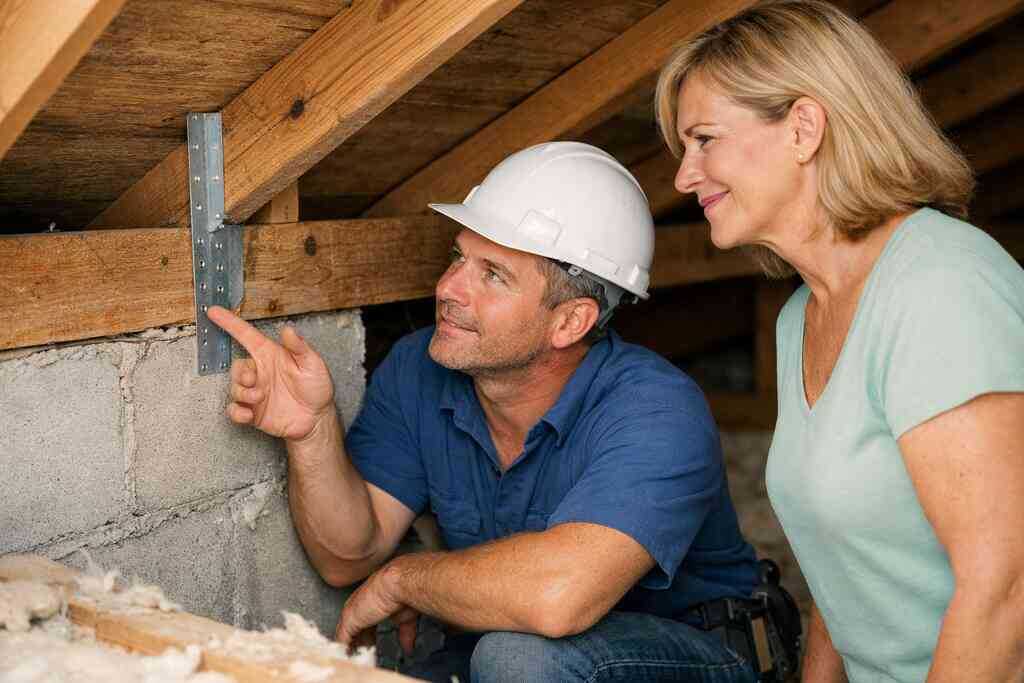
What homeowners should know about South Florida building codes before roof replacement code compliance starts
Before work begins, understand that South Florida building codes are written with wind in mind. That means roof replacement code compliance may include fastening requirements, attachment specifications, and inspection milestones. It may also involve HOA approval in some communities. If you live in a condo, townhome, or gated neighborhood, expect extra coordination. That is normal.
You do not need to memorize code language. You do need to know what your contractor is proposing and why. Ask for the scope in writing. Ask whether the work includes roof replacement code compliance items or only surface replacement. If someone tries to make permits sound optional, keep looking. That is not a small red flag.
The contractor decisions that separate code-compliant work from expensive rework
Choosing the right contractor is where the project becomes manageable or miserable. The hardest part is not finding someone who says yes. It is finding someone who is licensed, insured, communicative, and honest about structural work. That is especially important for South Florida contractors working on hurricane-related upgrades. The wrong hire can create rework, delays, and insurance headaches.
How to verify a contractor license for a roofing contractor South Florida or general contractor near me South Florida
Start with the license. Always. Use a trusted source and confirm the name matches the company you are hiring. If you want a simple starting point, review how to verify a contractor license in Florida before signing anything. That check should be routine, not optional. It protects you from avoidable problems.
Ask whether the contractor has relevant experience with roofing contractors in South Florida and structural upgrades, not only cosmetic reroofs. A company can be excellent at one type of work and weak at another. That matters if your project includes tie-downs, underlayment, or framing corrections. The question you get more than any other from first-time homeowners is exactly this: “How do I know they are real?” Verify first. Trust second.
What contractor insurance requirements Florida and contractor bonding requirements should look like before any contract is signed
Insurance matters because roof work is inherently risky. Ask for current proof of coverage, and confirm the contractor can explain it clearly. You are not asking to be difficult. You are protecting your home and your timeline. For a plain-language refresher, review contractor insurance requirements in Florida before you commit. If they hesitate, that tells you something.
Bonding can matter too, depending on the project scope and contractor type. Contractor bonding requirements are not a magic shield, but they add another layer of accountability. They are especially relevant on larger jobs and complex structural work. If you are comparing bids for a home remodeling contractor South Florida project or a coastal home builder Florida scope, ask what protections are in place. Keep the conversation specific. Vague answers help no one.
ItemWhy it mattersWhat to askLicenseConfirms legal authorityIs the license active and appropriate?InsuranceReduces financial exposureCan you send current proof today?BondingAdds accountabilityIs the project bond-supported?ExperienceImproves roof code executionHave you handled tie-down upgrades?How lien waiver Florida, change order contractor Florida, and contractor dispute resolution protect you during the job
A lien waiver Florida is a document showing a party has been paid and waives lien rights for that payment. That sounds dry. It is not. It helps protect you from payment disputes later. Ask for it when progress payments are made. Keep every copy organized.
A change order contractor Florida process matters just as much. Roof projects change when hidden damage appears. That is normal. What matters is written approval before additional work proceeds. Verbal promises turn into expensive misunderstandings fast. Good contractors document changes before the extra labor starts.
If a dispute does happen, stay calm and document everything. Photos, emails, signed scopes, and permit records help. Contractor dispute resolution works better when you have paperwork from day one. That is one reason homeowners often do better with a structured South Florida construction permit guide for roof work before the job begins. Organization saves money.
The smartest next move before hurricane season pressure hits
You do not have to solve every exterior upgrade at once. You do need a smart sequence. Roof tie-downs, openings protection, and structural coordination all affect each other. If you wait until the first storm warning, the best contractors are already booked. That is the reality in South Florida every season.
When to pair roof tie-down upgrades with hurricane impact window installer South Florida or hurricane shutter contractor work
If your roof needs structural improvement, think about the openings too. Pairing roof tie-down work with a hurricane impact window installer South Florida or hurricane shutter contractor can reduce repeat mobilization and improve overall resilience. That does not mean you must do everything together. It means the sequence should make sense. Exterior upgrades work best when planned as a system.
On some projects, homeowners begin with roof work and then realize the windows are still the weak spot. On others, impact glass comes first because the home is already exposed. The right answer depends on your house, your budget, and your risk tolerance. For owners comparing coastal priorities, the article hurricane roof tie-downs in South Florida is a useful starting point. It keeps the conversation grounded.
How coastal home contractor and oceanfront home contractor planning changes for waterfront home builder South Florida conditions
Coastal homes age differently. Salt air, moisture, and wind exposure change material performance. That is why a coastal home contractor or oceanfront home contractor thinks differently about fasteners, access, and sequencing. A waterfront home builder South Florida team also has to think about corrosion resistance and inspection logistics. Inland assumptions do not always hold near the water.
If you live near the beach, intracoastal, or a wind-exposed corridor, ask about coastal code compliance from the start. This is where coastal code compliance for South Florida homes becomes especially relevant. You want a contractor who respects wind, water, and review requirements equally. That is true whether you need a South Florida luxury renovation, a sunroom contractor South Florida, or a full structural upgrade. The house should be treated as one system.
Why a South Florida design build or South Florida home inspector review can help you choose the right sequence for the work
A South Florida design build approach can simplify coordination when roofing, windows, and structural details overlap. It keeps the plan more coherent. You are less likely to have one trade blocking another. That matters when permits and inspections are involved. It also helps reduce surprise change orders.
A South Florida home inspector review can also be smart before major roof work starts. It may reveal attic issues, moisture concerns, or connection problems you did not know existed. One homeowner in Miami-Dade asked for an inspection before replacing a roof on a townhome. The inspector found old moisture damage near the framing. That changed the sequence, not the budget balloon the owner feared. The work became cleaner because the problem was found early.
If you are ready to take one practical step, start by collecting three licensed bids from contractors who can explain tie-downs, permits, and inspections in plain English. Ask each one to show you how they handle county-specific requirements and written change orders. You do not have to figure this out alone, and you do not have to figure it all out today. Start with one phone call, then compare the answers carefully.
Frequently Asked Questions
Question: What are hurricane roof tie-downs, and how do they improve roof uplift resistance under South Florida building codes?
Answer: Hurricane roof tie-downs are structural connectors that help keep the roof attached to the wall system when strong wind tries to lift the roof assembly. In South Florida, that matters because hurricane code compliance is not just about the roof covering – it is about the full load path from the roof framing down into the structure. When a roofing contractor South Florida evaluates a home, they should look at roof-to-wall connections, truss tie-down straps, hurricane straps installation, and related structural roof reinforcement details. Done correctly, these upgrades improve roof uplift resistance and help reduce the chance of progressive failure during a storm. South Florida Contractors can help homeowners find a contractor South Florida who understands exterior structural work, permit-ready roof work, and the realities of local wind load requirements. Always verify contractor licensing Florida requirements and contractor insurance requirements Florida before moving forward.
Question: What should I expect from the South Florida permit process for Hurricane Code Upgrades for 2026 Roof Tie Downs?
Answer: If your roof work includes structural connection upgrade items, the South Florida permit process usually becomes more detailed than a simple surface reroof. Depending on the scope, you may need drawings, product approvals, fastening details, inspections, and possibly engineering input. That is especially true when the work affects roof deck fastening, nail pattern upgrades, roof sheathing attachment, or attic framing reinforcement. Palm Beach County permit, Broward County permit, and Miami-Dade permit requirements can differ, so county-specific experience matters. South Florida Contractors helps homeowners connect with licensed contractor Palm Beach County, licensed contractor Broward County, or licensed contractor Miami-Dade professionals who understand roof replacement code compliance and hurricane code inspection steps. We never recommend skipping permits; instead, we help homeowners prepare for them the right way.
Question: How is a permit-ready roof work upgrade different from a patch repair or basic reroof?
Answer: A patch repair treats a symptom, while a permit-ready roof work upgrade addresses the system. For homes in South Florida, that difference is critical because hurricane-code requirements apply when exterior or structural work affects the roof’s ability to resist wind. A basic reroof may replace visible materials, but a true structural upgrade may also include roof anchor reinforcement, roof deck fastening improvements, secondary water barrier installation, and uplift-rated roof assemblies. Those details can be the difference between a roof that merely looks new and one that performs as hurricane resistant roofing. South Florida Contractors helps you compare options from a general contractor near me South Florida search and choose a team that can explain the scope in plain English. If hidden damage is found, a written change order contractor Florida process should be used so everything stays transparent and code compliant.
Question: Why does What Are Hurricane Code Upgrades for 2026 Roof Tie Downs matter for homeowners in Palm Beach, Broward, and Miami-Dade Counties?
Answer: This topic matters because South Florida building codes are written for wind, moisture, and storm exposure, and older roofs often fail at the connection points rather than the surface. Homeowners in Palm Beach County, Broward County, and Miami-Dade County need to understand that hurricane roof tie-downs, roof retrofit upgrades, and structural connection upgrade work can reduce storm damage risk and improve long-term resilience. A roof can look fine from the street and still have weak roof-to-wall connections, poor roof deck fastening, or inconsistent truss tie-down straps in the attic. South Florida Contractors is built to help homeowners find the right match for their project, whether they need roofing contractors in South Florida, coastal wind mitigation support, or a South Florida home inspector review before work begins. We also encourage homeowners to ask about wind mitigation inspection opportunities after the upgrade is complete.
Question: What should I verify before hiring a roofing contractor South Florida for hurricane code compliance work?
Answer: Before hiring anyone, verify the license, insurance, and relevant experience. A contractor may be great at cosmetic repairs but not qualified for structural roof reinforcement, hurricane straps installation, or coastal code compliance work. Ask for active proof of contractor licensing Florida, current contractor insurance requirements Florida documentation, and any relevant bonding information if the project is large or complex. It is also smart to ask whether they have experience with hurricane code compliance, roof replacement code compliance, and the specific county permit process for your area. South Florida Contractors makes it easier to find a contractor South Florida by connecting homeowners with local professionals across the region, including licensed contractor Palm Beach County, licensed contractor Broward County, and licensed contractor Miami-Dade options. If you are planning broader exterior work, such as a hurricane impact window installer South Florida or hurricane shutter contractor, ask how the roof upgrade fits into the overall home protection plan.
Question: Can South Florida Contractors help with more than roof tie-downs, like coastal home renovation or South Florida design build projects?
Answer: Yes. Many homeowners need more than one exterior or structural upgrade, and that is where a coordinated approach helps. If your roof work overlaps with hurricane impact window installer South Florida needs, hurricane shutter contractor work, South Florida HOA permit requirements, condo renovation South Florida planning, or townhome remodeling South Florida coordination, it is often better to think in terms of a full project sequence rather than isolated tasks. South Florida Contractors can help you find professionals for roof tie-down upgrades, South Florida home additions, second story addition South Florida work, sunroom contractor South Florida projects, lanai builder South Florida services, and other coastal home renovation needs. For homeowners pursuing a South Florida design build approach, this can reduce confusion, limit change order surprises, and keep the job aligned with South Florida building codes. As always, verify licensing and insurance before hiring any contractor, and never assume permit requirements can be skipped.