
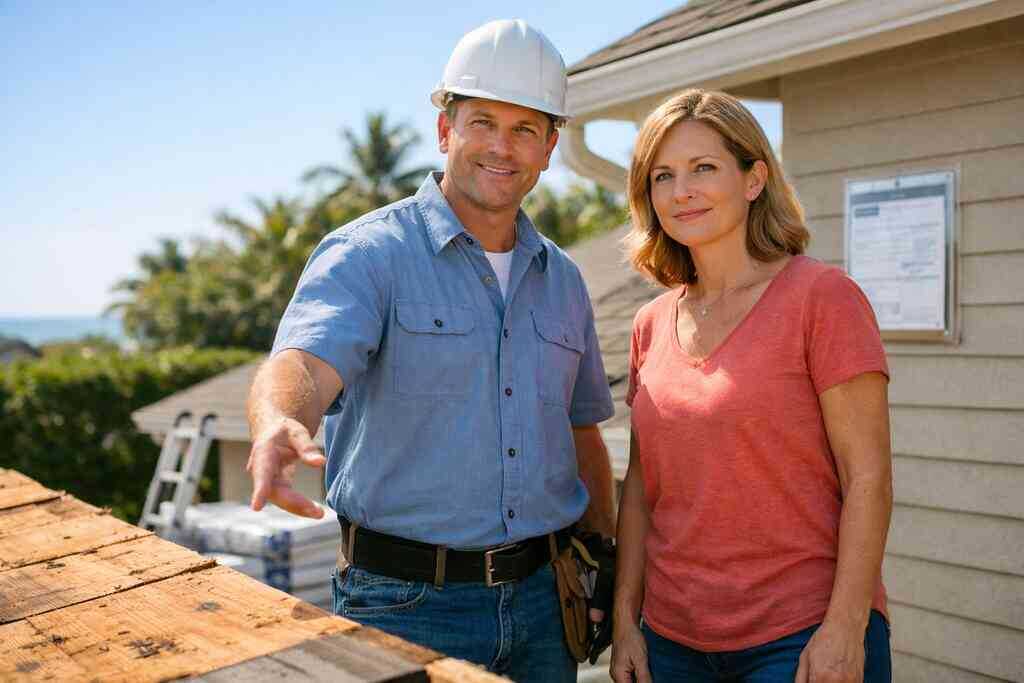
Why a roof replacement in South Florida can stall before the first shingle comes off
A roof project can feel urgent fast. A leak starts, the drywall stains spread, and suddenly you need answers now. Then the permit conversation begins, and that is where many homeowners feel the dread. That feeling is normal, because the South Florida roof replacement permit process is detailed for a reason. Inspectors are not just checking for missing shingles. They are checking whether your home can stand up to South Florida weather and code demands.
The permit is not paperwork theater and why inspectors care about more than leaks
A roof replacement permit in South Florida protects more than the roof surface. It helps confirm that the work meets South Florida building codes, including hurricane code compliance for wind-prone neighborhoods. Inspectors want to know the roof system, fastening pattern, deck condition, flashing, and drainage details all make sense together. If you skip that step, the project can stall later, often after you have already paid for materials. That is why the permit is part of the build, not a side task.
Here is the part most homeowners miss. A roof can look fine from the street and still fail the review. One homeowner in a Boca Raton neighborhood called after a contractor found rotten deck panels during tear-off. The job paused, a revised scope was submitted, and the permit had to reflect the repair before work continued. That delay was frustrating, but it was better than burying damaged decking under new shingles. On South Florida home improvement projects, hidden defects are routine, not rare.
How Palm Beach County Broward County and Miami-Dade handle roof replacement differently
The South Florida permit process is regional, but it is not identical across counties. A Palm Beach County permit may ask for different attachments than a Broward County permit, especially on reroof jobs with coastal exposure. Miami-Dade permit review can be stricter on wind resistance details because the county is known for demanding high performance in storm conditions. If your home sits near the Intracoastal, the requirements can feel even tighter. That is why a licensed roofing contractor South Florida should know local review habits.
The approval pace also depends on jurisdictional back-and-forth. Some cities within South Florida lean heavily on electronic submissions. Others still want very specific supporting documents before they will accept a roofing permit application. If you are comparing quotes from a roofing contractor South Florida, ask how they handle permit coordination. The best crews do not just install roofs. They manage paperwork, plan sequencing, and inspection timing with the same care.
The hidden red flags that trigger revisions after a contractor submits the roofing permit application
Permits often stall because the paperwork does not match the house. A square footage mismatch can trigger review comments. So can missing product approvals, vague scope language, or a plan that ignores a visible repair condition. If the contractor says “replace roof” but the roof also needs fascia repair, soffit work, or deck replacement, the permit may need clarification. That is especially true for roof replacement in coastal areas, where corrosion and water intrusion can spread quietly.
Common revision triggers include:
- Incomplete roofing permit requirements
- Missing contractor license details
- Product approvals that do not match the roof system
- Inconsistent roof slope or square footage data
- Unclear underlayment requirements
- Unstated flashing and waterproofing compliance notes
- Unapproved structural repairs
A client in Fort Lauderdale once assumed a simple shingle swap would be enough. The review flagged a prior patch area and a roof edge detail near a parapet. The contractor revised the package, added clearer documentation, and the permit moved forward. It was annoying, but it kept the project legitimate. That is the real South Florida permit process at work.
Why hurricane code compliance changes the plan for coastal homes and wind exposed neighborhoods
In South Florida, roof replacement is rarely just a cosmetic upgrade. Hurricane roof tie-downs, roof-to-wall connection requirements, and secondary water barrier requirements can change the whole approach. Homes closer to the coast often need more attention to fastening, uplift resistance, and edge details. Wind mitigation roof upgrades also matter because they can affect long-term resilience and sometimes insurance conversations. If you own an oceanfront home, waterfront home in South Florida, or a house in an exposed subdivision, assume the roof design will be scrutinized.
This is also where South Florida building codes for coastal roofing matter most. A code-compliant roof system is not one product. It is a sequence of parts working together. The deck, underlayment, flashing, fastening, and edge protection all need to line up. That is especially true for tile roof replacement permit work and metal roof replacement permit work. The stronger the wind exposure, the less room you have for shortcuts.
The paper trail that gets a roofing permit approved without costly backtracking
Most homeowners think the contractor handles everything. Sometimes that is true. More often, a clean permit file depends on the owner, the contractor, the HOA, and the city or county all staying aligned. If one piece is missing, the project can stop before tear-off. That is why the paper trail matters as much as the nail pattern.
What a permit ready roofing package usually needs before the city or county will review it
A permit-ready roofing package usually includes the contractor information, scope of work, product information, and any property-specific attachments. For a shingle roof replacement permit, tile roof replacement permit, metal roof replacement permit, or flat roof replacement permit, the jurisdiction may want different product approvals. Some projects also need a roof tear-off regulations note, especially when layers are being removed. If soffit or fascia work is included, that can need separate attention. The more complete the package, the fewer delays you face.
A strong package often includes:
- Signed roofing permit application
- Contractor license details
- Proof of insurance
- Product approvals or manufacturer specs
- Roof plan or sketch
- Repair notes for any damaged decking
- HOA or condo approval, when required
- Lien waiver Florida forms, when requested
If you are comparing bids from South Florida contractors, ask who prepares the permit-ready roofing plans. A general contractor near me South Florida can sometimes help coordinate the bigger picture, especially if the roof work touches other repairs. Still, never assume every contractor can legally perform every kind of roof work. Verify first.
How to verify a contractor license in Florida before signing anything
This step is not optional. A contractor can sound polished and still be the wrong choice. You should know how to verify a contractor license in Florida before you sign, hand over a deposit, or authorize permit filing. The license should match the work type and the county requirements. If the license, business name, and project scope do not line up, slow down.
A smart homeowner checks for three things. First, confirm the license status. Second, confirm the contractor insurance requirements Florida expects for roofing jobs. Third, ask whether the contractor is familiar with your county’s permit process. If you are still sorting through options, a licensed roofing contractor in South Florida should be able to explain the permit path without hand-waving. That clarity tells you a lot.
What contractor insurance requirements and bonding requirements actually protect you from
Insurance and bonding are not paperwork decorations. They protect you from real financial pain if something goes wrong. Contractor insurance requirements Florida may include general liability and workers’ compensation, depending on the project and the business structure. Bonding can help provide another layer of accountability when a contractor fails to meet obligations. For roofing, these protections matter because the job involves ladders, tear-off debris, weather exposure, and structural surfaces. 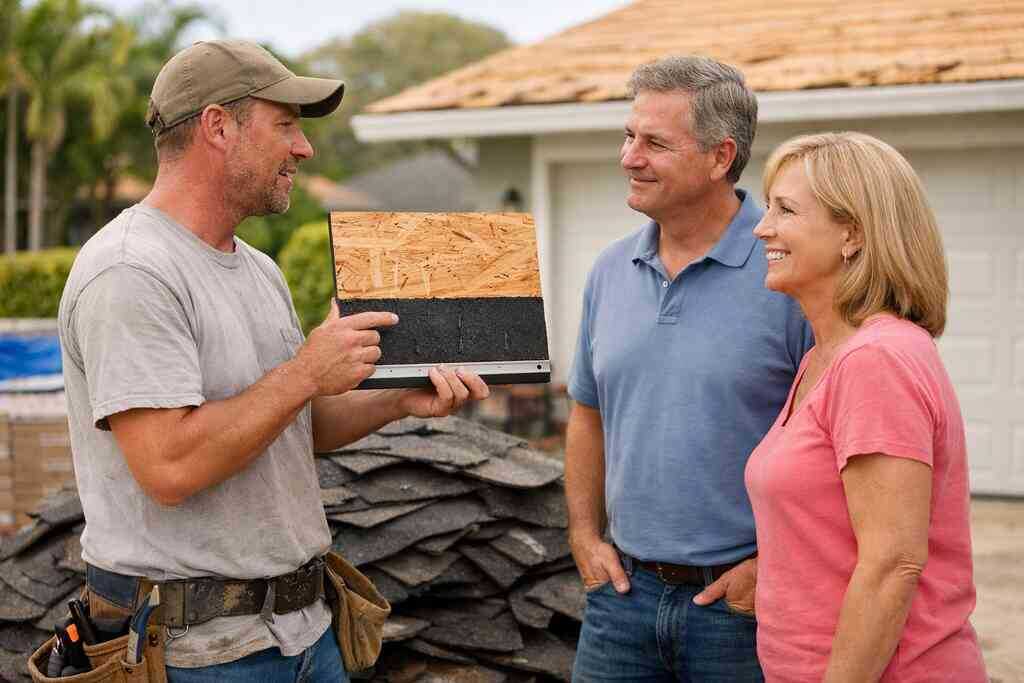
A simple table helps show the difference:
ItemWhat it helps coverWhy you should careLiability insuranceProperty damageProtects your home if an accident happensWorkers’ compensationWorker injury claimsReduces risk if someone gets hurt onsiteBondingContractor performance issuesAdds leverage if the contractor defaultsIf you want more confidence before hiring, review contractor insurance requirements in Florida for roofing jobs. Do not rely on a verbal promise. Ask for proof and verify it yourself. That is how you reduce the chance of a painful dispute later.
When HOA roof replacement approval and condo roof replacement rules come before the permit
This is where many projects slow down. HOA roof replacement approval in South Florida often comes before or alongside the permit. Condo roof replacement rules in South Florida can be even more specific because common areas, associations, and building systems all affect the work. Townhome roof replacement rules may also differ depending on who owns the structure and who maintains the exterior. If you live in a managed community, the permit path may have two checkpoints, not one. You may need color approvals, material approvals, installation hours, or restoration rules. Some associations want samples before they sign off. Others want a full submittal package with product data and contractor credentials. If your community sits near the beach or a canal, the board may be especially cautious about appearance and storm resilience. In those settings, a roof replacement permit in South Florida can become a coordination exercise, not just a building department task.
How change orders lien waivers and scope changes can complicate the approval path
Change orders are written changes to the original contract. They matter because roof jobs uncover surprises. A rotten deck, damaged eaves, or unexpected flashing failure can force a scope change. If the change order is not documented, the permit file and the contract can drift apart. That causes confusion during inspection and payment.
Lien waivers are different. A lien waiver is a document stating a contractor or subcontractor has been paid for certain work. It helps protect you from a surprise claim later. Scope changes, lien waivers, and permits should stay in sync. Otherwise, a simple repair can become a billing dispute. The cleaner the paperwork, the easier the approval path.
What to do after approval so the project ends with a final inspection and not a headache
Once the permit is approved, the job is not done. It is just properly started. The work still has to match the approved scope, pass inspections, and close out cleanly. That is where many homeowners relax too soon. Keep watching the process until final sign-off is complete.
What roof replacement inspection process looks like from tear off to final sign off
The roof replacement inspection process usually begins after tear-off and continues through key milestones. Inspectors may check the deck condition, fastening, underlayment, flashing, and final roof surface. In Broward County, that roof replacement inspection process in Broward County often includes close attention to code details that affect wind performance. Some jobs also need mid-project calls before the surface is covered. If the contractor misses an inspection step, the project can stall.
The best contractors schedule inspections around actual work, not around wishful thinking. That means they do not cover areas before they are approved. It also means they keep the site ready for access. On the projects we have seen this year, the cleanest jobs always had one thing in common. The contractor treated inspections like milestones, not interruptions.
How structural roof deck inspection roof to wall connection requirements and hurricane roof tie downs affect the work
A structural roof deck inspection checks whether the roof deck is sound enough for the new system. If the decking is weak, damaged, or improperly attached, the inspector may require repair before approval. Roof-to-wall connection requirements matter because they help the structure resist uplift during strong wind events. Hurricane roof tie downs are part of that bigger picture. They are not flashy, but they are critical.
Think of it this way. The shingles or tiles are the skin. The connections are the bones. If the structure is weak underneath, a beautiful finish will not save the house. A roofing contractor South Florida homeowners trust should be able to explain these details in plain language. If they cannot, keep looking.
When secondary water barrier requirements underlayment and flashing details matter most
Secondary water barrier requirements are a major issue in South Florida because wind-driven rain finds weaknesses fast. Underlayment requirements vary by system, but the principle is the same. The layer below the finish roof should help protect the house if outer materials fail. Flashing and waterproofing compliance are equally important around chimneys, valleys, skylights, walls, and roof penetrations. These details decide whether your roof sheds water or collects problems.
The mistake we see most often is rushing the details at the edges. That is where leaks begin. A smooth field installation can still fail if the flashing is sloppy. This matters even more for South Florida building codes because coastal weather punishes shortcuts. Ask your contractor how they handle transitions before the first nail goes in.
How storm damage roof replacement insurance claim roof repair and roofing jobsite compliance should be documented
If your roof damage came from a storm, document everything. Take photos before tear-off, during repairs, and after each major step. Keep copies of the insurance claim, roof repair estimate, permit records, and any inspection notes. Roofing jobsite compliance also matters. That means proper debris containment, safe access, and adherence to the approved scope. If a dispute later arises, your records will matter.
One family in a coastal community near Delray Beach had a storm-damaged tile roof and a mismatched estimate from the insurance carrier. Because they documented the job carefully, the contractor could show exactly which areas were repaired and which materials were installed. That recordkeeping made the conversation with the adjuster much easier. It did not remove the stress, but it reduced the chaos. That is a real advantage when the weather and paperwork both press in at once.
The smartest next move when you need a licensed roofing contractor South Florida for a code compliant roof system
Your next move should be simple and practical. Start with a roofing contractor South Florida who can explain the permit path, inspection steps, and code requirements without guessing. If you need help finding the right fit, use South Florida Contractors to find a contractor South Florida and compare verified professionals in your area. Ask for license confirmation, insurance proof, and a written scope that matches the permit. Then compare the answers, not just the price.
You do not have to figure this out alone, and you do not have to solve every piece today. Start with one call, one permit question, and one contractor who can prove they understand South Florida homeowners permit checklist realities.
Frequently Asked Questions
Question: What is the South Florida permit process for roof replacements, and how does South Florida Contractors help homeowners avoid delays?
Answer: The South Florida permit process for roof replacements starts with a proper roofing permit application, a contractor review, and the right supporting documents before work begins. In South Florida, that usually means the permit file needs to match the home, the roof system, and the local requirements for Palm Beach County permit, Broward County permit, or Miami-Dade permit review. For exterior and structural work, hurricane code compliance matters, so inspectors may look closely at underlayment requirements, flashing and waterproofing compliance, roof tear-off regulations, and roof-to-wall connection requirements. South Florida Contractors helps homeowners find a contractor South Florida by connecting them with verified professionals who understand the permit-ready roofing plans needed for a code-compliant roof system. Just as important, homeowners should always verify licensing and insurance before signing anything, because contractor licensing Florida and contractor insurance requirements Florida are not optional. That is especially true for roofing contractor South Florida projects where delays often come from incomplete paperwork, unclear scope, or missing approvals.
Question: How do I know if I need a licensed contractor Palm Beach County, licensed contractor Broward County, or licensed contractor Miami-Dade for my roof replacement?
Answer: The right contractor depends on where the home is located and how the local building department handles roof replacement permit South Florida requirements. A licensed contractor Palm Beach County may be familiar with one review process, while a licensed contractor Broward County or licensed contractor Miami-Dade may face different permit checklists, inspection timing, and product approval standards. That is why South Florida Contractors makes it easier to compare verified South Florida contractors by location and service area. You can use the directory to find a contractor South Florida who understands your county’s expectations and can explain whether your project needs a shingle roof replacement permit, tile roof replacement permit, metal roof replacement permit, or flat roof replacement permit. If you live in a coastal area, ask specifically about hurricane roof tie-downs, secondary water barrier requirements, and wind mitigation roof upgrades, since those details often affect approval. Always confirm how to verify a contractor license and ask for proof of contractor insurance requirements Florida before hiring.
Question: What documents should be included in permit-ready roofing plans for a South Florida roof replacement?
Answer: A permit-ready roofing package usually includes the roofing permit application, contractor license details, proof of insurance, product approvals, scope of work, and any repair notes for decking or flashing issues. Depending on the job, the city or county may also ask for HOA roof replacement approval, condo roof replacement permit documents, or townhome roof replacement rules documentation. If the project includes soffit and fascia repair permit work, structural roof deck inspection items, or changes after tear-off, those should be included too. South Florida Contractors supports homeowners by helping them connect with contractors who know how to assemble a clean file for the South Florida permit process without guesswork. That matters because a missing attachment or inconsistent square footage can delay review. For larger projects, a general contractor near me South Florida search may also help homeowners coordinate multiple trades, but the contractor still needs to be properly licensed and insured for the scope. Lien waiver Florida paperwork and change order contractor Florida documentation may also become important if hidden damage is discovered during the job.
Question: What happens during the roof replacement inspection process in South Florida, and why do inspections matter so much?
Answer: The roof replacement inspection process typically begins after tear-off and may continue through underlayment, flashing, deck repair, and final roof installation. Inspectors may review roofing jobsite compliance, structural roof deck inspection details, roof-to-wall connection requirements, and hurricane roof tie-downs before approving the next phase. In South Florida, that level of review exists because hurricane code compliance is a major part of exterior construction. The goal is not just to replace the roof surface; it is to make sure the whole roof assembly works as a code-compliant roof system under real storm conditions. South Florida Contractors helps homeowners find a contractor South Florida who understands how to sequence the work so inspections are scheduled properly and the project does not stall. This is especially important for storm damage roof replacement and insurance claim roof repair jobs, where documentation must match what was actually installed. A trustworthy roofing contractor South Florida should always be willing to explain the inspection milestones clearly and keep the homeowner updated.
Question: How do HOA roof replacement approval, condo renovation South Florida rules, and townhome remodeling South Florida requirements affect my roofing permit?
Answer: In many communities, HOA roof replacement approval or condo renovation South Florida rules can come before or run alongside the city or county permit. Townhome remodeling South Florida projects may also have association rules that control roofing materials, colors, installation hours, and restoration obligations. That means the South Florida permit process is not just a building department issue; it is also a coordination issue between the owner, the association, and the contractor. South Florida Contractors helps homeowners find a contractor South Florida who understands how to work through those layers without skipping steps. If your roof replacement is part of a larger project, such as a home remodeling contractor South Florida scope, a South Florida design build plan, or even a coastal home builder Florida project, the contractor should be able to coordinate the roof with the rest of the work. Homeowners should still verify licensing, insurance, and bonding before committing, because contractor bonding requirements and contractor insurance requirements Florida are there to protect you. If you are also considering related upgrades such as hurricane impact window installer South Florida, hurricane shutter contractor, or outdoor kitchen contractor South Florida services, make sure each trade is properly licensed for its work.
Question: Why should I use South Florida Contractors to find a contractor South Florida for my roof replacement instead of hiring the first roofer I meet?
Answer: Because roof replacement in South Florida is about more than price. You need someone who understands South Florida building codes, Florida Building Code 2026 expectations, hurricane code compliance, and the local permit path for your county and municipality. South Florida Contractors is designed to help homeowners compare verified local professionals across Palm Beach, Broward, and Miami-Dade Counties, rather than guessing based on advertising alone. Whether you need a roofing contractor South Florida, a general contractor near me South Florida for a bigger renovation, or support for a complex project involving South Florida home additions, South Florida concrete contractor work, or South Florida foundation repair, the key is choosing a licensed pro who matches the job. The directory helps homeowners start with local options, but the final step is still yours: confirm the contractor license, check insurance, review the written scope, and ask how they handle the South Florida homeowners permit checklist. That combination of local matching and homeowner verification is the safest way to move forward with a roof replacement permit South Florida project.