
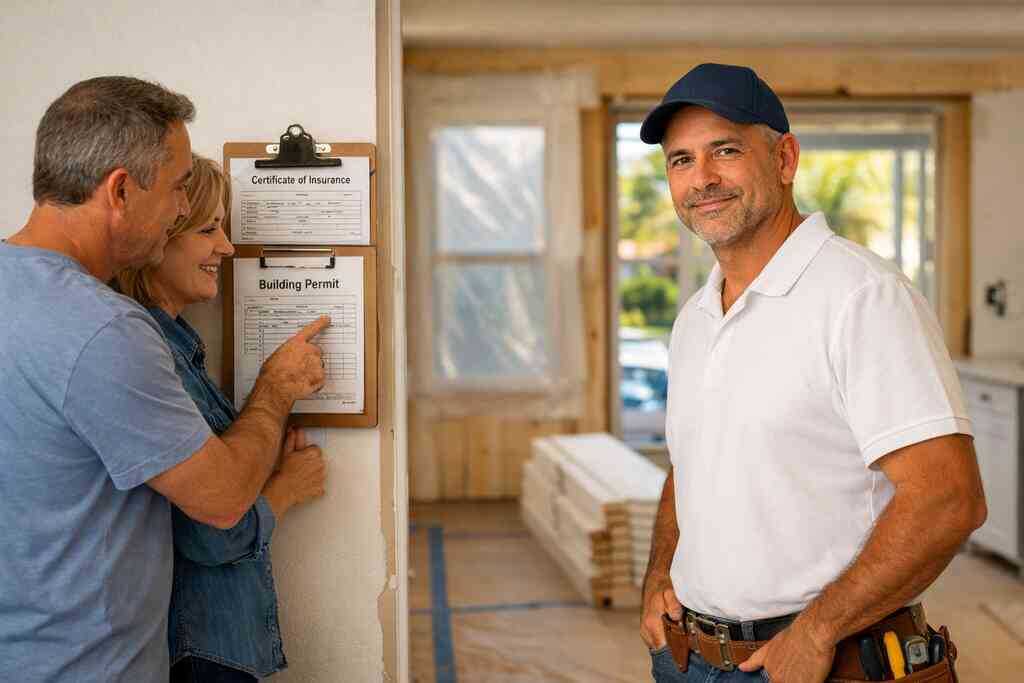
Why a cheap Broward County quote can become the most expensive mistake on the job
A homeowner called us during a hard afternoon storm, staring at water spots spreading across fresh drywall. The quote looked low. The paperwork looked fine. Then the wall opened, and the real problem showed up. If you are reading this because an estimate felt suspiciously cheap, take a breath. That uneasy feeling is usually trying to save you money.
Contractor insurance in Broward County is not just paperwork. It is the shield between a routine project and a financial mess. It helps cover injuries, property damage, and jobsite accidents when something goes wrong. In South Florida, where rain can arrive sideways and wind can turn minor exposure into a major headache, that shield matters more than most homeowners expect.
What contractor insurance is actually protecting when your walls are opened and your roof is exposed
Once demo starts, your home stops being a sealed system. A kitchen remodel can expose plumbing, wiring, and hidden leaks. A roofing job can leave decking vulnerable for hours. That is why contractor general liability insurance exists. It is designed to help cover damage caused by the work itself, not the hopes and promises around it.
Here is the part most homeowners miss. Insurance is not only about the finished product. It is about the messy middle, when dust is everywhere and the jobsite is open. On a home remodeling contractor South Florida project, one loose tool can crack a window or damage a floor. On a South Florida bathroom remodeler job, one drain issue can flood a hallway. Coverage matters before the first hammer swing.
How Broward County weather, storm seasons, and coastal exposure change the risk profile for every project
Broward County lives with humidity, wind, and sudden storms. So does the rest of South Florida. That changes risk fast. A half-finished roof, an uncovered opening, or exposed materials can become a claim after one storm cell passes through. Coastal exposure also increases corrosion, moisture intrusion, and schedule pressure.
We see this most often on roofing contractor South Florida work and exterior upgrades. A hurricane shutter contractor or hurricane impact window installer South Florida does not just install products. They are working against wind loads, water paths, and strict local expectations. The same is true for a coastal home builder Florida project or an oceanfront home contractor job. If a contractor ignores weather reality, you feel it in repair costs later.
Why a licensed contractor Broward County can still be a bad fit if the coverage trail is thin or vague
A license is necessary, but it is not enough. A licensed contractor Broward County may still be a risky hire if the insurance documents are vague, expired, or incomplete. You want a paper trail that matches the job, the company name, and the actual scope. If the certificate feels generic, ask more questions.
I have seen homeowners choose the lowest bid, only to learn the contractor had no clear workers’ compensation coverage for the crew on site. That is not a small detail. It can shift liability onto you if someone gets hurt. The same warning applies to a general contractor near me South Florida search result that looks polished but cannot explain coverage. Marketing is not protection.
The insurance paper trail that tells you whether a contractor is real or just well marketed
The smartest homeowners do not stop at the estimate. They ask for documents. They verify names. They compare what the contractor says with what the paperwork shows. That process feels uncomfortable at first, especially if you are eager to start. Still, it is the fastest way to separate professionals from smooth talk.
How to verify a contractor license in South Florida without relying on a logo or a sales pitch
Start with the basics: how to verify a contractor license before anyone touches your home. In South Florida, that means checking the license through the proper state or county channel, not trusting a website badge. Ask for the legal business name, license number, and classification. Then match those details to the job you need.
If you need a licensed contractor Palm Beach County, a licensed contractor Broward County, or a licensed contractor Miami-Dade, verify all three things: license status, scope, and disciplinary history if available. A polished van wrap means nothing. A solid answer means a lot. For a more detailed process, the guide on how to verify a Florida contractor’s license is a useful starting point.
What to look for on a certificate of insurance contractor document before work starts
A certificate of insurance contractor document should not read like a mystery novel. Look for the company name, policy types, effective dates, and the certificate holder. Make sure the name matches the entity signing your contract. If the job is large enough, ask whether you can be listed as an additional insured. That adds another layer of protection.
You also want the policy to fit the work. A South Florida kitchen remodeler doing cabinet replacement may need different coverage than a South Florida custom home builder doing structural work. The certificate should reflect the real risk. If you want a practical walkthrough, the article on what South Florida contractors need for insurance and bonding helps explain what belongs in the file.
Why contractor general liability insurance is not the same as workers compensation insurance for contractors
These two get mixed up constantly. They are not the same. Contractor general liability insurance helps address third-party property damage and bodily injury claims. Workers’ compensation insurance for contractors helps protect workers injured on the job, depending on company structure and legal requirements. One does not replace the other.
That difference matters on a South Florida flooring installer job where a crew is carrying heavy tile through a tight hallway. It matters on a South Florida cabinet maker install when a subcontractor slips. It matters on a South Florida concrete contractor site where equipment and people share limited space. If a contractor cannot explain both coverages clearly, keep looking.
When commercial auto insurance, umbrella insurance for contractors, and builder’s risk insurance matter on active job sites
Some policies matter only when the job gets bigger. Commercial auto insurance for contractors matters when trucks, trailers, tools, and material deliveries are part of the workday. Umbrella insurance for contractors can add another layer above basic liability when a serious claim escalates. Builder’s risk insurance becomes important on active projects with materials, unfinished structures, or exposure to theft and weather.
A waterfront home builder South Florida project often has more moving parts than a basic remodel. So does a South Florida design build job with multiple phases and long lead times. You may not need every policy on every project, but you should know why they exist. One client near the edge of Broward had materials stolen from a driveway stack, and the insurance conversation changed overnight.
Policy TypeWhat it generally helps withWhen it matters mostGeneral liabilityThird-party injury or property damageMost remodeling and exterior workWorkers’ compensationJobsite injuries for covered workersCrews on ladders, roofs, or demolitionCommercial autoVehicle-related business useDeliveries, tool transport, haulingBuilder’s riskMaterials and work-in-progressOpen structures, active constructionUmbrellaExtra liability layerLarger or higher-risk projectsThe Broward County permit and code trap most homeowners underestimate
Most homeowners think permits slow everything down. Sometimes they do add steps. But skipping them usually creates bigger delays later. That is especially true in South Florida, where inspectors, associations, and code requirements all overlap. A project that starts fast can still stall hard if the paperwork is wrong.
When a job needs a permit and why skipping it can trigger delays, fines, or resale problems
A permit is usually required when work changes structure, electrical, plumbing, roofing, or impact-rated openings. That includes many jobs people assume are minor. A wall removal can become structural. A window swap can become code-sensitive. A bathroom update can touch plumbing and electrical systems. If you are unsure, ask before demolition.
Skipping permits can trigger stop-work issues, fines, and disclosure problems when you sell. That is not theory. It happens. The South Florida permit process is part of the job, not an optional side quest. A homeowner trying to save a few days can lose weeks later.
How Broward County permit rules interact with South Florida building codes and HOA approvals
Broward County permit rules do not operate alone. They sit beside South Florida building codes, association approvals, and sometimes condo board rules. In a gated community, HOA approval can come before permit submission. In a tower or townhome complex, the management company may want contractor insurance, worker access rules, and elevator reservations first. That is why a South Florida HOA permit issue can become the real schedule bottleneck.
If you live in a condo, the rules may feel stricter because they are. Condo renovation South Florida jobs often involve notices, insurance certificates, and work-hour limits. Townhome remodeling South Florida projects can face shared-wall concerns and exterior appearance rules. Good contractors understand this sequence. Poor ones blame everyone else.
What hurricane code compliance means for hurricane impact window installer South Florida work and roofing contractor South Florida projects
Hurricane code compliance is not a slogan. It affects product selection, fastening methods, opening protection, and inspection timing. For hurricane impact window installers in South Florida, that usually means following approved specifications for ratings, installation methods, and document submittals. For a roofing contractor in South Florida, it may involve underlayment, attachment patterns, decking checks, and hurricane roof tie-downs where applicable. The local reality is simple. South Florida weather punishes shortcuts. A job that looks fine from the street can still fail inspection if the documentation or installation method is wrong. For broader context, the guide on South Florida construction permit guide gives a useful overview without the jargon.
Why exterior renovation insurance requirements get stricter for coastal home builder Florida work and oceanfront home contractor projects

Exterior work near the coast raises the stakes. Exterior renovation insurance requirements often become stricter when the project involves wind exposure, salt air, elevation concerns, or unfinished openings. That is why a coastal home builder Florida or oceanfront home contractor should be able to discuss coverage, sequencing, and protection of materials without hesitation. If they cannot, that is a warning sign.
We have seen this on South Florida home additions where a new opening sat exposed longer than expected. We have also seen it on sunroom contractor South Florida jobs and lanai builder South Florida projects, where weather protection and permit timing mattered more than the homeowner expected. The lesson is consistent. The closer you are to wind and water, the less forgiving the job becomes.
Reading the fine print before demolition starts changing the project before it changes you
Before demo begins, the contract should already answer hard questions. Who pays whom. Who insures what. Who approves scope changes. Who signs off on payments. If those answers are fuzzy, the project becomes vulnerable long before the first wall comes down.
Why lien waiver Florida paperwork protects homeowners from subcontractor payment disputes
A lien waiver Florida document is a simple idea with serious power. It is a written statement that helps show a contractor or subcontractor has been paid for work or materials covered by the waiver. That matters under the Florida Construction Lien Law, because unpaid parties can sometimes assert claims against a property. You do not want surprise payment fights attached to your house.
Ask for lien waiver forms in Florida before payment as part of every draw or final payment. This is not being difficult. It is being careful. A homeowner in a kitchen project once assumed the general contractor had already paid everyone, only to find a material supplier had not been released. That delay became expensive fast.
How change order contractor Florida language can turn a small scope shift into a budget reset
A change order contractor Florida clause is where many budgets quietly break. A small discovery, like hidden rot or a plumbing reroute, can become a formal scope change. That change should describe the added work, added cost, and added time before anyone continues. If the contractor says, “We will just figure it out later,” pause.
You should know how to read a change order before signing the original contract. The article on how to read a contractor change order in Florida is helpful because it explains the language in plain English. On a South Florida bathroom remodeling contractors job, even a small valve change can move tile, drywall, and waterproofing costs. That is why paper matters before the dust does.
What subcontractor insurance verification should cover on home remodeling contractor South Florida jobs
Subcontractor insurance verification is not optional on a serious project. If the general contractor uses subs, you want proof that each relevant trade carries the right coverage for the work performed. That may include roofing, electrical, plumbing, window installation, or concrete. Different trades bring different risk profiles.
On a South Florida kitchen remodeling contractors job, a cabinet installer and an electrician should not be treated like the same risk. On a South Florida tile contractor project, material handling and slip hazards can be different again. The general contractor should know who is on site and why. If they shrug, that is a problem.
Where contractor bonding requirements and bonded contractor Broward County status help on higher risk projects
Contractor bonding requirements can add another layer of accountability. A bond is not insurance, but it can help if a contractor fails to meet certain obligations. A bonded contractor Broward County status may matter more on larger jobs, public-facing work, or projects with tight schedule risk. It signals that someone has taken on additional financial responsibility.
That said, a bond is not a replacement for due diligence. It does not erase bad workmanship or poor communication. Still, for South Florida luxury renovation work, second story addition South Florida projects, or complex South Florida custom home builder assignments, bonding can be part of a stronger risk-management package. Ask about it early, not after a problem starts.
What to do next when the estimate is signed but the real decisions are still ahead
Signing the estimate does not end your job. It starts the oversight phase. That sounds tiring, and it is. But the good news is that a few disciplined questions can prevent a great deal of pain. You do not need to become a construction expert. You only need to become a careful buyer.
How to compare South Florida contractors for kitchen, bathroom, roofing, flooring, and structural work without getting trapped by price alone
Price matters, but it should never be the only filter. Compare scope, schedule assumptions, permit responsibility, insurance clarity, and communication. A low bid from a South Florida flooring installer means little if the finish details are vague. A higher bid from a South Florida bathroom remodeler may be worth it if they document waterproofing and inspections properly.
Use a simple comparison list:
- License status and classification
- Insurance documents and expiration dates
- Permit responsibility
- Clear scope and exclusions
- Change order process
- Cleanup and protection plan
If you are looking for a home remodeling contractor South Florida project partner, compare more than the headline number. Good contractors explain the boring parts well. That usually means they know the work.
When to ask for additional insured contractor coverage and proof of permit responsibility before scheduling work
Ask for additional insured contractor coverage when the project risk justifies it, especially on larger exterior, structural, or multi-trade jobs. Also ask who pulls the permit, who coordinates inspections, and who handles corrections if an inspection fails. Those answers should come before scheduling, not after material delivery. A contractor who avoids these questions is asking you to absorb the risk.
This matters on South Florida home additions, pool deck contractor South Florida work, and screen enclosure contractor South Florida projects. It also matters for outdoor kitchen contractor South Florida jobs, where weather exposure and utility coordination can complicate things quickly. If the contractor cannot explain who owns permit responsibility, slow the process down. You are protecting your home, not delaying the job for fun.
How South Florida homeowners should frame contractor dispute resolution before a problem becomes a construction defect claim
Disputes are easier to manage when the contract already says how to handle them. Ask about communication steps, documentation, and escalation paths. If there is a mistake, what happens first? Who inspects it? Who approves a fix? You want those answers in writing before emotions enter the room.
This is especially important for construction liability coverage issues, workmanship disputes, and possible construction defect claims. A clear process can prevent a small disagreement from turning into a long standoff. I have seen homeowners save themselves months of stress simply by insisting on written documentation and prompt responses. That is not overkill. That is calm leadership.
What a smart follow through looks like for South Florida home additions, condo renovation South Florida, and townhome remodeling South Florida projects
A smart follow-through is boring in the best way. Keep copies of the contract, permit records, insurance certificates, lien waivers, and change orders. Take photos as work progresses. Confirm that the contractor stays aligned with the South Florida permit process and any HOA or condo approvals. If something changes, document it immediately.
For South Florida home additions, condo renovation South Florida, and townhome remodeling South Florida projects, the best outcome usually comes from steady attention, not drama. Use the directory at South Florida Contractors to find a contractor South Florida homeowners can vet with confidence, but never skip your own verification. If you are ready to move, pick three bidders, compare the coverage trail, and ask for permit responsibility in writing before the next conversation. You do not have to figure it out alone, and you do not have to figure it all out today. Start with one phone call.
Frequently Asked Questions
Question: What should I check first when comparing contractor insurance Broward County options for a remodel or repair?
Answer: Start with the basics: verify the license, confirm the insurance, and make sure the paperwork matches the exact company name doing the work. A strong contractor insurance Broward County review should include contractor general liability insurance, workers’ compensation insurance for contractors, and, when the project involves vehicles or material hauling, commercial auto insurance for contractors. For larger or higher-risk jobs, ask whether builder’s risk insurance or umbrella insurance for contractors is appropriate. This matters for a home remodeling contractor South Florida homeowners can trust because the wrong documents, expired coverage, or a vague certificate of insurance contractor can shift risk onto you. South Florida Contractors is a practical place to begin because the directory helps you find a contractor South Florida homeowners can compare by location, license, and fit before they ever sign a contract.
Question: How to verify a contractor license before hiring a licensed contractor Broward County, licensed contractor Palm Beach County, or licensed contractor Miami-Dade?
Answer: The safest approach is to ask for the legal business name, license number, and classification, then match those details through the proper verification channel. That is the core of how to verify a contractor license without relying on a logo or sales pitch. If you are hiring a licensed contractor Broward County, licensed contractor Palm Beach County, or licensed contractor Miami-Dade, the license should align with the work being performed and the person or entity signing your agreement. For South Florida contractors, this step is especially important because storm exposure, permit rules, and insurance compliance can vary by job type. South Florida Contractors is helpful because it gives homeowners a way to identify a general contractor near me South Florida and then do the due diligence themselves before scheduling work.
Question: What is included in What to Know About Contractor Insurance in Broward County for hurricane impact window installer South Florida and roofing contractor South Florida projects?
Answer: The main message is that exterior and structural work in South Florida needs more than a low bid. For hurricane impact window installer South Florida jobs and roofing contractor South Florida projects, you want clear insurance, proof of permit responsibility, and an understanding of hurricane code compliance. Those projects often involve wind-driven rain, exposed openings, and strict South Florida building codes, so coverage and sequencing matter. Ask about additional insured contractor coverage, subcontractor insurance verification, and whether the contractor understands hurricane roof tie-downs when applicable. South Florida Contractors supports smarter hiring by helping homeowners compare professionals who work across the region, including Broward County permit, Palm Beach County permit, and Miami-Dade permit situations, without skipping the required checks.
Question: Why are lien waiver Florida paperwork, change order contractor Florida terms, and contractor dispute resolution so important on South Florida kitchen remodeler and South Florida bathroom remodeler jobs?
Answer: Because small paperwork gaps can become expensive arguments. A lien waiver Florida document helps show that a contractor or subcontractor has been paid for the work covered, which matters under the Florida Construction Lien Law. A clear change order contractor Florida clause protects you when hidden issues or scope changes appear during a South Florida kitchen remodeler or South Florida bathroom remodeler project. Contractor dispute resolution language matters too because it tells everyone how to handle disagreements before they become construction defect claims. South Florida Contractors encourages homeowners to compare more than price alone and to use a directory that makes it easier to find a contractor South Florida residents can vet with confidence, especially when multiple trades and permits are involved.
Question: How does the South Florida permit process affect condo renovation South Florida, townhome remodeling South Florida, and South Florida HOA permit projects?
Answer: The South Florida permit process can shape the entire schedule, especially in condo renovation South Florida and townhome remodeling South Florida work. HOA and condo approvals may come before or alongside permit submission, and many associations require insurance certificates, access rules, and work-hour compliance. If the job affects structure, electrical, plumbing, roofing, or impact-rated openings, a permit is usually part of the process and should never be skipped. That is particularly true under South Florida building codes and hurricane code compliance expectations. South Florida Contractors helps homeowners plan for that reality by providing a directory where you can search, compare, and contact South Florida contractors who understand the sequence of approvals before the first wall comes down.