

Why two nearly identical homes can face very different remodel rules
A homeowner in Boca once called after a simple bathroom demo exposed a rulebook thicker than the tile stack. That is the feeling most people miss. Your project may look straightforward, yet condo and townhome remodeling in Florida can split into very different paths fast. If you are reading this because the budget feels uncertain, take a breath. That anxiety is normal.
What changes inside a condo unit are usually locked behind association approvals and shared wall rules
A condo is not just your unit. It is also part of a bigger system with common elements, shared walls, and association control. That means interior remodeling in a condo often starts with paperwork, not demolition. Even a kitchen remodel in a condo can touch plumbing chases, electrical paths, or slab penetrations that the association wants reviewed first. In many buildings, soundproofing upgrades for condos and waterproofing for South Florida condos are not optional details. They are approval items.
Here is the part most homeowners miss: a wall can be “inside your unit” and still affect neighboring units. Shared wall renovation considerations matter because vibration, noise, and moisture can travel farther than you expect. We hear this from clients almost every week. The fastest way to create delays is to assume a condo acts like a single-family home.
Why a townhome can look like a house but still be treated like a hybrid property with community restrictions
Townhomes often feel simpler because they have private entrances and sometimes a garage. Still, townhome remodeling South Florida projects can trigger community rules, shared roof concerns, and exterior modification limits. A bathroom remodel in a townhome may seem private, yet structural changes in a townhome can involve fire separation, shared framing, or HOA review. That is why townhome renovation contractor teams need to read the documents before estimating. Looks can deceive.
One client in Coral Springs wanted to open a small wall and replace flooring throughout. The wall turned out to help carry a beam, and the flooring had strict underlayment requirements from the community. The project still moved forward, but only after the contractor adjusted the scope and documented every change. That kind of surprise is common in South Florida design build work. It is manageable, but only with eyes open.
How South Florida building codes, hurricane requirements, and coastal exposure change the risk profile before demolition even starts
In South Florida, the building envelope matters because weather is not a theory. Hurricane code compliance for condo work and hurricane code compliance for townhome work affect windows, doors, roof edges, and even balcony details. Coastal homes also face moisture, corrosion, and wind pressure that inland properties do not. South Florida building codes and Florida Building Code compliance shape what you can touch, how you can touch it, and what materials you can use. On oceanfront condo renovation and waterfront townhome renovation jobs, that reality arrives before the first dust wall goes up.
If your project is near the water, think about exposure first. Moisture-resistant materials for coastal homes are not a luxury in Broward, Palm Beach, or Miami-Dade. They are risk management. The difference between a smooth remodel and a problem-filled one often starts with that planning conversation.
The approval maze that decides whether your project even gets to start
Permits can feel like bureaucracy until they save you from a bad mistake. Most homeowners find this step uncomfortable, and that is completely normal. The approval chain is not just about city stamps. It is also about HOA rules, association review, and contractor documentation. If you want fewer surprises, you must respect the sequence.
Condo renovation South Florida paperwork that usually runs through the association before the city ever sees it
A condo renovation in South Florida often begins with the association, not the municipality. The condominium association approval process may ask for plans, product cut sheets, contractor license details, insurance, and work hours. Some communities also require elevator protection, debris routes, and neighbor notice forms. Condo remodeling permit requirements in South Florida often stack on top of those rules. If the association says no, the city permit never matters.
One owner near Fort Lauderdale thought the city permit was the only gate. It was not. The board wanted extra sound testing for flooring and a detailed plumbing scope before approval. The contractor had prepared those items, so the project stayed alive. That preparation saved weeks of back-and-forth.
Townhome remodeling South Florida approvals when exterior changes, shared roofs, or structural work trigger extra review
Townhome communities can be equally strict. Townhome exterior modification rules often apply when you touch windows, doors, paint colors, fences, or anything visible from the street. Shared roofs make roofing contractor South Florida jobs more complicated because one unit’s repair can affect the assembly above another unit. If you are changing anything structural, the community may ask for engineer review, board approval, or design review. Townhome remodeling permit requirements in South Florida are rarely “one-size-fits-all.”
This is where townhome remodeling in South Florida can become a coordination project. You may need the contractor, engineer, association manager, and permit office moving in sync. If the exterior scope touches drainage or openings, hurricane code compliance for townhome work becomes part of the package too. No one likes that complexity, but ignoring it costs more.
How Palm Beach County permit, Broward County permit, and Miami-Dade permit paths can differ without warning
The South Florida permit process is not identical across county lines. A Palm Beach County permit path may ask for documents in a different order than a Broward County permit or Miami-Dade permit. Review expectations can also vary by municipality, property type, and scope. That is why a licensed contractor Palm Beach County homeowners trust may still need county-specific experience. The same applies to a licensed contractor Broward County or licensed contractor Miami-Dade.
CountyCommon realityWhy it mattersPalm Beach CountyAssociation review often comes firstSequence affects the start dateBroward CountyCommunity and permit details can differ by cityScope documents must be tightMiami-DadeHurricane and product documentation can be especially strictProduct approval matters earlyThe short version is simple: do not assume one county’s process works everywhere. A contractor experienced in South Florida building codes will know how to adapt, but you still need to verify the plan.
What a South Florida HOA permit and condominium association approval process usually demand from your contractor
A South Florida HOA permit review usually wants more than a business card. It often asks for contractor licensing Florida verification, insurance certificates, a project scope, and sometimes product approvals. The association may also require lien waiver Florida forms, start dates, and work-hour commitments. In shared-wall properties, they may ask for noise protection plans or waterproofing details. That is normal, not annoying paperwork for its own sake.
A solid contractor anticipates those requests. If a team cannot explain how to verify a contractor license, they are not ready for association work. You want a general contractor near me South Florida homeowners can reach easily, but you also want one who respects the approval chain. That combination protects your time and your property.
The hidden construction differences that change the scope the moment walls come off
Once demo begins, the truth shows up fast. Walls hide pipes, wiring, fire ratings, and awkward old repairs. That is why interior remodeling in a condo can feel like a puzzle, while townhome work can feel like a partial house renovation with extra rules. The scope changes the moment the first layer comes off.
Interior remodeling in a condo when plumbing relocation in condo units can trigger stacked-line complications
Plumbing relocation in condo units sounds simple until you learn where the stack runs. A toilet move in one unit may affect the unit above or below. A vanity shift may require core drilling rules, slab review, or access to shared plumbing chases. That is why condo flooring installation restrictions and plumbing work often appear together in association review. They are not separate problems.
The kitchen and bath are where this shows up most. A South Florida kitchen remodeler may need to work around limited shutoff access. A South Florida bathroom remodeler may need moisture management details and a realistic ventilation plan. If you want a project to stay calm, you need to ask where water, waste, and power actually run. Guessing is expensive.
Structural changes in a townhome and why load bearing walls, fire separation, and shared systems matter more than homeowners expect
Townhomes often hide structural surprises behind standard drywall. Load-bearing walls may support upper floors, and fire separation walls protect neighboring units. Electrical upgrades in townhome remodeling can also intersect with shared utility pathways. That is why structural changes in a townhome require more than a quick hammer check. They often need engineering, permit coordination for shared-wall properties, and careful sequencing.
Here is what almost no online guide mentions. A townhome can have private finishes but shared consequences. If a wall removal changes fire separation, the repair may need rated assemblies and documentation. That is not red tape. That is life-safety design. A contractor who understands this will protect you from a failed inspection.
Condo flooring installation restrictions versus townhome flooring upgrade considerations when sound control and underlayment become deal breakers
Floors create some of the hardest conflicts in condo remodeling permit requirements. Many associations care about sound transmission, especially in stacked buildings. Condo flooring installation restrictions may dictate underlayment type, floor coverings, and even where carpet must stay. Townhome flooring upgrade considerations are often less strict, but not always. Shared walls and second-story areas still raise sound concerns.
ItemCondoTownhomeSound controlOften tightly regulatedSometimes community-drivenUnderlaymentFrequently specifiedOften recommended, sometimes requiredApproval speedSlower with reviewCan be faster, but still layeredThe mistake we see most often is treating flooring like a finish-only decision. It is not. It affects neighbors, compliance, and sometimes resale. If you are planning South Florida flooring installer work, ask for association-ready specs before you buy material.
Kitchen remodel in a condo and bathroom remodel in a townhome when moisture management, ventilation, and access limitations shape the design
A kitchen remodel in a condo usually has access limits that force smarter design. Cabinet depth, appliance routing, and venting may all need adjustments. A bathroom remodel in a townhome can give you more flexibility, but moisture management still rules the design. If ventilation is weak, mold follows. If access is tight, the contractor has to plan deliveries and staging carefully.
The best projects do not fight the building. They work with it. That means choosing a South Florida tile contractor who understands wet areas, a South Florida cabinet maker who can build around odd dimensions, and a home remodeling contractor South Florida owners can trust to sequence the work. Good planning saves you from expensive improvisation later.
Why exterior work in South Florida is never just exterior work
Exterior projects are where South Florida climate reminds everyone who is in charge. Wind, rain, salt air, and code compliance all show up at once. A simple upgrade can become a structural and approval exercise. That is especially true in coastal communities, where even small changes can affect the building envelope.
Hurricane code compliance for condo work and townhome work when windows, doors, balconies, and openings are on the table
Hurricane code compliance for condo work and townhome work affects more than storm shutters. Windows, sliders, balcony doors, and glass assemblies may need specific ratings, documentation, and installation methods. If your building is coastal, product approvals and attachment details matter even more. A hurricane impact window installer South Florida homeowners hire should know how to match product specs to the opening and the permit packet. The same is true for a hurricane shutter contractor.
If your project touches the envelope, do not improvise. South Florida building codes and hurricane code compliance go hand in hand. That applies to oceanfront home contractor work, waterfront home builder South Florida jobs, and smaller retrofit projects alike. Exterior openings are where a shortcut becomes a risk.
When a hurricane impact window installer South Florida or hurricane shutter contractor has to coordinate with association standards and permit review
Associations often have opinions about appearance, finish color, and hardware. That means the installer must coordinate with both the permit office and the board. A hurricane impact window installer South Florida residents rely on should be able to produce product approvals and installation details. The same is true for a hurricane shutter contractor. If the team cannot explain the association package, expect delays. One client in Miami-Dade wanted shutter replacements before storm season. The product was fine, but the condo board required a specific finish and submittal format. The contractor revised the paperwork, and the project moved. Small details matter more than people think, especially here. 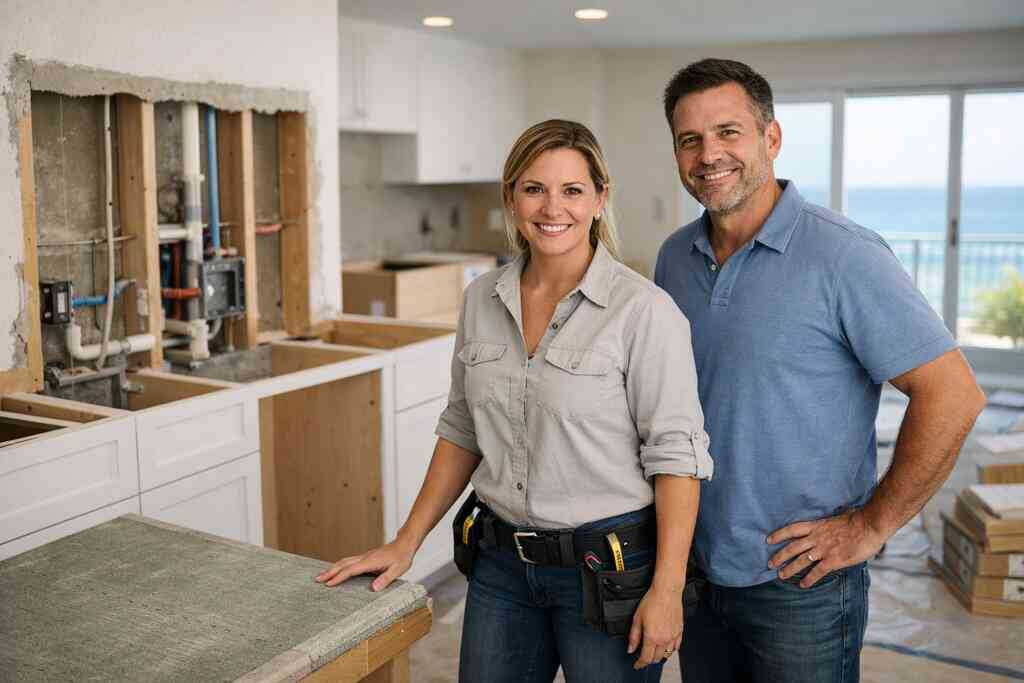
Roofing contractor South Florida projects, hurricane roof tie-downs, and when shared roof assemblies or edge conditions complicate the job
Roofing contractor South Florida projects are never just about shingles or membrane. Hurricane roof tie-downs, shared roof assemblies, parapet edges, and drainage paths all affect the scope. In townhomes, one unit’s roof line may connect to another. In condos, roof access and maintenance responsibility may be split in ways owners do not expect. That is why roof work often becomes a legal and structural conversation.
You should always verify who owns what before you sign. If the building shares the roof assembly, the association may control the repair. If the work affects edge conditions, hurricane code compliance for condo work can change the material list. Roof work is serious in South Florida. Treat it that way.
Pool deck contractor South Florida, paver installation South Florida, screen enclosure contractor South Florida, and other exterior upgrades that can trigger setback or wind-load issues
Exterior amenities sound harmless until setbacks and wind loads enter the conversation. A pool deck contractor South Florida homeowners hire may need to consider drainage, slab elevation, and finish slip resistance. Paver installation South Florida projects can affect runoff and property lines. A screen enclosure contractor South Florida clients choose may need engineering for wind resistance and community approval. These are not cosmetic choices alone.
If the work changes the footprint, ask about setbacks early. If it changes how wind moves around the structure, ask about load documentation. If the project touches an HOA, ask about the homeowners association approval process before buying materials. That one conversation can prevent a costly redo.
South Florida concrete contractor and South Florida foundation repair concerns when coastal moisture, settlement, or post-storm damage is part of the picture
Concrete and foundation issues often show up after storms or long moisture exposure. A South Florida concrete contractor may need to address slab cracking, spalling, or elevated walkways. South Florida foundation repair can also involve settlement, corrosion, or water intrusion around coastal structures. These problems are never just structural. They influence finishes, drainage, and long-term durability.
If your project includes storm repair, look closely at post-hurricane repair planning. The right contractor will inspect before they promise. And yes, that means verifying license, insurance, and bonding before the first load of material arrives. You do not need to figure out every piece today. Start with one solid assessment and build from there.
The contractor selection filter that protects your budget and your property
The contractor you hire changes everything. A good one prevents problems you never see. A poor one turns paperwork into conflict. In condo and townhome work, the selection filter is not optional. It is the difference between controlled progress and chaos.
How to verify a contractor license and why licensed contractor South Florida means more than a business card
A licensed contractor in South Florida should be easy to verify through state records. Ask for the license number, company name, and matching business details. Then check that the license is active and appropriate for the work. That matters because a business card can look polished while the underlying credentials are weak. Contractor licensing Florida is a safety step, not a formality.
A reputable company will welcome verification. If someone resists, that is your answer. When you find a contractor in South Florida, make this your first filter. It saves you from bigger problems later.
Contractor insurance requirements Florida and contractor bonding requirements explained in plain English for shared-wall properties
Insurance protects you if something goes wrong on site. Bonding helps provide another layer of accountability in some cases. Contractor insurance requirements Florida are especially important in shared-wall properties, where damage can spread beyond one unit. If a leak, electrical problem, or debris issue affects neighbors, the paperwork matters fast. That is why a general contractor near me South Florida search should never stop at proximity.
Ask for current certificates, not verbal reassurance. Make sure the policy and company names match. If the contractor works in association properties, ask how they handle contractor bonding requirements and access rules. Good answers sound specific, not rehearsed.
Why lien waiver Florida paperwork, change order contractor Florida records, and contractor dispute resolution matter more in condo and townhome jobs
Liens waiver Florida forms protect against unpaid subcontractor claims. Change order contractor Florida paperwork documents scope changes before the cost grows. Contractor dispute resolution matters because condo and townhome projects often involve more stakeholders than a house remodel. If a board, neighbor, or manager is involved, every change should be in writing. That is not mistrust. That is professional control.
You should also ask how the contractor handles surprises. Hidden plumbing, old wiring, or structural issues are normal in Florida remodels. The right team will explain the fix before they proceed. Written changes keep everyone aligned.
When to choose a home remodeling contractor South Florida versus a South Florida design build team for tighter coordination
A home remodeling contractor South Florida homeowners choose may be ideal for straightforward scopes. A South Florida design build team can be better when the project needs design, permitting, and construction tied together. If your remodel includes structural work, multiple trades, or HOA review, coordination becomes critical. Design build can reduce the number of handoffs. Fewer handoffs often mean fewer mistakes.
The best choice depends on your scope, not a slogan. For a condo renovation South Florida owners are planning, coordination often matters more than speed. For a townhome with exterior and interior work, it matters even more. You want the team that can think ahead.
How to think about South Florida kitchen remodeler, South Florida bathroom remodeler, South Florida flooring installer, South Florida tile contractor, and South Florida cabinet maker choices without skipping due diligence
Specialists matter, but only if they are the right specialists. A South Florida kitchen remodeler should understand cabinets, plumbing coordination, and inspection timing. A South Florida bathroom remodeler should know waterproofing, tile transitions, and ventilation. A South Florida flooring installer should know sound control and subfloor conditions. A South Florida cabinet maker should build for your real dimensions, not just catalog sizes.
Use this quick filter:
- Verify the license and insurance.
- Ask about similar condo or townhome projects.
- Confirm who handles permits and association submittals.
- Request a written scope and allowance list.
- Review how they handle change orders.
That is how you protect your budget and your home.
The next move that turns a stressful remodel into a controlled plan
You do not need to solve everything at once. You need a clean first step and a contractor who respects the process. If you are serious about a smooth remodel, clarity beats speed every time. That is especially true in South Florida, where weather, codes, and community rules can stack up fast.
What to ask before you sign so your condo renovation South Florida or townhome remodeling South Florida scope is realistic from day one
Before you sign, ask what needs approval, what needs engineering, and what might change once walls open. Ask how the contractor handles condo remodeling permit requirements in South Florida and townhome remodeling permit requirements in South Florida. Ask for a realistic sequence, not a wish list. You should also ask who will gather drawings, product approvals, and HOA paperwork. If the answer is vague, keep looking.
A good proposal should explain:
- permit responsibilities
- association review steps
- material allowances
- inspection timing
- contingency planning
Those five items reveal whether the team is prepared or just optimistic.
How coastal home remodeling, aging in place contractor South Florida planning, and energy efficient remodeler South Florida goals can be folded into one smart brief
Good remodeling plans can do more than fix a room. Coastal home remodeling should consider moisture, salt air, and durable finishes. An aging in place contractor South Florida homeowner may need can add wider clearances, safer showers, and better lighting. An energy efficient remodeler South Florida families hire can improve insulation, windows, and HVAC efficiency. Those goals can work together if you define them early.
That is especially useful in condo and townhome work. You may only open the walls once. So make that opening count. Think durability, comfort, and compliance together.
When a second story addition South Florida, sunroom contractor South Florida, lanai builder South Florida, or outdoor kitchen contractor South Florida makes sense and when it adds too much approval risk
Some projects are worth the extra complexity. Others are not. A second story addition South Florida homeowners consider can make sense for long-term space needs, but approval risk rises quickly. A sunroom contractor South Florida or lanai builder South Florida may be a better fit if the structure and community rules allow it. An outdoor kitchen contractor South Florida can also be smart, provided the gas, ventilation, and setback rules are clear.
If exterior approvals feel shaky, keep the scope modest. You can still upgrade function without forcing a fight over every detail. That is often the wisest move in HOA communities. Simpler projects finish with less stress.
How to use the South Florida Contractors directory to find a contractor South Florida by county, project type, and permit readiness without guessing
If you want a more grounded starting point, use the South Florida Contractors directory to narrow the field. You can search for South Florida contractors by county, project type, and the kind of permit-ready experience your project needs. That makes it easier to compare a licensed contractor Palm Beach County homeowners trust, a licensed contractor Broward County residents can verify, or a licensed contractor Miami-Dade property owners feel comfortable calling. You still need to confirm insurance and license status yourself. But at least you begin with the right pool.
Do one practical thing today. Make a short list of three contractors, ask each for license and insurance proof, and request their condo or HOA process in writing. You do not have to figure this out alone, and you do not have to figure it all out today. Start with one phone call.
Frequently Asked Questions
Question: What is the biggest difference between condo renovation South Florida projects and townhome remodeling South Florida projects?
Answer: The biggest difference is approval and control. In a condo, interior remodeling in a condo often starts with the condominium association approval process, condo remodeling permit requirements, and shared-wall rules before demolition can begin. In a townhome, you may have more private-feeling space, but townhome remodeling permit requirements, townhome community restrictions, shared roof issues, and townhome exterior modification rules can still create a layered approval path. South Florida Contractors helps homeowners think through both paths early so the project is planned around South Florida building codes, Florida Building Code compliance, and hurricane code compliance where exterior or structural work is involved. That kind of early coordination is exactly why homeowners look to South Florida Contractors to help them find a contractor South Florida residents can trust for permit-ready work.
Question: Do I need different approvals for a kitchen remodel in a condo versus a bathroom remodel in a townhome?
Answer: Yes. A kitchen remodel in a condo can trigger plumbing relocation in condo units, electrical changes, ventilation concerns, soundproofing upgrades for condos, and waterproofing for South Florida condos, all of which may need association review before the city permit is even considered. A bathroom remodel in a townhome may seem simpler, but structural changes in a townhome, moisture management, drainage, and shared-wall renovation considerations can still require HOA review and permit coordination for shared-wall properties. South Florida Contractors understands that the South Florida permit process is not one-size-fits-all, and that is why homeowners should always verify license and insurance status before hiring any licensed contractor South Florida project. If you are comparing a South Florida kitchen remodeler or South Florida bathroom remodeler, South Florida Contractors can help you start with a contractor who is ready to document the scope properly and avoid unnecessary delays.
Question: How does The Difference Between Condo and Townhome Remodeling in Florida affect flooring, plumbing, and structural decisions?
Answer: The blog title points to the core issue: condo and townhome remodeling may look similar from the outside, but the hidden construction rules are often very different. Condo flooring installation restrictions are usually stricter because of sound control, underlayment requirements, and neighbor impact, while townhome flooring upgrade considerations may allow more flexibility but still require community approval. Plumbing relocation in condo units can affect stacked systems and shared lines, while electrical upgrades in townhome remodeling may involve fire separation or shared utility pathways. These are not finish-level decisions; they affect code compliance, approval, and long-term performance. South Florida Contractors recommends using moisture-resistant materials for coastal homes, especially in oceanfront condo renovation and waterfront townhome renovation settings, because humidity and storms make shortcuts expensive. That practical approach is why homeowners in Palm Beach, Broward, and Miami-Dade Counties use South Florida Contractors to find a contractor South Florida property owners can rely on for careful planning.
Question: What should I check before hiring a general contractor near me South Florida for shared-wall or coastal remodeling work?
Answer: Start with the basics: how to verify a contractor license, contractor insurance requirements Florida, contractor bonding requirements, and whether the contractor has experience with condo-friendly renovation contractor or townhome renovation contractor work. For shared-wall properties, ask how they handle lien waiver Florida paperwork, change order contractor Florida documentation, and contractor dispute resolution if the board, manager, or neighbor raises a concern. For coastal work, ask about hurricane impact window installer South Florida coordination, hurricane shutter contractor requirements, roofing contractor South Florida experience, and hurricane roof tie-downs if the scope touches the exterior. South Florida Contractors encourages homeowners to verify licensing and insurance on every project, because a polished website is never a substitute for valid credentials. If you are searching for a licensed contractor Palm Beach County, licensed contractor Broward County, or licensed contractor Miami-Dade, the safest move is to compare documentation, scope, and association experience before you sign anything.
Question: Can South Florida Contractors help with exterior upgrades like pool deck contractor South Florida work, screen enclosure contractor South Florida projects, or balcony repair and waterproofing?
Answer: Yes, and those projects are exactly where planning matters most. Exterior upgrades can trigger South Florida HOA permit review, setback concerns, wind-load questions, and hurricane code compliance for condo work or hurricane code compliance for townhome work. A pool deck contractor South Florida project may involve drainage, finish safety, and slab conditions. A screen enclosure contractor South Florida job may require engineering and community approval. Balcony repair and waterproofing can be especially sensitive in condo settings because the work may affect shared elements and neighboring units. South Florida Contractors helps homeowners approach these projects with the right expectations, including the South Florida permit process, county-specific steps like Palm Beach County permit, Broward County permit, or Miami-Dade permit review, and the need to keep all work aligned with South Florida building codes. If you are planning coastal home remodeling, post-hurricane repair planning, or a luxury renovation that touches the exterior, it is smart to use a contractor who can coordinate the details and remind you to verify license and insurance before construction starts.
Question: When does a South Florida design build team make more sense than hiring separate trades for condo renovation South Florida or townhome remodeling South Florida?
Answer: A South Florida design build team often makes more sense when the project involves multiple moving parts such as permits, HOA review, engineering, material selections, and trade coordination. That is especially true for condo renovation South Florida projects with condo remodeling permit requirements, or townhome remodeling South Florida scopes involving structural changes in a townhome, electrical upgrades in townhome remodeling, or exterior work that may require hurricane code compliance and association review. Design build can reduce handoffs and keep the work aligned with the South Florida permit process, which is valuable when the job also involves South Florida cabinet maker coordination, South Florida tile contractor scheduling, South Florida flooring installer specs, or a South Florida bathroom remodeler and South Florida kitchen remodeler working together. South Florida Contractors is a strong starting point for homeowners who want to find a contractor South Florida residents can compare by county, project type, and permit readiness. Just remember: no matter who you choose, confirm licensing, insurance, and written scope before the first step of work begins.