
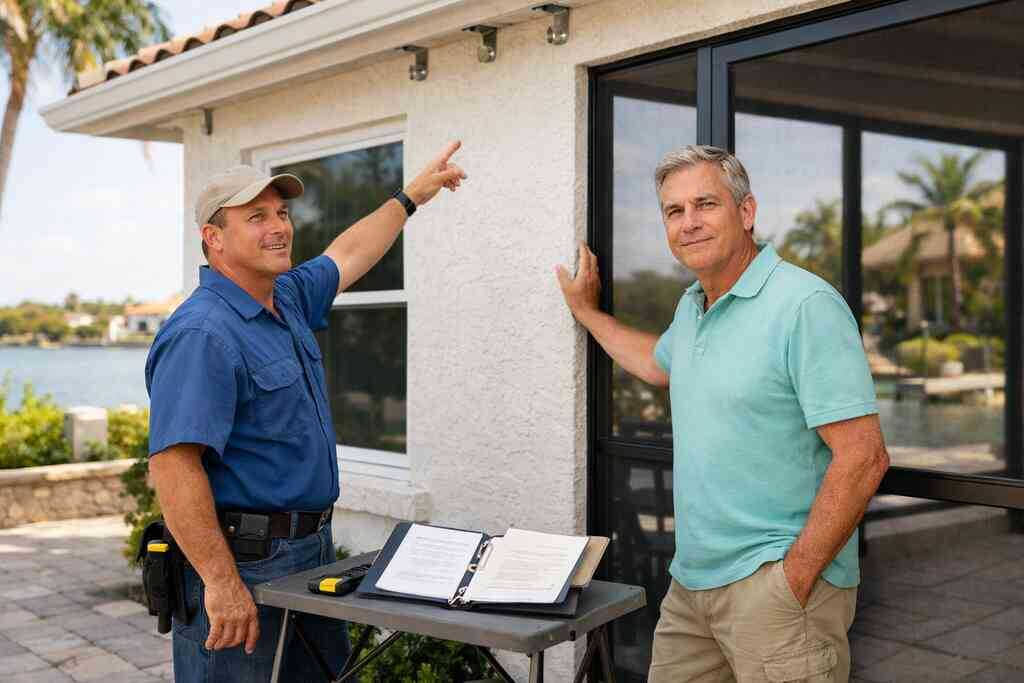
1) What proof should you review before trusting a coastal home builder in South Florida
Many South Florida homeowners feel uneasy before they sign anything. That feeling is healthy. Coastal work is not the place for guesswork, especially when wind, salt air, and permit scrutiny all come together. If you are trying to find a contractor South Florida and the first call feels vague or slow, pause. A real coastal home builder Florida should welcome documentation before discussing numbers.
How to verify a contractor license in Florida before accepting any estimate
Start with the license, not the sales pitch. Ask for the license number and verify it through state records before you accept an estimate. If you need a refresher, use a guide on how to verify a Florida contractor license. That step matters for any licensed contractor Palm Beach County, licensed contractor Broward County, or licensed contractor Miami-Dade project. A legitimate general contractor near me South Florida should never hesitate here.
You should also ask who will pull the permit. That answer tells you a lot. Some people sell like a builder but operate like a broker. Others truly manage work, inspections, and accountability. If the answer sounds vague, keep looking. Contractor licensing Florida is not a checkbox; it is your first line of protection.
Which insurance and bonding documents should be current for Palm Beach, Broward, and Miami-Dade work
Ask for current insurance certificates before you commit. You want proof of general liability and workers’ compensation when required. For larger projects, ask how contractor bonding requirements are handled too. A trustworthy team should explain contractor insurance requirements Florida without getting defensive. If they cannot, that tells you something useful.
One homeowner in Broward almost hired a team that looked polished online. Then the certificate had expired two months earlier. That project stopped immediately, and the pause saved a costly mess. Here is the part most homeowners miss: expired paperwork often surfaces after the contract is signed, not before. A responsible builder should also explain lien protection and whether subcontractors carry their own coverage.
What a legitimate South Florida custom home builder should explain about hurricane code compliance and coastal exposure
A real South Florida custom home builder should talk about wind, moisture, and impact exposure before design goes too far. If they only discuss finishes, they are not thinking like a coastal professional. Ask how they approach hurricane code compliance for openings, roof systems, and exterior assemblies. In coastal zones, salt air and airborne debris change everything. That reality shapes the project from the first sketch.
If you want a deeper local framework, review questions to ask before hiring a contractor in South Florida. The smartest builders will explain what applies to your lot, your elevation, and your exposure level. They should also mention the difference between a fast cosmetic fix and a durable coastal assembly. South Florida Contractors is a strong place to begin your search when you want local accountability and clarity.
2) Why the lowest bid on an oceanfront home contractor can become the most expensive mistake
The cheapest proposal often feels comforting at first. Then the hidden costs arrive. Coastal jobs tend to uncover surprises that inland projects never see. That is why an oceanfront home contractor quote needs careful reading. If a waterfront home builder South Florida price looks unusually low, ask what was excluded.
How vague allowances and missing scope turn a cheap proposal into a change order trap
Allowances are placeholders. They can help, but they can also hide weak planning. If the cabinet allowance, tile allowance, or fixture allowance seems too small, your budget can rise fast. A vague bid can become a change order contractor Florida nightmare. That is especially true for a South Florida luxury renovation, where finishes and structural adjustments often evolve together.
We once saw a kitchen scope that excluded electrical upgrades, trim carpentry, and appliance hookups. The initial number looked great. The final price did not. Ask for a line-by-line scope so you can see who is responsible for each item. That is how you avoid surprises and keep leverage.
What to compare in bids beyond price, including supervision, materials, and permit responsibility
Price matters, but it is not the whole story. Compare supervision, project communication, material quality, and permit responsibility. Ask who is on site daily. Ask who answers the inspector. Ask who handles revisions if field conditions change. If you need help comparing the structure of proposals, use how to compare contractor bids and estimates.
A strong bid should also clarify whether the contractor handles submittals and revisions. That matters in Palm Beach, Broward, and Miami-Dade, where review standards can differ. If two bids are far apart, the lower one may simply be underestimating permit work. That is not savings. It is deferred pain.
Why waterfront home builder South Florida pricing often shifts when corrosion resistance and wind-rated assemblies are involved
Coastal homes need tougher materials. Stainless hardware, better flashing, wind-rated products, and corrosion resistance all add cost. That is normal. It is also necessary. A serious waterfront home builder South Florida knows that the ocean does not care about budget optimism. It only responds to physics.
For example, impact-rated assemblies and wind-rated fastening systems are rarely bargain items. They are performance items. The same is true for exterior doors, balcony details, and roof connections. If a contractor explains those differences clearly, you are probably talking to the right person. If they dodge the topic, keep interviewing.
3) Which questions expose whether a design-build team actually understands South Florida building codes
Design-build should feel coordinated, not chaotic. Architecture, engineering, and permitting need to work together from the beginning. Otherwise, drawings chase problems instead of preventing them. The best South Florida design build teams keep the permit path in mind while they are still shaping the plan. That saves time, rework, and frustration.
How the South Florida design build process should connect architecture, engineering, and permit strategy
Ask how the team coordinates the design, engineering, and permit stages. If the architect and builder rarely speak, you may be buying confusion. You want a team that thinks about structure and approvals at the same time. That is especially true for South Florida home additions and exterior changes. A clean process reduces review friction.
For a stronger local view, see South Florida building codes and coastal code compliance. Good builders should know when engineering is needed before demolition begins. They should also explain who prepares the drawings and who answers plan review comments. The more specific they get, the better.
What a builder must know about South Florida building codes before touching structural or exterior work
Any builder touching walls, roofs, windows, or openings should understand local requirements. South Florida building codes are not a casual topic. They drive materials, fastening patterns, and even sequencing. A professional should speak comfortably about inspections, documentation, and code-driven details. If they cannot, the project may be too complex for them.
You may hear builders mention Florida Building Code 2026 concepts without naming every rule. That is fine, as long as they are not guessing. Ask how they handle structural drawings, product approvals, and jurisdiction-specific review. A home remodeling contractor South Florida should be able to answer clearly. If they cannot, walk away.
When Florida Building Code assumptions fail in coastal projects and why that matters for windows, roofs, and openings
A common mistake is assuming standard residential methods work everywhere. They do not. Coastal exposure changes the math for windows, roof edges, and wall openings. A house near Biscayne Bay is not the same as an inland lot in western Broward. That is why assumptions fail. Coastal detailing must be deliberate.
Ask a builder how they treat openings in high-wind zones. Ask how they select exterior products. Ask how they confirm compatibility between product approvals and field conditions. Those questions reveal competence quickly. They also protect your budget from hidden redesigns later.
4) When does a permit become nonnegotiable in Palm Beach, Broward, and Miami-Dade
Permits make many people tense. That is normal. Still, skipping them is never a smart shortcut. In South Florida, permits are not red tape for its own sake. They are part of how the work is checked for safety, documentation, and future resale value.
How to spot the difference between cosmetic work and permit-triggering structural scope
Paint is cosmetic. Removing a wall is not. Replacing a vanity is often cosmetic. Moving plumbing and electrical can trigger review. If you are unsure, ask before demo starts. That question alone can save months of stress. South Florida permit process decisions should happen early, not after someone opens a wall.
A South Florida kitchen remodeler or South Florida bathroom remodeler should explain which parts of the job require review. A good South Florida flooring installer may also flag subfloor issues that trigger permits or inspections. The key is transparency. If the scope is unclear, the permit will be unclear too.
What homeowners should ask about the South Florida permit process before signing anything
Ask who applies, who pays, and who responds to comments. Ask which department reviews the plans. Ask whether the contractor expects revision cycles. If the project is in Miami-Dade, get clarity on the Miami-Dade permit process for renovations. For broader reference, a South Florida construction permit guide can help frame the conversation.
Do not let anyone suggest that a permit is optional when it is not. That advice creates downstream problems. It can also complicate insurance claims and resale disclosures. A good contractor will tell you the truth even when it slows the start date. That honesty is worth paying for.
Why HOA approval, condo renovation South Florida rules, and townhome remodeling South Florida rules can add another layer of review
HOAs and condo associations can be as important as the city or county. Sometimes more so. If you are planning a condo renovation South Florida project, expect building management rules, elevator protection, work hours, and neighbor notifications. Townhome communities can bring similar restrictions. That is not a nuisance. It is reality.
Ask for all association documents before you approve the final scope. Many projects stall because the contractor assumed the association was easy. They are not always easy. They are predictable, though, if you ask early. That is especially important in densely managed parts of Broward and Miami-Dade.
5) What every homeowner should ask about hurricane impact windows, shutters, and roof tie-downs
Exterior protection is where good intentions meet wind pressure. South Florida homeowners know this better than most. When a storm approaches, the difference between “installed” and “installed correctly” matters a lot. That is why you should ask detailed questions about windows, shutters, and roof connections before work starts.
How a hurricane impact window installer South Florida should explain product approvals and impact ratings
A qualified hurricane impact window installer South Florida should explain the rating, the approval, and the installation method. “Impact-rated” is not enough by itself. Ask what documentation comes with the product and how it matches your property requirements. If you want a local starting point, review hurricane impact window installer questions in South Florida.
The best installers explain not just glass, but anchoring, sealant, and flashing. That is where failures often happen. A window can be excellent and still underperform if installed poorly. You deserve both product quality and craftsmanship. One without the other is incomplete.
What a hurricane shutter contractor should show for fastening methods, maintenance, and storm readiness
A hurricane shutter contractor should show you how the shutters mount, how they store, and how they should be maintained. Ask about removable systems, hardware corrosion, and storm-season readiness. If you are in Miami-Dade, a hurricane shutter contractor in Miami-Dade should also understand local approval expectations. The wrong fastening method can make a good product useless.
A homeowner in a coastal Broward neighborhood once had shutters that looked solid from the street. The hardware, however, was already rusting. The contractor replaced the wrong parts twice before anyone found the corrosion source. The lesson was simple: ask how the system will age, not just how it looks on installation day. Salt air always wins if maintenance is ignored.
How hurricane roof tie-downs and roof-to-wall connections affect roofing contractor South Florida conversations
Roof strength starts with connections. That includes hurricane roof tie-downs and roof-to-wall details. Ask your roofing contractor South Florida how the roof is anchored and what upgrades are included. If they only talk about shingles or tiles, they are not discussing the structure enough. That is a problem in coastal work.
You should also ask whether the roof project triggers related inspection or code upgrade items. Some repairs go deeper than the visible surface. The contractor should explain what will be opened, what will be tested, and what will stay exposed until inspection passes. That clarity prevents panic later.
6) Which ground-level problems tell you a coastal project needs more than cosmetic work
Coastal homes show stress at the ground first. Cracks, settling, dampness, and uneven slabs are often clues, not just eyesores. If you ignore them, your remodel may sit on a weak base. That is why a smart builder looks down before looking up. 
When a South Florida concrete contractor should inspect slabs, patios, and structural cracking before remodeling begins
A South Florida concrete contractor should inspect visible cracking, patio slope, and slab condition before cosmetic work begins. That is especially true when you are planning flooring changes or additions. Small cracks can be harmless. Others signal movement. You need someone who knows the difference. If you want a starting reference, review South Florida foundation repair warning signs.
Here is what almost no online guide mentions: patio drainage often tells the story before interior damage does. Water moving toward the house is a warning. So is patchwork repair from previous owners. Ask the contractor to explain what they see, not just what they sell.
How South Florida foundation repair questions change near waterfront lots and older homes
Foundation conversations change near water. Older homes can carry settled slabs, past moisture movement, or hidden patching. A South Florida foundation repair question should include soil, drainage, and past alterations. That is especially important if the property sits near canals or the Intracoastal. Your contractor should not guess. They should inspect and document.
A waterfront owner in Palm Beach once planned simple flooring replacement. The flooring contractor noticed hollow spots and deflection near one room. That discovery led to a structural evaluation before thousands were spent on finishes. The owner was frustrated for a day, then relieved for many more. That is what competent eyes do.
What soil drainage, settlement, and moisture clues can reveal before a second story addition South Florida is even planned
Before a second story addition South Florida project, ask about soil drainage and visible settlement. If the site holds water after rain, that is relevant. If doors stick or floors slope, that matters too. A heavy addition magnifies existing problems. It does not forgive them.
A builder should look at grading, downspouts, and drainage paths. They should also explain whether the existing structure can support the planned load. If they brush this off, stop. A strong addition begins below grade, not on the renderings.
7) Which interior remodel questions separate a skilled South Florida kitchen remodeler from a pretty portfolio
Beautiful photos are easy to post. Durable kitchens are harder to build. South Florida humidity, daily use, and coastal air all test the details. That is why your questions should go beyond style. Ask how the materials will behave over time.
How a South Florida cabinet maker should discuss moisture resistance, layout, and hardware choices
A capable South Florida cabinet maker should discuss moisture resistance, hinge quality, drawer slides, and layout efficiency. If the answer is only about door styles, keep pressing. Coastal homes need cabinetry that can tolerate heat and humidity. Ask what substrate they use and how they protect exposed edges. That is practical, not picky.
In a South Florida kitchen remodeler conversation, ask where small appliances will live, how trash storage works, and whether the layout supports real cooking. A gorgeous kitchen that feels awkward every day is a bad kitchen. Good design should earn its keep. It should also survive spills, steam, and constant opening and closing.
What a South Florida flooring installer and South Florida tile contractor should explain for humid coastal homes
A South Florida flooring installer should explain moisture testing, expansion gaps, and subfloor preparation. A South Florida tile contractor should talk about setting materials, grout choice, and movement joints. Those details sound small. They are not. Humidity and slab movement can punish shortcuts quickly.
Ask how the floor will transition at exterior doors and wet areas. Ask what happens if the slab reads damp. If the installer shrugs, they may be guessing. Flooring should be installed for the environment, not just the sample board. That principle saves a lot of regret.
Why a South Florida bathroom remodeler should talk about ventilation, waterproofing, and long-term maintenance
A South Florida bathroom remodeler should absolutely discuss ventilation. Moisture control is not optional in this climate. Waterproofing behind tile matters more than tile selection. Maintenance access matters too. If a contractor only talks about aesthetics, they are missing the point.
The best bathroom projects feel quiet in use. They drain properly. They dry quickly. They resist mildew better because the assembly was thought through. Ask how the shower is waterproofed, how exhaust is sized, and how the finishes will hold up. That is how you separate a photo-ready portfolio from a long-lasting remodel.
8) When do outdoor upgrades become a test of engineering, not just style
Outdoor work looks simple from the curb. It rarely is. In South Florida, decks, pavers, enclosures, and lanais all deal with drainage, heat, and wind pressure. Pretty materials alone cannot solve those conditions. The structure beneath must be right.
What a pool deck contractor South Florida should cover about drainage, slip resistance, and resurfacing
A pool deck contractor South Florida should discuss drainage first. If water pools near the house, that creates risk. They should also explain slip resistance, cracking repair, and resurfacing options. A good deck balances comfort and safety. That matters when kids, guests, and wet feet are involved.
Ask how the finish handles sun exposure. Ask how they deal with old coatings and substrate failures. If the deck has a history of settlement, the contractor should say so plainly. Outdoor spaces need honesty. They also need practical design.
How paver installation South Florida projects should account for base prep, settlement, and storm runoff
Paver installation South Florida projects succeed or fail at the base. Ask about excavation depth, compaction, edge restraint, and drainage slope. Storm runoff matters just as much as appearance. If the base is weak, the pavers will move. Then the pattern becomes irrelevant.
A good contractor will explain the difference between a cosmetic overlay and a properly prepared installation. Those are not the same thing. One lasts longer. The other looks good briefly. When you compare proposals, make sure base prep is written out clearly.
What a screen enclosure contractor South Florida or lanai builder South Florida must address about wind loads and permitting
A screen enclosure contractor South Florida and lanai builder South Florida should talk about wind loads, anchors, and permit requirements before pricing the job. Enclosures are not just mosquito screens. They are exposed structures. They must be designed with the local environment in mind.
Ask how the frame is anchored, how the openings are braced, and which permit office will review the plans. If the contractor treats the enclosure like a minor accessory, that is a red flag. Outdoor structures need the same seriousness as interior work.
9) Which additions actually work in South Florida without fighting the climate
Additions should solve real problems, not create climate fights. In South Florida, you need to think about heat, moisture, sun angle, and wind exposure. A successful addition feels like it belonged there from the start. That takes planning.
When a South Florida home additions project should become a sunroom contractor South Florida or outdoor kitchen contractor South Florida conversation
Sometimes the right answer is not a full enclosed room. It is a more climate-aware solution. A South Florida home additions project may become a sunroom contractor South Florida discussion if you want filtered light and usable indoor-outdoor space. It may become an outdoor kitchen contractor South Florida discussion if the real goal is entertaining with less conditioned space.
Ask what the space needs to do every day. Then ask how the structure handles heat gain and moisture. Those answers shape the project more than square footage alone. If the contractor helps you refine the use, they are thinking correctly.
How a second story addition South Florida changes wind exposure, structural demands, and budget expectations
A second story addition South Florida project changes almost everything. Wind exposure increases. Structural loads increase. The existing building must be evaluated carefully. Budget expectations should also rise. The project is more complex than most people first imagine.
You should ask how the contractor phases the work to protect the home below. Ask what happens if existing framing needs reinforcement. Ask whether temporary weather protection is included. That is especially important when you are living in the home during construction. The right answers reduce chaos.
Why aging in place contractor South Florida and South Florida ADA renovation planning should start early, not after demolition begins
If accessibility matters now or later, start early. An aging in place contractor South Florida and South Florida ADA renovation plan should shape the layout before finishes are selected. Wider clearances, safer entries, and better bath layouts are easier to build into the design. They are harder to retrofit later.
This is not only about compliance. It is about dignity and convenience. If a hallway needs to widen, that affects framing. If a shower needs zero-threshold access, that affects drainage. Early planning keeps the project calmer and cleaner.
10) What should be in the final handoff before you let a contractor start in South Florida
The final handoff is where good projects become protected projects. This is the paperwork moment people rush through, and that is a mistake. Clear documents reduce conflict. They also make payment safer. You do not need to distrust everyone. You do need to verify everything.
Which lien waiver Florida documents protect you before progress payments are released
Ask for the correct lien waiver Florida form before each progress payment. A lien waiver shows that the contractor or subcontractor is acknowledging payment for the work covered. It helps protect you from surprise claims later. That does not remove all risk, but it reduces it meaningfully.
If you want more detail, review lien waiver forms in Florida before paying a contractor. Keep copies organized. Do not pay casually. Payment should follow documentation, not replace it.
How change order contractor Florida language should be written so scope, cost, and timeline stay clear
A change order contractor Florida document should say exactly what changed, why it changed, how much it costs, and how it affects timing. No vague language. No verbal promises. No fuzzy descriptions. Change orders are normal in construction. Confusion around them is not.
Ask for written approval before extra work starts. If something is discovered behind the wall, pause long enough to document it. That protects both sides. It also keeps the job from spiraling into disagreement.
What to ask about contractor dispute resolution, closeout photos, warranty terms, and the next step after you find a contractor South Florida
Ask how disputes are handled if they come up. Ask for closeout photos, warranty language, and final inspection records. Ask who should receive punch-list items and how quickly they respond. A professional contractor will not take offense. They will respect the clarity.
If you are ready to move, use a local directory to compare options and verify before signing. South Florida homeowners do best when they combine research with patience. You do not have to figure this out alone, and you do not have to figure it all out today. Start with one phone call, then compare two more.
Frequently Asked Questions
Question: What should I ask before I try to find a contractor South Florida for a coastal project?
Answer: Start with the basics: license, insurance, coastal experience, and permit responsibility. A trustworthy South Florida Contractors listing can help you compare options, but you should still verify every company yourself before signing anything. Ask for the license number, confirm it through contractor licensing Florida records, and request current insurance and bonding documents if applicable. This matters whether you are hiring a licensed contractor Palm Beach County, licensed contractor Broward County, or licensed contractor Miami-Dade for a coastal home builder Florida project. You should also ask who pulls the permit, who handles inspections, and how the contractor approaches hurricane code compliance for exterior and structural work. For waterfront or oceanfront homes, those details are not optional. They are the difference between a smooth project and an expensive correction later. If you are searching for a general contractor near me South Florida, South Florida Contractors gives you a practical starting point to compare local professionals, but final verification is always on you.
Question: How do I know if a South Florida custom home builder understands South Florida building codes and hurricane code compliance?
Answer: Ask direct questions about wind-rated assemblies, roof connections, openings, product approvals, and permit strategy. A qualified South Florida custom home builder should be able to explain how South Florida building codes affect the project from design through inspection. That includes hurricane roof tie-downs, impact openings, moisture protection, and the review process tied to your county or city. If the builder works on a South Florida design build project, they should be able to coordinate architecture, engineering, and the South Florida permit process without confusion. If the home is in a coastal zone, ask how they adapt for salt air, wind exposure, and corrosion resistance. You do not need them to recite every rule from Florida Building Code 2026, but they should clearly understand how code-driven requirements affect the job. South Florida Contractors is a useful place to start because it helps you compare builders and verify the people you are considering before you commit.
Question: Why do I need to ask so many questions before hiring a South Florida kitchen remodeler or South Florida bathroom remodeler?
Answer: Because interior remodels in South Florida are often more technical than they look. A strong South Florida kitchen remodeler should discuss layout, cabinetry, moisture resistance, and how the work will affect plumbing, electrical, and ventilation. A capable South Florida bathroom remodeler should talk about waterproofing, exhaust, tile assembly, and long-term maintenance, not just style. If you also need a South Florida flooring installer, South Florida tile contractor, or South Florida cabinet maker, ask how they handle humidity, slab moisture, expansion, and material selection. Those details matter in coastal homes and luxury renovations because the climate can expose shortcuts quickly. For a South Florida luxury renovation, scope clarity is especially important, because small omissions can create a change order contractor Florida problem later. South Florida Contractors helps you find local professionals, but you should still confirm licensing and insurance before moving forward.
Question: What should I ask about permits for a condo renovation South Florida or townhome remodeling South Florida project?
Answer: Ask who is responsible for the permit, who responds to corrections, and whether the project also needs HOA or condo approval. The South Florida permit process can be different depending on whether the work is in Palm Beach County, Broward County, or Miami-Dade, and association rules can add another layer of review. A reputable contractor should explain when a Palm Beach County permit, Broward County permit, or Miami-Dade permit is needed, and they should never suggest skipping permits. If your project is a condo renovation South Florida or townhome remodeling South Florida job, ask about work hours, elevator protection, debris handling, and insurance requirements imposed by the association. The right contractor should also explain how permit scope connects to inspections and closeout. South Florida Contractors can help you compare firms that serve your area, but you still need to verify paperwork, licensing, and insurance before signing.
Question: How do I compare bids from an oceanfront home contractor or waterfront home builder South Florida without choosing only the lowest price?
Answer: Compare more than the bottom line. Look at scope detail, permit responsibility, supervision, material quality, and whether the bid includes coastal-specific items such as corrosion-resistant hardware, wind-rated assemblies, or hurricane impact window installer South Florida coordination. An oceanfront home contractor or waterfront home builder South Florida may appear more expensive because they are accounting for real conditions instead of leaving them for change orders later. Ask what is excluded, what allowances are included, and how they handle field discoveries. If the project includes a pool deck contractor South Florida, paver installation South Florida, screen enclosure contractor South Florida, or roofing contractor South Florida component, make sure each trade is clearly defined. The right contractor should also explain lien waiver Florida paperwork and how payment aligns with completed work. South Florida Contractors is designed to help you compare qualified local options, but always verify licensing, insurance, and bonding before hiring.
Question: When should I bring in a South Florida concrete contractor or South Florida foundation repair specialist before a remodel or addition?
Answer: Bring them in early if you see cracking, uneven slabs, settlement, patio drainage problems, or moisture issues. A South Florida concrete contractor can help determine whether the issue is cosmetic or structural, while a South Florida foundation repair review may be needed before flooring, remodeling, or a second story addition South Florida project begins. This is especially important on waterfront lots, older homes, or properties with past repairs. If you are planning South Florida home additions, an aging in place contractor South Florida layout, or a South Florida ADA renovation, the existing structure needs to be evaluated first so the new work is not built on hidden problems. South Florida Contractors is a strong starting point when you want to find a contractor South Florida who understands local conditions, but final vetting still matters: verify credentials, ask about insurance, and confirm the contractor is comfortable with coastal and hurricane-related requirements.