
1) The permit trap that turns a dream outdoor kitchen into a stop work order
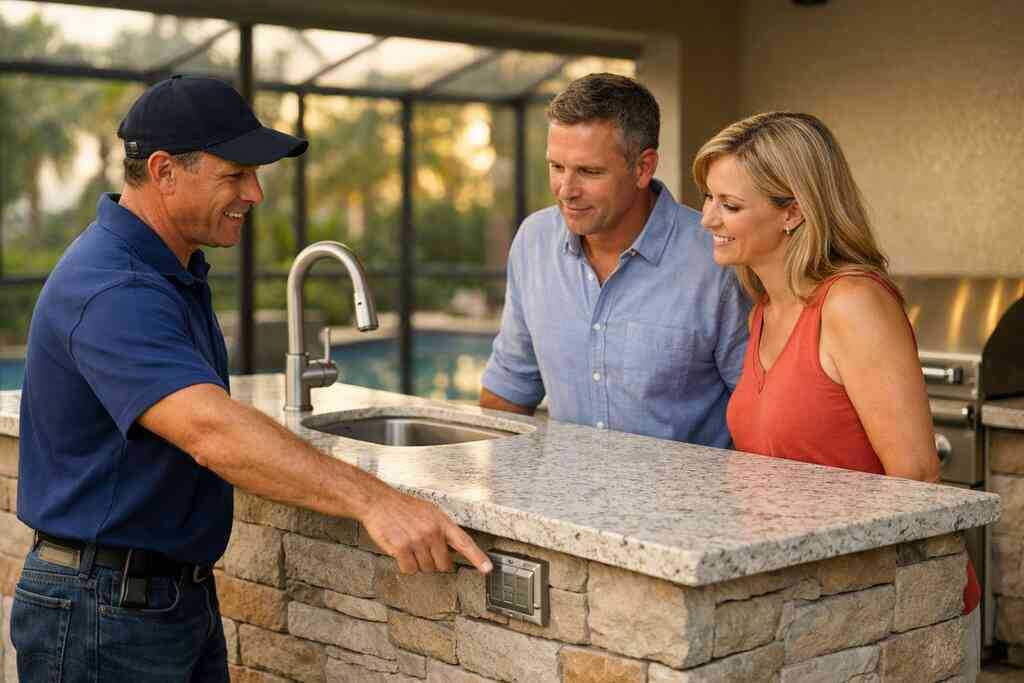
A lot of homeowners think an outdoor kitchen is just a nicer grill pad. It is not. The moment you add utilities, masonry, or a roofed structure, South Florida outdoor kitchen permits usually enter the picture. If you are reading this with a half-built patio and a knot in your stomach, that feeling is normal. The permit process feels slow because it is supposed to catch problems before they become expensive mistakes. Around Palm Beach, Broward, and Miami-Dade, that caution is not optional.
Why South Florida outdoor kitchen permits are different from a backyard grill pad
A basic grill pad can stay simple. An outdoor kitchen can quickly involve structural, electrical, plumbing, and gas work. That means the project may need more than one approval path. The summer 2026 outdoor kitchen permit requirements in South Florida are really about coordination, not paperwork for its own sake. The hidden issue is that small changes create permit triggers. A sink, a burner, or a masonry island can change the whole scope.
On the projects we’ve finished this year, the biggest surprise has been how often homeowners start with a “simple” plan. Then they add a hood, a prep sink, and undercounter refrigeration. Suddenly, the design looks more like a small addition. That is where a permit-ready outdoor kitchen design mindset saves time. One client in Broward thought the city would only review the slab. The final submittal needed utility drawings, equipment cut sheets, and clearer setback dimensions.
The hidden triggers that make a simple patio kitchen renovation permit-ready
Here is the part most homeowners miss. The permit trigger is often the combination, not the single item. A patio kitchen renovation permit may be required once you add wiring, plumbing, or a permanently anchored island. A countertop and masonry permit may also be needed if the structure is built in place. Even an island kitchen structure permit can show up if the design functions like a fixed exterior improvement. These details sound small until a reviewer asks for them.
The emotional part is real. People feel blindsided because they thought they were buying finishes, not paperwork. We hear this from clients almost every week. They want a clean backyard cooking area approval, yet the county wants drawings that prove safety and code compliance. The fix is early planning. A licensed contractor can tell you where the line sits before you spend money on cabinetry or stone.
Where Palm Beach County permit, Broward County permit, and Miami-Dade permit expectations start to diverge
The counties are not identical, even when the project feels similar. A Palm Beach County permit may lean heavily on clear site placement and trade separation. A Broward County permit may be especially sensitive to coastal exposure and documentation detail. A Miami-Dade permit often brings stricter scrutiny, especially near the coast or in HOA-controlled communities. The South Florida permit process rewards specificity. Vague drawings slow everything down.
County focusCommon pressure pointPractical homeowner takeawayPalm BeachSite layout and trade scopeShow exact dimensions earlyBrowardCoastal exposure and revisionsExpect careful plan reviewMiami-DadeHOA and hurricane contextConfirm community rules firstIf you need a local starting point, a Palm Beach County permit steps for remodels guide helps frame the sequence. Still, never assume one county’s shortcut applies to another. South Florida building codes move with exposure, jurisdiction, and project type. A good general contractor near me South Florida search should still lead you back to license verification before you sign anything.
The pieces that usually need separate approval like electrical, plumbing, gas line, and masonry work
Outdoor kitchen projects often split into trades. Electrical may cover outlet locations, GFCI protection, lighting, and appliance load. Plumbing may cover a sink, drain, or ice maker. Gas line permit for outdoor kitchen work should always be treated seriously. Masonry can affect the final structure, drainage, and footing details. Each one can trigger a separate inspection step.
A homeowner in Palm Beach once asked why his outdoor kitchen stalled after framing. The answer was simple. The gas route crossed a detail that never appeared on the original sketch. The correction was not dramatic, but it took a revised submittal and another inspection slot. That is why a licensed contractor Palm Beach County , licensed contractor Broward County , or licensed contractor Miami-Dade matters so much. They know the order, and they know what reviewers expect to see.
2) What the Florida Building Code and hurricane code compliance really demand outdoors
Outdoor projects in South Florida live in a tougher climate than most markets. Salt air, heat, rain, and wind all work against finishes and fasteners. That is why Florida Building Code compliance for outdoor additions in South Florida matters even when the outdoor kitchen is “just outside.” The code is not there to frustrate you. It is there because the weather is not forgiving. If your kitchen sits under a lanai, that does not automatically reduce the need for review.
Why coastal wind load requirements matter even when the kitchen sits under a covered lanai
Covered does not mean exempt. Coastal wind load requirements still matter because the structure above the cooking area may transfer loads into posts, beams, or attachments. A screened or roofed area can create more review, not less. The permit reviewer wants to know how the outdoor kitchen interacts with the structure around it. That is especially true for hurricane code compliance for coastal projects in South Florida. Wind does not care that you added a stone counter after the roof was already there.
One oceanfront homeowner assumed the lanai would make the permit easy. Instead, the inspector focused on connections and uplift paths. That is normal. On waterfront properties, a coastal home builder Florida often thinks differently from an inland builder because exposure changes everything. If you live near the beach, the standard can feel stricter. That is not overreach. It is risk management.
How hurricane-resistant outdoor kitchen materials reduce corrosion and inspection problems
The best summer build choices are not always the prettiest on day one. Stainless components, sealed stone, corrosion-resistant coastal finishes, and properly treated framing tend to age better. Salt, humidity, and rain can ruin cheaper hardware quickly. Inspection problems often begin as maintenance problems. Then they become replacement costs. Choosing hurricane-resistant outdoor kitchen materials cuts down on rust and keeps doors, hinges, and fasteners working longer.
Here is the mistake we see most often. A homeowner spends on a high-end grill and then saves on cabinet hardware. That is backwards in South Florida. The appliance can outlast the drawer slides if you are not careful. A waterfront home builder South Florida will usually push better material choices because repairs are harder near the coast. The same logic helps with South Florida luxury renovation work, where finish quality and durability have to live together.
When hurricane roof tie-downs and structural attachments come into the permit conversation
Once the project touches the roof or the supporting structure, the discussion gets more serious. Hurricane roof tie-downs can enter the permit conversation if the outdoor kitchen ties into a covered enclosure, patio roof, or lanai framing. Structural attachments are not decorative. They affect how loads move during severe weather. If the design changes the roofline, the permit team may want added details. A sunroom contractor South Florida or lanai builder South Florida usually knows that early.
In practice, this means your drawings should show how the kitchen sits relative to the existing structure. Do not treat the roof as background scenery. If the patio cover, enclosure, or beam system changes, it can affect approvals. That is why South Florida design build teams often keep architectural and trade coordination under one roof. It reduces the back-and-forth. It also gives the reviewer a cleaner package.
Why oceanfront home contractor and waterfront home builder South Florida standards are usually stricter than inland assumptions
Oceanfront and waterfront properties face additional wear. Salt, spray, and constant moisture shorten the life of ordinary materials. That is why an oceanfront home contractor often specifies different fasteners, coatings, and attachment methods. Inland assumptions can fail fast near the coast. A project that looks fine in another state may look fragile here. The permit reviewer knows that, and so should you.
The table below shows the practical difference.
SettingMain riskCommon responseInland lotGeneral wearStandard code complianceWaterfront lotCorrosion and windUpgraded materials and attachmentsOceanfront lotSevere exposureStricter detailing and reviewIf your kitchen project is part of larger exterior work, the same logic applies to hurricane impact window installer South Florida work, roofing contractor South Florida projects, and outdoor structural upgrades. Everything outside must respect the same weather reality. That is the South Florida lesson. Build for the storm you hope never comes.
3) The site test that decides whether your design can survive zoning, setbacks, and easements
The prettiest design on paper can still fail on the lot. Setbacks, easements, drainage paths, and HOA rules can shrink your usable area before a permit reviewer even opens the folder. That is why zoning compliance for outdoor structures matters so much. You may love the layout, but the site decides what is possible. This is where a quick sketch turns into a serious planning exercise.
How setback and easement review can shrink the usable footprint before drawings are even submitted
Setbacks are the invisible boundaries around your property. Easements are the areas other parties may have access to. If your island, hood, or pergola crosses those lines, the plan can stall. A setback and easement review should happen before you buy materials. Otherwise, you risk redesigning after money has already been spent. That is painful, and it is avoidable.
The most common issue is scale. Homeowners imagine a broad kitchen with bar seating, but the actual footprint is tighter. In townhome remodeling South Florida , that squeeze can be dramatic. In some cases, the only viable layout is compact and highly efficient. A careful site test protects you from overbuilding. It also keeps you from fighting the lot instead of working with it.
Why HOA approval for outdoor kitchen can be separate from county permitting and just as important
HOA approval for outdoor kitchen work is not the same as county permitting. You may pass one and still fail the other. That surprises people all the time. Miami-Dade HOA approvals for outdoor renovations can be especially detailed, but HOA rules exist throughout South Florida. They may regulate visibility, materials, noise, screening, and even appliance placement. Get that approval early.
The good news is that HOA review usually improves the final result. It forces clarity. Still, it can take time, so do not wait until after permit submittal. If your community wants specific elevations or finish samples, include them in the first package. That makes you look prepared. It also helps avoid late revisions that hold up the job.
What changes for condo renovation South Florida and townhome remodeling South Florida projects
Shared-wall communities bring extra hurdles. Condo renovation South Florida work can involve association approval, structural restrictions, and stricter utility routing. Townhome remodeling South Florida projects can trigger similar concerns, especially if common elements are involved. You may need letters, board review, and special insurance documents. The process feels slow because too many parties have to agree. That is common, not unusual.
A neighborhood client once wanted an outdoor kitchen on a shared terrace. The board asked for additional waterproofing details and a more limited equipment list. It was frustrating. It was also the reason the project succeeded without a later dispute. This is where a home remodeling contractor South Florida with multi-party experience is worth the call. They know how to package the request before it becomes a committee problem.
When a screen enclosure contractor South Florida or lanai builder South Florida becomes part of the approval path
If the outdoor kitchen sits under or inside an enclosure, the review expands. A screen enclosure contractor South Florida may need to coordinate the frame, openings, and access points. A lanai builder South Florida may need to account for roof support, drainage, and finish transitions. That coordination matters because one trade can block another. The permit reviewer wants to see the whole system, not disconnected pieces.
Many homeowners think the enclosure is just a comfort upgrade. It is more than that. It can change exposure, structural details, and even the inspection sequence. If your kitchen is tied to an enclosure, include that scope up front. That way, the project moves as one plan instead of three separate headaches.
4) The utility puzzle behind a code-compliant outdoor cooking area
Utilities are where beautiful plans become real projects. They are also where mistakes become expensive. Electrical, plumbing, and gas each have their own safety rules. Code-compliant utility routing is about protecting people, not just passing inspection. If the routes are clean and accessible, maintenance gets easier later. If they are buried haphazardly, repairs become a nightmare.
How outdoor kitchen electrical permit work changes with appliance loads and weatherproof outlets
Outdoor appliances draw real power. Lighting, fans, refrigeration, and ignition systems all add load. An outdoor kitchen electrical permit usually looks closely at outlet protection, conduit routing, and weatherproof equipment. Outdoor-rated receptacles and proper GFCI protection matter because moisture is part of the environment. This is not a place for guesswork. The wrong setup can fail inspection or fail during a storm.
Use an electrician early, not after the cabinets are in. That avoids cutting finished work later. It also helps with appliance planning. Some homeowners do not realize a beverage center and a grill ignition system may need separate considerations. A clean electrical plan supports both safety and longevity. It also reduces the chance of rework after drywall, stucco, or stone veneer is finished.
When an outdoor kitchen plumbing permit becomes necessary for sinks, drains, or ice makers
The moment you add water, you are in a different category. An outdoor kitchen plumbing permit may be needed for sinks, drains, supply lines, and ice makers. Plumbing work for outdoor kitchen sinks and drains must also account for moisture and drainage. Leaks under a stone island are hard to spot. That is why careful detailing matters. 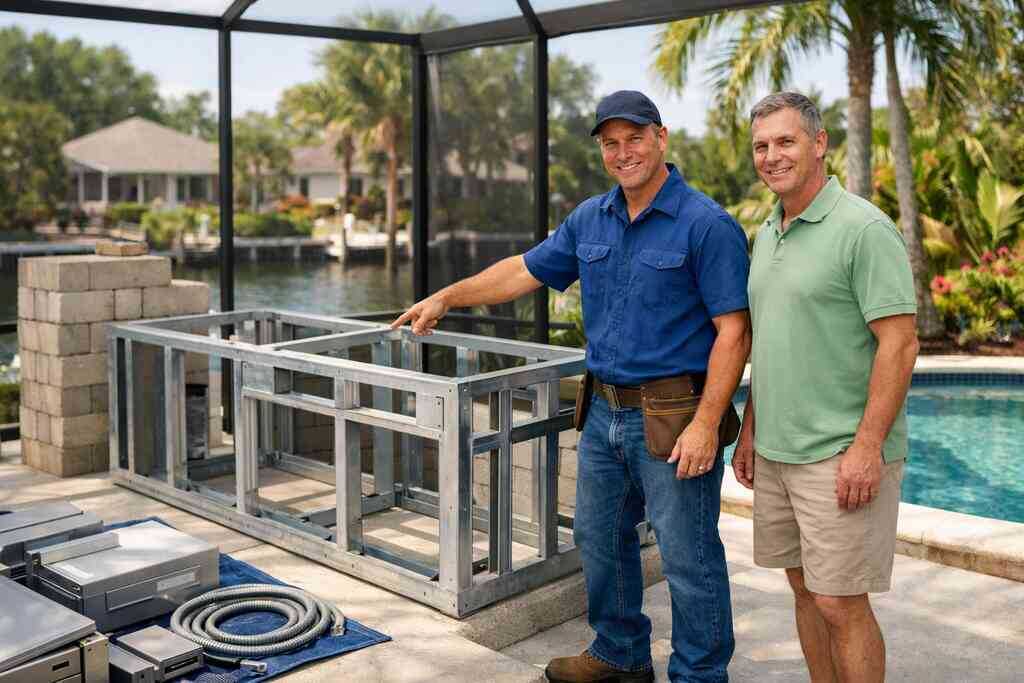
One homeowner in Broward added a sink after the cabinet order was already placed. The plumbing line had to be rerouted around a support and a drain detail. That small change cost time, but it avoided a future access problem. The lesson is simple. Lock the utility plan before final fabrication. Once the stone is cut, your options shrink fast.
Why gas line permit for outdoor kitchen work should always be handled by a licensed contractor Palm Beach County, licensed contractor Broward County, or licensed contractor Miami-Dade
Gas is not a DIY field. A gas line permit for outdoor kitchen work should be managed by a properly licensed professional. The same is true whether you are hiring a licensed contractor Palm Beach County, licensed contractor Broward County, or licensed contractor Miami-Dade. The risk is too high for shortcuts. Gas leaks are not paperwork problems. They are safety problems. Here is what almost no online guide mentions: the gas run can affect cabinet placement, appliance clearances, and future service access. If the line is buried poorly, every repair becomes a demolition exercise. That is why a permit-ready outdoor kitchen design should show the route clearly. It protects you during inspection and years later during maintenance.
What code-compliant utility routing means for safety, inspection, and long-term maintenance
Good routing looks boring. That is a compliment. It means wires, pipes, and lines are protected, accessible, and clearly documented. It means a technician can service the system without tearing out the kitchen. It also means the inspector can verify the work quickly. That keeps the project moving.
Think of utility routing as the project’s nervous system. If it is cluttered, everything else suffers. Good routing also helps with South Florida building inspection outcomes because the reviewer can see the logic immediately. When you hire an outdoor kitchen contractor South Florida, ask how they protect access and serviceability. That question tells you a lot about their experience.
5) The document stack that gets a permit reviewer to say yes faster
A permit reviewer does not want drama. They want clear documents, clear scope, and a clear contractor. The right package reduces comments and back-and-forth. That matters because every revision can cost momentum. If your project is already being coordinated with a South Florida kitchen remodeler or home remodeling contractor South Florida, the paper trail should be just as organized as the jobsite.
What belongs in a permit document checklist for South Florida outdoor kitchen permits
Start with the basics, then build from there. A permit document checklist should usually include site plan information, dimensioned drawings, trade scopes, and product sheets. If the project involves a roofed area or enclosure, include structural details. If a county asks for HOA approval letters, add those too. The more complete the first package, the fewer surprises later.
A practical checklist might include:
- Site plan with setbacks and easements
- Floor plan or layout plan
- Electrical, plumbing, and gas scope
- Equipment specifications
- Material descriptions
- HOA or condo approvals, if required
This is where how to verify a contractor license in South Florida becomes part of the package, not an afterthought. If the contractor is not current and properly licensed, the paperwork may not help you. Verification protects your schedule and your money. It also reduces the chance of a permit rejection.
Why permit-ready outdoor kitchen design drawings should show structure, utilities, and finish materials clearly
Good drawings do more than make the project look nice. They show how the kitchen works. A permit-ready outdoor kitchen design should identify structure, utility paths, clearances, and finish materials. Reviewers want to know what is being built, where it sits, and how it is supported. If those details are missing, the submittal can bounce back. That slows everything down.
Drawings should also reflect the real finish choices. If you are using stone veneer, marine-grade hardware, or built-in appliances, the plan should say so. That helps the reviewer understand the load and durability assumptions. It also helps your installer avoid substitutions that weaken the design. Precision on paper prevents arguments in the field.
How to verify a contractor license before signing with any outdoor kitchen contractor South Florida
Do not rely on a business card or a polished website. Verify the license. Confirm the company matches the scope. Ask whether the person you are hiring is authorized to pull the permit and supervise the work. This matters for any outdoor kitchen contractor services in South Florida you consider. A good contractor will not mind the question. They expect it.
Also ask for proof of insurance and bonding. That is not rude. It is smart. A licensed contractor Palm Beach County should be able to explain coverage plainly. The same goes for Broward and Miami-Dade. If the answers get vague, walk away. Your patio is not the place to learn expensive lessons.
What contractor insurance requirements Florida and contractor bonding requirements usually protect you from
Insurance and bonding are different protections. Insurance can help cover certain accidents or damages. Bonding can provide another layer if obligations are not met. You do not need to memorize the fine print, but you do need to ask for current proof. The article-specific point is simple: never hire based on price alone. The cheapest option can become the most expensive fast.
A clear contract should also explain change orders, payment draws, and scope limits. That protects both sides. If a contractor cannot explain those terms in plain language, that is a warning sign. South Florida contractors who do this work well usually welcome the paperwork. It keeps everyone aligned. It also helps avoid disputes later.
6) The summer build choices that prevent rust, delays, and expensive rework
Summer heat exposes weak materials quickly. Humidity, salt, and sudden storms do not forgive shortcuts. That is why build choices matter almost as much as permit approvals. The best outdoor kitchens in South Florida are the ones that still look good after abuse from weather and daily use. If you want less maintenance, buy durability early.
Why corrosion-resistant coastal finishes matter more in South Florida than in drier markets
Corrosion-resistant coastal finishes are not a luxury here. They are a necessity. Powder-coated frames, marine-grade hardware, sealed stone, and moisture-resistant substrates all perform better near the coast. A South Florida concrete contractor and South Florida cabinet maker should understand that. Dry-market habits can fail fast in our climate. Rust spots show up first, then swelling, then replacement.
The difference is visible after one season of weather. Hinges bind. Doors sag. Fasteners discolor. That is why a coastal home builder Florida or outdoor kitchen contractor South Florida should recommend materials based on exposure, not just appearance. Finish choices that cost a little more upfront often save far more later.
How weatherproof appliance installation helps protect the investment during storms and heavy humidity
Weatherproof appliance installation starts with placement. It continues with clearances, ventilation, and proper covers or housing. Appliances need more than a strong brand name. They need a setting that manages water, airflow, and heat. If the install ignores those factors, inspection and service become harder. So does warranty support.
Here is the human truth. You are not only buying a kitchen. You are buying fewer headaches. That means choosing equipment that survives wet months, afternoon storms, and constant sun. A South Florida flooring installer or South Florida tile contractor can help with surrounding surfaces, but the appliance plan has to be locked first. Otherwise, the beautiful finishes end up working around the wrong equipment.
What pool deck contractor South Florida, paver installation South Florida, and South Florida concrete contractor coordination can affect around the kitchen pad
Outdoor kitchens rarely live alone. They usually connect to a pool deck, patio, or hardscape. That means coordination matters. A pool deck contractor South Florida may influence elevation and drainage. Paver installation South Florida work can change transitions and edge restraint. A South Florida concrete contractor may need to form the base so it supports the final island without settling. If those scopes are not aligned, the project can look finished but perform badly.
The best time to align them is before the first pour or base installation. That keeps slopes, drains, and access points working together. It also prevents uneven surfaces around a heavy kitchen structure. A small elevation error can create standing water or trip hazards. Those are not cosmetic issues. They are long-term problems.
When South Florida flooring installer, South Florida tile contractor, or South Florida cabinet maker decisions should be locked before inspection
Do not wait until the inspector is coming tomorrow. Material choices should be set before the field work ends. A South Florida flooring installer or South Florida tile contractor may need to know the finish thickness. A South Florida cabinet maker may need exact appliance dimensions and reveal details. If those decisions are late, you may get field modifications that complicate approval. That is frustrating, and it is avoidable.
The best projects are decided early. The drawings match the build. The permit matches the site. And the materials match the weather. That is the rhythm that keeps expensive rework off your schedule.
7) The decision frame that keeps your project moving after the permit is filed
Once the permit is in, the real project starts. That is when scope changes, field conditions, and budget pressure show up. You need a decision frame that keeps everyone aligned. A good contractor helps you make calm choices when the pressure rises. That is especially important in South Florida, where weather can interrupt even well-planned jobs.
When to call a home remodeling contractor South Florida versus a South Florida design build team
If the outdoor kitchen is part of a bigger project, a home remodeling contractor South Florida can coordinate the moving parts. If the work involves design, permitting, and multiple trades from the start, a South Florida design build team may be the cleaner path. The right choice depends on scope, not marketing language. Big exterior projects often benefit from one team managing the sequence. That reduces blame-shifting.
For larger projects, it is smart to ask how the contractor coordinates inspections, sub trades, and revisions. You want someone who can explain the path from rough-in to final signoff. That question reveals experience fast. It also helps you compare candidates fairly. A South Florida remodeling and contracting services near Boca Raton search can help you start locally, but verification still matters.
How to handle change order contractor Florida situations before they become budget problems
A change order contractor Florida discussion should happen before the work changes, not after. If a hidden line, structure issue, or material swap appears, document it immediately. A change order should explain scope, cost, and schedule impact in plain language. That protects both the homeowner and the contractor. It also stops small surprises from turning into big disputes.
The worst budget problems come from informal agreements. A quick phone call is not enough. Put the change in writing. Confirm the price. Confirm the added time, if there is any. Then move forward. Clear paperwork is not bureaucracy. It is project stability.
Why lien waiver Florida paperwork matters before final payment and why not to release it early
A lien waiver Florida document is a receipt with legal weight. It shows payment was made and can help protect against later claims from unpaid parties. Never sign it early unless you understand exactly what you are releasing. That is not fearmongering. It is basic protection. Final payment should follow the agreed work, not replace it.
This is one of those details that feels small until it is not. If a subcontractor or supplier has not been paid, early release can complicate your position. Ask for a clear explanation before you sign anything. Good contractors expect that conversation. It signals that you are informed, not difficult.
What contractor dispute resolution looks like if the project stalls, and how South Florida contractors can help you compare next steps across Palm Beach, Broward, and Miami-Dade
Sometimes a project stalls. Materials are late. An inspection is delayed. A scope issue turns into a disagreement. Contractor dispute resolution usually starts with documentation, communication, and a written path to fix the problem. That is the best place to begin. Calm beats confrontation almost every time.
If you feel stuck, compare next steps across Palm Beach, Broward, and Miami-Dade with a local directory that understands the region. South Florida contractors can help you find a contractor South Florida who fits the scope, but you should still verify licensing, insurance, and references yourself. You do not have to solve the whole project today. Start with one call, one license check, and one clear permit plan. Then keep moving.
Frequently Asked Questions
Question: What makes South Florida outdoor kitchen permits different from a simple backyard grill pad, and when do I need a Palm Beach County permit, Broward County permit, or Miami-Dade permit?
Answer: The difference usually comes down to scope. A basic grill pad may stay simple, but once you add electrical work, plumbing, gas, masonry, a fixed island, or any roofed structure, South Florida outdoor kitchen permits often become necessary. In South Florida, those triggers can bring in the South Florida permit process, Florida Building Code compliance, and hurricane code compliance all at once. That is why the same project can be reviewed differently in Palm Beach County, Broward County, and Miami-Dade.
A good permit-ready outdoor kitchen design should show setbacks, easements, utilities, and all fixed components clearly before you buy materials. If your plan includes a sink, burner, refrigerator, hood, or masonry island, do not assume it is just a cosmetic upgrade. It may require separate approvals for the outdoor kitchen electrical permit, outdoor kitchen plumbing permit, gas line permit for outdoor kitchen work, or even a countertop and masonry permit. South Florida Contractors helps homeowners find a contractor South Florida who understands these triggers, but you should still verify licensing, insurance, and scope before signing anything.
Question: What should I know about Top 7 Summer 2026 Tips for Outdoor Kitchen Permits if my project includes a screened lanai kitchen addition or screened lanai kitchen addition tied to an existing patio?
Answer: If your outdoor kitchen connects to a screened enclosure, lanai, or covered patio, the permit review usually gets more detailed, not less. A screened lanai kitchen addition can affect structural attachments, wind load assumptions, drainage, and the way the kitchen interacts with the existing roof or enclosure. That is why hurricane code compliance and coastal wind load requirements matter even when the kitchen is under cover.
The smartest move is to treat the project as one coordinated system. A screen enclosure contractor South Florida, lanai builder South Florida, or sunroom contractor South Florida may need to coordinate with the outdoor kitchen contractor South Florida so the drawings match the actual build. If the project touches the roof or support structure, hurricane roof tie-downs may also enter the conversation. South Florida Contractors recommends using a licensed contractor Palm Beach County, licensed contractor Broward County, or licensed contractor Miami-Dade who can explain the permit path clearly and provide proof of contractor insurance requirements Florida and contractor bonding requirements before work begins.
Question: How do HOA approval for outdoor kitchen, condo renovation South Florida, and townhome remodeling South Florida rules affect the permit process?
Answer: HOA approval for outdoor kitchen work is separate from county permitting, and both matter. You can receive county approval and still be blocked by your community rules. In condo renovation South Florida and townhome remodeling South Florida projects, that review can be even more detailed because associations may care about visibility, materials, noise, utility routing, waterproofing, and whether the project affects shared elements.
That is why setback and easement review should happen early, before you order cabinetry or stone. If your outdoor kitchen sits near a shared wall, terrace, or common area, the association may ask for drawings, product details, insurance documents, or a more limited scope. South Florida Contractors can help you find a contractor South Florida who has experience with South Florida HOA permit requirements, but always verify contractor licensing Florida status, insurance, and references yourself. A home remodeling contractor South Florida or South Florida design build team with HOA experience can help keep the project organized and reduce revision cycles.
Question: What utility and safety details should be included in a code-compliant outdoor cooking area for Florida Building Code compliance?
Answer: A code-compliant outdoor cooking area should address electrical, plumbing, gas, and fire safety from the start. That means the outdoor kitchen electrical permit should account for outlet placement, weatherproof devices, GFCI protection, and appliance load. The outdoor kitchen plumbing permit should address sinks, drains, and any ice maker or water supply. A gas line permit for outdoor kitchen work should be handled by a properly licensed professional, with service access and clear routing shown in the drawings. Fire safety clearance outdoor kitchen details should also be part of the plan.
The goal is code-compliant utility routing that is safe, inspectable, and easy to maintain later. If those routes are buried behind finished stone or cabinetry without documentation, repairs can become expensive. South Florida building inspection teams usually respond better to clean, complete drawings that show structure, utility paths, and finish materials. Whether you are working with a South Florida kitchen remodeler, home remodeling contractor South Florida, or coastal home builder Florida, always confirm the contractor is licensed and insured before hiring. South Florida Contractors is a directory to help you compare options, not a substitute for checking credentials.
Question: How do hurricane-resistant outdoor kitchen materials and corrosion-resistant coastal finishes help protect my investment near the coast?
Answer: In South Florida, weather is part of the design. Hurricane-resistant outdoor kitchen materials and corrosion-resistant coastal finishes help reduce rust, swelling, warped hardware, and premature failures caused by humidity, salt air, and heavy rain. That matters even more for oceanfront home contractor and waterfront home builder South Florida projects, where exposure is harsher and maintenance is harder.
The best choices usually include stainless or marine-grade hardware, sealed stone, moisture-resistant substrates, and weatherproof appliance installation. Those details protect both appearance and function. They also help reduce inspection problems because the project is more likely to align with Florida Building Code compliance and hurricane code compliance expectations. If the outdoor kitchen is part of a larger exterior scope, it may also connect to roofing contractor South Florida, pool deck contractor South Florida, paver installation South Florida, or South Florida concrete contractor work. The key is coordination. South Florida Contractors helps homeowners compare local options, but you should always confirm licensing, insurance, and scope before selecting any contractor.
Question: What documents should be in a permit document checklist, and how can South Florida Contractors help me move faster without skipping the South Florida permit process?
Answer: A strong permit document checklist for South Florida outdoor kitchen permits usually includes a site plan, setback and easement review details, dimensioned drawings, trade scopes, equipment cut sheets, material descriptions, and any HOA or condo approval letters if required. If the project involves a roofed enclosure, lanai, or structural attachment, the package should also show how the kitchen relates to the existing structure. That is what makes a permit-ready outdoor kitchen design easier to review.
South Florida Contractors helps you start with a directory designed to make it easier to find a contractor South Florida by city and distance, then contact the company directly, and schedule the work after you get a quote. That process can save time, but it does not replace due diligence. Always verify contractor licensing Florida status, ask for proof of contractor insurance requirements Florida and contractor bonding requirements, and confirm who will pull the permit. If a change order contractor Florida situation comes up, get it in writing. If there is a dispute later, contractor dispute resolution is much easier when the project is documented well from the start. Following the South Florida permit process correctly is the safest way to protect your investment and avoid stop-work issues.