
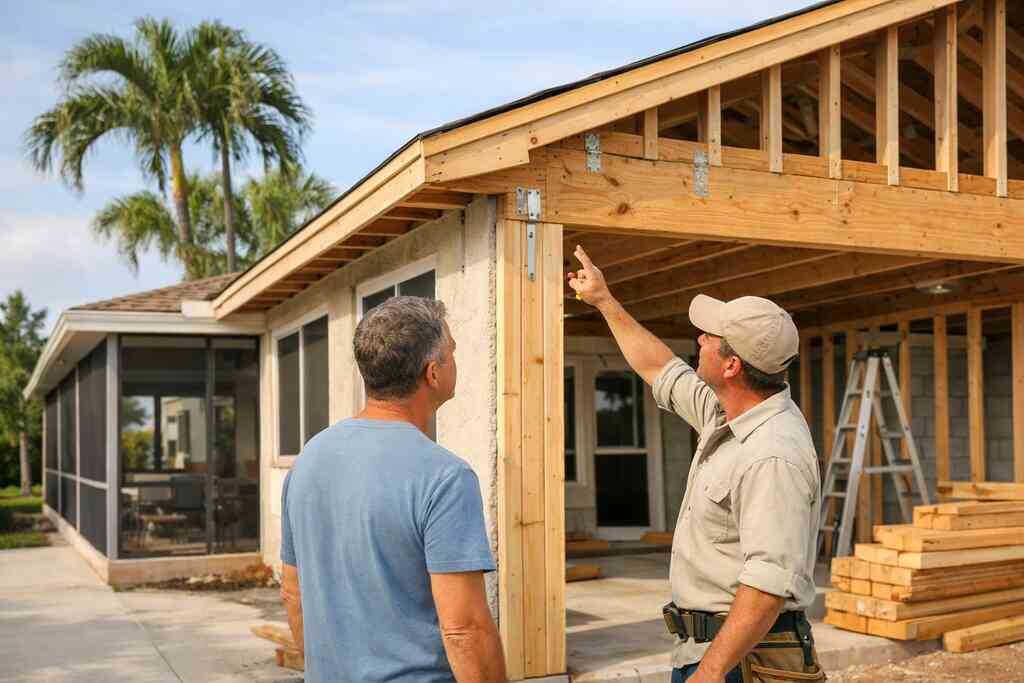
Why the cheapest home addition quote in South Florida is usually the riskiest bet
A low quote feels comforting until the details start leaking out. If you are reading this at night because your addition estimate came in higher than expected, take a breath. That reaction is normal. We hear it from homeowners all the time across South Florida, especially when the project touches structure, openings, or utilities. The cheapest number often omits the hardest work, and that is where budgets break.
How a low bid can hide permit gaps, unlicensed labor, and change orders
The weakest bids usually avoid the uncomfortable parts. They may leave out engineering, utility relocations, debris disposal, or the real South Florida permit process for additions. Some even rely on unlicensed labor that looks inexpensive on paper but creates legal and insurance trouble later. Once the project starts, the missing line items become change orders, and the price climbs fast.
Here is the part most homeowners miss. A proposal can look complete while quietly assuming the homeowner will handle approvals, selections, or corrections. One family near Lake Worth received a beautiful-looking bid for a rear addition, then discovered framing, drawings, and permit revisions were all “extra.” By the time the work was properly lined up, the first number was no longer meaningful. That is why a general contractor near me South Florida search should be judged on scope, not just price.
Why South Florida building codes make structural shortcuts expensive fast
South Florida building codes are not forgiving, and neither is the weather. Wind loads, water intrusion, and connection details matter more here than in many other regions. A shortcut around beam sizing, fastening, or envelope protection can turn into repair work after the first severe storm. That is especially true for South Florida building codes and hurricane compliance on additions that tie into existing roofs or exterior walls.
You should also expect special attention to openings and tie-ins. If the addition affects windows, doors, or roof transitions, hurricane-code work becomes part of the conversation immediately. A homeowner in Coral Springs once planned a modest family room expansion, but the old roof tie-in revealed weak attachment points. We saw the project stabilize only after the contractor corrected the framing and adjusted the load path. That kind of fix costs money, but it costs far less than rebuilding after a failure.
What Palm Beach County, Broward County, and Miami-Dade homeowners should ask before signing anything
Ask direct questions before you sign. Who pulls the permit? Who handles revisions? What happens if the inspector asks for corrections? Do you have active license and insurance documentation? These are not awkward questions. They are basic protections for anyone hiring South Florida contractors for home additions.
Use this short checklist:
- Does the proposal name every trade and major material?
- Are engineering, permits, and inspections included?
- Are allowances clearly marked?
- Who is responsible for HOA or condo approvals?
- What items trigger a change order?
If you are comparing a licensed contractor Palm Beach County, a licensed contractor Broward County, or a licensed contractor Miami-Dade, expect different site realities and different approval paths. That is not a problem. It is simply South Florida. The right contractor explains the gaps before the work begins.
The permit paper trail that keeps a home addition moving instead of stalling
Permits frustrate people because they slow the visible part of the project. Yet the permit paper trail is what keeps an addition from collapsing under stop-work notices, failed inspections, or redesigns. Most homeowners do not enjoy this part, and that is completely normal. Still, if you want a smooth build, the permit file has to be clean before framing starts. That is especially true in South Florida, where county review standards and HOA rules can complicate even small additions.
When a South Florida permit is required and when sketchy advice crosses the line
A permit is usually required when the work changes structure, electrical, plumbing, HVAC, exterior openings, or square footage. That means many home additions in South Florida are not permit-light projects. If someone suggests “we can just handle it later,” be careful. That advice often crosses into territory that creates code and insurance problems.
The safest route is to assume the permit is required until a qualified professional confirms otherwise. A home remodeling contractor South Florida homeowners trust will explain that upfront, not hide it. The question is not whether the permit is annoying. The question is whether you want the county or city finding the issue after work is hidden behind drywall. With the find a contractor South Florida process, the goal should always be clarity, not shortcuts.
How Palm Beach County permit, Broward County permit, and Miami-Dade permit expectations can differ
The counties may share a climate, but they do not always share the same workflow or review habits. Palm Beach County permit submittals can feel different from Broward County permit reviews, and Miami-Dade permit requirements may be stricter on certain exterior or impact-related details. That is why a contractor who knows one county well may still need local support in another. South Florida homeowners sometimes expect one universal process, but the reality is more layered.
That variation matters on additions because the project may cross structural, zoning, and building disciplines at once. A licensed contractor in Palm Beach County may prepare a file differently from a licensed contractor in Miami-Dade. If your project is near the coast, flood exposure and wind design can add another layer of review. A licensed contractor in Miami-Dade should know how to keep those details from delaying the build.
What drawings, engineering, and HOA approvals should already be in the file before work starts
Before the first nail, your file should usually include drawings, structural engineering, and any required HOA approvals. If you are in a condo or townhouse community, that process can be even more exacting. Many properties in Broward and Miami-Dade require architectural review before the permit package is complete. That means a South Florida HOA permit can become as important as the county permit.
You should also expect the contractor to explain the plan in plain language. Drawings show the layout. Engineering shows the structure can stand up to loads and wind. HOA approvals show the community has signed off on the appearance and sometimes the scope. For a South Florida design build team, coordination is the whole job, not an afterthought. The best teams handle the file like a chain, not a pile of loose papers.
Why hurricane code compliance matters for addition roofs, openings, and exterior tie-ins
Hurricane code compliance is not just for new homes. It matters for additions, roof tie-ins, windows, doors, and any exterior opening that affects the building envelope. If the project connects to an older roof, the contractor must think carefully about attachment points and moisture protection. The same is true for impact openings and shutters. A poor tie-in can turn a nice addition into a leak path.
This is where South Florida building codes and hurricane compliance become practical, not theoretical. You may need a hurricane impact window installer South Florida homeowners can trust, or a hurricane shutter contractor if the opening strategy changes. Roofing tie-ins and hurricane roof tie-downs also come into play on larger additions. If a contractor glosses over that work, keep looking. The best builders in South Florida respect the storm before the storm arrives.
What separates a real South Florida contractor from a polished salesperson
Polished sales materials are easy to buy. Real competence is harder to fake. A genuine South Florida contractor talks about inspections, sequencing, subcontractor coordination, and what can go wrong. A salesperson talks about finish samples and “easy” timelines. That difference matters more on home additions than almost any other project, because the work touches existing conditions and hidden systems.
How to verify a contractor license in Florida without guessing
Start with the license, not the pitch. You can verify a Florida license through state records, and you should. This is the single fastest way to separate a real operator from a confident talker. Never rely on a business card, a truck decal, or a smooth website alone. If someone avoids this topic, walk away.
Use how to verify a contractor license in Florida as a routine step, not a last-minute rescue. Confirm the license type matches the work. A contractor qualified for cosmetic remodels may not be the right fit for structural additions or coastal work. The same rule applies whether you are seeking a licensed contractor Palm Beach County, licensed contractor Broward County, or licensed contractor Miami-Dade.
What contractor insurance requirements Florida homeowners should confirm before work begins
Insurance is not optional, and it is not just a formality. Ask for current proof of coverage before work starts. You want to know the contractor carries the policy types appropriate for the job, and you want the documents to be current. The exact amounts can vary, so do not guess. Ask directly.
A serious contractor will not hesitate. For a useful framework, review contractor insurance requirements in Florida and keep your own checklist. If a worker gets hurt or property is damaged, you do not want to discover the coverage was missing or expired. Homeowners in South Florida already deal with enough uncertainty without adding insurance gaps to the mix.
Why contractor bonding requirements, lien waiver Florida, and change order contractor Florida rules matter
Bonding, lien waivers, and change orders sound legalistic, but they are simple once explained. Bonding helps protect against certain failures to perform. A lien waiver is a document showing a party has been paid for work completed. A change order is a written adjustment to the contract when the scope changes. These are guardrails, not paperwork for paperwork’s sake. Ask how the contractor handles change orders and lien waivers in Florida construction. If the answer is vague, the contract will be vague too. One client in Broward signed for a porch addition, then watched the price jump after the contractor “discovered” electrical relocation and additional framing. Nothing was malicious, but the original scope was too loose. Clear contract language would have prevented the surprise.
How to read a proposal for scope exclusions, allowances, and the hidden cost of vague language
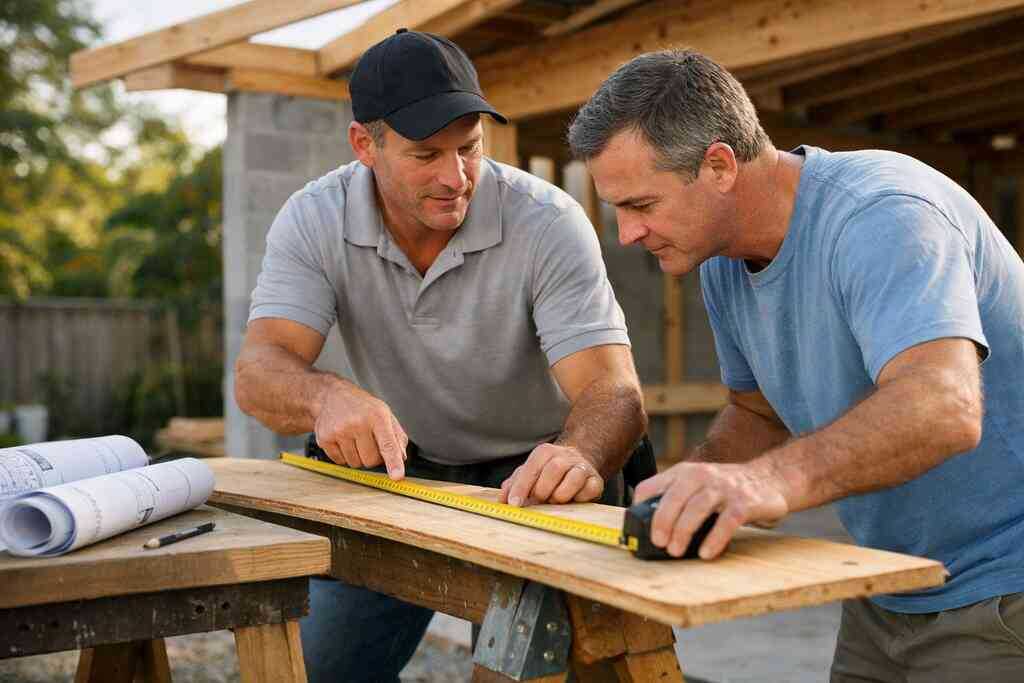
Read the proposal like an inspector, not like a shopper. Look for exclusions, allowances, and assumptions. Exclusions tell you what is not included. Allowances are placeholder amounts for items not yet selected. Vague language creates room for disputes later, and disputes cost time and money.
A strong proposal should answer these questions:
- What is included in demolition?
- Who handles permits and revisions?
- Which finishes are allowance-based?
- What site conditions are excluded?
- How are hidden conditions priced?
The hidden cost of vague language is stress. It also weakens contractor dispute resolution if things go sideways. That is why careful homeowners in South Florida want proposals that read like a plan, not a promise.
Which type of addition actually fits your lot, your flood exposure, and your lifestyle
Not every lot should expand outward. Not every family needs a second story. Not every outdoor dream should become a fully enclosed room. The best addition is the one that fits the property, the flood conditions, and your daily habits. That sounds obvious, but many costly mistakes happen when people choose the most exciting option instead of the most practical one.
When a second story addition South Florida makes more sense than expanding outward
A second story addition South Florida homeowners choose often makes sense when the lot is tight or flood exposure limits ground-level expansion. In those cases, upward growth protects yard space and can preserve drainage patterns. It also avoids eating into a pool area, side setback, or future landscaping plan. The structural demands are higher, though, so the contractor and engineer must coordinate early.
If you are serious about how to plan a second story addition in Miami-Dade County, expect extra attention to load paths and roof transitions. You may also need temporary protection during construction if the existing home stays occupied. On a recent project, a homeowner wanted to add two bedrooms over an older single-story wing. The team discovered the original framing needed reinforcement before the new load could be supported. Catching that early saved a much larger rebuild.
Why sunroom contractor South Florida, lanai builder South Florida, and outdoor kitchen contractor South Florida projects need different structural thinking
A sunroom, lanai, and outdoor kitchen are not interchangeable. A sunroom contractor South Florida homeowners hire must think about glazing, thermal gain, and water tightness. A lanai builder South Florida residents choose often deals more with shade, breezes, and screened comfort. An outdoor kitchen contractor South Florida property owners trust has to plan for utilities, smoke movement, and weather exposure. Each one uses different structural logic.
This distinction matters in coastal and inland neighborhoods alike. A sunroom near the Intracoastal may need more moisture discipline than one inland. An outdoor kitchen in Boca Raton may need different wind and salt exposure considerations than a similar build in Kendall. The right contractor talks about function first, then finishes. That is why what to know before hiring a coastal home builder in Florida is more than a headline.
How a screen enclosure contractor South Florida or pool deck contractor South Florida fits coastal and inland homes differently
Screen enclosures and pool decks seem simple from the curb. They are not. A screen enclosure contractor South Florida homeowners hire must account for wind loads, anchoring, and hardware durability. A pool deck contractor South Florida families choose needs to think about drainage, slip resistance, and how the deck ties into the existing slab. Coastal properties add another layer of corrosion and storm pressure.
You may also need paver installation South Florida homeowners use to improve drainage and surface finish around the pool. That work still needs proper base prep and edge restraint. If the home is near water, the design should respect both flood behavior and salt exposure. A good contractor will not dismiss those factors. A great one will build around them.
What South Florida design build teams should solve early for condo renovation South Florida, townhome remodeling South Florida, and HOA-controlled properties
Shared-wall properties create a different puzzle. Condo renovation South Florida owners undertake often depends on association rules, elevator access, work hours, and noise restrictions. Townhome remodeling South Florida projects may involve shared elements, exterior appearance rules, or limited storage space. A South Florida design build team should solve those issues before demo starts, not after neighbors start complaining.
This is where communication becomes as important as construction. The contractor should know how to coordinate with boards, managers, and architectural review groups. They should also know when a project needs more documentation than a detached home. If your property is HOA-controlled, ask for the approval path in writing. That small step can prevent weeks of delay and a lot of frustration.
The next move that turns a good idea into a buildable South Florida plan
You do not need to figure everything out today. You do need a clean next step. The fastest way forward is to gather the right contractor options, verify credentials, and compare proposals with real scope in mind. That is how a dream addition becomes a buildable plan instead of a stack of screenshots.
How to use find a contractor South Florida searches without getting buried in generic listings
Searches can overwhelm you fast. Generic directories, ads, and boosted listings all look similar at first glance. Start with the service area you actually need, then narrow by project type. If you are trying to find a contractor South Florida homeowners can trust, do not stop at the first polished profile. Look for licensing, location fit, and relevant addition experience.
The most useful approach is simple:
- Search by county and project type.
- Confirm the contractor handles additions, not just cosmetic remodels.
- Compare scope, not just price.
- Verify license and insurance.
- Ask for a written explanation of permit responsibility.
That process works because it filters out noise. It also helps you identify a home remodeling contractor South Florida homeowners can actually rely on for structural work.
What to ask a licensed contractor Palm Beach County, licensed contractor Broward County, or licensed contractor Miami-Dade before the first site visit
Before the site visit, ask about scope, timeline logic, and permit strategy. Ask who will visit the property, who will coordinate engineering, and whether the contractor has handled similar additions nearby. A licensed contractor Palm Beach County owners trust should answer clearly. The same holds for a licensed contractor Broward County or a licensed contractor Miami-Dade professional.
Do not skip the practical questions. Ask how they handle inspection delays, material substitutions, and hidden conditions. Ask what they need from you before pricing. Also ask whether they have experience with South Florida design build for additions and remodels. That single conversation tells you far more than a glossy brochure.
Why coordinating South Florida home additions with roofing contractor South Florida, concrete contractor South Florida, or South Florida foundation repair matters early
Additions rarely live by themselves. They tie into roofs, slabs, footings, drainage, and sometimes existing settlement issues. That means a roofing contractor South Florida homeowners trust may need to review the tie-in early. A South Florida concrete contractor may need to evaluate slabs or new footings. If the home shows movement or cracking, South Florida foundation repair input may be necessary before design is final.
Early coordination prevents expensive rework. It also helps you budget for the work honestly. In South Florida, water and soil conditions can change what a standard addition needs. If your project includes a roof transition, review how to choose a roofing contractor in South Florida before you finalize the plan. The smartest projects start with the whole building, not one room.
How to decide whether you need a home remodeling contractor South Florida, South Florida custom home builder, or South Florida luxury renovation team before design starts
The right team depends on the ambition of the project. A home remodeling contractor South Florida homeowners use well may be perfect for a moderate addition and interior tie-in. A South Florida custom home builder may be better if the project changes structure, layout, and systems across multiple areas. A South Florida luxury renovation team may fit best when the addition needs highly detailed finishes, specialty materials, or a full-property transformation.
If you live on the water, the bar rises again. Oceanfront and waterfront homes often need a coastal home builder Florida homeowners can trust with weather, corrosion, and code constraints. The same logic applies to a South Florida luxury renovation where the addition must match existing architecture exactly. In those cases, choosing the wrong team is expensive because the mistakes hide inside the walls. Start by defining the project honestly, then match the contractor to the job.
You do not have to solve the whole addition alone. Start with one call, one license check, and one honest proposal comparison. Then ask the question that matters most: who is actually protecting your home, your budget, and your permit file from day one?
Frequently Asked Questions
Question: What makes South Florida Contractors right for home additions in South Florida compared with a general contractor near me South Florida homeowners might find elsewhere?
Answer: South Florida Contractors is built around the realities of home additions in South Florida, where permitting, hurricane code compliance, and existing structure tie-ins matter just as much as the finish work. A good addition is not just framed walls and new square footage; it has to fit the South Florida permit process, account for Palm Beach County permit, Broward County permit, or Miami-Dade permit expectations, and respect South Florida building codes from the start. That is why the right contractor is one who thinks beyond price and focuses on scope, inspections, engineering, and storm readiness.
Question: How do I know whether I should hire a licensed contractor Palm Beach County, licensed contractor Broward County, or licensed contractor Miami-Dade for my addition?
Answer: The county matters because approval paths, review habits, and site conditions can differ across South Florida. If your project is in Palm Beach County, Broward County, or Miami-Dade County, you want a contractor who understands the local permit path, HOA requirements, and how the addition will tie into the existing home. South Florida Contractors helps homeowners find a contractor South Florida by emphasizing verification first: check contractor licensing Florida records, confirm how to verify a contractor license, and make sure the contractor carries proper contractor insurance requirements Florida before work begins. That approach protects your budget, your timeline, and your home.
Question: What should be included in the South Florida permit process before work starts on a second story addition South Florida or other structural addition?
Answer: Before framing begins, the file should already include the drawings, engineering, and any required South Florida HOA permit approvals. Depending on the project, you may also need roofing contractor South Florida input, South Florida concrete contractor review, or South Florida foundation repair evaluation if the existing structure shows settlement or tie-in issues. For exterior and structural work, hurricane code compliance is essential, especially when the addition involves roof tie-ins, windows, doors, or openings. South Florida Contractors encourages homeowners to treat permits as a required part of the build, not an obstacle to bypass, because skipping or delaying permits can lead to stop-work issues, failed inspections, and expensive corrections later.
Question: Can South Florida Contractors help me figure out whether a sunroom contractor South Florida, lanai builder South Florida, or outdoor kitchen contractor South Florida is the right fit for my project?
Answer: Yes. One of the biggest advantages of working with South Florida Contractors is helping homeowners match the project type to the right kind of builder. A sunroom contractor South Florida homeowners choose needs to think about glazing, heat, and water intrusion. A lanai builder South Florida homeowners hire must understand shade, airflow, and screened comfort. An outdoor kitchen contractor South Florida residents trust has to account for utilities, wind exposure, and weather-resistant materials. If the project also includes a pool deck contractor South Florida, screen enclosure contractor South Florida, or paver installation South Florida, the design should be coordinated so drainage, structural support, and finish materials all work together. That is where South Florida design build thinking helps prevent costly surprises.
Question: What should I ask before hiring South Florida contractors for a luxury or coastal project like a waterfront home builder South Florida or coastal home builder Florida?
Answer: Ask about license status, insurance, permit responsibility, hurricane roof tie-downs, and how the contractor handles hidden conditions before you sign anything. For coastal or waterfront work, the team should understand moisture, corrosion, wind exposure, and hurricane code compliance, especially if the project involves a hurricane impact window installer South Florida, hurricane shutter contractor, or roof tie-in. If you are considering a South Florida luxury renovation, South Florida custom home builder, or oceanfront home contractor, make sure the contractor has experience coordinating with the South Florida permit process and can explain how they handle change order contractor Florida procedures, lien waiver Florida documents, and contractor dispute resolution if scope changes. The goal is not just to build beautifully, but to build responsibly and legally in South Florida.
Question: How can South Florida Contractors help with condo renovation South Florida or townhome remodeling South Florida projects that have HOA restrictions?
Answer: Condo and townhome projects often need more coordination than detached homes because of community rules, shared walls, work hours, storage limits, and approval steps. South Florida Contractors understands that a South Florida HOA permit can be just as important as the city or county permit, and that boards or property managers may need drawings and scope details before work begins. For condo renovation South Florida and townhome remodeling South Florida jobs, the contractor should explain how the project will be sequenced, how access will be managed, and how approvals will be handled in writing. If the renovation includes South Florida flooring installer work, South Florida tile contractor finishes, South Florida cabinet maker customizations, or a South Florida bathroom remodeler or South Florida kitchen remodeler scope, that coordination becomes even more important. The right approach keeps the project moving and helps avoid delays, complaints, and rework.