
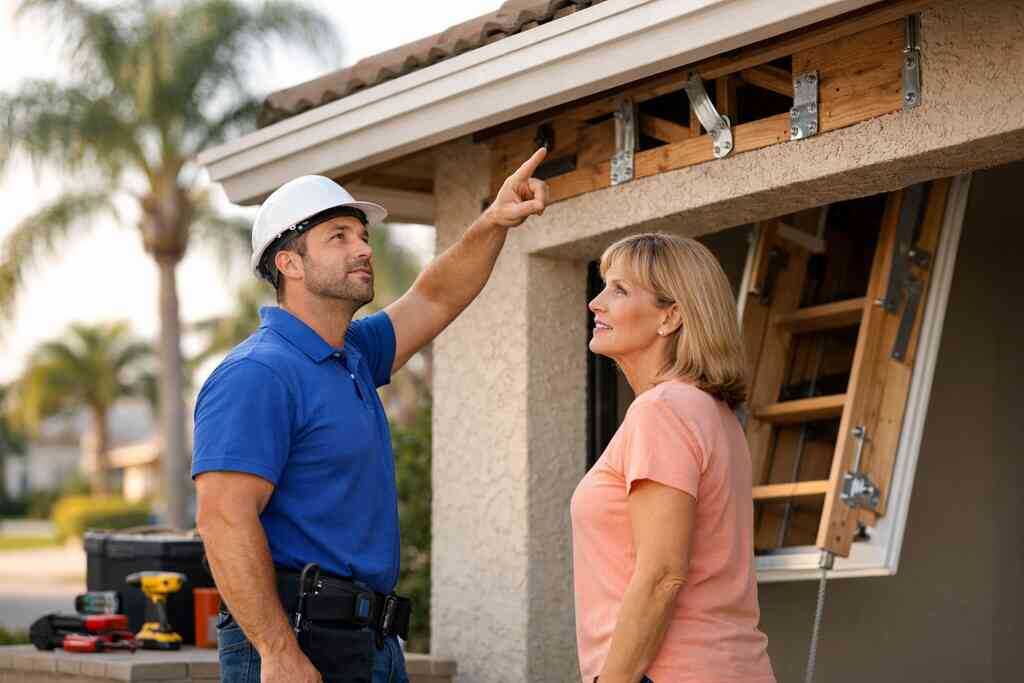
When hurricane roof tie downs are the difference between a repair and a rebuild
A homeowner in Boca Raton called after a fast-moving storm left ceiling stains and attic debris. The roof looked mostly fine from the street. Inside, the damage told a different story. That is the part most people miss. Hurricane roof tie-downs are not glamorous, but they can decide whether a South Florida home needs a focused repair or a much larger structural response. If you are worried about what storm season may have done, that reaction makes sense. Roof damage is hard to judge from a ladder, and even harder to judge from the ground.
What roof-to-wall connection failures usually look like after a South Florida storm
The first signs are often subtle. You may see cracked drywall near the ceiling line, a shifted ridge cap, or small gaps where soffit panels meet the fascia. Sometimes the roof does not visibly lift at all. Instead, the fasteners, clips, or straps connecting the roof structure to the walls loosen just enough to weaken the whole system. That is why a roof tie-down inspection after storm season in South Florida matters even when the shingles still look serviceable.
Here is what we see after stronger wind events in Palm Beach, Broward, and Miami-Dade. Rafters can separate slightly from their bearing points. Trusses can twist under repeated uplift cycles. Fasteners can back out of wood framing that has already aged in humid coastal air. None of that always shows up as a dramatic leak on day one. Still, the structure may already be compromised.
The emotional part is real. You want a simple answer. You want to hear, “It is just a patch.” Sometimes that is true. Sometimes it is not. A licensed roofing contractor South Florida homeowners trust should explain the difference clearly, not blur it.
Why older homes in Palm Beach, Broward, and Miami-Dade often need more than visible patchwork
Older homes often carry hidden vulnerabilities from past repairs, older framing methods, or outdated hardware. A patch on the roof deck does not strengthen the roof-to-wall connection. Neither does fresh sealant over a leak stain. That is why older homes in Palm Beach, Broward, and Miami-Dade often need more than surface-level work. They need a structural conversation, not just a cosmetic one.
On a recent project in Fort Lauderdale, the homeowner expected a limited roof repair after a corner leak. Once the attic was opened, the contractor found mixed fastener types and a few weak connection points near the eaves. The visible damage was small. The underlying risk was not. The fix involved targeted roof strap installation for Florida homes, plus careful documentation for inspection. That approach cost more than a quick patch, but far less than a future tear-off caused by avoidable uplift failure.
You may also find that older homes have additions, reroofs, or prior modifications that were never fully tied into the original structure. That is common in South Florida home improvements. It is also why a quick visual estimate can be misleading. Structural continuity matters. So does proper attic framing review.
The hidden chain reaction between roof uplift protection, soffit damage, and water intrusion
Roof uplift protection is not just about keeping shingles on the roof. It is about controlling the chain reaction that starts with wind and ends with interior damage. When a strong gust pushes up on the roof edge, the soffit can flex. Once soffit damage begins, water can enter through gaps that were never meant to be exposed. Then insulation gets wet, framing absorbs moisture, and interior finishes start failing.
That sequence can move fast. One loose connection can create a bigger opening. One opening can let wind-driven rain into the attic. One wet attic can trigger mold concerns, ceiling damage, and insulation replacement. Here is the part almost no online guide mentions: roof uplift protection and water intrusion are often the same problem seen from different angles.
This is why hurricane damage prevention is really a systems issue. Metal hurricane straps, roof deck fastening, and attic framing reinforcement all work together. So do gable end bracing and secondary water barrier details. If you are planning storm-resilient home upgrades, start with the structure beneath the surface.
What a real roof strap installation plan looks like before a single shingle comes off
A proper plan begins before demolition. A contractor should inspect the attic, identify framing conditions, and understand how the roof assembly is actually built. If that does not happen, you are guessing. Guessing is expensive in South Florida. It is especially expensive when permit reviewers and inspectors are part of the process.
How a licensed roofing contractor South Florida should inspect trusses, rafters, and attic framing
A serious inspection starts in the attic, not on the marketing brochure. A licensed roofing contractor South Florida homeowners can rely on should look at trusses, rafters, connectors, nails, signs of corrosion, and any previous patchwork. They should also note moisture stains, sagging, and any framing members that no longer sit true. That inspection tells you whether you need roof strap installation, rafter tie reinforcement, or broader structural roof retrofit work.
The best contractors also check the attic ventilation path. Why? Because poor airflow can hide moisture problems that weaken framing over time. They should document connection spacing, wood condition, and any areas where hurricane roof reinforcement and roof uplift protection need to be improved. If someone skips the attic and still promises a clean result, pause. That is not careful work.
A homeowner in Palmetto Bay once told us the roof quote sounded “surprisingly simple.” The attic told the truth. Several tie points had been patched before, but not upgraded. The contractor adjusted the plan after the inspection and avoided a bad closeout. That is the difference between experience and assumption.
Why wind mitigation roof straps and truss tie-down upgrades are not the same as cosmetic roof repairs
People often group every roof project together. That creates confusion. Wind mitigation roof straps are structural. Cosmetic roof repairs are surface-level. A new shingle layer may improve appearance. It does not automatically improve wind load resistance. Truss tie-down upgrades and roof-to-wall connection upgrades for coastal homes in Florida are designed to help the building resist uplift forces.
You should think of them differently:
- Cosmetic repairs fix visible wear.
- Wind mitigation roof straps strengthen the load path.
- Truss tie-down upgrades reinforce how the roof transfers force into the walls.
- Roof uplift protection helps the home stay intact during severe wind events.
That distinction matters because insurance questions, permit requirements, and inspection standards all change depending on the scope. If you are working with a coastal home builder Florida homeowners trust, ask whether the proposal addresses actual structural connections or just the roof surface. The answer should be plain, not jargon-heavy.
The paper trail that starts with contractor licensing Florida and ends with a clean inspection
The paper trail matters because good work must be provable. Start with contractor licensing Florida requirements. Then confirm scope, permit status, inspection sequence, and closeout documents. Keep every contract, product sheet, and approval notice. That documentation helps if you later need insurance support, resale records, or warranty proof.
If you are trying to find a contractor in South Florida for roof work, begin with verification, not sales pressure. Ask for the license number. Ask for the insurer. Ask for the exact scope. Then ask who will pull the permit and who will meet the inspector. A trustworthy contractor should answer without hesitation.
This is also where construction management in home improvement projects becomes practical, not theoretical. The person coordinating the work must understand sequencing, inspection timing, and the risk of change orders. That is what keeps the job moving cleanly through closeout.
Why permits and code compliance decide whether your storm upgrade actually holds
Permits are not red tape for the sake of red tape. In South Florida, they are part of how structural work becomes legitimate and verifiable. Skip them, and you invite delays later. Worse, you may create a repair that cannot pass inspection or support an insurance claim. That is not a paperwork problem. That is a protection problem.
How the South Florida permit process changes across Palm Beach County, Broward County, and Miami-Dade permit offices
The South Florida permit process is not identical everywhere. Palm Beach County permit reviewers may ask different documentation than Broward County permit staff. Miami-Dade permit process steps can be even stricter for hurricane roof reinforcement because of local expectations and coastal exposure. That does not mean one county is “harder” than another. It means you need a contractor who knows the local rhythm. If you want South Florida permit process for roof repairs, expect to provide plans, product information, and contractor details. Some projects also need engineering input. Do not assume the permit office will accept a vague repair description. Structural upgrades should be described clearly. The cleaner the submittal, the fewer surprises later. This is where homeowners get frustrated. You just want the roof secure again. That frustration is valid. But the permit path is part of making the work last. 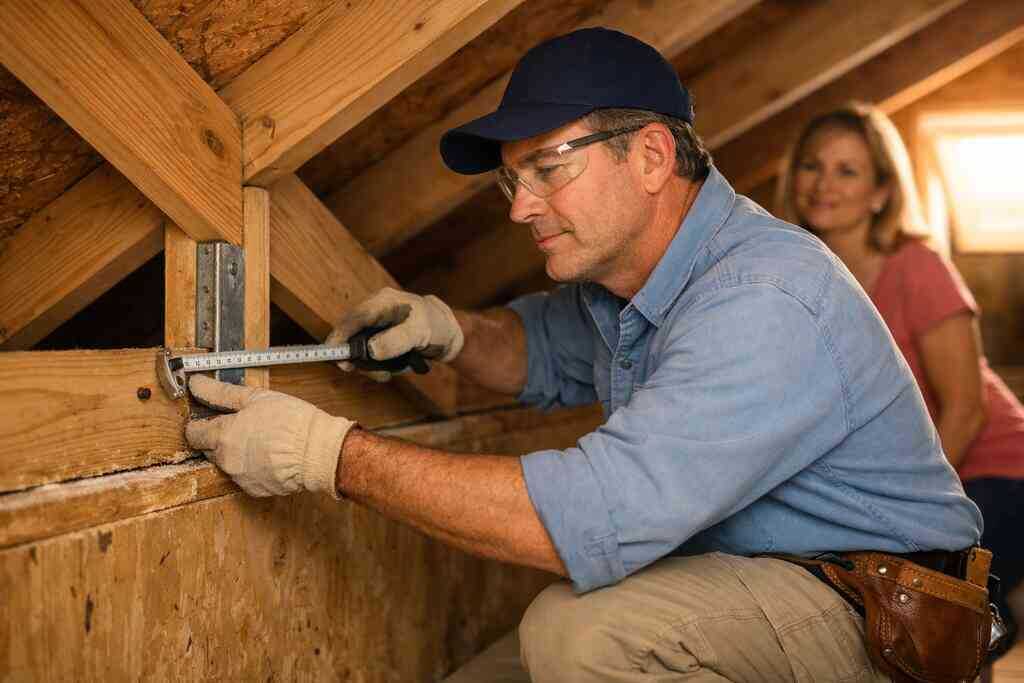
What homeowners should expect from South Florida building codes and Florida Building Code hurricane requirements
South Florida building codes are built around wind reality. So are Florida Building Code hurricane requirements. Your project may need specific fastening methods, approved connectors, or documented installation practices. When the scope involves roof-to-wall connection upgrades, inspectors will care about how the system performs, not just how it looks.
If your contractor mentions Florida Building Code hurricane requirements for roofs, ask what that means for your house specifically. You do not need code-speak. You need plain language. You need to know whether the framing, connectors, and roof deck fastening align with current expectations. That clarity protects you from expensive rework.
Here is a simple rule: if the work affects structure, wind resistance, or exterior envelope integrity, assume code compliance matters. That includes hurricane roof tie-downs, secondary water barrier decisions, and many roof deck details. It also applies to oceanfront home contractor work where exposure is more severe.
ItemWhy it mattersWhat to confirmRoof strapsImproves roof-to-wall load pathConnector type, spacing, inspectionRoof deck fasteningHelps resist upliftFastener pattern, deck conditionSecondary water barrierReduces leak risk if the roof cover failsProduct approval, installation methodGable end bracingSupports vulnerable roof geometryWhether it is included in scope### Why HOA approval, condo rules, and townhome remodeling South Florida can slow exterior structural work
HOA approval can slow a project, even when the repair is urgent. Condo rules can add another layer. Townhome remodeling South Florida projects often sit inside shared walls, shared elevations, or community standards that affect exterior materials and visible changes. That does not mean you cannot move forward. It means you must plan for approvals early.
If your home is in a managed community, ask for the architectural guidelines before signing a contract. Then compare them against the permit plan. The two should match. If they do not, you may be headed for delays. The same applies to South Florida HOA permit requirements, which can affect exterior color, trim, roofing profile, and visible hardware.
We hear this from clients almost every week. The permit is not the only gatekeeper. The association can be, too. A careful contractor will help you stage that paperwork before the work starts, not after the dumpster arrives.
How to verify a contractor license and confirm contractor insurance requirements Florida and contractor bonding requirements
Always verify before you commit. Ask for the license, then check it. Ask for proof of insurance, then confirm it is current. Ask about bonding where applicable, and do not accept vague answers. These are not insulting questions. They are basic homeowner protection steps.
If you need how to verify a contractor license in Florida, do it before deposit discussions. Also review contractor insurance requirements in Florida and contractor bonding requirements in Florida. That due diligence matters whether you are hiring a roofing contractor South Florida or a South Florida concrete contractor for related structural work.
If a contractor resists verification, move on. If they welcome it, that is a good sign. Strong businesses do not hide the basics.
The next move that protects the house, not just the quote
The smartest storm upgrade rarely stands alone. Roof tie downs, opening protection, drainage, and structure often work better as a coordinated plan. That is especially true in South Florida, where wind, water, and permitting all intersect. Your goal is not the cheapest quote. Your goal is the most complete path to a safer house.
When to pair roof tie downs with hurricane impact window installer South Florida work and hurricane shutter contractor upgrades
If your roof needs structural reinforcement, look at the whole exterior envelope. A hurricane impact window installer South Florida homeowners trust can help reduce opening vulnerability. A hurricane shutter contractor can provide another layer where impact glass is not the right fit. Together, these upgrades reduce the chance that wind pressure gets inside and worsens roof damage.
That is especially helpful in waterfront and coastal zones, where wind-driven debris and pressure shifts can be intense. It also makes sense for energy efficient remodeler South Florida projects, because tighter openings can support comfort and resilience at the same time. Still, do not treat these upgrades as substitutes for roof tie-downs. They solve different problems.
If your home is already due for a roof project, ask the contractor to think in systems. One weak opening can compromise the whole storm strategy.
How roof reinforcement fits with South Florida foundation repair, concrete contractor work, and storm-resilient home upgrades
Roof issues sometimes point to broader movement in the house. That is why South Florida foundation repair and South Florida concrete contractor work may enter the conversation. Cracks, settlement, and moisture problems can affect how loads move through the structure. If the home is shifting, roof reinforcement alone may not be enough.
On a recent project in Coral Springs, a homeowner expected only a reroof. The inspection showed subtle settlement near one corner and a few interior cracks that had grown slowly. The team coordinated with a structural specialist before proceeding. That prevented a mismatch between roof upgrades and foundation conditions. It was a slower start. It was also the right one.
Storm-resilient home upgrades work best when they respect the whole structure. That may include home remodeling contractor South Florida coordination, lanai builder South Florida scope adjustments, or even second story addition South Florida planning if the home is expanding.
What to ask before signing, including lien waiver Florida, change order contractor Florida, and permit requirements for roof work
Before you sign, ask direct questions. You deserve clear answers. Start with the money paper trail, then move to the scope. Ask for a lien waiver Florida document when appropriate, so you understand how payments are protected. Ask how change order contractor Florida procedures will work if hidden damage appears. Ask who will handle permit requirements for roof work and inspection scheduling.
Use this short checklist:
- What exactly is included in the roof strap scope?
- Who pulls the permit?
- What happens if attic framing damage is discovered?
- How are change orders documented?
- What closeout documents will I receive?
These questions are not signs of distrust. They are signs of maturity. A well-run company will appreciate them. A sloppy one will not.
Why a South Florida contractor network matters when you need a roofing contractor South Florida who can coordinate inspections and closeout
A South Florida contractor network gives you options when the work touches more than one trade. Maybe you need a roofing contractor South Florida for structural connections, a South Florida flooring installer for interior repair, or a South Florida cabinet maker after water intrusion affects a kitchen. Maybe you are also comparing a South Florida bathroom remodeler or South Florida kitchen remodeler because storm damage spread further than expected. Coordination matters.
That is where licensed roofing contractor near South Florida becomes more than a search phrase. It becomes a safeguard. You want a contractor who can coordinate inspections, explain the sequence, and finish with clean closeout documents. You also want someone who respects the permit path, the insurance trail, and the reality of South Florida weather.
If you are ready to act, pick three verified contractors, request written scopes, and compare their permit plan before you compare price alone. You do not have to solve everything today. Start with one call, one license check, and one honest conversation about how to keep your roof tied down when the next storm season tests it.
Frequently Asked Questions
Question: What should I expect during a roof tie-down inspection after storm season in South Florida?
Answer: A proper roof tie-down inspection should start in the attic and examine the roof-to-wall connection, trusses, rafters, connectors, fasteners, and any signs of moisture or corrosion. In South Florida, that matters because hurricane roof tie-downs and hurricane code compliance for roofs are about more than shingles on top. A licensed roofing contractor South Florida homeowners trust should explain whether you need roof strap installation for Florida homes, truss tie-down upgrades, rafter tie reinforcement, or broader structural roof retrofit work. South Florida Contractors can help you find a contractor South Florida homeowners can verify for licensing and insurance before any work begins, which is especially important when the project touches permit requirements for roof work and local hurricane-code requirements.
Question: How do I know if I need roof strap installation, roof uplift protection, or just a cosmetic roof repair?
Answer: Cosmetic repairs fix visible surface damage, but roof strap installation and roof uplift protection address the structural path that keeps the roof attached during high winds. If you see ceiling stains, attic debris, cracked drywall near the ceiling line, or gaps near soffits and fascia, that can point to a deeper issue than a simple patch. In South Florida, especially for older homes or coastal properties, wind mitigation roof straps and roof-to-wall connection improvements may be needed to improve wind load resistance. South Florida Contractors helps homeowners compare scopes from a roofing contractor South Florida can trust, a coastal home builder Florida residents may use for larger projects, or a general contractor near me South Florida search result—always with the reminder to verify contractor licensing Florida status, contractor insurance requirements Florida, and contractor bonding requirements before signing anything.
Question: How does the South Florida permit process work for hurricane roof tie-downs in Palm Beach County, Broward County, or Miami-Dade?
Answer: The South Florida permit process can vary by jurisdiction, and Palm Beach County permit, Broward County permit, and Miami-Dade permit reviews may ask for different documentation, product information, and contractor details. For work involving hurricane roof reinforcement, roof deck fastening, secondary water barrier details, or other structural changes, permits should never be skipped. South Florida building codes and Florida Building Code hurricane requirements are designed to make sure the work is documented and installed correctly. South Florida Contractors is a directory that helps you find a contractor South Florida homeowners can contact, but you should still verify the contractor license, confirm insurance, and ask who will pull the permit and meet inspections. That process protects you from delays, failed inspections, and problems with insurance or resale later.
Question: Can South Florida Contractors help me find a licensed contractor Palm Beach County, licensed contractor Broward County, or licensed contractor Miami-Dade for roof work and related home upgrades?
Answer: Yes. South Florida Contractors is built to help homeowners find a contractor South Florida residents can review by location, distance, and service area, including Palm Beach, Broward, and Miami-Dade Counties. If your project is larger than roofing alone, you may also need a home remodeling contractor South Florida, South Florida concrete contractor, South Florida foundation repair specialist, hurricane impact window installer South Florida, or hurricane shutter contractor to create a complete storm-resilient home upgrades plan. The key is to choose a verified professional for each trade and confirm the scope matches the permit requirements for roof work and local hurricane-code requirements. South Florida Contractors supports that search process, but homeowners should always verify contractor licensing Florida, contractor insurance requirements Florida, and contractor bonding requirements before hiring anyone.
Question: What other projects should I consider with hurricane roof tie-downs to improve hurricane damage prevention?
Answer: Roof tie-downs work best as part of a system. Depending on your home, it may make sense to pair roof reinforcement with hurricane impact window installer South Florida services, a hurricane shutter contractor, attic framing reinforcement, gable end bracing, or secondary water barrier improvements. If the home has settlement or cracking, South Florida foundation repair or South Florida concrete contractor work may also be worth reviewing before roofing begins. For larger updates, a South Florida design build team, coastal home builder Florida, oceanfront home contractor, or waterfront home builder South Florida may coordinate the whole scope. South Florida Contractors can help you find the right starting point, whether you are planning South Florida home improvements, a South Florida luxury renovation, or a focused structural upgrade. Just be sure every contractor is licensed, insured, and experienced with South Florida building codes and hurricane code compliance for roofs.
Question: Why should I trust South Florida Contractors when researching the Ultimate Guide to Hurricane Roof Tie Downs for Florida Homes?
Answer: South Florida Contractors is a South Florida contractor network designed to help homeowners make informed choices in a region where weather, permits, and code compliance matter. The goal is not to push a specific company, but to help you find a contractor South Florida homeowners can verify for the job at hand. That includes roofing contractor South Florida options, South Florida custom home builder services, South Florida kitchen remodeler and South Florida bathroom remodeler support for storm-related interior repairs, and even specialty trades like South Florida flooring installer, South Florida tile contractor, South Florida cabinet maker, or pool deck contractor South Florida when storm damage affects more than the roof. The right contractor should always provide clear documentation, follow the South Florida permit process, respect HOA approval or condo renovation South Florida rules when applicable, and explain change order contractor Florida procedures if hidden damage appears. That combination of local knowledge, verified licensing, and clear communication is what homeowners should expect.