
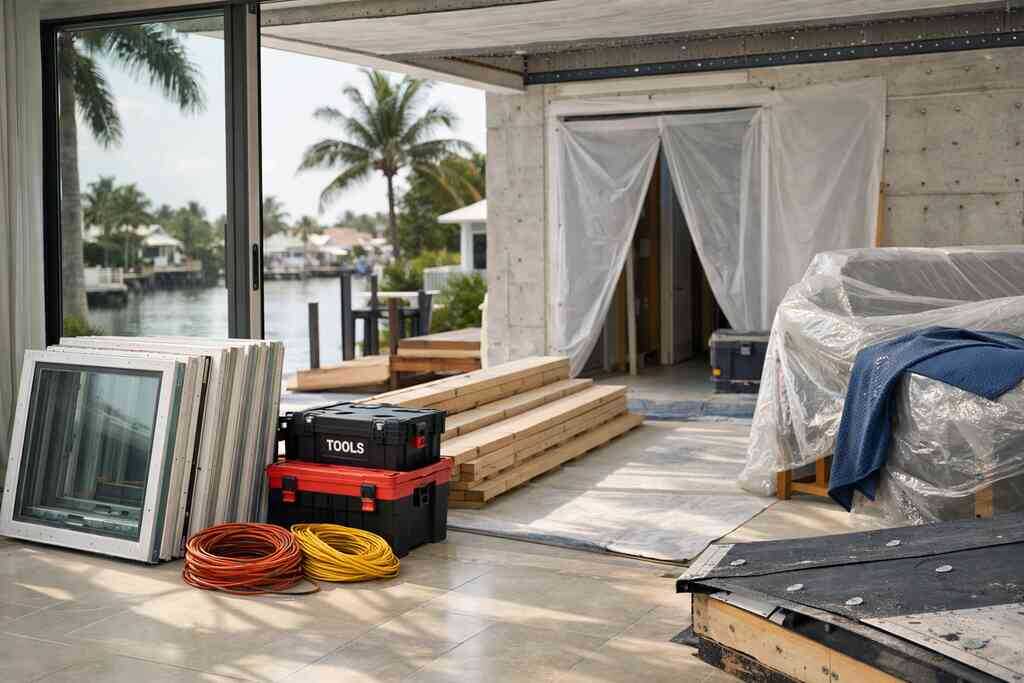
A good coastal home builder in South Florida is one who can prove hurricane-code experience, permit readiness, and clean licensing before you sign anything. If the lowest bid looks tempting, pause first; coastal work rewards the builder who understands wind, water, salt air, and local approvals.
Key Takeaways
- Choose a coastal home builder Florida homeowners can trust by verifying licensing, insurance, bonding, and permit experience before the first site visit.
- South Florida projects often need more than standard construction skill; they need hurricane code compliance, flood-aware detailing, and county-specific permit handling.
- A flashy portfolio means little if the builder cannot explain roof tie-downs, impact openings, change orders, and inspection sequencing in plain language.
- For exterior and structural work, never skip permits or HOA approvals; South Florida building codes and county review can change the project path.
- If you want a faster starting point, use a regional directory like South Florida Contractors to find and compare local builders by area and trade.
Why the lowest bid can be the most expensive mistake on the coast
The lowest bid can become the most expensive mistake on the coast because South Florida homes face wind, moisture, salt corrosion, and strict code review. A builder who prices too low may be skipping details, underestimating permits, or ignoring hurricane-code work that you will pay for later. That risk grows near the water.
What coastal conditions in South Florida quietly change the builder you need
South Florida is not a generic building market. A coastal home builder Florida homeowners hire must think about uplift, corrosion, drainage, slab edges, and how salt air affects fasteners, metal connectors, and exterior finishes. In Palm Beach, Broward, and Miami-Dade, the same house style can require different field judgment because lot conditions, exposure, and local review practices vary.
That is why “general contractor near me South Florida” is not enough as a search strategy. You want someone who has handled waterfront home builder South Florida details, oceanfront home contractor constraints, and inland projects with the same discipline. One project we saw in a coastal neighborhood looked simple on paper, but hidden moisture damage around the sill plate changed framing, insulation, and finishes once walls opened up. The homeowner was relieved the builder had planned for contingencies instead of pretending nothing could go wrong.
If you are comparing a general contractor with a coastal specialist, ask which subcontractors they routinely use for impact openings, roofing, and structural repairs. The right answer should sound specific, not improvised.
Why hurricane code compliance and permit readiness matter more than a flashy portfolio
A beautiful portfolio does not tell you whether the builder can pass inspections. For exterior and structural work, hurricane code compliance is not optional, and the South Florida permit process can stop a project if the documents are weak or incomplete. That is especially true for hurricane impact window installer South Florida work, hurricane shutter contractor scopes, roofing contractor South Florida projects, and second-story additions.
Here is the part most homeowners miss: a builder who knows the Florida Building Code and local review culture can save weeks of back-and-forth, even when the design is complex. The details matter more than the marketing. Roof tie-downs, opening protection, product approvals, and engineer letters all need to line up before work can move cleanly through inspection.
For homeowners comparing remodeling categories, a resource like top remodeling services can help you think through scope before you call three separate firms. That is useful when your project may involve a South Florida kitchen remodeler, South Florida bathroom remodeler, or a full South Florida luxury renovation with structural touchpoints.
How to spot a coastal home builder Florida homeowners can trust before the first walkthrough
You can learn a lot before the first walkthrough. A trustworthy South Florida custom home builder will ask about your lot, drainage, HOA rules, and whether the scope touches structure, plumbing, or exterior envelope. A smooth talker usually talks about finishes first and paperwork later. Use this quick screening list: – Ask how they handle South Florida building codes and inspections.
- Ask whether they have completed projects requiring hurricane code compliance.
- Ask how they coordinate with engineers, surveyors, and permit reviewers.
- Ask what they need from you before pricing a South Florida design build scope.
- Ask how they manage change orders when hidden conditions appear.
A builder who handles outdoor living well should also understand a pool deck contractor South Florida scope, paver installation South Florida, screen enclosure contractor South Florida work, lanai builder South Florida details, and outdoor kitchen contractor South Florida utilities. If they cannot discuss those pieces clearly, they may not be the right fit for a coastal site.
The paper trail that separates a real South Florida custom home builder from a smooth talker
A real South Florida custom home builder should be able to show active licensing, proper insurance, and a clear process for permits, inspections, and payment documents. If the builder dodges those questions, move on. This is not paperwork for paperwork’s sake; it protects your home, your money, and your ability to resolve problems later. 
How to verify contractor licensing Florida, insurance, and bonding without guessing
Start with the license, then check the rest. You should verify the contractor license through state records, confirm the business name matches the proposal, and ask for proof of insurance and bonding if the project requires it. For bigger jobs, especially home additions, structural work, or a South Florida custom home builder scope, this is not a formality.
The safest approach is to ask for three documents before you sign:
- Active license information.
- Certificate of insurance.
- Any bonding or surety documentation relevant to the project.
If you want a step-by-step reference, how to find a licensed contractor is a practical place to start. It helps you avoid the common mistake of assuming a polished website means the contractor is properly credentialed. For work in South Florida, that assumption can get expensive fast.
ItemWhat you should confirmWhy it mattersLicenseActive, correct classification, matching business nameEnsures the contractor is authorized for the scopeInsuranceCurrent proof, not a vague promiseProtects you if damage or injury occursBondingAsk if the project requires itAdds another layer of financial protectionReferencesRecent projects similar to yoursShows relevant experience, not just marketing
What to ask about Palm Beach County permit, Broward County permit, and Miami-Dade permit handling
Ask who pulls the permit, who responds to corrections, and who attends inspections. Those three answers tell you more than any brochure. A builder experienced with a Palm Beach County permit, Broward County permit, or Miami-Dade permit should know the local rhythm, the likely review questions, and how to keep the job moving without shortcuts.
This matters for South Florida home additions, condo renovation South Florida work, townhome remodeling South Florida projects, and South Florida HOA permit situations. In one recent interior remodel, a homeowner thought the permit would be a formality, but the scope touched electrical, plumbing, and a structural opening. The builder had to resubmit drawings, coordinate revisions, and sequence inspections carefully. That is normal. What is not normal is acting surprised by it.
If your project is more specialized, such as a screen enclosure project, the permit conversation becomes even more important because exterior enclosures often trigger code, wind, and HOA review. You want a builder who explains that clearly before pricing begins.
A good question to ask is simple: “What would slow this permit down?” A competent contractor will answer with specifics about drawings, product approvals, association rules, or scope changes. If they say “we handle all that” and stop there, keep looking.
Why lien waiver Florida, change order contractor Florida language, and dispute terms matter before work starts
A lien waiver is a document showing a contractor or subcontractor has been paid for work completed to date. You want those handled properly because they reduce the risk of payment disputes and surprise claims later. Change order language matters too, because coastal projects often uncover hidden rot, framing issues, or drainage problems once walls open.
Before signing, look for three things:
- Payment schedule tied to milestones, not vague dates.
- Written change order process for added work.
- Dispute resolution terms that explain what happens if there is disagreement.
This is especially important on South Florida luxury renovation jobs, custom home builds, and projects involving South Florida concrete contractor, South Florida foundation repair, South Florida flooring installer, South Florida tile contractor, or South Florida cabinet maker trades. The scope may evolve. The paperwork should already know how to handle that. For readers who want a broader contractor-selection checklist, how to choose the right contractor is a strong next read.
If you are comparing options now, South Florida Contractors is a practical place to start because it helps you find a contractor South Florida by city, ZIP, and trade before you make the first call. Use the directory, compare a few licensed contractors, and ask the permit and insurance questions up front. Then call 18443112703 to get moving with a cleaner short list.
Frequently Asked Questions
Question: How do I use South Florida Contractors to find a contractor South Florida homeowners can trust for a coastal project?
Answer: Start by entering your ZIP code or selecting your city in the South Florida Contractors directory, then compare contractors by distance, trade, and service area across Palm Beach, Broward, and Miami-Dade Counties. This is a practical way to find a contractor South Florida homeowners can actually vet before making the first call. For coastal work, focus on contractors who can show active licensing, insurance, and experience with hurricane code compliance, South Florida building codes, and the South Florida permit process. If your project involves exterior or structural work, ask whether they have handled roof tie-downs, impact openings, drainage concerns, or other waterfront details. South Florida Contractors helps you build a cleaner shortlist, but you should still verify every contractor license, insurance document, and permit plan before signing.
Question: What should I look for in a coastal home builder Florida homeowners can trust for hurricane code compliance and permits?
Answer: A trustworthy coastal home builder Florida residents hire should be able to explain licensing, permit readiness, inspection sequencing, and hurricane code compliance in plain language. That matters because coastal homes face wind, moisture, salt air, and stricter review than many inland projects. Look for a South Florida custom home builder or waterfront home builder South Florida who can discuss hurricane roof tie-downs, impact windows, exterior finishes, and the local approval process without sounding vague. If the builder cannot clearly explain the Palm Beach County permit, Broward County permit, or Miami-Dade permit process, that is a red flag. You want someone who understands that the lowest bid can become the most expensive choice if they skip detail work or underprice the permit and inspection burden. South Florida Contractors is useful here because it helps you compare local builders, but the final decision should always depend on verified licensing, insurance, and project-specific experience.
Question: How do I verify contractor licensing Florida, insurance, and bonding before hiring a South Florida custom home builder?
Answer: Begin by confirming that the contractor license matches the company name on the proposal and is active for the scope of work. Then request proof of insurance and ask whether any contractor bonding requirements apply to your project. This is especially important for larger jobs such as South Florida luxury renovation, South Florida home additions, or second story addition South Florida projects, where structural and exterior work may trigger more risk and more inspection points. You should also ask how the contractor handles lien waiver Florida documents, payment milestones, and change order contractor Florida procedures, because those details protect you if the scope changes after walls are opened. A reliable builder will not get defensive about verification; they will expect it. South Florida Contractors supports homeowners by making it easier to compare listed professionals, but you should still perform your own how to verify a contractor license check before moving forward.
Question: What types of projects can I find through South Florida Contractors besides new home construction?
Answer: You can use South Florida Contractors to find professionals for a wide range of residential and commercial work, not just new builds. That includes home remodeling contractor South Florida services, South Florida kitchen remodeler and South Florida bathroom remodeler projects, roofing contractor South Florida work, hurricane impact window installer South Florida services, hurricane shutter contractor scopes, and specialty outdoor upgrades like pool deck contractor South Florida, paver installation South Florida, screen enclosure contractor South Florida, lanai builder South Florida, and outdoor kitchen contractor South Florida work. The directory is also useful for South Florida concrete contractor, South Florida foundation repair, South Florida flooring installer, South Florida tile contractor, and South Florida cabinet maker needs. If your project includes South Florida ADA renovation, aging in place contractor South Florida work, sustainable home builder South Florida goals, or energy efficient remodeler South Florida upgrades, you can still use the directory to compare local options. The key is to match the trade to the scope and then verify credentials before signing anything.
Question: How can How to Find a Coastal Home Builder in South Florida help me avoid permit problems and contractor disputes?
Answer: The main value of How to Find a Coastal Home Builder in South Florida is that it teaches you to screen for permit readiness, clear documentation, and practical experience before construction begins. Coastal projects often involve the South Florida permit process, South Florida HOA permit reviews, condo renovation South Florida rules, and townhome remodeling South Florida restrictions, all of which can slow a job if the paperwork is incomplete. A good contractor should explain what might delay approval, who pulls permits, who responds to corrections, and how inspections will be scheduled. Just as important, they should give you a written change order contractor Florida process and clear contractor dispute resolution terms so you are not guessing later if hidden conditions appear. South Florida Contractors is a strong starting point because it helps you identify local professionals by area and trade, but your protection comes from careful vetting, written agreements, and confirmed licensing and insurance.