

1) The roof reality check that tells you whether fall is repair season or replacement season
A stormy afternoon can leave you with a roof problem that looks small but turns into a headache fast. That is why a fall roof inspection South Florida matters now, not later. If you are reading this because you saw a stain, smelled damp insulation, or heard dripping after a thunderstorm, take a breath. You are not overreacting. The hard part is that roof damage rarely stays in one place.
How to spot roof leak detection after storms before stains turn into attic moisture and mold
Start inside the house, not on the ladder. Look for ceiling discoloration, bubbling paint, musty odors, and damp attic insulation. Those signs often point to roof leak detection after storms that began small and spread quietly. Here is the part most homeowners miss: water can travel sideways before it drips. By the time you see a stain, the leak may already be creating attic moisture and mold prevention problems.
On a Lake Worth project, a homeowner thought a bathroom stain came from a pipe. It was not plumbing. A lifted shingle at a roof valley let wind-driven rain soak the decking for weeks. We found it only because the attic smelled different, almost sweet and stale. That inspection saved them from replacing drywall in two rooms.
What shingle damage assessment, tile roof repair South Florida, and flat roof maintenance South Florida each reveal differently
Different roofs fail in different ways. A shingle damage assessment often shows granule loss, creased tabs, or lifted edges after strong winds. Tile roof repair South Florida projects usually reveal cracked tiles, slipped tiles, or broken underlayment beneath the surface. Flat roof maintenance South Florida often exposes blistering, ponding water, or seam failure around edges and penetrations. Each roof type tells a different story, so you need the right eyes on it.
On the projects we have finished this year, the biggest mistake is assuming every roof problem needs the same fix. It does not. A patch on a tile roof may hide a deeper underlayment issue. A shingle roof might need only localized repair, while a flat roof with repeated ponding may need broader corrective work. The goal is not to spend more. The goal is to spend accurately.
Why roof flashing inspection around chimneys skylights and sealed roof penetrations matters more after summer storms
Water loves the seams. That is why roof flashing inspection deserves more attention than most people give it. Check flashing around chimneys, skylights, vents, and any sealed roof penetrations. These are the places where materials meet, shift, and fail first. After heavy weather, even a tiny gap can become an active leak.
If you have a skylight that was installed years ago, look closely at the surrounding sealant and metal flashing. The same applies to exhaust vents and pipe collars. In South Florida, heat cooks sealants fast, then storms test them hard. That combination is brutal.
When a soft spot roof assessment points to roof decking condition check and underlayment replacement instead of a quick patch
If the roof feels soft underfoot, do not ignore it. A soft spot roof assessment often points to a damaged deck, not just a missing surface material. The roof decking condition check tells you whether the wood underneath still carries the load safely. If the decking is weakened, a simple patch is false comfort. In many cases, underlayment replacement becomes part of the real fix.
This is especially important after repeated leaks. Once water reaches the deck, the repair scope can change quickly. A contractor should explain that clearly before work starts. A real pro will not pretend a small patch solves a structural problem.
Why roof ventilation inspection and gutter cleaning and roof drainage can decide whether a small issue becomes a big one
You can have a decent roof and still have a bad moisture problem. That is where roof ventilation inspection matters. Poor airflow traps heat and humidity in the attic, which shortens roof life and drives up cooling costs. Then add clogged gutters, and you have a drainage problem waiting to happen. Gutter cleaning and roof drainage may not sound dramatic, but they often decide whether a roof stays dry.
A homeowner in Broward once called about recurring leaks along an eave. The roof itself was serviceable. The real issue was debris packed in the gutters and a downspout that sent water back toward the fascia. Once we corrected the drainage and checked the attic airflow, the recurring leak stopped. Simple does not mean minor.
2) The contractor vetting checklist that separates a real pro from a risky low bid
Finding the right roofer is emotional. Nobody wants to overpay, get ghosted, or discover a bad license after materials arrive. That is why the phrase find a contractor South Florida should mean more than scrolling reviews. You need proof, paperwork, and a clear conversation before anyone climbs the roof.
How to verify a contractor license before you hire a roofing contractor South Florida or general contractor near me South Florida
Before you hire a roofing contractor South Florida or search for a general contractor near me South Florida, verify the license first. Use the state lookup and confirm the company name matches the person signing the contract. Then check whether the scope of work fits the license classification. How to verify a contractor license should be part of your first phone call, not your last.
If a contractor hesitates to provide a license number, move on quickly. A legitimate pro expects scrutiny. South Florida homeowners have enough to deal with without guessing who is legally allowed to touch the roof.
What contractor insurance requirements Florida and contractor bonding requirements should look like before any work starts
Ask for proof of coverage before anyone starts. Contractor insurance requirements Florida typically involve general liability and workers’ compensation, though the exact setup can vary by company and job type. Contractor bonding requirements can also matter, especially on larger or more complex work. Do not accept a verbal promise. Ask for documents and confirm they are current.
Here is a simple rule: no paperwork, no work. That includes subcontractors. If somebody falls, damages a neighbor’s property, or opens the roof and finds more damage than expected, insurance becomes your protection line.
Why a licensed contractor Palm Beach County may still not be the right fit for Broward County or Miami-Dade permit realities
A licensed contractor Palm Beach County may be excellent, but that does not automatically mean they know every permit nuance in Broward or Miami-Dade. Local permit offices interpret documents differently, and coastal projects can trigger extra documentation. A contractor who handles one county well may stumble in another. That matters if you want speed and fewer corrections.
Miami-Dade, in particular, tends to be more exacting on wind-related documentation. Palm Beach and Broward each have their own administrative habits too. Ask where the contractor regularly pulls permits. Then ask who handles revisions when an inspector wants clarification. That tells you more than a glossy brochure ever will.
How to read lien waiver Florida paperwork so you are protected during progress payments and final closeout
A lien waiver Florida form is not just paperwork noise. It is your protection against someone later claiming they were not paid. Read it before each progress payment and again at final closeout. Make sure it matches the payment amount and the work being released. If you do not understand the wording, ask for a plain-English explanation.
We hear this from clients almost every week. They want to pay fairly, but they also want protection. That is reasonable. The paperwork should reflect that balance.
Why change order contractor Florida language should be written clearly before roof replacement planning South Florida gets underway
Scope changes happen. Hidden damage appears. Material selections shift. That is why change order contractor Florida language matters so much. If something changes, the agreement should say what changed, why it changed, and how it affects price and timing. No vague handshakes. No fuzzy texts.
When roof replacement planning South Florida begins, ask how the contractor documents extras. A solid change order process reduces conflict later. It also helps if the job triggers other repairs, like fascia replacement or deck repair. Clear language protects both sides.
3) The permit trail that keeps a fall roofing project legal under South Florida building codes
Permits make some homeowners nervous. That is understandable. But skipping them can create bigger problems than the paperwork ever would. The truth is simple: South Florida building codes exist because storms are real here. If you are doing exterior or structural work, the permit trail matters.
When roof permit requirements South Florida apply even for repairs and not just full reroofs
People often assume only full replacements need permits. Not always. Roof permit requirements South Florida can apply to certain repairs, especially when work affects structure, sheathing, or weather protection. A contractor should tell you upfront when a permit is needed. If they brush it off, that is a warning sign.
Even repair jobs can trigger documentation. The safest approach is to ask before materials are ordered. That keeps the project aligned with inspection rules and avoids delays midstream. It also protects your insurance position later.
How Palm Beach County permit Broward County permit and Miami-Dade permit rules can change the way a roofing job is documented
A Palm Beach County permit, Broward County permit, and Miami-Dade permit are not always processed the same way. The forms may look similar, but the review path can differ. Some jurisdictions want more detail on product approvals or attachment methods. Others want clearer contractor documentation or property information. These differences matter when you are trying to stay on schedule.
If you are comparing quotes, ask each contractor how they handle submittals. Ask who is responsible for corrections if the county requests revisions. That one question reveals who has real field experience and who is improvising.
Why South Florida permit process and South Florida HOA permit approvals should be checked before materials are ordered
The South Florida permit process can take more coordination than most owners expect. Add a condo association or HOA, and the layers multiply. South Florida HOA permit approval may require architectural review, product sheets, or color samples before work starts. If you order materials too early, you may end up paying storage costs or reordering. That is especially true in condo renovation South Florida projects and townhome remodeling South Florida communities. In those settings, roofing choices may affect appearance rules, noise restrictions, or access schedules. Ask the association first. Then buy.
What hurricane code compliance and hurricane roof tie-downs mean for wind resistance in coastal neighborhoods
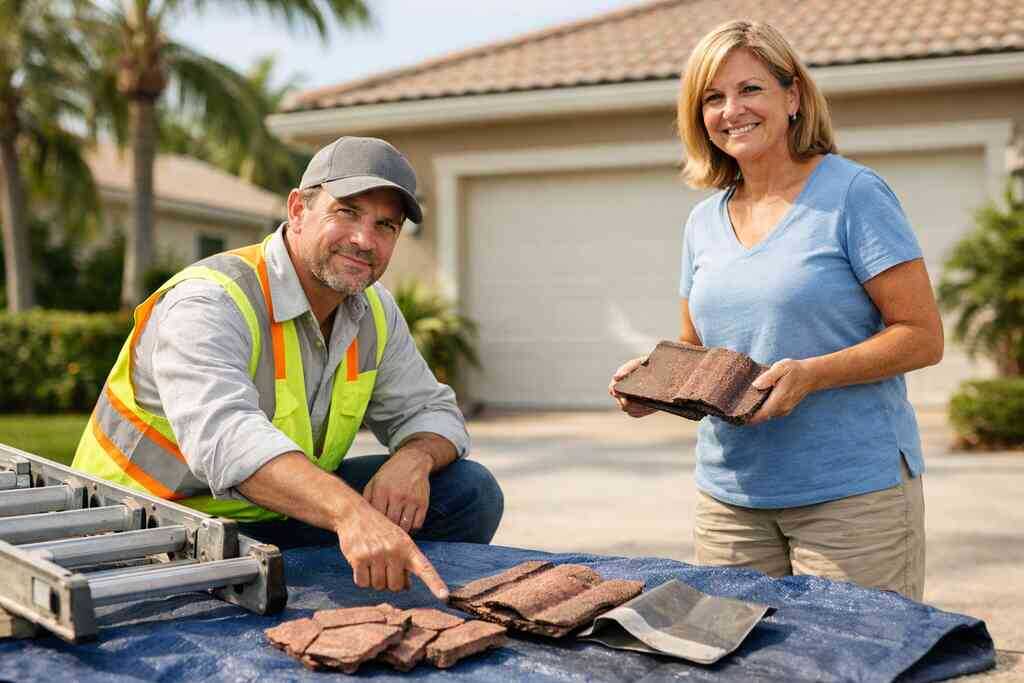
Hurricane code compliance is not a slogan. It is the difference between a roof that resists uplift and a roof that fails early. Hurricane roof tie-downs help anchor the structure, especially in coastal neighborhoods where wind pressure can be severe. The details matter: fasteners, attachment patterns, and approved materials all affect performance.
In Miami-Dade, those details can be especially important near the coast. That is why a contractor should explain the wind-resistance strategy in plain language. If they cannot explain it, they probably do not fully own it.
How Florida Building Code 2026 and reroofing permit compliance affect storm-ready roofing upgrades and roof warranty review
Florida Building Code 2026 standards shape how roof work should be planned, documented, and inspected. That affects materials, installation methods, and sometimes even warranty eligibility. Reroofing permit compliance matters because a warranty is only useful when the installation follows the rules. If you are paying for storm-ready upgrades, you want those upgrades to be recognized by the manufacturer and the county.
A good contractor should review the roof warranty with you before the job ends. Ask what voids coverage. Ask what paperwork you should keep. Then store everything together. That small habit can save a major dispute later.
4) The storm-hardening upgrades that make a roof earn its keep in South Florida weather
The best fall roofing plan is not only about fixing damage. It is also about making the whole exterior stronger before the next round of heavy weather. That is where storm-ready roofing upgrades and broader envelope improvements pay off.
Why wind mitigation roof improvements can matter as much as the roof itself in hurricane season roof checklist planning
A hurricane season roof checklist should include more than shingles or tiles. Wind mitigation roof improvements can reduce vulnerability at the edges, ridges, and attachment points. That can include better fastening patterns, improved sealing, and stronger connections where the roof meets the structure. In South Florida, edge failure is often where trouble begins.
Think of it this way: a roof does not fail all at once. It usually fails at the weak points first. Strengthening those points is often smarter than waiting for a major leak.
How hurricane impact window installer South Florida and hurricane shutter contractor work tie into the broader exterior envelope maintenance plan
The roof is only one part of the shell. A hurricane impact window installer South Florida and a hurricane shutter contractor help protect the same exterior envelope. If your windows leak or shutters are poorly fitted, water pressure can affect the roof line too. That is why roof work and opening protection should be considered together.
We have seen homes where the roof was solid, but failed windows allowed interior damage during a storm. That kind of mismatch wastes money. Coordinated upgrades are cleaner, and they usually age better.
When an oceanfront home contractor or coastal home builder Florida should think beyond shingles to roof decking condition check and sealed roof penetrations
A skilled oceanfront home contractor or coastal home builder Florida knows the roof is not just surface material. Near the water, hidden connections matter even more. That includes the roof decking condition check and every sealed roof penetrations point. Salt air, moisture, and wind exposure all work together against the assembly.
If you own a waterfront property, ask for a detailed inspection of edges, penetrations, and underlayment transitions. The ocean does not care how nice the roof looks from the street. It attacks the weak links.
How roof inspection for waterfront homes differs from a typical inland home because salt air and uplift exposure are not the same
A roof inspection for waterfront homes needs a different mindset. Inland roofs deal with heat and rain. Waterfront roofs deal with heat, rain, salt, and stronger uplift exposure. That means fastener corrosion, flashing wear, and sealant breakdown may happen sooner. Don’t compare a coastal roof to a subdivision roof miles away. They are not the same.
The inspection should also account for corrosion on metal details and the condition of nearby exterior components. That is why the right contractor matters. Experience in South Florida coastal conditions is not optional.
Why emergency roof tarping and post-storm roofing review should be part of seasonal home protection South Florida
You do not want to search for help after a storm with water pouring in. Emergency roof tarping is a damage-control step, not a long-term fix, but it can protect interiors quickly. Follow that with a post-storm roofing review so you know what was temporary and what still needs permanent repair. Both belong in seasonal home protection South Florida planning.
A homeowner in Miami-Dade once called after a branch strike near a ridge. The tarp held, but the later inspection found cracked tiles and a compromised flashing detail the tarp could not reveal. If we had stopped at the tarp, the next rain would have reopened the problem. Temporary protection buys time. It does not replace diagnosis.
5) The smartest way to turn a roof inspection into a no-drama fall action plan
A roof inspection is only useful if it leads to a decision. Otherwise, it becomes one more thing on your mental stack. You need a plan that tells you what gets fixed now, what gets watched, and what needs a bigger budget later. That is how you turn stress into control.
How to rank what gets fixed now versus what can wait until roof replacement planning South Florida becomes unavoidable
Start with risk. Active leaks, soft decking, and failed flashing belong at the top. Cosmetic wear can often wait. Roof replacement planning South Florida should begin when repairs stop solving the same problem. If the same area keeps failing, replacement may be the more honest financial move.
A simple ranking helps:
- Fix now: active leak points, exposed decking, broken flashing
- Watch closely: isolated wear, minor sealant failures, early granule loss
- Plan ahead: repeated repairs, widespread aging, or multiple system failures
That framework keeps emotions from running the budget.
Why insurance claim roof documentation should start before the next storm if you want a cleaner contractor dispute resolution path
If you expect insurance questions later, document now. Insurance claim roof documentation should include photos, dates, written findings, and contractor notes before the next storm muddies the evidence. Clear records help if you later face contractor dispute resolution over whether damage was old or new. That is not paranoia. That is smart recordkeeping.
Save everything in one folder. Keep estimates, permits, invoices, and photo logs together. If the roof changes, document the change. Future you will be grateful.
How South Florida home improvement contractor coordination works when roofing overlaps with South Florida concrete contractor or South Florida flooring installer repairs
Roof leaks do not stay in the roof. They often affect ceilings, trim, insulation, tile, and slab-adjacent areas. That is where South Florida home improvement contractor coordination matters. Sometimes a South Florida concrete contractor must address moisture-related damage at exterior entries. Sometimes a South Florida flooring installer is needed after interior water intrusion.
The best results come when the trades communicate. If the roof repair happens first, interior work can follow with less rework. That coordination is one reason homeowners use a directory to find a contractor South Florida rather than chasing random referrals. You want overlap managed, not guessed.
When South Florida luxury renovation or South Florida design build projects should include roof work so the whole envelope stays consistent
If you are planning South Florida luxury renovation or South Florida design build work, include the roof early. The envelope should feel like one system, not separate projects stitched together. That is especially true for additions, exterior upgrades, and homes with larger glazing or custom rooflines. South Florida kitchen remodeler, South Florida bathroom remodeler, and exterior teams all benefit when the roof plan is settled first.
This also applies to South Florida home additions, second story addition South Florida projects, sunroom contractor South Florida work, lanai builder South Florida work, and outdoor kitchen contractor South Florida scopes. Structure, drainage, and roof connections need to agree. Otherwise, the beautiful finish work becomes expensive maintenance.
What your next call should be if you need a residential roofing contractor vetting plan that fits Palm Beach Broward and Miami-Dade realities
If you need a residential roofing contractor vetting plan, start local and start carefully. Ask for license proof, insurance proof, county experience, and permit strategy. If you want help narrowing the field, use a trusted directory to find a contractor South Florida homeowners can rely on in Palm Beach, Broward, and Miami-Dade with the right paperwork. For a focused starting point, review a roofing contractor in South Florida and compare that against your own checklist.
You do not have to figure this out alone, and you do not have to figure it all out today. Pick three licensed contractors, ask for written scopes, and request permit-handling details before you choose. Then verify the paperwork before anyone lifts a tile.
Frequently Asked Questions
Question: How can South Florida Contractors help me with a fall roof inspection South Florida homeowners can trust after storm season?
Answer: South Florida Contractors is built to help homeowners find a contractor South Florida residents can rely on for a thorough fall roof inspection South Florida properties often need after heavy rain and wind. The right inspection should look for roof leak detection after storms, roof flashing inspection, shingle damage assessment, tile roof repair South Florida concerns, flat roof maintenance South Florida issues, and attic moisture and mold prevention risks. It should also include a roof ventilation inspection, gutter cleaning and roof drainage review, and a roof decking condition check if there are signs of a soft spot roof assessment.
A practical inspection is not just about spotting damage on the surface. It is about understanding whether you need repair, underlayment replacement, or roof replacement planning South Florida homeowners should consider when the same area keeps failing. South Florida Contractors helps connect you with local pros across Palm Beach, Broward, and Miami-Dade Counties, but you should always verify contractor licensing Florida, how to verify a contractor license, and contractor insurance requirements Florida before hiring anyone. That is the safest way to move from concern to action without guessing.
Question: What should I check before hiring a roofing contractor South Florida or general contractor near me South Florida for fall roof repairs?
Answer: Before hiring a roofing contractor South Florida homeowners should verify the basics first: license, insurance, experience, and permit handling. A legitimate licensed contractor Palm Beach County, licensed contractor Broward County, or licensed contractor Miami-Dade should have no problem providing proof. If you are wondering how to verify a contractor license, use the state lookup, confirm the company name matches the contract, and make sure the scope of work fits the license classification.
You should also ask about contractor bonding requirements, contractor insurance requirements Florida, and whether they use clear lien waiver Florida paperwork during progress payments and final closeout. For repair work, ask how they document change order contractor Florida updates if hidden roof damage is found. That matters because roof work often reveals extra issues around flashing, decking, or sealed roof penetrations.
South Florida Contractors is a directory designed to make it easier to find a contractor South Florida homeowners can compare side by side. That helps you narrow down options for roofing contractor South Florida services, but also for related needs like a home remodeling contractor South Florida, hurricane impact window installer South Florida, hurricane shutter contractor, or South Florida design build team. Always verify licensing and insurance before signing anything.
Question: Do I need permits for fall roofing work, and how do South Florida building codes affect roof permit requirements South Florida projects?
Answer: In many cases, yes, permits matter, and they should never be skipped. Roof permit requirements South Florida projects depend on the scope of work, but even repairs can trigger permit needs if the work affects structure, sheathing, or weather protection. A contractor should explain when a Palm Beach County permit, Broward County permit, or Miami-Dade permit is required and how the South Florida permit process will work before materials are ordered.
This is especially important when hurricane code compliance is involved. Exterior and structural work in South Florida must account for South Florida building codes and, where applicable, Florida Building Code 2026 standards. That can affect reroofing permit compliance, hurricane roof tie-downs, and the documentation needed for storm-ready roofing upgrades. If your project is in an HOA, condo, or townhome community, South Florida HOA permit approvals may add another layer of review.
South Florida Contractors does not replace the permit process, but it helps homeowners find the right local professionals to handle it correctly. Whether you need help with condo renovation South Florida requirements, townhome remodeling South Florida rules, or a roof repair that overlaps with other exterior work, the goal is the same: get the paperwork right, get the inspection right, and keep the project compliant from the start.
Question: What storm-hardening upgrades should I consider during the Top 5 Roofing Contractor South Florida Checklist for Fall?
Answer: A smart fall plan should go beyond patching damage and include storm-ready roofing upgrades that strengthen the full exterior envelope. That often means wind mitigation roof improvements, better fastening patterns, improved flashing details, and stronger hurricane roof tie-downs where appropriate. If your home is coastal, an oceanfront home contractor or coastal home builder Florida professional should also pay close attention to roof decking condition check results, underlayment replacement needs, and every sealed roof penetrations point.
Your roof also works with the rest of the home. A hurricane impact window installer South Florida homeowners trust and a hurricane shutter contractor can help reduce pressure and water intrusion during severe weather. That is why seasonal home protection South Florida planning should consider the full exterior, not just shingles or tiles. If your property is near the water, roof inspection for waterfront homes should also account for salt air, corrosion, and uplift exposure that are more aggressive than inland conditions.
South Florida Contractors can help you find experienced South Florida contractors for these related needs too, whether that means a South Florida concrete contractor, South Florida flooring installer, or South Florida foundation repair specialist after water intrusion. Always verify licenses, insurance, and permit responsibilities before work begins.
Question: How do I know whether I need repair, emergency roof tarping, or roof replacement planning South Florida homeowners should prepare for?
Answer: The answer usually comes down to risk and repetition. If you have active leaks, a soft spot roof assessment, damaged flashing, or exposed decking, the priority is immediate repair or emergency roof tarping if the roof is taking water. Tarping is temporary protection only. It helps buy time, but it does not replace a full post-storm roofing review or a proper roof decking condition check.
If the same area has failed more than once, or if the roof shows widespread aging, repeated patching, or deeper structural concerns, roof replacement planning South Florida homeowners should start budgeting for may be the better long-term decision. A contractor should explain whether the issue is surface-level or whether underlayment replacement, structural repairs, or broader roof system work is needed.
This is where good documentation matters. Keep insurance claim roof documentation, photos, invoices, and inspection notes together so you are ready if a dispute arises. If there is disagreement about what was storm-related versus pre-existing, contractor dispute resolution becomes much easier when your records are clear. South Florida Contractors helps homeowners compare local professionals for roofing contractor South Florida services, but the final call should always be based on verified licensing, insurance, and a written scope of work.
Question: Can South Florida Contractors help me find more than just a roofing contractor South Florida homeowners need for a larger renovation?
Answer: Yes. South Florida Contractors is designed as a directory to help you find a contractor South Florida homeowners can use for more than roofing alone. Many fall roofing projects connect to broader home improvement needs, especially in South Florida luxury renovation, South Florida design build, and South Florida renovation planning projects. A leak may affect drywall, flooring, cabinetry, or exterior surfaces, which means you may also need a South Florida kitchen remodeler, South Florida bathroom remodeler, South Florida cabinet maker, South Florida tile contractor, or South Florida flooring installer.
For exterior and addition work, the same directory can help you compare options for a pool deck contractor South Florida, paver installation South Florida, screen enclosure contractor South Florida, sunroom contractor South Florida, lanai builder South Florida, outdoor kitchen contractor South Florida, South Florida home additions, or second story addition South Florida projects. If accessibility or efficiency is part of the plan, you may also want an aging in place contractor South Florida, South Florida ADA renovation specialist, sustainable home builder South Florida, or energy efficient remodeler South Florida.
The key is to treat the roof as part of the full building envelope. When the roof, windows, drainage, permits, and interior repairs are coordinated together, the project is cleaner and less stressful. South Florida Contractors can help you start the search, but you should always confirm contractor licensing Florida, insurance, and permit experience before you commit to any one company.