
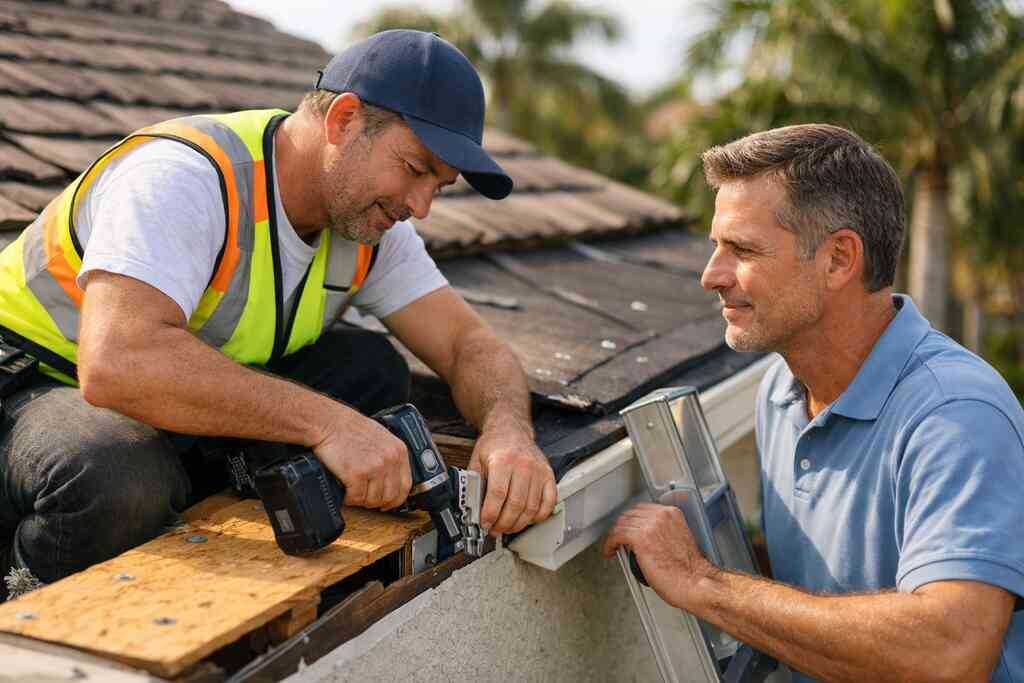
A homeowner called us after a thunderstorm left stains on the ceiling and a stack of conflicting opinions. One roofer said the fix was simple. Another said the roof would fail inspection without structural upgrades. That kind of confusion is common in South Florida, and it usually means the project is bigger than shingles alone. If you are reading this because the permit conversation already feels overwhelming, take a breath. You are not behind, and you are not the only one asking these questions.
Why a roof replacement can still fail a hurricane code inspection
The line between a normal reroof and true hurricane code compliance
A normal reroof replaces worn materials and restores weather protection. Hurricane code compliance goes further. It asks whether the roof can resist uplift, shed water, and stay connected during severe wind. That is where roof uplift resistance, secondary water barrier, roofing underlayment upgrade, and roof deck attachment start to matter. In South Florida, a roof that looks clean from the street can still miss the larger storm-resistance goal.
Here is the part most homeowners miss: a roof covering is not the same thing as a storm-ready roof system. The covering is only the visible layer. Underneath, the fasteners, deck spacing, sealants, and connection points determine how the assembly performs. A roofing contractor South Florida homeowners trust should talk about the whole system, not just shingles or tiles.
On the projects we have seen this year, the biggest surprises usually show up after tear-off. One home in western Broward had a beautiful tile roof on the outside. Underneath, the deck attachment pattern was too weak for the desired upgrade path, so the scope shifted quickly. The homeowner thought they were buying a cosmetic replacement. Instead, they needed a structural conversation.
Why South Florida homeowners in Palm Beach, Broward, and Miami-Dade get different answers from different inspectors
If you ask three inspectors the same question, you may hear three versions of the answer. That is frustrating, but it is normal in South Florida. Palm Beach County permit, Broward County permit, and Miami-Dade permit reviews may focus on different details, especially when the job touches structural elements. Local practices also shift based on exposure, neighborhood type, and whether the property sits inland or closer to the coast.
That is why a licensed contractor Palm Beach County, licensed contractor Broward County, or licensed contractor Miami-Dade should not guess. They should explain what the local reviewer wants and what the drawings must show. A find a contractor South Florida search is only the first step. The real test is whether the contractor understands the county-specific review culture and the South Florida building codes that shape the job.
A client near Coral Gables once assumed the same reroof package would work everywhere. The county reviewer asked for more documentation because the house sat in a higher-exposure zone. The process slowed, but the delay protected the homeowner from a weak scope. That is the kind of friction people hate in the moment, yet appreciate later.
What roof tie-downs, roof deck attachment, and roof-to-wall connection actually change in the field
Hurricane roof tie-downs are not a slogan. They are the physical ties that help transfer wind forces from the roof system into the walls and foundation. The roof-to-wall connection matters because a roof can only perform as well as its weakest connection. If the deck attachment is underbuilt, wind can peel back the assembly. If the wall connection is weak, the load path breaks somewhere below.
You may also hear contractors discuss hurricane roof reinforcement and wind mitigation roofing. Those terms usually point to improvements that increase the roof’s ability to hold together under pressure. That can mean stronger attachment patterns, better edge details, or upgraded underlayment systems. In some homes, the upgrade is part of a broader storm-ready roofing system rather than a basic replacement.
ItemNormal reroofHurricane code-focused workMain goalReplace worn roofingImprove wind and water resistanceFocusSurface materialsLoad path, attachment, sealingInspection riskLowerHigher if details are incompleteScopeOften narrowerOften tied to structural review### When a permit is not paperwork but the project itself
A permit is not just a stamp. For many South Florida homes, it is the framework that defines the work. If the roof needs structural corrections, the permit scope can shape the price, the schedule, and even the material choices. That is why skipping the permit conversation is risky. It can create a false sense of progress while the real job remains unapproved.
The South Florida permit process exists to force hard questions early. Does the existing deck meet the intended use? Are the details compliant with the Florida Building Code 2026 expectations? Does the job stop at replacement, or does it cross into structural modification? A careful contractor makes those distinctions before the first tear-off. That protects you from surprises that feel small at first and expensive later.
A homeowner in Palm Beach County once told us they wanted the “fastest possible roof.” The fastest option was not the safest option. Once the permit reviewer flagged missing details, the project had to pause anyway. The best contractors know that clean paperwork can save weeks of avoidable rework.
The paper trail that separates licensed roofing from real storm-ready work
How to verify a contractor license before anyone touches the roof
You should never hire on a handshake. Start with how to verify a contractor license through state and local records. Then confirm the company name matches the license holder, and make sure the scope fits the license classification. A roofer who handles shingles may not be the right choice for structural modifications. That sounds obvious, but many homeowners discover the difference too late.
If you want a practical starting point, use a trusted directory and compare several firms instead of rushing to the first call. A good place to begin is to find a contractor in South Florida for storm-ready roofing systems. Then verify everything independently. Ask for the license number, check expiration status, and confirm any disciplinary history before work starts. A polished website never replaces verification.
- Match the legal business name to the license.
- Confirm the license covers the exact scope.
- Check local and state standing.
- Ask who will actually supervise the job.
- Keep copies of every document.
What contractor insurance requirements Florida homeowners should ask for before signing
Insurance matters because roofing is high-risk work. Ask about contractor insurance requirements Florida before you sign anything. You want proof of current coverage, not vague assurances. The policy details should match the company doing the work, and the documents should be current. If a contractor hesitates, that is a warning sign.
You should also ask about contractor bonding requirements, especially for larger or more complex jobs. Bonding does not make a contractor perfect, but it adds another layer of accountability. For homeowners, the point is simple: if something goes wrong, you want a real paper trail. That becomes even more important for general contractor near me South Florida searches, because proximity does not equal reliability.
One couple in Broward called after a roofer disappeared mid-job on a detached garage. The replacement contractor found mismatched paperwork and no clear insurance record. Cleanup took longer than the repair. That is why the first questions should be boring, direct, and documented.
Where the South Florida permit process gets stricter for reroof permit South Florida jobs and structural upgrades
The reroof permit South Florida process is usually straightforward until the project stops being cosmetic. Once structural work enters the picture, the reviewer may ask for more detail. That can include attachment schedules, product approvals, and engineering support. The result is not bureaucratic theater. It is a chance to align the project with local wind and water realities.
If you are comparing firms, ask whether they understand the South Florida permit process for roof replacements and structural upgrades before they quote. A strong contractor will know when the permit can stay narrow and when it must expand. They will also know when a reroof must be paired with other upgrades to avoid future failures. That is especially important for South Florida contractors working near the coast or on older homes.
The best clue is how the contractor talks about details. If they only discuss square footage and shingles, keep looking. If they discuss product approvals, tie-downs, and inspection sequence, you are closer to the right conversation.
Why lien waiver Florida forms and change order contractor Florida documents matter before final payment
The final payment stage is where many disputes begin. A lien waiver Florida form protects you by showing that subcontractors and suppliers were paid. Without it, you can pay twice for the same work if a payment dispute surfaces later. That is why you should not treat the paperwork as an afterthought.
A change order contractor Florida document matters just as much. It records scope changes, price changes, and approval before extra work begins. If the roof deck is worse than expected or a permit reviewer requests modifications, the change order keeps the project honest. It also protects the contractor from losing money on undisclosed changes.
A good rule helps here:
- Never approve verbal extras.
- Require written changes.
- Ask what triggered the change.
- Keep the revised cost in writing.
- Release final payment only after the closeout package is complete.
How HOA approvals condo renovation South Florida rules and townhome remodeling South Florida restrictions can slow or reshape the job
HOAs can be helpful, but they can also reshape the timeline. South Florida HOA permit requirements often layer on top of county approvals. That means your roof project may need architectural review, color approval, or specific product documentation. Condo boards can be even stricter, especially when roofing affects common elements or shared drainage. For condo renovation South Florida projects and townhome remodeling South Florida work, the property type changes the rules. Shared structures, association insurance, and building management can all affect the scope. The same applies when roofing work is part of a larger South Florida design-build plan. You may be dealing with two approvals at once, and both matter. 
This is where patience saves money. The board may ask for more documentation than you expected. That does not mean the project is wrong. It means the building is protecting itself, and you should do the same.
When roofing is not enough and the house needs a harder shell
The projects that push beyond shingles into hurricane roof tie-downs and structural roofing inspection
Some homes need more than a new roof cover. If the structure shows movement, rot, or old attachment patterns, the project may need a structural roofing inspection before it goes further. That is especially true in older South Florida neighborhoods where upgrades were done in layers over decades. The roof may look fine from the curb while the load path tells a different story.
This is where hurricane roof tie-downs become part of a larger resilience plan. They are not decorative additions. They are structural improvements that help the house resist the kind of pressure South Florida storms create. A contractor who understands roofing contractor South Florida work should be able to explain the difference between maintenance and hardening. That explanation should be plain, not technical for the sake of sounding impressive.
Here is what almost no online guide mentions: sometimes the smartest move is not a bigger roof spec. Sometimes it is sequencing the project correctly so the structure, permit, and inspection path all support each other. That is why a home remodeling contractor South Florida families trust often works alongside a roofer on more complex jobs.
Why hurricane impact window installer South Florida work belongs in the same conversation as roof replacement
A roof does not protect a home alone. Hurricane impact window installer South Florida work belongs in the same conversation because the building envelope works as a system. If windows fail under pressure, the interior can pressurize and stress the roof from below. That is why impact-rated exterior upgrades matter together, not separately.
If you are already planning roof work, consider whether the openings need attention too. Impact glass can reduce the need for certain shutter strategies, depending on the design and exposure. It can also improve daily comfort and noise control. But the key is coordination. A roof upgrade and window upgrade should not fight each other in the permit set.
That coordination matters especially for oceanfront home contractor and waterfront home builder South Florida projects. Those homes often face tougher wind and moisture exposure. The envelope has to work harder, and the details matter more than ever.
Where hurricane shutter contractor decisions meet exterior hardening for hurricanes and coastal wind load requirements
A hurricane shutter contractor can help you choose between panels, accordion systems, roll-downs, and other protection options. But the choice should reflect the building, the exposure, and your daily use. A home that already has impact openings may only need selective shutter work. A home with large vulnerable openings may need a more comprehensive strategy.
The phrase exterior hardening for hurricanes means you are reinforcing the weakest points first. That includes windows, doors, soffits, garage openings, and roof details. It also means respecting coastal wind load requirements instead of assuming inland standards are enough. South Florida weather does not reward assumptions.
If you want to compare the bigger roof and envelope options side by side, start with the roof, then add the openings:
- Roof structure and attachment
- Openings and glazing protection
- Garage door reinforcement
- Soffit and fascia details
- Drainage and flashing continuity
How South Florida concrete contractor and South Florida foundation repair work can become part of the same resilience plan
A roof upgrade is sometimes only part of the answer. South Florida concrete contractor and South Florida foundation repair work may be needed if settlement or cracking is affecting the shell of the house. When walls shift, roof connections can strain. When the slab or foundation moves, openings can misalign, and that changes how the whole system performs.
That is why resilience planning sometimes crosses trades. A coastal home builder Florida project may involve foundation, framing, roofing, and envelope work in one sequence. The same is true for a South Florida custom home builder handling a South Florida luxury renovation or South Florida home additions. When you are improving a house for storm readiness, the structure and the skin must be treated as one conversation.
A client near the water once planned only a reroof and new shutters. A structural review found settlement at one corner of the home, so the scope expanded into foundation repair before exterior upgrades began. The homeowner was frustrated at first. Later, they admitted the repair sequence probably saved them from chasing cracks forever.
The next move for homeowners weighing South Florida design build, home remodeling contractor South Florida, and long-term storm readiness
If you are trying to choose between a roofer, a remodeler, or a design-build team, focus on coordination. A South Florida design build approach can help when the roof, envelope, and interior work all overlap. That is common in South Florida kitchen remodeler, South Florida bathroom remodeler, South Florida flooring installer, and South Florida tile contractor projects that also touch structural work. The project gets easier when one team sees the whole picture.
The same advice applies to specialty additions. A sunroom contractor South Florida, lanai builder South Florida, or outdoor kitchen contractor South Florida may need to align with roofing and wind-hardening details. Additions, especially a second story addition South Florida, demand even more planning. The permit trail, structure, and storm-readiness strategy must all match.
If you are stuck, start small and stay specific. Ask for three estimates from licensed firms. Ask each one to explain the permit path, the insurance, and the inspection sequence. Then compare the answers, not just the prices. You do not have to figure this out alone, and you do not have to figure it all out today. Start with one phone call to South Florida Contractors, then verify the rest before anyone steps onto the roof.
Frequently Asked Questions
Question: What is the difference between a normal reroof and hurricane code compliance in South Florida?
Answer: A normal reroof mainly replaces worn roofing materials, but hurricane code compliance goes further by focusing on roof uplift resistance, roof deck attachment, roof-to-wall connection, secondary water barrier details, and overall storm performance. In South Florida, that means the job may involve more than shingles or tile – it can trigger a deeper review of the structure, permit scope, and inspection requirements. South Florida Contractors helps homeowners understand when a project is truly a roofing replacement versus a storm-ready roofing system that must meet South Florida building codes and Florida Building Code 2026 expectations. If your home is in Palm Beach, Broward, or Miami-Dade, we always recommend verifying the permit path early and working with a licensed contractor Palm Beach County, licensed contractor Broward County, or licensed contractor Miami-Dade before any work begins.
Question: How can I verify a contractor license and make sure I’m hiring the right roofing contractor South Florida homeowners can trust?
Answer: Start by confirming the contractor’s license through state and local records, then make sure the business name matches the license holder and that the license classification covers the exact scope of work. For roofing, structural upgrades, and exterior hardening for hurricanes, you should also ask for proof of contractor insurance requirements Florida and discuss contractor bonding requirements before signing anything. South Florida Contractors encourages homeowners to compare multiple bids, ask who will supervise the job, and review the paperwork carefully before work starts. If you are searching for a general contractor near me South Florida or trying to find a contractor South Florida, the safest approach is to verify licensing first and never skip permit requirements. That is especially important when the project touches hurricane code compliance, reroof permit South Florida rules, or structural roofing inspection items.
Question: Why do South Florida permit process reviews, Palm Beach County permit, Broward County permit, and Miami-Dade permit requirements feel so different?
Answer: Because permit reviewers may focus on different details depending on location, exposure, and whether the project is purely cosmetic or includes structural work. A reroof permit South Florida application can stay relatively straightforward if the job is limited to replacement, but the process becomes more detailed when it involves hurricane roof tie-downs, roof deck attachment changes, or roof-to-wall connection upgrades. South Florida Contractors works with the reality that county reviews can vary, so we help homeowners prepare for the documents, product approvals, and inspection sequence that may be requested. If your project involves hurricane code compliance, HOA review, or a condo renovation South Florida or townhome remodeling South Florida setting, the permit path may become even more detailed. That is normal, and it is exactly why a practical, licensed contractor is so important.
Question: How do I know if my roof project needs hurricane roof tie-downs, wind mitigation roofing, or a structural roofing inspection?
Answer: If the home is older, if the roof has had repeated leaks, if there is visible damage, or if the existing deck attachment may not support the intended upgrade, a structural roofing inspection is often the right next step. Hurricane roof tie-downs, hurricane roof reinforcement, and wind mitigation roofing improvements are typically considered when the goal is more than simple replacement and the homeowner wants stronger storm performance. South Florida Contractors helps clients understand the difference between maintenance and hardening, especially in coastal and high-wind areas. We also look at related issues like roof uplift resistance, secondary water barrier needs, and whether the roof-to-wall connection or underlayment system should be improved as part of the same project. That kind of planning is especially important for oceanfront home contractor work, waterfront home builder South Florida projects, and homes exposed to coastal wind load requirements.
Question: Can South Florida Contractors help coordinate roofing with hurricane impact window installer South Florida work, hurricane shutter contractor services, and other exterior upgrades?
Answer: Yes. A roof does not perform in isolation, so exterior hardening for hurricanes often works best as a coordinated plan. We regularly help homeowners think through roofing contractor South Florida needs alongside impact-rated exterior upgrades such as hurricane impact window installer South Florida services, hurricane shutter contractor options, and related envelope improvements. In some cases, the right plan also includes South Florida concrete contractor support, South Florida foundation repair, pool deck contractor South Florida work, paver installation South Florida, or screen enclosure contractor South Florida services when the broader property needs attention. For larger remodels, South Florida design build coordination can help keep the roof, openings, and structural elements aligned. Whether you are planning a South Florida luxury renovation, South Florida home additions, second story addition South Florida, sunroom contractor South Florida, lanai builder South Florida, or outdoor kitchen contractor South Florida project, the key is making sure the permit, structure, and storm-readiness strategy all match. Always verify licensing, insurance, and scope before hiring any contractor.
Question: What paperwork should I expect during final closeout, including lien waiver Florida and change order contractor Florida documents?
Answer: Before final payment, you should expect a clear closeout package that may include lien waiver Florida forms, final invoices, permit sign-off details, warranty information, and any approved change order contractor Florida documents. These papers matter because they protect you from paying twice, prevent misunderstandings about extra work, and create a clean record if contractor dispute resolution is ever needed. South Florida Contractors advises homeowners to avoid verbal extras, require written change approvals, and keep copies of every document tied to the project. This is especially important on roofing and structural jobs where the scope can change after tear-off or during inspection. A professional contractor will understand that paperwork is part of the project, not an afterthought.