
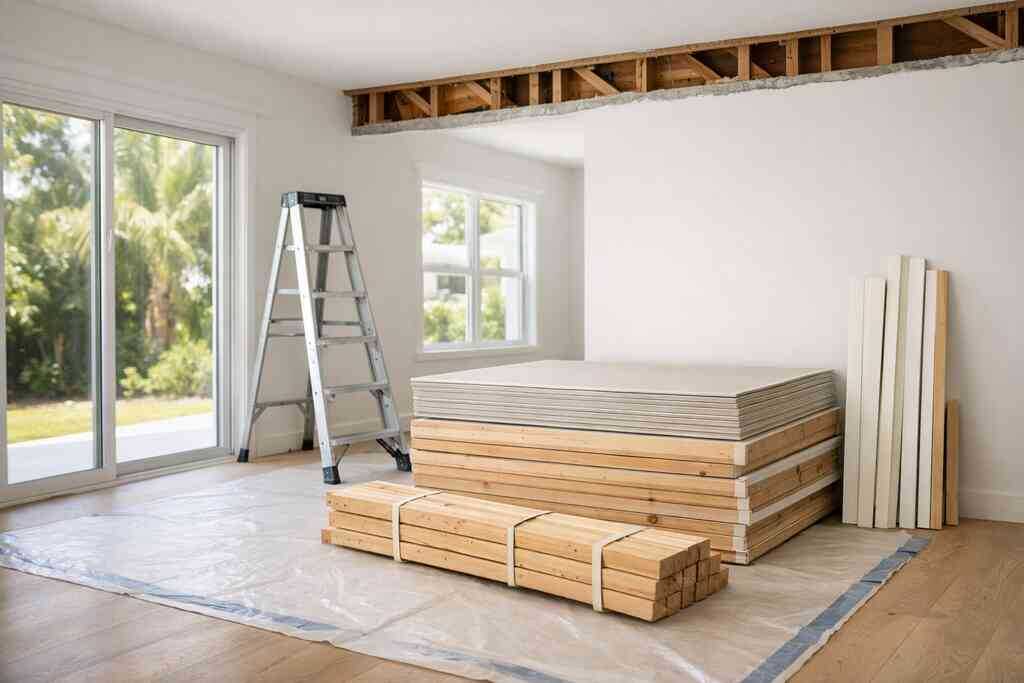
Hurricane roof tie-down compliance in Florida means the roof structure is anchored to the walls and foundation well enough to resist high wind uplift, movement, and progressive failure. In South Florida, that usually includes verified roof-to-wall connections, approved fastening patterns, and permit-ready documentation that matches local hurricane code expectations.
If you are looking at a roof that seems perfectly fine and still feeling uneasy, that reaction is normal. The damage that matters most is often hidden in the framing, not the shingles. We hear this concern from homeowners across South Florida after storms, and it is one of the hardest things to judge without opening up the structure.
Key Takeaways
- Hurricane roof tie-down compliance in Florida is about structural anchorage, not just roof appearance.
- Roof-to-wall connection inspection can reveal missing straps, clips, or fasteners that are invisible from the street.
- Palm Beach, Broward, and Miami-Dade may have different permit and inspection expectations, even for similar roof work.
- Roof structural work usually needs permits, and skipping them can cause failed inspections, insurance problems, and HOA issues.
- A licensed roofing contractor South Florida homeowners trust should document tie-down work, permits, and any required engineering before the job closes out.
Why a roof can look fine from the curb and still fail hurricane roof tie down compliance
A roof can look complete from the curb and still fail because compliance depends on hidden structural connections, not surface condition. The real question is whether the roof framing is tied to the house strongly enough to resist uplift, especially under Florida Building Code hurricane requirements and local inspection standards.
The hidden roof-to-wall connection problems South Florida homeowners miss after past storms
The hidden failures are usually in the connectors: missing straps, undersized clips, corroded fasteners, or tie-downs that never matched the original plans. A roof may shed water perfectly and still be weak at the ridge, trusses, or wall plate connection. On older South Florida homes, we often find patchwork repairs done after storms that solved the leak but never restored full structural capacity.
Here is the part most homeowners miss. A handyman patch or cosmetic reroof does not automatically fix roof framing anchorage. If a prior repair changed the load path, the home may still need a roof-to-wall connection inspection, especially if you are planning a refinance, wind mitigation inspection, or major exterior work like a hurricane impact window installer South Florida project that triggers broader review.
One homeowner in Broward called after a reroof looked perfect but failed a wind mitigation review. The shingles were new, but the tie-down documentation was missing, and a few clips had been installed inconsistently. That turned a simple closeout into a documentation chase, which is exactly why permit records matter as much as the materials on the roof.
Why Palm Beach, Broward, and Miami-Dade homes are judged by different permit and inspection expectations
Palm Beach County, Broward County, and Miami-Dade County all follow South Florida building codes, but inspection culture and documentation expectations can differ. Miami-Dade permit reviewers and inspectors are typically very strict on product approvals and fastening details, while Broward County permit and Palm Beach County permit reviews may focus differently on structural scope, reroof triggers, and supporting engineering.
County focusWhat often gets checkedWhat homeowners should preparePalm Beach CountyScope of work, structural repairs, product approvalsPlans, contractor license, permit documentsBroward CountyRoof upgrade details, inspection sequencing, wind-related requirementsFastener specs, photos, signed contractor recordsMiami-DadeHurricane-code compliance, product approvals, connector detailsEngineering, permit history, full closeout packageIf you live near the coast, or in a condo, townhome, or waterfront neighborhood, the review can get even tighter. HOA approval for roof repairs may also be required before work starts, and that review is separate from the county permit process. A good contractor will tell you that up front, not after materials are ordered.
What actually counts as hurricane roof tie down compliance under South Florida building codes
Hurricane roof tie-down compliance means the roof assembly has approved structural connectors, fastening patterns, and documentation that show it can resist wind uplift. In practice, that includes roof framing anchorage, truss tie-down compliance, correct clip installation, and often proof that the roof deck attachment standards and water-resistance layers were installed together. 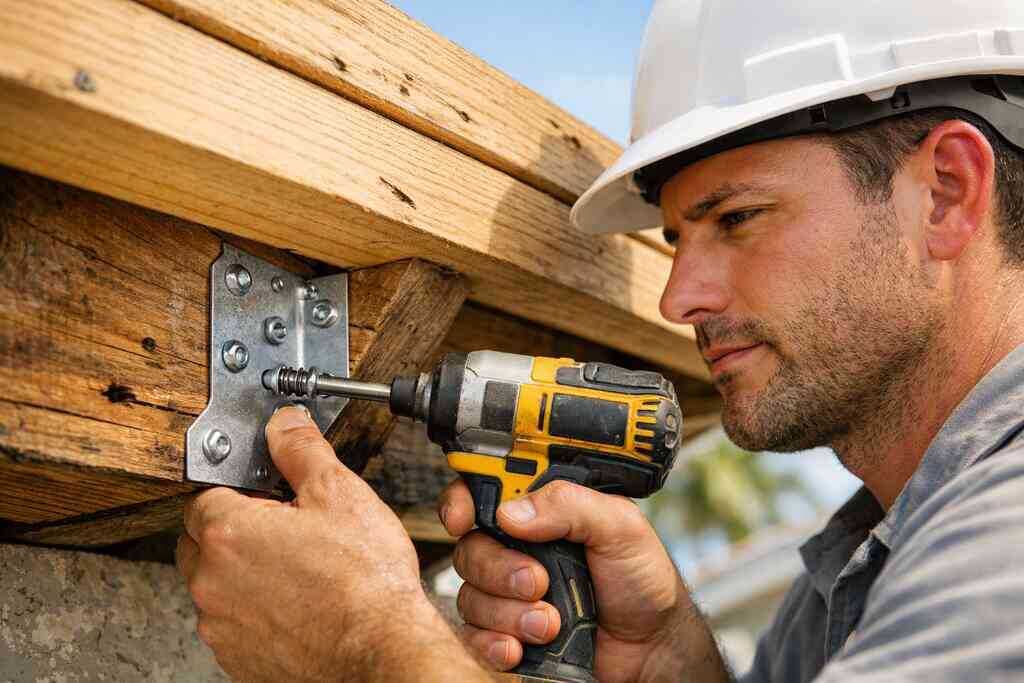
Roof framing anchorage, truss tie-down compliance, and hurricane clip installation explained in plain English
In plain English, tie-down compliance means the roof is physically locked to the house. That connection usually starts with rafter tie-down requirements or truss straps that connect the roof framing to the wall plate or structural wall system. Hurricane clip installation is not decorative hardware; it is the mechanical connection that helps keep the roof from lifting in strong wind.
The details matter more than most people expect:
- Roof framing anchorage: how the truss or rafter is fastened to the wall structure
- Truss tie-down compliance: whether the connector type and spacing match approved plans
- Structural roof connection upgrade: a retrofit that strengthens weak or outdated connectors
- Hurricane roof uplift protection: the system that resists wind trying to peel the roof away
A roofing contractor South Florida homeowners hire for this work should be able to show you the connector type, the permit scope, and the inspection milestone where it will be verified. If they cannot explain that clearly, keep looking.
For broader code context, the South Florida Contractors On Hurricane Roof guide breaks down how regional roof work gets reviewed, and why the paperwork is part of the protection system.
When roof deck attachment standards, secondary water barrier requirements, and roof uplift protection become part of the same conversation
Roof tie-down compliance does not live alone. Once a reroof or structural repair reaches a certain scope, inspectors may also look at roof deck attachment standards, underlayment, and secondary water barrier requirements. That is because the roof has to do two jobs: stay attached in wind and limit water intrusion if the outer layer is breached.
This is where many people get frustrated. They thought they were only replacing shingles, then suddenly the project involves deck nailing patterns, underlayment details, and possible structural repairs. If the deck is weak, the connector work may be meaningless. If the barrier is poor, the roof may survive the wind and still suffer costly interior damage.
A practical way to think about it is this:
- The roof deck must be fastened correctly.
- The framing must be anchored correctly.
- The system must be permitted and inspected correctly.
- The contractor must close out the job with the right documents.
That is also why a licensed roofing contractor South Florida property owners trust should coordinate with a structural professional when the roof framing looks compromised. In some cases, a broader review also touches adjacent work like South Florida concrete contractor repairs, South Florida foundation repair, or even a second story addition South Florida scope, because those changes can affect the load path and permit strategy.
If you want a deeper plain-language primer on the connectors themselves, the Ultimate Guide To Hurricane Roof Tie-Downs is a useful next read, and the What Is A Hurricane Roof Tie article is especially helpful for Miami-Dade homeowners comparing inspection expectations.
If you are trying to figure out your own next step, start with the permit trail. A correct roof system is not just built; it is documented. That is the difference between a project that closes cleanly and one that gets stuck in revision after revision.
For homeowners who want to compare options across South Florida, South Florida Contractors can help you find a contractor South Florida by trade and location, then narrow down the right licensed contractor Palm Beach County, licensed contractor Broward County, or licensed contractor Miami-Dade for the scope you actually need. It is also a practical place to compare a general contractor near me South Florida, a South Florida luxury renovation team, or a coastal home builder Florida for projects that involve more than a simple reroof.
Before you sign anything, verify the contractor license, ask about contractor insurance requirements Florida, confirm contractor bonding requirements where applicable, and get lien waiver Florida paperwork in writing. If the proposal changes midstream, ask for a change order contractor Florida document before approving the extra work. And if you are ready to start the search, use the directory and call 18443112703 for the next step.
Frequently Asked Questions
Question: What is hurricane roof tie-down compliance in Florida, and how do South Florida Contractors help homeowners understand it?
Answer: Hurricane roof tie-down compliance in Florida is about making sure the roof framing is properly anchored to the walls and foundation so it can resist wind uplift and structural failure during severe storms. It is not just about how the roof looks from the street. In South Florida, that usually means verified roof-to-wall connection inspection, approved fastener patterns, and permit-ready documentation that aligns with South Florida building codes and hurricane code compliance expectations.
At South Florida Contractors, we help homeowners find a contractor South Florida who understands the full scope of this work, from roof framing anchorage to permit requirements for roof structural work. Whether you need a roofing contractor South Florida, a licensed contractor Palm Beach County, a licensed contractor Broward County, or a licensed contractor Miami-Dade, the key is to verify licensing, insurance, and experience with hurricane roof tie-downs before any work starts.
If your project is part of a larger exterior upgrade, such as a hurricane impact window installer South Florida project, a hurricane shutter contractor, or broader storm-hardening home upgrades, the roofing scope may need to be coordinated with other trades. That is why South Florida homeowners should never skip the permit process or assume a roof is compliant just because it was recently repaired.
Question: How do I know if my roof needs a roof-to-wall connection inspection or a structural roof connection upgrade after a storm?
Answer: If your home has had storm damage, prior repairs, an older roof, or any sign of roof movement, it is smart to schedule a roof-to-wall connection inspection. The hidden issues are often in the connectors, not the shingles. Missing straps, corroded fasteners, weak clips, or inconsistent hurricane clip installation can all affect truss tie-down compliance and hurricane roof uplift protection.
A roof can look perfectly fine from the outside and still fail to meet Florida Building Code hurricane requirements. That is especially true in older South Florida homes, where previous repairs may have fixed leaks but never restored the original structural performance. If the framing, deck attachment, or connector layout looks questionable, a structural roof connection upgrade may be needed.
South Florida Contractors can help you connect with the right professional for the job, whether you are planning a roof retrofit for wind resistance or coordinating related work with South Florida concrete contractor services, South Florida foundation repair services, or even a second story addition South Florida project that changes the load path. Always confirm contractor licensing Florida, contractor insurance requirements Florida, and contractor bonding requirements before hiring anyone.
Question: What permit requirements should I expect for roof tie-down work in Palm Beach County, Broward County, or Miami-Dade?
Answer: Permit requirements for roof structural work can vary by county, even though all of South Florida follows strict hurricane code expectations. A Palm Beach County permit may focus on the scope of structural repairs and product approvals, while a Broward County permit for roof upgrades may include detailed inspection sequencing and fastening documentation. A Miami-Dade permit for roofing work is often the strictest when it comes to product approvals, connector details, and closeout records.
If you live in a condo, townhome, or community with an HOA, you may also need HOA approval before work begins. That approval is separate from the county permit process. For that reason, homeowners should never assume a reroof, repair, or retrofit can move forward without proper documentation. Skipping permits can create failed inspections, delays, insurance issues, and problems during resale.
South Florida Contractors helps homeowners compare options for South Florida permit process needs by connecting them with the right trade and location. Whether your project is roofing, condo renovation South Florida, townhome remodeling South Florida, or a larger South Florida design build scope, it is always smarter to confirm the permit path first and then hire the correct licensed contractor Miami-Dade, licensed contractor Broward County, or licensed contractor Palm Beach County for the job.
Question: What should I look for when hiring a licensed roofing contractor South Florida homeowners can trust for hurricane roof tie-downs?
Answer: Start by verifying the contractor license, confirming insurance, and asking direct questions about hurricane roof tie-downs, roof deck attachment standards, and secondary water barrier requirements. A trustworthy licensed roofing contractor South Florida homeowners can rely on should be able to explain the exact connector type, the inspection milestones, and the permit documentation needed to close out the job properly.
A strong contractor should also be comfortable coordinating with related trades when the project is bigger than the roof alone. For example, a home remodeling contractor South Florida, South Florida kitchen remodeler, South Florida bathroom remodeler, pool deck contractor South Florida, paver installation South Florida, or screen enclosure contractor South Florida may all be involved in a broader exterior or renovation plan. For coastal homes, oceanfront home contractor and waterfront home builder South Florida teams may also need to coordinate structural details with the roofing scope.
South Florida Contractors is designed to help homeowners compare professionals in one place, rather than guessing from a random search. If you need a general contractor near me South Florida, a coastal home builder Florida, a South Florida custom home builder, or a South Florida luxury renovation specialist, use the directory to review local options, then verify how they handle lien waiver Florida paperwork and change order contractor Florida documentation before signing anything.
Question: How does the blog title What Is Hurricane Roof Tie Down Compliance in Florida relate to real homeowner projects in South Florida?
Answer: The blog title reflects a real issue many South Florida homeowners face: the difference between a roof that looks finished and a roof that is actually compliant. Hurricane roof tie-down compliance affects reroofs, roof retrofit for wind resistance projects, storm-hardening home upgrades, and even larger scopes like South Florida home additions or second story addition South Florida work that changes structural loads.
This matters because hurricane-code requirements are not limited to the roof covering. If the framing, anchorage, or documentation is incomplete, the house may still be vulnerable. That is why homeowners often need more than a quick patch or cosmetic replacement. They may need a full home inspection for hurricane compliance, roof system reinforcement, or coordination with South Florida concrete contractor or South Florida foundation repair services if the structural conditions call for it.
South Florida Contractors helps homeowners find a contractor South Florida who can handle the right scope, from exterior structural compliance for coastal homes to specialty remodeling like South Florida flooring installer, South Florida tile contractor, South Florida cabinet maker, South Florida ADA renovation, aging in place contractor South Florida, sustainable home builder South Florida, or energy efficient remodeler South Florida. The value is not just in finding a contractor, but in finding the right one for the permit, code, and structural realities of South Florida.